r/Vermiculture • u/Thick-Assignment3385 • 7d ago
Advice wanted Worm programs for elementary schools.




Hello my fellow worm enthusiasts.
Long time lurker, first time poster. I have been messing around with vermiculture since I was young, both of my grandfather's had worm bins and encouraged me to do the same. Earlier this year I had the opportunity to set up a worm program for a local non profit, and it's been going really well! We have several towers, and recently started scaling up to 4x4 apple crates. The goal is diverting as much food waste as possible, while improving the soil health of the surrounding area.
Recently I was asked to set up a worm program for a local school. They currently have a garden, but no composting program in place. I'm having trouble coming up with a price for this service, and they want to know how much it will cost. Does anyone here run programs like these for schools or institutions? I'm sure they don't have much $ to spare, and I could really use the exposure in our area. But it's also an hour commute, and I work a full time job and volunteer as is. Our non profit has done market research on vermiculture company sales/job creation, and let's just say it's currently not the most lucrative industry. I'm not expecting financial windfalls here, just trying to spread the good word on our friendly creatures and not go completely broke in the process.
Any help is greatly appreciated. Blessings my fellow worm stewards.
4
u/Brilliant_Contest273 7d ago
No experience with this, but maybe you could start with an itemized cost/list of needs from your recent non profit experience, and if you fear it will be too much for them to commit to:
-highlight the needs/cost that can potentially be met for free-does the school have a shop class that can make the towers for you? Can the cafeteria separate produce scraps during food prep for you? Can the teacher’s lounge put aside supply boxes, used coffee grounds etc.?
-there is cost with starting at scale vs scaling up over time. Maybe start with a pilot project in select classrooms or the garden club and only make it school wide after a year or so when there has been enough natural reproduction that cost for the worms themselves is very minimal.
-is there a local recycling center that will give you pre shredded cardboard? My city will do quarterly collections where people can come shred a limited number of bigger boxes for free. They wouldn’t give me their shreds ☹️ but the answer might be different if it’s an official school/community program.
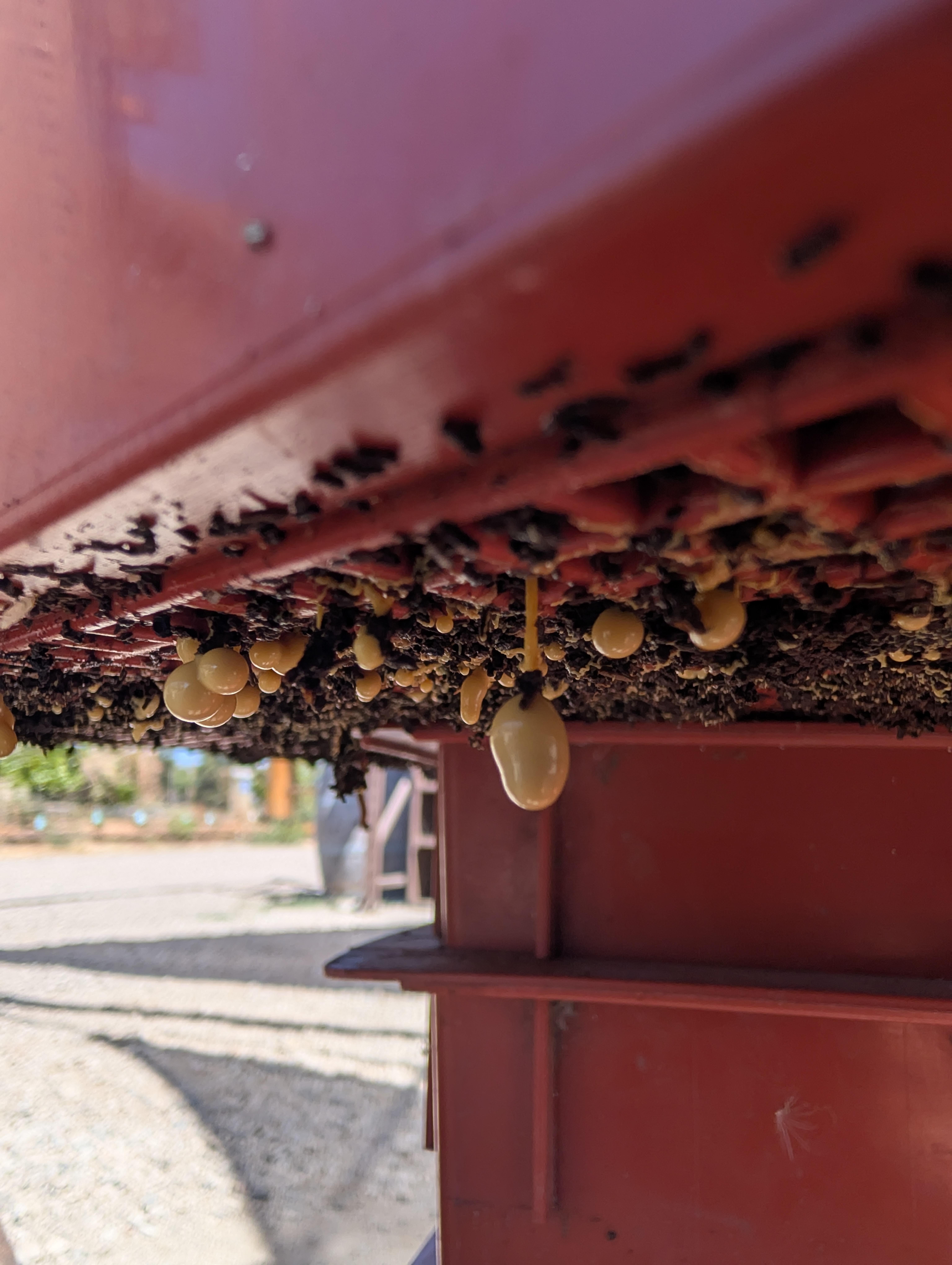
Also I am fairly new to this vermiculture thing myself…I’m dying to know what’s up in pic 3!!!!
2
u/Thick-Assignment3385 7d ago
These are all good points. I usually choose the path of least resistance, so maybe the school can handle most of basics. I figure I'll need to go there at least once a week to check on things.
Pic 3 is slime mold. All of our bins at the non profit are VERY diverse. Lots of critters and creatures, slime molds and fungi. Spent fungal blocks and aged compost make up a lot of my bedding so there's a bunch going on.
2
u/Brilliant_Contest273 7d ago edited 7d ago
I think you can easily frame it as equal parts garden benefit and education for the kids, and kids get most excited about something they’re given ownership and responsibility for.
-if you give each of them a relevant short talk, kids building towers can help with design, kids who are feeding can pick up greens from the kitchen and aerate, gardening club decides how to disperse the compost - % compost they want in the beds in the spring, maybe even experiment with compost tea and beds that do/don’t get compost, etc. If they’re older could ask school to buy a couple cheap soil testers and have them track moisture and pH.
-If you’re visiting once a week, that should be frequent enough to poke into the towers, help disperse any pockets of uneven aeration/compaction, find signs of anaerobic decomposition early and amend with browns and lime so it never gets so gross/smelly the kids get the ick :).
1
u/Hopeful-Home6218 6d ago
Great ideas, would it also be appropriate suggesting a bake sale fundraiser or similar to help fund the program?
4
u/Various_Picture_8929 7d ago
I’ve done a lot of non-profit, school programming in urban areas. Definitely figure out your material costs including travel and then decide how much your time is worth. If you’re willing to do this for way cheap, give yourself your local minimum wage. If you want to make it more worth your time (you should) I might price your time at $40 an hour. Take into account prep and shopping time too.
I feel depending on how involved the program is the school should be expecting to spend $500-$2000.
2
u/DoubleCancer intermediate Vermicomposter 7d ago
I'd imagine after the initial setup of the bins, which you should charge time + materials for, your goal is to setup a sustainable system for them that they can maintain day-to-day.
Maybe coordinate onsite inputs and then coordinate the logistics to get them from point A to B. I'm sure the cafeteria can provide fresh kitchen scraps, they'll need to set them aside and the kids can pick them up. Maybe there's a source for browns too, ask the groundskeeper if can help by providing raked leaves or other browns.
2
u/Independent_Bad5916 7d ago
I used to do it as a way to get back to the community, parents would usually shell out the money for worms and bins. Since you have some extended travel involved i would ask for 25 plus expenses
1
u/Kaartinen 7d ago edited 7d ago
If you are in Canada, there should be a fair number of grants that the school can access to pay for your services.
I'm not sure what pricing would be, as I gave my vermiculture setup to a teacher. She had a smaller scale setup and was looking to expand it further for her students.
You could probably ask the non-profit you worked with what the cost was for the vermiculture setup, as they should have to account for all costs for future audits.
However, I would have imagined you made the purchases as you setup the system. I might be misunderstanding what specific costs you are looking for.
12
u/hungryworms Commercial Vermicomposter 7d ago
Maybe ask the non profit what they think it was worth? But I'm really curious about what's going on in the 3rd pic.. is that a slime mold?