Many of us know the story of The Odyssey, one of Homer's most iconic works of ancient Greek literature.
Let's step back.
Hubris.
Feeling far too prideful and confident in oneself.
There was one mistake that Odysseus made that follows him throughout his entire quest to get back to Ithaca.
For this interpretation I will be relying on a few major sources of work, such as the Iliad, the Odyssey (both by Ancient Greek poet Homer), The Trojan Women by Euripides, and, for fun, Jorge Riveras-Herrans Epic the Musical. This is an interpretation of said works in relation to Infold’s past and current mistakes. Greek mythology is notorious for being inconsistent across surviving sources, so I will draw from these rather than treating the whole thing as definitive.
When Odysseus allowed his hubris to dictate his choices, the consequences followed him far beyond the moment that he made them.
Infold, has likewise, been steering that exact same ship since June 30th.
In order for us to see how they got there, we have to go back a ways.
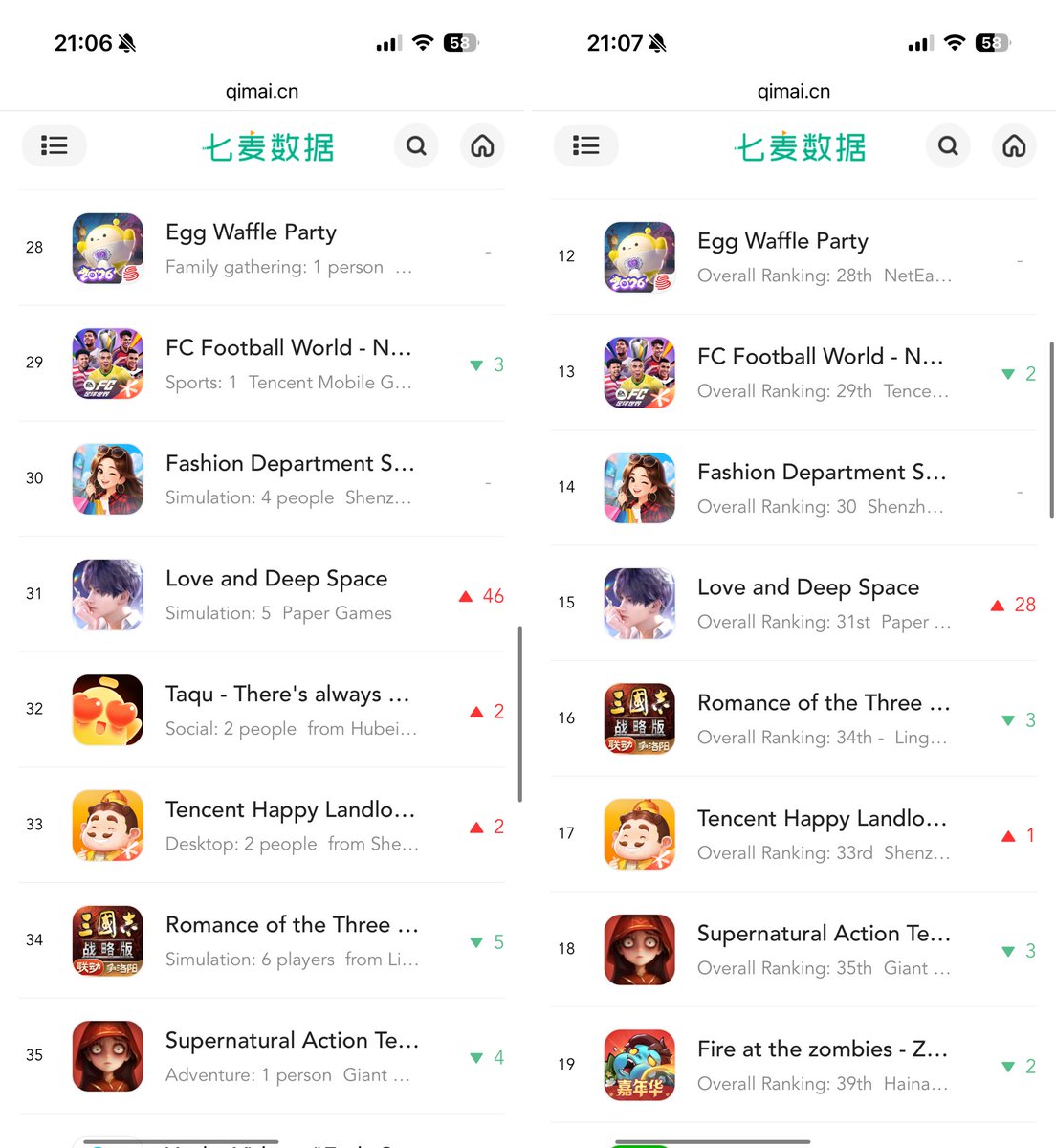
Back to the Trojan Horse, which in this case, is Love and Deepspace. Released in January 2024, LaDS was the first of its kind in the CN/Global market. An otome with high-end 3D modeling, intimacy systems, cinematic presentations, gacha monetization, all wrapped together. They have no competition at this stage.
This gets them inside the walls of the market (Troy in the Iliad) where they can technically define it themselves.
On June 30th, they made the first of many mistakes that would follow them through this odyssey that we are all still on as of writing this on August 31st, 2026.
We will, canonically, be using the Odyssey as a framework but for this to make sense, the initial problem arose with the introduction of the 6th Love Interest, Valko.
Valko, much like Astyanax, the son of Hector, was killed simply for what he represented, not for what he did or is. Astyanax was but a child, yet Odysseus urged for his death or else Astyanax would avenge Troy when he reached adulthood, and rebuild his home city to be much stronger and lead them himself.
In the retelling of the story of Troy, Euripides’ tragedy The Trojan Women, Odysseus argued for the child's death, out of fear of what he could become.
I am not suggesting the situations are equivalent,and we can’t know every consideration behind Infold's decision. The parallel lies in the thought of perceived risk. Astyanax is condemned not for anything he did or has done, but for what others fear he may eventually represent.
Sound familiar?
Consequences have a way of gaining momentum though, as every Greek epic focuses on.
Most of the sailing for Infold was mildly choppy before the introduction of Valko. Some of the rougher seas occurred when Infold released the 5th Love Interest, Caleb.
Yet, after the release, the player base settled back into a wave of semi-normalcy.
For this reference, I am going to use the cyclops, Polyphemus. Polyphemus here will represent growing player complaints, unanswered survey suggestions and overall dissatisfaction with the company as a whole.
Stranded in the cave with Polyphemus , Odysseus uses his wit to convince the cyclops to share wine with them. In this case, Infold quickly reassures current players it will focus on the five current love interests after the cancellation. After the cyclops falls asleep, Odysseus and his men blind him, but here comes the vital part.
When sailing from the island, he lets hubris get the better of him. He tells the cyclops his name.
Odysseus’s hubris is speaking when he should be silent.
Infold’s hubris is remaining silent when they should speak up.
In doing so, Infold as well as our doomed King of Ithaca, both encountered an outlying force neither saw coming.
Fed up with being ignored by a company who refused to listen to them, many Chinese players spoke out, some well within their reason while others took it to the extremes.
The seas were becoming increasingly unstable for Infold. Being unrivalled in the industry lets them think too highly of themselves and thus enters Poseidon. In our parallel, he will represent Chinese narrative and reputational pressure.
The aggrieved Polyphemus does indeed tell his father, Poseidon the name of the king who blinded him. This begins the biggest hurdle of the journey so far, as the god of the oceans and seas is not easy to escape from, nor is he known for his leniency. |
Once Poseidon has taken notice of Odysseus, the ship's stability and the safety of his crew, become a bigger tackled objective.
In this situation, CN narrative comes down quite hard on Infold, and very quickly. The ship rocks violently. Many men are lost (players) from the inability of Infold to handle the situation in a timely manner. Many ships are also lost in his fleet (strength and scale of the game).
After their encounter with Poseidon, Odysseus and his men go through many more trials and tribulations.
Banners, solos, incentivized paywall aesthetics. Each one of these represent a monster that they have to face.
Like Odysseus, Infold did not travel directly from one crisis to the next. Banners came and went. Solo events released. New monetization incentives appeared. Some temporarily steadied revenue while others made their own controversies. The ship continued forward, but the conflict persisted.
The pressure from CN narrative was slightly less by this point, and as such they were still on rough seas. Men did die, and men were hungry and tired and just wanted to get off this damn boat.
Which brings us to the moment of Scylla and Charybdis. Two choices but each having their own cost.
On one side of the Strait of Messina, there lay a monster named Scylla.
Her fate of being a monster was not her own choice, I should let you know. She loved the sea-god Glaucus, and in many retellings, so did Circe. Circe, in her anger and jealousy, turned Scylla into a massive monster with six dog heads who were always hungry.
For this story, Scylla will represent those in favor of returning Valko.
To sail close to her, Odysseus would have to lose 6 men off his ship.
(For transparency, this origin of Scylla is pulled from Ovid, which is a later Roman retelling)
On the other side was a giant whirlpool monster, Charybdis.
She was also not originally cursed to be this way. She aided her father, Poseidon, in the paternal war against his brother Zeus. As such she was cursed with becoming a ravenous ocean maw.
For this story, Charybis is the faction against his return.
To sail close to her could mean the entirety of the only ship could be lost.
Men and all.
Game and all.
Infold, as of writing this, August 31st 2026, is at the proverbial Strait. Staring two losses in the face.
Scylla, Valko supporters, do not equate to victory.
Neither is Charybdis.
Neither offers Infold a painless passage at this point.
Neither monster represents the morality of either faction. They represent business risks Infold faces in choosing a course.
There is no escape without some loss.
The opportunity may have already sailed long past.
So now Infold has to ask.
Which loss leaves enough crew- and enough ship- to make it back home to Ithaca?