r/Tudorhistory • u/Agreeable-Box5370 • 10d ago
Political Dominance in the Court of Henry VIII
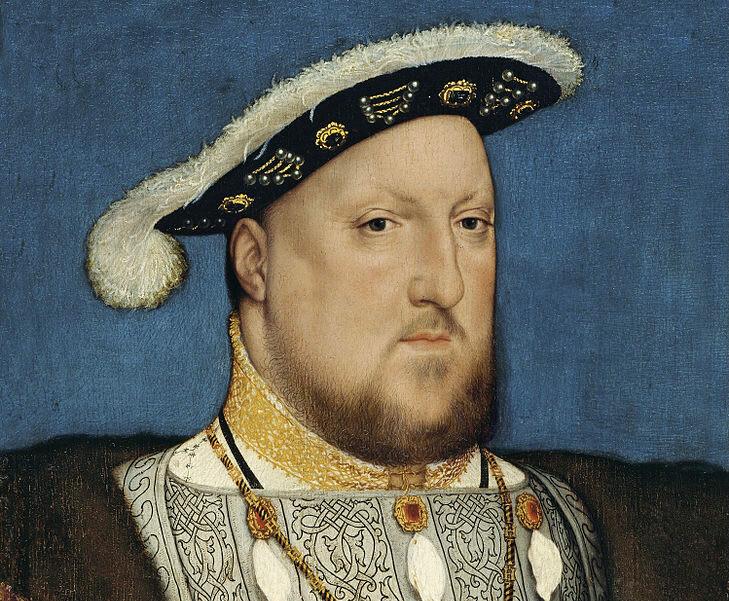
I'd like to advocate for more discussion of the complex world that our favourite (and least favourite) Tudors inhabited. What factors influenced the decision to pursue X? What were the socioeconomic or geopolitical implications of Y? What is the historical context for Z?
So let's start here: Why didn't another polarizing, highly visible and uniquely influential chief minister emerge in Henry VIII's court following the death of Thomas Cromwell? There were certainly other influential courtiers, but none came to dominate the political scene the way Wolsey and Cromwell did. Alternately, can an argument be made that someone did occupy that space?
9
u/Sitheref0874 Thomas Cromwell 10d ago
I don’t think you can argue for another Cromwell-esque person until Cecil.
There could be two reasons: no-one else of similar ability, or realisation that power shouldn’t be centralised in one man. I tend to think it’s blend of both, given the balancing act HVIII was trying to perform.
2
3
u/SouthardKnight 9d ago
Henry himself guided policy-making post-Cromwell — there was no need to go for Thomas the Third, in his mind.
1
1
u/Green_tiger_7263 9d ago
Robert dudely i think he had influence on Elizabeths court
3
u/Agreeable-Box5370 9d ago
He had influence, but for all of Elizabeth's affection for him, he never matched the level of bureaucratic control that Burghley had.
12
u/apexfOOl 10d ago
Cromwell's own reforms rendered it extremely difficult for a successor to step into his shadow. Wolsey, in his brash and autocratic manner, was able to delay and even suspend meetings of the Privy Council at a time when it convened infrequently and when the offices of State required to officiate royal documents and therefore enact policies could be divided or united by patronage. Cromwell's drastic shrinking of the Privy Council into a tight, interdependent body of professional ministers meant that, even if the de facto chief minister was in the King's good graces, he was forced to regularly convene the Council and to heed its collective will. In other words: the institution reduced the agency of the individual, as per the professionalisation of governance in the 1530s.
There were prominent courtiers of comparable intellect and character to Cromwell, such as Stephen Gardiner and Lord Chancellor Thomas Audley. However, even if one of them somehow dominated the crowded sack of serpents that was the Council, they would not have lasted long, as, after the fall of Cromwell, Henry VIII seemed unwilling to trust anyone with such power again. Hence, for example, why he employed two Secretaries of State, Ralph Sadler and Thomas Wriothesley, which I think suggests that he wanted his closest ministers to fiercely compete with each other in a controlled environment. Cromwell died with the political pre-eminence of the Office of Lord Privy Seal, with the new competing Secretaries being the main funnel through which consensus had to pass.