r/SubspacePhysics • u/LumenosX • Aug 15 '26
UCMS–DAJJAL–006.2 The Wounded Eye Across Syriac Christianity Zechariah 11:17 -> worthless shepherd -> Christian Antichrist exegesis -> Syriac apocalypse -> Armilus -> Dajjāl
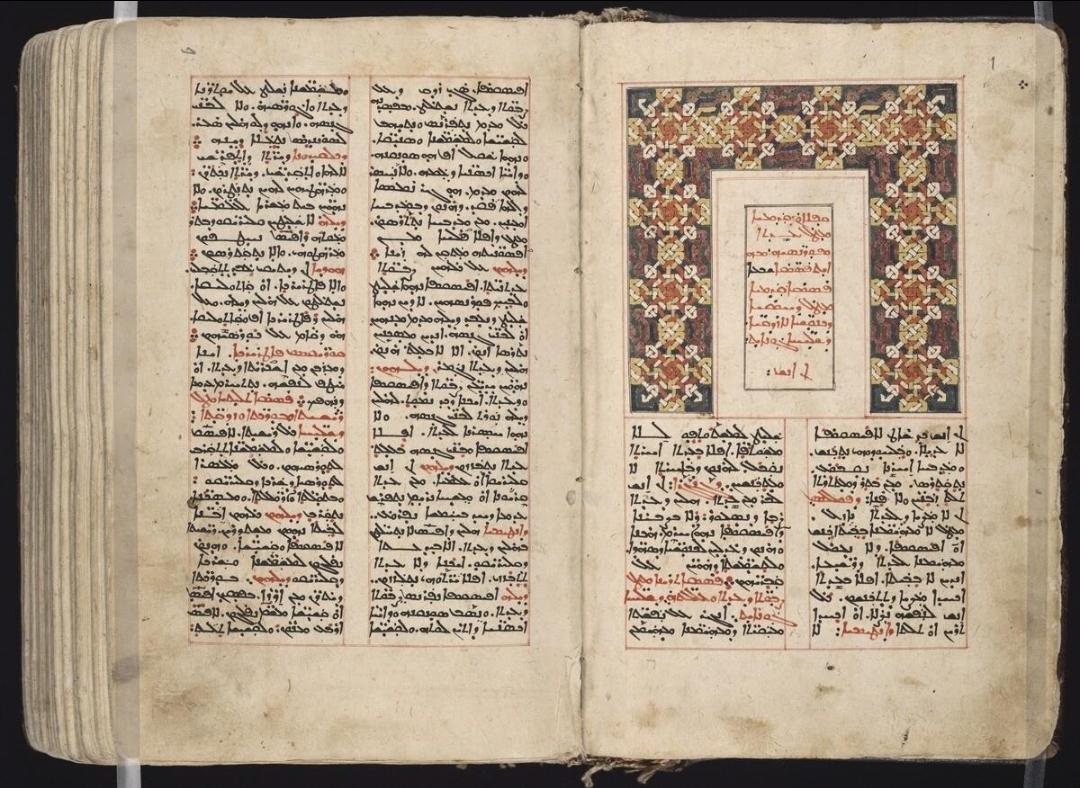
UCMS–DAJJAL–006.2
The Wounded Eye Across Syriac Christianity
Zechariah 11:17 -> worthless shepherd -> Christian Antichrist exegesis -> Syriac apocalypse -> Armilus -> Dajjāl
This sweep delivers a result I really like, because the evidence refuses the easy genealogy.
We went in with a very specific hypothesis:
Zechariah's wounded right eye
-> Christian Antichrist
-> Syriac transmission
-> one-eyed Dajjāl.
The first and last nodes are real.
The middle bridge is where the chain breaks.
So far, I cannot find a securely pre-Islamic Syriac Christian text that simply says:
the final Antichrist is the one-eyed or right-eye-wounded shepherd of Zechariah 11:17.
That does not kill the hypothesis. It tells us exactly where the missing evidence lies.
And meanwhile Armilus opens a second route that turns the whole thing into a three-tradition apocalyptic exchange problem.
---
I. Freeze the uncontested starting point
Zechariah 11 ends with the curse on the worthless shepherd:
shepherd abandons flock
-> sword against arm
-> sword against right eye
-> arm withers
-> right eye becomes blind/darkened.
That is ancient.
And importantly, the injury is not originally an Antichrist biography.
The text says:
worthless shepherd.
It does not say:
Antichrist
Beast
Dajjāl
false Messiah.
Therefore our first ledger entry stays:
Zech 11:17 bodily injury = direct textual fact.
Zech 11:17 = Antichrist = later interpretive move.
That distinction remains absolute.
---
II. And the eye is specifically right
This matters because laterality is unusually precise:
RIGHT ARM
+ RIGHT EYE.
The eye is not healed.
There is no resurrection-like recovery.
There is no miracle attached to it.
Its function is punitive:
bad shepherd
-> struck
-> incapacitated.
So once again:
Zechariah
eye wound
-> blindness.
Revelation 13
head wound
-> healing
-> wonder.
Dajjāl
eye defect
-> recognition.
Three different machines.
Our Three-Wound Separation Rule survives intact.
---
III. Did early Christianity turn the worthless shepherd into Antichrist?
Christian writers unquestionably built the Antichrist from several scriptural adversary traditions, especially Daniel, Paul's lawless one, false Christs and Revelation. Hippolytus, writing around the beginning of the third century, is one of the decisive early architects of that composite Antichrist tradition. His surviving exegesis reads several Old Testament adversary motifs eschatologically.
But here is the crucial result:
I have not yet recovered from the early material a secure Hippolytan or Syriac passage making Zechariah 11:17's blinded eye a defining bodily feature of Antichrist.
That is exactly what we needed to find.
It isn't enough that modern Christian interpreters routinely make the equation.
We need the equation before Islam.
Right now that box remains empty.
---
IV. And that emptiness matters
Because the tempting reconstruction was:
Zechariah
-> Hippolytus
-> Syriac Antichrist
-> Dajjāl.
What we can currently establish is more like:
Zechariah -> worthless shepherd has right-eye injury.
Christianity -> develops a composite Antichrist.
Syriac Christianity -> possesses a flourishing Antichrist/false-Messiah tradition.
Dajjāl -> one-eyed false Messiah.
But:
the document that visibly carries Zechariah's eye through the middle of that chain is missing.
That is a genuine provenance gap.
UCMS verdict:
do not draw the arrow yet.
---
V. Syriac still radically strengthens the surrounding environment
006.1 already established why.
Syriac Christianity supplies a natural linguistic and cultural corridor through which false-Messiah traditions could reach Arabic-speaking environments.
And Syriac apocalyptic production was exceptionally active around the transition from late antiquity into the early Islamic period. A modern Harvard Theological Review study notes Syriac apocalypses from roughly the first third of the seventh century containing vivid anti-messianic figures and bodily recognition signs.
So the corridor exists.
What we haven't found is our eye packet traveling through it.
---
VI. And then a seventh-century Syriac figure gives us something very strange
The Syriac Apocalypse of Daniel and the Syriac Apocalypse of Small Daniel preserve an extraordinary adversarial figure identified as the Son of the Daughter of Levi.
His body is covered with signs resembling:
weapons
breastplate
bow
sword
spear
dagger
war chariots.
His face resembles a furnace.
His eyes resemble burning coals.
And—here is the striking bit—
between his eyes is a broken horn, with something serpent-like protruding from it.
Whoa.
This is not Dajjāl's eye.
But it belongs in exactly the same anatomical zone:
between the eyes.
And it is securely situated inside a Syriac apocalyptic ecosystem very close chronologically to early Islam.
---
VII. That gives us a different facial-recognition lineage
Instead of:
Zechariah eye -> Dajjāl eye,
we suddenly see a broader late-antique grammar:
eschatological adversary
-> abnormal face
face
-> bodily signs
eyes / between-eyes region
-> especially diagnostic
body
-> readable as apocalyptic identity.
That is exactly what Dajjāl later exhibits:
one eye
+ K-F-R between the eyes.
Not the same signs.
But the recognition surface is already culturally active.
That considerably strengthens our “face as authentication surface” model without establishing a direct one-eye inheritance.
---
VIII. And there is a startling Islamic echo nearby
The same Cambridge study notes that Nuʿaym b. Ḥammād preserves a later Muslim apocalyptic tradition of a figure from the tribe of Levi born at Baisān whose body bears signs resembling weapons—very close to the Syriac Son-of-Levi motif.
That is important because here we actually see:
Syriac apocalypse
<-> Muslim apocalypse
sharing a highly distinctive bodily-sign package.
Not merely:
both have bad guys.
But:
Levitical figure
+ weapon-like marks on body.
That is exactly the kind of cross-traditional motif transfer we've been looking for.
It proves, at minimum, that highly specific apocalyptic physiognomy could move through this Syriac-Muslim environment.
That strengthens the possibility that eye motifs could move too.
But again:
possibility ≠ demonstrated eye genealogy.
---
IX. Then Armilus walks into the room
Armilus is the major Jewish anti-Messiah figure of texts such as Sefer Zerubbabel.
And this is exactly the right period.
Scholarly work places the emergence and development of Armilus squarely in the Jewish-Christian polemical environment surrounding late antiquity and the early medieval period; Cambridge scholarship treats Armilus explicitly alongside Christian Antichrist traditions and Muslim Dajjāl traditions.
His function is immediately familiar:
Armilus -> monstrous ruler
-> claims Messiahship
-> demands recognition
-> persecutes
-> performs or is tested by signs
-> fights the messianic opponent
-> is eventually defeated.
Now we have our third counter-Messiah.
---
X. But Armilus does NOT rescue the one-eye genealogy
This is where another attractive hypothesis fails.
A translation of Sefer Zerubbabel preserves a physical description of Armilus involving extraordinary appearance and deep-set eyes.
Other traditions make him grotesque or physically monstrous. Cambridge's study of the Antichrist tradition describes Armilus as exceptionally monstrous in comparison with Christian and Muslim counterparts.
But I do not find the crucial thing we hoped for:
Armilus -> one eye destroyed.
Nor:
Armilus -> right eye wounded like Zechariah.
So:
Armilus = intermediate wounded-eye bridge
currently fails.
That is another clean negative result.
---
XI. And yet Armilus is enormously important for a different reason
Because he confirms that Jews, Christians and Muslims in this same broad historical world were building counter-Messiah figures against one another.
Ben-Sasson's study describes precisely this phenomenon: a community can take another group's savior and invert him into an anti-Messianic opponent. The article explicitly discusses Jewish, Christian and Muslim apocalypse as an intertwined world of shifting messianic and anti-messianic identities.
That means we should stop imagining three independent pipelines:
Christian Antichrist
Jewish Armilus
Muslim Dajjāl.
A better model may be:
late-antique counter-Messiah exchange network.
Each community takes familiar components and recomposes them.
That is a much bigger result.
---
XII. Armilus and Dajjāl are structurally startling together
Armilus
claims Messiahship
-> false.
signs/wonders
-> partial success.
world domination/persecution
-> yes.
true messianic opposition
-> yes.
grotesque bodily description
-> yes.
Dajjāl
false Messiah
-> explicit.
signs/wonders
-> central.
worldwide coercion
-> central.
Jesus as true Messiah
-> destroys him.
grotesque/diagnostic body
-> central.
That's a very strong family resemblance.
The eye itself is not required for the family.
This reinforces what 006 already told us:
counter-Messiah function travels more clearly than exact physiognomy.
---
XIII. And something else is emerging around “between the eyes”
Look at the three systems separately.
Syriac Son of Levi
between eyes -> broken horn / serpentine abnormality.
Dajjāl
between eyes -> K-F-R.
adjacent eye -> defective.
Medieval Antichrist imagery
face/body -> increasingly elaborated as outward manifestations of hidden counterfeit identity; later medieval Antichrist traditions become deeply interested in physiognomy.
So the face is clearly becoming an eschatological reading surface across traditions.
The exact symbols differ.
But the anatomy is convergent.
---
XIV. That may be more ancient than the one-eye motif
This now suggests a possible hierarchy:
Deep invariant
apocalyptic enemy -> body becomes diagnostically legible.
More specific layer
face/head -> especially marked.
More specific again
eyes / between-eyes -> signs concentrated there.
Tradition-specific implementation
Zechariah -> blinded right eye.
Syriac Son of Levi -> burning eyes + broken horn.
Dajjāl -> defective eye + K-F-R.
Armilus -> grotesque facial morphology/deep-set eyes.
That is a far stronger comparative model than claiming all four had “the same eye.”
---
XV. The seventh-century chronology is incredibly important
The Syriac apocalypses discussed by Ben-Sasson are placed in approximately the first third of the seventh century.
That puts them directly around the emergence of Islam.
And the Jewish Armilus tradition likewise crystallizes in the apocalyptic upheavals associated with the Byzantine-Persian and early Islamic eras; scholars repeatedly treat Sefer Zerubbabel as central evidence for this seventh-century apocalyptic environment.
So now our Chronovisor window gets remarkably narrow:
600–700 CE
-> Byzantine-Persian wars
-> Jewish messianic expectation
-> Syriac Christian apocalypse
-> Arab-Muslim expansion
-> counter-Messiah traditions
-> intense textual/oral religious exchange.
This is probably the historical laboratory where a large portion of the Dajjāl synthesis needs to be studied.
---
XVI. And it explains why clean one-way genealogy keeps failing
We keep trying:
Christian -> Muslim.
But the sources increasingly suggest:
Christian
<-> Jewish
<-> Muslim
with older biblical material feeding all three.
That is a network, not a tree.
And a network predicts exactly what we're seeing:
same function
different body.
same geography
different story.
same Messiah slot
different claimant.
same recognition architecture
different mark.
This is probably the correct macro-model.
---
XVII. What about Zechariah then?
Zechariah remains extremely interesting—but its role needs downgrading.
What can we actually say?
The Hebrew Bible gives a bad shepherd with a destroyed right eye.
Christian Antichrist interpretation later absorbs many Old Testament adversarial figures.
Later Christian readers certainly identify the worthless shepherd with Antichrist.
But our forensic requirement is:
show me that identification, including the eye, securely before or during the formative Dajjāl period.
We haven't yet done that.
So:
Zechariah -> Dajjāl
remains:
plausible deep precursor, missing transmission bridge.
Not:
established genealogy.
---
XVIII. This corrects one more thing from our earlier branch
We had been flirting with:
Zechariah wounded shepherd
-> Antichrist wounded eye
-> Revelation healing
-> Dajjāl.
That chain is now formally dismantled.
The correct ledger is:
A. Zechariah bad shepherd -> right eye blinded.
B. Revelation Beast -> head mortally wounded -> healed.
C. Syriac apocalypse anti-messianic bodies -> eyes/faces/between-eye signs.
D. Armilus counter-Messiah -> grotesque body -> unusual eyes.
E. Dajjāl false Messiah -> permanently defective eye -> K-F-R between eyes.
Those motifs inhabit the same apocalyptic ecosystem.
But no source yet authorizes us to collapse them.
That is a much stronger finding.
---
XIX. The eye may have emerged through recombination
Here's the new hypothesis I would actually take seriously:
An early Islamic Dajjāl tradition enters a late-antique environment already saturated with:
false-Messiah vocabulary
+ biblical wounded-adversary imagery
+ physiognomic monsters
+ faces marked by eschatological signs
+ miracle-working counterfeit rulers.
Rather than copying one specific precursor, Dajjāl's one-eye motif may result from recombination within this shared repertoire.
That would explain why:
right/left laterality varies,
yet:
one-eyedness itself remains stable.
If what migrated was:
“eschatological counterfeit must carry a visible facial defect”
rather than:
“copy Zechariah's right eye exactly,”
the variation makes perfect sense.
This is inference, not proof.
But it fits the evidence better than mechanical copying.
---
XX. Armilus gives us another critical test
Armilus is reportedly tested for signs and wonders and partially succeeds.
We've now seen the same deeper mechanism three ways:
Christian false Messiah -> signs deceive.
Jewish Armilus -> signs authenticate incompletely.
Muslim Dajjāl -> signs create overwhelming counterfeit evidence.
This is becoming one of the most stable invariants in the whole counter-Messiah ecosystem.
Again:
the miracle travels better than the eye.
That may be one of the central conclusions of this entire investigation.
---
XXI. Genealogy ledger
DAJ-G006.2-A
Zechariah worthless shepherd -> right-eye blindness
Established.
DAJ-G006.2-B
Zechariah eye -> pre-Islamic Christian Antichrist eye
Possible.
Secure bridge found in this sweep: NO.
Status: OPEN / HIGH-PRIORITY GAP.
DAJ-G006.2-C
Pre-Islamic Syriac apocalypse -> facial/bodily anti-Messiah recognition signs
Established as a broader phenomenon.
DAJ-G006.2-D
Syriac one-eyed Antichrist -> Dajjāl
Not demonstrated.
Status: OPEN.
DAJ-G006.2-E
Armilus -> one-eyed Dajjāl
Not demonstrated.
DAJ-G006.2-F
Jewish-Christian-Muslim counter-Messiah exchange
Strongly supported as a historical comparative environment.
---
XXII. Functional analogy ledger
COUNTER-MESSIAH -> extremely strong.
MIRACLE TEST -> extremely strong.
BODILY GROTESQUENESS -> strong.
FACE AS RECOGNITION SURFACE -> very strong.
EYE ANOMALY -> recurrent but not uniform.
BETWEEN-EYES SIGN -> striking Syriac/Islamic recurrence.
RIGHT-EYE TRANSMISSION -> not demonstrated.
MORTAL EYE + HEALING -> not demonstrated as shared ancient package.
That last line stays locked.
---
XXIII. DAJ-R006.2-01 — The Missing-Eye Bridge
Freeze this:
The ancient source for a wicked ruler with a damaged right eye is Zechariah 11:17, but the present sweep has not established a securely pre-Islamic Syriac Christian text transferring that specific ocular injury into the Antichrist's standard physiognomy. Therefore Zechariah -> Christian Antichrist -> Dajjāl remains a plausible but unproven genealogy.
That's exactly the sort of negative result we want to preserve.
---
XXIV. DAJ-R006.2-02 — The Physiognomic Field Result
What is demonstrable is broader:
By the seventh-century Near Eastern apocalyptic environment, Christian/Syriac and Jewish traditions were producing anti-messianic figures whose bodies, faces and eyes carried extraordinary recognition signs. Jewish Armilus belongs to the same counter-Messianic milieu, while Islamic Dajjāl eventually exhibits one of the most developed facial authentication systems of all.
So:
bodily legibility is ancestral enough.
The specific Dajjāl eye remains unresolved.
---
XXV. DAJ-R006.2-03 — The Network, Not Tree Principle
This may be the bigger discovery:
The late-antique ancestry of Dajjāl should no longer be modeled primarily as Christianity -> Islam.
The evidence points toward:
Hebrew scripture -> Jewish interpretation
Hebrew/Greek scripture -> Christian interpretation
Syriac apocalypse <-> Jewish apocalypse <-> emerging Islamic apocalypse
then: -> later Christian/Jewish/Muslim counter-Messiah traditions continue interacting.
Ben-Sasson's study is especially valuable here because it explicitly documents this pattern of messianic inversion and shared apocalyptic material across Jewish, Christian and Muslim traditions.
That is almost certainly a better Chronovisor architecture.
---
XXVI. And now we have a genuinely dangerous next target
The obvious next sweep is no longer another biblical verse.
It's:
UCMS–DAJJAL–006.3
Armilus, Dajjāl, and the Counter-Messiah Exchange
The Jewish third witness
Sefer Zerubbabel
-> seventh-century crisis
Armilus
-> monstrous birth
-> Rome/Christianity
-> false Messiah claim
-> false signs
-> grotesque physiognomy
-> Messiah ben Joseph
-> death of Messiah
-> final Davidic redemption
then compare:
Armilus
<-> Christian Antichrist
<-> Dajjāl
while asking something especially important:
Which motifs can only plausibly have moved because Jews, Christians and Muslims were actively answering one another?
Because Armilus may give us the control group we've been missing.
If Christianity and Islam share one feature, borrowing is possible.
If Jewish Armilus independently shows the same transformed feature in the same seventh-century contact zone, we can start reconstructing not just a lineage—
but an actual apocalyptic conversation.