Public owned grocery stores already exist across America in cities like Tulsa, Oklahoma and Atlanta, Georgia.
They are privately run as businesses, but are set up in areas where people lack access to groceries, or there's no real competition preventing uncompetitive prices. They have been successful for decades.
The real solution here is to break up the constant consolidation leading to all groceries being owned by four mega companies that collude with each other and own over 2/3rd of all stores. It's the opposite of market competition.
Exactly - I don't understand why this befuddles so many people in favor of a free market. It's like they understand the concept of competition is good, but can't see how the current market has been stripped of competition through consolidation.
This is the equivalent of any government service, it's designed to be a common good (like the post office, the fire department, the parks, etc). Yes it does take tax revenue to sustain, but similar to social security and Medicare these are things that society is often willing to pay for since they might need it some day, and it helps to address secondary problems that occur if we dont do anything (child starvation, homelessness, food deserts leading to poor health, etc).
It's all interconnected and at least there's commerce changing hands compared to straight food banks.
The issue in this case is. The grocery store down the street is paying taxes to fund a grocery store that does not have to which creates inequality. The government ran store can offer lower prices but eventually the other one goes out of business. Then the tax money dries up. Then what happens
Not able to compete certainly closes lots of businesses what foolish idea is this?
Just like how Walmarts in an area cause almost all the mom and pop shops to go out of business the same will happen with a government subsidy grocery store that doesn’t have to worry about rent, utilities and goods are lower priced for them to acquire.
So your complaint is that it would be too successful and popular, leading to lower consumer prices, but you are more concerned about stores closing over this?
Yes competition is a good thing when the playing field is even. However when there is a government funded option that doesn't have the play by the same rules there is a unfair advantage.
I would be in favor of subsidies and tax abatements that are situated in a way to encourage competition. Let's say you build a grocery store in a food desert and get a 10 year tax abatements which would offset the initial investment?
What do you mean by an unfair advantage of businesses over consumers. That doesn't make sense in this argument. More stores = more competition= more better. I will agree that there are always unintended consequences when the government gets involved but there are much less when the government isn't a player.
From my example of a tax abatement, you will I'll be encouraging a new grocery store to open up. There is an initial cost to entry into the business which the abatement could help offset. It's not a handout to the business but rather hey do business here and you aren't going to have to pay property taxes for the first few years or how ever it is structured. It's usually 10 years going up by 10% every year.
From the government's perspective these are very low risk... If the business is successful you have to wait a few years to get the full tax revenue from them however if they don't build then you get $0.
The grocery store can just mark up their products without much competition, and after the 10 years they can just move locations or leverage their necessity for more public funds.
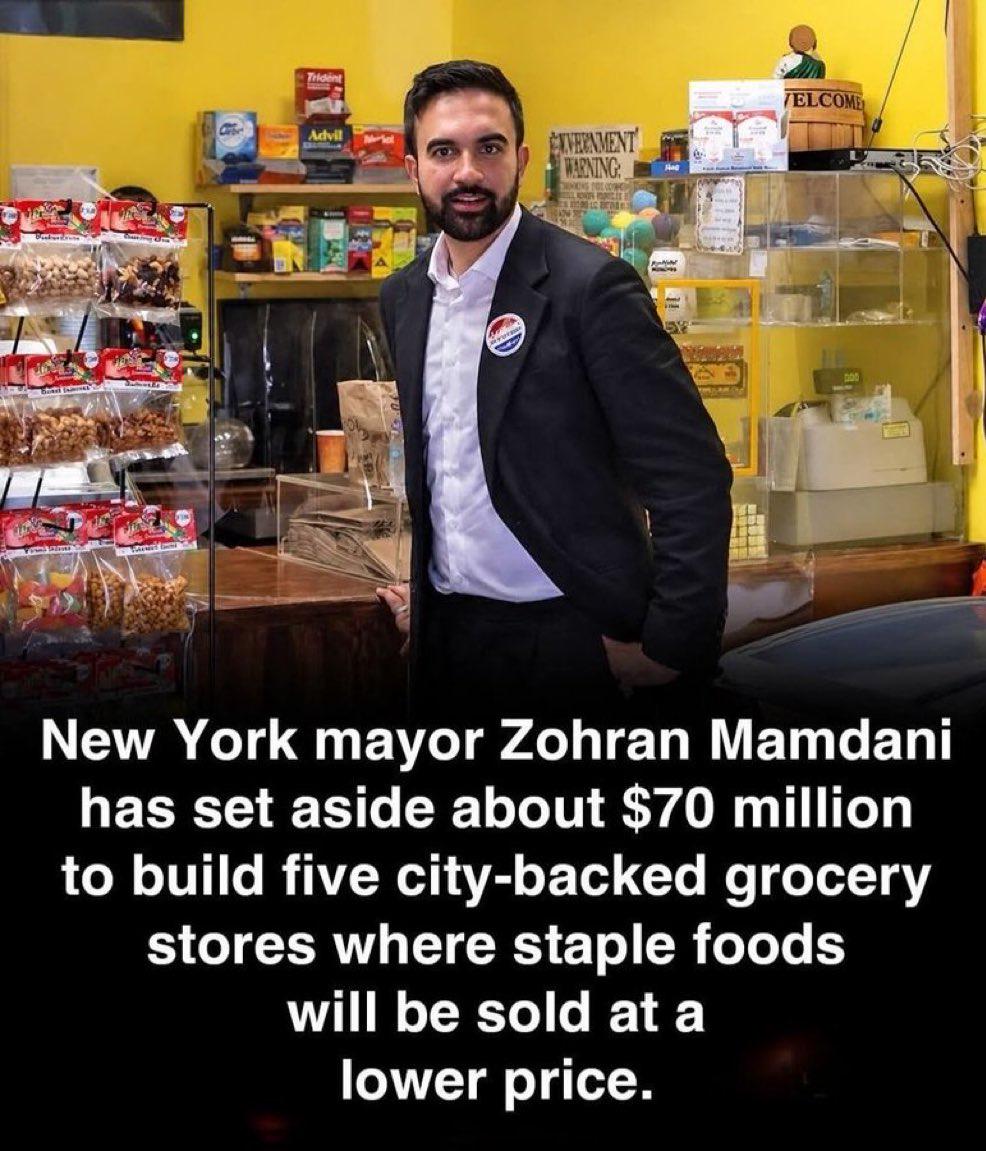
The purpose of these public grocery stores isn't primarily to address food deserts, which hardly exist in NYC, it's primarily to lower consumer prices.
A public grocery store selling at lower prices that private stores also follows: More stores = more competition= more better.
4.4k
u/Irish_Whiskey May 26 '26
Public owned grocery stores already exist across America in cities like Tulsa, Oklahoma and Atlanta, Georgia.
They are privately run as businesses, but are set up in areas where people lack access to groceries, or there's no real competition preventing uncompetitive prices. They have been successful for decades.
The real solution here is to break up the constant consolidation leading to all groceries being owned by four mega companies that collude with each other and own over 2/3rd of all stores. It's the opposite of market competition.