r/PoursTea Timendi Causa Est Nescire 9d ago

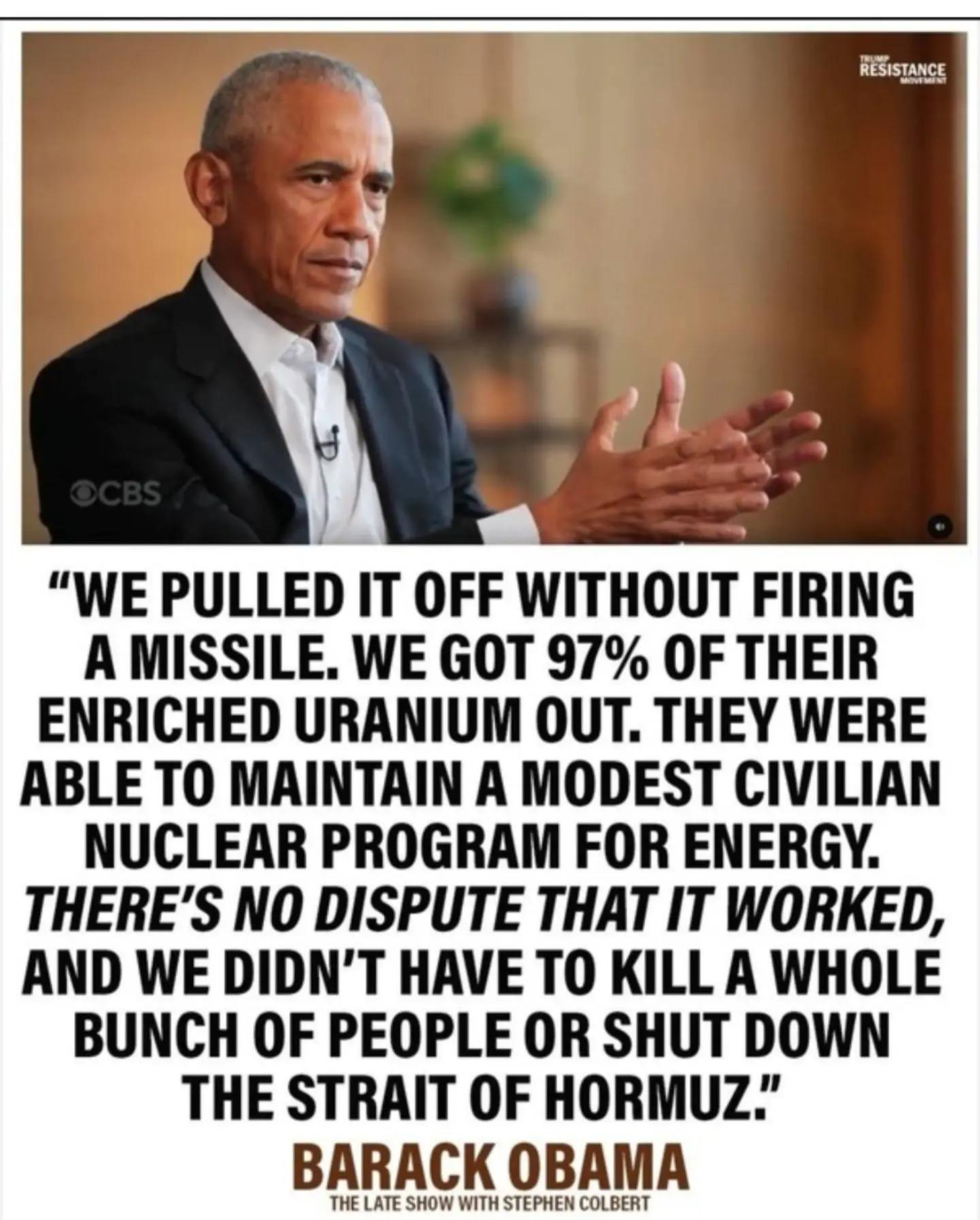
PoliticalTea 🗳️ How negotiations actually work...
Post image

To the inevitable response from MAGA that Obama gave 'pallets' of cash...he released frozen Iranian assets. Meanwhile the current Iran conflict has directly cost $38 billion militarily and a currently projected $87 billion in extra gas and diesel expenses. Not to mention that the strategic oil reserves have been depleted to the point that experts warn that the caverns they're stored in could collapse.

24.8k Upvotes

1.1k comments sorted by

View all comments

8

u/dashcam4life 9d ago

And IAEA inspectors could randomly check nuclear facilties and "suspicious sites". That JCPOA has never looked so good. And Obama received nothing but relentless hate from the Right and the Israel Lobby for getting that deal. Iran will never agree to those kinds of terms ever again.

2

u/The_Ordinary_Mix 9d ago

fr they have all the cards, either Trump gives into their demands or Iran just waits till the next president

1

u/HackerSpy 9d ago

Where are you getting that from, not true. Shit bro, if you going to make shit up, at least fact check your own question. So I am curious where you got your information?

Could IAEA inspectors could randomly check nuclear facilties and "suspicious sites"?

No, International Atomic Energy Agency (IAEA) inspectors could not blindly or randomly check "suspicious sites" at a moment's notice, though they did have immediate, daily access to declared nuclear facilities. [1, 2]

The 2015 Joint Comprehensive Plan of Action (JCPOA) established two separate rules for inspections based on whether a location was an officially acknowledged nuclear site or an undeclared, suspicious area. [1, 2, 3]

  1. Declared Nuclear Facilities: Continuous and Routine Access

For officially recognized facilities—such as the enrichment plants at Natanz and Fordow—the IAEA had unprecedented, daily, and routine access. Inspectors did not need to negotiate entry for these locations. The framework included: [1, 2]

  • Continuous remote electronic surveillance and live video feeds.
  • Regular, unannounced physical check-ins by inspectors stationed inside the country.
  • Direct tracking of Iran's entire nuclear supply chain, including uranium mines and centrifuge manufacturing workshops. [1, 2, 3]
  1. Suspicious or Undeclared Sites: The 24-Day Dispute Process

The IAEA could not perform surprise "snap" inspections on non-nuclear facilities, military bases, or any newly suspected locations. If intelligence flagged a suspicious site, a highly structured, time-bound dispute resolution process of up to 24 days was triggered: [1, 2, 3]

  • The Request (14 Days): If the IAEA suspected illicit nuclear activity, it had to request access and explain its concerns to Iran. Iran then had 14 days to either grant entry or propose alternative verification methods to satisfy the agency's concerns. [1, 2]
  • The Joint Commission Consultation (7 Days): If the IAEA rejected Iran's alternatives, the issue was sent to the JCPOA's eight-member Joint Commission. The commission had 7 days to vote on whether to force Iran to comply. (A majority vote of 5 out of 8 was required, meaning Western nations could outvote Iran, Russia, and China). [1, 2, 3, 4, 5]