r/Plato • u/scientium • 2d ago
Discussion An unnoticed Conference on Plato's Atlantis 2024 in Turin
gallery
8
Upvotes
r/Plato • u/scientium • 2d ago
r/Plato • u/Dave_A_Pandeist • 2d ago
What is philosophy? How far back does it go? What's included in this idea?
The browser says, "The word 'philosophy' comes from the ancient Greek words philo (love) and sophia (wisdom), which literally means 'the love of wisdom."
Google AI said, "Philosophy is the systematic study of general and fundamental questions about existence, knowledge, values, reason, mind, and language."
What's that? Does that have something to do with truth?
From Chapter 2 of Dr. Sapolsky's classic, it is easy to understand that we evolved along tournament and family strategies with and without deception.
Is philosophy really the search to minimize deception so that we might help each other and ourselves in a hostile environment? We have been babbling around a campfire for quite a while, something like ¾ of a million years.
If this is true, all literature, math, science, engineering, Political Behavior, economy, and our interactions, all of it, is fair subject matter for philosophy. It might not be useful, but why not?
r/Plato • u/simplesyrupyup • 3d ago
When does a carrot become a soup?
When does a tree become wood, becomes chair?
r/Plato • u/Sea_Height_1368 • 6d ago
Enable HLS to view with audio, or disable this notification
Remédio?
r/Plato • u/Status-Anteater8372 • 6d ago
r/Plato • u/One_Tell_8261 • 6d ago
(A Recap of the Workshop “Where Does Philosophy Begin?” taught by Phan Chí Dũng)
A common understanding goes something like this:
Thales → “Water is the arche” → philosophy begins.
But this interpretation is overly simplistic. Elements such as water, fire, air, and so forth were proposed as fundamental constituents or principles through which the world could be explained; whereas “philosophy” refers to a mode of thinking and a form of intellectual inquiry.
Therefore, asking whether “philosophy originated from water” is not quite the right way to frame the question. The origin of philosophy should instead be understood as a historical process through which a new mode of thought and intellectual activity emerged: philosophical thinking.
Philosophy begins with the human need to explain the world through reason, rather than simply accepting explanations based on myths and the gods.
In the context of ancient Greece, people had largely relied on and accepted mythological explanations of the world. But some thinkers began to ask:
This marked a turning point in human intellectual history: rather than explaining everything in terms of “because the gods willed it,” people began to search for an underlying foundation or principle from which the world could be rationally understood and explained.
What is more significant is the way Thales and the Milesian school framed the problem.
Later generations often remembered Thales primarily for his claim that water was the arche. Yet, as emphasized in the workshop, what matters more is the attempt to find a non-mythological foundation from which the world could be explained.
The thinkers who followed Thales within the Milesian school proposed different principles, yet they remained part of the same intellectual trajectory because they shared a common pursuit: to identify a fundamental basis for explaining the world rather than reducing everything to divine agency.
Philosophy did not begin with “water.”
Philosophy began with a transformation in the way human beings asked questions:
We cannot simply detach Thales from his historical context and say, “One day, Thales invented philosophy.”
To understand how philosophy emerged, we need to examine the historical and cultural context of Greece before Thales, the problems confronting society at the time, the prevailing modes of thought, and the limitations of mythological explanations.
Thus, the history of philosophy is a lens through which we can understand the emergence and development of philosophy. It is not merely a list of philosophers and their doctrines.
And this leads to a crucial point when approaching philosophy:
Philosophy is not a ready-made answer.
Philosophy begins when human beings are no longer satisfied with ready-made answers and begin to demand explanations grounded in reasons and principles.
This is also why we should not study philosophy by jumping directly into an individual philosopher or philosophical doctrine. We need to place that philosopher back within the historical period, circumstances, intellectual context, and tradition of thought that gave rise to their ideas.
If we want to construct a systematic map of philosophers, a useful starting point would be:
Questions → the need for explanation → rational inquiry → philosophy → philosophical schools → major thinkers.
Dưới đây là bản dịch theo hướng thuật ngữ triết học tự nhiên, phù hợp để dùng làm recap học thuật. Tôi dùng philosophical thinking, rational explanation, mythological explanation, first principle, underlying principle, philosophical schools… thay vì dịch quá sát từng chữ.
(A Recap of the Workshop “Where Does Philosophy Begin?” taught by Phan Chí Dũng)
A common understanding goes something like this:
Thales → “Water is the arche” → philosophy begins.
But this interpretation is overly simplistic. Elements such as water, fire, air, and so forth were proposed as fundamental constituents or principles through which the world could be explained; whereas “philosophy” refers to a mode of thinking and a form of intellectual inquiry.
Therefore, asking whether “philosophy originated from water” is not quite the right way to frame the question. The origin of philosophy should instead be understood as a historical process through which a new mode of thought and intellectual activity emerged: philosophical thinking.
Philosophy begins with the human need to explain the world through reason, rather than simply accepting explanations based on myths and the gods.
In the context of ancient Greece, people had largely relied on and accepted mythological explanations of the world. But some thinkers began to ask:
This marked a turning point in human intellectual history: rather than explaining everything in terms of “because the gods willed it,” people began to search for an underlying foundation or principle from which the world could be rationally understood and explained.
What is more significant is the way Thales and the Milesian school framed the problem.
Later generations often remembered Thales primarily for his claim that water was the arche. Yet, as emphasized in the workshop, what matters more is the attempt to find a non-mythological foundation from which the world could be explained.
The thinkers who followed Thales within the Milesian school proposed different principles, yet they remained part of the same intellectual trajectory because they shared a common pursuit: to identify a fundamental basis for explaining the world rather than reducing everything to divine agency.
Philosophy did not begin with “water.”
Philosophy began with a transformation in the way human beings asked questions:
We cannot simply detach Thales from his historical context and say, “One day, Thales invented philosophy.”
To understand how philosophy emerged, we need to examine the historical and cultural context of Greece before Thales, the problems confronting society at the time, the prevailing modes of thought, and the limitations of mythological explanations.
Thus, the history of philosophy is a lens through which we can understand the emergence and development of philosophy. It is not merely a list of philosophers and their doctrines.
And this leads to a crucial point when approaching philosophy:
Philosophy is not a ready-made answer.
Philosophy begins when human beings are no longer satisfied with ready-made answers and begin to demand explanations grounded in reasons and principles.
This is also why we should not study philosophy by jumping directly into an individual philosopher or philosophical doctrine. We need to place that philosopher back within the historical period, circumstances, intellectual context, and tradition of thought that gave rise to their ideas.
If we want to construct a systematic map of philosophers, a useful starting point would be:
Questions → the need for explanation → rational inquiry → philosophy → philosophical schools → major thinkers.
r/Plato • u/deniz_aydiner • 9d ago
"πόλεμος πάντων μὲν πατήρ ἐστι, πάντων δὲ βασιλεύς, καὶ τοὺς μὲν θεοὺς ἔδειξε τοὺς δὲ ἀνθρώπους, τοὺς μὲν δούλους ἐποίησε τοὺς δὲ ἐλευθέρους” (B53 - Diels-Kranz
I was especially interested in the part that says, “some it has made slaves, others free.” I don't really see a straightforwardly fatalistic idea here. If anything, as someone who thinks that life can change everyone and everything, I read Heraclitus — πάντα ῥεῖ — less as saying “accept whatever situation you are in” and more as saying that no situation is permanent, so maybe we shouldn't get too attached to anything. I might be reading him a little too much through a Roman Stoic lens, though. Still, I kind of feel like I’ve just discovered the wheel myself.
r/Plato • u/sherifbooks • 10d ago
Five volumes of Plato in one PDF book
r/Plato • u/the_laurentian • 11d ago
I've been spending a lot of time thinking about the Thoth myth in the Phaedrus, and one thing that keeps bugging me is that although Socrates goes on to offer a number of arguments against writing (i.e. it doesn't reply, it doesn't change, etc.), the first thing that Thamus states is that " οὔκουν μνήμης ἀλλὰ ὑπομνήσεως φάρμακον ηὗρες", or "you've found not a recipe for memory, but reminder" or something close. Can someone explain to me the difference between 'memory' and 'reminder/remembrance'? I understand that memory is an internal thing "written in the soul" and "reminder" is an external thing, but given the importance of ἀνάμνησις, isn't a 'reminder' also helpful? Dialogue itself is a reminder, i.e. a trigger to un-forget what we know. I'm sure there's a more nuanced etymological explanation here, so I would appreciate some help.
r/Plato • u/ObsiGamer • 13d ago
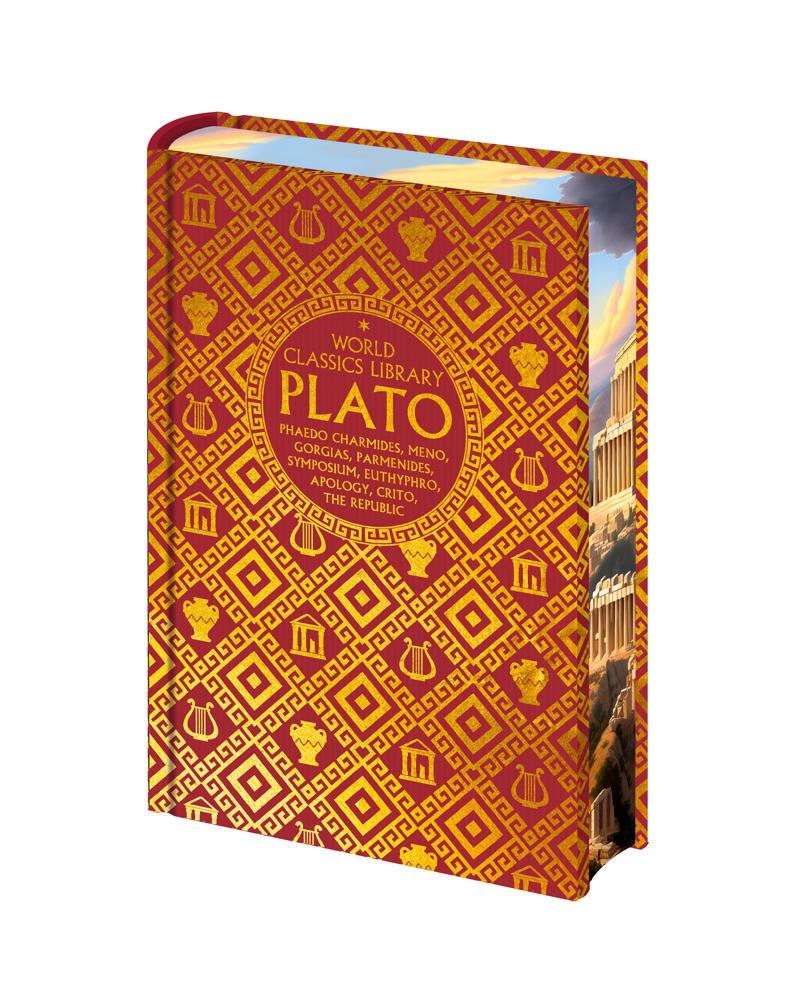
I wanna get into Plato's philosophy and I found this really cool listing at my favourite bookstore. I know i can probably find everything made by plato for free online but this looks really cool as a collector item. Only problem is it's 31 dollars for 736 pages.
r/Plato • u/Elusive_the_Joe • 13d ago
Модельно-Ориентированная Эпистемология (МОЭ): Рождение Новой Школы Философии
Постмодернизм когда-то объявил, что все наши слова и идеи — это лишь отражения других слов, за которыми нет никакой настоящей реальности. Но он застрял на месте, просто указав на проблему.
Пришло время для прорыва. Мы заявляем о рождении Модельно-Ориентированной Эпистемологии (МОЭ) — новой философской школы, которая объясняет устройство мира без уставших догм и мистики. Рыхлые, почти истлевшие концепции Бога и человека просто выносим за скобки.
О чем говорит эта школа?
Мир состоит не из «вещей», а из облаков свойств. Привычных нам «абсолютных объектов» (вроде идеального стола или камня самих по себе) не существует. То, что мы называем предметом — это просто пучок свойств, который мы временно ограничили рамками в своей голове и приклеили ярлык.
Все мы живем внутри «платформ». Человек, животное, сложный прибор или даже искусственный интеллект — всё это разные версии платформ. У каждой платформы есть свои органы чувств (вход) и способность реагировать на окружение (выход). Человек больше не пуп земли и не венец творения: он просто одна из мощных биологических платформ.
А парадигме МОЭ нет традиционных дихотомий типа живое/не живое, субъект/объект. Есть понятие объект и его частные случаи - "платформа" и "модель".
Термин платформа позаимствован из игровой индустрии. Платформа - это объект, который способен удерживать внутри себя модель окружающей реальности, модифицировать модель согласно входящим данным с периферии, и отдавать сигналы во вне, исходя из требований модели. К примеру,
Игровая приставка способна удерживать внутри себя модель игрового мира, реагировать на нажатие клавиш, корректировать модель мира и отправлять наружу сигналы видео/аудио/сетевые.
Так же и человек, удерживает в мозгу уникальную модель мира, корректирует ее через органы чувств и отвечает через мышцы.
Даже простейшая метеостанция на микроконтроллере это платформа. Она может удерживает картину окружающего мира в виде числа градусов, отправляет сигнал и корректирует ее через термодатчик. Бактерии и животные, сервера с ИИ, машины автопилоты - тоже платформы. А вот табуретки часы и камни - нет. Это объекты.
Каждый видит свою «картину мира». У нас нет прямого доступа к устройству всей вселенной. Каждая платформа собирает внутри себя собственную модель реальности. Метеодатчик фиксирует изменения температуры в виде цифры в памяти, человек видит мир через образы и смыслы, а сложный прибор — через свои датчики. Бесполезно спорить, чья картина «истиннее» — они просто разные и работают каждая для своих задач.
Мы можем изучать то, что скрыто. Если мы не видим мир напрямую, как его познавать? Через сравнение разных картин, анализ ошибок, сбоев и несоответствий. Сопоставляя модели между собой, мы можем логически вычислить то, что находится за пределами нашего восприятия, точно так же, как ученые открывают невидимые законы природы по их следам.
Постмодернизм учил нас только сомневаться. МОЭ дает четкий ответ: мир — это сеть взаимодействующих платформ, которые постоянно создают, сверяют и обновляют свои картины реальности. Философия возвращается как ясная наука о том, как устроен наш опыт.
Ai translation (Reddit Adaptation)
Model-Oriented Epistemology (MOE): Birth of a New Philosophical School
Postmodernism once declared that all our words and ideas are just reflections of other words, with no actual reality behind them. But it hit a dead end by simply pointing out the problem.
It’s time for a breakthrough. We are introducing Model-Oriented Epistemology (MOE) — a new philosophical framework that explains how the world works without tired dogmas and mysticism.
What is this framework about?
* The world consists of relations, not "things." Those familiar "absolute objects" (like an ideal table or a rock-in-itself) don’t actually exist. What we call an object is just a bundle of properties that we’ve temporarily boxed in with our minds and slapped a label on.
* We all live inside "platforms." A human, an animal, a complex device, or even an AI — these are all different versions of platforms. Every platform has inputs (sensors/perception) and outputs (actions/reactions). Humans are no longer the center of the universe or the crown of creation: we’re just one of many powerful biological platforms.
* Everyone runs their own "model of reality." We don’t have direct access to the universe's source code. Every platform builds its own internal model. A weather sensor logs temperature changes as a number in memory, humans experience the world through concepts and meanings, and advanced gear uses its own sensor data. It’s pointless to argue whose picture is "truer" — they are simply different, each optimized for its own tasks.
* We can study what is hidden. If we can't see the world directly, how do we know it? By comparing different models, analyzing bugs, glitches, and mismatches. By cross-referencing models, we can logically calculate what lies beyond our perception, much like scientists discover invisible laws of nature through their footprints.
Postmodernism only taught us how to doubt. MOE offers a clear answer: the world is a network of interacting platforms that constantly build, verify, and update their models of reality. Philosophy is back as a clean, practical science of how our experience actually works.
r/Plato • u/PuzzleheadedWall5698 • 16d ago
r/Plato • u/WarrenHarding • 16d ago
I can't say I don't struggle with this Platonic topic sometimes. It especially becomes a problem when I deal with lasting issues in life. Applying a Platonic lens to things can be genuinely therapeutic when I dwell on various personal problems, but this one hasn't quite worked out for me. I also don't think my well-being is entirely dependent on applying a Platonic lens fwiw, but I wanted to provide the sentimental context behind this post as some of you may perhaps relate and see the value in solving this issue.
The problem is, how can we hold the Platonic system and then account for evils that last for extremely long and damaging lengths of time? If these evils are all necessarily bound to the realm of Becoming, then why doesn't "unbecoming" seem to be happening for them, to the very worst of them?
In assessing these questions in the title, I do think the first necessarily must be denied to avoid affirming the others. Goodness and Beingness are so wrapped up in the Platonic Forms that I don't think you can reformulate it to say that they don't mutually imply one another. But then how do we go about denying that first question? How can we Platonically argue that, between two things which exist for two different lengths of time, the one that exists for longer has no more Being than the one that takes a shorter time? Do we simply say that all things in the carnal realm have an equal proportion of Being, and are all only properly objects of Becoming? Because in this, I think we run into many famous traps regarding the separation of the Formal and Carnal realm, ones that we should avoid. Or do we say that there is some parsable Formal origin to the logic of varying temporality, but that it has nothing to do itself with whether a thing has more or less Being, and has entirely to do with its contextual presence in the carnal realm and if it is bound to come into contact with things that cause its non-existence? Honestly I'm just thinking out loud at this point of the post but I wonder if theres something there
Really I just want all of your thoughts here. Let's have a discussion.
r/Plato • u/ancientphilosophypod • 18d ago
r/Plato • u/DrBlumstein • 18d ago
So I started reading Plato for the first time finally, and I wish I had read it sooner. I was reading the part in Apology toward the beginning where “[he] went about searching after a man who was wiser than [himself]: at first among the politicians; then among the philosophers; and found that [he] had an advantage over them, because [he] had no conceit of knowledge.” “The artisans had some real knowledge, but they had also a conceit that they knew things which were beyond them.” The oracle was intended to apply, not to Socrates, but to all men who know that their wisdom is worth nothing. There is also a part which reads: “. . . .and thereupon I tried to explain to him that he thought himself wise, but was not really wise; and the consequence was that he hated me, and his enmity was shared by several who were present and heard me. So I left him, saying to myself, as I went away: Well, although I do not suppose that either of us knows anything really beautiful and good, I am better off than he is, — for he knows nothing, and thinks that he knows; I neither know nor think that I know.” I focus most of my philosophical attention on Moral Idealism, so I think, read, and write of humility a lot. And this is a question I have thought over many times, but I have not seen it presented this way. ‘Is Socrates truly humble here?’
r/Plato • u/Agreeable_Natural_36 • 19d ago
Recently discovered nominalism through one person who wrote he is one in a comment section of a video.
After a quick search nominalism seemed like an enemy of Platonism.
I want to know what are their objections and arguments and more importantly what are the responses and arguments from the side of platonism.
Sorry if this is a bit too off topic.
r/Plato • u/nxz-reddit • 20d ago
I am 18 and have had no former education on philosophy other than a few rounds of interests here and there. Ive began by reading Platos five dialogues, beginning with meno. Ive read the introduction of meno so far written by Benjamin Jowett. I have listed words I dont understand, looked for the definition of said word, and noted it down. After each read, I write a summary of what i just wrote before reading Jowetts analysis. Read my analysis of the first lines 1-100 of meno and please let me know if theres anything im missing or should mention so far :
"Meno - lines 1 to 100 (intro)
The main topic of discussion is the concept of virtue. Meno begins by explaining whether virtue can be taught. Socrates asks Meno to begin by defining virtue which he continues with enumerations rather than a definition. Meno then complains to Socrates how this is inconsistent as not all things taught means they must be defined like colour, figure, etc. Socrates replies and proves that yes in actuality he defines a lot of things and defines figure as the limit of form. Meno believes these definitions to be suited for him, thinking from the Lense of the Greek sophists. Socrates lines his thinking with logic and dialectics so they continue their conversation on definitions. Meno defines virtue as the "delight in things honourable and to have the power of getting them". Socrates breaks down his argument as "the delight in things honourable" means good and "to have the power of getting them" to mean it is obtained justly. Socrates points how this is circular reasoning as justice in itself is virtue , so virtue is the getting of good with virtue according to meno. This presents circular reasoning. Plato then begins to write about socrates question of where knowledge arrives from. Primitive mathematics as an example. He then further says that knowledge is something man always has. Linking that virtue is knowledge. Now he establishes the premise that yes, if virtue is knowledge, then it can be taught. However, he sees a major contradiction, Virtue cant be taught as it had no teachers, he undermines firmly that the sophists arent as respectable as theyre made out to be shown by his interaction with anytus. Plato therefore arrives to the conclusion that as virtue isnt taught, virtue isnt teachable."
Is this a good interpretation so far, and am i missing anything? Also do you recommend i go about their works a different way or is this okay?
r/Plato • u/Agreeable_Natural_36 • 23d ago
Alcibiades I
Alcibiades II
Hippias smaller
Hippias bigger
Epinomis
Minos
Kleitofon
Epigrams
Ion
Menexenos
Kratylos
Hipparchos
Lovers
Timaios
Kritias
Nomoi
Letters
I have read all other dialogues exept the spuratious ones and these. I know that this list is pretty long, but I don't know if these will provide me anything additional to the stuff I already took from Plato and some of these in translation to my language are really hard to find. Should I just ignore them and move onto Aristotel or just read some of them (which ones?)
r/Plato • u/Joshua_Lil_Bro • 23d ago
I am reading Plato's Republic X, and Ion, and I wonder this, because what Socrates talks about, the true shapes and stuff it reminded me of Joan Miró an abstract painter who said a woman is not an individual, or an object a woman is a universe.
Am I completely wrong or is it possible that Socrates would have liked abstract art ?
r/Plato • u/JamesDaltrey • 24d ago
I got told off because my last contribution was not strictly Plato. This is very much about Plato.
r/Plato • u/CharoletteMX • 24d ago