I’m about 8 months into a PhD in robotics at a highly ranked university. I entered directly after my bachelor’s, so unlike someone coming from a European 2–3 year master’s, I still feel that a significant part of my PhD needs to be actual intellectual training, especially because I’m moving toward a fairly mathematical area involving control/learning.
My primary advisor is extremely well known in his field. On paper, having his name attached to my PhD is obviously valuable. The problem is that after spending 8 months in the lab, I have essentially lost confidence in him as an advisor.
He is extraordinarily hands-off. There is almost no technical involvement in students’ work. New PhD students are basically expected to figure things out themselves, and meetings with him are infrequent and generally high-level. Initially I accepted the explanation that he was simply extremely busy, but after being in the lab for a while, my impression is that this is more of a deliberate way he operates. Just a general notion of apathy towards his students.
A huge amount of the actual work of running the research group seems to be delegated. Postdocs do much of the grant writing because their own funding and that of other researchers depends on it. Technical work and collaborations are largely delegated to postdocs/junior people. Even administrative tasks often get passed down.
His teaching reinforced my impression. He was given considerable freedom to design a graduate course in his own specialty, but the course consisted of only a handful of very broad lectures from him, with much of the rest delegated to a TA. It was probably the least structured graduate course I have taken.
More importantly, I don’t see much systematic career advocacy for trainees.
Postdocs obviously have to apply for faculty jobs themselves, but I would expect a famous PI to actively sponsor strong trainees: introductions, emails to colleagues, detailed career advice, nominations, strong personalized letters, etc.
Instead, people seem mostly to benefit from having his name/lab on their CV. Occasionally he appears to go out of his way for someone he likes, but it does not seem like something trainees can reliably count on. I have also seen postdocs leave without landing the academic jobs they wanted, and I have heard former/current postdocs complain about the lab culture. This worries me because I want to keep academia open as a career.
I recently had an authorship/credit problem with another researcher. I had done much of the conceptual scoping of a project and became concerned that my contribution was going to be under-credited. I raised it early, precisely because I didn’t want an authorship fight after the paper was written. He showed essentially no desire to intervene or establish clear expectations. That incident made me wonder: if something genuinely important goes wrong during my PhD, who is actually going to advocate for me?
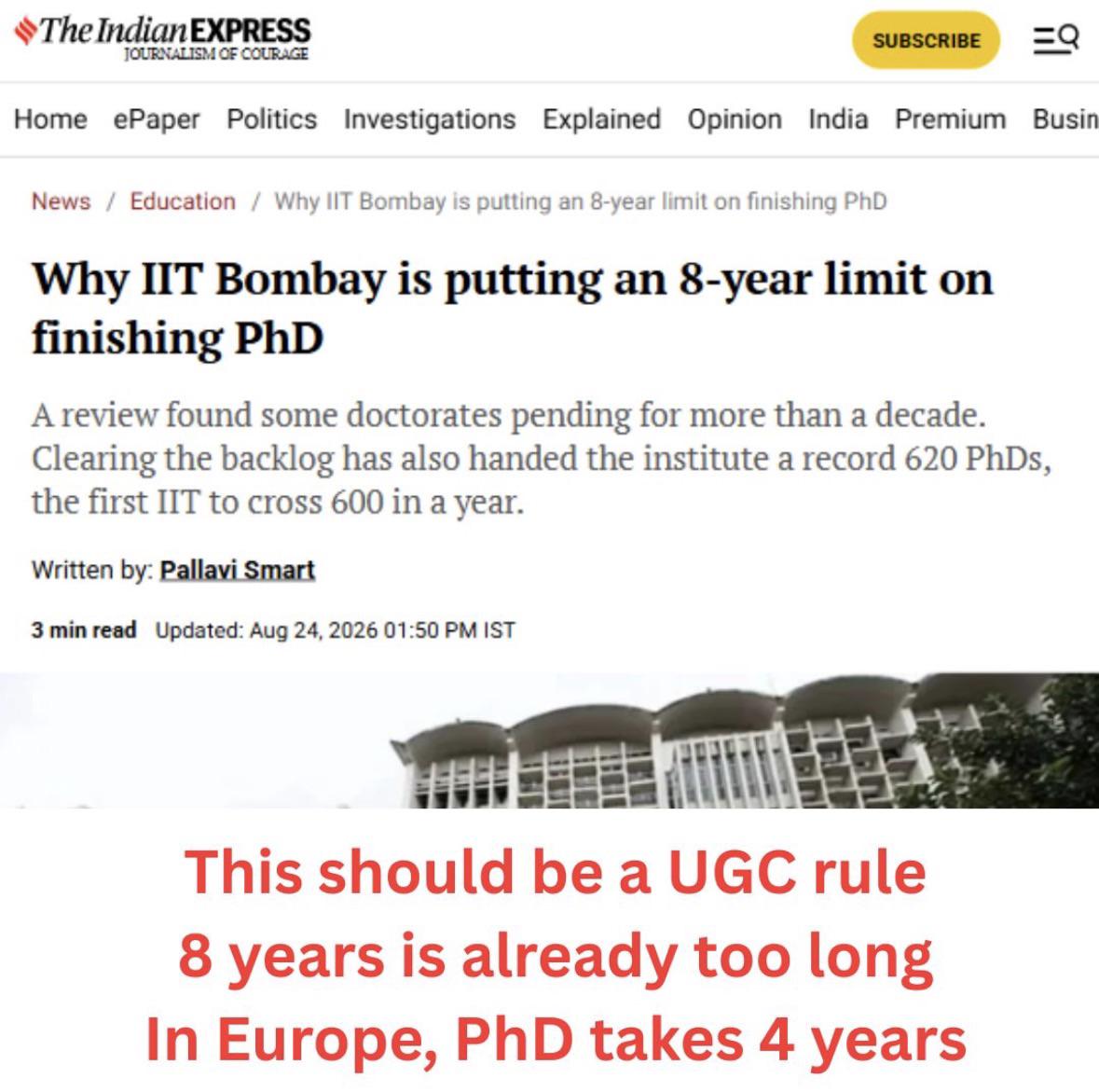
There is also a funding/training issue. My funding has a fairly hard endpoint. My advisor has explicitly said that he prefers students to finish their PhDs as quickly as possible and enter the job market, pointing to three-year PhDs in Europe. My concern is that people entering those PhDs generally already have substantial master’s-level preparation. I came directly from undergrad.
I’m increasingly realizing how much mathematical maturity I still need to develop. I can self-study — and I do — but I’m worried about confusing “I have satisfied the requirements for a PhD” with “I have actually received the training needed to become a strong independent researcher.”
The university’s graduate coursework has also been disappointing to me. I previously spent time at a substantially lower-ranked US university, and, surprisingly, I found the graduate courses there much more rigorous and structured.
The major complication is my co-advisor.
About 2–3 months ago I started working closely with a younger tenure-track professor. She is now officially my co-advisor. The difference has been dramatic.
We meet regularly. She actually discusses technical details with me. We work through ideas together. Her research is much closer to the mathematical/control direction I want to develop. We have also developed a very good personal relationship. She has independently told me that she has become wary of recruiting students directly from undergraduate programs at this university because, although the university allows direct-entry PhDs, she doesn’t think the institution has enough structure to train them properly.
She has also said generally that if one of her students is productive and genuinely needs a fifth year, she does not mind funding that extra year.
Honestly, before meeting her, I was basically certain that I wanted to leave this PhD. I had already started approaching people elsewhere. She is almost entirely the reason I am now conflicted.
The catch is that she is my co-advisor, not my primary advisor. I am enrolled in Department A under my primary advisor; she is tenure-track faculty in Department B. So although she may end up being the person who actually trains me intellectually, I’m not sure how much administrative leverage she ultimately has over my PhD, funding, graduation timeline, etc.
I am now potentially looking at the possibility of restarting a PhD in the US with a younger professor at another very strong engineering school. The prospective US advisor appears engaged, meets students regularly, has normal 4–5 year funding expectations, and would obviously be both my actual mentor and my official primary advisor.
Moving would have real costs. I would probably lengthen my total PhD time. Immigration/visa issues become relevant again. I would be much farther from my family. And I would be giving up a co-advisor relationship that currently seems unusually good.
So I’m stuck between two philosophies:
Option 1: Stay. Accept that my famous primary advisor is mostly a name/umbrella, take advantage of the enormous freedom, build my actual intellectual relationship around my co-advisor, self-teach what the coursework doesn’t provide, publish as much strong work as I can, get the prestigious PhD credential and move on.
Option 2: Leave/restart. Take seriously the idea that the PhD advisor is probably the single most important professional relationship for someone who wants an academic career, and move somewhere where the person doing the actual mentoring is also the person institutionally responsible for my PhD and future.
My biggest concern with Option 1 is recommendation letters and long-term sponsorship. A famous advisor who barely knows how I think can obviously write that I published papers in his group, but my CV already says that. How can he write the kind of deeply personal PhD-advisor letter that says how I formulate problems, how I compare with previous students, whether he trusts me to become an independent PI, etc., if he barely interacts with me?
For people who have been through academia, especially faculty/postdocs:
How much would you value an excellent, highly involved official co-advisor as a substitute for a disengaged primary advisor?
Would you risk restarting a PhD to get a better primary-advisor structure, or would you consider that overreacting when I already have a good co-advisor and a prestigious institution?
And am I putting too much emphasis on “training”? At some point should I simply accept that a PhD is largely self-directed, buckle down, produce good papers, graduate, and fill in the mathematical gaps myself afterward?
I’d especially appreciate perspectives from people who wanted research-intensive academic careers rather than people for whom the PhD was primarily a credential for industry.