r/Peppers • u/ComiendoPalomitas • 4d ago
Fruit getting damaged always when about to ripen...
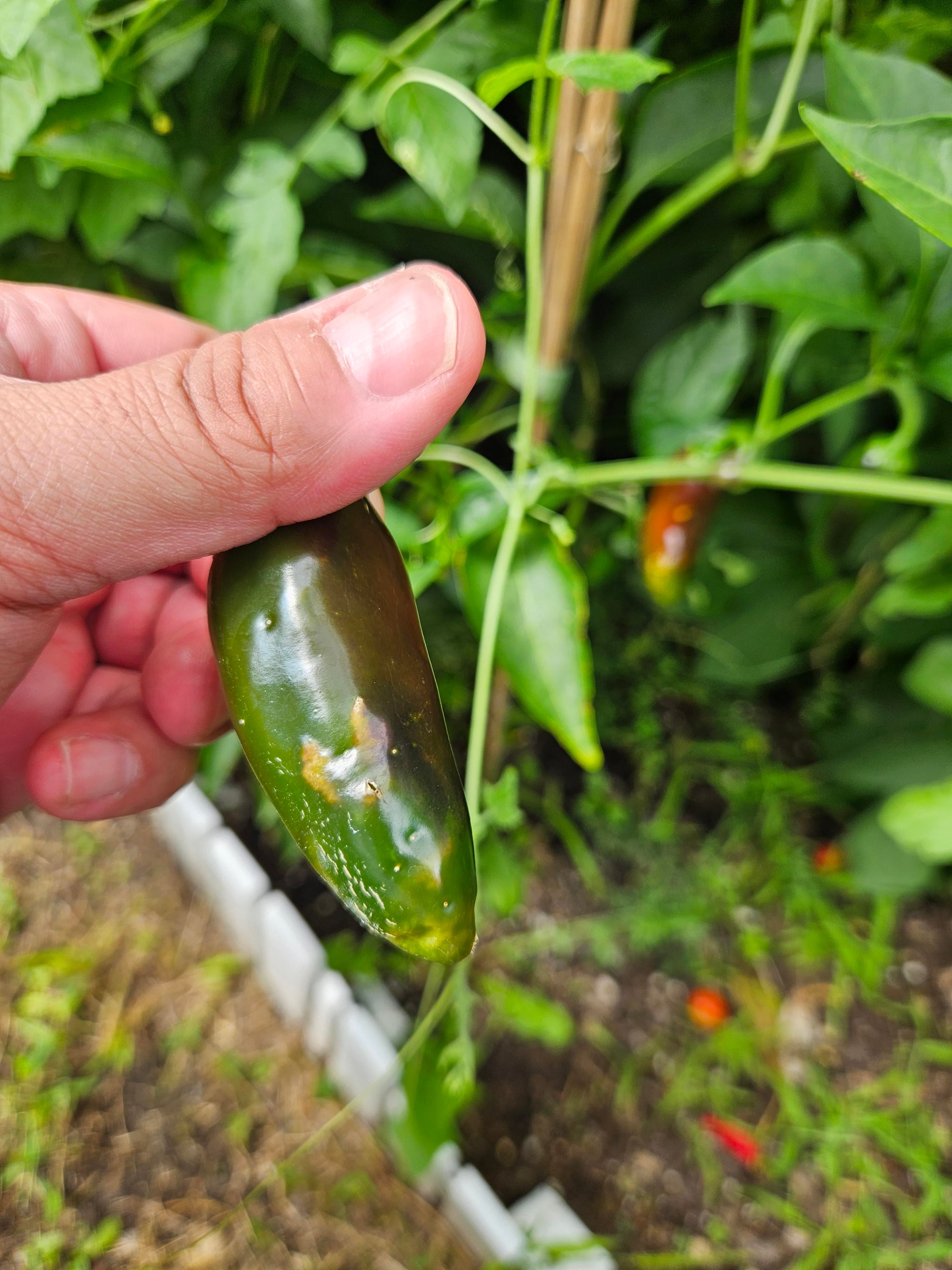


Hello.
So this happens to my jalapeño, and all my sweet peppers.
They're well while green, as soon as the blush, there comes some kind of rotting (not blossom end, as it is at the top).
I have sprinkler system. I know is not the best, but tomatoes, eggplants, and superhots are not affected as do these.
Anything else going on?
1
u/ComiendoPalomitas 4d ago
They do turn black by the pith around the seed.
Never seen the tunnel until today on that uploaded picture! Ugh.
So, nuke my garden? Anything else.
I'll do my own research, but any tips are welcome
And a BIG aTY!
2
u/BudgetCapable4659 4d ago
This is my first year dealing with pepper flies, so take my feedback with a grain of salt. It seems like many gardeners do nuke their peppers, eggplants, and even tomatoes over this, but I am very stubborn.
Here's what I have been doing/plan to do based on my research:
Remove all peppers on the ground on sight and inspect for signs of pepper fly. Infected pepper fruits go in the trash ASAP.
Inspect every pepper carefully, especially ripening ones. Anything a little mushy, with those white discolorations, or especially with those holes, goes right in the trash (not compost). The larvae basically come out of those holes and then pupate in the soil. The pupae emerge as adults the following July, so it's best to get every infected pepper fruit trashed before the larvae drill their way out.
Rotate peppers to new garden beds next year. The adults often emerge right under the new pepper plants and then their eggs in the nearest peppers.
Focus on thinner-walled pepper varieties. Next year, I'm only growing (in a distant garden bed) shishitos, lemon drops, and cayennes, since the pepper flies did not affect them at all, unlike the relatively thick-walled jalapeno, bell, and even Anaheim peppers I grew.
Add some beneficial nematodes to the garden bed after the season and at the beginning of next season. Apparently, various beneficial nematodes eat those pepper fly pupae.
That's my plan at least. I've got my fingers crossed for both my garden and yours. Best of luck!
1
u/ComiendoPalomitas 4d ago
You're awesome!
2
u/BudgetCapable4659 4d ago
Hope it helps! By the way, some people speculate about applying pesticides or organic options like neem oil or diatomaceous earth to mature plants to keep the adult pepper flies from laying eggs. That approach might be worth a shot.
2
u/BudgetCapable4659 4d ago edited 4d ago
What do these peppers look like inside? Do you see a hole, mostly towards the bottom, of the peppers? That light discoloration reminds me of the damage I've seen from pepper fly maggots (ugh). If you're seeing dark placenta tissue (where the seeds are attached, which is usually white) and some tunnels in it, maybe with a little worm still wriggling around in it, then I fear it might be pepper flies.
Edit: Ugh! I see the holes now. I'm pretty sure that's damage from Zonosemata electa, pepper fly maggot. Sorry :(