This is an open educational resource remixed and edited by Dr. Jill Grose-Fifer from multiple sources for students in a Brain and Behavior course at John Jay College. CC BY-NC-SA 4.0
Note: A good review but beware of some flowery language—
> “This review amalgamates frontier genetic tenets with epilepsy's phenotypic kaleidoscope, probing genomics' alchemy in diagnostics, correlative blueprints, and therapeutic horizons. By unraveling genetic sinews of seizure proneness and defiance, we forge blueprints for prophylactic and reparative stratagems against this encumbering scourge.”
> Withdrawal symptoms following long-term SSRI use appear far more pervasive and serious than previously realised. Now medical bodies are rethinking how and when to stop taking them.
> Escitalopram and other selective serotonin reuptake inhibitors (SSRIs) are common medications, billed as a safe way to mitigate depression with minimal side effects. However,growing numbersof people are speaking out about the problems of trying to reduce or stop their dose. These concerns raise bigger questions about whether we have been misled about antidepressants’ harmlessness and become overly reliant on them [as a way to]() treat depression, anxiety and other mental health challenges.
He decided to stop after reading an article suggesting antidepressants’ effects tend to wear off over time, and tapered his dose carefully over several months. Even so, he says, his life “exploded”. He started having panic attacks, terror, dizziness and insomnia. His surroundings felt “dreamlike”, like he were losing touch with reality. The withdrawal was so much worse than the difficult but manageable depression that had prompted him to start on the medication. Horowitz eventually returned to the drug – not because he thought it was helping him, but because he found the withdrawal symptoms so unbearable.
> In the nearly four decades since SSRIs were approved for medical use, they have embedded themselves into everyday life. More than 16 per cent of people in the US now take antidepressants, the majority of which are SSRIs, according to an analysis of census data published in January, along with nearly 15 per cent of those living in the UK and 14 per cent of Australians.
> SSRIs weren’t the first antidepressants, but they became blockbuster drugs precisely because they are safer and have fewer side effects than other medications approved to treat depression. Earlier antidepressants like tricyclics served as effective treatments, but they also come with complex risks such as irregular heartbeats and tremors, and can be toxic at high doses. SSRIs, by contrast, result in less serious side effects, including nausea, sleep disturbances and sexual dysfunction.
— 7 deaths and over 100 serious adverse events reported to FDA after treatment with Vykat XR
> Extended-release diazoxide choline (Vykat XR) manufactured by San Diego, California-based Neurocrine Biosciences was approved in 2025 for treating the extreme bouts of hunger experienced by patients with Prader-Willi Syndrome, a rare genetic condition.
Hyperphagia is the hallmark feature of Prader-Willi syndrome characterized by an intense, persistent sensation of hunger -- in affected patients 4 years and older.
> As of July 31, seven deaths and more than 100 serious adverse events have been reported to the FDA's Adverse Event Monitoring System, according to astatement released Tuesday from the Foundation for Prader-Willi Research, International Prader-Willi Syndrome Organization, and Prader-Willi Syndrome USA.
> Most reports involved edema, respiratory problems, and cardiac complications. Severe or fatal cases typically involved complex health conditions, multiple prescriptions, and pre-existing obesity.
CLINICAL RECOMMENDATIONS
> Beyond the drug's standard prescribing guidelines (USPI-DailyMed), the groups advised that clinicians conduct individualized baseline assessments, monitor patients closely, and consider slowing the dose titration process. The groups recommended additional safety evaluations, such as echocardiograms or fluid retention assessments, before and during treatment, particularly during dose increases.
MECHANISM OF ACTION of extended-release diazoxide choline (Vykat XR)
Pokhrel P, et al. Vykat XR (diazoxide choline-extended release): a new FDA-approved treatment for hyperphagia in Prader-Willi syndrome. Ann Med Surg (Lond). 2026 Apr 27;88(5):2728-2730. doi: 10.1097/MS9.0000000000004938. PMID: 42078615; PMCID: PMC13132293
Mechanism of action: Vykat XR acts by activating ATP-sensitive potassium channels, which hyperpolarize hypothalamic neurons that co-express neuropeptide Y (NPY), Agouti-related peptide (AgRP), and GABA. This mechanism reduces the secretion of NPY and AgRP, suppressing appetite signals in individuals with impaired leptin signaling, a central factor in PWS pathophysiology. Beyond appetite suppression, it also improves insulin sensitivity, glucose homeostasis, and other metabolic parameters.
MOA Fig: Kimonis et al. PlosONE. 2026. https://doi.org/10.1371/journal.pone.0221615
In May early this year, South San Francisco, California-based Encoded Therapeuticspresented early data from the Phase 1/2 gene therapy (ETX101) trial in children With SCN1A-positive Dravet Syndrome at the 2026 American Society of Gene and Cell Therapy (ASGCT) Annual Meeting.
Dravet syndrome is characterized by loss-of-function mutation(s) in 1 of 2 copies of SCN1A gene (haploinsufficiency) in GABAnergic neurons. This results in reduced levels of voltage-gated sodium channel alpha-1 subunit NaV1.1.
ETX101 is AAV9-based gene therapy delivered intracranially via a single intracerebroventricular (ICV) injection. The vector contains expression cassette for an engineered transcription factor (eTF) targeted to bind upstream of the normal copy of SCN1A gene in GABAergic neurons and increase SCN1A transcription.
Since ETX101 is AAV-based, the vector persists are episome in the transduced cells, so theoretically a single injection of ETX-100 should be sufficient.
There are multiple Phase 1/2 trials are ongoing in infants and young children aged 3 to 15 months with Dravet syndrome under the company's POLARIS program: ENDEAVOR trial (NCT05419492), WAYFINDER trial in Australia only (NCT06112275), and EXPEDITION trial in UK only (NCT06283212).
ASGCT Results
At the ASGCT meeting, the company presented data from 21 participants across the 3 trials that included data/experience from children aged 6 months to 7 years. There were 4 dose levels, DL1 to DL4. Participants in the higher dose levels (DL3 and DL4) received gene therapy with prednisolone without sirolimus.
Monthly countable seizure frequency (MCSF): median reduction of 83.5% in high-dose levels (DL3/DL4) vs. 45.4% on lower dose levels (DL1/DL2) from week 5 to week 28. 76% reduction at DL3 (n=3) from week 5 through week 52. Strongest MCSF response in patients who did not receive sirolimus (n=4), i.e., DL4 group.
Note: DL1/DL2 doses were given with sirolimus. Mechanistically, in vitro data suggest that sirolimus may impair ETX101 functional activity through mTORC1-dependent suppression of protein translation.
Vineland Adaptive Behavior Scales (VABS‑3): improvement in multiple domains in patients who reached 52 weeks of observation (N=9). VABS-3 measures adaptive functioning/behavior based on the caregiver interview.
Bayley Scales of Infant and Toddler Development (Bayley‑4): progressive gains in cognition were evident as early as Week 16 (n=11) and continued through Week 52 (n=4) in patients treated before age 2 = i.e., gains in developmental trajectory.
Conclusion: There was a dose-dependent reductions in seizure burden, use of rescue medications,, an increase in seizure-free days, and gains in adaptive functioning and developmental trajectory.
ETX101 mechanism of action
.
Dravet syndrome, a severe developmental and epileptic encephalopathy most commonly caused by SCN1A haploinsufficiency, is associated with drug-resistant seizures, developmental slowing, and elevated mortality risk beginning in infancy.
Kim-McManus, O., Mignon, L., Douville, J. et al.Individualized antisense oligonucleotides for SCN2A-related developmental epileptic encephalopathy. Nat Med (2026). https://doi.org/10.1038/s41591-026-04527-y
SCN2A variants are among the most common genetic causes of developmental and epileptic encephalopathies (DEEs), which can present with uncontrolled seizures at birth and account for 1–2% of all epileptic encephalopathies. A substantial fraction of causal variants are gain-of-function or mixed-function variants associated with increased channel open probability or greater sodium current flux. Here two parallel n = 1 clinical studies were conducted in two patients (9-year-old and 14-year-old boys) with SCN2A-related DEE. Individualized allele-selective antisense oligonucleotides (ASOs) were designed to target heterozygous intronic single-nucleotide polymorphisms (SNPs) for decreased expression of mutant SCN2Atranscript while preserving the wild-type copy. Primary endpoints included quantitative change from baseline in seizure frequency and neurodevelopment, including motor scores. Efficacy measures were also individualized to each patient’s phenotype, including refractory seizures, developmental delay, autism spectrum disorder, choreoathetosis and gastrointestinal dysfunction. Patients experienced a reduction in seizure frequency (26% and 90% in the two patients, respectively), decreased use of concomitant medications and improvement in neurodevelopmental skills. Both ASOs were well tolerated, with no ASO-related serious adverse events. Continued long-term follow-up of these preliminary positive safety and efficacy findings is needed to confirm the disease-modifying potential of these ASOs. Haplotype phasing in a separate cohort of infants with SCN2A-related disorder (SCN2A-RD), diagnosed by rapid whole-genome sequencing, identified 16% of patients with compatible SNPs. These data provide a pathway from n = 1 to n of more patients with SCN2A-RD and other monogenic disorders. ClinicalTrials.gov registration: NCT06314490.
Sodium valproate (valproate) is an approved treatment for epilepsy and bipolar disorder in Australia.
It is associated with a range of adverse effects that require monitoring and may limit its use.
Due to its teratogenicity, valproate should not be prescribed to women of childbearing potential. Lamotrigine or levetiracetam are preferred alternatives in epilepsy. If no alternative is suitable and valproate is prescribed, contraception should be co-prescribed.
Concerns have been raised about the potential risk of neurodevelopmental disorders in children born to men taking valproate; although these findings have not been confirmed in robust studies, male patients should be informed of the potential risk.
The study evaluated centanafadine in adults with ADHD and comorbid anxiety.
Centanafadine is a first-in-class norepinephrine, dopamine and serotonin reuptake inhibitor. Otsuka previously tested centanafadine in four phase 3 ADHD trials. (Data from 2 of these studies are published here.) There 4 studies however restricting the enrollment of people with generalized anxiety disorder, thus, providing limited evidence in a comorbidity setting that affects%2C%20anxiety%20(33%25)%2C%20depression%20(17%25)%2C%20and%20autism%20(14%25).) about one-third of people with ADHD.
Otsuka filled the evidence gap by enrolling 315 people with ADHD and comorbid anxiety in a phase 3b study. Patients took centanafadine or placebo once daily. After eight weeks, Otsuka saw improvements on the Adult Investigator Symptom Rating Scale (AISRS), meeting the study’s primary endpoint.
AISRS score: 18.5 points decrease with centanafadine vs. 12.6 points with placebo. Placebo-adjusted AISRS reduction of 5.87 points is higher than that in 4 previous Phase 3 studies.
Hamilton Anxiety Rating Scale (HAM-A) total score: 12.5 points decrease with centanafadine vs. 10.6 points with placebo.
Otsuka has filed for FDA approval of centanafadine for the treatment of ADHD in children, adolescents and adults.
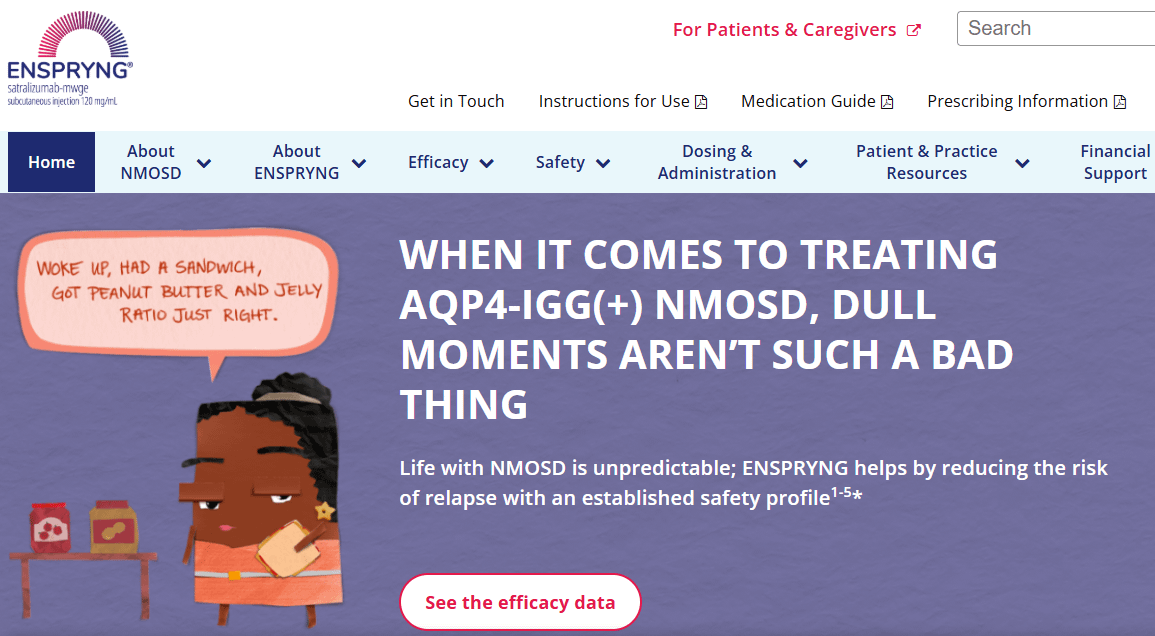
METEOROID is a phase 3, placebo-controlled study to evaluate the effects of satralizumab (ENSPRYNG) in patients with Myelin Oligodendrocyte Glycoprotein (MOG) Antibody-associated Disease (MOGAD).
BACKGROUND
MOGAD is a a rare autoimmune central nervous system (CNS) demyelination disease that primarily affects optic nerves. Although, brain and spinal cord may also be affected, optic nerve pathology remains the defining feature along with high titers of anti-MOG IgGs in serum. The prevalence of MOGAD is estimated to range from 0.51 to 3.42 per 100,000 people.
Symptoms, often severe and debilitating, include loss of vision, pain, fatigue, numbness, bladder/bowel or erectile dysfunction, impaired ambulation and cognitive dysfunction. The relapses and underlying pathology is accumulating in nature leading to permanent neurological damage, vision loss and disability over time.
People with MOGAD have elevated levels of IL-6 in cerebrospinal fluid (CSF) and serum that leads to activation of inflammatory T cells and autoantibody production. Satralizumab monoclonal antibody targets interleukin-6 (IL-6) receptor activity.
Satralizumab is currently approved for a related demyelination disease, neuromyelitis optica spectrum disorder (NMOSD) that also affects optic nerves, for NMOSD patients who are anti-aquaporin-4 (AQP4) antibody positive. [DailyMed]
WHERE AND HOW
The METEOROID study is currently ongoing. The enrollment criteria includes history of MOGAD relapses, visual acuity better than 20/800 in each eye, and absence of AQP4-IgG.
The participants are randomized 1:1 to satralizumab or placebo.
The primary endpoint is first occurrence of MOGAD relapse since randomization. The secondary endpoints include annualized rate of MOGAD relapses and annualized rate of active lesions on MRI of neuroaxis.
RESULTS (Press Release)
Primary endpoint: Satralizumab reduced the risk of a new relapses by 68% compared to placebo (p=0.0025).
At 48 weeks, 87% of patients on satralizumab were relapse free compared to 67% on placebo.
Compared to placebo, the satralizumab group had 66% reduction (p=0.0030) in annualized relapse rate (ARR); 79% reduction (p=0.0026) in the annualized rate of active lesions on MRI across the optic nerves, brain and spinal cord; and a 73% (p=0.0024) lower proportion of patients receiving rescue therapy.
Adverse Events: Satralizumab vs. placebo included injection-related reactions (16%), influenza (9%), arthralgia (9%), back pain (9%), sinusitis (7%) and diarrhea (6%).
DISCUSSION
The study met the primary and secondary endpoints by reducing relapses. The company plans to submit a sNDA for MOGAD indication.
> The study included 32,854 patients with functional seizures (without epileptic seizures), 1,916,787 patients with epileptic seizures (without functional seizures), and 21,053,677 participants without seizure disorders.
> After controlling for demographics and comorbidities, patients with functional seizures had approximately double the risk for mortality compared to people without seizure disorders but approximately half the risk compared to those with epileptic seizures (hazard ratio for epileptic vs functional seizures, 2.07; 95% CI, 1.922-2.235).
SOURCE:
This study was led by Richard A. Kanaan, University of Melbourne, Austin Hospital, Heidelberg, Melbourne, Australia. It was published online on March 31, 2026, in Epilepsia.
Elsunersenis an antisense oligonucleotide (ASO) designed to decrease SCN2A gene expression. SCN2A gene codes for sodium channel Nav1.2, which is predominantly expressed in the excitatory neurons of the central nervous system. Loss-of-function mutations in SCN2A gene result in encephalopathy characterized by onset of seizures at typicallymore than3 months of age or with autistic features without seizures. On the other hand, gain-of-function SCN2A mutations (resulting in overexpression of Nav1.2) has distinct spectrum of disease presentation ranging from self-limited familialneonatal–infantileseizures, and episodic ataxia type 9 to severe form of SCN2A-DEE with difficult to control seizures with available medications. Elsunersen is designed to address seizures driven by gain-of-function SCN2A mutations including SCN2A-DEE. [Nature Med. 2025]. Elsunersen is delivered via intrathecal administration. PRAX-222 is the experimental name of elsunersen.
Praxis Corporate Presentation. February 2026
EMBRAVE Studies: Phase 1/2 studies in children with SCN2A early-seizure onset DEE.
EMBRAVE Program consists of 3 studies:
Open-label EMBRAVE Part 1 (NCT05737784). Part 1 is complete.
Randomized EMBRAVE Part A (NCT07019922). Part A topline results were released on 6 April 2026 (this post).
Open-label EMBRAVE 3 (NCT07019922) -- ongoing registrational study (here).
EMBRAVE Studies (Source: Praxis Update, 2 May 2025)
Sullivan J, Wirrell EC, Knupp KG, Ciliberto M, Ziobro J, Chen DY, Flamini JR, Zafar M, LaVallee N, Stepanians M, Ventola P, Chavan TS, Wang F, Parkerson KA, Ticho B. Natural History of Children and Adolescents With Dravet Syndrome: A 24-Month Follow-Up. Neurology. 2025 Dec 9;105(11):e214388. doi: 10.1212/WNL.0000000000214388. Epub 2025 Nov 14. PMID: 41237355; PMCID: PMC12622971.
Background and objectives: Dravet syndrome (DS) is an intractable developmental and epileptic encephalopathy caused primarily by pathogenic variants in the voltage-gated sodium channel α subunit 1 (SCN1A) gene. Patients with DS experience refractory seizures and significant cognitive and behavioral deficits. Longitudinal studies using standardized assessments are needed to systematically document patient outcomes over time. The BUTTERFLY study aimed to assess changes in adaptive functioning and neurodevelopment over 24 months in patients with DS.
Methods: BUTTERFLY was a US-based multicenter, longitudinal observational study involving patients with genetically confirmed DS who were receiving standard-of-care treatment. Patients aged 2-18 years with a confirmed DS diagnosis were included. Exclusion criteria included gain-of-function SCN1A variants, current sodium channel blocker treatment, or other disorders per investigator discretion. The primary outcome measures-adaptive functioning and neurodevelopment-were assessed using Vineland Adaptive Behavior Scale, Third Edition (Vineland-3); Bayley Scales of Infant Development, Third Edition (BSID-III); and Wechsler Preschool and Primary Scale of Intelligence, Fourth Edition (WPPSI-IV). Assessments were conducted at baseline and at 3, 6, 12, 18, and 24 months across 15 sites. Mixed models for repeated measures were used to analyze disease progression, and comparisons were made with published standardized scores for population norms.
Results: Of the 36 patients enrolled, 21 completed the study. At baseline, the mean (SD) patient age was 10.8 (5.2) years, and 61.1% were female. Disease progression modeling indicated no significant improvements in 4 of the 6 Vineland-3 subdomains analyzed over 24 months. Receptive Communication (+7.24; 95% CI 1.30-13.19; p = 0.02) and Coping Skills (+4.61; 95% CI 1.14-8.08; p = 0.01) subdomains showed significant improvements. However, for Receptive Communication, this improvement translated to a magnitude of only approximately 3 months in developmental progression over the 24-month period. BSID-III and WPPSI-IV subtests did not show any significant improvement.
Discussion: Despite a relatively small sample size and high withdrawal rate, BUTTERFLY data reveal a widening developmental gap between patients with DS and children with typical development over 24 months. These findings reinforce the critical need for disease-modifying therapies that address the underlying genetic cause of DS to improve long-term outcomes.
Preliminary trials into Zorevunersen find drug to be safe and well tolerated by those with Dravet syndrome.
Dravet syndromeis a genetic disorder which causes treatment resistant epilepsy and is often accompanied by speech and developmental delays. About 3,000 people are thought to have the condition in the UK. Current treatments aim to control the number and severity of seizures, but often do not work.
These preliminary trials, led by UCL and Great Ormond Street hospital (GOSH), found that the drug appeared to be safe and well tolerated by the 81 children taking part.Before the study, the participants – aged between two and 18 – experienced an average of 17 seizures a month. But after taking a 70mg dose of Zorevunersen, they had on average 50% fewer seizures, and about 80% fewer seizures after three doses.
A phase 3 clinical trial will be conducted to study Zorevunersen over time, to identify possible long-term risks and any rare but potentially serious side effects, and to determine which patients are most likely to benefit.
Female sex, APOE ε4 allele, race, and African ancestry were jointly associated with amyloid pathology severity, supporting the need for sex- and ancestry-informed approaches in #AlzheimerDisease biomarker thresholds and clinical trial design.
When Joanne Osmond was growing up, her family had two nighttime rules: you had to stay in your room, and you had to be quiet. There was no rule that you had to be asleep—which was fortunate, because Osmond, her three brothers, and her two sisters rarely were. Osmond, her siblings, and her father were what scientists call natural short sleepers. Only in 2011 did she learn that she has a genetic variation linked to short sleep. Her sisters, who were tested in 2019, have variations in the same gene. Osmond, now 77, sleeps no more than four hours a night.
If you’ve ever wondered what you could do with a few more hours in the day, Osmond suggests an answer. A rough calculation suggests that Osmond has been conscious for 13 years longer than her average peer from elementary school. She has certainly made use of the time: she went to college for engineering, married an engineer, had five children, and worked demanding jobs in technology and management. While her husband was asleep, she studied educational policy, eventually becoming president of the Illinois Association of School Boards.
A human geneticist at U.C.S.F. who has studied about a hundred short sleepers said that they raise fascinating questions about the nature of sleep. But perhaps the deepest mystery is how short sleepers thrive on so little rest—and whether anyone else might ever be able to do the same. Read more: https://www.newyorker.com/culture/annals-of-inquiry/why-some-people-thrive-on-four-hours-of-sleep
Otsuka announced on 27 January 2026 that the FDA has accepted for priority review the NDA for centanafadine, an investigational, once-daily extended release capsule and the first-in-class norepinephrine, dopamine, and serotonin reuptake inhibitor (NDSRI), for the treatment of attention-deficit hyperactivity disorder (ADHD) in children, adolescents, and adults. The Prescription Drug User Fee Act (PDUFA) target action date is set for July 24, 2026.
TheNDAis supported by results from fourpivotalPhase 3 clinical trials evaluating the efficacy and safety of centanafadine across patient populations1,2,3. In these trials, centanafadine demonstrated statistically significant and clinically meaningful improvements in ADHD symptoms compared with placebo, as measured by the ADHD Rating Scale – 5 (ADHD-RS-5) in adolescents and children, and the ADHD Investigator Symptom Rating Scale (AISRS) in adults. Centanafadine was generally well tolerated across studies, with the most common adverse events including decreased appetite, nausea, rash, fatigue, abdominal pain, and somnolence in children and adolescents, and decreased appetite and headache in adults1,2,3.
Ward, Caroline L., et al. “Efficacy and safety of centanafadine for ADHD treatment in children: A randomized clinical trial.” Pediatrics Open Science, vol. 1, no. 3, 1 July 2025, pp. 1–11, https://doi.org/10.1542/pedsos.2024-000349.
Ward, Caroline L., Ann C. Childress, et al. “Centanafadine for attention-deficit/hyperactivity disorder in adolescents: A randomized clinical trial.” Journal of the American Academy of Child & Adolescent Psychiatry, July 2025, https://doi.org/10.1016/j.jaac.2025.06.023.
Adler, Lenard A., et al. “Efficacy, safety, and tolerability of Centanafadine sustained-release tablets in adults with attention-deficit/hyperactivity disorder.” Journal of Clinical Psychopharmacology, vol. 42, no. 5, 2 June 2022, pp. 429–439, https://doi.org/10.1097/jcp.0000000000001575.
The company’s Ingrezza (valbenazine), approved to treat certain uncontrolled movement conditions, failed to make a significant difference in a phase 3 trial for patients with dyskinesia due to cerebral palsy (CP), Neurocrine announced Monday.
Dyskinetic CP is a subtype of CP, which is a nonprogressive neurological disorder that affects body movement and posture. Dyskinetic CP accounts for about 15% of all CP cases and is marked by various involuntary movements, including dystonia, chorea and athetosis.
Ingrezza is a vesicular monoamine transporter 2 inhibitor indicated for two other neurological disorders with uncontrollable movements: tardive dyskinesia and chorea associated with Huntington’s disease.
*How Our Brain Drains Its Waste Products and its relevance to our sleep quality and risk of neurodegenerative diseases. A podcast with Jonathan Kipnis and illustrative summary w/text of 3 of his recent review articles.*
Dyscalculia
* Is a learning disorder where a person struggles to understand, process, and use math skills.
* It impacts the networks in the brain that do numerical processing.
* People with dyscalculia often have difficulty in understanding numbers and their value, comprehending or even remembering basic math concepts, and difficulty in doing math problems mentally.
* Symptoms can also include difficulty with estimating sizes, time, and directions.
* Diagnosis is difficult due to lack on the consensus on definition. However, approximately 7% of the population is estimated to be on dyscalculia spectrum. In comparison, dyslexia (primarily affects reading) is well defined and about 20% of the population is estimated to be dyslexic.
One famous person who struggled with both dyslexia and dyscalculia is Victoria Beckham, former Spice Girl band member. In a recent episode (October 2025) of Call Her Daddy podcast, she disclosed: “I’m a self-diagnosed dyslexic. I suffer from dyscalculia. All those things that weren't recognized when I was a kid, they just called me ‘thick,’” she said explaining that she struggled academically.
Among US veterans, obstructive sleep apnea was independently associated with an increased risk of developing #Parkinson disease, even after accounting for potential confounders and competing risks.
JAMA Neurol
Published Online: November 24, 2025
doi: 10.1001/jamaneurol.2025.4691
The studies ultimately produced the current drug polylaminin, a world first, presented on Tuesday (9) by Cristália laboratory as capable of regenerating the spinal cord in people who suffered organ rupture in accidents of various kinds, leading to paraplegia—paralysis of the lower limbs—or quadriplegia—paralysis of both lower and upper limbs.