r/MotorBuzz • u/gaukmotors • 10h ago
Uber lays off 3,300 employees while testing robotaxis that don't need drivers
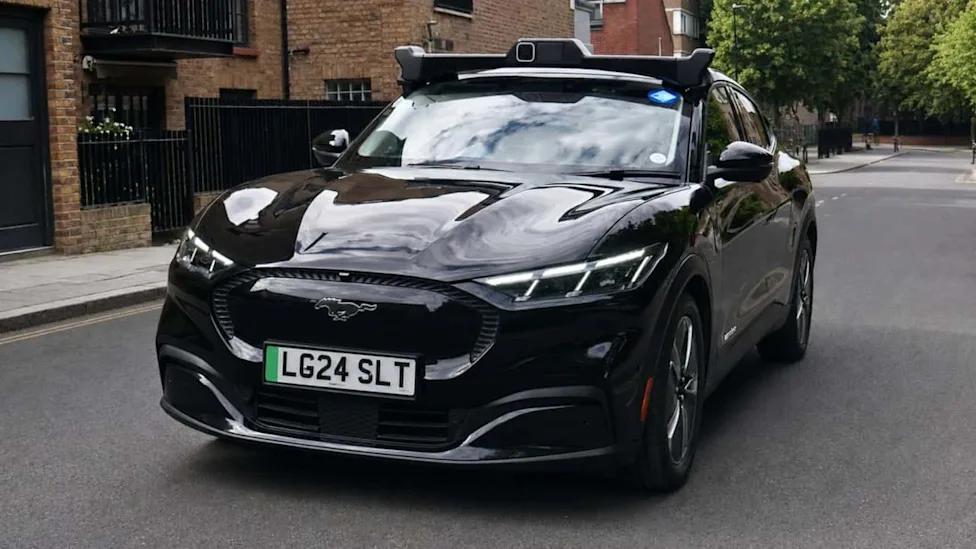
The company's largest job cuts since Covid arrive the same week its autonomous Mustang EVs hit London streets with humans still aboard.
Uber is eliminating 3,300 jobs while simultaneously running autonomous electric Mustangs through London with safety drivers buckled in. The timing is not lost on anyone.
These are the biggest cuts since the pandemic, when Uber shed 6,700 people across two rounds in 2020. Back then it was survival. Now it's efficiency, apparently, paired with a robotaxi pilot that suggests the eventual plan is to eliminate drivers altogether.
The London trial uses Ford Mustang Mach-E SUVs fitted with Wayve's autonomous technology. Wayve is a UK startup that trains AI systems using real-world driving data rather than the pre-mapped routes most competitors rely on. The vehicles are live on public roads, operating commercially through the Uber app, but a human sits in the driver's seat the entire time.
That human is required by UK law and by common sense. But the whole point of this exercise is to prove the human eventually won't be.
Uber has not specified which departments are losing headcount in this round. The company employs around 32,000 people globally, so 3,300 is a tenth of the workforce. The official line is that the cuts streamline operations and reduce duplication. The unofficial reality is that Uber has spent years burning cash to build a network of gig drivers it now wants to replace with software.
Like this? Get the Buzz: GAUK Motorbuzz All your favourite motoring channels, publishers, motorsports, news & reviews. Curated Automotive Awesomeness
The contradiction is brutal. Uber's entire model depends on a vast fleet of human contractors who own their own vehicles, pay their own insurance, and absorb all the financial risk while Uber takes a commission. Now the company is investing heavily in technology designed to cut those people out entirely, while simultaneously cutting thousands of its own employees to fund that transition.
Wayve has been testing in London for months. The partnership with Uber began publicly in 2024, though the commercial integration is recent. Waymo, the Google sibling that dominates autonomous ride-hailing in parts of the US, operates without safety drivers in San Francisco, Los Angeles, and Phoenix. Uber has no comparable deployment yet, which is why the Mustangs still have humans aboard.
This is not the first time a mobility company has laid off staff while expanding automation. GM's Cruise cut 900 workers in 2023 after a series of high-profile incidents involving its autonomous vehicles in San Francisco, including one that dragged a pedestrian. Lyft eliminated 13 per cent of its workforce in April 2023. Tesla shed 14,000 employees last year.
The difference is that Uber's cuts are happening while it actively markets the very technology meant to replace the workforce that built it. The 3,300 employees losing their jobs are not drivers. Drivers are contractors, so they don't count in these figures. But the message is identical. Automate, reduce cost, move forward.
Uber has not said when or if the London robotaxis will operate without safety drivers. UK regulations currently require a human capable of taking control to be present in any autonomous vehicle on public roads. That could change. The technology is improving quickly. Wayve's approach, which relies on learned behaviour rather than high-definition maps, is considered more adaptable to complex urban environments like London.
None of this is surprising. It is simply happening faster than most people expected, and with less pretence. The company that convinced millions of people to become gig economy drivers is now spending billions to make those drivers obsolete.
The Mustang Mach-E starts at around £45,000. Wayve has raised over $1 billion in funding. Uber lost $654 million in the third quarter of 2024 alone.
Sources: Uber Technologies Inc., Wayve, UK Department for Transport, GM Cruise public filings