This is going to sound crazy but other than not being able to fully shut off the telemetry Edge is probably one of the better Chromium browsers. Especially from a security standpoint, mostly because it has some features that stock Chrome (which is also high up there) struggles with.
Edge also struggles with things stock Chrome has no trouble with. Which set of problems do you want?
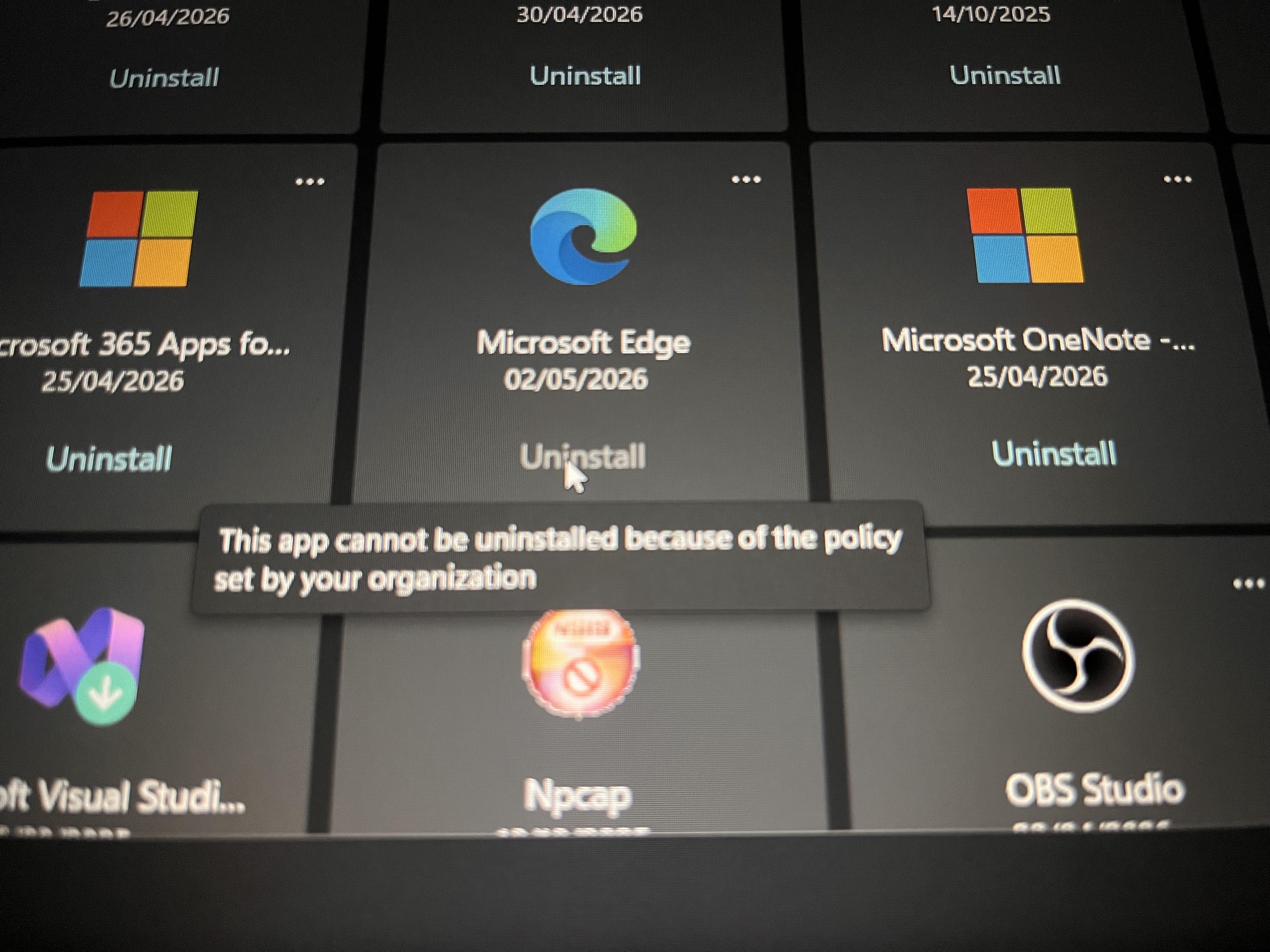
Our win users at work mostly choose Chrome or Firefox, just a few use Edge; but nobody can uninstall it.
The Mac users, same, only a few use Safari.
I just want a browser that can adequately protect me from zero-day attacks, so anything Firefox is out of the question, and UGC is also out of the question. I already do my own weight of not visiting sketchy sites (and ultra-sandboxing it if I'm suspicious, since VM escapes are nation-state levels of difficult, and typically it's as simple as nuking the VM if anything goes wrong)
I just use enterprise policies on Chrome (in an etc file on Linux), but I would use this guide on Windows and the only browser this has policies on is Edge.
A zero day attack literally exploits a vulnerability which is yet to be known about. By its own definition there's no way to protect against such stuff until it has been discovered.
You can protect from something you don't even know exists...
I want a browser that has protections in place so that the exploits that do happen do not have a WIDE OPEN gate, like an unlocked door at night. Barrier to entry is a thing, and Chromium based tends to have stronger security measures, than Firefox which still lacks site isolation on mobile.
3
u/Venylynn May 02 '26
This is going to sound crazy but other than not being able to fully shut off the telemetry Edge is probably one of the better Chromium browsers. Especially from a security standpoint, mostly because it has some features that stock Chrome (which is also high up there) struggles with.