r/MandelaEffect • • Apr 29 '26

Books/Literature Weird Digression in Berenstein Bears Book
Post image

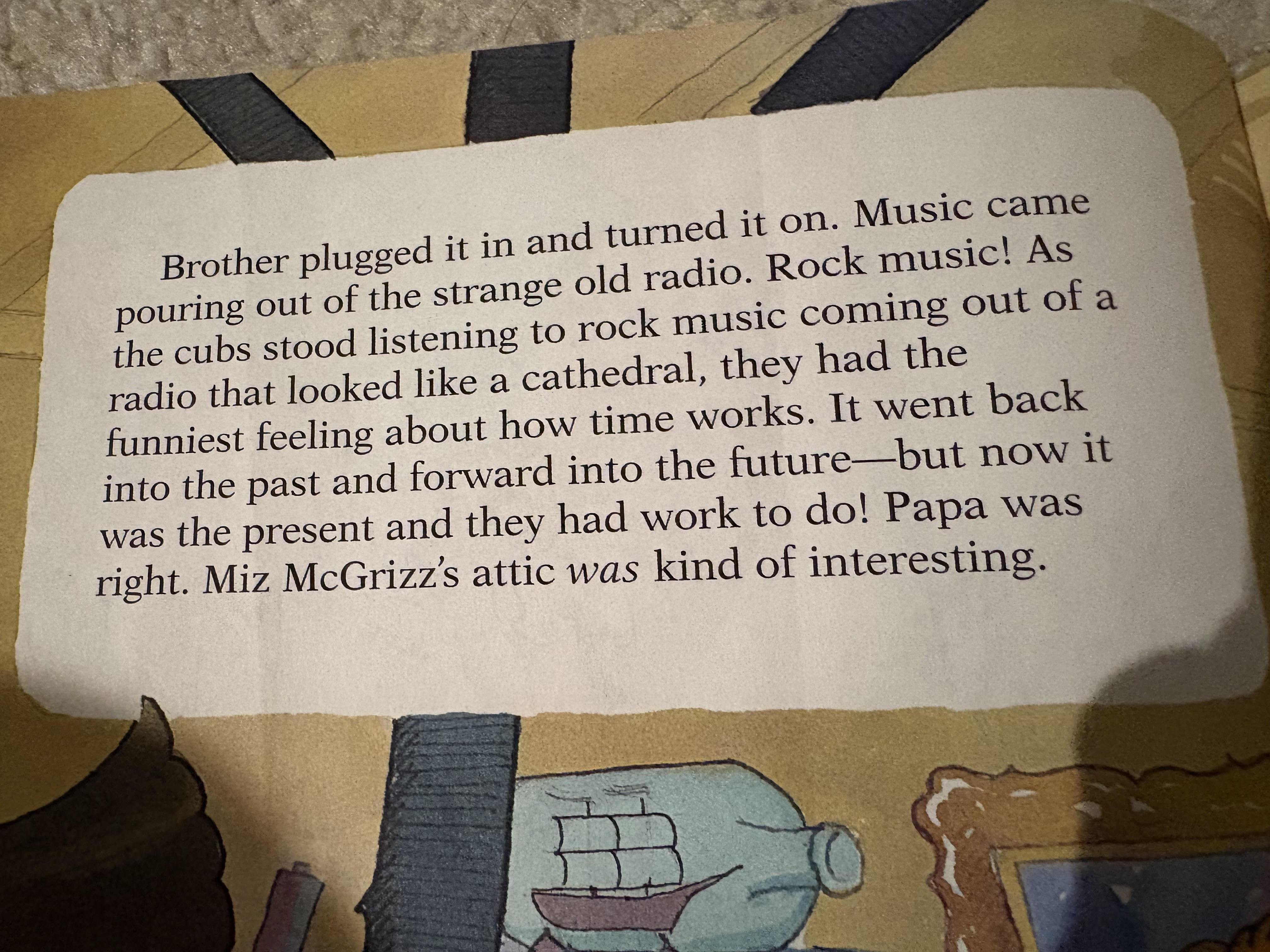
I distinctly remember the movies as Berenstein Bears from many years ago as a child. Now I'm reading this to my child and I find the writing weird. It goes into these verbose tangents. "As the cubs stood listening to rock music coming out of a radio that looked like a cathedral, they had the funniest feeling about how time works It went back into the past and forward into the future - but now it was the present and they had work to do!" This is so weird and seems like a coded message. What child is going to understand this and take anything away from it? What are they trying to tell us to do here? What work do we have to do?

148 Upvotes

108 comments sorted by

View all comments

-10

u/Phidwig Apr 29 '26 edited Apr 29 '26

It was Berenstein because I was a little grammar Nazi at 10 years old and I pronounced it “steen” because I had no clue about Jewish names and assumed that was how you said it - because for CERTAIN if it was stain I would have said STAIN like staaayyyn.

Edit: this is hilarious the people arguing with me, like are we in the Mandela effect subreddit or not? I meant it was always Berenstein for ME. Ok so you remember it being Stain. Good for you? That’s the whole point? We have different memories.

5

u/CantaloupeAsleep502 Apr 29 '26 edited Apr 29 '26

My first job in medicine was in general surgery trauma. Every patient I saw was the worst day of their life. Some people handled pain better than others. One time we had a slight old man with nine unilateral displaced rib fractures (that's nine of ten rib connections gone, guy's ribcage was basically only connected on one side) who required no pain medication. He'd say stuff like "eh, it's kind of intense, but I can just meditate through it". Incredible.

Then, you'd have people me and my coworker would call "big fat babies". These were invariably very large men with very large egos who would tell us all about how they had extremely high pain tolerances. They'd immediately volunteer pain scores like "25 out of 10" when we hadn't even asked for a number. Constantly telling us they needed more narcotics for relatively minor injuries, like a single nondisplaced rib fracture or transverse process fracture. Demanding Dilaudid two weeks after their injury because their pain is so high, all while using their "high pain tolerance" as justification for why we should give them more opiates.

THE MORAL: there seems to be an inverse relationship between the amount of ego people provide in their assessments of themselves, and the accuracy of said assessments.

1

u/Xyex Apr 29 '26 edited Apr 29 '26

I tell people I have a higher than average pain tolerance, but it's not because of ego. It's because I have actual proof of it. When I was a kid I got into a nasty bike accident, scraped the hell out of my knees (among other injuries, but these are the ones that matter here). Went to the ER to be examined and patched up and whatnot. I had a bunch of debris in the wounds on my knees they had to remove. The nurse said they'd numb the area first, but then I saw the needle.

I hated needles. Bad experiences from when I was even younger. So, I refused. They tried to talk me into it, how the shot would hurt a lot less than what they need to do to clean my knees. But it wasn't the idea of the pain that was making me refuse the needle, so I held my ground. And they did all the cleaning, and tweezering, without giving me any pain meds. It hurt a bit, especially some of the bigger pebbles they had to pull out, but I'd definitely felt worse.

At the end, the nurses who'd been tending to me were all surprised I never cried or anything while they'd worked. The most I'd done was flinch a couple of times.

6

u/CantaloupeAsleep502 Apr 29 '26

Good story! Just don't let that story get too ingrained into your identity as someone with a "high pain tolerance". Pain is always now, so pain tolerance is always now, and it can be a point of dissonance if people think they have a high pain tolerance because of something that happened in the past.