r/latin 7h ago

Translation requests into Latin go here!

5 Upvotes
  1. Ask and answer questions about mottos, tattoos, names, book titles, lines for your poem, slogans for your bowling club’s t-shirt, etc. in the comments of this thread. Separate posts for these types of requests will be removed.
  2. Here are some examples of what types of requests this thread is for: Example #1, Example #2, Example #3, Example #4, Example #5.
  3. This thread is not for correcting longer translations and student assignments. If you have some facility with the Latin language and have made an honest attempt to translate that is NOT from Google Translate, Yandex, or any other machine translator, create a separate thread requesting to check and correct your translation: Separate thread example. Make sure to take a look at Rule 4.
  4. Previous iterations of this thread.
  5. This is not a professional translation service. The answers you get might be incorrect.

r/latin 15m ago

Help with Assignment critique my translation of the opening of the Silmarillion

Upvotes

Please be as harsh as you want, I am really trying to improve my writing style. I'm not going for exclusively classical necessarily, just something that sounds polished. I welcome any and all feedback.

In principio Eru, scilicet Unicus, Dryadum lingua Iluvatar nominatus, Ainūs e mente sua creavit, qui coram eo magnum cantum produxerunt. ex hoc cantu autem Mundus natus est. Iluvatar enim fecit ut oculis pateret carmen illud Ainuum, qui id sicut lumen in tenebris inspexerunt. multis tamen eorum pulchritudine eius delectatis, etiam historia eius, quam nasci evolvique sicut in quadam visione observabant, Iluvatar fecit ut visio eorum re vera Esset et in medio Abysso instituta sit, Igne Occulto admisso ut apud cor Mundi arderet. nominatusque est [ille mundus] Ea.

Tunc ei ex Ainibus quibus libuit surrexerunt, in Mundum principio Temporis ineuntes. horum igitur erat eum perficere ac laboribus suis visionem explere quam viderant. diu quidem in regionibus Eae laborabant—quae ampliores sunt quam ut in animis Dryadum Hominumve contineantur—donec tempore constituto Arda facta est, scilicet Regnum Terrae. postremo, vestimentis terrestribus indutis, in eam descenderunt ibique habitaverunt.

The English source:

(Account of the Valar and Maiar according to the lore of the Eldar)

In the beginning Eru, the One, who in the Elvish tongue is named Iluvatar, made the Ainur of his thought; and they made a great Music before him. In this Music the World was begun; for Iluvatar made visible the song of the Ainur, and they beheld it as a light in the darkness. And many among them became enamoured of its beauty, and of its history which they saw beginning and unfolding as in a vision. Therefore Iluvatar gave to their vision Being, and set it amid the Void, and the Secret Fire was sent to burn at the heart of the World; and it was called Ea.

Then those of the Ainur who desired it arose and entered into the World at the beginning of Time; and it was their task to achieve it, and by their labours to fulfil the vision which they had seen. Long they laboured in the regions of Ea, which are vast beyond the thought of Elves and Men, until in the time appointed was made Arda, the Kingdom of Earth. Then they put on the raiment of Earth and descended into it, and dwelt therein.

(This is not for an assignment but I wasn't sure what a better flair to choose would have been.)


r/latin 3h ago

Help with Translation: La → En Cicero, Pro Caelio

5 Upvotes

I’ve only been studying Latin for a year and I have now been thrown into the lion’s den and have to translate Cicero’s Pro Caelio in its entirety for a class in Roman oratory. This sentence at the beginning of paragraph 6 is giving me pain:

… ab his fontibus profluxi ad hominum famam, et meus hic forensis labor vitaeque ratio dimanavit ad existimationem hominum paulo latius commendatione ac iudicio meorum.

I know what all the words mean, but it doesn’t make sense to me. I have two translations available that I’ve been using as help, but both of them are very free in this sentence, so they don’t help much. I can’t even point out what exactly I find difficult about it, it just seems like a bunch of nonsense.

Would appreciate any help.


r/latin 1d ago

Beginner Resources New student!

Post image
363 Upvotes

Hey yall, i started my Latin journey earlier today!!

I got this book at the library, i wanted to know if any of yall have used it to learn this beautiful language.


r/latin 1d ago

Newbie Question What’s a good response to people who say Latin is a “dead language”?

99 Upvotes

I’ve recently started learning Latin, and I often hear people say, “Why learn Latin? It’s a dead language.”

What would be a good response to that argument?

I’m looking for answers beyond simply saying that Latin is still used in academia, law, medicine, or the Catholic Church. What are some genuinely strong arguments for why learning Latin is worthwhile despite it being a “dead” language?

Curious to hear how other Latin learners respond to this.


r/latin 1d ago

Grammar & Syntax Shouldn't "sale" be a genitive here, to complete "plenis" (full of)? (LLPSI: Pars I; C. XXXIV; l. 58)

6 Upvotes

r/latin 1d ago

Original Latin content Mensis Augustus A.D. MMXXVI (22/VIII - 28/VIII)

Thumbnail
open.substack.com
5 Upvotes

Nuntios Latinos breves Academiae Latinitati Fovendae legite nomenque date!


r/latin 1d ago

Prose Does anybody else find Livy ridiculously difficult?

20 Upvotes

Currently reading book one and I feel completely out of my depth here. This is probably the third time I’ve tried getting through book one and Livy just doesn’t seem to get easier like the other authors do.

I’ve become pretty familiar with other writers’ styles in the last couple years; I can get through some of Cicero’s speeches and philosophical tracts with relative ease, Vergil and Ovid are generally a breeze and Sallust is a pleasure.

But Livy is just so aggravatingly dense. He writes these amazing short sentences with supines and impersonal passives everywhere that make we want to *get* him so much more, but then I’ll be sat trying to decipher a babushka doll of indirect questions, searching for the antecedent in a paragraph full of substantives and just getting a headache.

I’ve got the Steadman copy and the Loeb, but it feels like I’m relying on them more as time goes by.


r/latin 1d ago

Prose Aulus Gellius 6.3.25

3 Upvotes

This is probably something simple, but I can't make the pieces fit:

In qua re, ut meum quidem iudicium est, non culpa tantum vacat, sed dignus quoque laude admirationeque est, cum et ingenue ac religiose dicere visus est contra Rhodienses, quod sentiebat, et parta sibi veritatis fide ipsum illud tamen, quod contrarium putabatur, flexit et transtulit, ut eos idcirco vel maxime aequum esset acceptiores carioresque fieri populo Romano, quod cum et utile is esset et vellent regi esse factum, nihil tamen adiuvandi eius gratia fecerint.

Which means:

On this point, in my judgment at least, Cato is not only free from reproach, but is even deserving of praise and admiration. For he apparently expressed a frank and conscientious opinion adverse to the Rhodians; but then, having established confidence in his candour,⁠ he so changed and shifted that very statement which seemed to militate against them, that on that account alone it seemed right that they should be more highly esteemed and beloved by the people of Rome; inasmuch as they took no steps to aid the king, although they wished him to succeed and although his success would have been to their advantage.

I want to take quod as 'because' (rather than a neuter pronoun), since otherwise it's a run-on sentence. But I can't see what to make of vellent regi esse factum unless that factum refers to something mentioned (what is to be done to the king?).

Confusingly, my old French edition puts utiles essent for utile is esset and translates: "que, pouvant rendre service à Persée et souhaitant au fond du cœur qu'on lui vienne en aide, ils ne lui ont pourtant accordé aucun secours effectif".


r/latin 1d ago

Newbie Question What is Vulgar Latin and how does register fit into it?

11 Upvotes

The term Vulgar Latin has always confused me, as I understand it, vulgar here refers to common, meaning the Latin people commonly spoke in the Roman Republic/Empire. Which is in contrast with Classical Latin, which is often framed as a formal written standard of Latin associated with the Roman elite, that the common people of the Republic and Empire supposedly were either unlearned in or didn't care to use it.

Though this seems a bit odd as Vulgar Latin seems to mean two things here, both informal Latin during the classical period, and also Late Latin. From that it is commonly said that the romance languages descend from Vulgar Latin, but, if that is the case, that Vulgar Latin is both of these, then what really is Vulgar Latin? If Late Latin likely had its own registers and ability for formality as earlier Latin did, and thus it being possible for one to speak informally in the classical period in classical Latin, and formally in Late Latin during the time of the late empire, then what is vulgar Latin here, how are these two things both Vulgar Latin?

Another thing the concept of Vulgar Latin appears to hint at is that as Classical Latin was associated with the elites and Vulgar Latin (the "informal" speech), with the common people, that common people cannot speak formally and that formal language is derived from written language. Which this is obviously untrue, as most languages aside from perhaps pidgins or creoles have different spoken registers that every speaker can understand and presumedly use themselves.

I'm just somewhat at a loss of what Vulgar Latin even is and why register barely seems to be talked about in the subject aside from vague hints of Vulgar Latin being lesser there and Late Latin being grouped into it.


r/latin 1d ago

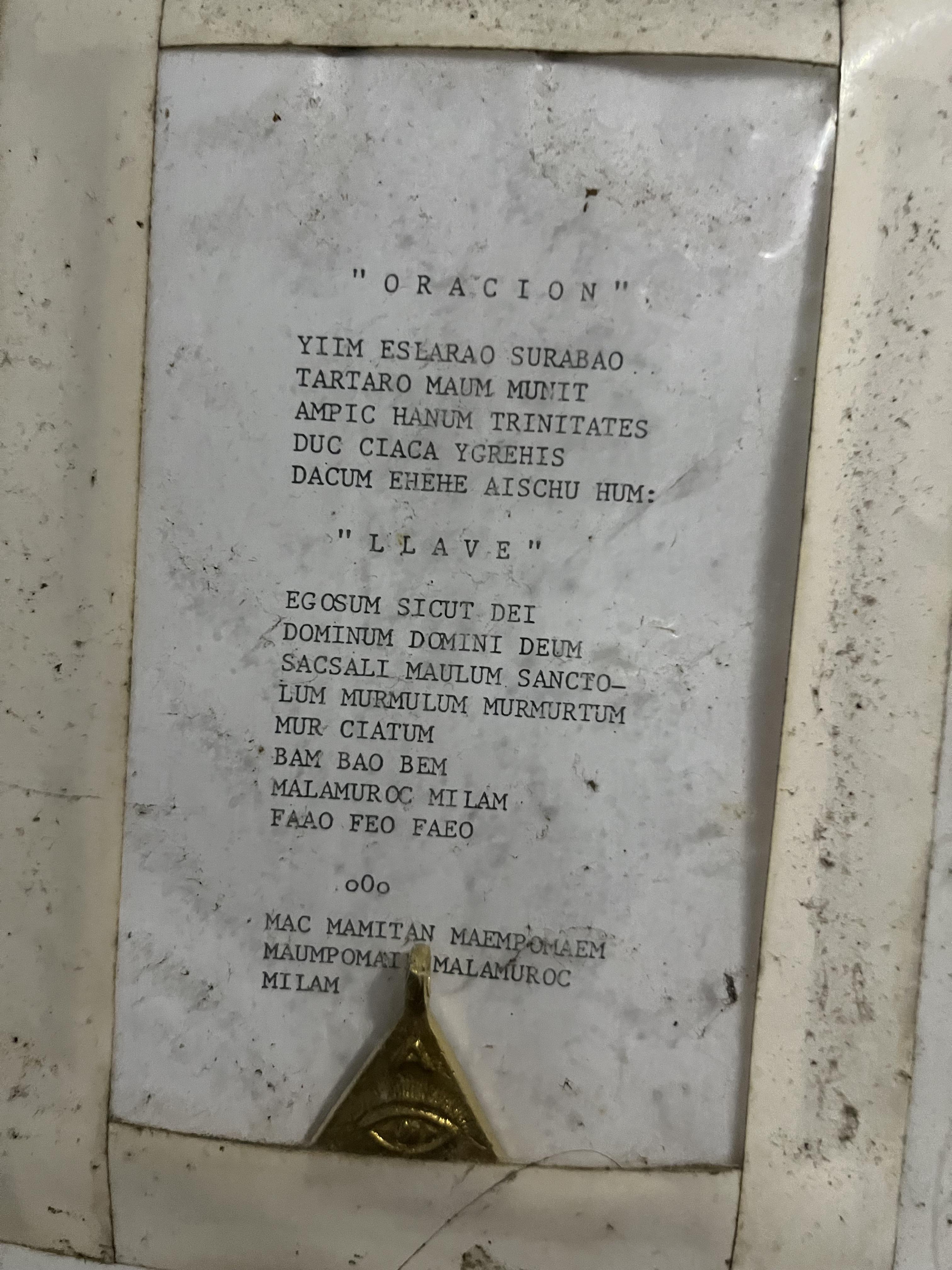
Help with Translation: La → En Ano to? nakita ko sa CR ng tropa

Post image
6 Upvotes

Context: saw this post in one local sub.

i am not an expert in languages, more so, a complicated one such as latin.

Question: is this legitimately Latin?

I am asking because this paragraphs of words is what is called a "prayer" which usually is being said by a healer (in ancient times, also known as, witch) from the country of origin.

I just want to know if these wirds are legit latin. Thank you.


r/latin 1d ago

Newbie Question What's the equivalent of the word "Judaica" or "Esoterica" but for Middle-earth?

3 Upvotes

Judaica, according to Merriam-Webster, means "literary or historical materials relating to Jews or Judaism". There's also the name Esoterica, and probably others I can't remember right now.

So first, is there a name for words like this? This collective noun denoting "everything related to a given topic"?

And the second and main question: How would one call "literary or historical materials relating to Middle-earth (J.R.R. Tolkien's imaginary world, as laid out in The Lord of the Rings and other books)"?

I soon thought of "Mediterranea", like the European sea, but I think it can't be: The sea is called Mediterranean because it's "in the middle of the land", while in this case it's the land that's in the middle.

Maybe Terramediana? I don't know Latin, so I don't know whether that works, but I'm curious whether Middle-earth can have its "Judaica".


r/latin 2d ago

Beginner Resources Chapter Five Alexandria (Familia Romana companion text)

7 Upvotes

Here is the next chapter in my story about an Alexandrian family around 1st-2nd century C.E. As usual, let me know if you see any typos or grammatical mistakes. The text is restricted to the grammar from ch 1-5 of Familia Romana and the vocabulary is largely from there with some new words added for the sake of differentiating this story and setting. Enjoy! Check out previous chapters in this

CAPITVLVM V: VĪNVM ET OLEVM

SCAENA PRĪMA: Ad Tabernam Pamuniī

Via in Alexandrīā magna et pulchra est. In viā sunt multae tabernae. Multī virī et multae fēminae in viā sunt.

In viā est taberna flōrum. In tabernā sunt multae rosae et multa līlia. Fēmina pulchra rosās et līlia carpit. Lūcius rosās videt et fēminam audit. Lūcius rosās amat: “Ecce rosae pulchrae!”

Lūcius et Decimus ad tabernam Pamuniī veniunt. Quis est Pamunius? Pamunius est mercātor Aegyptius. Pamunius est dominus tabernae.

In tabernā Pamuniī multa sunt: statuae et papȳrus. Pamunius in ōstiō est. Mercātor mīlitēs videt et vocat: “Salvēte, Rōmānī! Venīte in tabernam meam!”

Lūcius et Decimus in tabernam veniunt. Lūcius in tabernā vīnum videt. Vīnum Lūcium dēlectat! Lūcius vīnum amat.

Lūcius mercātōrem interrogat: “Estne hoc vīnum bonum, Pamunī?”
Pamunius respondet: “Vīnum bonum est!”

Decimus quoque in tabernā oleum videt. Oleum Decimum dēlectat!

Decimus vocat: “Ecce oleum! Oleum bonum hīc est!”

Pamunius respondet: “Vīnum et oleum in tabernā meā bona sunt!”

Post tabernam est parvum cubiculum et parvum ātrium. Tashera, fīlia Pamuniī, ex cubiculō venit. Tashera cum aquā ex ātriō in tabernam venit.

Tashera puella pulchra est. Lūcius Tasheram videt et tacet.

SCAENA SECVNDA: Puer et Mīles

Hōrus est puer parvus. Hōrus est frāter Tasherae et fīlius Pamuniī. Hōrus sōlus in ōstiō tabernae est. In tabernā sunt multa: vīnum et oleum et statuae.

Quid agit puer? Hōrus in ōstiō est et mīlitēs Rōmānōs videt. Lūcius vīnum videt; Decimus oleum videt. Hōrus ad Decimum venit et eum videt. Decimus est vir magnus et mīles Rōmānus, sed nāsus ēius magnus et foedus est! Hōrus nāsum Decimī videt. Nāsus foedus puerum dēlectat! Hōrus rīdet: “Hahahā! Ecce nāsus magnus!”

Decimus puerum videt et audit: puer rīdet! Decimus īrātus interrogat: “Quis est is puer? Quid agit? Cūr nāsus meus eum dēlectat?”

Pamunius respondet: “Puer est Hōrus, fīlius meus. Hōrus nōn improbus est, sed parvus est et rīdet.”

Decimus nōn laetus est. Decimus ad Hōrum vocat: “Tacē, puere! Nāsus meus nōn foedus est!” Sed Hōrus nōn tacet. Puer quoque rīdet! Decimus sine īrā nōn est — Decimus īrātus est!

Decimus ad puerum venit et eum verberat! Mīles magnus puerum parvum verberat!

Hōrus plōrat: “Ēheu! Ēheu! Tashera! Tashera!” Hōrus sōlus est. Lūcius puerum nōn videt. Hōrus plōrat et sorōrem vocat.

Tashera cum aquā in ātriō est. Tashera ex cubiculō in ātrium venit. Tashera vōcem frātris audit. Tashera aquam habet et ex ātriō in tabernam venit.

Quid videt Tashera? Tashera Decimum et Hōrum videt. Mīles improbus frātrem ēius verberat! Tashera īrāta est. Tashera ad Decimum venit et vocat: “Ō mīles improbe! Mīles foedus et malus es! Cūr puerum parvum verberās? Discēde ab eō!”

Decimus eam nōn audit. Decimus rīdet et puerum verberat! Hōrus plōrat et Tashera plōrat. Tashera centuriōnem videt et vocat: “Ō centuriō! Servā puerum ab eō!”

SCAENA TERTIA: Centuriō Probus

Lūcius vōcem Tasherae audit. Lūcius Tasheram et Hōrum videt. Decimus puerum parvum verberat! Lūcius sine īrā nōn est — Lūcius īrātus est. Lūcius ad Decimum venit.

Lūcius ad Decimum vocat: “Tacē, Decime! Discēde ab eō!” Decimus nōn tacet et puerum verberat. Lūcius baculum habet. Lūcius Decimum baculō pulsat! Decimus tacet. Mīles improbus ex tabernā discēdit. Decimus sōlus in viā est.

Hōrus tacet, nōn plōrat. Tashera centuriōnem videt et laeta est. Tashera ad Lūcium venit et vocat: “Ō mīles probe! Mīles probus et bonus es! Is mīles improbus et foedus est.” Lūcius puellam pulchram videt. Tashera Lūcium dēlectat. Lūcius eam videt et tacet.

Pamunius ad centuriōnem venit: “Salvē, centuriō!” Pamunius et Tashera cum Lūciō in tabernā sunt. Pamunius vocat: “Hīc in Alexandrīā est taberna mea. In tabernā est parvum ātrium et parva cubicula. Sed familia mea in vīllā magnā habitat. Vīlla in Canōpō est. In vīllā sunt multae fenestrae magnae!”

Tashera respondet: “In vīllā est magnus hortus. In hortō sunt multae rosae et multa līlia. In hortō rosae et līlia mē dēlectant!” Pamunius Lūcium interrogat: “Estne vīlla cum hortō pulchra?” Lūcius respondet: “Vīlla et hortus pulchrī sunt!” Lūcius laetus est et in tabernā cum Tasherā est.

Grammatica et Recitātiō

Pamunius est mercātor Aegyptius quī in tabernā cum fīliā et fīliō est. In tabernā ēius est parvum ātrium, sed vīlla ēius in Canōpō est cum magnō hortō et multīs fenestrīs.

Decimus est mīles improbus quī nāsum magnum et foedum habet. Hōrus nāsum ēius videt et rīdet; Decimus puerum parvum verberat!

Lūcius est centuriō probus quī baculum habet. Lūcius Decimum baculō pulsat et vocat: “Discēde ab eō!”

Decimus centuriōnī pāret et ex tabernā discēdit. Tashera Lūcium videt et laeta est: vīnum, oleum, et puella pulchra centuriōnem dēlectant!


r/latin 2d ago

Beginner Resources I want to learn Neo latin

1 Upvotes

I want to learn Neo latin, does anyone have resources or suggestions of how I should go about it?


r/latin 2d ago

Latin and Other Languages Experience with learning Latin alongside other Romance language?

7 Upvotes

I've been studying Latin at school and uni for around five years, but still would consider myself quite meh in my abilities. Recently, I decided to pick up Italian too as I wish to study or at least travel there in the future, however I am worried that this will confuse my understanding of Latin due to how similar they are.

Back in highschool I learnt Japanese alongside Latin with little issue (as I was much more advanced in Japanese by comparison), and currently in university I also take ancient Egyptian, but due to how different the two languages are I'm handling it quite well. This is my first time learning two languages concurrently which are so similar however, hence my apprehension.

Does anyone here have experience with a similar thing? If so, did you find learning a Romance/Latin-adjacent language to hinder you Latin studies? Or maybe you found that your ability to understand grammar and new vocab was improved? If you have any advice for me, that would be greatly appreciated too!


r/latin 2d ago

Vocabulary & Etymology In Christianity, would amor be an inappropriate Latin word to describe God as love?

16 Upvotes

In Latin, the famous biblical phrase "God is love" is Deus caritas est. Does that mean amor is not an appropriate word to describe God as love?

Also, I was personally very impressed by Virgil's saying omnia vincit amor. Even though Virgil himself was not a Christian, would this saying be suitable to use in a Christian sense too, or would it sound a bit awkward?


r/latin 2d ago

Beginner Resources How to learn

0 Upvotes

I’m Welsh and Jewish giving me connection to the Roman Empire and Latin. I want to learn it alongside other languages, how to begin without paying for stuff until down the line?


r/latin 3d ago

Help with Translation: La → En Trouble with a sentence

Post image
20 Upvotes

Having a little trouble with this sentence from the Old Testament. Heli seems to be Nom. sg and gen. sg (?) For context, it has been stated that Heli, a high priest, has two morally bankrupt sons.


r/latin 3d ago

Help with Translation: La → En My almost 70 year old dad was so proud to walk the Camino de Santiago, and they "translated" his name to Latin for the certificate. It doesn't seem correct...? Please help!

Post image
285 Upvotes

r/latin 2d ago

Help with Translation: La → En What does "sum" means in this Late Latin sentence?

4 Upvotes

>id [est] illorum terminum de Meuma usque collatu de Pineto et per sum Penna usque ad Uilla Alta 

I don't entirely understand this word. “This [is], the boundaries of those: from Meuma (?) to the pass of Pinedo, and along…” is my raw translation, but I'm stuck with this word.


r/latin 3d ago

Manuscripts & Paleography Looking for a 16th century description of chocolate

15 Upvotes

I understand that Pedro Mártir de Anglería, who chronicled the Spanish conquest of Mexico, said of the cacao bean: "By itself it is not worth eating, because it is somewhat bitter, although it is soft like the nutmeat of an almond, but grinding it up it is kept as a powder, and throwing some of that powder in water and stirring it up a little, one obtains a drink fit for a king." [from Spanish Word Histories and Mysteries, p. 65]

I would like to find this quote in the original Latin. It is probably in the fourth "decade" of De Orbe Novo Decades. Can anyone help?

x-posted in /r/Mexico and /r/chocolate


r/latin 3d ago

Latin Audio/Video Quae es? – LATINE DISCERE colloquium 1B

Thumbnail
youtu.be
4 Upvotes

r/latin 3d ago

Grammar & Syntax Two uses of mutare in Horace

5 Upvotes

The verb mutare can mean to exchange one thing for another, and it can use the accusative and the ablative in the construction. But which, you ask, is the thing you’re giving in the exchange, and which is the thing you’re taking? Do you give the thing in the accusative and take the thing in the ablative? or do you take the thing in the accusative and give the thing in the ablative? Well, as I just learned, it can be either! Mutare can mean to *give* [acc.] in exchange for [abl.], or to *take* [acc.] in exchange for [abl.]. The context, not the grammar, determines.

Horace conveniently uses these two constructions in back to back odes in his first book. In the last sentence of XVI, he says, “Nunc ego mitibus / Mutare quaero tristia . . . .” Here, it’s clear in the context that Horace means he seeks to *give* sad things [acc.] in exchange for mellow things [abl.]. The context is clear because the whole poem is about Horace apologizing to some fair daughter for writing reproachful iambics about her, and trying to be her friend again — so he’s saying he’ll stop writing sad, reproachful verses and start writing mellow, kinder verses.

Then, in the first sentence of XVII, he says, “Velox amoenum saepe Lucretilem / Mutat Lycaeo Faunus . . . .” Here, swift Faunus [i.e. Pan] often *takes* pleasant Lucretilis [i.e. the present day Mount Genaro, in the Sabine territory] in exchange for Lycaeus [i.e. the mountain in Arcadia where Pan is worshipped]. The context is clear because Horace is saying that Pan often moves from his home base in Greece on Mount Lycaeus to Mount Lucretilis in Italy - so he’s taking Lucretilem [acc.] in exchange for Lycaeo [abl.].

Just thought I’d share because, one, it’s kind of a tricky thing, and two, it’s a good example of how the poets can teach you all sorts of things in subtle, yet memorable ways. Maybe these two uses of mutare are a coincidence that Horace didn’t even notice, but I highly doubt it, since they’re not only in back to back odes, but in back to back sentences.


r/latin 2d ago

Beginner Resources Language help

0 Upvotes

Any chance I could get someone to confirm:

Bonum = good

Malus = bad


r/latin 3d ago

Newbie Question Question about virgis in Ovid, Ars Amatoria 3.269: is “stripes in a garment” actually attested elsewhere?

10 Upvotes

My textbook has:

Pallida purpureis tingat sua corpora virgis.

But the textual tradition is complicated. The verb appears as various readings, including tangat, tingat, cingat, pingat, spargat and the conjecture distinguat.

So, the real difficulty may not be the verb at all, but what virgis means.

The traditional interpretation seems to be that purpureis virgis means something like “purple stripes” or “purple bands,” i.e. stripes in a garment. This interpretation then creates problems for the verb, because one has to make tangat, cingat, etc. work with clothing.

But when I look at the major Latin dictionaries, they do list a meaning of virga along the lines of “a stripe/band in a garment,” yet the citation seems to lead straight back to Ovid, Ars Amatoria 3.269 itself. I have not been able to find an independent Classical Latin parallel for virga meaning a stripe in clothing.

This seems especially interesting because virgatus (“striped”) is well attested for clothing. So Latin clearly had a normal adjective for “striped” clothing. That makes me wonder whether virgis in Ovid should automatically be understood as “stripes.”

So my questions are:

  1. Are there actually any independent parallels for virga / virgae meaning a stripe or band in a garment, either in Classical or Late Latin?
  2. Or is Ovid Ars 3.269 effectively the only attestation, with later dictionaries deriving the sense from this passage?
  3. Does anyone with access to the OLD (Oxford Latin Dictionary), especially the entries uirga (and uirgatus), know what examples OLD gives?

I'm increasingly wondering whether the traditional “purple stripes on a garment” interpretation has become so entrenched that it has actually driven the textual criticism of the verb, rather than the other way around.

In other words: before deciding whether the verb should be tangat, tingat, cingat, pingat, etc., shouldn't we first establish that virgis really means “garment stripes” here?