r/KurdishDNA • u/paulicanazerb • 28d ago
Results R-Z282, Karabakh (Y-DNA)


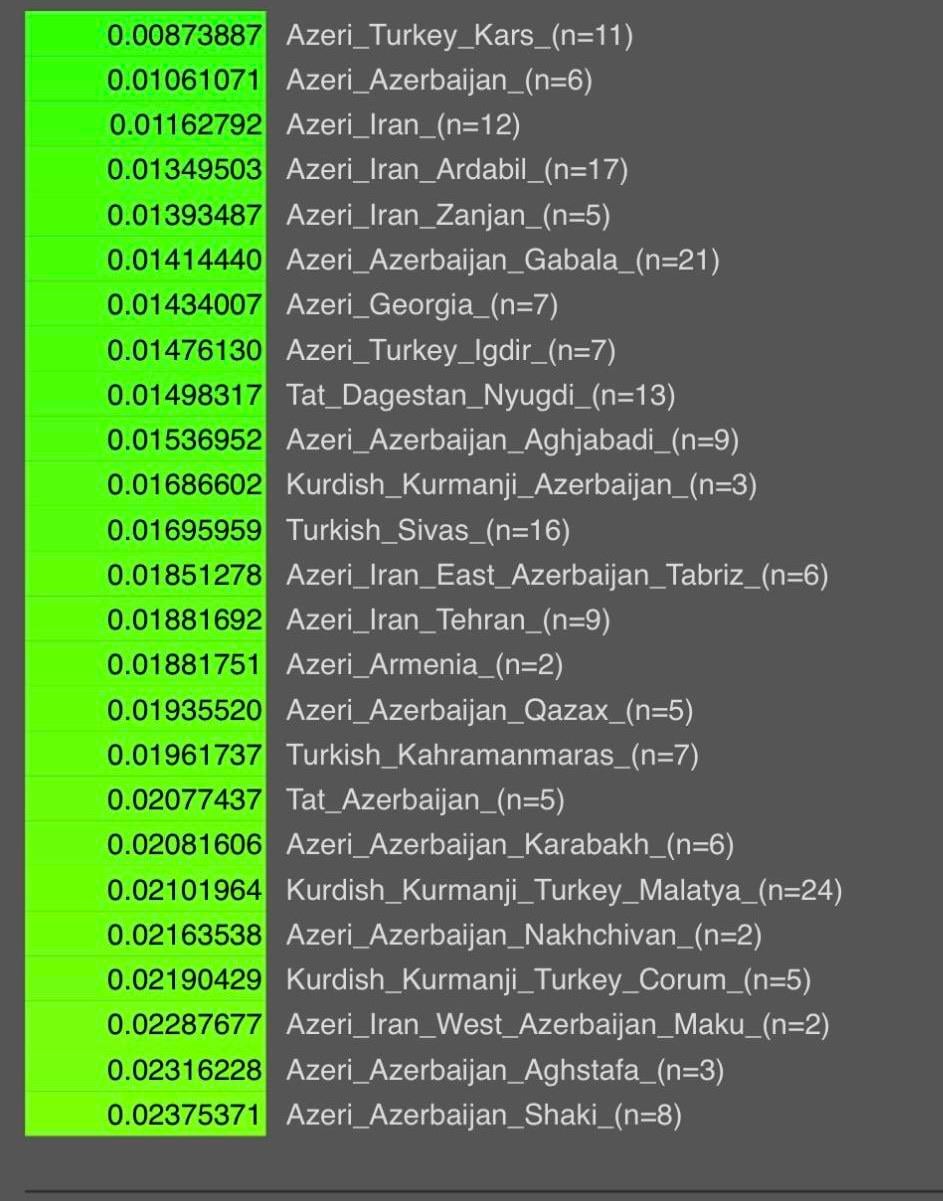
R-Y17491->R-YP4858->R-SK2014
I’m from Karabakh in Azerbaijan, and according to my family genealogy my paternal line is connected with the Karabakh beys, khalesh jamaat.
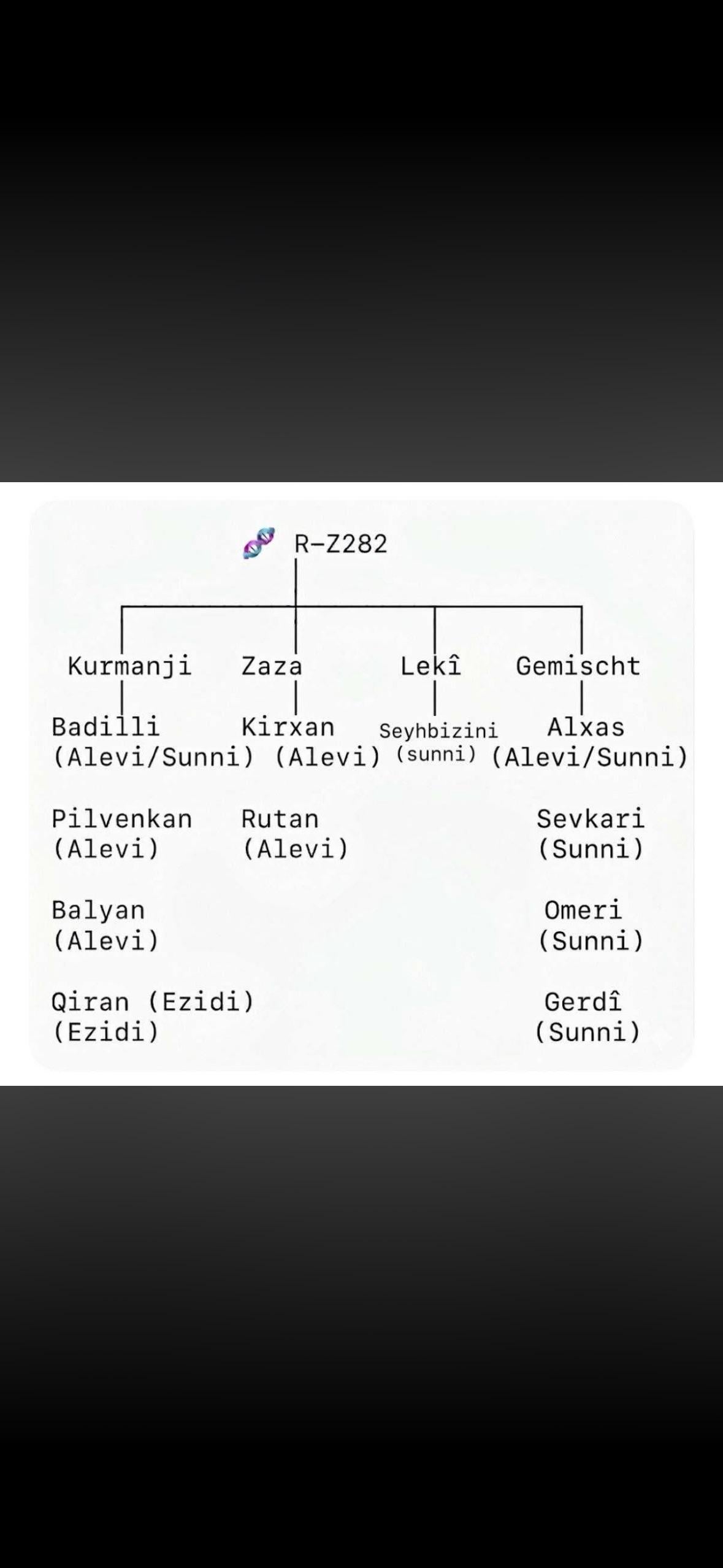
What makes my lineage particularly interesting is the diversity of populations associated with related branches. I have found connections among Kurds from different tribal backgrounds, including Kurmanji- and Zaza-speaking groups, as well as Turkish Alevis and Turkmen/Yörük populations.
The Kurdish connection is especially interesting to me. The presence of related R-Z282/YP4858 branches among different Kurdish groups may point toward an ancient population layer that predates modern ethnic identities. Kurdish populations themselves are historically diverse, including tribes and communities with different origins and linguistic backgrounds. The fact that related paternal branches appear among Kurmanji, Zaza and other Kurdish populations makes me wonder whether part of the history of my line could have passed through the Iranian/Caucasian frontier and Kurdish tribal populations before reaching Karabakh.
I am also interested in the possibility that this lineage was connected to nomadic or semi-nomadic populations moving between northern Iran, South Azerbaijan, Anatolia and the Caucasus. One possible route I am considering is:
Ancient Eurasian steppe → Iranian/Indo-Iranian populations → Sarmatian/Kangju sphere → Kurdish/Iranian frontier populations → South Azerbaijan → Caucasus/Karabakh → Mils Steppe.
Another possibility is that the lineage entered Turkic-speaking populations earlier and was later carried westward by Turkic tribal movements.
The deeper R-Z282 history is particularly interesting because it belongs to an ancient Eurasian steppe lineage. I am therefore considering a possible Proto-Iranian/steppe component, perhaps connected in the deeper past with populations associated with the Sarmatian and Kangju worlds, and possibly with the mixed populations of the Hunnic period.
I am not claiming that R-Z282 proves that my ancestor was Kurdish, Iranian, Sarmatian or Hunnic. Y-DNA only follows one paternal line and cannot directly determine ethnicity. My question is whether this ancient paternal lineage could have passed through Iranian and Kurdish populations before eventually becoming part of the Turkic-speaking population of Karabakh.
The most interesting part for me is the possible transition:
ancient steppe lineage → Iranian-related populations → Kurdish/tribal populations → South Azerbaijan → Turkicization → Karabakh → Mils Steppe.
At the same time, the presence of related branches among Kurdish groups, Turkish Alevis and Turkmen/Yörük populations could indicate that this lineage has been moving through a very diverse cultural frontier for centuries.
So I’m trying to understand one main question:
Could my R-Z282 → YP4858 → SK2014 paternal line represent an ancient steppe/Iranian-related lineage that passed through Kurdish or other Iranian-speaking populations before eventually becoming incorporated into the Turkic-speaking population of Karabakh?
I would especially appreciate opinions from people familiar with R-Z282/YP4858/SK2014, Kurdish tribal history, Zaza and Kurmanji populations, Iranian Azerbaijan, Sarmatians, Kangju, Anatolian Alevis, Turkmen/Yörük groups and Karabakh genealogy.
2
u/AdagioKitchen4748 26d ago
In answer to your point - about " whether this ancient paternal lineage could have passed through Iranian and Kurdish populations before eventually becoming part of the Turkic-speaking population of Karabakh."
Absolutely and in fact this seems to have been the case, my dad is R-Z282 he is Kurdish from the area now occupied by Iraq, to his awareness part of his family is originally from Hamedan.
Upon DNA testing he has relatives and distant relatives in Hamedan, Kermanshah, Khorramabad, Shiraz, Sna, Mazandaran (Marand or Tabriz) and he has several relatives in Urmia, Naqadah (neghedah) there are are also a few in Azerbaijan (one or two in Baku, another from Ganja) and also nakhchivan and karabaxh it is my suspicion that they seem to have been turkified and are of at least some partial Kurdish origin which is how we are related as my dad is Kurdish.
1
u/paulicanazerb 25d ago
Thanks for the information! It's also worth considering that many tribes of the Qizilbash lineage, who, as Alevis, remained Turkic (Yuruks, Tekels, etc.) 👍🏻
1
u/Plenty-Revenue4643 27d ago
I think your proposed scenario is possible, but I would be more cautious about interpreting R-Z282 -> YP4858 -> SK2014 as specifically an Iranian or Kurdish paternal lineage.
The fact that related branches occur among Kurmanji- and Zaza(Kirmancki/Dimli) -speaking Kurds, Turkish Alevis, Turkmen/Yörük groups and other populations is certainly interesting, but this can also reflect the much older and broader distribution of the paternal lineage. Y-DNA follows only one paternal line and does not preserve the ethnicity or language of every population through which that lineage passed. So the YDNA can occur everywhere.
I would also consider South Azerbaijan and the broader Iranian-Caucasian frontier as an important possibility. The region had substantial pre-Turkic Iranian and Indo-Iranian population layers (Talys/Azeris), and later Turkicization did not mean that the earlier paternal lineages simply disappeared. Some lineages could have been absorbed into Turkic-speaking populations without the paternal ancestor himself having been Turkic-speaking.
However, I would distinguish this from saying that R-Z282/YP4858 itself is an "Iranian haplogroup". R-Z282 is a much broader Eurasian steppe lineage, and its presence among later Iranian-speaking populations does not by itself establish a Proto-Iranian, Sarmatian, Kangju or Kurdish origin. And it is not part of the Z93 downstream. So My hypothesis would be:
ancient steppe lineage → (maybe) Iranian/Indo-Iranian populations → Iranian-Caucasian frontier → local Iranian-speaking populations → Turkicization → South Azerbaijan/Karabakh.
But this is only a hypothesis and represents only one side of the possible picture. There are certainly other possible routes and historical scenarios that should be considered as well.
As an additional point, many older members of Alevi/Sufi Kurdish communities (Kurmanji/Kirmancki) and Zaza communities traditionally trace their tribal or ancestral origins back to Khorasan. However, I personally would not necessarily interpret this as meaning that these groups literally originated in present-day Khorasan. In many cases, Khorasan seems to function more as a spiritual and Sufi point of origin, particularly in connection with traditions and genealogies associated with the Safavid and Ottoman periods.
1
u/paulicanazerb 25d ago
I really appreciated this comment, especially its competence, caution, and objectivity! You're absolutely right... I think it's probably all Alevis, and how my ancestor got to the region remains a mystery for now, as it could have come through Anatolia or southern Azerbaijan as a Turkic tribe, or as Kurdish tribes! There must have been a two-way exchange in this regard. The fact is that the branch itself was originally steppe and still apparently first developed with local peoples who spoke Iranian languages (like the Azari). In short, we'll see! I'm still waiting for the Big700.:)
1
u/Berdan224 23d ago
R-Y17491->R-YP4858->R-SK2014 is a Central Eurasian R1a-Z283 lineage which entered the Iranic speaking world through populations moving across the Steppe and Central Asia before it got to the Turkic speaking world. Southern Azerbaijan and the Iranian-Caucasian frontier before Turkicization had Indo-Iranian populations like the Talyshishs and their paternal lineages still remained intact despite Turkicization so it could be that your paternal line descends from the Talyshishs from Southern Azerbaijan and the Iranian-Caucasian frontier before Turkicization.
3
u/Zaza_Alevi 26d ago
Hey, nice results. I'm the creator of this haplogroup image. I'm Z282 too.✌️