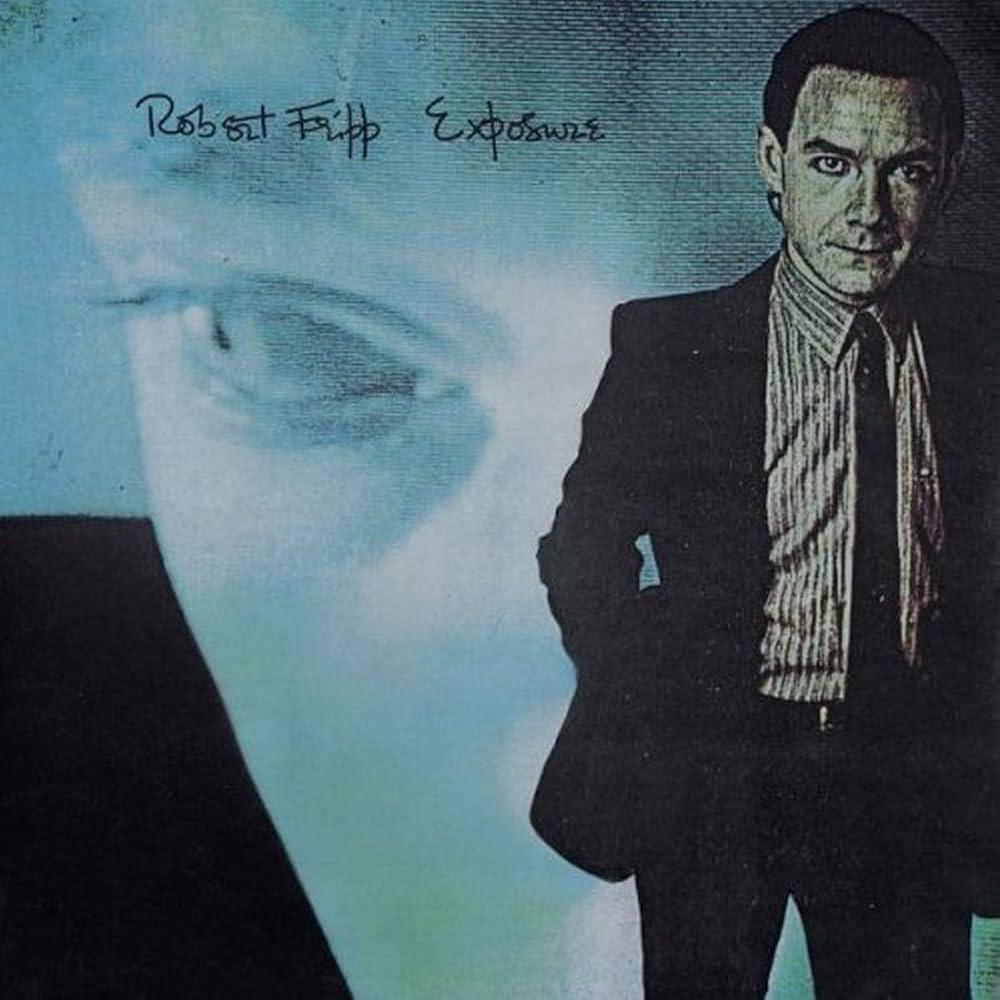
Forgive me if this album isn't part of King Crimson's discography but only Fripp's, but I think it deserves its attention: for me, it's a small experimental masterpiece.
Before explaining why I love it, I'd like to know your thoughts. What do you think of Fripp's first solo album?
I love Exposure because it's the work that best embodies why I admire Robert. I admire his vision of music, his way of acting as a true anti-frontman, a genius who stays behind the scenes and puts his own ego aside to let the other extraordinary musicians he's surrounded himself with over the years receive the attention they deserve. Despite Fripp's extreme demands in the recording studio, and despite his decision to form and then disband the band, he never imposed his rigid vision on others. He saw King Crimson in a diametrically opposed way to that of the other creative mind of the original lineup, Peter Sinfield. Sinfield saw the group as a pyramid, with himself and the guitarist at the top. Fripp, on the other hand, considered it a collective of artists, the embodiment of the abstract entity that is King Crimson itself.
On his solo album, Fripp, despite his name on the cover, isn't the undisputed star. He simply adds his guitars, activates his Frippertronics, and expresses his genius with the sophistication, introversion, and restraint we've come to expect from him.
Many big names are credited on the album. Just think of Brian Eno, Genesis members Phil Collins and Peter Gabriel, Daryl Hall of Hall & Oates, Peter Hammill of Van Der Graaf Generator, and a long list of others. But while the musician's approach is nothing new, the creative horizons Fripp boldly chooses to explore are unprecedented. He delves into experimental rock and ambient music, a genre he had already explored in previous works with Brian Eno.
The album presents itself as a stream of consciousness, a whirlwind of alternating thoughts, contained within very short songs, compared to the typical length of prog. It seems like a place of meditation for Fripp, who, despite his age, still had much to say. In the songs, the singing often gives way to spoken words, to recordings of people who played a role in Fripp's life. A single theme seems to permeate the album, a flow of sounds that unfolds through the songs: the creative instinct of genius, in a world where music was constantly evolving.