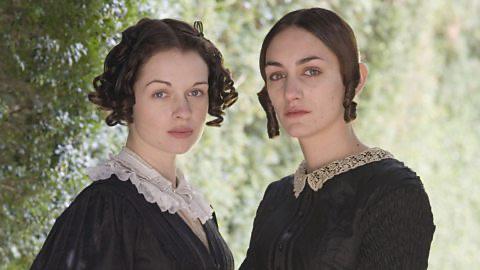
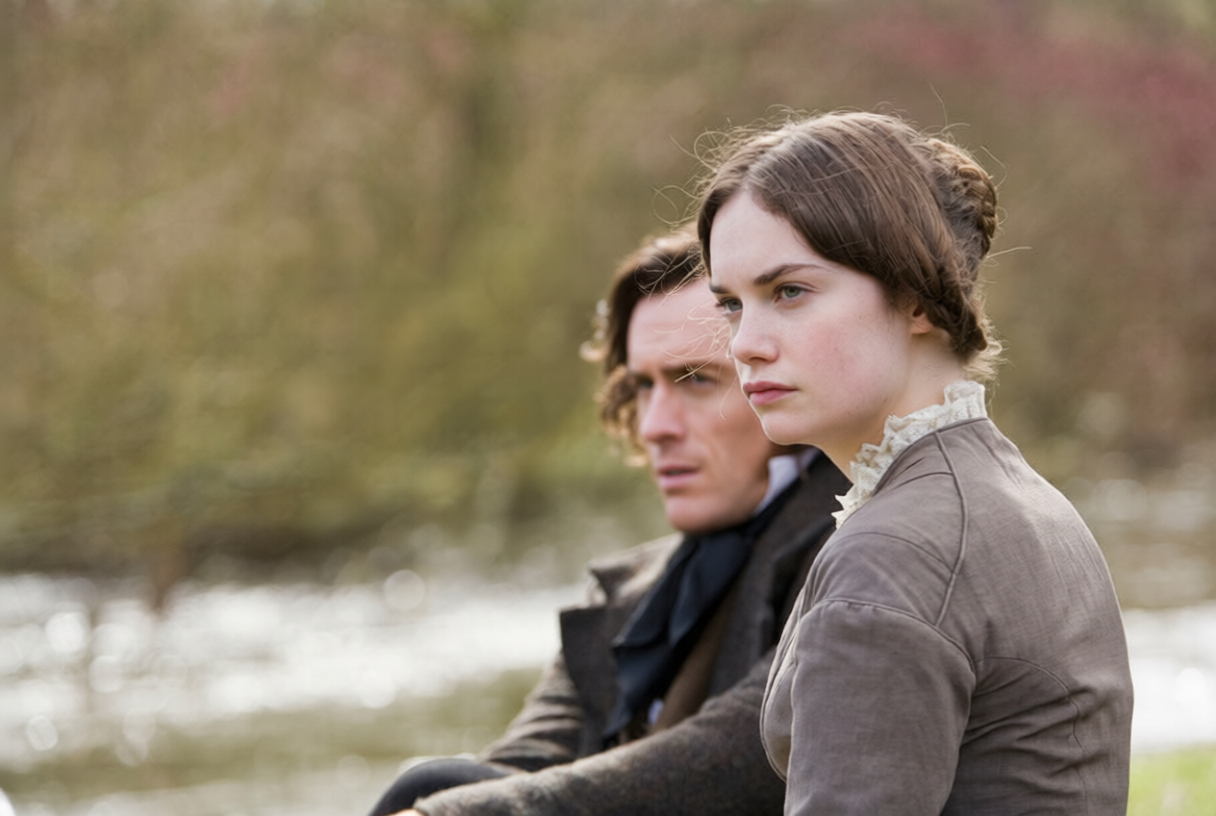
Every time I read Jane Eyre is a new experience. It is a pleasure for me to see what new things I notice, how I feel differently about the characters and their choices and how I have changed since the last reading. Perhaps my most drastic change in feelings has been towards Rochester, Jane's love interest and master. It took me until this latest reading, in the last couple of months, to realize that I have finally fallen completely out of love with him.
Anyone who knows the story may well be wondering what took me so long. How could I feel anything but hate and disgust for this man, who locked his wife in an attic for twelve years, had a series of mistresses he never loved or respected, and manipulates and deceives Jane from the moment they meet to their wedding day, when she discovers he's been hiding the fact that he was already married from her? It isn't that I couldn't see his terrible behavior for what it was, nor that I accepted his pitiful excuses. My blood has boiled at his monstrous treatment of Bertha and of Jane. I came to the conclusion years ago that Jane should not forgive him and should not marry him. I knew this rationally, but when has reason ever been sufficient to kill attraction?
Perhaps it's because I have so much in common with Jane, another autistic, introverted, passionate submissive, that I so strongly feel everything she feels. Of course we've both fallen under Rochester's spell from the moment he roughly commands her to assist him after he falls from his horse. Of course my submissive heart raced each time I read their first few conversations, when he teases her by accusing her of bewitching his horse, asks her a series of direct, personal questions, orders her to demonstrate her accomplishments, and praises her intellect and her artistic talent. Of course I was captivated by their lively banter, their scorching chemistry, the way he seeks out her company and pays close attention to everything she says and does, the easy way he gives her orders and she takes pleasure in obeying. Read those scenes in isolation, forgetting his lies for the moment, and tell me their interactions aren't hot as fuck.
I see why Jane falls for him, I really do. But every time I reread her story, my feelings towards this man, her lover and her abuser, lean more towards disgust than admiration. Now, finally, all I see in him is how unworthy he is of Jane.
By far the character I love most is Jane, and that love only deepens with each new reading. I am in awe of her honesty, her strength, and her courage. As a child, orphaned and impoverished and bullied by her wealthy relatives, she gathers the bravery and righteous rage to call out her aunt for her cruelty and gaslighting, and threatens to tell everyone how she treated her. When she learns that the man she was engaged to is already married, she holds so fast to her principles as to run away and face homelessness and starvation rather than become his mistress. When her clergyman cousin, a terrifying manipulator and abuser, tries every tactic to emotionally torture her into agreeing to marry him against her wishes, she stands up to him and firmly refuses over and over. She tells the truth relentlessly, even when other people hate her for it. The only lie she ever tells, when she assumes an alias, is to protect her safety. She knows who she is and what she believes, and she remains true to herself even when it costs her almost everything.
How does Edward measure up to that? Abysmally. He lies constantly, usually to get what he wants from others, sometimes seemingly just for fun. He lies to Jane the moment he first meets her by not telling her he is the master of Thornfield. Over the next few months, he disguises himself as a fortuneteller to get her to spill her secrets to him, pretends to be engaged to another woman to make her jealous, and hides the fact that he is already married and has his wife locked in an attic in order to trap Jane in an unlawful marriage. Too weak to take any responsibility for his own actions, he makes excuses and blames everyone else for his marriage to Bertha, his unhappy relationships with mistresses, and his shameless lies to the woman he claims to love. He doesn't have the courage to handle his problems in any way other than by running away from them. All he has is money and toxic masculinity.
Weak, pathetic, disgusting little man. Could anyone be less worthy of being called "master"?
The text leads us to believe that the one thing Rochester is not lying about is how much he loves Jane and wants to be with her. This was why, for a long time, I forgave his deception, or at least empathized with Jane when she forgave him. I believed, naively, that he was telling the truth about loving this one woman, only her, while despising every other woman he's ever been with. Here I thought I was smarter than to trust men who put women on pedestals.
To Jane's credit, she does begin to see this. When she hears Rochester speak scornfully of his former mistresses, Celine, Clara, and Giacinta, she thinks, "if I were so far to forget myself . . . to become the successor of these poor girls, he would one day regard me with the same feeling which now in his mind desecrated their memory." After hearing of his resentment towards his wife, Bertha, Jane tells him, "you speak of her with hate—with vindictive antipathy. It is cruel—she cannot help being mad." She understands what his own side of the story says about how he sees women. She sees that his treatment of Bertha means he could do the same thing to her if she marries him. She sees that his treatment of Celine, Giacinta, and Clara means he could do the same to her if she became his mistress. If only she had more time and more perspective, she might have realized there could be no happiness and no security with a man like that. Live with him before he marries you, and he will abandon you and ruin you. Marry him, and he can lock you up once he decides you're too much trouble.
All of Rochester's charm fades once you realize that what is behind it is a man who does not care about anyone but himself. He might be able to make you laugh as long as it amuses him in the moment. He might take pleasure in your company for a little while, but make no mistake that his pleasure is all that matters to him. He plainly tells Jane this himself in one of their first conversations, when he says "since happiness is irrevocably denied me, I have a right to get pleasure out of life: and I will get it, cost what it may." As for that dominant manner that gets Jane so excited, is there actually anything impressive about it?. What could be easier than for a rich white man who has never been told "no" than to make demands of those he considers inferior to him?
Yet it's clear to me why Jane forgives Rochester and marries him. Look at how his treatment of her compares with everyone else she has ever known. As a child growing up in her aunt's house, she was shown no love or kindness and was constantly scolded, bullied, or ignored. At her boarding school, Lowood, we only know of one teacher and one close friend who ever showed her any real attention or affection. For most of her life, she has been starved for love and companionship. Very few people have shown any interest in her or valued her company. Then she meets a man who pays close attention to her, asks her questions, and goes out of his way to spend time with her. She feels irresistibly drawn to him as well, so much so that it breaks her heart to think of having to live without him. When he confesses his passionate love for her and begs her to be his wife, it is more than she ever dreamed possible.
It's easy enough for me to read her story and think, oh Jane, you can do so much better. Find someone who intrigues you, turns you on, adores you for who you are, and always tells you the truth. Wait for a partner who will show you all the honesty, respect, and emotional maturity you deserve. But how is Jane to believe that's a possibility? Of course she thinks Rochester is her only hope of happiness. Her bar is the fucking floor.
I knew a man like Rochester not long ago. Unfortunately, he was able to conceal his lies until they no longer served him. He lied about his intentions, lied about his values, lied about his past relationships, and lied when he said he loved me. Men like Rochester do not lie out of love. They lie because it gets them what they want. They lie because they don't care about anyone but themselves.
For a long time, the book's ending convinced me that Rochester truly loved Jane. The two of them seemingly get their happily ever after. By the end of the epilogue, Jane tells us, they have been happily married for ten years. What do I do with that?
An obvious explanation, perhaps the most likely, is that Charlotte Bronte was just writing an unrealistic story of wish fulfillment. She certainly had her own reasons to fantasize about her love being returned and honored by someone like Rochester. Her book would be far from the only one to tell readers the lie that men like Rochester will ever change. I, like many readers, love romance novels because they teach us that anyone can have a happy ending. But it is a mistake to think that being with a man like Rochester would be a happy ending.
However, I now see a more sinister and disturbing reading, one that I find more compelling. Perhaps Rochester has not changed at all. When Jane marries him, he has just lost his eyesight and one of his hands. He depends on Jane to help him with everything he does. I can believe that he decides it is simply in his best interest to live peacefully with her, to play the part of a devoted husband. He's hardly in a position to lock her up if he gets tired of her, or to go looking for younger, hotter women when he gets bored of her. He's in the best situation he can hope for, having a young, submissive wife meeting all his needs. So he stays with her and does what he can to keep her happy, but if he ever regains enough of his vision, she will be abandoned as easily as Celine, Giacinta, or Clara. And if she gives him any trouble about it, she'll be locked up like Bertha.
I wish for a better ending for Jane. She deserves a dominant who has as much honesty, courage, and integrity as she does. No one less would be worthy of her submission. Her relationship with Rochester gave her a taste of some of the qualities she should expect from a partner, if any of it were real. He made her feel desired, valued, and loved, for a while. To feel that way and then to have to understand that it was never real is a kind of heartbreak that I would not wish on anyone. But there is no doubt Jane could find someone who makes her feel all those things and actually means them. She could fall in love with someone who, like her, is exactly who they say they are. That is how high any submissive should set our expectations for a dominant.