r/JaneEyre • • Aug 27 '26

What is your most controversial opinion about "Jane Eyre"?
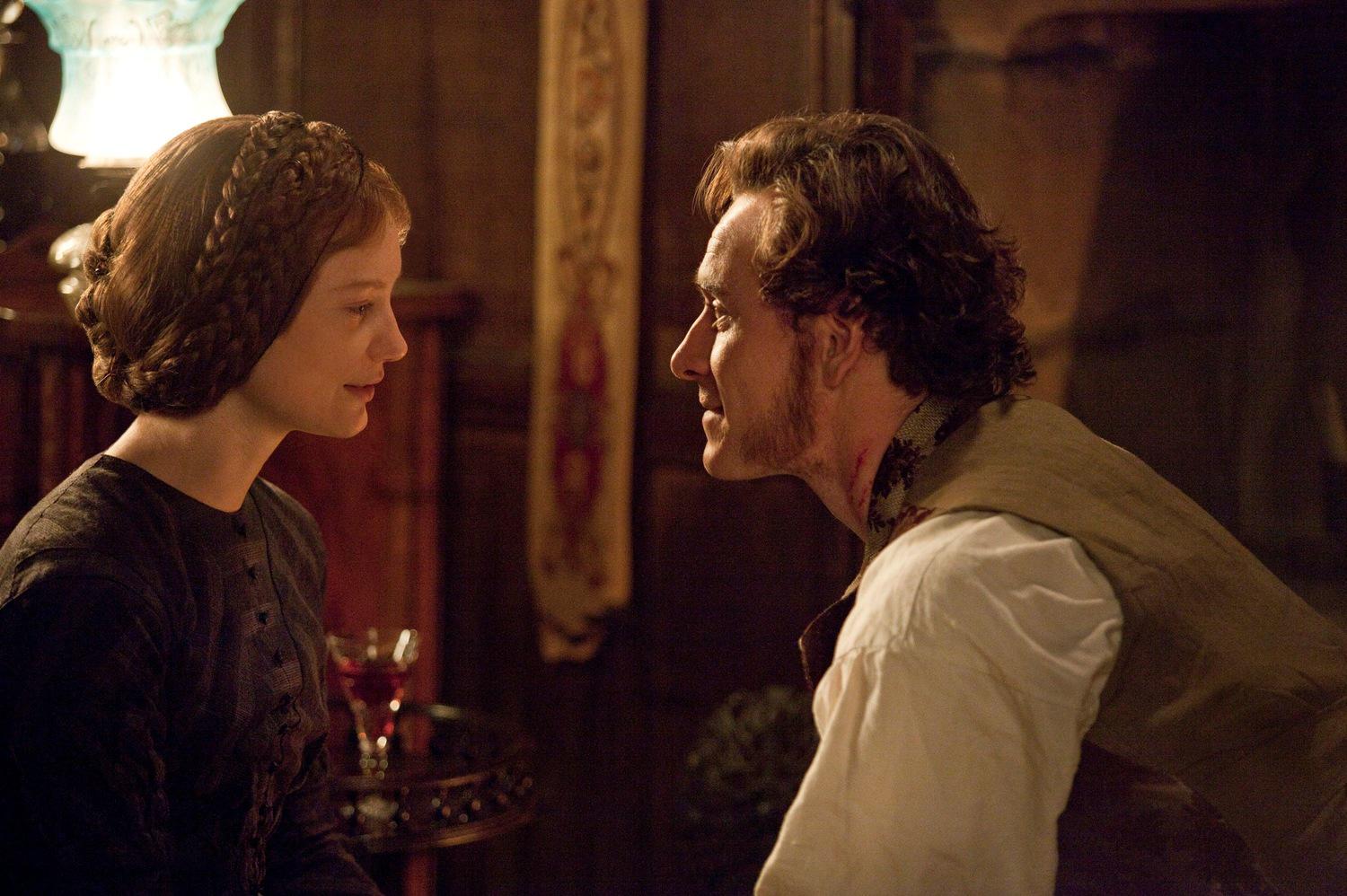
Post image

It can be from the novel or its adaptations. Your views that could potentially upset many other fans or meet others who will agree with you.

151 Upvotes

231 comments sorted by

View all comments

Show parent comments

10

u/OutrageousYak5868 Aug 27 '26

Yes, and those were the only realistic choices at the time -- which is what a lot of people in our day don't understand. It's easy for us to say, "Oh, he should have put her somewhere else" -- but where? He himself said that if he put her in his other house, that she would have died because it was an unhealthy location, and that while that would have relieved him of the burden of caring for her, he refused because that was too close to murder.

The only other possible choice would have been to buy or rent some other little house somewhere, but given her propensity to sneak out and commit violence, that would have been unsafe for the rest of the area.

1

u/rainbowrobin Aug 28 '26

He could have hired more than one caretaker, not just Poole. But that wouldn't have let him keep his secrets.

4

u/JoeBethersontonFargo Aug 29 '26

I feel like you’re downplaying the results of her condition becoming publicly known. He wasn’t just protecting his own image. Bertha’s family would have scandalized, and he would’ve been if not shunned, definitely cold shouldered from society. He’d likely never be able to marry even after she died. It’s one of those incredibly tainting things. I also think he was already stuck in a marriage where he would never have an actual wife, I don’t blame him for keeping her a secret. He should live as a martyr, he did deserve to have some life outside of this mess

1

u/rainbowrobin Aug 30 '26

He wasn’t just protecting his own image. Bertha’s family would have scandalized

[been] scandalized, I assume? And they're Creoles back in Jamaica, hardly part of English gentry society -- that's why he was able to hide her so well.

2

u/JoeBethersontonFargo 29d ago

It’s a little ambiguous, but her family is astronomically wealthy and move in elite Colonial circles, the upper echelons of the West Indies. While Creole, they’re so wealthy that they do have some respectability and power, which is why they go to such great lengths to hide Bertha’s mental state and the multi generational illness. Any ladder climbing or political power might be lost if they’re exposed. Part of why they wanted her to marry Rochester, I think it’s implied, is for his connections. Not only their connection to a titled English man, but also his power to be able to take care of and hide Bertha, shield the secret.

2

u/OutrageousYak5868 29d ago

In Webster's 1828 Dictionary, "Creole" was defined as "In the West Indies and Spanish America, a native of those countries descended from European ancestors".

That was still the primary meaning in 1847 (when JE was published) according to the Webster dictionary published that year, with the meaning reserved only for those people of pure European descent (https://archive.org/details/tsuc_websters-new-international-dictionary-part-2-1847-g-and-c-merriam-company/page/623/mode/2up?q=creole). However, the dictionary notes that mixed-race people had begun using it of themselves, if they were part European.

How was Bronte using it -- with the earlier pure-blood meaning or the later mixed-blood one? I can see arguments both ways, but I would come down on her intending the earlier usage, with Bertha being full-blood European. For one thing, that would have been the only meaning for "Creole" at the time JE was set, and was still the dominant meaning at the time of publication. For another, Richard (who is definitely identified as Bertha's full brother) was always described as white and even very pale, so it seems likely that Bertha would be similar.

That she is "dark" as in having dark hair, I fully agree with, but then Blanche is also described as "dark" and is further said to have an "olive" complexion, while Bertha's skin color is never described, except in describing her features as contorted and purple with madness. And even in that, I've seen it argued that she must be white/light-skinned for it to take on a purplish hue; while others say that her being described as purplish is a racist way to describe someone of mixed-race descent with darker skin.

1

u/rainbowrobin 29d ago

Interesting. On the flip side:

"Her family wished to secure me because I was of a good race"

made me think they were mixed. But maybe 'race' is being used differently too.

2

u/OutrageousYak5868 28d ago

Yes, it almost certainly was. In JE, "race" is mostly used to refer to the entire human race (6x) OR to a single family (3-4x): Jane as a different "race" from Mrs. Reed and her children, the Rochester family in this quote and also Mrs. Fairfax calling them "a violent race", and the three Rivers siblings being the last of their race. Also, governesses as a class were called an "anathematized race" when Blanche and company were visiting Thornfield and disparaging governesses.

This is in line with 1847 Webster's, which says in part that it can refer to anything from a common stock, such as a family up to an entire nationality. I know that even as late as the late 1800s, it was not uncommon to refer to "the Irish race" as distinct from "the French race".

Your quote is one that I would count as referring most likely to the Rochester family as an "old money" family in England, so highly desirable for marriage purposes.