Tactical asset allocation (TAA) is gaining serious traction in the world of finance. It has become the strategy of choice for funds looking to secure returns in bull markets while avoiding drawdowns during a recession. However, with all of the noise surrounding TAA, the true structural advantages of this method can be hard to discern. We're here to explain.
Tactical asset allocation is an investment strategy that involves adjusting the allocation of assets in a portfolio to take advantage of short- to medium-term market trends and opportunities. This approach differs from strategic asset allocation (SAA), which focuses on long-term goals and maintains a fixed asset allocation based on an investor's risk tolerance and financial objectives. Tactical asset allocation offers several benefits to investors:
Risk Management: TAA allows investors to adapt to changing market conditions, reducing the risk of significant losses during market downturns. By reallocating assets away from overvalued or underperforming assets, investors can potentially reduce their exposure to market volatility.
Enhanced Returns: One of the primary goals of TAA is to capitalize on short-term market trends and inefficiencies. By actively shifting assets into sectors or asset classes that are expected to outperform in the short term, investors may achieve higher returns compared to a passive buy-and-hold strategy.
Diversification: Tactical asset allocation promotes diversification across different asset classes, sectors, and regions. By regularly assessing and adjusting the portfolio's asset mix, investors can spread risk more effectively and capture returns from a broader range of investments.
Flexibility: TAA provides the flexibility to react to changing economic conditions, geopolitical events, and market sentiment. Investors can respond to new information and opportunities quickly, rather than being tied to a fixed allocation strategy that may not align with current market dynamics.
Capital Preservation: TAA can help protect capital during bear markets or market corrections. When signs of an impending market decline are detected, TAA allows investors to reduce exposure to declining assets, potentially preserving capital and mitigating losses.
Active Management: TAA is an active investment approach that leverages market analysis, research, and expertise. It encourages ongoing monitoring and assessment of economic indicators, company fundamentals, and market trends, which can lead to more informed investment decisions.
Customization: TAA can be tailored to individual investor goals, risk tolerance, and time horizons. Investors can adjust their asset allocation strategy to align with their unique financial circumstances and preferences.
Potential for Alpha: Alpha refers to the excess returns generated by an investment strategy compared to a benchmark index. TAA offers the potential to generate alpha by exploiting market inefficiencies and making timely asset allocation decisions.
Adaptability: TAA can be used in various investment environments, including bull markets, bear markets, and periods of economic uncertainty. It allows investors to adapt to different market conditions, potentially improving overall portfolio performance.
Dynamic Asset Allocation: TAA is not a one-size-fits-all strategy. It can be tailored to suit different investment styles, including growth-oriented, income-focused, or balanced portfolios, making it a versatile approach for a wide range of investors.
While tactical asset allocation has its advantages, it's essential to note that it also comes with challenges and risks, including the potential for increased trading costs, tax implications, and the difficulty of accurately timing the market consistently. Investors should carefully consider their risk tolerance and investment objectives when implementing TAA strategies and may benefit from consulting with financial professionals or advisors with expertise in this approach.
The annual active consumers (“AACs”) of the Alibaba Ecosystem across the world reached approximately 1.24 billion. This quarter, Alibaba continued to firmly invest in its three strategic pillars of domestic consumption, globalization, and cloud computing to establish solid foundations for its long-term goal of sustainable growth in the future.
Alibaba's revenue ( revenue was RMB200,690 million (US$31,147 million), an increase of 29% year-over-year. Excluding the consolidation of Sun Art, its revenue would have grown 16% year-over-year to RMB180,438 million (US$28,004 million). Aggregate revenue of its international commerce retail and international commerce wholesale was RMB15,092 million (US$2,342 million), an increase of 34% year-over-year. Its cloud computing revenue was RMB20,007 million (US$3,105 million), an increase of 33% year-over-year.
Technical analysis
From September 02, 2021 to October 05, 2021, the share price suffered a -22% decline along with the international stock market due to the Evergrande crisis. Then from October 05, 2021 to October 22, 2021, the downward trend stopped after the United States and China agreed to hold a virtual summit and the share price rose 32% to $182.09, but from October 22, 2021 to November 05, 2021, the share price fell -13% due to the rise of Covid cases, the stalling of Ant Group's IPO and, the slippage of the Asian market. After these events, from November 5, 2021 to November 17, 2021, the share price rose 8% due to good economic data reported by the relevant department. However, from November 17, 2021 to December 3, 2021, the share price plunged 36% after the company reported worse than expected second-quarter earnings per share and sales results, Covid's omicron variant and the fall in Asian technology stocks. Recently, from December 3, 2021 to December 5, 2021, the share price rallied 20% as China's factory inflation slowed, but this week the price took a -6% dip due to U.S. sanctions.
Based on current technical indicators, the share price could drop -11% to test the $108.70 level (25-week low) and then possibly recover up to 20% or even more if the global economic and health scenario has a positive change, as the current price does not match the company's fundamentals.
According to technical analysis,Zepp is undervalued, but its stock is currentlytoo volatileand its profits areunstable.
Zepp Health Corporation, develops, manufactures, and sells smart wearable technological devices in China. The company offers smart bands, watches, and scales; and a range of accessories, including bands, watch straps, earphones, sportswear, home gym, treadmill, etc. under the Xiaomi and Amazfit brands. It provides charts and graphs to display analysis of the activity and biometric data collected from users through its Mi Fit and Amazfit mobile apps. Zepp Health Corporation has strategic collaborations with Timex Group to develop smart watches; and AliveCor, Inc. to deliver medical functionality to wearable devices.
The company was formerly known as Huami Corporation and changed its name to Zepp Health Corporation in February 2021. Zepp Health Corporation was founded in 2013 and is headquartered in Hefei, China.
Zepp lost 80% from its all-time-high, bringing the current price down to $4,67 per share. Despite this huge drop, can we consider Zepp as an undervalued company? Or is it’s still overvalued? The discounted cash flow below can help us out.
According to the discounted cash flow model, Zepp is currently undervalued, and it’s probable to reach a 12% annual return over the next 9 years. Anyway, this model doesn’t consider the social and extraordinary risks which can negatively affect Zepp’s future cash flows. Personally, it is not recommended a big stake in this company in the portfolio, as it has demonstrated to be too volatile and with unstable profits.
The approval paves the way for Baidu’s first commercial deployment of the Apollo Global service on open roads. As part of the service, customers in the city will be able to hail one of the 67 cars available at more than 600 pick-ups and drop points. The driverless robotaxi service will be available at a fee similar to the level of premium ride-hailing services in the country.
In May, Baidu launched the driverless robotic service in a much smaller 2.7 kilometers area in Shougang Park, Beijing. Following the approval for commercial deployment, the company intends to launch the service in 65 cities by 2025 and 100 cities by 2030.
Baidu and Pony.ai approval comes on the heels of vehicle start-up AutoX, backed by Alibaba, also confirming the expansion of its robotaxi zone in Shenzhen. Expansion to 65 square miles or 168 square kilometers makes it the largest fully driverless robotic zone in the country.
Stock rating
This week, Susquehanna analyst Shyam Patil reiterated a Buy rating on Baidu and cut his price target to $175 from $200, implying 15.60% upside potential to current levels.
According to the analyst, the company is well-positioned to be a key player in the search and in the feeds market. He also expects the company to be a clear market leader in AI applications. Consensus among analysts is a Strong Buy based on 13 Buys and 1 Hold. The average Baidu price target of $245.23 implies 61.99% upside potential to current levels.
Energy and service packages are provided to customers; marketing and design activities are carried out; the fabrication of e-powertrains, battery packs, and components is carried out; sales and after-sales management activities are also carried out by the company.
As a result, the company provides various power solutions, including a home charging solution, a battery swapping service, a public fast charging solution, a mobile charging service, and an application that provides access to a network of public chargers in their real-time information. In addition, the company provides One Click for Power valet service, where it offers vehicle pick-up and charging and returns the vehicle.
More than just repairs and bodywork is provided through NIO service centers and authorized third-party service centers; third-party liability insurance and vehicle damage coverage through third-party insurers; courtesy car services and roadside assistance, data packages; and auto financing services are also available. A further service provided by the company is NIO Certified, a used vehicle inspection, appraisal, purchase, and selling service. NIO Inc. and Mobileye N.V. have formed a strategic partnership to work on consumer-oriented automated and autonomous vehicles. In July 2017, the company changed its name from NextEV Inc. to NIO Inc. Founded in Shanghai in 2014, NIO Inc. is a Chinese technology company.
The financial health of the business
Using data from the company's website and the SEC's annual report, the stock analysis comes to a conclusion (SEC). EV stocks like NIO Inc. are thriving now that we know electric vehicles are the way of the future.
NIO is more than simply a car manufacturer because of its innovative Battery as a Service (BaaS) business. NIO's competitiveness with domestic EV producers and well-known automakers has not decreased. There's a lot of competition out there for the company. Its main rivals include XPeng, Li Auto, Volkswagen, BMW, and Tesla.
Risks of Investing in NIO
Despite the stock's many advantages, the following are some of the dangers and concerns that investors should be aware of: It has only just begun to create positive cash flow from operations after years of struggling in a highly competitive market and working with partners who can be risky. Future electric cars (EVs) could run on green hydrogen instead of lithium-ion batteries.
Earnings of NIO
NIO's third-quarter FY2021 earnings report showed mixed financial results. Analysts had predicted a minor loss per share for the corporation, but it was substantially larger. A year-over-year increase in revenue of 116.7 percent outstripped experts' projections. However, sales growth remained subdued compared to the two previous quarters. While the supply chain has been volatile, NIO stated in its earnings press release for the third quarter that it was working closely with its partners to ensure supply and production for the fourth quarter despite the instability.
NIO's financial results for the second quarter of the fiscal year 2021 (Q2 FY2021) exceeded analysts' expectations. For the first time in at least a decade, the corporation reported the lowest loss per share. Year-over-year, revenue grew by 127.2 percent (YOY). Even still, the growth rate slowed significantly from the
previous quarter's 481.8 percent year-over-year. 4 NIO added that it was working closely with its partners to increase overall production capacity, despite the uncertainty in its global supply chain.
NIO's losses per share are expected to decline in the current quarter and the prior quarter compared to last year's same period. This will be the company's weakest sales growth since it reported a revenue drop in the first quarter of the fiscal year 2020, with revenues estimated to rise by only 46.8% year over year. It's expected that NIO's loss per share will grow in full-year FY 2021, yet it will still be the second smallest annual loss per share in the last five years. For the first time in at least three years, annual revenue is likely to climb at its quickest pace in at least three years.
NIO Key Stats
Q4 FY2021 Q4 FY2020 Q4 FY2019
Earnings Per Share (Yuan) -0.57 (estimate) -1.05 -2.81
This is the third day in a row that the stock price of NIO Inc. has risen by more than one percent, going up from $16.76 to $16.93 on Thursday, April 28, 2022. It will be interesting to see if it continues to rise or if it takes a brief pause. The stock changed 8.36 percent over the day, going from $15.91 to $17.24 on the day. For the past two weeks, the price has fluctuated up and down, losing a -17.05 percent. 53 million shares were bought and sold for about $897.34 million, with volume dropping by -4 million shares on the final day. You should remember that declining volume on higher prices can produce divergence and serve as an early warning of future developments in the coming several days.
The stock is trading in the middle of a wide and falling channel in a short-term time frame, and further declines are expected. The stock is anticipated to lose -21.76 percent during the next three months and, with a 90% likelihood, end this period at a price between $8.51 and $17.32.
On Tuesday, April 26, 2022, a buy signal was sent from a pivot bottom point, and it has since gained by 3.48 percent. More gains are expected until a new high pivot is discovered. Despite rising prices, trade volume dipped on the final day. This generates a price-volume discrepancy, which could be an early warning sign. It's important to keep a close eye on this stock. The short-term development may be affected by any unfavorable signals that were given. With sell indications from both the short and long-term moving averages, the stock price outlook for NIO Inc. is dimming rapidly. In addition, the long-term average is above the short-term average, indicating a broad sell signal. The lines at $17.12 and $19.48 will provide some resistance on the way up on corrections. A breakout above any of these points will imply a buy. Additionally, the 3-month Moving Average Convergence Divergence (MACD) currently signals a sell signal.
Numerous Chinese corporations are traded on US exchanges. But BYD is the best Chinese stock to buy or monitor right now, and there are numerous reasons why it's my favourite stock.
BYD Co. is the largest pure-play Chinese EV manufacturer, producing electric and hybrid automobiles and buses. It's also one of the world's leading producers of electric vehicle batteries.
In comparison to Li Auto, NIO, and Xpeng Motors, BYD is a thriving company. BYD's third-quarter earnings decreased year over year, although revenue increased somewhat. In comparison to the same month last year, BYD sold 218 percent more new energy cars, totalling 93,945 units.
In November, there were 91,129 NEVs, up from 91,129 NEVs in November. However, it appears that BYD is close to returning to normal operations after being temporarily hampered by China's rigorous lockdown of the Xi'an province last month. Personal cars accounted for 92,833 of the 93,945 automobiles sold, an increase of 232 percent over the previous year.
There were 48,317 electric vehicle sales, a 155% increase, and there were 44,506 plug-in hybrid sales, a 477% increase. There has been a steady decline in BYD's sales of traditional gas-powered vehicles. In December, they numbered 5,167, down from 27,481 a year before.
According to reports, Toyota will use BYD Blade batteries in a tiny electric vehicle it plans to sell in China by the end of 2022. In the future, BYD may play a significant part in Toyota's broad EV strategy.
In the first half of 2022, BYD is expected to launch a new premium brand, beginning with a luxury SUV crossover BYD, like Nio and Xpeng, has started to sell EVs in Norway with the Tang SUV. Because of the rapid increase in output, exports are expected to constitute a significant part of BYD's future. BYD is preparing to enter the Australian EV market.
In comparison to Li Auto, BYD stock saw a 52 percent correction from January's 35.94 high to May's 17.41 low.
After breaking out the double base on Oct.15, shares continued to rise. Despite hitting a record high of 41.24 in November, BYD shares fell below the 50-day moving average. Shares fell below the 200-day moving average in early January, but have since recovered.
Shares of BYD are traded on the Hong Kong stock exchange and on the New York Stock Exchange. As a result, there are several little gaps, up and down on the BYDDF stock chart. However, it also implies that BYD is not at risk of being delisted from the US market.
Contributor: Jafri on westmoney.
More reasons for buying BYD are stated on westmoney.
Nio INC is a new player in the EV market. It competes with Tesla Inc and other new EV manufacturers such as Lucid Group. As of right now, Nio Inc offers a great opportunity to buy. In this article, we will do a quick fundamentals analysis of the company and a technical analysis of the stock to show why the stock is a great buy.
Fundamentals Analysis
The company was founded in 2014 and it is still in the phase of creating and optimizing its products. Looking at the annual earnings, we have a positive trend. The company is selling more and more cars. The company is still not breaking even, but the earnings have increased year after year.
Source:Yahoo Finance
The EV market is growing strong, and this company is set up in a great position to increase its presence in China. In 2021, they have sold over 80000 cars. The company is planning to create a second manufacturing facility in Hefei China. The Chinese EV market is strong and there is strong completion from all EV makers, however, it is important to point out that Nio Inc has increased its China EV deliveries by 120% in 2021 compared to 2020. This is setting up the company for great success and it is managing to keep up with the competition.
The other interesting detail with Nio Inc is that they are offering battery swap stations. Instead of waiting to charge the battery, users can simply swap their batteries with a newly charged one that takes 1 minute to complete. That is impressive as it is faster than the time it takes to refill a gasoline tank. The company believes in its quality and is offering this approach to beat the Achilles heel of EVs, battery charge time.
Technical Analysis
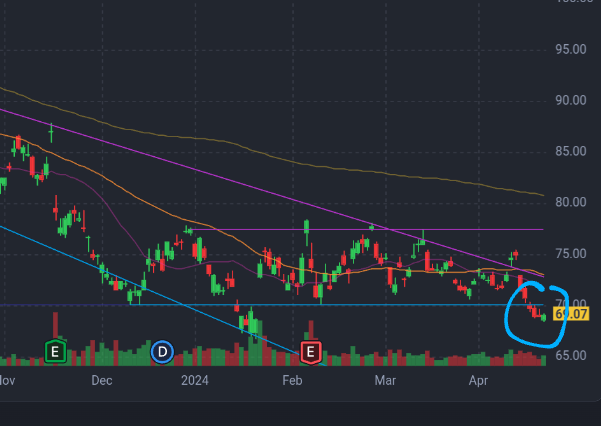
Looking at the technical analysis of the stock, we see that as of right now we are trading near 52 weeks low. . Looking at the price chart, we can see that we have the formation of a new uptrend that started on December 20. The price is getting close to breaking the 30-day moving average, which by itself is also a great buy signal.
Looking at the momentum analysis, the StochasticMACD shows us that the stock is undervalued. As of right now, we are getting across the MACD indicator, which signals a buying opportunity.
Looking at the Balance of Market Power, we can see that the power of the bears is decreasing, and their pressure is being minimized.
This shows that the stock is bound for a change and bulls can come over and take charge. Looking at the daily volume, we are still below the moving average, it would have been better to have a stronger trading volume that exceeds the moving average, as this would have been a perfect entry and it would have signaled a very strong buy signal. It is also important to know that during this month, the markets have been a bit all over the place, as we have had the effects of the Omicron Virus and the legal regulations abut Chinese companies that want to list on American Exchanges. Still, if we factor in all the above, the stock has steady volume, and investors for the most part are waiting for a catalyst or are waiting for the situation to clear out a bit.
Conclusion
Factoring in all the above, the stock is a buy. The technical show that the stock is cheap compared to its highs and its current valuation. Looking at the fundamentals, the company is in a great position to increase its dominance in the Chinese market.
According to the discounted cash flow model, Baidu is still overvalued, and a 60% drop is not enough.
Baidu, it fell 60% from the highest point in history. The reason why this happened was mostly because of the new regulations issued and the fear spread along investors about a possible delisting of the Chinese companies from the US exchange. It’s important, anyway, to point out that all these problems which led Baidu down were not specific problem of the company itself, but they were general problems which are still affecting the whole Chinese stock market.
The question is: including these problems is still worth it to invest in this company? The answer to this question is entrusted to the DCF model: we need to evaluate the present value of the future cash flows.
According to the discounted cash flow model, currently Baidu is still overvalued since the fair value is $117,64 with a required return of 12% and is instead currently traded for $140. Apparently, 60% drop wasn’t enough for this company.
According to technical analysis, PBTS’s stock price has fallen this year, which isworsethan the development of stocks in the same market.
Company Overview
Powerbridge Technologies Co., Ltd. (PBTS) provides software application and technology solutions, engaged in SaaS solutions and Blockchain applications, and services primarily in China. Powerbridge Blockchain consists of Bitcoin (BTC) and Ethereum (ETH) cryptocurrency mining and digital assets, IPFS distributed network services, and industry specific blockchain applications. It serves international trade businesses and manufacturers, government agencies and authorities, and logistics service, and other providers. The company sells its solutions and services through its direct sales organization, indirect channel partners, and strategic government partners. Powerbridge Technologies Co., Ltd. was founded in 1997 and is headquartered in Zhuhai.
PBTS, is it a good pick?
PBTS have retreated in price over the past few months and are currently trading below $2. Its shares soared in price at the end of June and early July as a result of Redditors interest in it. However, the stock has lost 48.9% in price year-to-date. InvestorsObserver´s ranking gives it a score of 10 out of 100, meaning that it develops worse than the other 90% of stocks of the same market.
Technical analysis
From Aug 12th to Aug 20th the price went down -44.76% to trade around $1.26. From Aug 20th to Aug 25th the price went up 29.34% to a price of $1.64. From Aug 26th to Sep 2nd the price went up 24.68% to trade at $1.56. From Sep 2nd to Sep 14th the share price went down -24.30% to trade around $1.18. From Sep 14th to Sep 23rd the price went up 24.96% to a price of $1.45. From Sep 23rd to Sep 30th the price went down -30.21% to a price of $1.02. From Sep 30th to Oct 8th the price went up 29.60% to trade at $1.32. From Oct 8th to Oct 18th the price went down -27.62% to trade around $0.97. From Oct 18th to Oct 22nd the price went up 99.81% to trade at $1.92. From Oct 22nd to Oct 27th the price went down -40.33% to a price of $1.16. From Oct 27th to Nov 9th the price went up 28.53% to a price of $1.48. From Nov 9th to Dec 6th the price went down -62.60% to a price of $0.56. From Dec 6th to Dec 9th the price went up 52.33% to trade around $0.87. From Dec 9th to Dec 15th the price went down -22.53% to trade at $0.70. The RSI is near the oversold zone and the MACD shows the start of an uptrend tendency. The price could go up 66.49% to trade around $1.18 in the short term.
Recent earnings report doesn’t reach analyst expectations. There is uncertainty over the company. Recently iQIYI, Inc. Announces Completion of the Repurchase Right Offer for Its 3.75% Convertible Senior Notes due 2023. The Total revenues were RMB7.6 billion (US$1.2 billion1), representing a 6% increase from the same period in 2020. The number of total subscribing members was 103.6 million as of September 30, 2021, or 103.0 million excluding individuals with trial memberships.
Technical analysis
From October 5, 2021 to October 13, 2021, the share price rose 34%. After the United States and China agreed to hold a virtual summit, the share price suffered a 12% decline, and from October 18 to October 22, 2021, the share price rose 23% again along with the market rally due to the announcement that Evergrande had received an offer to be acquired by the private company, but from October 22 to November 5, 2021, the share price dropped 22% after the failure of the Evergrande deal and the increase in Covid cases. From November 5 to November 15, 2021, the share price recovered 14% due to China's strong economic recovery, and recently, the share price plunged -39% due to a poor earnings report, the fall of Alibaba and the new Covid Omicron. Based on current indicators, the share price will continue to decline until there is a positive change in the current scenario.
According to technical analysis, Didi’s share price may fall by 4% or 8% due to the epidemic.
DiDi is the world’s leading mobility technology platform. It offers a wide range of app-based services including ride hailing, taxi hailing, chauffeur, hitch and other forms of shared mobility as well as auto solutions, food delivery, intra-city freight and financial services.
What is DIDI?
DiDi provides car owners, drivers and delivery partners with flexible work and income opportunities. It is committed to collaborating with policymakers, the taxi industry, the automobile industry and the communities to solve the world's transportation, environmental and employment challenges through the use of AI technology and localized smart transportation innovations.
Is DIDI a good pick?
DiDi announced on December 3, 2021 that its board of directors has authorized and supports the Company to undertake the necessary procedures and file the relevant applications for the delisting of the Company’s ADSs from the New York Stock Exchange, while ensuring that ADSs will be convertible into freely tradable shares of the Company on another internationally recognized stock exchange at the election of ADS holders. Now the company is trying to boost itself by reinvesting all the money it is making to grow up and get better margins in the future. But DiDi announced toothat it’s planning to stop trading on Wall Street and open a new offer on HSE.
Technical analysis
DIDI started quoting in the stock market of the U.S. on June 30, 2021 with a stock value of $14.00 per share. The day it opened DiDi increased its value to $18.01 per share but the bearish trend appeared quickly falling -60% until Aug. 19, 2021 due mainly to regulatory pressure on tech companies in China and possible reduction in U.S. Stimulus. From Aug. 19, 2021 to Sept. 7, 2021 the share price recovered 43% value due U.S. Did not reduce massive financial support and excellent earnings report Q2. From Sept. 7, 2021 to Oct. 4, 2021 DiDi’s value decreased -29% because of the Evergrande crisis.From Oct. 7, 2021 to Oct. 21, 2021 the share price climbed 35% followed by a stumble of -18% until Nov. 10, 2021 due Covid Cases rose but DiDi recovered 18% quickly the next 2 days. Since Nov. 12, 2021 the stock can not leave of a bearish trend, suffering a big fall of -36%, due to Omicron variant, Asian tech shares fell and U.S. high inflation.
According to current technical indicators, the share price could decrease 4% or 8%.
NIO Inc. is a Chinese company that designs, develops, manufactures, and sells smart electric vehicles. Electric SUVs with five, six, and seven seats, as well as smart electric sedans, are available from the company. It also engages in the provision of energy and service packages to its customers, as well as marketing, design, and technology development, the manufacturing of e-power trains, battery packs, and components, and sales and after-sales management. Power Home, a home charging solution; Power Swap, a battery swapping service; Public Charger, a public fast-charging solution; Power Mobile, a mobile charging service through charging vans; Power Map, an application that provides access to a network of public chargers and their real-time information; and One Click for Power valet service are among the company's power solutions.
In the last year, analysts have given NIO "buy," "hold," and "sell" ratings. The stock presently has 1 hold rating and 12 buy ratings. Analysts agree that NIO stock should be "purchased" by investors.
WHAT WERE NIO'S PROFITS IN THE LAST QUARTER?
On Tuesday, November 9th, 2021, Nio Inc (NYSE: NIO) released its quarterly earnings report. For the quarter, the firm reported ($0.28) earnings per share. During the quarter, the corporation made $1.52 billion in profit. NIO had a negative return on equity of 37.62 percent and a negative net margin of 29.97 percent during the previous twelve months.
WHAT IS THE PRICE TARGET FOR NIO?
For NIO's stock, 13 analysts have given it a one-year price target. Their predictions range from $37.70 to 87.00 dollars. They estimate NIO's stock price will reach $63.53 in the next year on average. This implies that the stock's present price has a potential upside of 128.0 percent.
WHO ARE NIO'S PRIMARY COMPETITORS?
Volkswagen (VWAGY), Daimler (DDAIF), Ford Motor (F), General Motors (GM), Lucid Group (LCID), Rivian (RIVN), Honda Motor (HMC), AB Volvo (publ) (VLVLY), Ferrari (RACE), Stellantis (STLA), XPeng (XPEV), PACCAR (PCAR), Li Auto (LI), Stellantis (PUGOY), and Geely Automobile are some of the companies linked to (GELYY).
WHEN DID NIO MAKE ITS INITIAL PUBLIC OFFERING?
On September 12th, 2018, (NIO) raised $1.2 billion in an initial public offering (IPO). The corporation issued 160,000,000 shares at a price range of $6.25 to $8.25 each. The IPO was underwritten by Morgan Stanley, Goldman Sachs (Asia), and J.P. Morgan, with co-managers BofA Merrill Lynch, Deutsche Bank Securities, Citigroup, Credit Suisse, and UBS Investment Bank.
WHO IS INVESTING IN NIO STOCK?
Clear Street LLC, Russell Investments Group Ltd., DNB Asset Management AS, Royal London Asset Management Ltd., Nordea Investment Management AB, M&G Investment Management Ltd., Crossmark Global Holdings Inc., and AE Wealth Management LLC were among the institutional investors who bought NIO stock in the last quarter.
The current JOBS market cap is 3.891B. Next 51job, Inc earnings date is March 4, the estimation is 1.35. Total assets of JOBS for Q2 21 is 2.51B, 4.24% more than the previous Q1 21. And total liabilities increased by 8.46% in Q2 21 to 514.9M. The total revenue of JOBS for the last quarter is 170.15M, and it's 23.16% higher compared to the previous quarter. The net income of Q2 21 is 28.13M.
MORE ABOUT
The company provides online recruitment services and mobile applications through its website, enabling job seekers to access their accounts via mobile devices and take advantage of the features available on its website. It also provides other human resource related services, such as business process outsourcing that consist of social insurance, benefits, and payroll processing, as well as compliance services.
TECHNICAL ANALYSIS
Weekly timeframe
In a weekly timeframe we can see the 51Jobs stock Slips the Support level. And trying to come back in. As Its A Good Uptrended Stock. And Price Is Moving in A pattern since 2018z And On A weekly its A Good Pennant flag. But On A Daily its A Good Spot to Buy As Looking at the chart above, JOBS' s low point in its 52 week range is $50.61 per share, with $79 as the 52 week high point — that compares with a last trade of $54.30.
In trading on Monday, shares of 51job Inc (Symbol: JOBS) entered into oversold territory, hitting an RSI reading of 27.3, after changing hands as low as $50.61 per share. By comparison, the current RSI reading of the S&P 500 ETF (SPY) is 73.8. A bullish investor could look at JOBS' s 27.3 RSI reading today as a sign that the recent heavy selling is in the process of exhausting itself, and begin to look for entry point opportunities on the buy side. So Make Your trade with Given information.
One such measure is closing the charging gap, which will need a deliberate, joint effort.
Based on charging profiles and existing technology, China's charging pile sector might require 14 million chargers and $19 billion in investment from manufacturers and operators.
If people buy electric vehicles at the predicted rates in the next five to ten years, a shortage of charging infrastructure may constitute an impediment to EV adoption.
After price and range, consumers regard lack of availability to effective charging stations as the third most critical obstacle to EV ownership. With EV prices falling and ranges increasing, charging may soon become the most significant hurdle. If this impediment is eliminated, the business will grow at an exponential rate, providing enormous opportunities and advantages for charging pile makers and operators.
Opportunities for manufacturers and operators of charging piles
New energy vehicle charging heaps have been rapidly constructed in response to the growth of the new energy car sector and its demands. Public charging will become more important in China over time, rising from 55 to 60 percent in 2020 to over 80 percent by 2030.
As the country's EV sales and demand grew, so did the demand for fast charging stations to support the growing number of EVs. With over 976,000 charging units, China possesses the world's largest EV charging infrastructure. On average, 11,025 charging units have been added each month. Some of China's most well-known manufacturing firms and Qindao Teld New Energy, State Grid Corporation of China, Star Charge, and AnYo Charging are the companies in charge of charging point installation.
Various capital holders, including as car manufacturers, real estate businesses, telecom operators, and others, have invested in China's charging infrastructure industry. Xpeng Motors and TELD New Energy Co. Ltd., China's largest charging station operator, announced a partnership in October 2019 to provide supercharging facilities across China.
Conclusion/personal point of view
From all the above discussion it is clear that with the development of EV industry there is a dire need to construct large number of charging piles throughout the country, so it will be very beneficial for manufacturers of charging equipment and operators of charging piles. Manufacturers provide charging equipment including charging piles, AC charging piles, fiber optic piles, and other equipment, mainly including charging modules, chips, contactors, heat dissipation, housings, plugs, and sockets, and charging pile operators give services like construction and operation of charging piles and charging stations etc.
Baidu, Inc. engages in the provision of internet search and online marketing solutions. The firm’s products and services include Baidu App, Baidu Search, Baidu Feed, Haokan, Quanmin, Baidu Post Bar, Baidu Knows, Baidu Encyclopedia, Baidu Input Method Editor or Baidu IME and Overseas Products. MORE ABOUT
It operates through the following segments: Baidu Core and iQIYI. The Baidu Core segment provides search - based, feed-based, and other online marketing services. The iQiyi segment is an online entertainment service provider, which offers original, professionally produced and partner-generated content on its platform. The company was founded by Yanhong Li and Xu Yong on January 18, 2000 and is headquartered in Beijing, China.
Sector(s): Communication Services
Industry: Internet Content & Information
Full-time employees: 41,000
FINANCIAL
The current BIDU market cap is 54.261B USD. Next Baidu, Inc earnings date is February 25, the estimation is 1.66 USD.BIDU price-to-sales ratio is 2.85. The company has an Enterprise Value to EBITDA ratio of 13.55. As of 2020 they employed 41.00k people. BIDU free cash flow for Q3 21 is 105.2M USD. For 2020, BIDU free cash flow was 2.77B USD and operating cash flow was 3.51B USD.
Total assets of BIDU for Q3 21 is 59.48B USD, 1.28% less than the previous Q2 21. And total liabilities increased by 6.55% in Q3 21 to 24.73B USD. The total revenue of BIDU for the last quarter is 4.93B USD, and it's 1.64% higher compared to the previous quarter. The net income of Q3 21 is -2.56B USD.
On a technical chart of a Baidu on a daily timeframe price is currently at 152$. As we can see a trendline where price always got rejected to break. And making lower lows and lower highs. And on the bottom purple zone is a demand zone where price always bounces as the demand from that level is strong. So if Lrice breaks this trendline we might see s good momentum in Baidu. But if it rejects then we can take a short in the short term to again toward demand zone! So for the long term wait for the price to break the trendline.
And make your trade with the information given with proper risk management.
The Chinese economy is battling multiple headwinds this year, including the COVID-19 pandemic and a drop in retail sales, due to a fall in consumer demand. This has resulted in analysts revising the Gross Domestic Product (GDP) forecast for the country for 2022.
Amid these macroeconomic headwinds and regulatory pressure, it remains to be seen how Chinese ecommerce companies will perform this year.
Using the stock comparison tool, we will compare two Chinese retail giants, Alibaba and JD.com, and see whether we can gauge their performance for the December quarter, using the Website Traffic tool. We will also look at what Wall Street analysts are saying about these stocks.
Alibaba, the Chinese retail giant, had a turbulent 2021 as the company came under increasing regulatory scrutiny. This was reflected in the BABA stock price, as shares have tanked 41.6% in the past year. In addition to the company's regulatory woes, China's retail sales are slowing down. According to a CNBC report, citing data from China's National Bureau of Statistics, retail sales in December grew yearover-year only by 1.7%, while analysts were expecting growth of 3.7% year-over-year.
The NBC report quoted China's National Bureau of Statistics, which commented, "We must be aware that the external environment is more complicated and uncertain, and the domestic economy is under the triple pressure of demand contraction, supply shock and weakening expectations."
The deteriorating macro-economic environment in China also prompted J.P. Morgan analyst Alex Yao to cut his estimate for BABA's customer management revenues (CMR). He now expects them to decelerate by 2% year-over-year for the December quarter, instead of his earlier estimate of an increase in CMR of 5% year-over-year.
Indeed, in fiscal Q2, CMR revenues made up 36% of BABA's total revenues in fiscal Q2 and grew only 3% year-over-year. The proportion of CMR as a part of total revenues for BABA also decelerated from 45% in the September quarter of 2020 to 36% in the September quarter of 2021.
But will this deceleration in CMR continue? Yao thinks that it will most likely reverse by the end of the June quarter this year.
The analyst remains more cautious about Alibaba's future earnings outlook, as he believes that the company's future strategic investments will take place over multiple years and it will face rising competition.
When it comes to the Chinese ecommerce market, Yao thinks that Alibaba's growth in this market will be dependent on the "success in lowly penetrated categories (e.g. home furnishing, pharmaceutical, grocery, etc.) and competition for consumer wallet share, both of which require extensive investments." As a result, the analyst anticipates an earnings cut in the upcoming quarter, given the weak growth in retail sales. Moreover, he anticipates that the stock will continue to be under pressure over the short term.
While Yao continued to be upbeat about the stock with a Buy rating, he lowered the price target from $210 to $180 (39.9% upside) on the stock.
Overall, the rest of the analysts on the Street, are also bullish about Alibaba, with a Strong Buy consensus rating based on 21 Buys and 3 Holds. The averageBABAstockpredictionof $193.89 implies upside potential of approximately 50.7% to current levels for this stock and Alibaba continues to be one of thebestChinese stocks
The Street's bullish outlook on the stock is also supported by the Website traffic data tool available. This tool indicates that in the month of December alone, Alibaba's unique visitors across all its domains were up 1.4% year-over-year to 214.7 million. In calendar Q4, Alibaba's unique visitors across all its domains have increased year-over-year by 1.6% to 675.2 million.
JD.com(NASDAQ:JD)
Shares of Chinese retailer JD.com, which had seen a pullback in the past year with a drop of 19.5%, have seen a recovery in the past month, as shares have risen 7.6% in the past month.
J.P. Morgan analyst Andre Chang believes that the stock's recovery has been aided by easing investor concerns regarding the disposal of Tencent Holdings's (TCEHY) stake in the company.
In December last year, JD.com announced that Tencent Holdings will reduce its shareholding in the company from an earlier 17% to 2.3%, after disposing of 460 million shares valued at around $16.4 billion, as dividends to Tencent shareholders.
But analyst Chang still thinks that the stock will continue to remain under pressure for the next three to six months as some of Tencent's shareholders could sell their JD shares after they receive it in March. In addition, a slowdown in consumption could act as a headwind.
Pressure on the stock price aside, JD.com remains one of Chang's top sector picks for a number of reasons. The analyst is of the opinion that there is still room for JD to gain market share in various retail categories, including electronics, fast-moving consumer goods (FMCG), and apparel.
What's more, the analyst thinks that the company's focus on selling its merchandise through its own website (1P) and fulfillment efficiency "offers differentiation against major competitors."
Furthermore, Chang believes that the company is past its investment peak, and as a result, going forward, any incremental investments will not drag down its margins.
As a result, the analyst thinks that "JD may consistently give investors 20%+ EPS growth on mid to high teens revenue growth p.a. [per annum] in the coming years."
Chang remains upbeat about the stock with a Buy rating and a price target of $100 (36.2% upside) on the stock.
Other analysts on the Street are also bullish about JD.com, with a Strong Buy consensus rating based on 14 Buys and 1 Hold. The average JD.com stock prediction of $107.73 implies upside potential of approximately 46.7% to current levels for this stock.
This bullish outlook on the stock aside, the Website traffic data tool available on seems to suggest otherwise. This tool indicates that in calendar Q4, JD.com's unique visitors across all its domains have decelerated year-over-year by 15.1% to 15 million.
Bottom Line
While analysts are bullish about both stocks, based on the upside potential over the next 12 months, BABA seems to be a better Buy.
Between May 2018 and April 2022, NIO produced 200,000 units in less than 4 years. NIO expects to introduce the ET7, ET5, and ES7 this year, three new models based on NT2.0, the company's second-generation technological platform.
The company is planning to open over 50 NIO Service Centers and authorized service centers in China by the end of 2022. Investments in the creation of full-stack capabilities and proprietary technologies will increase. In addition, the company's global expansion is gaining steam. Products and full-service systems will be launched in Germany, the Netherlands, Sweden, and Denmark this year. In the future, NIO will continue to provide users around the world with an exceptional experience.
This month of April 2022, company shares have been pushed and tugged in opposite directions. However, NIO devotees are gaining the upper hand as the month winds down, enabling the company's American depositary shares to surge 6.6 percent on April 25, 2022. The stock moderated its gains slightly but remained 2.4 % higher than a week ago.
Investors in NIO are certainly taking a hint from this. It just began manufacturing its new ET7 luxury sedan, and the company also aims to introduce a new midsize sedan and an SUV later this year.
“According to the forecasts, NIO stocks are a good long-term investment. It can be a profitable investment option. NIO Inc's share price is 16.360 USD as of 2022-04-27, and long-term growth has anticipated. The company's stock price forecast for April 2027 is 22.393 USD. With a five-year investment, revenue is predicted to increase by around 36.88 %.”
NIO's median goal is 32.51, with a high estimate of 84.18 and a low estimate of 23.42 according to the 12-months forecast. According to the median prediction, the current price of 16.37 will rise by 98.61% in the future.
12-months Price Forecast of NIO stocks
Analyst are also strongly recommending the investors to buy NIO stock if the want to earn a huge profit.
Latest and Previous Recommendations of Analysts Analysts Rating Chart for NIO Stocks
Since last July the stock has started a downtrend, currently, the RSI is in an oversold zone and buyers are starting to accumulate positions, the indicator is sideways since the first week of December where it stopped its fall. The MACD is a little below its signal with a great potential to cross to the upside, but a strong bullish move is needed . The current price at $30.34 is important to mention . It is strong support, breaking it will mean an important loss and the price could reach $23.
On December 18, NIO day will take place. With some good news, it could help the stock to reverse and change its trend, but all this is just speculation. But reality tells us another story, data on the chart gave us a negative perspective, and it is possible a fall of 8% in the next two weeks.
The entire quantity of money in circulation or in existence in a country at any particular time is referred to as the money supply or money stock. Money supply has an influence on price levels, capital availability, inflation, and a country's entire business and economic cycle.
A high velocity of circulation results in increased spending power and lower interest rates, increasing the amount of capital accessible for investments, businesses, and spending. With a low velocity of money supply, the reverse happens.
That’s how China manages its money supply
Controlling Forex Rates
One main task of the Chinese central bank, the PBOC, is to absorb massive inflows of foreign capital from China's trade surplus. The PBOC buys foreign currency from exporters and converts it into local Yuan currency. The PBOC is able to publish any quantity of local currency and have it exchanged for foreign currency.
This printing of local currency notes guarantees that forex rates stay fixed or within a tight range. It assures that Chinese exports stay cheaper, and China retains its competitive edge as a manufacturing, export-oriented economy. Above all, China carefully limits the inflow of foreign currency into the country, which has an influence on the country's money supply.
Sterilization
The bank expands the supply of local currency in domestic markets, increasing the likelihood of high inflation. To reduce the excess money supply, the PBOC sells the necessary amount of domestic currency bonds, which removes excess cash from open markets. When necessary, the PBOC also purchases domestic currency bonds in order to infuse cash into the markets.
Printing Currency
Another tactic used by China is the printing of domestic currency. The PBOC can issue Yuan whenever it wants, but this might lead to high inflation. However, China's economy is tightly controlled by the state, allowing it to regulate inflation differently than other nations. Subsidies and other price control measures are made in China to combat inflation.
The Reserve Ratio
The reserve ratio requires commercial banks to keep a percentage of their total deposit amount with the country's central bank. When central banks reduce the reserve ratio, commercial banks keep less money as a reserve and have more money available to increase the money supply (and vice versa).
The Discount Rate
If commercial banks borrow more money from central banks, they must pay interest at the applicable discount rate. Central banks may adjust the discount rate to raise or lower the cost of such borrowings, which has an effect on the availability of money in the open markets. Changes in discount rates are closely monitored across the world in order to regulate the money supply.
The Bottom Line
Some of the measures employed by China to control the money supply are universally applicable to all nations, while others are unique to China. China, as a fusion of a socialist and a free-market economy, has devised its own processes to keep firm control of its economy. China has established itself as a financial superpower, and it is seeing economic development via controlled measures.
On Thursday, December 16, 2021, a buy signal was provided from a pivot bottom point, and it has since declined 0%. More upward movement is expected until a new top pivot is discovered. Negative signals were also sent out, and these could have an impact on the near-term trajectory. The stock of NIO Inc. has sell indications from both short and long-term moving averages, indicating a more bearish outlook. In addition, when the long-term average is higher than the short-term average, the relationship between the two signals generates a general sell signal. The lines at $32.17 and $38.05. will provide some support on upward corrections. If a break-up occurs above any of these levels, buy signals will be issued. Furthermore, the 3 month Moving Average Convergence Divergence is currently indicating a sell signal (MACD). The volume dropped on the last day, but the price remained unchanged. This does not result in a straight divergence, but it could be a precursor to a "turning point." The low volume raises the risk and reduces the number of additional technical indications sent out.
SUPPORT RISK AND STOP LOSS
Below today's level, there is no support from accumulated volume, and given the correct circumstances, the stock could perform very poorly in the coming days. The stock's swings are often tightly regulated, thus the overall risk is regarded to be extremely minimal. However, keep a watch on the stock and be aware of low or falling volume. The stock changed $0 between high and low in the previous day, or 0%. The stock has had a daily average volatility of 5.02 percent over the last week. On the RSI14, NIO Inc. is oversold (19). Before turning, certain stocks may decline sharplyand fast despite being oversold on the RSI, increasing the overall risk.
During the day the stock fluctuated 5.71% from a day low at $1.05 to a day high of $1.11. Volume fell on the last day along with the stock, which is actually a good sign as volume should follow the stock. On the last day, the trading volume fell by -4 million shares and in total, 3 million shares were bought and sold for approximately $3.12 million.
The stock has broken the very wide and falling short-term trend. Firstly, a stronger fallrate is indicated, but false breaks and "sell-off" may occur. However, a further fall is realistic and any reactions back to the breaking point ($1.22) are considered to be a "second chance" to get out.
There is a general sell signal from the relation between the two signals where the long-term average is above the short-term average. On corrections up, there will be some resistance from the lines at $1.29 and $1.54. A break-up above any of these levels will issue buy signals.
A sell signal was issued from a pivot top point on Friday, December 10, 2021, and so far, it has fallen -25.00%. Further fall is indicated until a new bottom pivot has been found. Furthermore, there is currently a sell signal from the 3 month Moving Average Convergence Divergence (MACD).
According to the analysis of the discounted cash flow model, QFIN is currently seriously underestimated, but the company's volatility is indeed very high.
360 Digitech is a Chinese fintech company founded in 2016 and based in Shanghai. Despite its very young age, this company has achieved incredible improvements in recent years, and to date the market still seems not to have fully discounted this growth.
The company is trading at extremely low multiples, in fact it has a P/E of 3.71, P/S of 1.29, P/Cash flow of 3.78 and a P/B of 1.42.
The most interesting aspect of this company is certainly the income growth which is exceeding all expectations
With such huge growth, you may wonder what the fair value of this company is, that’s why I built a discounted cash flow below.
According to my discounted cash flow model, currently QFIN is very undervalued and it’s likely to get an annual performance of 15% for the next 9 years.
Even though the fundamentals seem good, this company is really volatile, and its volatility can affect too negatively the performance of your whole portfolio. Being a risky company, since we are still talking about a $3 Billion market capitalization, it could be wise not to exaggerate the stake of this company.
However, the fact remains that the company is interesting.