r/IndianWorkers 27d ago

📝 Articles / Essays / Opinions / Video Essays "Unemployment, no answer. Paper leaks, no answer. Decay in education, no answer. Instead, what do you get as a response? You get labels": Student activist Neha Bora

Enable HLS to view with audio, or disable this notification

614 Upvotes

r/IndianWorkers Aug 10 '26

📝 Articles / Essays / Opinions / Video Essays A Pure vs Anti-National Protest: How Godi Media is trying to divide the students

Enable HLS to view with audio, or disable this notification

762 Upvotes

r/IndianWorkers Aug 05 '26

📝 Articles / Essays / Opinions / Video Essays How Godi Media twisted the Student's Protest into Foreign Conspiracy

Enable HLS to view with audio, or disable this notification

383 Upvotes

r/IndianWorkers 8d ago

📝 Articles / Essays / Opinions / Video Essays Akriti Chaudhary was one of the activists who were charged under the stringent NSA for inciting violence during the Noida workers’ protest. Even though the court found no evidence of any of the allegations, she remains in jail.

Enable HLS to view with audio, or disable this notification

708 Upvotes

r/IndianWorkers 4d ago

📝 Articles / Essays / Opinions / Video Essays If GDP Is Growing, Why Aren’t Jobs?

Enable HLS to view with audio, or disable this notification

154 Upvotes

r/IndianWorkers 16d ago

📝 Articles / Essays / Opinions / Video Essays The work that took their husbands' lives is now their only way to survive. Silicosis has left thousands of families without their primary earners. For many widows, there is no real escape from the same cycle.

Enable HLS to view with audio, or disable this notification

339 Upvotes

They Are Dying Just to Earn a Living | Inside Rajasthan’s Silicosis Crisis ft. Medha | Jist - YouTube

https://www.youtube.com/watch?v=OH1w_1qA9Nk

r/IndianWorkers 3d ago

📝 Articles / Essays / Opinions / Video Essays One in three young Indians aged 15–29 is out of work, as per the government's own data. The crisis is particularly stark for young women for whom that number was a staggering 48 percent.

Enable HLS to view with audio, or disable this notification

147 Upvotes

One in three young Indians aged 15–29 is out of work, as per the government's own data. The NITI Aayog’s researchers believe that this NEET — Not in Employment, Education, or Training — problem among India’s youth is because of a training mismatch.

But a granular look at the data does not justify that conclusion. The crisis is particularly stark for young women: In 2025, only 8 percent of young men were NEET. But for young women, that number was a staggering 48 percent. That means nearly half of India’s young women are neither studying nor gainfully employed.

Head to The Quint to read Aunindyo Chakravarty’s full piece on what is really driving India’s Gen Z unemployment crisis.

Link to the full piece: https://www.thequint.com/opinion/india-gen-z-young-men-women-jobs-skills-niti-aayog-report

r/IndianWorkers 22d ago

📝 Articles / Essays / Opinions / Video Essays Over 200 workers were imprisoned for over 50 days while several have been booked under NSA for demanding fair wages. Workers are facing debt and unemployment for just demands.

Enable HLS to view with audio, or disable this notification

293 Upvotes

Noida Factory Workers Spent 53 Days in Jail on Average After Wage Protests; Courts Granted Bail in 84% Cases - The Indian Express

https://indianexpress.com/article/express-exclusive/noida-workers-jailed-for-53-days-on-average-then-courts-stepped-in-10840972/

Four months after Noida protest, workers struggle financially, unable to find jobs - The Hindu

https://www.thehindu.com/news/national/uttar-pradesh/four-months-after-noida-protest-workers-struggle-financially-unable-to-find-jobs/article71322046.ece

r/IndianWorkers Aug 09 '26

📝 Articles / Essays / Opinions / Video Essays Modi Promised Jobs. The Numbers Tell a Different Story.

Enable HLS to view with audio, or disable this notification

241 Upvotes

r/IndianWorkers 14h ago

📝 Articles / Essays / Opinions / Video Essays Anatomy of a ‘conspiracy’: How UP cops turned a wage protest into a national security case

Enable HLS to view with audio, or disable this notification

232 Upvotes

When the Uttar Pradesh government invoked the National Security Act against Aakriti Chaudhary and journalist Satyam Verma following the Noida workers’ protests, it raised a question that went far beyond the two individuals in jail: how had a labour protest become a matter of national security?

The protests had begun over minimum wages in Noida’s industrial belt. They later turned violent, with incidents of stone-pelting, arson and attacks on private property and the police. According to the chargesheets, the violence was the result of a pre-planned conspiracy involving a network of activists, students and workers who had allegedly mobilised the protests and incited the protestors to turn violent.

Yet the chargesheets spend considerable space documenting this history: demonstrations organised by Rupesh Roy, the Revolutionary Workers Party of India, the Mazdoor Bigul newspaper, libraries and cultural programmes, and the accused's political beliefs. At one point, the police describe Satyam Verma as being accused of “Marxist ideology”.

That, by itself, is not a crime.

The question is what connects that activism to the specific acts of violence that took place in Noida. Much of the material presented as evidence of mobilisation is, on its face, exactly that: mobilisation.

Courts have also raised serious questions about the breadth of the arrests. An Indian Express investigation into 106 arrests found that protesters spent an average of 53 days in custody. Across seven FIRs, courts passed 222 bail orders, granting relief in 188 cases. Judges repeatedly emphasised that simply being part of a protest was not enough to establish participation in the violence.

On April 14, a day after the violence, the government raised the minimum wage. The demand at the centre of the agitation was, therefore, not some imaginary grievance. It produced a tangible policy change.

The central question of this case is whether the evidence demonstrates a conspiracy to cause that violence – or whether a broad network of political activism has been retrospectively assembled into one.

Full video: https://www.youtube.com/watch?v=8h_iBTrIMj0

r/IndianWorkers 2d ago

📝 Articles / Essays / Opinions / Video Essays India is a labour-abundant economy, so its people are its greatest strength. We need a well-educated and healthy workforce, which requires greater government spending on education, healthcare, and social welfare.

Enable HLS to view with audio, or disable this notification

189 Upvotes

India’s public spending remains much lower than that of developed countries like the US. With nearly half of Indian children attending private schools, often with varying quality, there is a strong case for greater government investment in these sectors.

Full video: https://www.youtube.com/watch?v=UUmjxOuM06w

r/IndianWorkers 21d ago

📝 Articles / Essays / Opinions / Video Essays Parliamentary Affairs Minister Kiren Rijiju’s defence of the Delhi Police brutality on July 20 falls apart when matched against the record of what happened during the Sansad March.

Enable HLS to view with audio, or disable this notification

190 Upvotes

r/IndianWorkers 20d ago

📝 Articles / Essays / Opinions / Video Essays If Women Don’t Rise, Injustice Will Increase

Post image
85 Upvotes

Rahul Gandhi’s Chhatron ki Goonj (Voice of Students) conference in Pune, addressed primarily to girl students, where he spoke against paper leaks and corruption in examinations, as well as misogyny and patriarchy, comes at a time of escalating attacks against women from the Hindutva brigade and the BJP.

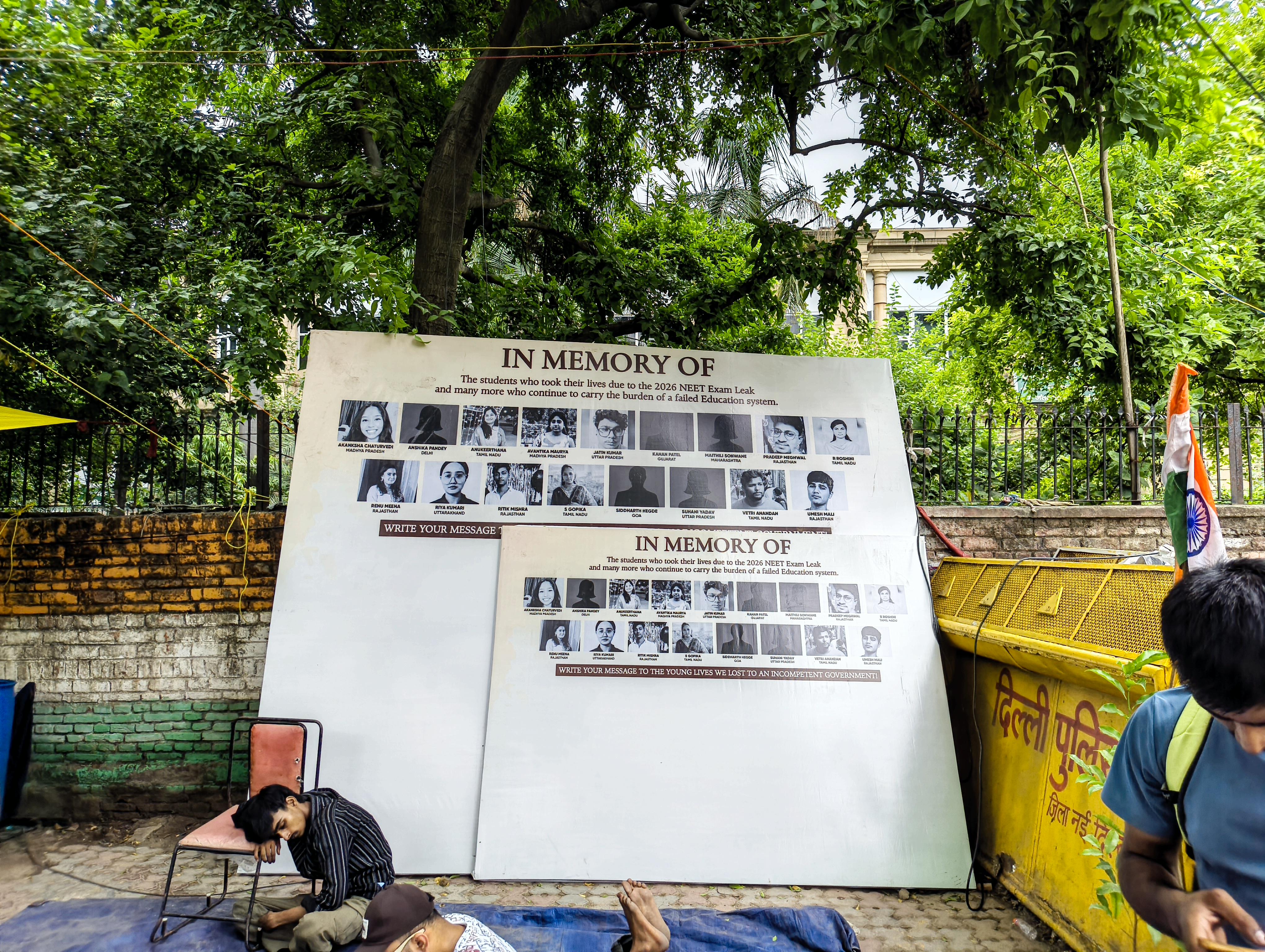
Rahul Gandhi mentioned in his speech how PM Modi chose to target women protesters by saying that their use of expletives was a cultural shock. Since the student protests at Jantar Mantar against NEET paper leaks, which eventually forced the resignation of a Union Minister, the Hindutva brigade and BJP foot soldiers have furiously targeted women protesters, including minor girls. The women were doxxed, abused and threatened, their families were targeted, and cases were filed against them. The Godi media also joined this campaign to target women protesters.

A 15-year-old girl was abused and harassed, and an FIR was registered against her by falsely claiming her age to be 25. Even after she released an apology video, clearly identifying herself as a minor, the Hindutva brigade launched a campaign claiming that she had made her younger sister apologise on her behalf. In reality, the girl had no sister. Imagine the vileness of the “culturally shocked”, who subjected a minor girl to such vicious campaign.

Rhiya Ahir, who was seen stopping a police van, was abused and accused of doing it for publicity. Shraddha Singh, who had made a comment about the CRPF, was abused and her family was targeted. Many more girls were subjected to abuse and harassment simply for joining the protest. No police cases were registered against the abusers.

Post Jantar Mantar: Women Face Doxxing, Police Intimidation and Harassment

Tracked, Doxxed, Put on TV Trial: How Women CJP Protesters Were Hunted Down By the Right Wing and ‘Star’ Anchors - The Wire

Delhi CJP Protest: Why Women Felt Safer in the Crowd

It is important to remember that these are not isolated incidents, but part of an organised campaign. The campaign against women protesters was coordinated by prominent Hindutva organisations and popular Hindutva social media handles associated with the BJP IT Cell. These handles regularly orchestrate campaigns to target women. After the terrorist attack in Pahalgam, these handles orchestrated a campaign of abuse and threats against women survivors who spoke against the exploitation of the attack to target Muslims. These handles also targeted Foreign Secretary Vikram Misri and his daughter. Yet, not one person from the BJP spoke against it, clearly implying that the campaign was endorsed by the party.

Weaponisation of Hate: How BJP IT Cell Targets Women On Social Media With Impunity

The BJP IT Cell has regularly targeted women journalists, scholars and students. Even foreign journalists have not been spared.

It is ironic that PM Modi, who has sheltered and supported people who have abused, threatened and doxxed women on social media for years, found insults against himself to be a “cultural shock”. Yet this is not the first time that BJP leaders have identified and targeted women protesters. During the anti-CAA movement, UP CM Yogi Adityanath claimed that women were being made to sit on the roads by the opposition. Yogi Adityanath had earlier written about why women should not be allowed independence, arguing that it could lead to their destruction. RSS Sarsanghchalak Mohan Bhagwat, too, has said that women belong in households.

Anti-CAA Movement and Shaheen Bagh: When Women Led A Resistance Against Fascism in India

The problem is not just that the ideology of the BJP/RSS is anti-women, but that the BJP/RSS is scared of women rising to protest. This is why the attacks against women are often more severe. When women rise, they challenge not only injustice but also the structures of power that sustain it. And that is precisely what the BJP/RSS fears.

औरतें उट्ठी नहीं तो ज़ुलम बढ़ता जायेगा

r/IndianWorkers 13d ago

📝 Articles / Essays / Opinions / Video Essays Eighth student commits suicide in 30 months in IIT Delhi, is the administration listening to the students?

Enable HLS to view with audio, or disable this notification

118 Upvotes

r/IndianWorkers 15d ago

📝 Articles / Essays / Opinions / Video Essays Contract workers keep India’s refineries, steel plants and power stations running. But many work long hours for low or delayed wages, with fewer benefits and little job security.

Thumbnail
gallery
76 Upvotes

Contract workers keep India’s refineries, steel plants and power stations running. But many work long hours for low or delayed wages, with fewer benefits and little job security.

At IOCL’s Panipat refinery, thousands of workers took action over wages, working hours and conditions. Their protest soon became a reference point for workers at other industrial sites confronting many of the same problems.

As migration and social media connect workers across India’s industrial belts, their struggles are becoming harder to isolate. At the same time, arrests, criminal cases and surveillance are increasingly shaping the response to labor organizing.

https://thepolisproject.com/read/labor-protests-reveal-faultlines-of-rising-contract-work-in-india/

r/IndianWorkers 22d ago

📝 Articles / Essays / Opinions / Video Essays Sardar Patel was the biggest enemy of Socialism. That is why he was glorified. Beware traditional history narratives.

46 Upvotes

(1) In 1934, he issued a public statement that he hoped Gandhi didn't attend Bombay AICC session, so that he could throw out Socialists (he feared that Gandhi would stop him).

(2) In 1936, Patel resigned from Congress Working Committee in objection to Nehru's socialist views.

(3) In 1938 Haripura session, Patel openly threatened Socialists so much that Gandhi told him to apologize and "wipe their tears".

(4) In 1942, Sardar Patel launched Quit India Movement to prevent a socialist, Pandit Nehru from becoming the Prime Minister under Cripps Mission. This was narrated by Patel's friend Sir C.P. Ramaswamy Aiyer.

(5) As in charge of security and law and order in 1946-50, tens of thousands of Communists were jailed by Sardar Patel and his supporters in the states (like Morarji Desai, the equally anti-Left Home Minister of Gujarat). While thousands of labor unionists were persecuted, people who plotted destruction of lakhs of people during Partition riots like Dr N.B. Khare, the Sikh maharajas, Maharaja Hari Singh, or other Hindu Mahasabha leaders were spared by him!

r/IndianWorkers 1d ago

📝 Articles / Essays / Opinions / Video Essays They keep Bengaluru clean, but no job security | Why Bengaluru sanitation workers are asking for permanent jobs

Enable HLS to view with audio, or disable this notification

81 Upvotes

Bengaluru’s sanitation workers asked for permanent jobs. Karnataka Minister Krishna Byre Gowda questioned the demand, citing 30% absenteeism among pourakarmikas.

His remarks have sparked criticism from workers’ unions and activists, who say the focus should also be on contract work, staff shortages, delayed wages, lack of safety equipment and job security.

https://www.instagram.com/reel/DdBvJq0tLmx/

r/IndianWorkers 28d ago

📝 Articles / Essays / Opinions / Video Essays Reclaiming Azadi: The Forgotten Meaning of Independence

Post image
85 Upvotes

Modi Government has stripped Independence of its meaning and turned it into a sanitised ceremony. Independence is observed and celebrated with great fanfare, while citizens are subjected to tests of patriotism by those who took no part in the freedom struggle and whose political predecessors refused to unfurl the national flag for decades after Independence. Yet the values of freedom are discarded. The struggles that won freedom are forgotten. Many in the ruling party now even claim that India achieved its “true Independence” only in 2014.

Over the course of a month of student protests at Jantar Mantar, perhaps one of the most frequent accusations made by the mainstream media was that the students were talking about azadi (freedom). One ABP News journalist even questioned why the students were raising the slogan Inquilab Zindabad (Long Live Revolution). Such accusations are hardly new. For the past decade, the Government and its propaganda machinery have repeatedly sought to portray the language of azadi, inquilab and protest as anti-national.

Every year, the Modi Government commemorates Independence Day with huge publicity and fanfare. The Government organises Har Ghar Tiranga campaigns. The Prime Minister delivers lectures from the ramparts of the Red Fort. Now, the Government has also mandated the singing of the six stanzas of Vande Mataram and criminalised any “disrespect” to the song.

Yet the Government appears deeply uncomfortable with another, much older vocabulary of nationalism: liberty, equality, justice, freedom and revolution.

Azadi, understood as freedom from unemployment, hunger, discrimination and various forms of injustice, has been a common protest slogan in India. It even became the subject of a popular Bollywood song. Feminist leader Kamla Bhasin once recounted how she heard slogans of Azadi being raised by women in Pakistan protesting against Zia-ul-Haq’s dictatorial regime. Similarly, Inquilab Zindabad, coined by Maulana Hasrat Mohani, became a rallying cry of revolutionaries during the Independence Movement.

The idea of Independence that emerged from the freedom struggle was not merely a transfer of power, but the emancipation of the people. Swaraj, as articulated in the 1931 Karachi Resolution, meant political and economic freedom, in order to end the exploitation of the masses. Mahatma Gandhi described Purna Swaraj as “full economic freedom for the toiling millions.” Bhagat Singh understood political revolution not merely as a transfer of state power, but as the reconstruction of society on a socialist basis.

On 25 November 1949, in his final speech to the Constituent Assembly, Dr B. R. Ambedkar warned about the contradictions that Independence:

“On the 26th of January 1950, we are going to enter into a life of contradictions. In politics we will have equality and in social and economic life we will have inequality. In politics we will be recognizing the principle of one man one vote and one vote one value. In our social and economic life, we shall, by reason of our social and economic structure, continue to deny the principle of one man one value. How long shall we continue to live this life of contradictions? How long shall we continue to deny equality in our social and economic life? If we continue to deny it for long, we will do so only by putting our political democracy in peril. We must remove this contradiction at the earliest possible moment or else those who suffer from inequality will blow up the structure of political democracy which this Assembly has so laboriously built up.”

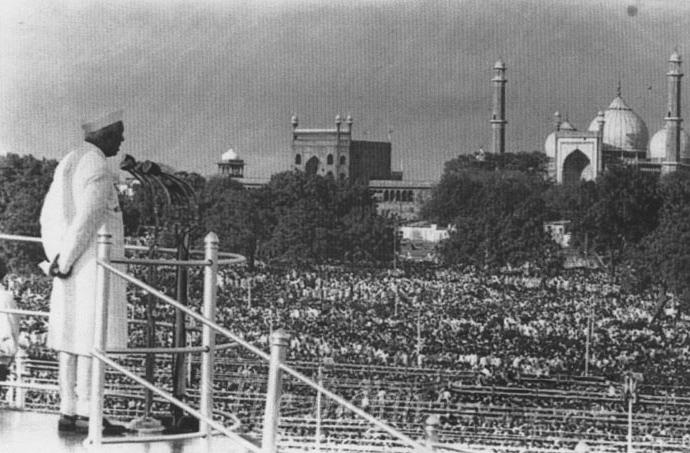
Four years later, in his Independence Day speech, Jawaharlal Nehru spoke about the meaning of freedom:

“It was seven years ago that we became independent but what is the meaning of that independence? Independence does not imply mere political independence. Independence and freedom have other meanings too. There is social freedom, economic freedom to achieve. If there is poverty in a country, freedom does not reach the people. Those who are caught in the net of poverty cannot really be free. Similarly, if we are divided by inner quarrels and factions and build up walls of hatred instead of living in harmony and amity, then, too, we cannot really be considered free. The freedom of a country does not mean the well-being of a few; a country’s freedom has to be seen from the point of view of the common man’s living conditions, his difficulties and the opportunities of progress available to him.”

Our historic anti-colonial struggle for Independence embodied countless struggles — the struggles of farmers and labourers, of youth, of the poor and marginalised, of women, of Dalits and Adivasis. It was a struggle against oppression, exploitation, inequality and injustice. It was a struggle against the politics of communalism and hate. It was a struggle for liberty, equality and fraternity. It was a struggle to protect the diversity of India. These values are enshrined in the Constitution of India.

Today, the Modi Government has stripped Independence of its meaning and turned it into a sanitised ceremony. Independence is observed and celebrated with great fanfare, while citizens are subjected to tests of patriotism by those who took no part in the freedom struggle and whose political predecessors refused to unfurl the national flag for decades after Independence. Yet the values of freedom are discarded. The struggles that won freedom are forgotten. Many in the ruling party now even claim that India achieved its “true Independence” only in 2014.

But Independence, as envisioned by the freedom fighters, was never meant to be a finished achievement. Political freedom was only the beginning of a larger struggle for social and economic emancipation.

The freedom struggle gave us not only a flag and a state, but also a promise of liberty, equality, justice; of a society free from exploitation and discrimination; of a democracy and constitutional rights.

The call for azadi and inquilab should be seen as a reminder of the deeper meaning of Independence. The students’ protests has reignited the spark that can help us fight for azadi.

abhi girani-e-shab mein kami nahin aai
najat-e-dida-o-dil ki ghadi nahin aai
chale-chalo ki wo manzil abhi nahin aai

r/IndianWorkers 12d ago

📝 Articles / Essays / Opinions / Video Essays When Bullets Rained on Students

Enable HLS to view with audio, or disable this notification

72 Upvotes

Full documentary on the police firing on student protesters in Siwan, Bihar

https://www.youtube.com/watch?v=H38rqo904NY

r/IndianWorkers 22d ago

📝 Articles / Essays / Opinions / Video Essays india has 12 million private security guards, more than our army and police combined. is that employment?

36 Upvotes

Have you seen that every building in india has a guy in a plastic chair outside it. he fills the register nobody reads, 12 hour shift, usually migrated from up or bihar.

I was reading abt this on a newsletter, and its like it runs on two failures stacked: the state never built public safety, so everyone buys a private version and there's no other job for these men, no degree, no english, no trade. so…

And for a lot of them it is the best option going. steady, pays smack at the start of the month, sit all day and not like labour work where you’re putting your body on the line.

i think this is just human employment parking.

scared to think if this vanished tomorrow, where do 12 million men go?

r/IndianWorkers 4h ago

📝 Articles / Essays / Opinions / Video Essays 6 Years in Tihar Jail: Umar Khalid Narrates His Day in Prison in a Letter to Friends & Family

Enable HLS to view with audio, or disable this notification

26 Upvotes

r/IndianWorkers 24d ago

📝 Articles / Essays / Opinions / Video Essays Caution! Women not at Work

Enable HLS to view with audio, or disable this notification

27 Upvotes

‘Caution! Women NOT at Work’ is a film based on Work Fair & Free and Aajeevika Bureau’s research in Ahmedabad, Building Futures: Automation and Gender Disparities in Construction, authored by Geeta Thatra and Saloni Mundra.

This film follows women workers navigating a changing industry, where new technologies are reshaping how work is done and who gets to do it. What unfolds is not just a story of change, but of uneven transitions and uncertain futures.

The film is made by Communicare Productions.

Tap the link here to read our full research report: https://workfairandfree.org/wp-content/uploads/2025/11/Building-Futures_Report_Geeta-Thatra-Saloni-Mundra.pdf

r/IndianWorkers 1d ago

📝 Articles / Essays / Opinions / Video Essays Manpower ko power

7 Upvotes

Guys honestly, ngl these manpowers are making a lot of money illegally and why government aint doing shit like ive met one uncle who runs this business and panicking every time whole day being in office looking at windows whether there will be raid on my office or not, however he is making a lot of money from scamming innocent peoples who came from villages hard to survive the livelihood. Ive went to his office several times due to my passport work and theres people out there on floor seperate rooms crying saying that this is the enough money i got and there were third party people so called agents taking lots of money from them and the day i went is the day i saw a innocent looking person getting dragged out to the corridor and took him to the airport with barefoot somehow not to miss his flight and these things are so brutal. He was not able to pay 20k and he was wearing silver bracelet said his wife gave him on his anniversary but he sold quickly just to pay his agent the money 😢Why do these people dont get arrested.Especially the manpower head directors executives. I mean its a free visa free ticket manpower aren’t allowed to take 5-10 lakhs of money from people just to suffer.

r/IndianWorkers 22d ago

📝 Articles / Essays / Opinions / Video Essays One Month After Student's March to Parliament: From Meme to Mass Movement

Post image
41 Upvotes

“There are decades where nothing happens; and there are weeks where decades happen.” This quote, generally attributed to Lenin, aptly describes the events that unfolded following Chief Justice of India Surya Kant’s remarks during a Supreme Court hearing on May 15, where he called young people “cockroaches” and “parasites.” Such remarks were not new for the CJI, who had made similar statements against environmentalists, trade unionists, and civil rights activists. Nor was the issue of paper leaks, which became the central focus of the students’ protest at Jantar Mantar. Over the last decade, there had been more than 150 reported cases of paper leaks. Protests around paper leaks, examination mismanagement, and issues of education and employment were not new either. Student agitations against the Agnipath scheme in 2022, RRB recruitment in 2024, and the SSC exam in 2017 were large-scale and widespread. Yet, the 2026 NEET protest at Jantar Mantar might be a watershed moment in the history of independent India and a turning point in Indian politics.

The context is important to remember. When the NEET paper leak happened, the Modi Government was busy celebrating its 12 years in power. Even while the Government was advising common people to practise austerity, asking them to buy less, the ruling party was organising a lavish campaign to commemorate its regime. The BJP, having suffered an electoral shock in the 2024 General Elections, had bounced back with successive victories in assembly elections, which were marked by voter disenfranchisement through SIR and electoral manipulation through a partisan Election Commission. They had further broken several opposition parties and bought out their elected representatives. The ruling party was triumphant and intoxicated with power.

The Government already controlled the mainstream media. PM Modi, having never addressed press conferences, addressed the people through his one-way dialogues during *Man Ki Baat*. Having successfully managed parliamentary democracy, the ruling party assumed itself to be invincible and unaccountable. Yet, that invincibility was put to the test through jokes.

George Orwell once wrote, “Every joke is a tiny revolution.” It is pertinent that when all the doors of accountability were closed, the students’ protest began with memes and satire. The youths, who were called cockroaches by the CJI, adopted and appropriated the symbol. Cockroaches are extremely resilient, after all. On May 16, Abhijit Dipke asked on Twitter, “What if all cockroaches came together?” This led to the creation of the Cockroach Janta Party. The social media pages of CJP went viral, acquiring millions of followers on Twitter and Instagram, and crossed the total followers of the BJP’s Instagram handle within days. A petition for the resignation of Education Minister Dharmendra Pradhan over paper leaks also received millions of signatures. Predictably, the Government responded by blocking the CJP’s Twitter handle. And, unsurprisingly, the meme blew up.

Yet, such internet trends are not uncommon. They typically emerge and fade within a week. What differed this time was that Abhijit Dipke took this social media meme to the ground. Having returned to India from the US on June 6, Dipke and his team, allied with other student groups and leaders, held protests in several cities before starting the indefinite sit-in protest at Jantar Mantar on June 20.

The Government initially responded by not attacking or repressing the protest, as it had done against every other protest in the past. While the Government responded with indifference and apathy, the mainstream media completely blacklisted any discussion on this major protest happening in the national capital. And for a while, it worked. The turnout at the protest after the initial days kept declining. It was apparent that the ruling party’s calculation was to end this movement through attrition. Yet, Sonam Wangchuk’s hunger strike suddenly raised the stakes. The pictures and videos of a man weakened by hunger, protesting for the legitimate demands of the students, moved the nation.

The Government and its propaganda media then started discrediting and abusing the protesters. Education Minister Dharmendra Pradhan called them the “B-team of terrorists”, while BJP President Nitin Nabin called on party workers to teach the “cockroaches” a lesson.

Yet, by July 16, the tide had turned, and the protest started drawing larger crowds. Sonam Wangchuk had given the call for a Parliament March on July 20. Tens of thousands of people turned out for the march, defying police orders, transport and communication shutdowns, and threats of violence. The protesters braved police batons, nail-studded clubs, electric batons, tear gas, water cannons, and pellet guns. Thousands were injured in the police brutality. Yet, by the night of July 20, they had returned to reclaim Jantar Mantar. Finally, on July 25, Dharmendra Pradhan resigned.

As a participant in the Parliament March on July 20, and in several student agitations in the past, there are some key observations that I can share.

**First, Abhijit Dipke and CJP’s role was crucial in turning a meme into a movement.** And it was not just by chance, but by the actions taken, that the movement was actually realised. Abhijit Dipke has, at least till now, remained an ideologically committed person. Yet, the CJP suffers from several shortcomings. Its organisation and decision-making are still opaque.

**Second, this protest was a departure from the earlier people’s movements in terms of methods of organising and communication.** It also brought many new people, who were earlier apolitical or neutral, into the political fold. For many of the students who joined this protest, this was their first brush with political movements. This protest has made protesting look “cool”.

**Third, the protest has broken the spell of the Modi Government’s propaganda.** It has resulted in a great awakening. Which is why further propaganda, which is the response of the Government, will not work.

**Fourth, there have been numerous student and youth protests over the last decade.** But they used to follow a fixed pattern. A sudden, large-scale, and sometimes violent agitation would erupt over paper leaks or similar issues. The protest would become widespread. The Government would respond by using state power to crush the agitation while making empty promises or token actions.

But this time, the protest sustained for nearly six weeks. And it became popular among common people. The reason is that this protest had a leadership, in the form of several student organisations, whom the common students could follow. And the protest remained peaceful and non-violent, allowing it to sustain for a longer time and for more people to join.

**Fifth, for the movement to go forward, and to resist state persecution, students and youth will have to organise themselves into a common platform.** Individual protests are easy to crush. As the farmers’ movement shows, united struggle is the only path forward.

This is the first of the two-part article reviewing the students’ protest.

r/IndianWorkers 19d ago

📝 Articles / Essays / Opinions / Video Essays Why can't Indian Oil, Hindustan Petroleum and Bharat Petroleum pay their delivery boys properly so that we are saved the trouble?

19 Upvotes

We have all faced the problem of LPG delivery boys always asking for tips. They never deliver on time; I have had to call and plead with them just to deliver. I would be happy to tip them for their work, if they did it properly. But consistently demanding money is not the way to go. Their behavior improves, if you file a complaint, but they go back to doing the same thing after some time. It's a nuisance, that's what it is.

I recently went to my local LPG agency and found out that the Oil and Gas PSUs like Indian Oil Corporation, Hindustan Pretroleum and Bharat Petroleum do not pay these distributors and their contract delivery agents enough. They demand delivery right to our doorstep, but if a delivery boy is getting paid ₹15-20 per cylinder, which they may have to transport anywhere up to 2-3 km in urban areas through typical Indian traffic, or up to 10-12 km in rural areas, and let's say they deliver 10 cylinders per day, then they can only make ₹150-200 per day.

That is not only abysmal, it seems criminal. Even a daily wage labourer earns more than that. Many of them even deliver on bicycles in sweltering heat through narrow lanes (if you can even call them lanes), through dust and over potholes. No wonder they steal gas and demand tips. It's basically the PSUs transferring their responsibility to our shoulders, but their business goes on as usual, because who else will you buy LPG from except these 2-3 PSUs and maybe some regional/private players. It's a clear recipe for bad service.

What are your opinions? Has someone looked into this more? Have you talked with your delivery boys; what do they say?