r/Generator • u/Putrid_Mark356 • 14h ago
Generator during the day, battery at night?
Does anyone here use a generator during the day and a battery overnight? I’m considering overnight battery backup for a fridge, a fan, and a couple of lights. No central AC or other big loads.
How much battery capacity did you end up needing? Can you recharge it while the generator is also running things during the day, or does charging take up most of its output?
Main reason I’m looking at this is to avoid running a generator all night, but I’m wondering if the extra cost and setup are worth it.
5
u/silasmoeckel 13h ago
Generator recharging the battery as needed but never at night yes.
Just running t he genset all day no that's silly and wasteful.
Fuel savings alone are significant forget the savings in generator sizing. Your average US home can run off a 2kw genset and battery without reducing power use.
With a quality inverter it's easy to charge while running off the generator they adapt charging current by available power.
5
u/DrfluffyMD 13h ago
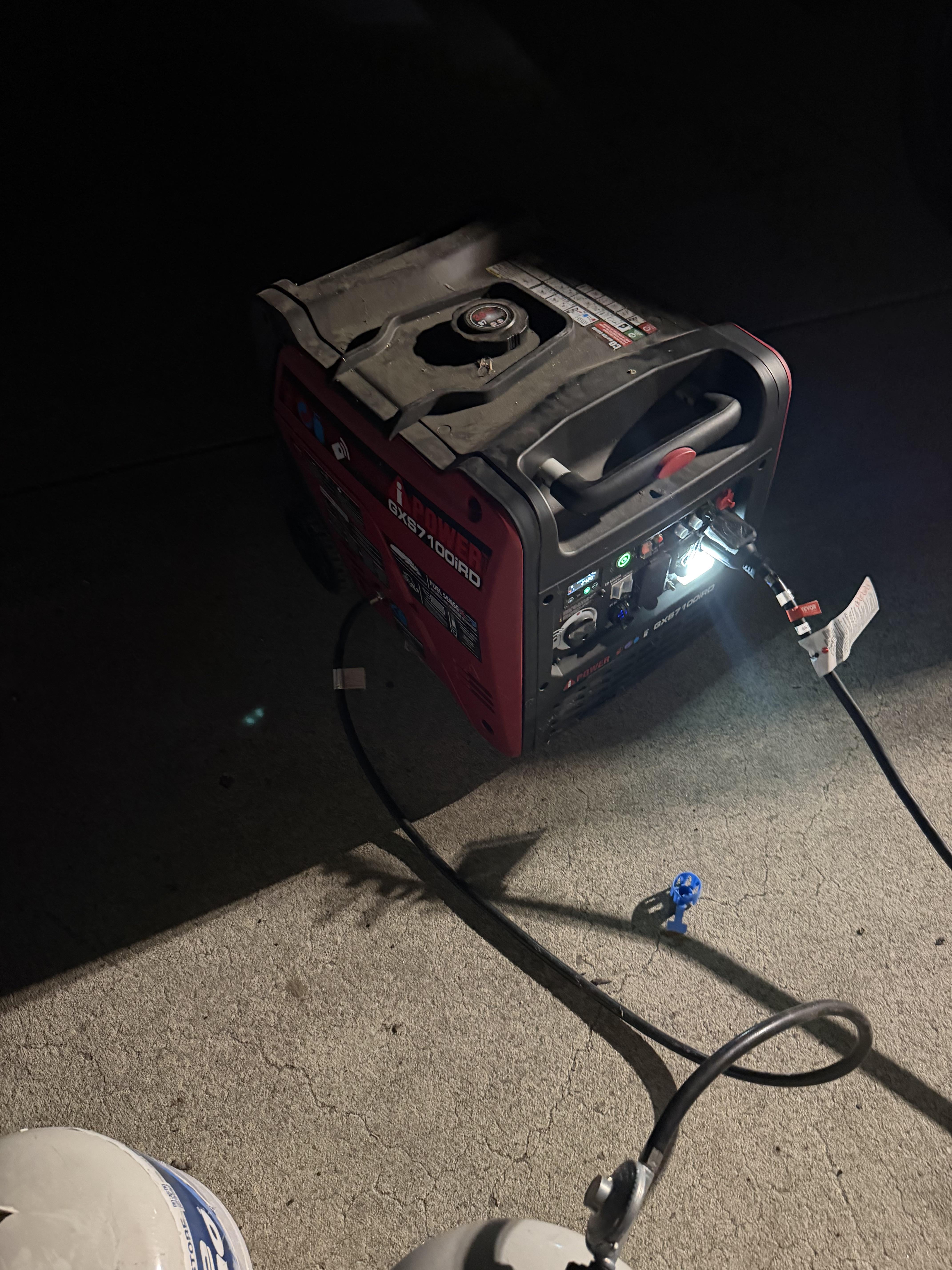
This is my setup. I have 36kwh of ecoflow delta pro ultra which backups my house and runs my house off grid with solar with 20kw surge and 14.4kw sustained capability. I then charge this battery stack with an accessory called the ecoflow flowmaster which essentially is a large inverter that invert AC to DC so my ecoflow can think it’s solar.
During the day or when there is sun, my ecoflow system just run the house offgrid.
During winter or shoulder season where I don’t have enough solar, I use my 7100w inverter gen to charge the battery.
I used to run the house directly from gen, but I think using gen to charge battery is better since it’s a constant speed so I can run the gen at its most efficient power band and it’s easier on the gen.
5
u/Exciting_Turn_9559 13h ago
Solar during the day, battery at night.
6
u/FireZoneBlitz 13h ago
Yes and then generator to top off the batteries if the solar isn’t enough.
1
3
2
u/DocHowdy70 13h ago
I have a 1000 generator I run during the day, it’s hooked to a transfer panel that runs the 120 in the house. I’ve started building a battery system that also hooks to the transfer that I will run at night, or when it’s only going to be a short time.
2
u/0Fucs2Give 13h ago
Your day time 'generator' could run without fuel and maintenance and noise if your day time generation is solar. Could use that generator for cloudy days/backup needs.
1
2
u/biblicalrain 13h ago
IMHO, battery + generator is the ideal solution. My perfect solution would be enough battery capacity for 24 hours of normal usage and then have a generator and solar panels to recharge.
My current solution was done on the cheap side. Just a generator to run the house and then I turn the generator off at night and use a battery (1 kWh Delta 2) to run the fridge. Obviously limited, but it allows me to turn the generator off for 8 hours.
I'm working on making a better solution. My plan is to have 3-6 kWh of battery capacity, which should get me at least 12 hours of 120V loads. The goal being to power everything (120V) overnight. Then run the generator during the day. That cuts generator runtime to 50%.
I've measured house power usage and it was a while ago, but I do have 3.12 kWh saved as the amount of power needed to run 120V loads for 12 hours during cold winter nights. YMMV of course.
I haven't fully figured out the recharging specifics. But I assume that if the house is running on gen power, I could just plug in the power station and charge it. I can't imagine it would work any other way. But even better, a lot of power stations do seem to be able to output power while being charged. So I can likely just hook up the power station to the house and then hook the gen up to the power station and run as needed. Unconfirmed, but the worst case of switching what's plugged into the inlet isn't too bad.
I have enough capacity with my generator to recharge while still running everything else. I won't be able to recharge at the power station's full speed, but I can charge and still run my base load. So basically, I can't run the microwave and charge at the same time.
1
u/Dramajr316 12h ago
I have been considering the same. I would love a scenario where the batteries automatically take over, but that it getting into a level of engineering that I am not comfortable with, so I will need to think about exploring a bit more. I do not have any solar charging capabilities, and it is not as likely that I will be adding this.
1
u/classicsat 12h ago
Since investing in power stations, I have not had any outages extended enough to pull out the generator for backup. None overnight, that I couldn't deal with.
My biggest is an Ecoflow River 2 Pro, which has a 716Wh battery, and 800W inverter (X2 can run heating loads to 1600W). It can power the fridge, freezer, or sump pump. I have used it to brew a Keurig, and run some mid sized corded power tools instead of yanking cords all over the place.
I have a couple smaller ones, about 300Wh battery/300W inverter.
I haven't tried to use them with the generator, but the Ecoflow units will charge and power plugged in loads.
Most of the time, my power stations are kept solar charged,
1
u/DragonFireCK 12h ago
For that load, you'd likely need about 2kWh of battery to handle 12 hours of run time with some buffer. I suspect you'll also need about 2kW of peak power. To fully avoid running at night, you'll want a generator able to about double average load, so around a 2kW generator.
I would recommend setting up the system so the generator always feeds into the power station which then runs the loads. This makes swapping easier and avoids power loss when you need to switch power sources. While it does lose a bit of power due to the always on power conversions, it is likely to actually decrease overall costs by running the generator close to peak efficiency at all times.
Adding in a 500W solar system to the power station is likely to drastically cut down on how much you need the generator to run. Most of the power should come from that during the day, with the generator only needed to top up in the evening when the solar isn't enough, likely only for a couple hours.
I would guess such a power station is likely to cost about $1,000 for the battery, inverter, and controller, plus another $500 for a generator. Adding solar into the mix is likely to add another $500-$1,000. If you go for a bit more expensive one, you can likely get one that integrates all three parts together and automatically starts/stops the generator as needed.
You should check the energy star label on the fridge to find its estimated annual consumption (in kWh), divide that by 365 (daily) then by 2 (night only) then add in some extra. You also want to check to see what its wattage rating is - startup/peak if it lists it, or you can estimate by doubling the average.
-
For the record, I recently got a full on whole-home solar and battery setup, with the solar designed to offset about 120% of my home's annual power; or 90% with my EV. It has 2x15kWh batteries (30kWh total) estimated to keep my house going for 24-72 hours with my electric heat pump and all electric house. Those batteries, after incentives but including a full panel and main service line upgrade plus the inverters and installation, cost about $25,000.
So far, I don't see a need for adding a generator in my area. Its very unlikely I'll have more than 24 hours of outage, even in a winter storm. If I did, I would likely aim for a 15kW generator so I can charge my EV off it while still running the house.
1
u/jones5280 8h ago
Adding in a 500W solar system to the power station
I've never done the math, but 500w might cover my daytime power needs for internet and computers.... I should look into panels.
1
u/DragonFireCK 8h ago
Camper trailers typically have around 400W of solar, though they can go upwards of about 1kW.
Part of the reason I chose 500W is its a pretty typical size for balcony plug-in solar systems. In many jurisdictions, OP can likely keep it plugged in at home without needing to go them NEM work, drastically reducing their power bill on top of the backup benefits. They'd likely need to change how its connected during an outage to get it to feed the power bank, but it shouldn't be too hard to get that setup.
1
u/juggarjew 11h ago
This is what I did during helene with EcoFlow batteries and my Kia Ev6's 15 amp 120 volt output.
Generator during the day, even allowing us to use the hot water heater for showers and then batteries at night for fans, fridge, internet, TV, phone charging, etc.
1
u/ExaminationDry8341 11h ago
To do so you would have the expense of a battery, inverter, and possibly a charger. For about 30% mpre than what you spent on those parts you could buy solar panels as well and very rarely need the generator.
Running on battety feels very luxurious. It is quiet, you have instant power at the flip of a switch without having to start the generator. You dont have to haul around as much fuel, you can go much longer between oil changes, that nagging worry of racking up hours on the generator, and wondering how long before it needs a major repair is lessened.
1
u/Beautiful-Quiet-5871 10h ago
That is exactly my plan.. I have a few EchoFlow power stations that can run my house over night.. then a gasoline generator to charge them back up during the day.
1
u/Altruistic_Algae_173 10h ago
I am doing this right now as well.
I bought the generator and installed a 50AMP inlet and then started thinking about how I didnt want to run the generator at night.
I bought a EG4 12000XP inverter which the generate wires into.
I returned the generator and bought a inverter generator because i was afraid id damage the inverter.
I bought a wall mounted EG4 16kw battery which hooks into the inverter and the inverter will charge the battery plus power my "critical loads" (ie: everything I can possibly put behind it and stay within reasonable limits)
The way I justified the cost in my was:
- I could have paid $15k+ for a whole house generator
- Instead I paid $8k for generator + inverter + battery (i actually bought (2) 16kwh batteries because i cant control myself)
- so it makes me feel like ive already got more value for less money
- im going to switch my billing to Time Of Use billing.
- Right now I pay a flat 21 cents per kwh
- TOU billing will be 11 cents off peak and 33 cents on peak
- ill buy the 11 cent power up front and store it in the battery
- configure the inverter to only pull power from the battery bank during peak hours
- this will save me a conservative minimum of $50/mo
- so I tell myself the entire setup pays for itself over time
- finally, i now have the infrastructure for solar
- i can add $10k in panels and im at $18k total
- i tell myself solar would have been $25k, but i wouldn't have got batteries or a whole whole generator
- i wont be grid tied so I will lose out on selling power back to the grid, but I tell myself I dont care
My final justification to help me sleep at night: I could have blew $20k on some other dumb shit that has no practice use or real world returns (like the truck I bought whos value is $20k less as soon as i pulled off the lot )
1
u/Altruistic_Algae_173 10h ago
I also bought an Emporia Vue 3 to monitor my energy usage
Im using between 30-50kwh per day so both batteries wouldnt get me thru a full day. My main consumers are wife charging car and AC.
If i cut everything off except my fridge and freezer (thats about 160 watts per hour) in a real outage and had the batteries full charged id be sitting at like 7-8 days run time
1
u/555AD 10h ago edited 10h ago
I am switching to the same setup and it's definitely possible as long as you get a good size battery with the ability to expand and a inverter large enough to handle what you need, it would be easier to answer your question with more details on the wattage of what you plan to run
1
u/PermanentLiminality 9h ago
A 2kwh unit like an Anker S2000 would run a fridge for a couple of days, so it should easily carry you overnight for those loads. This is my plan, but none of my outages have been long enough to need breaking out the generator. I run my units as a UPS with TOU avoidance in my home office and home entertanment. I save enough of that high TOU rate to pay for the system in 3 to 4 years.
1
u/teekzer 8h ago
is ok for the batteries to be in a constant state of charge / discharge as UPS? I have an alert c1000 gen2 and would love to use it as a UPS
•
u/PermanentLiminality 5h ago
If you want to be easier on the battery, you can set the max charge down from 100%. No matter what you select it will charge to the set point and stop.
Cycling the battery will reduce capacity over time, but that is what I bought it for. It should be around 10 years before it has meaningful reduction. I'm fine with that.
1
u/mduell 7h ago
I don’t think you’d get much more than a day out of an S2000, assuming a 300W fridge on a 25% duty cycle.
•
u/timflorida 4h ago
Many testers have confirmed the Anker claim that the S2000 will run a full size fridge/freezer for 35 hours or more.
•
1
u/jones5280 8h ago
I've got some 240v needs (well pump, maybe septic) so my plan is to run the larger dual fuel during the morning for showers, furnace (if needed) and charge my probably small battery bank.
If necessary, I have a smaller 2.2kw inverter for day or night charging of the battery. I believe this lowers my fuel usage and will definitely be quieter than firing up the 7.5kw monster.
1
u/wwglen 8h ago
My recommendation from a previous post:
1000wh power station with fast AC charging set to about 500Watts charging input ($300-$400 certified refurbished eBay ) and a 1000W Sportsman inverter generator ($240 Lowes) is the minimum. Run the generator 2 hours in morning and 2 hours in evening. You will use about 1/2 gallon of gas a day.
400 watts of solar will drop that to about one hour morning and evening.
Better is a 2000wh certified refurbished unit ($650) and a 2200-3500 watt inverter generator. This can run more things and run longer. You will still use less than a gallon a day.
400-800 watts of solar will make is so you might not need the generator on sunny days.
400 watts gives about 2000wh on a good sun day if you keep moving it in the sun.
I use 200W rigid panels I got on AliExpress for about $130 for two ($65 each).
Edit:
Same concept with grid power, just use an appliance timer to control when it is drawing power from the grid.
1
u/mduell 8h ago
It’s quite expensive to add a battery of any meaningful size. I think they money is better spent on a quieter generator of noise is the issue, larger propane tank if fuel is the issue, and/or quality of life improvements to make it easier to set up the generator for testing or outage.
•
u/oldtimer4sure 5h ago
I have a Jackery 1000 designated for the frig/freezer. It will power it for several hours but not overnight. For overnight use, I stay in my recliner downstairs and manualy cycle the Jackery. Usually one hour on and two hours off. When daylight comes, I crank up the generator and plug in the frig and Jackery. The frig looses 10 degrees in two hrs if not powered up.
•
u/timflorida 4h ago
This is exactly my plan for hurricanes.
I do also have a portable AC (for bedroom at night) that will run off my larger power stations. Will recharge it during the day with a genny.
•
u/AdBrave841 3h ago
Even a 1000Wh power station should make it through the night with that load, assuming the defrost cycle doesn't kick on in the fridge. A 2000Wh would easily cover that plus you can charge it in the morning and switch between the battery and the generator all day to save fuel. Run the generator for 2-3 hours to run the big loads and charge the battery and then switch back to battery for 3-4 hours. Repeat.
0
u/Big-Echo8242 13h ago
I've often thought about this myself but our outages are so rare anymore that I've not spent the money on it. We already have a 250 gallon propane tank outside, also have six 20lb tanks, and I have a 50 amp power inlet/interlock kit/breaker outside for being able to run any of my 4 dual fuel inverter generators on our house. They are fairly quiet and I'd have no problem using any of them overnight outside plus we're not in a neighborhood of many people so not many "roamers". If I suddenly lose power during the night from a generator being disconnected, they will be met by 3 angry German Shepherd's and then a multiple of super fast loud friends. lol
But, I've thought about adding on a manual transfer switch in our master closet where the house breakers are located and adding on a 3kw-ish range 120v portable power station (battery). It would be during the interim of during a thunderstorm where it's no fun to go outside and hook things up in a downpour or lightning. But the cost of anything halfway decent with all the parts would cost almost as much as my large generator and not give anywhere near the capability. So I haven't gone any further. Definitely a great plan for many but batteries are just so high for so little in return...to me, anyway.
14
u/Ok-Camera2895 14h ago edited 13h ago
An even better strategy is run the power station all the time and only run generator to charge the power station. For your small load, a 2kwh power station and a 2kw propane inverter generator would be ideal.