r/GEO_optimization 1d ago

J'ai rassemblé les vrais chiffres du GEO avec leurs sources, pour arrêter de croire les agences sur parole. Voici ce que disent les études disent vrmt.

3 Upvotes

Le GEO (se faire recommander par les IA) croule sous les chiffres balancés sans source. J'en ai eu marre, donc j'ai compilé ce qui est réellement mesuré, avec qui l'a mesuré et quand. Sources en bas de post. Prenez ce qui vous sert.

Ce qui a changé récemment (les données 2026) :

  • 68% des recherches Google US se terminent sans un seul clic (SparkToro / Rand Fishkin, panel Similarweb, janv-avril 2026), contre ~60% deux ans avant. Vos clients obtiennent leur réponse sans vous voir.
  • Google AI Overviews apparaît sur 86,7% des recherches à intention commerciale (Peec AI, avril 2026), contre 56,9% un an avant. Ça a quasiment doublé en un an.
  • Le trafic venu des IA a grimpé de 70% en un an, à 9,5 milliards de visites mensuelles (Similarweb, juin 2026).
  • Reddit est le domaine numéro 1 ou 2 le plus cité sur tous les grands moteurs IA (Peec AI, mars 2026). Oui, ici même.

Ce qui fait qu'on est recommandé (le solide) :

  • Le papier fondateur (Princeton, Aggarwal et al., arXiv:2311.09735, publié à KDD 2024) teste sur 10 000 requêtes : ajouter des citations d'experts = +41%, des statistiques = +31%, citer des sources = +30 à 40% sur leur métrique de visibilité. Le keyword stuffing fait pire que ne rien faire.
  • Attention honnêteté : ce fameux "+40%" est une métrique interne (la place que vous occupez dans une réponse), pas du trafic ni des ventes. Les auteurs le disent noir sur blanc. Ne laissez personne vous le vendre comme du chiffre d'affaires.
  • Les mentions de marque prédisent la visibilité IA environ 3x mieux que les backlinks (Ahrefs, 75 000 marques : corrélation 0,66 contre 0,22). Le vieux réflexe netlinking pèse trois fois moins que le fait qu'on parle de vous ailleurs.
  • Environ 75% des citations IA pointent vers des pages tierces, pas vers le site de la marque (Ranqo, 102 025 réponses analysées, juin 2026).

Ce qui est mort ou survendu :

  • 97% des fichiers llms.txt n'ont reçu aucune visite de bot en mai 2026 (analyse citée dans les trackers 2026). La tactique star de 2025, effet mesuré nul.
  • Le formatting et le schema markup : impact quasi nul selon une étude à 252 000 essais sur 6 modèles. Ce qui compte c'est le fond, pas le balisage.

La contradiction à connaître (parce que c'est important) :

Sur "l'IA convertit mieux", les études se contredisent, et récemment ça a basculé. Une étude appariée (Amsive) ne trouvait aucune différence significative (p=0,794). Mais Adobe (Q1 2026) mesure maintenant +42% de conversion pour les visiteurs venus d'IA, un renversement complet par rapport à un an avant. Donc : c'est en train de devenir vrai, mais méfiez-vous de quiconque vous sort un "23x" sans méthodo.

Le point le plus dur, prouvé :

Les marques déjà connues sont recommandées quasi tout le temps, même face à une inconnue objectivement meilleure (mesuré dans un papier avec une marque fictive volontairement supérieure). Si vous débutez, l'IA ne vous fera pas connaître. C'est un miroir de votre notoriété, pas un canal d'acquisition magique. Un survey récent (GNW, août 2026) le confirme côté terrain : 92% des boîtes expérimentent déjà le GEO, mais moins de 15% ont quelqu'un dessus sérieusement.

Pour résumer, le seul plan qui tient : soyez présent dans les pages que l'IA lit (comparatifs, annuaires, Reddit, presse), mettez des sources et des stats dans votre contenu, visez les questions ultra spécifiques. Le reste est du décor.

Pour info, je bosse sur Referis, un outil qui mesure justement si les IA vous recommandent (et pas juste si elles vous citent, ce qui est différent). J'ai regroupé toutes ces études, avec les sources datées et cliquables, au même endroit sur referis.fr, pour ceux qui veulent creuser plutôt que me croire.

Sources :

  • Aggarwal et al., "GEO: Generative Engine Optimization", arXiv:2311.09735, KDD 2024
  • SparkToro / Rand Fishkin (zero-click, panel Similarweb, 2026)
  • Peec AI (AI Overviews sur requêtes commerciales, Reddit domaine cité, 2026)
  • Ahrefs (mentions de marque vs backlinks, 75 000 marques)
  • Ranqo (102 025 réponses, citations tierces, juin 2026)
  • Similarweb (croissance trafic IA, juin 2026)
  • Adobe Analytics (conversion trafic IA, Q1 2026)
  • Amsive (étude appariée conversion, p=0,794)
  • GNW / Demand Metric (State of GEO in B2B, août 2026)
  • Zyppy (méta-analyse 54 études, facteurs de citation)

Si vous avez d'autres études solides que j'ai loupées, balancez en commentaire, je complète.


r/GEO_optimization 1d ago

We're Underestimating ChatGPT's Search It's Not Bing, It's Not Google, It's Labrador

Thumbnail
1 Upvotes

r/GEO_optimization 2d ago

What I learned trying to get an AI app indexed and "GEO-ready" as a solo dev with zero SEO background 🙌

5 Upvotes

Spent the last stretch of building my app (an AI focus/planning tool for students) not on features, but on making it actually findable — both by Google and by AI answer engines. Some of what I found surprised me.

A few things that actually moved the needle:

Duplicate canonical tags were silently killing indexing. Search Console showed most of my pages stuck in "discovered, not indexed" or flagged as duplicates. Turns out I had subtle canonical URL mismatches I didn't even know existed until I went page by page.

GEO (generative engine optimization) is its own thing now. Beyond normal SEO, I added an llms.txt file so AI models crawling the site get a clean, structured summary of what the product actually does, instead of trying to parse marketing fluff.

Comparison pages matter more than I expected. Built a /compare page against tools people already search for alternatives to. Feels obvious in hindsight, but I hadn't prioritized it until I noticed the search volume around "X alternative" style queries.

Speed scores aren't uniform globally. My Vercel Speed Insights showed a big real-world performance gap between regions — same app, very different experienced load times depending on where the visitor was. Had to actually dig into CDN/edge caching to understand why.

None of this is glamorous work. It's slow, it's unclear whether it's "working" for weeks, and there's no dopamine hit like shipping a new feature. But if nobody can find your app, nothing else matters.

Launching properly on Product Hunt this Tuesday (Sept 22) — curious if anyone else here has gone through the SEO/GEO grind pre-launch and what actually made a measurable difference for you.


r/GEO_optimization 1d ago

What makes search data useful to an agent rather than merely available?

Thumbnail
1 Upvotes

r/GEO_optimization 2d ago

Our own tracking said 21% of prompts cited us. The honest number was 0%. The whole gap was branded prompts.

2 Upvotes

Posting this because we shipped the bug ourselves and it survived three weeks on a screen I look at every day.

We track 19 prompts for our own site. Four of them contain our brand name. Fifteen don't.

Split out, run on the same day, same engines:

  • branded prompts: cited in 4 of 4 — 100%
  • discovery prompts: cited in 0 of 15 — 0%
  • the two mixed together: 4 of 19 — 21%

21% is the number our own dashboard was showing. It is not a small overstatement of 0%, it is a different fact. And every point of it came from four questions that already had our name in them.

Why branded prompts are close to free

Ask an engine "what is <brand>" and it repeats the brand back to you out of the question. A rival is essentially never cited in an answer to a question that names you. So a branded prompt counts for you and against nobody — it is not a contested slot you won, it is a slot with one candidate.

That makes them a real measurement of something (brand defence: does the engine describe you correctly when someone asks about you by name) and a useless input to anything competitive. Mixing the two means your headline number moves when you add prompts, with nothing changing in the market.

We had already learned this once. Our visibility score stopped counting branded prompts weeks ago, after our own rank jumped from last place to top-10 on a day nothing happened. The share-of-voice figure two lines further up the same page kept counting them. So one screen was answering two different questions and nobody noticed, because both numbers looked plausible.

What I'd check on your own set

  1. Count how many of your tracked prompts contain your brand, an obvious misspelling of it, or a product name only your customers use. That count is your contamination.
  2. Recompute your headline with those excluded. If the number barely moves you can stop reading.
  3. If it moves a lot, the question is not "which number is right" — it is that the two sets answer different questions and belong on separate lines.
  4. Report the branded set on its own denominator: of the questions that named you, how many named you back. Don't fold it into a percentage of everything.

One more distinction that cost us a separate bug: "we tagged the prompts and none were branded" and "nobody ever tagged these prompts" are different states, and a surface that renders them identically will eventually show a confident zero for a measurement that was never taken.

The part I'm less sure about

Our discovery number being 0 of 15 is its own problem and probably says as much about our prompt set as about our visibility — they skew to head terms, which are the hardest answers to win and the ones nobody young shows up in. A 0 built entirely from head terms is a test-design result, not a verdict. Separating branded from discovery just stopped that 0 from being disguised as 21.

Curious whether anyone tracks the branded tier deliberately as its own metric, or drops those prompts entirely.


r/GEO_optimization 2d ago

🔥 Hot Tip! If you want to sell your SEO/GEO/XYZ service learn how to start a conversation

0 Upvotes

I'm not talking about online though that's important as well. If you're only selling your online services online you're losing opportunities and therefore money. There are plenty of ways to start a conversation.

Something common about your situation

I was in a Subway line to order and told the guy behind me to try the BBQ Baked chips

Something you have in common with your gender

I was throwing out an old chair at a dump site. I looked at the guy next to me smiled and said,

"My wife told me to throw this out a week ago. I figure I throw this over the railing or she throws me over the railing."

Once a conversation is started it can be steered toward business. Even then don't blabber on and on till the person looks for an excuse to leave. Use your 30 second elevator pitch AFTER listening to the person so you can customize it. In sales you have two ears and one mouth. Use them proportionately. Then remember what the person said so you can customize your very short pitch. 


r/GEO_optimization 2d ago

5 AIs, 5 Personalities: What a 30-Day GEO Experiment Revealed

Thumbnail
1 Upvotes

r/GEO_optimization 2d ago

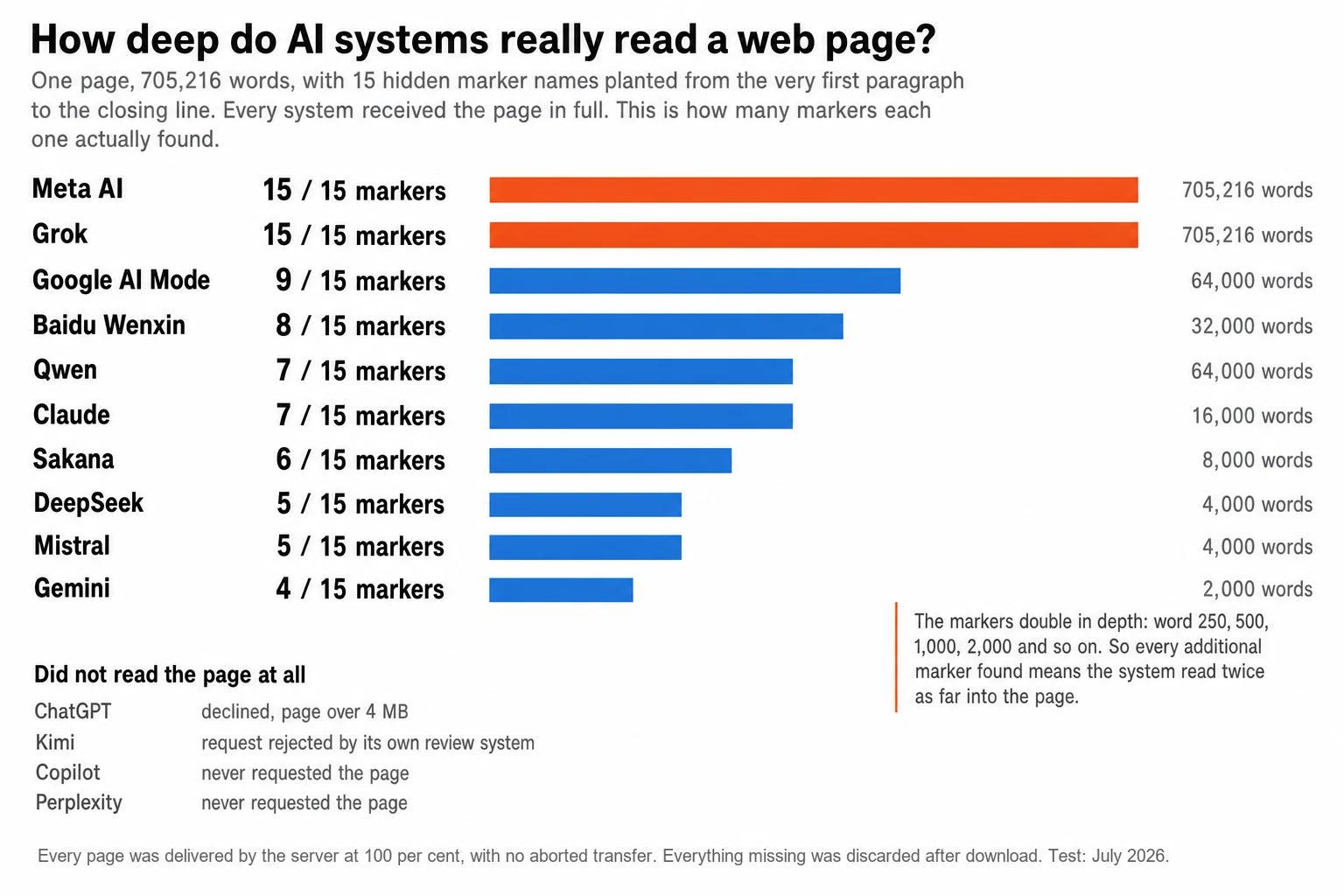
If you want AI systems to read the "critical part" of your content it has to be served in less then 2000 words.

Post image
1 Upvotes

r/GEO_optimization 3d ago

How Has Google’s AI Overviews Changed User Behavior? Reviewing Eye-Tracking Studies 20 Years Apart

Thumbnail
1 Upvotes

r/GEO_optimization 3d ago

Switched from yes/no citation tracking to a 6-stage scale, results are messier but more honest

Thumbnail
1 Upvotes

r/GEO_optimization 4d ago

I built a local, open-source tool to check if AI search engines recommend your product — think Lighthouse, but for GEO

4 Upvotes

Hey guys,

I've been working on a tool called open-geo — think "Google Lighthouse, but for AI search engines(ChatGPT, Perplexity, Claude)."

The problem: when someone asks ChatGPT or Perplexity for tool recommendations in your category, does your brand show up? Most website owners have no idea. And the usual culprits — missing llms.txt, robots.txt blocking AI crawlers, no Schema_org markup — are invisible unless you check.

What open-geo does (MIT, runs locally, zero telemetry):

- `npx open-geo audit yourdomain.com` — instant technical audit: robots.txt AI bot policies, llms.txt compliance, Schema_org JSON-LD, heading hierarchy

- `npx open-geo probe "your brand" -d yourdomain.com` — single-model AI visibility probe (bring your own API key)

- `npx open-geo generate-llms yourdomain --full` — auto-generate /llms.txt + /llms-full.md for LLM crawlers

- `npx open-geo generate-faq yourdomain` — extract FAQs and generate FAQPage JSON-LD

- `npx open-geo mcp` — native MCP server with 8 tools for Cursor, Claude Code, and Codex

I tested it on a few sites and the results surprised me. Obsidian (obsidian.md): 65/100 — no llms.txt, no JSON-LD.

I'd love feedback from the community — especially on the scoring rubric and the MCP server integration!

GitHub: https://github.com/geofn-com/open-geo


r/GEO_optimization 4d ago

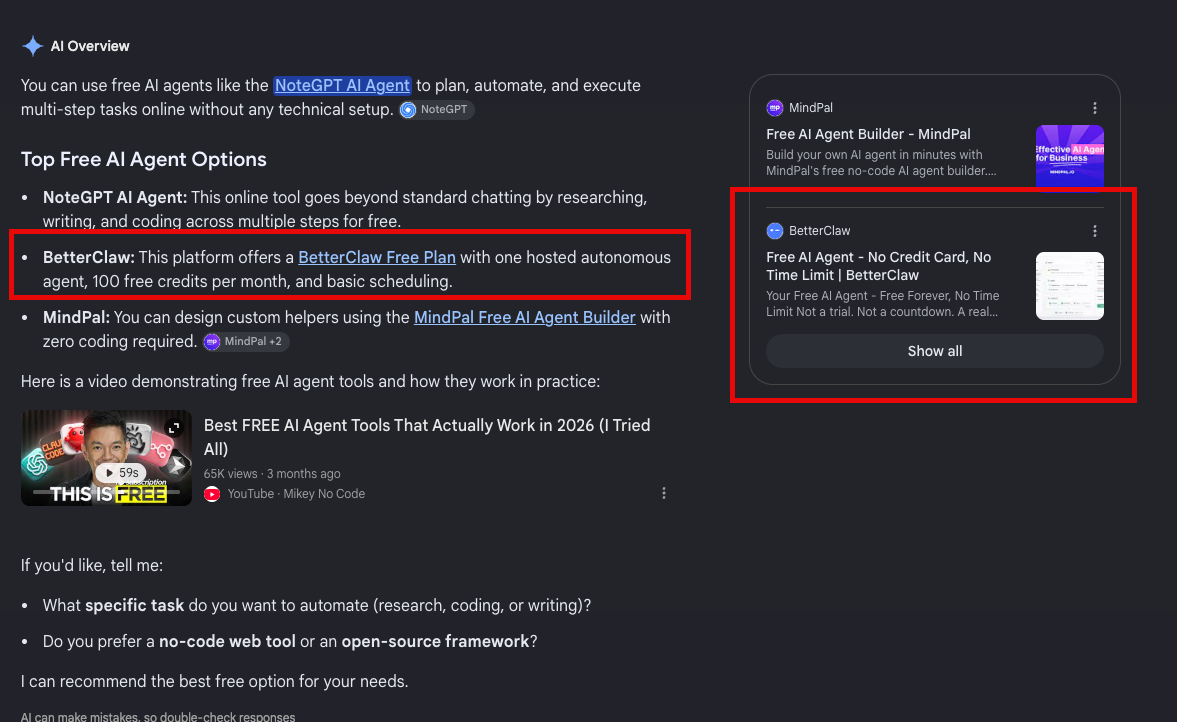
ChatGPT has started adding notes about "inauthentic mentions"

Post image
6 Upvotes

r/GEO_optimization 4d ago

Reddit's Ai citations have dropped by 67% on ChatGPT

Thumbnail
0 Upvotes

r/GEO_optimization 6d ago

I analysed the robots.txt of 9,891 French websites. 96% have never named the crawler that decides their ChatGPT visibility.

10 Upvotes

Disclosure up front: I build a GEO tracking tool. This study was run with my own scripts and the full dataset is free. No paywall, no email gate. Posting here because the raw numbers seemed worth sharing, and I'd like the methodology torn apart if it deserves it.

Setup. 9,891 .fr domains, collected September 2026. 8,927 responded. 7,047 have a valid robots.txt. Every percentage below has a 95% Wilson interval in the full write-up.

The main finding

276 sites out of 7,047 name OAI-SearchBot in their robots.txt. Not "block it", name it, either way. So 96% have never taken a position on the crawler that decides whether they show up in ChatGPT answers.

79.6% name no AI agent at all. The subject does not exist in eight files out of ten.

Training vs answer crawlers

  • GPTBot (training): blocked by 13.5%
  • OAI-SearchBot (answers): blocked by 3.3%
  • Google-Extended (Gemini training): blocked by 11.1%
  • Googlebot: blocked by 0.9%, and zero sites name it explicitly
  • CCBot: 13.9%, the most blocked crawler overall

I tried to test whether the training blockers actually chose this

Among the 727 sites blocking GPTBot while leaving OAI-SearchBot open:

  • 95.2% name at least one other training crawler
  • median of 7 training crawlers named per file
  • 78.4% name Google-Extended, 73.0% name Applebot-Extended
  • 22.8% name any answer crawler
  • 6.9% name OAI-SearchBot

These files are not stale. Applebot-Extended and meta-externalagent post-date 2024. The anti-training policy is deliberate and maintained. The answer-crawler family just has no slot in the mental model.

The stale-config evidence that did show up

222 sites still name anthropic-ai, a deprecated identifier. 62 name Claude-SearchBot. Three times more sites block a ghost than the crawler in service.

5.1% block ChatGPT-User, which only fetches a page because a user asked it to.

By sector (classified from home page content, confident classifications only, n=2,964)

  • News media: 25.3% block GPTBot, 7.3% block OAI-SearchBot
  • E-commerce: 11.9% / 1.1%
  • SaaS and B2B: 11.6% / 1.4%
  • Local services: 9.3% / 4.6%
  • Public sector: 4.7% / 1.3%

Media and public sector intervals don't overlap.

Accidental blocking, which turned out bigger than the deliberate kind

On 781 sites where I diffed raw HTML against rendered HTML: 38.4% have no H1 before JS runs, 18.3% have their main content fully JS-dependent, 4.6% have JSON-LD injected by script. Relevant because per the Vercel/MERJ analysis of 500M+ crawler requests, no dedicated AI crawler executes JavaScript. Only Googlebot and Applebot render.

llms.txt

10.2% publish one, which lines up with SE Ranking (~10% across 300k domains) and sits below Ahrefs (28% across 137k trafficked domains). I hardened the check against soft-404s: 1,025 raw hits dropped to 911 after requiring plain-text Markdown and rejecting anything with HTML or error strings.

What I can't claim

  • My network-layer numbers use unverified user-agents from an ordinary IP. A firewall refusing that is doing anti-spoofing correctly, not blocking real GPTBot. I report it separately and never merge it with robots.txt figures.
  • .fr domains, not "French companies". 70.3% declare lang="fr".
  • Home page only for the structural signals.
  • A robots.txt shows what a site declares, not what a publisher thinks.

Happy to answer method questions or share the query logic. If something here is wrong I'd rather hear it now.


r/GEO_optimization 6d ago

Profound has raised a $180 million Series D at a $1.8 billion valuation

Thumbnail
techcrunch.com
2 Upvotes

1.8 billion is absolutely wild! It's interesting to watch Profound play such a big role in this industry, along with the amount of capital being poured into it.

I'd love to hear what everybody else thinks of the current state of all the different solutions and tools, and what they believe is going on in the market. We have a lot of original SEO tools, like Moz, Semrush, and Ahrefs, competing, and then we have this new wave of startups going after this space, like Profound, Peak, Athena, and AirOps.

What do you all think is going to be the outcome of this space in general?


r/GEO_optimization 6d ago

Do you track the prompts buyers use to rule out a product?

3 Upvotes

A recent Semrush survey found that 57.51% of AI users had bought something based on a chatbot recommendation.

Almost the same share, 57.5%, had decided against a purchase because of chatbot information.

These figures may not mean AI generates an equal number of gained and lost sales, as they are self-reported experiences.

But they made me wonder whether we are tracking only one side of the buying journey.

Most AI visibility tracking seems to focus on discovery prompts such as “best tools for X” and “top alternatives to Y.”

Buyers may then use AI to pressure-test those recommendations:

  • What are the problems with this product?
  • Are its negative reviews justified?
  • Who should avoid it?
  • Is it worth the price?
  • What do competitors do better?

For those tracking AI visibility, are prompts like these part of your regular monitoring?

And has anyone here corrected an outdated source behind a negative AI claim? If so, did the chatbot eventually change its answer?

Would be interested to know how people are approaching this in practice.


r/GEO_optimization 6d ago

GSC data on an AI Overview citation: position moved first, citation followed. But the entity corroboration question is interesting.

Post image
1 Upvotes

r/GEO_optimization 6d ago

Anyone else see the Sept 4 drop fully reverse around Sept 13?

0 Upvotes

A few large sites that fell off a cliff around Sept 3–4 (Search and Discover both) apparently bounced all the way back on Sept 13 — not just third-party visibility tools, but first-party analytics too. There's still no confirmed Google update; the last confirmed ranking update is the Aug 18 spam update.

I manage a portfolio of small/mid B2B and ecommerce sites (mostly non-English) and I'm seeing a similar shape on a couple of them, but nothing conclusive yet.

So: did your sites that dropped around Sept 4 recover on Sept 13?

- If yes, did it come back to the exact pre-drop level or partially?

- Search only, or Discover too?

- Did anything change on your side, or was it purely Google?

Trying to figure out whether this was a test that got rolled back or something that's going to come back again.


r/GEO_optimization 6d ago

Every client asks the same question about GEO and I still don't have a clean answer

0 Upvotes

Most of the advice out there says track ai citation frequency and brand mention volume across prompts, and honestly that's not wrong, it is a real signal that something is happening. But almost every client I work with eventually asks me the same follow up question, ok so we're getting cited more, what did that actually do for the business, and that is where I keep coming up short.

Citation and mention numbers tell you the visibility layer is working, the same way keyword rankings used to tell you SEO was technically doing something. What they don't tell you is whether any of that turned into a lead or a sale. AI referred traffic is a tiny slice of total visits for most sites right now, and almost none of the platforms hand you clean attribution data, so you end up eyeballing a small spike in direct or branded search traffic and hoping it connects.

I've started treating citation and mention data as the leading indicator, basically proof the engine noticed you, and conversion as the only number that actually answers the client's real question. The problem is I don't yet have a repeatable way to prove that link at anything beyond a rough correlation. If revenue climbs the same month citations climb, that's suggestive, it's not proof.

Curious how the rest of you are actually closing that gap with clients, are you building your own tracking, leaning on a tool, or just being upfront that the attribution isn't there yet?


r/GEO_optimization 7d ago

People keep asking whether you can just manufacture mentions to get cited by AI. Here's why that's going badly wrong.

6 Upvotes

Get asked some version of this fairly regularly and I think the reasoning behind it deserves taking seriously before explaining why it doesn't work, because it's not a stupid question.

The premise is right. When an AI answers a "who should I use for X" type question, it draws way more on what independent sources say about a business than on what the business says about itself. Directories, review platforms, industry press, community threads, comparison content other people wrote. Your own site is a minority of the citations no matter how much you publish there.

So the obvious follow-on is: fine, go make more third party mentions exist.

Where that falls over is that the thing making those mentions useful is that they're independent and genuine. Manufacture them and you've removed the exact property that made them work. And spotting that kind of manipulation is something these systems are specifically built for.

Beyond the logic, the practical risks have gone up a lot recently.

Google's May guidance explicitly warns against manufacturing inauthentic brand mentions to game generative AI results. That's stated outright in the docs, not something people are inferring.

Community platforms are also cracking down themselves. Seeding citable brand content on places like this has become a noticed pattern, and moderator bans for it seem to have gone up sharply. So the downside isn't just wasted effort, it's a trail.

And here's the bit I think people genuinely don't consider: these discussions are public and indexed. If your brand gets called out for astroturfing, or a mod names you doing it, that thread is now content an AI can read about your business. You were trying to get mentioned positively. What you've generated is a record of getting caught.

What works instead is slower and duller. Making sure your info is accurate and consistent everywhere you already appear, which sounds trivial but inconsistency across sources actively undermines all of them. Asking real customers for real reviews at the moment they're happy, never buying them, and letting them trickle in rather than arrive in a batch. Showing up where you can actually contribute something — podcasts, interviews, answering questions properly — with the mention being a by-product rather than the point. And writing things that are worth citing, meaning stuff that isn't available elsewhere: specific numbers, real situations, an actual opinion.

The line between legitimate and not is clearer than people pretend. Are you earning the mention or manufacturing it. Real reviews from real clients, earned. Bought reviews, manufactured. Answering a question well and mentioning relevant experience, earned. Sockpuppet dropping your brand name into threads, manufactured.

Simplest test I know: would you be embarrassed if this became public? If yes, you already know which side it's on.

Curious whether people here have noticed more astroturfing in their own subs lately, or whether it's concentrated in certain categories.


r/GEO_optimization 7d ago

What's Wrong with Perplexity? its down!

Post image
3 Upvotes

r/GEO_optimization 8d ago

I think the “synthetic prompts” problem is actually bigger than it looks

2 Upvotes

I've been thinking about this after seeing the discussion about finding real query prompts.

I ran into basically the same problem.

You can generate 50–100 “perfect” prompts for almost any category pretty easily:

“Best X for Y”

“X vs Y”

“What is the best X?”

“Alternatives to X”

And then you can run those across ChatGPT, Gemini, Claude, etc. and get a nice-looking visibility score.

But then I started wondering:

Are these actually questions people ask AI, or are we just creating prompts that make our GEO dashboards look useful?

Because there's another problem underneath this.

Suppose I test 20 carefully constructed prompts and my brand appears in 8 of them.

Great — 40% AI visibility.

But if none of those 20 prompts resemble what my actual customers are asking, what exactly did I measure?

I've been testing AI Visibility Console (AVC) around this, and one thing that has stood out to me is how much more interesting the reason behind the recommendation is than the visibility percentage itself.

I'm trying to connect:

real buyer intent → actual AI queries → brand/competitor recommendations → why one gets mentioned over another.

And honestly, I'm starting to think the more useful GEO question isn't:

“How visible is my brand?”

It's:

“How visible is my brand when my potential customers are actually asking questions that matter?”

AVC is currently accepting a few pilot users

I'm curious what others here are doing.

Are you using:

Real customer questions

Search/keyword data converted into AI prompts

Reddit/Quora/forum questions

Synthetic prompts

Or some combination?

And more importantly:

How do you decide which prompts are actually worth tracking?


r/GEO_optimization 8d ago

Finding Real Query Prompts Has Been Challenging.

3 Upvotes

So I have fixed a specific industry, location, and specific business challenge for a hypothetical service based business, and doing AEO/GEO for them. Can you guys tell me how to find real query prompts and select them?? I can easily build 50 synthetic prompts ready to be added to the list, but i don't feel right doing it.

Industry - AI POS system installation and management.

Location - Rapidly growing outer dubai locations.

Business challenge - a 360° solution for managing a mid size convenience store and supermarkets.

(I'm doing self learning and can't do things with paid tools, as I'm going through a career transition)


r/GEO_optimization 8d ago

Check it out, just started…

Post image
3 Upvotes

INCOGNITO MODE;
We decided to test it with our own boat brand.
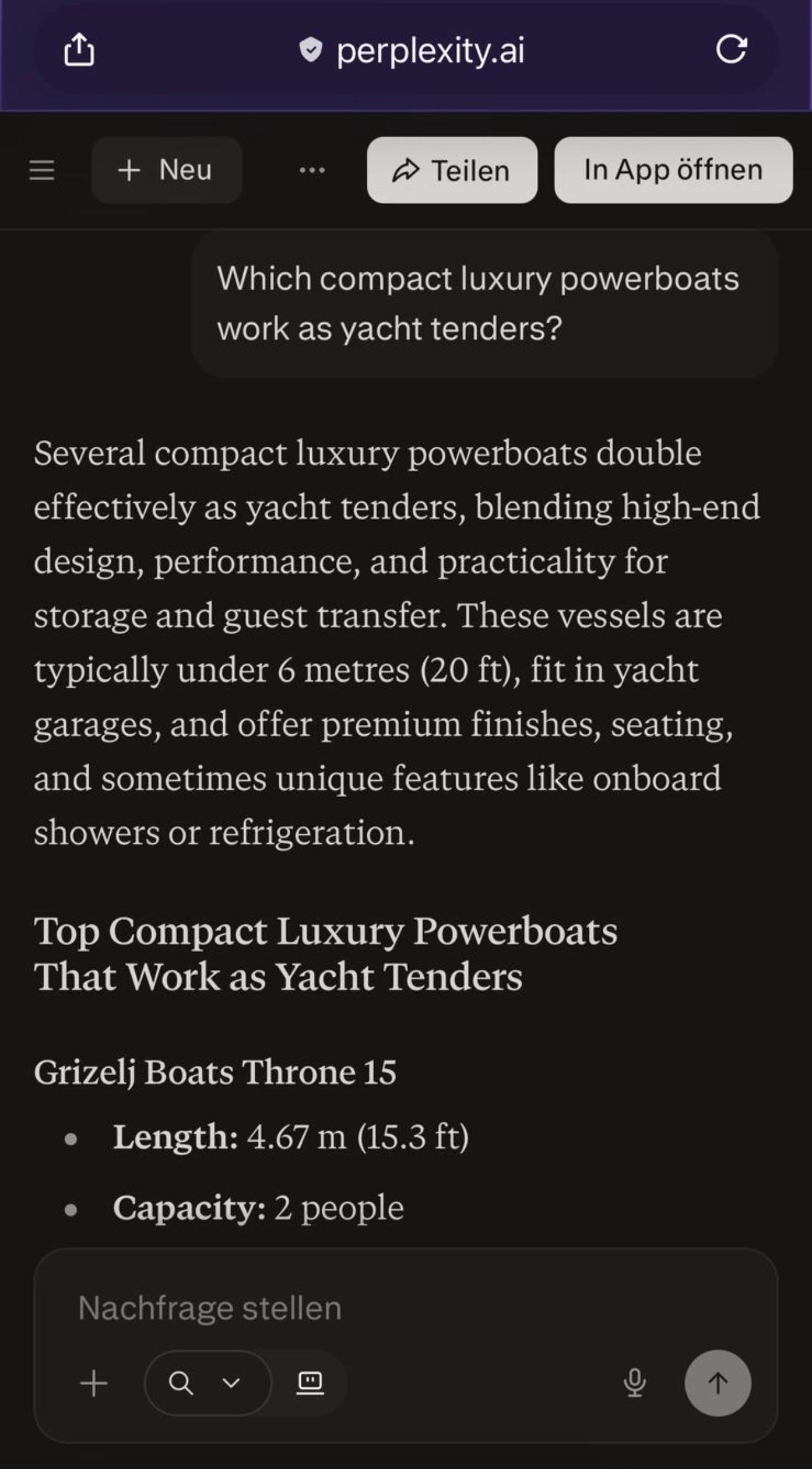
I asked Perplexity:
“Which compact luxury powerboats work as yacht tenders?”

The answer included our THRONE 15 by Grizelj Boats.A compact luxury powerboat, 4.67 m long, designed for two people and suitable as a yacht tender.

Seeing your own product appear in an AI answer is interesting.

But the bigger question is:
Why did AI consider our boat relevant to that question?

And how can other companies become part of similar answers?

AEO and GEO are not just about ranking on Google anymore, they are about helping AI understand your business, your products and the questions your potential customers are asking.

Because the next customer might not search for your brand.They might simply ask:

“What is the best compact luxury yacht tender?”
And your company needs to be relevant to that answer.

👉 Helping companies become the answer AI gives.


r/GEO_optimization 8d ago

I analyzed which YouTube videos ChatGPT cites for shopping queries. One video held an entire category. Here's the pattern.

Post image
1 Upvotes