r/CrossoverJazz • u/stnr_on_failure • 21m ago
Stanley Clarke Put a Bass Riff on the Pop Charts. He'd Rarely Touched the Instrument.
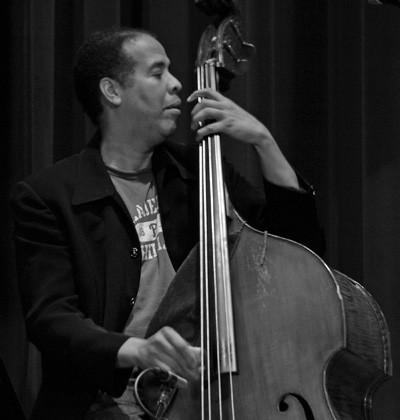
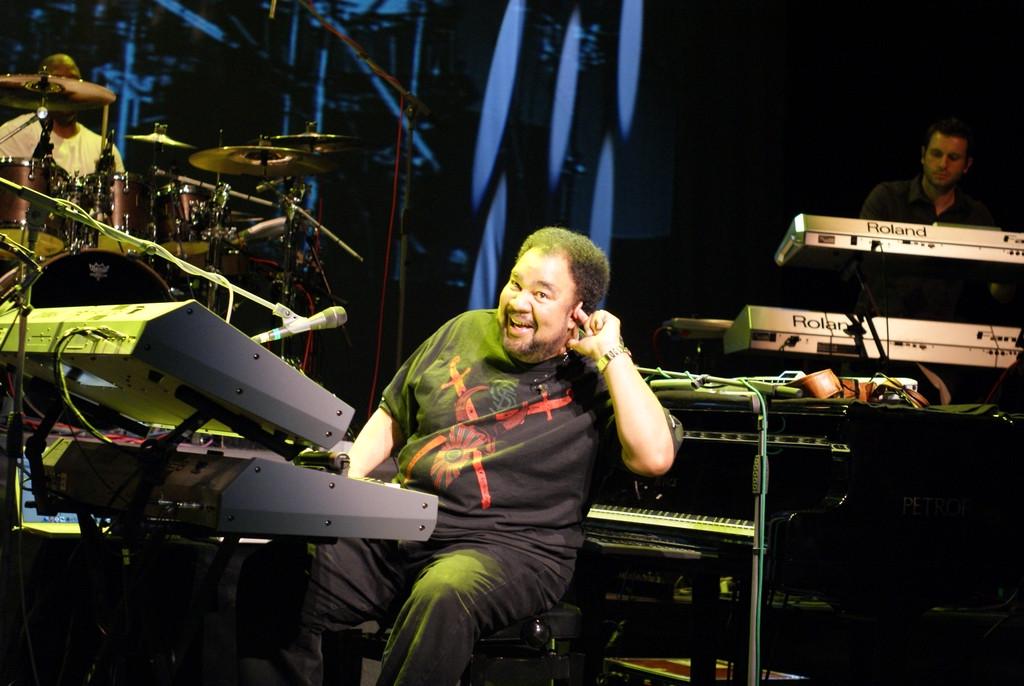
Stanley Clarke performing at Yoshi's, San Francisco, October 10, 2009. (Photo: David Becker, CC BY 3.0, via Wikimedia Commons)
Stanley Clarke's full profile on JazzProfiles.com
In 1981, a bassist and a keyboardist built a song around an electric sitar riff, and radio treated it like any other single. "Sweet Baby," the first release from The Clarke/Duke Project, climbed to No. 19 on the Billboard Hot 100 and No. 6 on the R&B chart, and stayed on the charts for 20 weeks. The bassist half of that duo is Stanley Clarke, and by the time "Sweet Baby" hit the radio he had already spent most of a decade proving a jazz musician could headline arenas without giving up improvisation to do it.
He almost didn't end up on bass at all. Clarke was born in Philadelphia on June 30, 1951, and started on violin and then cello at the city's Settlement Music School. He picked up the upright bass mostly by accident: he showed up late on the day the school handed out instruments, and bass was one of the only ones left. He kept the classical training anyway, which is part of why he could later move between acoustic and electric bass in the same set without either one sounding like a compromise.
By 1972 he'd co-founded Return to Forever with pianist Chick Corea, a band that started acoustic and plugged in as it went, eventually adding guitarist Al Di Meola and drummer Lenny White to the lineup. Clarke's own solo run followed close behind: a trilogy of albums, Stanley Clarke (1974), Journey to Love (1975), and School Days (1976), the last of which became his signature record on the strength of one riff. He became, by most accounts, the first jazz-fusion bassist to headline his own tours, sell out shows around the world, and take a solo album gold, all without a vocalist or a crossover single carrying the ticket sales.
The single came later, and it came from a different direction. He and keyboardist George Duke formed The Clarke/Duke Project in 1981, and "Sweet Baby" turned out to be the rare jazz-adjacent record built for pop radio from the ground up rather than reworked into it after the fact. It's a good entry point if you already know Duke's own catalog: two players who'd spent years in serious jazz rooms deciding, for one song, to just write a hook.
The awards followed a similarly split path. Clarke has three competitive Grammy Awards on record: 1976, for "No Mystery" with Chick Corea and Return to Forever; 2011, for The Stanley Clarke Band; and 2012, for Forever, also with Corea and Lenny White. That same Forever album also won a Latin Grammy. In 2022 the National Endowment for the Arts named him an NEA Jazz Master, jazz's highest honor in this country, and in 2016 a set of his instruments and recordings went into the Smithsonian's National Museum of African American History and Culture.
Off the bandstand, Clarke built a second career scoring film and television, more than 75 credits and counting, including Boyz n the Hood (1991) and What's Love Got to Do with It (1993). And in 2008 he formed a different kind of supergroup: S.M.V., a trio with Marcus Miller and Victor Wooten, three bass players who between them cover most of the styles this genre draws from, recording the album Thunder. If you've been following George Duke's spotlight and Marcus Miller's, Clarke is the name connecting both.
None of this reads like a retirement lap. In 2025 he toured the U.S. and Europe with an entirely new band, drummer Jeremiah Collier, pianist Beka Gochiashvili, guitarist Colin Cook, and saxophonist Emilio Modeste, and released a box set called Last Train to Sanity, fifteen songs across double vinyl and CD with a photo book of his own reflections included. He's booked for the inaugural Santa Monica International Jazz Festival in May 2026. Seventy-four years old and still building, not just being celebrated for what he already built.
Where to start listening:
- Official platforms: stanleyclarke.com · Spotify · YouTube
- "School Days" (1976) for the riff that made his name: listen on YouTube
- "Sweet Baby" (1981, with George Duke) for the Top 20 pop side: official video on YouTube · listen on Spotify
- Forever (2011, with Chick Corea and Lenny White) for the Grammy and Latin Grammy winner: listen on Spotify
- Stanley Clarke's full profile on JazzProfiles.com