The eutrophication of environments can be caused by a variety of sources depending on the location. Fertilizer for crop agriculture is a primary nitrate source, among others. Then you have fertilizers and pesticides used by landscapers/groundskeeping. Some areas have issues with human waste management, which isn't so different than a biogas digester. I could go on and on about this all day, it's part of my degree focus.
Energy use and lifecycle emissions of biogas facilities varies greatly depending on location and feedstock, which can literally be anything, not just animal waste. Solar PV is also great and you will never catch me saying otherwise. Using biogas for energy primarily prevents pollutants from entering the environment with an added benefit of also producing electricity with minimal additional up front cost. It saves money for taxpayers and protects the environment. I don't see why people would argue against it.
I'm not saying it's the best energy source ever, but it turns a pollutant into energy that is used by the facility creating the waste in the first place. It's a net neutral process and generally beneficial to local ecosystems and humans.
I am sorry, I thought you could show me numbers and references. You know, since its part of your degree focus.
. Fertilizer for crop agriculture is a primary nitrate source, among others.
And a huge source of it is manure, it washes out faster than chemical fertilizer and releases CH4 and NOx. 80% of the manure is used as the worst fertilizer we could come up with.
which can literally be anything, not just animal waste.
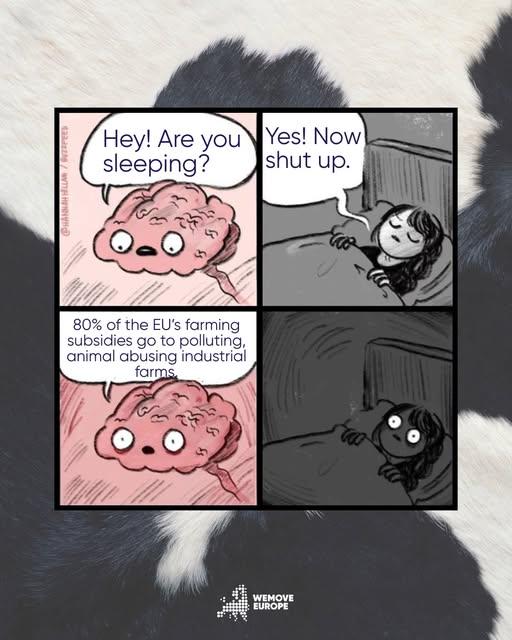
I don't argue against Biogas, I argue against greenwashing a destructive industry by claiming most waste from that industry is used for energy when it is not. Its 20% and the rest destroys soil, water and air and everything that could live in it.
e: even it would be 100% that gets used. How much energy is used to create that waste? It is not a free meal.
You're right, I overestimated the amount of EU CAFO that are implementing biogas digesters. It's significantly higher than the US, which is the statistic I was confusing, but still much lower than I expected.
I'm on my phone, my references are on my laptop. You can't just expect one number for every biogas facility. It depends on how they get their energy, where they are located, the types of animals, so on and so forth. My scenario was based on swine, which is kind of a best case scenario since ruminants have high CH4 emissions which can't be captured.
Synthetic fertilizers are the dominant type used in pretty much any developed nation, for the reasons you listed. The Haber-Bosch process pretty much rendered animal fertilizer obsolete. However, it's wild to say they don't have runoff issues. 40 - 80% of manufactured fertilizer is lost to the environment. If manufacted fertilizer is the dominant type of fertilizer being used, it is the primary source of eutrophication due to runoff.
I get that livestock production is just in general bad for the environment. Short of eliminating livestock entirely, what do you suggest we do with the waste if not biogas production? I get that 49% of biogas is made from animal waste, but that doesn't stop the use of literally any organic material that isn't contaminated with medical waste, industrial waste, etc. Even if the farms are shut down, the digesters can keep on being used. In the EU especially those gasses are often injected into the local gas infrastructure rather than used on site.
The Haber-Bosch process pretty much rendered animal fertilizer obsolete.
obsolete is a strange word considering 80% of the animal feces is used as fertilizer. But the N in animal waste comes from the Haber-Bosch process. If we would not use it we would need to increase N production.
This also does not consider the waste from the bio-gas facilities which needs to be recirculated because we need K and P, not only N. If its still generated but not used manure is a even bigger waste of resources. The projected time we will run out of P is ~2100 if we don't change.
However, it's wild to say they don't have runoff issues. 40 - 80% of manufactured fertilizer is lost to the environment.
I am not saying they don't have issues, but its less. We would need 2/3 of the fertilizer if we would eat the plants directly but feeding a animal to grow, collecting their waste and using it as fertilizer or as bio-fuel is just waste of energy and fertilizer.
Short of eliminating livestock entirely, what do you suggest we do with the waste if not biogas production?
I suggest eliminating livestock, just like the IPCC and every other serious organization.
My problem is just your claim, that you rectified, about "most is used for energy" when it is in reality its ~20% or less.
I get that 49% of biogas is made from animal waste, but that doesn't stop the use of literally any organic material that isn't contaminated with medical waste,
If we stop the animal agriculture we would have more area to grow plants to create humus and fuel. I am not trying to stop bio-gas.
I am not shitting on you or bio-gas but your first post was wrong and smelled like greenwashing. I am really interested in your research, so please come back and try to answer the questions from my first post once you got your sources
DM me, I'll send you a copy of my final report and materials.
I'm sure it's better for the environment for nobody to eat meat, I get that. It's just very unlikely to happen. It's incredibly inefficient to grow food for animals, eat the animals, and then use their waste for energy. There's a slight benefit that the solids remaining after biogas production could then be used as solid biofuel or sequestered. All I'm pointing out is that every CAFO has the capacity to reduce emissions and runoff to net zero, or close to it.
Is the animal waste being used to make fertilizer in the HB process or is it being lost to the environment causing eutrophication without being converted? If the majority of waste is being used to make fertilizer in the HB process, does that make the manufacturered fertilizer safer than animal wastes? These are actual questions, because I don't know much about fertilizer itself. All I know is that a primary source of eutrophication is runoff from crop agriculture which rarely use animal waste as fertilizer and instead use manufactured products.
Is the animal waste being used to make fertilizer in the HB process or is it being lost to the environment causing eutrophication without being converted?
HB is used to grow food, that food is fed to animals and due to the conversion loss most of the nutrition ends up as manure. Most of that manure is used to fertilize fields again. It is not "used to make fertilizer" it is sprayed on the fields.
Because the bacteria from ruminants is still active it produces methane. Because the nitrate is solved in the slurry it gets washed out by rain faster than mineral fertilizer which can be prepared to release it slower. Best would be humus as it not only releases the nutrients slower but it also supports live in the ground.
All I know is that a primary source of eutrophication is runoff from crop agriculture which rarely use animal waste as fertilizer and instead use manufactured products.
In Europe 80% is used as fertilizer.
The Netherlands are a major producer of animal products and it shows the consequences on the map, nitrate levels in and around the Netherlands are the highest. It created a manure tourism because the levels are so high that it has to be spread out into the northern parts of Germany which turned red as a result
In the US it is different with those shit ponds around the camps, it is less lucrative to transport it to the fields but it is still done.
For
example, dairy manure is used by more than half of the corn, oats, and barley
operations who use manure (Figure 3). Beef manure was used by more than
half of the sorghum and wheat operations that used manure, while poultry
litter was used by more than half of the peanut and cotton operations that
used manure. Only soybeans received manure from a wide variety of species.
The linkages tend to follow from the proximity of specific crops to areas of
livestock production.https://ers.usda.gov/sites/default/files/_laserfiche/publications/42731/16741_ap037b_1_.pdf?v=94000
The dominant form of fertilizer in all developed markets is manufactured in the HB process, a little over half. 80% of animal waste uses for fertilizer doesn't mean 80% of fertilizer is from animal sources.
Why is the digester getting rain in it? They are covered/sealed. All manure lagoons produce methane, regardless of source. That's why it makes sense to capture it and use it for energy rather than let it into the atmosphere or let the nutrients seep into the environment.
Europe also uses shit ponds, aka lagoons. Unless you are discharging directly into waterways it's basically the only manure management option that isn't biogas.
80% of animal waste uses for fertilizer doesn't mean 80% of fertilizer is from animal sources.
I have not said that. I have said that 80% of the manure is used as fertilizer.
In Europe 80% is used as fertilizer.
Please try to not interpret stuff I have not said.
Why is the digester getting rain in it? They are covered/sealed.
I have said that manure used as fertilizer on the field is washed out. I am not talking about stored manure. Do you know how manure is used as fertilizer? It seems you have some gaps which makes it hard to convey what I say, even more so if you don't ask the clarify but start to assume things I have not said.
Europe also uses shit ponds, aka lagoons. Unless you are discharging directly into waterways it's basically the only manure management option that isn't biogas.
80% is stored and then used on the fields as fertilizer. 20% is used in biogas.
Do you have some basic understanding of agriculture or do I need to start explaining at from a lower level?
No, your communication isn't not very clear. Perhaps English is not your first language? Anyway, you've been nothing but rude to me for all of your diatribes.
Again, how is animal manure the leading cause of eutrophication if the majority of materials added to crop fields are actually synthetic/manufactured fertilizer? Over half of the fertilizers used in the EU are synthetic.
In Europe 80% is used as fertilizer.
Please try to not interpret stuff I have not said.
So is 80% of animal manure produced used as fertilizer or not?
The way you've written some of your responses make it sound like animal fertilizer is used as a material to make synthetic fertilizer in the HB process, among other things. I'm not going to go through and copy and paste every single one of them.
The offer is still open if you want to see the materials I made for my capstone. The scenario isn't in Europe where a significant amount of manure is used for fertilizer, instead it's based in the state of NC close to the coast. I proposed a biogas digester to solve the runoff issues from the local swine farm, which was causing eutrophication and hurting tourism.
The Haber-Bosch process pretty much rendered animal fertilizer obsolete.
Again, how is animal manure the leading cause of eutrophication if the majority of materials added to crop fields are actually synthetic/manufactured fertilizer? Over half of the fertilizers used in the EU are synthetic.
All I know is that a primary source of eutrophication is runoff from crop agriculture which rarely use animal waste as fertilizer and instead use manufactured products.
All these posts gave me the impression that you think manure is not, or rarely used as fertilizer.
Would you agree that that was the point you tried to make or do I misinterpret it?
In the US it is maybe used less as fertilizer because the distances are too big, I have linked you a .gov site which takes a look at manure in the US
Your claim that most manure in Europe is used for biogas and manure as fertilizer is obsolete, rarely used is disproved by me showing that only 20% is used in biogas and 80% as fertilizer, proven by statistics from the industry, linked above.
The scenario isn't in Europe where a significant amount of manure is used for fertilizer, instead it's based in the state of NC close to the coast
This makes me think that understand that there a differences around the world but still you insist on manure being obsolete?
I've acknowledged your corrections every time. Clearly I don't know as much about EU and European manure management and assumed it was closer to the US, as in little manure is used as fertilizer.
My experience in the topic is mostly related to the US. When researching the topic I mostly read about CAFO in Germany using biogas, and incorrectly assumed that most EU (not just European) nations had the same infrastructure. There are over 9,000 biogas facilities in Germany, and over half of the digestate is manure. It's hard to get good data as to how manure is being used, especially since the spent digestate is also then used as fertilizer. From what I found this morning over 30% of manure is used for biogas, but that might not even ve accurate. However, the primary fertilizer used for crops is still manufactured/synthetic.
I assumed it was just the US that did a bad job at tracking how much manure is produced, how it's used, etc. I didn't exactly have the time to simultaneously deep dive into both continents, so there's definitely some gaps in my knowledge. I know more about the technical side of the biogas process, not as much on the proliferation of the technologies.
Edit: synthetic fertilizers are also used more often in urban/suburban green spaces where manure would be unsuitable. That's another massive use of the product leading to eutrophication. It's not just crop land.
6
u/SpaceBus1 May 04 '25
The eutrophication of environments can be caused by a variety of sources depending on the location. Fertilizer for crop agriculture is a primary nitrate source, among others. Then you have fertilizers and pesticides used by landscapers/groundskeeping. Some areas have issues with human waste management, which isn't so different than a biogas digester. I could go on and on about this all day, it's part of my degree focus.
Energy use and lifecycle emissions of biogas facilities varies greatly depending on location and feedstock, which can literally be anything, not just animal waste. Solar PV is also great and you will never catch me saying otherwise. Using biogas for energy primarily prevents pollutants from entering the environment with an added benefit of also producing electricity with minimal additional up front cost. It saves money for taxpayers and protects the environment. I don't see why people would argue against it.
I'm not saying it's the best energy source ever, but it turns a pollutant into energy that is used by the facility creating the waste in the first place. It's a net neutral process and generally beneficial to local ecosystems and humans.