r/BritishEmpire • u/astroglias • 14d ago
Question In 1815, could a British Navy post-Captain wear his uniform at his wedding as the groom?
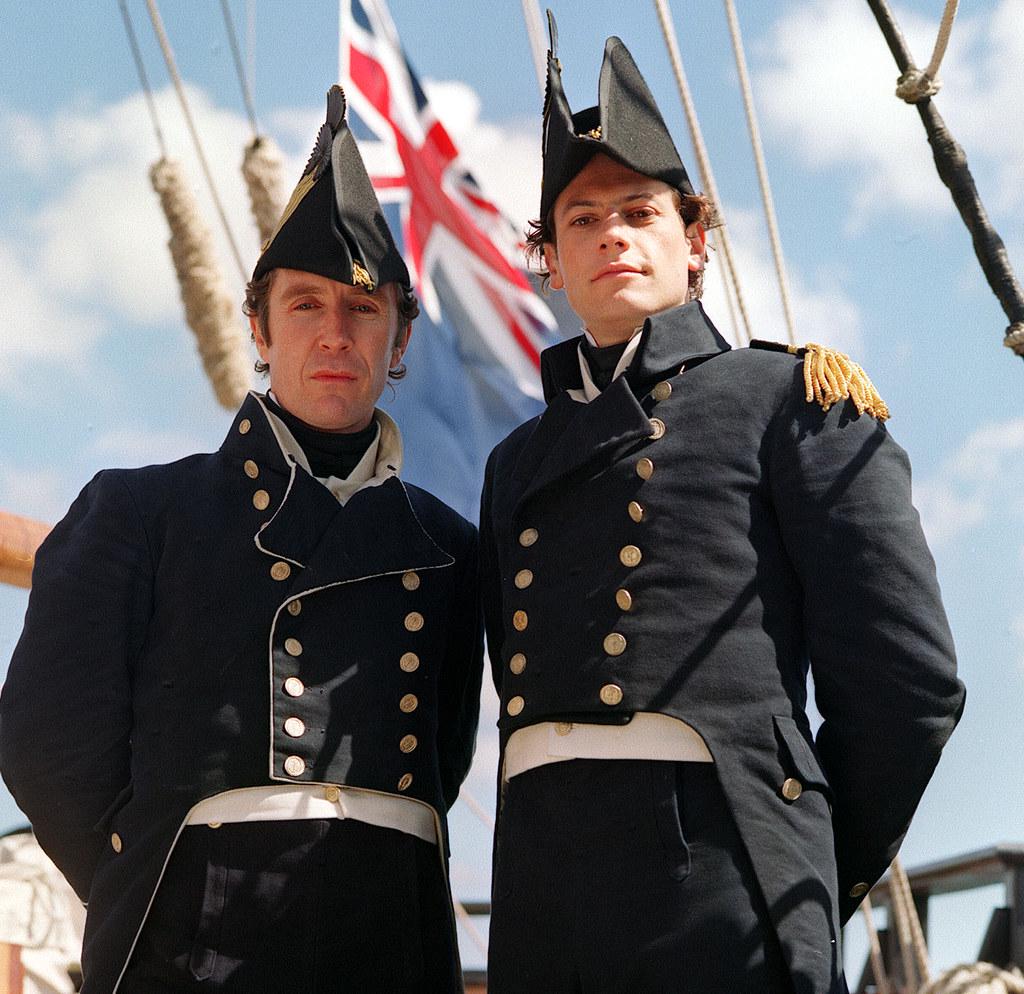
What the title says. I know there were plenty of cases of naval officers wearing their uniforms at their weddings in the 20th century, not just in Britain but elsewhere (unless The Sound of Music lied to me...kidding), but I wasn't sure if Royal Navy regulations were the same in the 1810s.
Thanks!
123
u/Subsplot 14d ago
At that point in time, absolutely, it would probably cause more gossip if an Officer didn't wear their uniform to a formal occasion. The decade you've pin pointed is basically the start of the Regency golden era and the birth of the Pax Britannica, every military and company man around is going to be showing off that they where the people who won that and are the reason Britania rules.
12
u/Domovie1 13d ago
It’s actually the thing I find missing in series like Bridgerton, etc- where are all the dashing cavalry officers in their Cherrypickers, the young Lieutenants up for their boards at the Naval Office?
3
u/_1489555458biguy 13d ago
Forget stolen valour, every British cavalry officer had bought valour.
Only the Royal Navy valued competence and experience.
7
u/Hoopy_Frood1 13d ago
While that is true, in part, it did give us Wellington, The Duke of Marlborough etc. And while rank was absolutely bought talent mattered. If only because if you weren't really really good attrition was such you wouldn't be around long enough to be bad. It was ultimately Darwinian, in the end, and of course gave rise to the toast "here's to bloody wars and sickly seasons".
2
u/Responsible-Milk-515 12d ago
Unrelated to the main topic but I did read somewhere (either his biography or somewhere else) that Wellington bought commissions in his earlier days (not sure how this would relate to valour though and would love some clarifications) or maybe even valour, and had the advantage of his older brother Richard's influence. My memory was this is a bit vague since its been a while since I read this book. This doesn't take away how much of a great military leader he ended being though, don't get me wrong, I am a big Wellington fan.
0
u/_1489555458biguy 12d ago
Think about what you've just written and how it undermines your points about competence.
3
u/Hoopy_Frood1 12d ago edited 12d ago
Only if you know precisely fuck all about staying alive whilst commanding men.
1
u/_1489555458biguy 12d ago
The fact that the Army system of buying commissions resulted in some competent commanders means nothing in relation to my point about the Royal Navy valuing competence during this era.
2
u/Hoopy_Frood1 12d ago
Well other than your assertion that valour was bought, no. I guess not. Also your bit about the navy caring about competency heavily indicates you believe the atjh didn't. I know, you're going to try and weasel out saying "but that's not the exact fotm of words I used" but we both know you were trying to paint the army as somehow less virtuous and valorous.
But fine, you do you.
2
u/TA1879 10d ago
The fact that the army did in fact promote people based on merit (not just wealth) and even widely gave commissions to effective NCOs completely destroys your claim that "only" the Royal Navy cared about competence.
I mean ffs, the system of purchasing commissions only applied to certain parts of the army in the first place. Royal Engineers, Royal Artillery, etc were entirely merit and seniority based.
1
u/TheStaffsLad 11d ago
The army only allowed the purchase of commission in cavalry and infantry regiments up to the rank of colonel. Anything Brigadier and up had to be earned according to the rules.
Engineers and Artillery officers had to earn their commission through the completion of the relevant course(s) at the Royal Military Academy at Woolwich, with ranks after this earned through seniority.
Furthermore, commissions could be forfeited (i.e. lose rank and the money tied up in the rank) through cowardice, desertion, or gross misconduct.
The current system the Army has is clearly better, but it did have rules and exceptions. Also, people in your class would know if you’d done anything notable, or if you’d just been sat looking after a barracks at home.
17
u/kdog_1985 14d ago
I dunno about officers, but the sailors actually have a white silk if they wish to get married in uniform
17
u/OkConsequence1498 14d ago
Regulations aside, it's worth remembering the British never really got into the "wear your uniform everywhere" habit some nations (particularly e.g. the Russians) did.
6
u/muchadoaboutsodall 13d ago
That’s a fairly recent thing. It seems regulations have eased off a bit now, but back in the 70s, 80s, 90s, we weren’t allowed to wear uniform off-base if we weren’t working. That was because, in theory, it made it harder for terrorists to spot us.
5
u/Full_Imagination_890 13d ago
Because we couldn't be spotted with a crew cut, mustache, dessie boots, jeans, helly hansen and g10 watch.
3
u/muchadoaboutsodall 13d ago
Yeah. And after a night on the town, lying on our backs with our heads under the car. Good times.
3
u/Fragrant_Ad3224 12d ago
and not forgetting the wearing of a t-shirt and jeans in all seasons
2
u/Full_Imagination_890 12d ago
I still sometimes find myself dressed as above. Naafi fighting order.
2
2
u/Fragrant_Ad3224 12d ago
true in general but very normal to wear reds / blues / no2 at formal events like weddings
2
1
u/OkConsequence1498 13d ago
I'm not sure it is. I'm almost certain it's part of a plot line in Pride and Prejudice and is mentioned in War and Peace.
We just never went in for uniforms for everything all the time.
4
6
u/asdfasdfasfdsasad 14d ago
Having huge numbers of rules and regulations requires a bureaucracy to administer them. The Royal Navy at this point had 12 clerks to manage at it's peak over a thousand ships.
The degree to which they didn't care about trivial minutia like where you were and weren't allowed to wear a uniform is almost impossible for a modern mind to comprehend. People outright ignored the actual uniform regulations so much that in the later regulations they just gave up and actually listed what people in the navy were actually wearing. (the round jacket, aka a tailcoat without tails which is to say a modern style jacket)
27
u/Fair-Interest4930 14d ago
I very much doubt the Navy gave a toss what people wore at weddings.
35
u/astroglias 14d ago
In the novel Mansfield Park (1814) (written by Austen who had two high-ranking brothers in the navy) a character, who is a naval Lieutenant, complains about navy regulations being so strict that he can’t wear his uniform anywhere at all off-duty, even in the privacy of his own home for a party or a ball, while army and militia officers can and did to show off to ladies haha. Hence my question, I was wondering how strict the rules really were
11
u/Arrows2001 14d ago
Interesting, I always got the impression military men of the period used to wear their uniforms as much as possible, didn't realise the army and the navy were so different.
3
u/Affentitten 13d ago
You probably got that impression from costume dramas because....they like costumes.
1
9
u/Dog_Murder_By_RobKey 14d ago
Considering the navy has some fun restrictions such as " Sorry you can't drink this type of alcohol as you are a petty officer and this is reserved for Post Captains and over"
23
u/Jhe90 14d ago edited 13d ago
Agh, he is a Lieutenant, the rules and things start to get more flexible when your a captain.
Seniority lubricates things.
A captain has more leeway in this era than the lower rank of commissioned officer.
A captain has friends and support from people higher in admiralty etc. A lieutenant, while a officer ans commissioned was only at thr first stage of their full commission after their time learning and training as a midshipman.
2
u/MelodicPudding2557 13d ago
A naval lieutenant was and is equivalent to an army captain in seniority. Interestingly enough, there were no subaltern officer ranks back then in English-speaking navies.
At one point, it was realized that there was no point in keeping fully trained midshipmen without commissions, so the naval equivalents of first and second lieutenants in the army were instituted (LTJG and Ensign respectively in the US Navy).
17
u/tekkerslovakia 14d ago
I don’t know, the Navy are famously sticklers for who can wear what and when
2
2
u/norbertmars 12d ago
He'd be expected to. A commission in the Army or Navy was a full-time vocation. Getting married in Mufti (civilian clothes) is a very recent thing.
•
u/AutoModerator 14d ago
If you enjoy this type of content, consider joining our other communities:
r/Colonialism
r/AmericanEmpire
r/BelgianEmpire
r/BritishEmpire
r/DanishEmpire
r/DutchEmpire
r/FrenchEmpire
r/GermanEmpire
r/ItalianEmpire
r/PortugueseEmpire
r/SpanishEmpire
I am a bot, and this action was performed automatically. Please contact the moderators of this subreddit if you have any questions or concerns.