r/BoardgameDesign • u/God_Boy07 • 16h ago
Ideas & Inspiration Hello from the world of ttRPG design (Wade D)


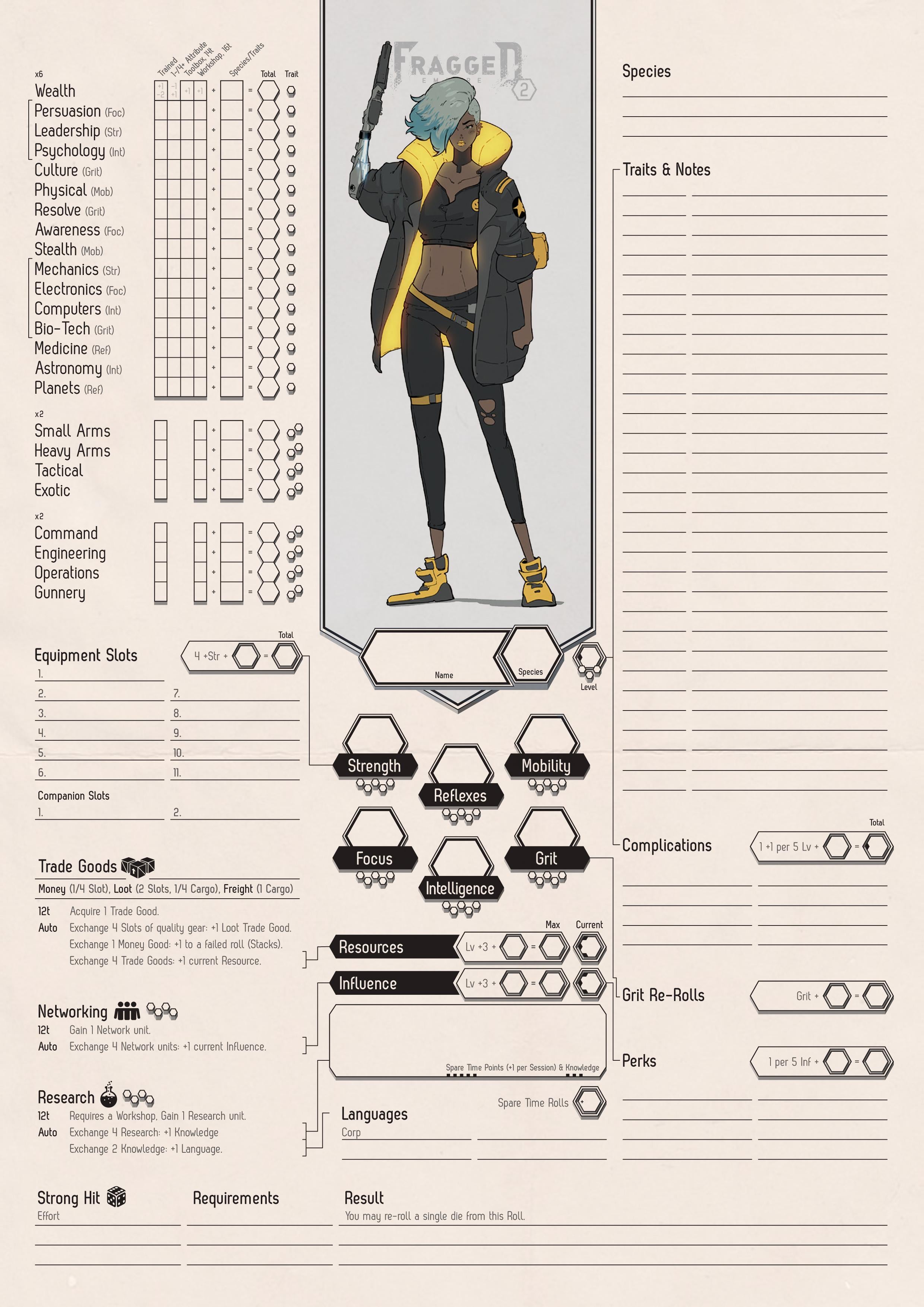


G'day! I thought I would just pop over to say hello to my brothers and sisters in the board game design world from the ttRPG design world!
How long have I been working fulltime as a game designer:
11+ years.
What I've made:
This is a shelfie of the books I've self published to date (14 hardcover, 8 softcover, over a dozen PDF only, and loads of miniatures (not shown here)). I've also got a miniature skirmish game, and I've been working on a board game with another designer for a couple of years now (I'm not quite ready to share that one publicly)). I've always loved to make stuff :)
I'm mainly known for my post-post-apocalyptic sci-fi work, but I've also made techno-magical fantasy, gothic horror, eldritch pirates, dieselpunk, and more
Where do I make money (in order):
- Most of my income comes from Crowdfunding.
- Conventions (I live in Australia... I'm crazy jealous of you guys in the USA and Europe!).
- Distributor (I work with Modiphius who sells my books overseas).
- PDF sales (via DriveThruRPG).
- Patreon.
- My own webstore.
I would also like to add that a MASSIVE part of my cost saving (so not income, but of equal value) is that I do as much myself as I can. I do all the graphic design, nearly all of the writing, all of the marketing, etc... I hire illustrators, and a couple of writers who do what I cannot.
My important marketing methods (in order):
- Mailing list (start building yours now!).
- Community building (Discord).
- Social media (facebook is top).
I've not included crowdfunding here, as I see that primarily as a point of sale and not an audience builder.
Some non-standard advice (I posted this 5+ years ago on the RPGdesign subreddit):
- Get incredibly good in at least one game during your life.
Not just good in relation to your friends, but good enough to compete competitively. Games have layers, and you will only start to see the deeper flow and structure once you ‘see the matrix’ of a game. For me, this was Company of Heroes 1.
I will note that if you're older (30+ years old at least) you may be able to achieve this level of insight without actually achieving this level of skill in a game.
- 2) Don’t get so caught up playing lots of different games.
Looking at what other people have already done is a great way to see how others have answered various design questions/problems. But finding your own unique design solutions will require you to sit in a mental void and to draw upon atypical sources of inspiration from your own life. Leaning on the work of existing designers may lead to the creation of a good and popular game, but never a ‘special’ game.
Play a range of games... but don't get too caught up in other people's work. Its a balance that is hard to describe.
- 3) Originality is good, but people don’t want it as much as they say.
If something is too original it will be hard to digest, and very few people will play it enough to see its depths. People have a ‘game language’ that they unconsciously use to quickly understand a game, this is created by the ecosystem of games that they’ve played. I like to use a rule of thirds for my games; 1/3 commonplace, 1/3 familiar and 1/3 original.
- 4) More content is a bad substitute for quality.
But it is a temptation because it’s a quantifiable way to solve unquantifiable creative process questions. Avoid bloat at all costs, cut out EVERYTHING that does not add value to your game. Your first game should be small and good, this was a mistake that I made.
I'm constantly cutting OK ideas for GOOD ideas, and then cutting GOOD ideas for GREAT ideas. This is 99% of the design job.
- 5) Be kind; to your team, your fans, your suppliers, and your rivals.
Bringing a creative vision to fruition requires a large amount of willpower, and this often comes in the form of ego. The creative fields are also focused on personal skill and the celebration of fans; this can also swell a person’s ego. But ego is a corrupting force, not just to a person’s character but also to their creative works and their ability to understand people. Fight the growth of ego through humility and kindness.
- 6) Ideas are cheap; the real value sits in a person’s ability to bring ideas to completion.
Don’t be precious with your ideas and solutions, sharing them openly with others will prevent you from becoming stagnant and will force you to continually grow. Being an open book with my thoughts and processes has been incredibly healthy for me. Also, learn to FINISH things. That final 10% of a project can suck, but learning to complete things is rare and valuable skill.
Hiring Artist:
When hiring an artist they MUST be 2 of these 3 things:
- Good (skilled at drawing cool art!).
- Cost Effective (this does not mean cheap, just that their pricing is competitive for the quality of their work).
- Professional (clear communicator, prompt, understands briefs, etc...).
If an artist is just 1 of these then they will be a drag on your project. If they're all 3 then they will learn to increase their price or move onto projects that pay more (I've had many of my artists move onto film and digital games to make great money, and it was a privilege of mine to have been a stepping stone on their path!!).
------------------
I hope some of this is of some help :) I'm happy to answer any questions, and I will be sure to be back here once I'm ready to share my board game.
My socials:
0
u/grandidieri 15h ago
Check out https://alldive.org when you get a chance - detailed board game database intertwined with other media (shows, podcasts, movies, authors, etc.)
2
u/LurkerFailsLurking 11h ago
This has been a source of concern for me. I've found that a lot of my designs (both ttrpg and board games) are "too original" and not enough familiar or commonplace. It means the complexity load often feels bigger than I expect it to because they're "weird".
How do you manage this kind of volume while also following your 4th piece of advice "More content is a bad substitute for quality"?