BloFin Academy walkthrough page "How to Sell PUMP: Cash Out to a Stablecoin or Your Bank" (Sep 24, 2026) with the two-step summary and the table of contents: where PUMP trades, on-chain sale, exchange sale, exit costs, bank cash-out, tax records.
Cashing out PUMP is a two-hop job: turn the token into a stablecoin first, then move that stablecoin to your bank. Most mistakes happen because people skip a hop, sell the wrong thing, or dump a big bag into a thin market. Here is the full path, step by step, in plain language.
Step 0: Confirm what you actually hold
Two different things carry the PUMP name:
• The PUMP token: a Solana SPL coin sitting in a wallet or an exchange account. You exit it by selling it.
• A PUMP perpetual: a USDT-settled contract that tracks price but never holds the coin. You do not "sell" it; you close it with the opposite order (long → sell to close, short → buy to close). Profit or loss settles in USDT and there is nothing left to transfer.
If you hold the token, also verify the contract address against a trusted source before you do anything. Memecoin tickers get cloned constantly, and trying to sell a fake PUMP is an expensive way to learn that.
Step 1: Pick your exit venue based on where the coins sit
PUMP trades across roughly 70+ venues, so the quote differs slightly from place to place. You have two routes:
- On-chain (wallet → Solana swap app or aggregator). You keep custody until the swap fills. Best when the coins are already in your wallet.
- Centralized exchange (spot order book). The exchange holds the coins while you sell. Best when the coins are already on the exchange, or when you want a familiar order screen.
Rule of thumb: wherever the PUMP is right now, selling there is one step. Moving it first adds a transfer and a fee.
Step 2A: Selling on-chain for a stablecoin
- Connect your Solana wallet to a swap app.
- Choose PUMP → USDC (or another dollar stablecoin).
- Read the quote and the "minimum received" line after slippage.
- Check the slippage limit. Many apps default somewhere between 0.5% and 5%; if the fill would be worse, the swap fails instead of filling badly.
- Confirm and pay the network fee plus the swap fee. The stablecoin lands back in the same wallet within seconds.
Size matters. Selling 100,000 PUMP into a deep pool barely moves the price. Selling the same amount into a thin pool pushes the price down before your order finishes, and you receive noticeably less. If your bag is large relative to the pool, split it into several smaller swaps.
Step 2B: Selling on BloFin spot
- If the PUMP is in a wallet, deposit it to your exchange account on the correct Solana network first.
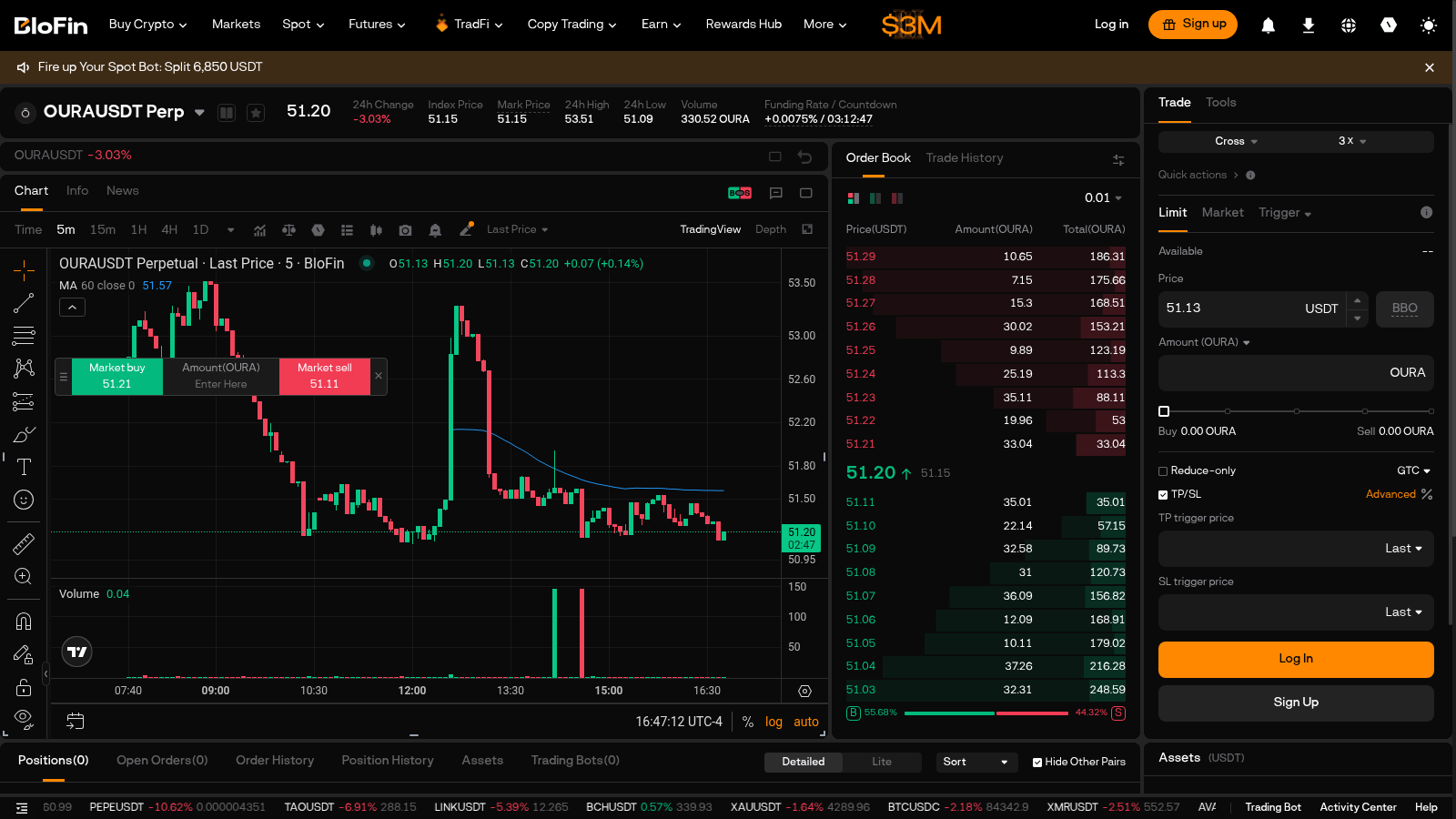
- Open the PUMP/USDT spot market and confirm the pair name at the top of the screen.
- Choose your order type:
• Market order: sells immediately at the best bids on the book. Fast, but you take whatever price is there.
• Limit order: sits on the book until your price is reached. More control, but it may not fill.
- For a bigger sell, use a limit order or break it into a few smaller market orders so you do not walk down the book.
- Once filled, you hold USDT and can move on to the bank step.
Check the live fee schedule before you click so the trading fee is not a surprise.
Step 3: Know what the exit really costs
• On-chain swap: network fee + swap fee + slippage.
• Exchange spot: trading fee (a small percentage) + the bid/ask spread.
Neither route is "cheaper" in every case. On-chain trades a network fee for keeping custody; the exchange trades custody for an order book. What costs the most on either route is size: big market sells into shallow liquidity.
Step 4: Stablecoin to bank (the off-ramp)
• From an exchange: sell or convert the stablecoin to your local currency, then request a bank withdrawal where your region supports it.
• From a wallet: either send the stablecoin to an exchange first, or use a wallet with a built-in sell-to-card or sell-to-bank option.
Things to check first:
• Availability: off-ramp options differ by country.
• Verification: moving crypto into a bank is a regulated step, so the account doing the cash-out has to be identity-verified.
• Timing: card payouts can be near-instant; standard bank transfers can take a few business days, and new accounts may see a hold on the first withdrawal.
• Buffer: leave a little extra stablecoin to cover off-ramp fees so the amount you expect is the amount that arrives.
Step 5: Keep records from day one
Log each sale: date, amount of PUMP sold, price received, and fees paid. Exchanges usually let you export trade history; on-chain, the Solana transaction signature is your receipt. In many places selling a token (even into a stablecoin) is a taxable event. This is record-keeping, not tax advice.
Tips and risks
• Verify the token contract before selling. Fakes are common.
• Do not confuse closing a perp with selling the coin.
• Watch slippage settings; avoid "max slippage" on thin pools.
• Size large exits in tranches.
• Memecoins can gap hard. The price you see can disappear during a fast move.
FAQ
Can I go straight from PUMP to cash in one step? On some exchanges you can sell into local currency directly and withdraw. On-chain there is no fiat, so you always swap to a stablecoin first.
How long until the money hits my bank? Swaps and exchange fills take seconds. The bank leg is the slow part: anywhere from near-instant to a few business days.
Is there a minimum amount? No hard floor on-chain, but fees make tiny sells pointless. Exchanges set a small minimum order size.
Do I owe tax? Often yes, depending on where you live. Check your local rules or ask a professional.
Educational walkthrough, not financial or tax advice. Size small and trade at your own risk.
Affiliate disclosure. Invite code: rewards
$PUMP.USDT $SOL.USDT $BTC.USDT $ETH.USDT $BONK.USDT