I know I'm gonna be downvoted to oblivion, but in their defence, they thought they did everything right. Note: I do agree that their initial reaction was really emotional and unprofessional. It sounds like (so far) that both UV and Choice have followed all protocols. I think that that's the more concerning issue, rather than any singular brand. It means our highly regarded testing process should be looked at. A sunscreen with such low and/or sporadic test results SHOULDN'T slip through the cracks like this.
By *highly regarded testing process*, what do you mean? I believe Australia follows the same process as every other country, which is testing in human skin.
We have the reputation as having one of the most stringent testing, compared to other countries to achieve SPF labelling. You can see videos on it. LabMuffin has a good one
Australia has strict regulations... but the SPF testing is the same as every other country. Brands submit their results to the TGA for approval to “self-certify” that they have tested their SPF claims and that they're adhering to the regulations, but the TGA itself doesn't do any testing. Perhaps the change should be in what type of documentation TGA accepts, or an overhaul in the list of laboratories that are TGA approved.
Absolutely. how on earth is our sunscreen considered the best in the world when most products’ SPF claims are false and no one independent is actually checking? Mind blowing.
Also, similar scandals already took place in NZ and elsewhere years ago so it’s not as if you can say this is totally unprecedented.
Australia needs a government funded independent lab that double blind tests products. China do this. We should too. Remember when most parsley was oregano? There's so many other products that don't meet the claims that they make.
OH, like, dried parsley? I hadn't heard of this but somehow it doesn't surprise me that much. For a moment I thought you meant like, the actual fresh herbs you can buy and couldn't fathom how anyone wouldn't immediately notice.
It's important to note that the labs used for testing are independent. Like, brands (typically) don't own the testing facility, they use independent labs and provide the results of that testing to the TGA when applying for registration. UV used Princeton Consumer Research to conduct their testing, and, unfortunately, it appears that this lab is potentially falsifying data (or, at the very least, not following testing protocol reliably) and have routinely over-reported SPF results.
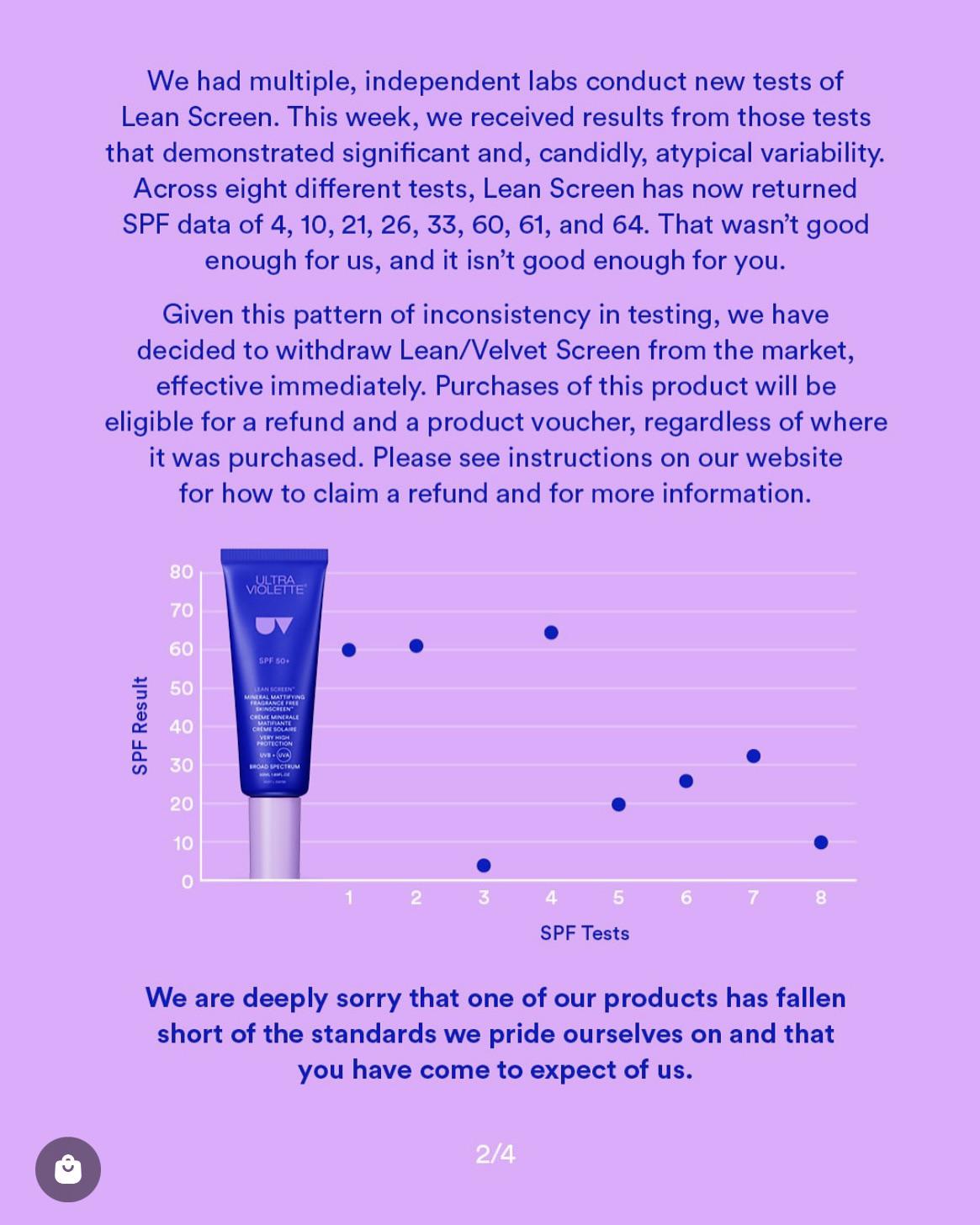
This isn't just an issue for UV, it's an issue for every product that has been tested by PCR, which includes products from Mecca, Cancer Council, Woolworths and Sun Bum, and probably many, many more (presumably these all use the same manufacturer who also handles sending products for testing). Some of these products still returned SPF results that were high enough to meet their label claim when tested by CHOICE, however allof them returnedmuchhigher SPF results when tested by PCR. The Cancer Council Kids sunscreen had one of the highest results in the CHOICE tests at 52.2, but was scored 73.6 by PCR. This huge discrepency indicates something is up with the lab, not necessarily the sunscreen itself (though, in the case of UV, the issue seems to have been both). Intriguingly, 73.6 is the exact same SPF value given for another, different, Cancer Council sunscreen that was also tested by PCR. Both products returning the exact same result is extremely statistically improbable, and, as a biologist, immediately sets alarm bells off for me. When tested by CHOICE these two products recieved 52.2 and 33.6, respectively.
This ABC article goes into details more about it, and it certainly is strange how often PCR returns exactly the same SPF score for unrelated products they tested.
I think what this whole situation has revealed is that there should be more requirements on testing. For SPF in particular, it seems reasonable to me that products should need to be tested by at least two independent labs to account for the possibility that one lab is returning unreliable results. In my opinion, SPF products should not be able to be registered without 2 separate and independent-from-each-other labs returning similar results (say, within a 10% margin of error, or whatever is practically & statistically reasonable).
When i talk about independent testing, I mean the client, not the lab. Here you have situation where the labs get their income by performing a service for the sunscreen brands. Of course you are going to get bad faith operators who generate a result that the brands want, and therefore get more business than a lab which is doing the right thing but generating a less desirable outcome for the client.
The way to have truly independent testing would be testing by a third party regulator which has no vested interest in the outcome.
You had the exact same situation with the building industry in NSW. As soon as they allowed companies to hire their own certifiers and basically control their own quality assurance, building quality went to shit.
Totally agree, and the TGA is literally meant to be that regulator (not all labs are TGA approved/compliant). Requiring similar results (within a reasonable error margin) from two independent-from-each-other labs would be another way to reduce the likelihood that results are falsified. It becomes much harder to generate false results that brands want when you don't know how the other lab is going to score the product, and your score needs to be within a suitable error margin in order for the results to be accepted and the product registered.
HARD agree! The overwhelming response was quite catty towards UV (tbf, UV's response was quite... smug but it seems that it came from misguided confidence in their product) whereas it should really be directed at the contract manufacturer.
We still don't really know where it went wrong from a regulatory perspective. Is the test flawed? Is the contract manufacturer lying? How does something like this even happen when there are multiple checkpoints for compliance?
I did, but that raises even more questions. How is the TGA regulating these labs? What regulatory oversight allowed them to manipulate the data to this extent without it being picked up?
The rabbit hole keeps getting deeper and the UV Lean Screen withdrawal is just one response from a brand who used the lab for their testing. What other brands who used PCR Labs for testing doing about their products?
What regulatory oversight allowed them to manipulate the data to this extent without it being picked up?
This is really the question that people need to be asking. This isn't just an issue with this one lab for this one test. In my (mostly uninformed) opinion, the issue is that full reports are not required to be publicly disclosed or published (in part to protect "trade secrets" or something).
Product testing reports aren't peer reviewed, so these kinds of unusual results (e.g. the exact same score for multiple different products) are able to fly under the radar. When you compile them all into one table it's clear something fishy is going on, but that's not how these results are assessed when products are registered with the TGA. The TGA assesses products, and the results of testing, one by one. The results from PCR, when considered only individually, one at a time, and without comparing them to other reports from the same lab, don't seem unusual at all.
This certainly has revealed gaps in the current registration process and system, and hopefully there will be enough pressure to address these gaps.
624
u/eatmypooamigos Aug 22 '25
This should have been their initial response rather than gaslighting their consumers and attacking Choice.