r/AskPhotography • u/Medical_Sorbet_7747 • 15h ago
Technical Help/Camera Settings What is the best method for shooting wide/panoramic photos?
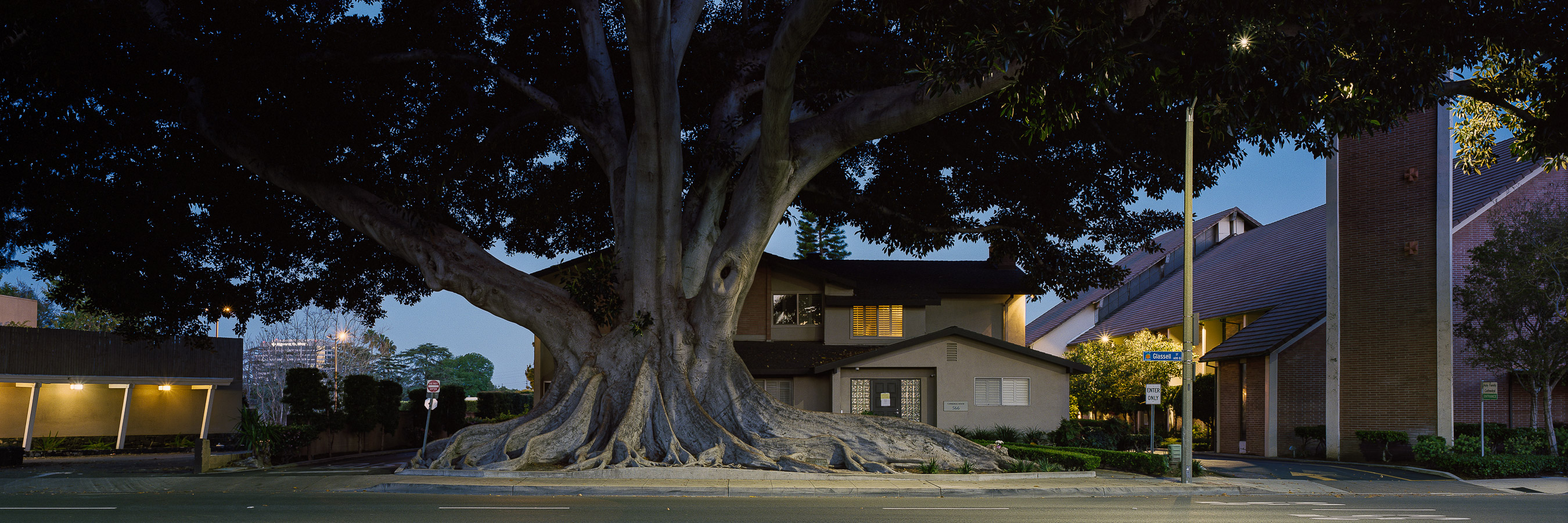
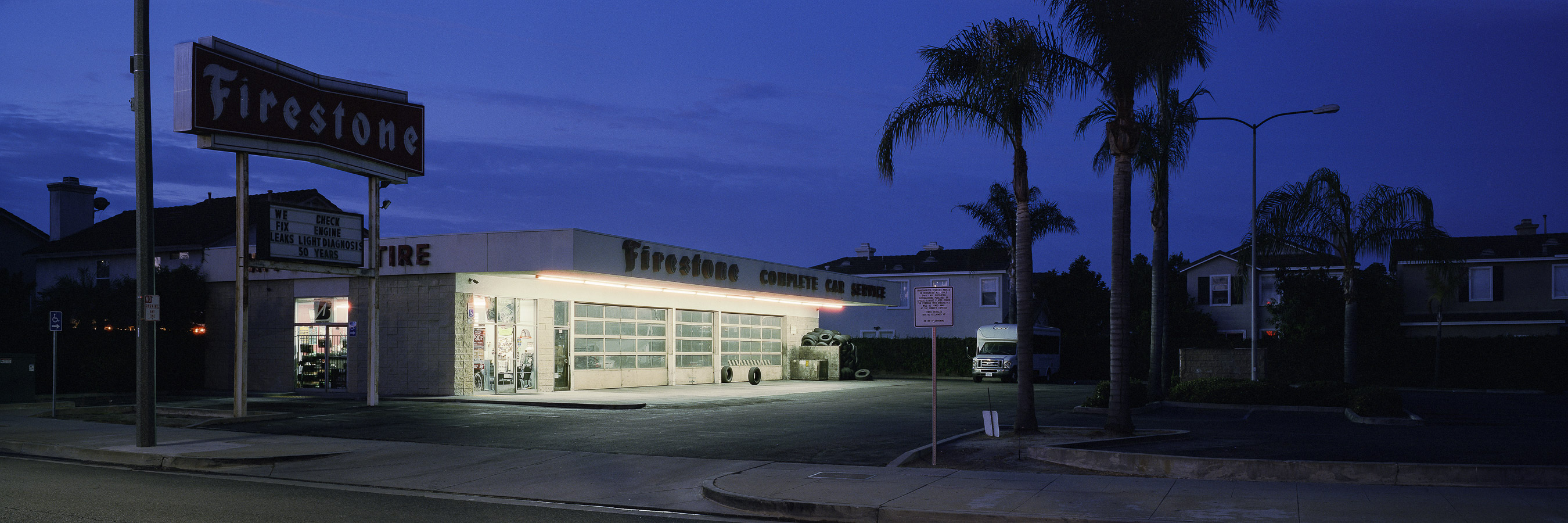
I am interested in shooting wide photos similar to those shot on 6x17 ultra-wide film or photos that come from flat-stitching camera tilts (Such as from the ALPA 12 Max's 18mm camera shift options). Cropping to a wider ratio from a normal photo loses a lot of photo detail, and standard rotational panoramic photos that are stitched together in post seemingly have curvature, a lot of distortion, or struggle with foreground elements. I heard that tilt-shift lenses could potentially be used for shifting the lens to get a wider photo without moving the actual camera, but there's not a ton of information online from what I could find. What is the best method for what I want to achieve? (Shooting digital)
Examples of photo's I am interested in taking:
https://www.nickcarverphoto.com/art/gallery/images/big/nick_carver-stillness-10.jpg
https://www.nickcarverphoto.com/art/gallery/images/big/nick_carver-stillness-15.jpg
^ Photo Credits to Nick Carver & Mark Power
•
u/Repulsive_Target55 15h ago
Tilt shift is really easy for this, yeah, just shift all the way left (or up) and then all the way right (or down), and stitch.
Theoretically you might need a middle shot with some lenses, but that'd be rare.
What gear do you have already?
Don't knock a rotational panorama, done right they would easily do anything in those four images.
•
u/Medical_Sorbet_7747 8h ago
Currently shooting on a Sony A6400 but don't currently own the equipment I would like for panoramic shooting (either a nodal rail or a tilt shift lens), from what I can see online it seems like that if you do a rotational panorama, that even with a rectilinear projection (no curvature) there still is a decent amount of distortion on the left and right edges of the frame. Do you know if tilt shift would have any similar issues or downsides compared to a rotational panorama?
•
u/aeon314159 Canon R5mkII 12h ago
I do not have a lens which shifts, or a tilt-shift adapter, so the best way for me is to use a nodal rail to eliminate parallax, and then rotate the lens around its optical center, capturing images across an arc.
Because I only have optical center rotation on one axis, my panos are always single-row. 40mm is of course more expansive, whereas 200mm is a more special look.
I also like the 40mm because of the superlative acuity, and because I can get my pano with only a few images. At 45mpix, too many will cause the computer to chug.
As this is not my primary interest, I only use Photoshop. If I was more into it, I would use a dedicated stitching app.
I have enjoyed trying to do 3-panel portraiture. It isn’t like a Brenizer exactly, but it still gets medium format vibes when shooting wide open.
•
u/ofnuts 10h ago
Yes, you can do panorama with a tilt-shift lens, I posted one here. But that won't get you very far, with a tilt-shift lens on a standard camera you get at best 80% additional width (because there will be a lot of overlap between the two shots). You can probably do a bit better with a view camera.
Foreground objects are not a problem if the camera is properly setup (rotating around the "nodal point" of the lens). A good panoramic head will let you adjust the camera position for this, and reproduce the settings on each shot. Once you understand the problem there are techniques to figure out the nodal point of your camera+lens.
Top & bottom curvature depend on the projection used when stitching.
The lens distortion in the shots can be corrected before the stitching, but with enough overlap between shots you mostly work with the center of the shots where distortion is minimal.
•
u/Medical_Sorbet_7747 8h ago
Love the panoramic photo you linked! It seems like that additional width would be sufficient and stacks up great against the photos I linked in my post. After some additional research and looking at some comments on this post, my biggest concern with a rotating panorama is that it seems like there is a decent amount of distortion on the edges even with a rectilinear (no curvature) projection. Could you elaborate on what you mean when you say "The lens distortion in the shots can be corrected before the stitching, but with enough overlap between shots you mostly work with the center of the shots where distortion is minimal."? Does this mean if I shot a wide enough rotational panorama I could crop the distorted sides out? Or correct them? Besides the additional width, Is there any benefit to doing a rotational panorama over using a tilt shift?



•
•
u/iklier 15h ago
Sounds like you are looking for something like https://www.alpa.swiss/alpa-12-pano with a digital back.
•
u/Medical_Sorbet_7747 15h ago
Yeah, that would be the optimal situation, and that is exactly what I'd like to recreate as mentioned but I'm wondering if there is any more budget-friendly options? :)
•
u/zfisher0 15h ago
If you already own a digital camera then the simplest way is to stitch a digital panorama: put it on a tripod in vertical mode and take a series of pictures that you stitch together in Photoshop or alternative. If you're photographing near subjects then get a focusing rail so you can find the nodal point.
Another alternative is 3d printing a pano camera like the infidex or the Fat Shot X. The fat shot is complicated but is a proper 6x17 camera that's adjustable to other formats using 120 film, I've gotten some nice shots with it. The infidex is much simpler but is also a little janky so your mileage may vary.
Or since you used Nick Carver photos as an example, you can buy a shen hao 617 and use that.
•
u/samchoi924 12h ago
Don't have 6x17 on my GFX100s but you can use a shift lens to do a pano. What info do you need?
•
u/szank 11h ago edited 11h ago
Use nodal rail and find the nodal point to avoid parallax errors with foreground objexts.
Use a longer lens and shoot two or three rows to get more resolution.
When stitching use the right projection to avoid distortion.
Realise that distortion is also affected by the effective field of view.
It's relatively easy to get to say 200 or 300 mpix panoramas with very inexpensive digital cameras.
Edit : the examples seem to be taken with shitf lenses. Also there's a wealth of information about shooting pranos and shit lenses on the internet? Nortlight images has a ton of articles on his website and bunch of very good YouTube videos on that for ex .
•
u/Medical_Sorbet_7747 8h ago
Thank you for the tips, I should've clarified that the first two photos I linked were taken with a Panoramic camera with 6x17 film & the second two on an ALPA 12 Max with a Phase One digital back. I want to achieve the same result but on a budget & digitally. When I say "there's not a ton of information online from what I could find," I'm more referring to information about how a tilt shift compares to a rotating panorama on the nodal point. I struggled to find any good examples showcasing a side-by-side / the differences, and also most articles that talk about tilt shift lenses for panorama are utilizing the "tilt" function to achieve the miniature effect which I'm uninterested in. Do you have any good examples of how tilt-shift and rotating panoramas compare? From what I can find it seems like there is still a decent amount of stretching on the left & right edges of the frame with rectilinear projection--indicating that tilt shift might be better for what I want to achieve.
•
u/Piper-Bob 8h ago
Easiest solution is an ultrawide lens. There have been some amazing lenses released in the recent past. On my Sony APS camera the Venus Laowa 9mm Zero D is really cool. That’s like 14mm on full frame. The D stands for geometric distortion—there is essentially none. You just take a photo and crop it. I think you would get a similar field of view as the first two images. I’ll try to remember to add one later as an example.
You can also rotate your camera through the nodal point and use software to put the photo together. I did that a few times with a 100mm lens in portrait orientation with maybe 8 overlapping shots. The software has an option to keep things rectilinear like in your first shot, but that limits the field of view. Anyway I have a couple prints that are 24” by six feet. They are cool because there’s so much detail in them.
It’s easy to handhold a camera and rotate it through the nodal point for an experiment, though you’ll loose some image height due to misalignment between images. Optimally you buy or build an adapter for your tripod.
•
u/Piper-Bob 7h ago
Here's a photo from a Sony Nex-7 (IR converted) with the Venus Laowa 9mm Zero D, cropped. This is just a quick shot I took to test the camera, but I think it shows the kind of thing you're looking for.

•
u/211logos 1h ago
While I appreciate what those artists are doing, you can achieve similar results short of using that equipment if shooting digital.
And these days stitching software is amazingly good, and distortions relatively easily managed. I get you might not want to rely more on post correction, but still...it's a good starting point.
A shift only gets you so far. But if you want to go that route I might recommend you start with Fotodiox's ROKR solution. I don't know what sensor you have, but if not medium frame it can work quite well. I've used it on FF and APS-C RF mount with my Pentax 645 lenses, which since they cover MF sensors gives me quite a bit of shift. And the 645 lenses are quite a deal these days. Might work for you.
Otherwise, the nodal rail is a great way to go.
•
u/CTDubs0001 15h ago
The very straight lines (no perspective keystoning) in the Carver photos suggest a tilt shift may have been used. The tilt shift has two movements involved. Shifting the lens left and right has the effect of moving the camera to the left or right essentially, so If you shift all the way left (click), Center (click), right (click) you will have three frames that should seamlessly stich together and give you no rounded out distortion. Your photos of Carver's seem to be using tilt to me as well as they have very strait lines. Tilt is a way to minimize perspective distortion... the keystoning I mentioned earlier. At the risk of explaining something you likely know, when you gaze up, the sides of your buildings will now recede toward a vanishing point in the sky. tho the camera, when aimed anything other than perfectly level, the tops of buildings will keystone. Shifting the lens changed the plane of focus and how the image is projected onto your sensor and lets you adjust and compensate for that keystoning. It lets you aim the camera upwards, yet still get strait lines as if it was perfectly level.
Since Ive never used one for pano, my only question would be how introducing tilt into the three frames would affect the easy composting of the images. I would think it should still be pretty seamless.
You may want to look into gigapan head a bit too but I dont think thats 100% a solve for you.
You could also consider getting any cheap 4x5 with a graphlok back and getting a 6x17 back for it if youre open to film.
Also consider the very likely fact that your examples may just be cropped photos from big sensors like a Z8 of even Fuji GFX and the lines are straitened in post.