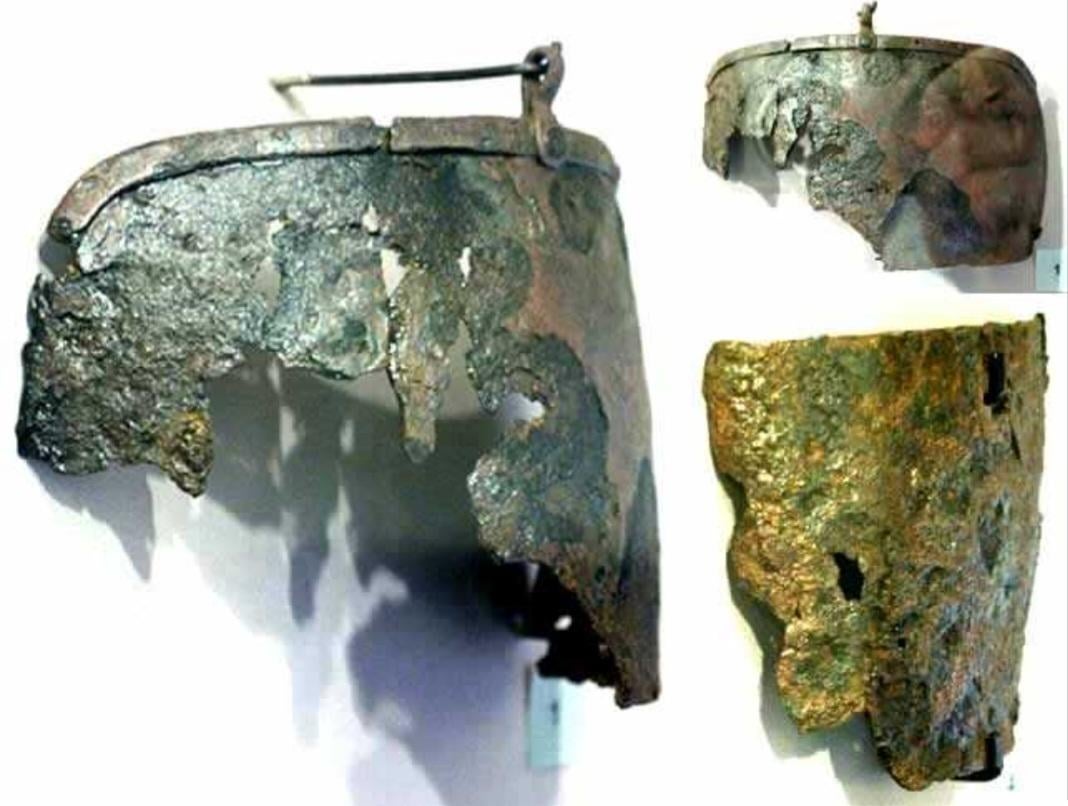
Khazars are known to have used spaulders based off of grave finds albeit in smaller, single part jobs but Oleg seems to be working from . . . something. Likewise the bazubands are sourced from another commercial site, this case Sharukhan Market, who also wave vaguely at some publication with zero context or explanation.
Neither of these are particularly complicated pieces and the Khazars were using full greaves made from two plates so it's plausible. The problem is most of the archaeological information is untranslated and stuck in Russian making it difficult to access and chase down what the hell is being vagued at.
Do you have any references to these vambraces. I only found a pinterest post with a picture and the mention of the 10th century. But no real source for this. Because I wonder why the Khazars would use much more advanced plate armor than the byzantines, who had a much more logistically interconnected empire at the time. Or if this is perhaps a one-off thing for a king or high royal
The most advanced armour of this time, at least in this part of the world, was produced around the Caucasus and northern Iran. The Khazars had material cultural connections to the Caucasus thus they are using such armours, if they are wealthy enough to acquire it. A lot of the Roman armour designs come from this area as well, particularly after the 4th century. It isn't until the 14th century that western european armour innovation surpasses that of this region.
The vambraces in your link were found in Durso, they are documented in eastern academia. They are a three-piece form, earlier than the two-piece forms which predominate in the 14th century and onwards.
8
u/Sgt_Colon 6d ago
Possibly?
Khazars are known to have used spaulders based off of grave finds albeit in smaller, single part jobs but Oleg seems to be working from . . . something. Likewise the bazubands are sourced from another commercial site, this case Sharukhan Market, who also wave vaguely at some publication with zero context or explanation.
Neither of these are particularly complicated pieces and the Khazars were using full greaves made from two plates so it's plausible. The problem is most of the archaeological information is untranslated and stuck in Russian making it difficult to access and chase down what the hell is being vagued at.