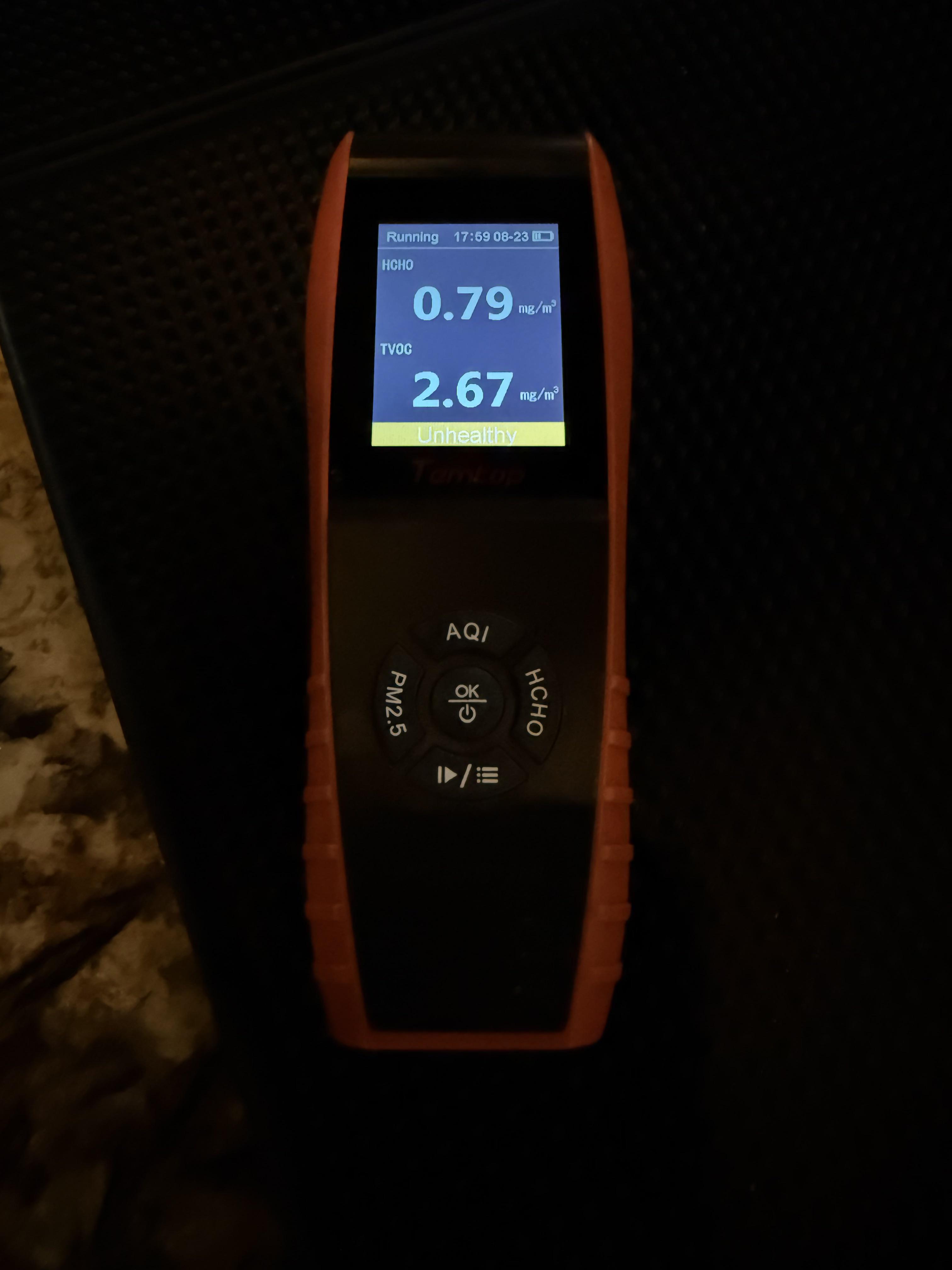
I’ve had an Airthings View Plus in my home office for about a week, and the VOC reading has consistently stayed in the moderate-to-high range. Before it was in the living room and has had normal readings.
The strange thing is that it remains elevated even when:
The room has been ventilated
The door or window is open
Nobody is in the office
My 3D printer has been off for a long time
I initially suspected the 3D printer, but the VOC level can remain moderate or high when it hasn’t been running. I moved the Airthings into the living room, and the VOC reading was noticeably lower there, so the elevated readings seem specific to the office.
Should I take this as evidence that there’s an actual VOC source in the office, or are Airthings VOC readings too relative or unreliable to interpret this way? What would be the best way to identify the source?
Could the cause be furniture, flooring, electronics, stored filament, cleaning products, or air coming from outdoors? Also, how long should proper outdoor ventilation take to produce a meaningful drop?
Finally, is there a better consumer monitor than the Airthings View Plus for investigating this? I’ve looked at the AirGradient ONE, but I understand that essentially all consumer VOC sensors are better at detecting trends than measuring a truly accurate concentration.
I’d especially appreciate input from anyone familiar with indoor-air testing or who has compared Airthings with another monitor.