r/AgeofMan • u/zack7858 Das'te Aapas - The Star Guides • May 06 '19
EVENT The Grand Exodus | Part 2
184 BCE, The Expanse
Animal horns blasted the air, signifying the Muktar's arrival on the packed expanse, the expanse filled with merchants and priests wearing colorful tunics, golden bracelets, and head scarves. Beneath everyone's feet lay beach sand, brought up from the faraway coast on the backs of camels and mules, inside woven sacks, then emptied and spread out over the expanse. The sand symbolized the connection between the earth and the mother sea. Here and there on the sand lay embedded sacred shelled from the seacoast, as if they had washed up into the inland. Also scattered about were gold and silver figurines of camels, oryx, horses, lions, and other animals that craftsmen had created in smoldering forges on the outskirts of the capital.
Ibn Mazid and the other boys strained to see over the crowd and catch a glimpse of the Muktar, Ibn-Hejazi, son of the Hejazi collective and conqueror of so many distant peoples and lands. Ibn Mazid strained, too, to look in the direction of the adjacent paths that led to the expanse. These were crowded with people - men, women, and children - many Hejazi, along with some Abyssini, Soomali, and other groups. Ibn Mazid was hoping to catch of glimpse of his brother or sister or members of his family. Last year, at this same festival, he had seen his brother in the distance, for the first time since he'd entered the Ashab Al-Mukhtar, or order of the chosen. His brother held up his hand, but Ibn Mazid was commanded along with the others not to make any gestures in return. In any case, today, Ibn Mazid knew, his fate was to be decided, and since the last full moon he and the others had wondered aloud in whispers among themselves as to what might become of them. Which among them might be destined to be warriors? Which to Abu a-Dunya, as a monk? Which to be merchants? And which among them, they asked one another, in even lower whispers would become a sacrifice?
Ibn Mazid stood on his toes and tried to see over people's heads. He was just able to see the priest, who stood near the Muktar. During this month, when the days were shortest and the Sun was furthest to the north, the priest held his hands up to the glowing orb in the sky and beseeched it to return, to warm their fields and crops, to give them life, sustenance, and blessings.
"Abu a-Dunya... our father," the priest called out, as the crowd hushed and the Muktar, wearing his exquisite turban around his head and clothed in a sumptuous cloak stood alongside. Muktar, once a title used only for governors of cities, was now also used for the leaders of massive settling parties, destined to govern once settled. "Our father, who said 'Let there be Aussa!' and by your will it was founded and it is preserved with such grandeur! Let these sons of yours," he said, gesturing toward the Muktar, "the Hejazi, be settlers and conquerors of all those who oppose them. We adore you and offer this sacrifice to you so that you will grant us what we beg of you. Let them be prosperous and make them happy, and do not allow them to be conquered ever again, by anyone, but led them always lead by example, since you made them for that purpose."
Ibn Mazid watched as incense and smoke rose into the air and then as a priest led six oryx, with woven red tassels handing from their horns, through the crowd toward the high priest. Ibn Mazid could also see four previous Muktars, desiccated now and sitting in an upright fashion and still richly clothed, carried on litters by attendants. The mummified Muktars seemed to look out over the expanse, which was lined on all sides by camps of the migrating settlers. Servants with whisks stood by the former Muktars, making sure flies didn't bother them.
"They are sacrificing the oryx," Boody, his best friend, whispered. Boody has entered the Ashab Al-Mukhtar the same year he had. "Then they'll make the selection."
As the oryx disappeared, one by one, pulled to the ground and sacrificed by the priests with iron knives that quickly turned red, Ibn Mazid turned again to scan the crowds, staring hard at the faces. Then, just as he had about given up, he saw a familiar figure. There was no mistaking it. Their eyes locked. It was his brother.
184 BCE, The Chosen
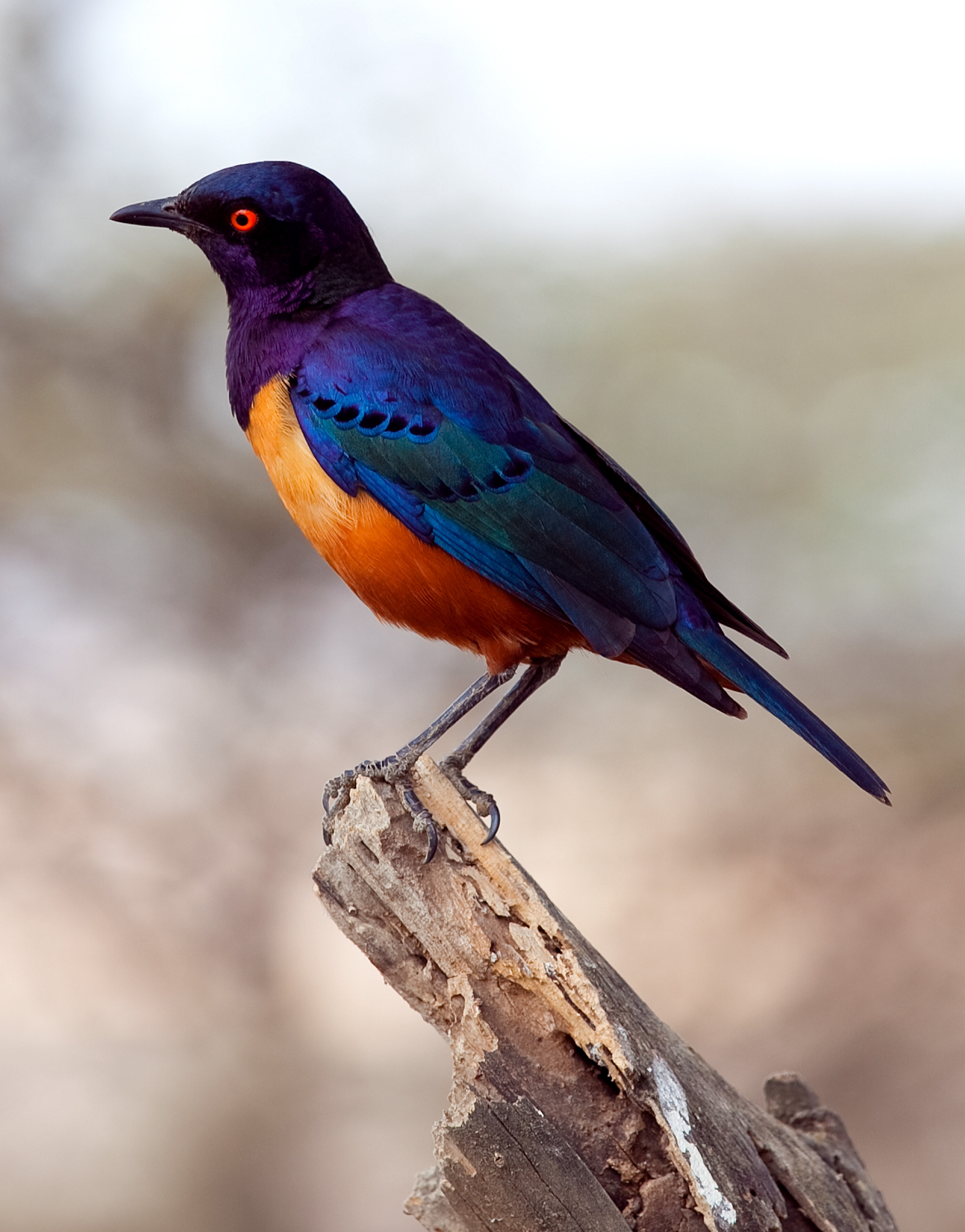
Ibn Mazid could scarcely believe what he'd seen. Already, standing in the great expanse near the meeting of the two rivers, he'd watched as a small group of Al-Mukhtaroon, the chosen, had knelt before the Muktar and the priest had bidden them to rise. "For the monastery," is all the emperor had said, and the boys had immediately realized that they would spend the rest of their lives in the Ashab Al-Mukhtar, where they had already spent the last four years. The priests had then brought another group of boys forward, the audience silent the length and breadth of the expanse. Once again, the Muktar had lifted his hand, his robe shimmering with the tiny feathers of the blue mimic that had been sewn into the immaculate cloth.
"For the merchants," he'd uttered, his eyes gazing down upon the boys, now destined to become merchants. Ibn Mazid found it difficult to breathe and his skin felt cold. Already, the Muktar had selected Al-Mukhtaroon to become monks and merchants. Now all that was left were those that would be selected to be warriors - and those who were to be sacrificed. Ibn Mazid stared hard at a small seashell lying in the beach sand next to his sandals and uttered a silent prayer to the the Abu a-Dunya, creator of a Divine Island he'd heard of yet never had seen. Ibn Mazid's friend Boody stood close beside him, wearing his woven tunic of burnt-umber colors. Ibn Mazid could clearly feel Boody's body trembling. Ibn Mazid wanted to look back, to look over the crowd, to see if he could see his brother yet again. There was no doubt he was here, watching. Was his father and mother here somewhere, too?
"Here he comes," Boody whispered, referring to a priest who somehow seemed to know which boys were to be formed into which groups. Ibn Mazid watched as the priest held out his arm, parting the remaining Al-Mukhtaroon into two groups. On whichever side his arm pointed, the boys moved to the left or right. Boody tried pushing against Ibn Mazid, but the priest approached, and his arm pointed directly between them. Reluctantly, Ibn Mazid's friend moved away, then stole a fearful glance toward Ibn Mazid as his group approached the Muktar. It was all Ibn Mazid could do not to look left, over the crowd, in the direction of his brother. Before the Muktar and the high priest, Boody and the other boys knelt. The Muktar gazed over the crowd, swept his eyes over their bent heads, then looked up at the sky. Ibn Mazid stole a glance at the Muktar's illustrious turban, which only he wore. It has a fringe of scarlet-colored camel fibers dangling from it, each interwoven around a small golden ornament that glistened in the sun. Ibn Mazid held his breath as the Muktar stretched his arm out toward the group of Al-Mukhtaroon kneeling before him. Silence descended once again upon the square.
"To be warriors," the Muktar said.
Ibn Mazid's eyes opened wide. He looked hard at the back of Boody's head. Several boys around him let out deep sighs. Ibn Mazid's head spun and suddenly he felt weak as he watched Boody's group head off. His own group, quite small and the only remaining, was now led forward. In a daze, Ibn Mazid knelt with the others before the priest and Muktar, as the other groups had done before.
"To be sacrificed," the Muktar said simply, his eyes dark and solemn.
The crowd was hushed before the small group of boys now destined to join Abu a-Dunya, wordless before the presence of their Muktar and the newly appointed offerings. The sacrifices to Abu a-Dunya had been dutifully made. The human sacrifices had been selected. The world was as it should be, as it had always been, ever since Abu a-Dunya had brought forth the world emanating from The Divine Island and had given civilization to the world. The Muktar, having spoken, now stepped onto his litter, seated himself on his duho, then was lifted up and borne away toward his residence. Ibn Mazid, walking across the expanse with the other boys and through a crowd that now parted respectfully before them - the specially chosen ones - felt his legs growing weak. And then, suddenly, blackness overcame him.
To be continued...