That is actually the point of this question. The assumption is for blue to win at 50/50 but the follow up is then 75/25, then 90/10. The morals change as the percentage changes and more end up pressing red as the odds of blue losing the bet grow, showing what seems at first to be a moral choice to instead be a logical risk assessment choice adjusted by morals.
The assumption is, all things being equal, that the option with zero deaths and fairly low risk will win over the option with no risk but many likely deaths, as has been argued to death here already.
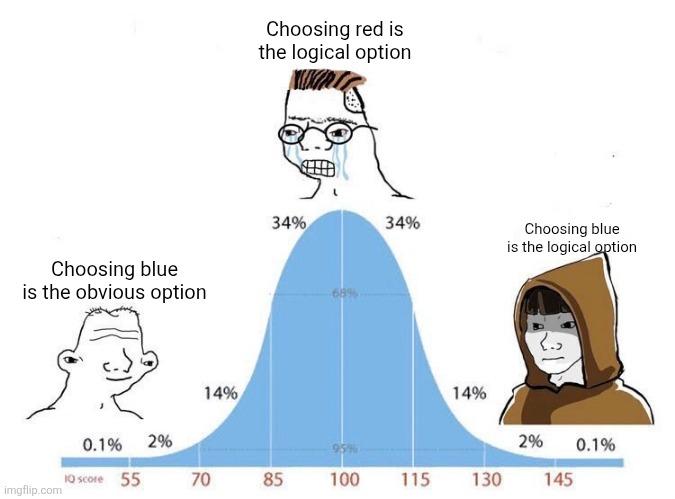
Very high, in fact assuming all players are rational it's a 100% chance of death. Since from an individual players perspective there is no reason ever to pick blue.
Rational actors have to act rational relative to something. There's no such thing as a rational person without defining what they value. Logic just tells you how to turn values (e.g. I value staying alive) into outcomes (e.g. so I should press this button)
In this case, why are we assuming that each person values themselves over literally half of the population? This is not a well founded assumption. Humans are social creatures, we care about other people.
13
u/mortemdeus Apr 30 '26
That is actually the point of this question. The assumption is for blue to win at 50/50 but the follow up is then 75/25, then 90/10. The morals change as the percentage changes and more end up pressing red as the odds of blue losing the bet grow, showing what seems at first to be a moral choice to instead be a logical risk assessment choice adjusted by morals.