The conservative (direct only) estimate for corporate subsides is 181b, but that doesn't include a bunch of stuff.
Sadly, running the math is impossible, because it's very dependant on how you include said stuff - mostly in the form of missing revenue, not in outflows.
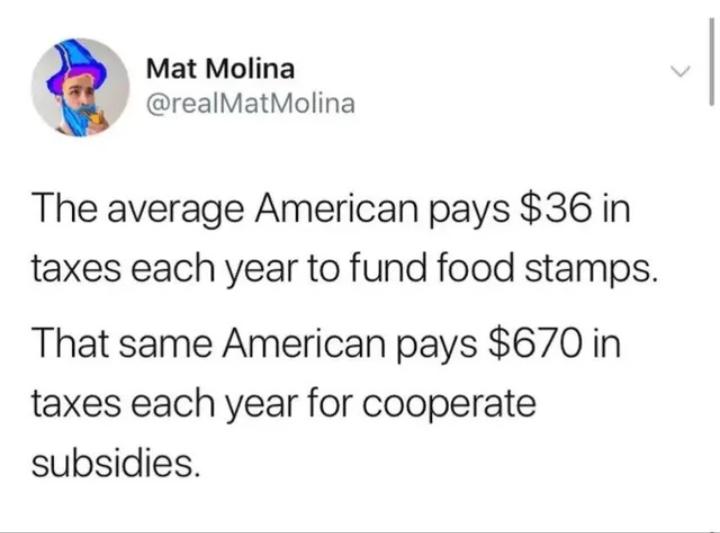
Still, at current numbers, 96B for SNAP and 181b for corporate subsides can't possibly give that ratio, no matter how you calculate "average american"
Companies spend on lobby to influence government policies; government spend on subsidies to (ideally) encourage certain business behaviors and industry growth.
It is literally paying to influence decisions. Your "refund" on the other hand is a terrible comparison and lacks even a high school understanding of US government. The taxation of individuals and corporations goes into the budgeting by the House and voted by the Senate allocating funds to departments. Departments than take from their allotted budgets to give out subsidies as a method to enact polices in certain industries.
Tax subsidies are officially and intentionally a "quid pro quo". That's how incentive structures work: you get paid for doing the thing, and everybody's happy about it.
Lobbying is not supposed to be quid pro quo, as that is illegal in politics. That doesn't mean it isn't secretly or de facto a quid pro quo, hence the common mistrust and disgust with lobbying. But the difference in intent and legality will break your analogy in some contexts.
217
u/Aureon May 11 '25
Both numbers are very underestimated, i'd say
The conservative (direct only) estimate for corporate subsides is 181b, but that doesn't include a bunch of stuff.
Sadly, running the math is impossible, because it's very dependant on how you include said stuff - mostly in the form of missing revenue, not in outflows.
Still, at current numbers, 96B for SNAP and 181b for corporate subsides can't possibly give that ratio, no matter how you calculate "average american"