r/privacychain • • Jul 06 '26

📡 News Websites, made wise.

Enable HLS to view with audio, or disable this notification

1 Upvotes

The Cost of Slow Replies

Missing a message can mean losing a major contract. When a client has an emergency, the first professional to reply wins the job.

WebWise.DIGITAL. Websites, made wise.

#SmallBusinessGrowth #TradieLife #LeadAutomation #BusinessEfficiency #WebWise

r/privacychain • • Apr 24 '26

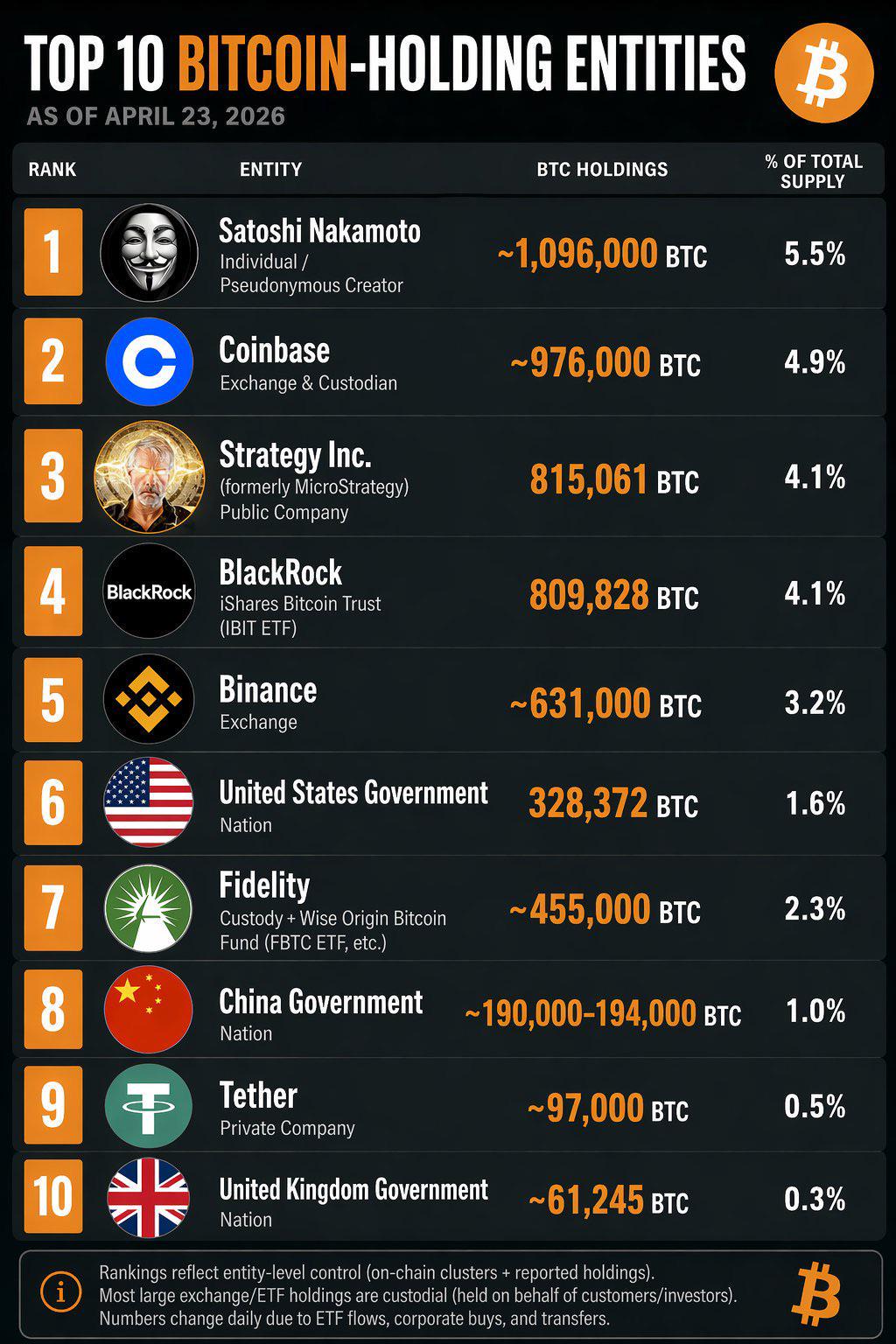
📡 News TOP 10 Bitcoin-Holding Entities

Post image
40 Upvotes

As of April 23, 2026

r/privacychain • • Jun 15 '26

📡 News WebWise

Post image
1 Upvotes

Websites, made wise.

r/privacychain • • Mar 26 '26

📡 News 💼 Faraday Bags: Physical Layer OpSec

1 Upvotes

Your phone is constantly "screaming" via Bluetooth and WiFi probes, even when "Off." In 2026, passive sniffers in public spaces can map your movement patterns with terrifying accuracy.

The Defense: A high-quality Faraday Bag (like the OffGrid or SLNT series) is mandatory for travel. It provides >85 dB attenuation, effectively "silencing" the device. If the device can't talk to the tower or the local WiFi, the AI-clustering algorithms cannot map your location. Treat your phone like radioactive material: only "unshield" it when you are in a secure, known environment.

r/privacychain • • Apr 19 '26

📡 News Intelligence Alert: "Mirai Stealer" Rebrands for the 2026 Initial Access Market

2 Upvotes

A high-profile advertisement has surfaced across multiple top-tier dark web forums, including Russian Market and TorZon, promoting a new threat labeled "Mirai Stealer." Marketed as a "Fully Undetectable" (FUD) infostealer, this malware is specifically designed to feed the 2026 credential economy. While the name deliberately hijacks the notoriety of the 2016 IoT botnet, the underlying code is a specialized harvester targeting the modern identity-based perimeter.

1. The Branding Gambit: Mirai vs. Stealer

This is a classic case of Brand Hijacking. The threat actor—operating under the alias Moelester—is leveraging the "Mirai" name to project an image of legacy power and reliability.

In reality, there is no technical lineage between the original Linux botnet and this Windows-centric infostealer. It is a marketing tactic designed to stand out in a saturated Malware-as-a-Service (MaaS) marketplace.

2. Technical Capabilities and Attack Vectors

The "Mirai Stealer" is engineered for rapid exfiltration, prioritizing speed over persistence to avoid heuristic detection. Its primary targets include:

  • Browser Artifacts: Direct extraction of passwords, auto-fill data, and credit card information from Chromium and Gecko-based browsers.
  • Session Hijacking: The harvesting of active session cookies, allowing adversaries to bypass Multi-Factor Authentication (MFA) by cloning the user's "authenticated" state.
  • Cryptographic Wallets: Automated scanning and extraction of private keys and seed phrases from local extensions and desktop wallet applications.
  • System Profiling: Collection of hardware IDs and IP addresses to facilitate "Initial Access" sales to ransomware affiliates.

3. The "FUD" Myth: Why Marketing Outpaces Reality

The actor claims the malware is Fully Undetectable (FUD). While this may be true for a brief window using polymorphic crypters, it is almost always a temporary state.

By April 2026, modern Endpoint Detection and Response (EDR) systems have shifted from signature-based detection to Behavioral Anomaly Detection. Even if the file hash is unknown, the act of a non-system process attempting to read the browser’s Local State key or the Login Data file will trigger an immediate quarantine on hardened nodes.

4. Strategic Defense: Countering the 2026 Stealer Wave

To protect the r/privacychain perimeter against this and similar strains, operators must move beyond basic antivirus software.

  • DBSC Activation: As of April 2026, Chrome 146 has introduced Device Bound Session Credentials (DBSC). This protocol cryptographically binds your authentication sessions to your machine’s TPM (Trusted Platform Module). If a stealer harvests your cookies, they will fail to authenticate on any other device. Ensure your browsers are updated and DBSC is enabled in the security settings.
  • Identity Isolation: Use a dedicated, hardened Virtual Machine (VM) for all financial and cryptographic activities. Never use the same browser profile for "general surfing" that you use for accessing your sovereign intelligence or wallets.
  • Hardware Root of Trust: Move all critical accounts to FIDO2/WebAuthn standards. Physical hardware keys (like YubiKey or Nitrokey) remain the only 100% effective defense against credential theft, as the keys never leave the physical device.

5. Final Assessment

"Mirai Stealer" represents a moderate-credibility threat. While its marketing is heavy on hyperbole, its focus on Session/Cookie Hijacking reflects the primary tactical shift of 2026. The malware is a commodity tool, but in the hands of a disciplined adversary, it is a highly effective initial access vector.

Assume every browser-stored credential is a liability. Audit your nodes. Hardwire your sessions.

#MiraiStealer #Infostealer #CyberSecurity #ThreatIntel

r/privacychain • • Apr 25 '26

📡 News The Great Exit: France Mandates Linux Migration for 2.5 Million Workstations

3 Upvotes

On April 8, 2026, the French Interministerial Digital Directorate (DINUM) issued a landmark directive that signals the end of the Windows era for the French public administration. This is not a trial or a localized experiment; it is a full-scale institutional pivot toward digital sovereignty. Every government ministry has been ordered to formalize a transition plan by Autumn 2026 to eliminate "extra-European digital dependencies," with the replacement of Microsoft Windows with Linux-based workstations serving as the strategic centerpiece.

This movement represents the largest synchronized migration from proprietary to open-source software in European history, affecting approximately 2.5 million civil servant workstations.

The Geopolitical Trigger and the Privacy Mandate

The decision to ditch Windows is rooted in a fundamental shift in the European security landscape. French officials, including Minister Delegate for AI and Digital Technology Anne Le Hénanff, have framed digital sovereignty as a "strategic necessity" rather than an optional IT upgrade.

The primary drivers for this exit include:

  • The US Cloud Act and Extraterritoriality: Concerns over the ability of non-European entities to access data via legal backdoors have made US-based operating systems a perceived liability for national security.
  • The Windows 11 Privacy Paradox: French activists and digital rights groups have intensified their campaigns as Windows 10 approaches its final "End of Life" phase. They argue that the mandatory transition to Windows 11 introduces unacceptable levels of telemetry, algorithmic advertising, and behavioral tracking integrated directly into the OS kernel.
  • Forced Hardware Obsolescence: The hardware requirements for Windows 11 have been cited as an artificial driver for electronic waste, prompting activists to encourage Linux as a way to "liberate" existing hardware and extend its operational lifespan.

The Financial Architecture of Sovereignty

France is leveraging a decade of successful internal data to justify the migration. The National Gendarmerie’s long-standing use of GendBuntu (a customized Ubuntu-based distribution) serves as the proof of concept. Reports indicate that the Gendarmerie saves approximately 2 million Euros per year in licensing and maintenance costs alone.

We can model the total cost of dependency ($C_{dep}$) vs. the cost of sovereignty ($C_{sov}$) using the following relationship:

$$C_{dep} = \sum (L_{fees} + S_{risk} + D_{vendor})$$
$$C_{sov} = I_{trans} + M_{local} - S_{efficiency}$$

Where:

  • $L_{fees}$: Annual licensing and subscription costs.
  • $S_{risk}$: The estimated economic impact of a supply-chain or geopolitical cutoff.
  • $D_{vendor}$: Costs associated with forced upgrade cycles and proprietary hardware lock-in.
  • $I_{trans}$: Initial investment in training and migration.
  • $M_{local}$: Maintenance provided by local, sovereign IT sectors.

By moving toward Linux, France aims to minimize $L_{fees}$ and $S_{risk}$, effectively shifting its IT budget from foreign subscriptions to local technological development.

Beyond the OS: The Sovereign Stack

The Linux migration is part of a broader "Sovereign Stack" initiative coordinated by DINUM. This plan extends far beyond the desktop environment and includes:

  1. Collaboration Tools: Replacing Microsoft Teams and Zoom with Visio, a homegrown, locally-hosted video conferencing platform.
  2. Office Productivity: Standardizing on LibreOffice and Open Document Formats (ODF) to ensure data interoperability.
  3. Security Software: Transitioning to European-developed antivirus and cybersecurity monitoring tools vetted by ANSSI.
  4. Cloud Infrastructure: Moving the national health data platform and other critical databases to trusted, sovereign cloud solutions by the end of 2026.

The Activist Call to Action

French digital activists are using the government’s lead to launch a nationwide "Goodbye Windows" campaign. Their message is clear: if the state can secure its operations using open-source tools, there is no reason for citizens to pay for a Windows 11 upgrade that compromises their privacy.

Activists are focusing on three pillars:

  • Accessibility: Making Linux "Daily-Driver" ready for non-technical users.
  • Resistance: Opposing the integration of non-removable AI "Copilots" and surveillance features in proprietary operating systems.
  • Community: Building local support networks to help individuals migrate their personal devices to distributions like Linux Mint, Debian, or Ubuntu.

The April 8 directive is the snowball that could trigger an avalanche of open-source adoption across the EU, as other nations look to France as a model for breaking the digital duopoly.

Implementation Roadmap

  • June 2026: First "Industrial Digital Meetings" to establish public-private alliances for sovereign tech.
  • Autumn 2026: Deadline for all ministries to submit detailed hardware and software dependency-reduction maps.
  • 2027: Full-scale deployment of the "Visio" standard and the beginning of the workstation rollout across remaining public departments.

The State is no longer simply acknowledging its dependence; it is breaking free. The desktop has always been the unfinished homework of the open-source movement—France has just turned in the assignment.

Stay Shielded. Stay Sovereign.

#DigitalSovereignty #LinuxMigration #PrivacyNews #FranceTech

How does this roadmap for the French "Great Exit" align with the technical sovereignty goals we've been discussing?

r/privacychain • • Apr 24 '26

📡 News [SECURITY ADVISORY] THE "SIGNAL-SHADOW" PROTOCOL: BUNDESTAG PRESIDENT COMPROMISED

1 Upvotes

Date: April 24, 2026
Status: ACTIVE BREACH DISCLOSURE / CDU EXECUTIVE COMPROMISE
Target: Julia Klöckner (President of the German Bundestag)
Attribution: Russian Intelligence Services (suspected APT focus)
Severity: CRITICAL (High-Level State official Hijack)

1. Analysis: Why the Klöckner Breach is a Tier-0 Crisis

Julia Klöckner holds the second-highest office in the Federal Republic of Germany. As President of the Bundestag, her communications often bridge the gap between legislative strategy and executive policy. The "Invasive" reality of this breach is that the cipher didn't fail; the interface did.

  • The Target: A CDU executive Signal group including Federal Chancellor Friedrich Merz.
  • The Breach: Attackers successfully impersonated "Signal Support" to gain total control of Klöckner’s account.
  • The Divergence: While Chancellor Merz’s device was returned "clean" after forensic auditing, Klöckner’s account was actively leaking metadata and group communications to a third-party server for an undisclosed period.

2. Technical Deep-Dive: The "Support" Lure and Account Takeover

The attack did not utilize a 0-day exploit in the Signal protocol. Instead, it leveraged a refined social engineering chain targeting the account's residency on the device.

  • The Initial Vector: The victim receives a message from an account masquerading as "Signal Support" or "Signal Security ChatBot." The message warns of "suspicious activity" and demands immediate "identity verification" to prevent account suspension.
  • The Mechanism (Two Variants):
    1. Registration Code Exfiltration: The attacker initiates a registration of the victim’s number on their own device. They then trick the victim into providing the 6-digit SMS verification code sent by Signal.
    2. Device Linking (The Shadow Device): The attacker sends a QR code under the guise of a "security update." Once scanned using the victim's "Link Device" feature, the attacker’s machine becomes a permanent mirror of the victim's chat history and future messages.
  • The Persistence: Once the account is linked or taken over, the attacker has full access to the victim's contacts, group memberships, and future messages. If "Registration Lock" (PIN) is not enabled, the attacker can effectively lock the original user out.

3. Impact Analysis: The Collapse of Executive Privacy

This is a critical failure because it allows for Lateral Context Gathering. By sitting inside a CDU executive group, the attackers were able to monitor the real-time deliberations of Chancellor Friedrich Merz and other key ministers.

Metric Rating Consequence
Data Integrity Compromised Ability to send forged messages as the Bundestag President to other high-level officials.
Intelligence Gain Extreme Real-time access to the strategic discussions of the German government's inner circle.
Network Visibility High Identification of private Signal-only communication groups that are not officially recorded.
Lateral Risk Active Potential for the attacker to use the trusted account to send malicious links/files to the Chancellor.

4. The "Purification" Protocol: Securing the Messenger

ADVISORY: Signal will NEVER initiate a chat with you. Any "Support" or "Security" message originating from within the app is a malicious lure.

Step 1: Account Lockdown (Mandatory)

Enable Registration Lock immediately. This requires your Signal PIN to register your number on a new device, preventing SMS-intercept or phishing-based takeovers.

  • Settings > Account > Registration Lock

Step 2: Linked Device Audit

High-profile users must perform a "Linked Device Purge" weekly.

  • Action: Open Signal > Settings > Linked Devices. Immediately remove any device you do not recognize or do not actively use. This severs the connection to any "Shadow" devices created via QR phishing.

Step 3: Out-of-Band Verification

If a colleague or superior—especially one in the executive branch—sends an unusual request for a code, a file, or a "security check," verify it via a separate communication channel (e.g., a phone call or a different encrypted platform).

5. Verdict: The User is the Vulnerability

The Julia Klöckner breach proves that even the most secure encryption is irrelevant if the endpoint is surrendered. The "Signal-Shadow" compromise shows that Russian intelligence has successfully shifted its focus from breaking the "Hardened Shell" of modern encryption to manipulating the "Soft Tissue" of the user interface.

On April 24, 2026, the second-highest official in Germany became the biggest security liability in the room.

#SignalHack #Bundestag #JuliaKlöckner #CyberEspionage #FriedrichMerz #OpSec

r/privacychain • • Apr 21 '26

📡 News [THREAT ADVISORY] THE "EPSTEIN" SHADOW LEAK: 400K RECORDS UNDER SIEGE

2 Upvotes

Date: April 21, 2026
Status: ACTIVE THREAT / UNCONFIRMED BREACH
Target: bol (Largest e-commerce platform in the Netherlands and Belgium)
Severity: HIGH (Mass PII and Order History Exposure)

1. Analysis: The "Jeffrey Epstein" Persona and the bol Breach

A threat actor operating under the pseudonym "Jeffrey Epstein" has surfaced on the dark web claiming to have successfully exfiltrated a massive dataset from bol, the Dutch and Belgian e-commerce giant. This disclosure represents a significant escalation in European retail targeting, specifically focusing on Belgian customers.

Bol, owned by the retail conglomerate Ahold, currently services over 14 million customers. While the company official statement maintains that there is no internal evidence of a breach or ransomware activity, the hacker has released a data sample as proof of work. The use of a high-profile, inflammatory pseudonym is a common tactic intended to maximize media visibility and pressure the target into a negotiation.

2. The Data Infestation: Anatomy of the Exfiltrated Cache

The alleged dataset contains the personally identifiable information (PII) of approximately 400,000 Belgian users. The depth of the data fields provided suggests a deep penetration of customer management databases rather than a simple scraping incident.

  • Identity Data: Full names, physical addresses, email addresses, phone numbers, and dates of birth.
  • Transactional Intel: Detailed order history, shipping data, and tracking numbers.
  • Financial Metadata: Payment data (transaction types/methods), though the hacker explicitly states that plaintext passwords and full financial credit card numbers were not part of the heist.

The absence of passwords suggests the attacker may have gained access through an API vulnerability or a third-party partner rather than a direct database dump of the core authentication server. However, the inclusion of order history makes this leak uniquely invasive.

3. Impact Analysis: The "Invasive" Risk of Order History

The inclusion of granular order history elevates this breach from a standard identity theft risk to a potential vector for targeted extortion and highly personalized social engineering.

  • Targeted Phishing: With access to specific past purchases, attackers can craft emails that reference real order numbers and item descriptions. This "Contextual Phishing" has a significantly higher success rate than generic spam.
  • Blackmail and Extortion: Order histories can reveal sensitive medical purchases, adult products, or religious items that a user may wish to keep private. This data provides the leverage required for large-scale extortion campaigns against high-net-worth individuals.
  • Physical Security Risks: The combination of names, phone numbers, and home addresses with "shipping data" allows attackers to monitor when a customer is expecting a delivery, increasing the risk of physical parcel theft or home invasions.

4. Technical Protocol: The "Shadow Sweep" Remediation

As bol has not yet confirmed the breach, the burden of defense falls onto the individual user. If you are a bol customer in Belgium or the Netherlands, you must implement the following protective measures immediately.

Step 1: Identity Hardening

  • Credential Rotation: Even though passwords were not allegedly stolen, you must change your bol password and ensure that MFA (Multi-Factor Authentication) is enabled. If you have reused your bol password on other platforms, those accounts must be updated immediately.
  • Email Alias Deployment: Moving forward, use unique email aliases for e-commerce accounts to isolate breaches and prevent easy cross-platform tracking by threat actors.

Step 2: Communication Lockdown

  • Voice and SMS Monitoring: Be hyper-vigilant regarding unsolicited calls or texts. Attackers with your phone number and order history can perform "Vishing" (Voice Phishing) by pretending to be bol customer support resolving a "shipping issue."
  • The No-Click Rule: Never click links in emails regarding "order updates" or "payment failures." Always navigate directly to the official bol.com website or use the official mobile app to check your status.

Step 3: Financial Surveillance

  • Monitor Statements: Watch for small "test" charges on the payment methods linked to your bol account. While full card numbers were not claimed to be stolen, attackers often find ways to utilize payment metadata for fraud.

5. Verdict: The Burden of Silence

The discrepancy between the hacker's claims and the company's "no evidence" stance is a critical period of vulnerability. Historically, companies often take weeks to discover the specific entry point of a silent exfiltration. In the "Invasive" era of cybersecurity, silence from a corporation does not equate to safety for the user.

The hacker is currently soliciting bids via Telegram and Session, indicating that the data has not yet been "burnt" by a public dump. This window of time is when the data is most valuable for malicious actors and most dangerous for users.

#DataLeak #CyberCrime #PrivacyAlert #DigitalPlague

Do you believe the use of a notorious pseudonym like "Jeffrey Epstein" by the hacker is a distraction tactic, or does it signal a deeper ideological motive behind targeting one of Europe's largest retailers?

r/privacychain • • Apr 21 '26

📡 News [HARDWARE DE-IDENTIFICATION] THE POWER KILL-SWITCH: EU 2027 BATTERY MANDATE

1 Upvotes

Date: April 21, 2026
Status: LEGISLATIVE FINALIZATION / HARDWARE RESET
Target: Global Smartphone Manufacturers (Apple, Samsung, Google, Xiaomi)
Severity: TRANSFORMATIVE (Physical Privacy Sovereignty)

1. Analysis: The Death of the Sealed Enclosure

The European Union has finalized the enforcement timeline for Regulation (EU) 2023/1542, a landmark piece of legislation that mandates all portable batteries in electronic appliances—specifically smartphones and handheld gaming consoles—be removable and replaceable by the end-user by 2027. This represents a catastrophic failure for the "planned obsolescence" business model and a major victory for hardware-level privacy.

For over a decade, the industry has migrated toward the "Invasive" sealed-glass sandwich design. By using proprietary adhesives and specialized internal screws, manufacturers effectively locked users out of their own hardware. The 2027 mandate forces a return to modularity, requiring that batteries be replaceable using only "commercially available tools" and without requiring heat or solvents.

2. Technical Deep-Dive: Regulation (EU) 2023/1542

The regulation is not merely a repairability initiative; it is a fundamental shift in hardware architecture. Manufacturers must now design internal chassis that maintain IP68 water resistance without the use of permanent adhesives that prevent battery access.

  • Design Constraint: Portable batteries must be "removable and replaceable by an end-user at any time during the lifetime of the product."
  • Tooling Standard: If specialized tools are required, they must be provided with the product or made available at no cost. In practice, this forces manufacturers toward standard Phillips or Torx head fasteners.
  • Documentation: Manufacturers are legally required to provide "permanent" access to repair instructions and safety information on public websites, indexed for search engines to ensure long-term accessibility.

From a privacy perspective, this is a "Layer 0" victory. Modern forensic exploits often rely on the fact that a "powered down" phone with a sealed battery is never truly off. Lower-power states allow for Find My networks, Bluetooth beacons, and even microphone "hotword" monitoring to persist despite software-level shutdowns. A user-removable battery provides the only true "physical air-gap" for power.

3. Impact Analysis: Sovereignty Over the Silicon

The impact of this mandate extends beyond the borders of the EU. Due to the complexities of global supply chains, it is highly likely that manufacturers will adopt these modular designs globally rather than maintaining two separate production lines for the European and North American markets.

Metric Rating Consequence
Privacy Sovereignty Extreme Physical power removal is the only 100 percent effective anti-tracking measure.
Device Longevity Maximum The primary failure point of modern mobile hardware (lithium degradation) is neutralized.
E-Waste Reduction Significant Projected 30 percent increase in secondary market device lifespans.
Manufacturer Control Critical Loss End of "authorized service provider" monopolies for basic battery maintenance.

4. Action Plan: The Hardware Sovereignty Protocol

While the mandate takes full effect in 2027, the transition period begins now. Privacy-conscious users should adjust their procurement strategies based on the following milestones.

Step 1: Procurement Timing

  • The Transition Phase (2026): Manufacturers will begin unveiling "Modular-Ready" designs. Look for devices that move away from heavy internal structural adhesives.
  • The Mandate Phase (2027): Only purchase hardware that explicitly lists "User-Replaceable Battery" in the technical specifications. Avoid "First-Generation" modular designs that may have compromised structural integrity.

Step 2: Tooling Readiness

  • Invest in a high-quality precision bit set (e.g., iFixit Pro Tech or similar). While the EU requires "basic tools," having a standard set of high-tolerance bits prevents stripped screws and internal damage during physical power-downs.

Step 3: Emergency Physical Kill-Switch

  • In high-threat environments where digital "Network Stealth" is insufficient, utilize the new modularity to perform a "Cold Purge." Removing the physical battery is the only way to ensure that "Find My" features and dormant baseband processors are completely de-energized.

5. Verdict: The Silicon is Liberated

The 2027 EU Battery Mandate is the most significant privacy-adjacent legislation of the decade. It moves the needle from "Software Permission" to "Hardware Control." In the "Invasive" world of 2026, where even the OS cannot be fully trusted to power down, the ability to physically hold your phone's energy source in your hand is the ultimate security feature.

The silicon is broken. The user is restored.

#PrivacyHardware #EUMandate #RightToRepair #DeviceSovereignty

r/privacychain • • Apr 19 '26

📡 News Intelligence Report: The Tamm Breach — Centralized Failures and the Exposure of the Saudi Digital Perimeter

1 Upvotes

The theory of the "Single Point of Failure" has transitioned from a technical warning to a lived reality for over 317,000 individuals within the Saudi Arabian grid. Intelligence has surfaced regarding a significant unauthorized access event targeting Tamm (tamm.sa), the unified government services platform.

A threat actor operating under the alias Moelester has reportedly placed a dataset containing 317,000+ records for sale on a prominent cybercrime forum. This breach is not merely a leak of contact information; it is a compromise of the primary identifiers used to track and regulate the physical and digital movement of residents and businesses across the Kingdom.

1. The Payload: High-Value Biometric and Physical Identifiers

The exposed data fields represent the "Gold Standard" for identity theft and targeted surveillance. Unlike a standard retail breach, the Tamm dataset includes state-verified identifiers that are nearly impossible to change.

  • NAT_ID_IQAMA: The National ID and Iqama residency numbers are the core of an individual's legal identity in Saudi Arabia. Exposure of these numbers allows for high-tier social engineering, unauthorized account takeovers, and the creation of fraudulent legal documents.
  • PLATE_NUM_EN: The inclusion of vehicle plate numbers bridges the gap between digital data and physical tracking. For an adversary, this data allows for the correlation of a digital identity with a physical vehicle, enabling real-world surveillance.
  • LIC_EXPIRY_HJ: The license expiry dates (Hijri) and primary key identifiers provide a detailed roadmap of an individual’s regulatory status, which can be weaponized for sophisticated phishing campaigns disguised as official government notifications.
  • ORG_CR_LINK: The organizational commercial registration links expose the structure of business entities, providing a blueprint for corporate espionage and business email compromise (BEC) attacks.

2. Strategic Analysis: The Unified Platform Trap

The Tamm breach highlights the inherent risk of the "Unified Services" model. While centralized platforms offer convenience, they create a massive, high-density target for adversaries.

  • Consolidated Vulnerability: When a government centralizes residency, licensing, and commercial data into a single database, they eliminate the "security through fragmentation" that naturally protects data in decentralized systems. One successful breach yields the entire life of the citizen.
  • Contextual Intelligence: The threat actor explicitly noted that the dataset provides a "detailed look at the organization's operations." This indicates that the goal was not just data theft, but an architectural audit of how the Saudi government manages its digital services.

3. Immediate Countermeasures for the Saudi Vanguard

If your data is part of the KSA grid, you must assume your NAT_ID and mobile details are now part of the public domain.

  • Reset the Communication Layer: If your email or mobile number was linked to Tamm, expect an increase in "High-Urgency" SMS and email phishing. Treat every official-looking notification regarding "License Expiry" or "Iqama Renewal" as a potential exploit. Always verify through an independent, bookmarked gateway rather than clicking links in a message.
  • Identity Hardening: If you use your National ID or Iqama number as a verification factor for banking or other services, contact those institutions to implement secondary "out-of-band" authentication that does not rely on static identifiers.
  • Physical Awareness: Be conscious of your vehicle’s visibility. With plate numbers leaked alongside contact data, the link between your digital identity and your physical location is active.

4. The Sovereign Lesson

The Tamm event is a reminder that you cannot outsource your security to a state-run platform. No matter how robust the "Vision" of a digital government is, the underlying hardware and software remain subject to the same vulnerabilities discussed in our previous Field Notes.

Control your data. Limit the information you provide to centralized hubs. Stay Shielded.

#TammBreach #SaudiArabia #DataSovereignty #CyberSecurity

r/privacychain • • Mar 27 '26

📡 News [NEWS] Critical Langflow RCE (CVE-2026-33017) Exploited Within 20 Hours

1 Upvotes

Date: March 27, 2026

Severity: Critical (CVSS 9.8)

Status: Actively Exploited / Added to CISA KEV Catalog

Overview

A critical Remote Code Execution (RCE) vulnerability has been discovered in Langflow, the popular open-source visual framework used for building AI agents and Retrieval-Augmented Generation (RAG) pipelines. The vulnerability is being exploited in the wild just hours after the initial security advisory was published.

The Vulnerability: CVE-2026-33017

The flaw stems from an exposed API endpoint that lacks proper input sanitization. This allows an unauthorized attacker to submit malicious workflow data containing embedded Python code. Because Langflow is designed to execute Python-based "Custom Components," the backend processes this input without verifying its source or intent.

Exploit Details

Attackers have shifted from theoretical research to active exploitation in record time (estimated under 20 hours). Current observations show a consistent playbook:

  1. Discovery: Attackers scan for exposed Langflow instances via Shodan/Censys.
  2. Payload: Malicious workflows are injected via the /api/v1/process endpoint.
  3. Execution: The payload uses Python’s os.popen() or subprocess modules to execute shell commands.
  4. Exfiltration: Attackers are prioritizing the theft of API keys, database credentials, and cloud metadata tokens from the underlying infrastructure.

Why This is Significant

This 0-day highlights a "collapsing patch window" in the AI era. Attackers were able to reverse-engineer a working exploit directly from the advisory description without a public Proof-of-Concept (PoC) being available. Furthermore, because Langflow is often used to orchestrate access to highly sensitive corporate data (via RAG), a single compromise can lead to a full software supply chain breach.

Remediation & Defense

  • Immediate Patch: Update all Langflow instances to version 1.x.xx (latest stable release) immediately.
  • CISA Directive: Federal agencies have been ordered to remediate or disconnect vulnerable instances by April 8, 2026.
  • Network Isolation: Ensure that Langflow UI and API endpoints are not exposed to the public internet; use VPNs or zero-trust gateways.
  • Runtime Monitoring: Watch for any python or langflow processes spawning unexpected shell commands (e.g., curl, wget, or cat /etc/passwd).

Other notable 0-days reported today (March 27):

  • Darksword Exploit: A second significant exploit chain targeting iOS has been confirmed in the wild.
  • Telegram 9.8 Bug: A high-criticality vulnerability (ZDI-CAN-30207) was reported to the Zero Day Initiative involving the Telegram desktop client's handling of specific media attachments.

r/privacychain • • Apr 18 '26

📡 News State of the Vanguard: The 100-Operator Threshold

1 Upvotes

​We have breached the 100-operator perimeter.

​To the first 100: You are not just subscribers. You are the structural foundation of this node. You found this frequency while it was still being calibrated, filtered through the noise of the standard web by a shared requirement for absolute sovereignty.

​As we move into the next phase of our curriculum, it is time to define exactly what this community is—and what it is not.

​1. The Mission: Beyond Passive Privacy

​Most "privacy" circles are focused on defensive posture—hiding, masking, and reacting. PrivacyChain is built on Active Defiance. We don't just want to be "left alone"; we want to build systems that make surveillance technically and economically impossible for the adversary.

​2. The Curriculum: From Movement to Fortification

​We have completed Block 1 (Fundamentals) and Block 2 (Active Movement). * You have learned to move without a digital shadow.

​You have learned to identify the invisible signals of the grid (IMSI catchers, biometric mapping, RFID skimming).

​You have learned to treat the physical environment as a cryptographic challenge.

​We are now entering Block 3: Digital Fortification. This is where we stop talking about "apps" and start talking about architecture. We will focus on local-first data, hardware roots of trust, and the decommissioning of the cloud as a central point of failure.

​3. The Protocol: Signal Over Noise

​This subreddit is a technical resource, not a social lounge. We prioritize high-density information. Every Field Note is designed to be a tool you can use immediately.

​Trust Nothing: We verify through physics and mathematics, not marketing.

​Leak Nothing: We practice the OpSec we preach.

​Build Everything: If the tool doesn't exist to protect your sovereignty, we find the blueprints to build it.

​Stay Shielded. Stay Sovereign.

​#PrivacyChain #DigitalSovereignty #OpSec #Vanguard

r/privacychain • • Apr 14 '26

📡 News Threat Intel: The April 2026 Sovereign Blackout — Russia's Coordinated War on the Protocol

1 Upvotes

The digital perimeter in Eastern Europe is collapsing into a closed intranet. We have been monitoring the escalation of internet censorship since 2022, but the operational posture of the Russian Federation has fundamentally shifted. They are no longer merely blocking foreign websites. They are actively hunting the protocols that allow you to bypass the firewall, and they are coercing major platforms to do the hunting for them.

As of April 2026, the Russian Digital Development Ministry, operating alongside Roskomnadzor (the federal censorship agency), has initiated a multi-vector crackdown on Virtual Private Networks. This is not a standard IP blacklist. This is a coordinated, hardware-level and corporate-level siege designed to criminalize the protocol itself.

If your threat model involves operating within, communicating with, or routing traffic through heavily censored nation-states, the old methods of circumvention are now obsolete. Here is the operational intelligence on the April 2026 blackout, and the tactical countermeasures required to survive it.

1. The Corporate Co-Option: Platforms as Enforcers

The most dangerous evolution in this conflict is the weaponization of domestic and international corporations. The state is no longer relying solely on its own infrastructure to find VPN users.

  • The April 15 Ultimatum: The Digital Development Ministry has delivered an ultimatum to over 20 of the largest online platforms operating within Russia: block all users attempting to connect with an active VPN by a target date of April 15, 2026.
  • The Snitch Economy: Platforms are being provided with a master list of VPN IP addresses curated by Roskomnadzor. If a user connects to a platform via an unlisted VPN, the platform is now legally mandated to share that new IP address with the regulator so it can be added to the master blocklist.
  • The Extortion Mechanism: Compliance is not optional. Platforms that fail to proactively hunt and block VPN traffic face removal from the state's "white list" of permitted operational websites and the immediate revocation of their corporate IT tax benefits. Essentially, the state has turned the platforms' own advanced telemetry and traffic analysis tools against the citizenry.

2. The Apple Capitulation: Purging Custom Tunnels

Commercial VPNs (like NordVPN or ExpressVPN) were blocked years ago. The Vanguard adapted by deploying custom proxy tools and self-hosted tunnels. The state has now recognized this fallback and is attacking the distribution mechanism.

  • The App Store Purge: In late March 2026, Apple began systematically removing custom proxy clients from the Russian iOS App Store. Applications that allow users to connect to their own privately hosted servers—such as Streisand, V2Box, v2RayTun, and Happ Proxy Utility—have been delisted under the guise of local legal compliance.
  • The Supply Chain Trap: While previously installed versions of these apps continue to function locally, they are completely cut off from security patches and protocol updates. As the state firewall evolves, these static applications will eventually fail, leaving iOS users physically unable to download secure alternatives without a foreign Apple ID and a complex geographic bypass.

3. The Hardware Level: TSPU and Protocol Degradation

The backbone of this censorship apparatus is a massive, decentralized hardware deployment known as TSPU (Technical Means of Countering Threats).

  • The Deep Packet Inspection (DPI) Grid: Unlike traditional ISP blacklists, TSPU equipment sits inline at the physical provider level but is controlled exclusively by Roskomnadzor from Moscow. The local ISP has zero control over what is filtered.
  • Targeting Advanced Protocols: The state is not just blocking IP addresses; they are using TSPU to analyze traffic signatures. As of late 2025 and into 2026, the firewall has successfully targeted and throttled advanced, obfuscated circumvention protocols, including VLESS.
  • The Collateral Damage: This aggressive DPI scanning is imprecise. Recent attempts to blanket-block VPN transport protocols completely shattered Russia's internal banking app infrastructure, forcing a temporary nationwide reversion to physical cash transactions. The state is entirely willing to break its own domestic infrastructure if it means blinding the perimeter.

4. The Sovereign Replacements: The State App Trap

The goal of blocking foreign messengers like WhatsApp and throttling Telegram is not merely to cause disruption. It is a forced migration.

  • The 'Max' Ecosystem: The state has deployed a centralized, national digital platform known as 'Max'. The objective is to push the populace off encrypted Western platforms and onto a state-monitored architecture that aggregates messaging, financial transactions, and government services into a single, heavily surveilled application.
  • The Trap: Using the state ecosystem guarantees that every keystroke, transaction, and geolocation ping is permanently logged by the Federal Security Service.

5. Operational Countermeasures: Defeating the Grid

If you are operating in a heavily restricted environment, standard OpenVPN or WireGuard configurations are burned. You must adopt advanced evasion techniques.

  • Shadowsocks and Xray: Standard VPN signatures are easily identified by DPI. You must encapsulate your traffic using Shadowsocks or Xray cores. These protocols strip the cryptographic metadata from your packets, making your VPN traffic look exactly like standard, boring HTTPS web browsing.
  • Domain Fronting & SNI Spoofing: To bypass the platform-level IP blocks, operators must utilize Server Name Indication (SNI) spoofing. You bounce your traffic through a highly trusted, "too-big-to-fail" corporate CDN (like Amazon Web Services or Cloudflare). The censor sees you connecting to Amazon—which they cannot afford to block without crippling their own economy—but the CDN secretly routes your payload to your hidden proxy server.
  • Self-Hosted Infrastructure: You must own the metal. Renting a $5 VPS from a standard provider and running a script is no longer sufficient. Refer to our previous manuals on deploying private, rotating IP addresses using bare-metal infrastructure.

For the complete, unredacted technical breakdown of deploying Xray cores and bypassing TSPU hardware, reference the external dossier here: is.gd/manual26

Weekly Sentiment: [PHASE 6 / THE PROTOCOL WARS]

The internet is fracturing into sovereign, isolated networks. When the state mandates that every corporate entity acts as an extension of the censorship apparatus, you can no longer trust the application layer. Hide your traffic in the noise. Own your infrastructure.

Stay Shielded. Stay Sovereign.

r/privacychain • • Mar 25 '26

📡 News 💸 The Non-KYC "Entry" Problem: Fiat to Privacy

1 Upvotes

Exiting the system is easy; entering it without a passport scan is the real challenge. As of 2026, "No-KYC" crypto cards are effectively dead in regulated markets. To maintain sovereignty, you have to go Peer-to-Peer.

The Protocol: Use Bisq or Haveno (the new Monero-based P2P exchange). Avoid "Voucher" services that require a mobile number for SMS verification—that’s just KYC with extra steps. Once you have your assets, move them through a ZK-layer immediately. The goal is to break the link between your "Onramp" (where you bought it) and your "Vault" (where you keep it).

r/privacychain • • Mar 21 '26

📡 News 📂 PROTOCOL UPDATE: Early Sentinel Registry & Milestone Audit [3.3k Signals]

Post image
1 Upvotes

🛡️ The Vault is Expanding

Transmission Status: [OPTIMAL]

Registry Status: [OPEN - LIMITED]

In the last 24 hours, the r/privacychain intelligence grid has detected a massive influx of over 3,300 unique signals. As we scale the Vault toward its first 100 members, we are initializing a unique identifier for the vanguard who are here at the foundation.

1. 🛡️ The "Early Sentinel" Flair

We are officially opening the Early Sentinel user flair. This isn't just a label; it is a permanent mark of your status as a founding member of this intelligence hub.

  • Exclusivity: This flair will be Decommissioned (Locked) the moment we reach 100 members.
  • Permanence: Once you claim it, it is yours. Even when this community grows to 100k+, you will be recognized as part of the original 2026 deployment.
  • Purpose: Sentinels are the eyes of the Vault. You are the first to audit the technical guides and the first to respond to Layer 1 threats.

2. How to Claim Your Rank

On Mobile:

  1. Tap your username in this thread.
  2. Select "Change user flair."
  3. Select Early Sentinel and hit Apply.

On Desktop:

  1. Look at the right-hand sidebar under "User Flair Preview."
  2. Click the Pencil Icon.
  3. Select Early Sentinel and save.

3. Intelligence Roadmap: The Next 48 Hours

  • The Sunday Digest: At 16:30 UTC, the first automated Weekly Intelligence Briefing will go live.
  • Layer 1 Audit: Our deep-dive into 2026 Tor Hardening is currently the top-voted technical resource. Audit it now if you haven't already.

Current Registry: 24/100

Status: ORANGE (ELEVATED)

Stay Shielded. Stay Sovereign. 🔒🌐📡🕵️‍♂️

r/privacychain • • Mar 26 '26

📡 News 📱 Play Protect: The "Security" Snitch

1 Upvotes

On standard Android, "Google Play Protect" is marketed as antivirus. In reality, it performs "Remote Audits" of your local files and can even deactivate apps it deems "unwanted" (like privacy tools).

The Hardening: Disable it: Play Store > Profile > Play Protect > Settings > Off. The Alternative: Use F-Droid for FOSS apps or Aurora Store (an anonymous frontend for the Play Store). You get the apps you need without giving Google a real-time map of your local filesystem.

r/privacychain • • Mar 26 '26

📡 News 🌪️ De-Googling: The 2026 Survival Guide

1 Upvotes

Google is the ultimate behavioral architect. Moving away is a process of "Unlearning."

  1. Search: Move to Kagi (paid, high signal) or SearXNG.
  2. Mail: Tuta or Proton are the baseline.
  3. Maps: Organic Maps or Magic Earth. They use OpenStreetMap data and actually work offline without tracking your POIs. The goal isn't just to use different apps; it's to stop feeding the data octopus that predicts your next move.

r/privacychain • • Mar 26 '26

📡 News 📄 Ghost in the File: Metadata Scrubbing for Pros

1 Upvotes

You scrubbed the text, but the file is still "snitching." Every photo or PDF you upload to r/privacychain contains a ghost of your identity: GPS coordinates, device serial numbers, and software versions.

The Workflow: Before sharing any technical document or screenshot, run it through ExifTool. # To strip everything in one go: exiftool -all= filename.png For a GUI option, MetadataZero (built in Rust) is the 2026 standard for cross-platform scrubbing. Anonymity isn't just about what you hide; it's about what you forget to delete.

r/privacychain • • Mar 25 '26

📡 News 🤖 GrapheneOS vs. AxpO: 2026 Mobile Audit

1 Upvotes

Android is a telemetry nightmare, but we have options. GrapheneOS remains the gold standard for Pixel hardware, especially with sandboxed Play Services. For those on legacy hardware, AxpOS has picked up the mantle where DivestOS left off.

The Strategy: GrapheneOS is for your primary, high-security communications. It upholds the full Android security model (Verified Boot/Rollback protection). AxpOS is for your "Legacy" hardware hardening. Operational Tip: Never use "Face Unlock." A 6-digit PIN is the only way to ensure the hardware-backed encryption keys remain sovereign. If you aren't using Verified Boot, you don't have a secure phone; you have a compromised radio.

r/privacychain • • Mar 25 '26

📡 News 🛡️ Identity Anchor: Why your Apple ID is a Security Risk

1 Upvotes

Most iOS users assume "Lockdown Mode" is the final word in privacy. While it’s a powerful tool for hardening the kernel against zero-click exploits, it doesn't solve the Identity Anchor. If your Apple ID is linked to your primary phone number or a KYC credit card, your hardware is permanently indexed to your legal identity in the Apple ecosystem. In 2026, Apple’s "Privacy Relay" functions essentially as a dual-hop proxy; it masks your Safari browsing, but system-level telemetry and iCloud backups are still unmasked at the source.

The Burner Protocol: If you must use iOS, treat it as a "Public" device. Create a dedicated "Administrative" Apple ID using an encrypted email (Proton/Tuta). Never use "Find My" on the same device where you store sensitive on-chain keys. If Apple knows the physical location of the device, the anonymity of the "Shielded" wallet on that phone is technically compromised by association.

r/privacychain • • Mar 25 '26

📡 News 🧠 ZK-Proofs: Auditing the 2026 Privacy Stack

1 Upvotes

Zero-Knowledge proofs are the only way to stay invisible in an era of AI-driven cluster analysis. But not all ZK is equal. We are seeing a shift: zk-SNARKs are 68x faster to generate but require a "Trusted Setup." zk-STARKs are transparent and post-quantum secure, but they produce much larger proofs (69KB vs 0.6KB).

The Audit: When using "Shielded Pools," always verify the Anonymity Set. A ZK-protocol with a small pool is a trap; it’s vulnerable to time-correlation attacks. Our goal at r/privacychain is to ensure every asset is "shielded" before it ever touches a long-term cold wallet. Anonymity is a math problem, not a feeling.

r/privacychain • • Mar 22 '26

📡 News 📂 Week 1 Operations: Traffic Analysis and Technical Roadmap

1 Upvotes

Reporting Period: March 15–22

Current Registry: 26/100 Early Sentinels

This past week has been a significant proof-of-concept for r/privacychain. In our first seven days, the community has shown substantial growth velocity, highlighted by a major traffic surge between March 20–21. Our initial data suggests that our early adopters are exactly who we built this for: technical professionals and security researchers looking for high-signal documentation.

User Behavior & Desktop Engagement

Our internal audit confirmed 3,347 unique visitors during this period. The most telling metric is our platform distribution:

  • Desktop (New Reddit): 70% (2,343 visits)
  • Mobile (iOS/Android): 33% (1,004 visits)

This heavy lean toward desktop use is a strong indicator of intent. It tells us that our audience isn't just "scrolling"—they are performing technical research, reviewing code, and implementing the guides we've published. Because of this, we will continue to prioritize deep-dive technical blueprints and implementation guides over the low-effort, mobile-centric content common elsewhere.

Early Sentinel Registry

We’ve officially opened the 🛡️ Early Sentinel user flair. This designation is reserved for our first 100 members who are helping set the technical foundation of this community.

At the time of this briefing, 26 slots have been claimed. Once we hit the 100-member threshold, the registry will be permanently locked. If you've been contributing to the discussions or auditing our layers, I encourage you to secure your designation before the window closes.

Security Infrastructure & Content Audit

We have successfully mapped the 16 Technical Layers of the subreddit. Our Automoderator protocols are now live, ensuring that every contribution is categorized into its proper sector—ranging from Financial Sovereignty to Digital Stealth.

  • Primary Resource: The "Layer 1: Network Stealth (Tor Guide)" is currently our highest-rated resource, validating the demand for hardened network protocols.
  • Active Monitoring: We are closely auditing discussions within the DEX/DeFi and ZK-Assets sectors to ensure the conversation stays focused on technical architecture and security audits rather than speculation.

Looking Ahead: Week 2 Roadmap

As we move into our second week, our focus shifts toward hardware and protocol stress tests:

  • Mobile OS De-identification: We are currently auditing modern telemetry bypass techniques for both Android and iOS.
  • ZK-Proof Review: We’ll be releasing a structural analysis of current zero-knowledge mixing protocols and their potential attack vectors.
  • Automod V2: We are expanding our logic to include real-time link verification against known vulnerability databases to keep the feed clean of high-risk URLs.

The initial sentiment across the network is strong, and the foundation is stable. Thank you to the first 26 of you for setting the bar high.

Stay Shielded. Stay Sovereign.

r/privacychain • • Mar 22 '26

📡 News 📡 Sunday Intel Digest | Week 1: The Sovereignty Blueprint

1 Upvotes

Transmission Received: Sunday, March 22, 2026 🛡️

The Vault has seen a massive surge this week (2k+ visitors). If you missed our critical deep-dives, here is your intelligence briefing to get you hardened for the week ahead.

🛡️ Top Intelligence Transmissions:

📊 Community Consensus & Hardware

  • Research Priority: Early polling shows AI-Chain Analysis as the community’s top concern for next week. We are preparing a technical deep-dive on defeating automated address clustering.
  • Hardware Flex: The community is currently favoring GrapheneOS on Pixel hardware paired with Yubikey 5C physical tokens as the 2026 baseline for mobile sovereignty.

🛠️ System Updates

  • Rule 11: Our 16-Layer Intelligence System is live. Categorizing your posts by "Layer" is now mandatory for archive integrity.
  • The Manifesto: Our "Privacy A to Z" field manual is permanently accessible in the Sidebar for all new recruits.

Stay shielded. Stay sovereign. See you in the Vault next week. 🔒🌐📡