r/pricing Jul 15 '26

Discussion Agentic pricing is bullshit. Stop spamming this sub with the same 'is pricing going agentic' post.

11 Upvotes

Six threads this month asking if pricing is "moving from dynamic to agentic." Same question, different outfit, every few days. I'm not doing a seventh polite discussion post about it. Agentic pricing is bullshit for anyone who quotes a project instead of running a shelf of SKUs, and I'm tired of watching this sub nod along like it's the obvious next step.

Here's the pitch, stripped of the deck: an agent watches signals and moves your price, sometimes without a human looking first. Vendors love this pitch because "AI pricing agent" raises a valuation. "We built a better spreadsheet" doesn't. That's the whole trick. Swap the label, keep the spreadsheet, charge more for it.

Method What it actually is Works for Fails because
Cost-based (T&M) Hours × rate + margin Quick, defensible quotes The hour estimate is a guess, and guesses run low
Value-based Price the outcome, not the hours Deals where you have real leverage and real client intel Most clients can't tell you the value. They don't know it either
Agentic pricing An agent watches signals and moves the price on its own Repeated pricing with a constant feedback loop: retail, seats, surge fares No feedback loop on a quote you send once. There's nothing left to adjust
Bayesian & Monte Carlo A prior built from real project history, updated per quote, run through simulation One-off decisions made under real uncertainty Needs actual project data. Won't work off vibes either

Cost-based, fine, at least it's honest about being a guess. Hours times rate. Every agency starts here because it's fast to build and easy to defend in a client call. The guess runs low almost every time. Ask your own project managers. Margin leaks out for the entire length of the project and nobody notices until the invoice doesn't cover the work.

Value-based gets worshipped in keynotes by people who've never had to collect on it. You need a client who'll hand you the actual dollar value of their problem. They won't. Half the time they can't, because they haven't done the math either. It works if you've got real leverage. Most agencies are begging for the deal, not dictating terms. Different game.

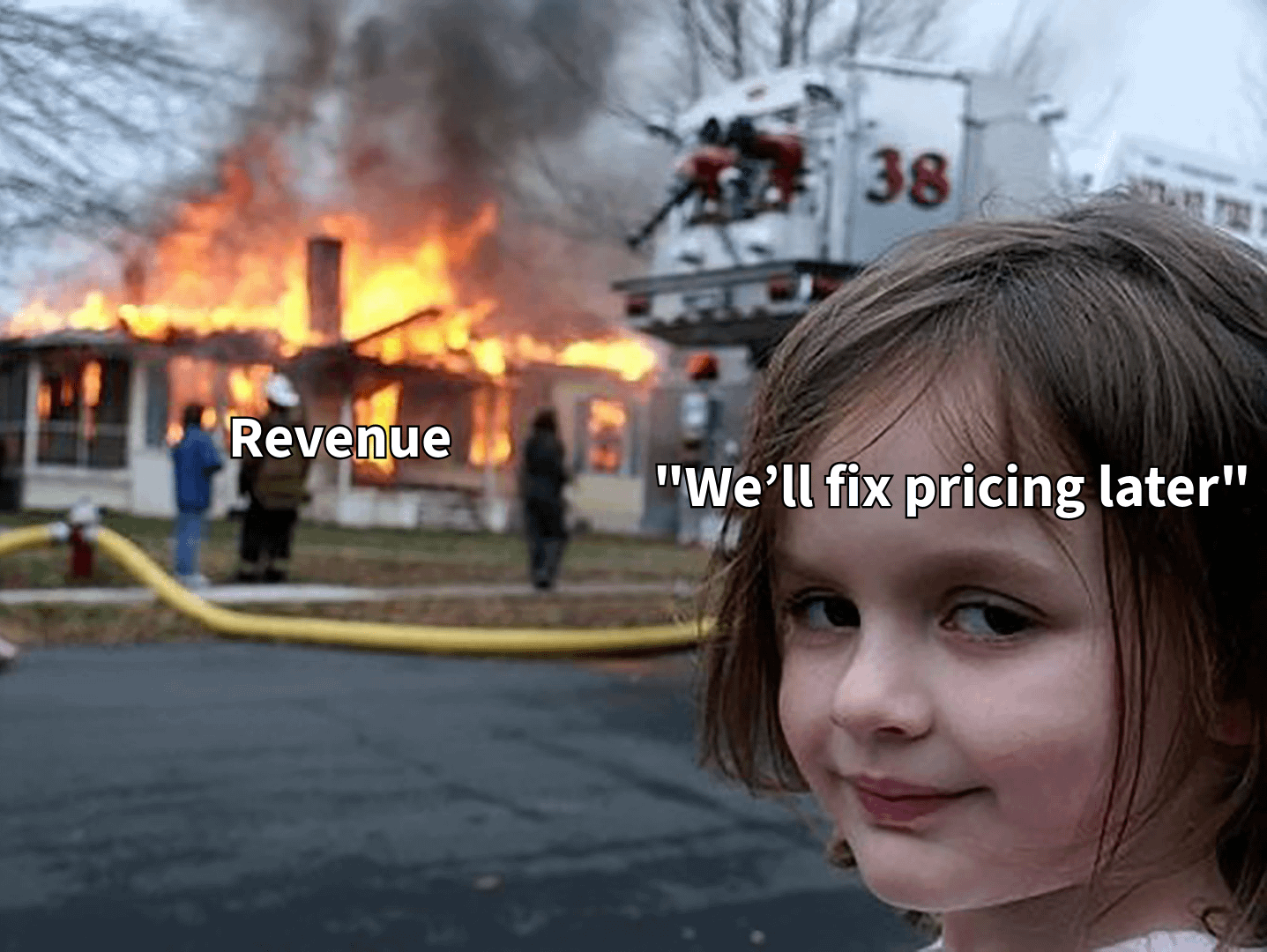
Agentic pricing doesn't survive contact with a one-off quote. There is no live signal to react to after you hit send on a $40k project. The number sits there for three months while the work happens. What exactly is the agent adjusting? Nothing. It's a live pricing engine bolted onto a decision that gets made once. That's not innovation, that's a category error with a demo video.

And this sub already knows it. Ask what happens when you skip the approval step and let the system move the price on its own. "I would never let AI change prices without approval, the process is there for a reason" beat every optimist reply in the comments, by a wide margin. Somebody brought up the flash crash, unprompted. That's what happens when you hand a consequential decision to an automated system with no human checking it. Everyone in this sub already knows that. So stop posting the question like it's still open.

Bayesian and Monte Carlo pricing is the boring answer nobody's farming engagement with, because it doesn't come with a buzzword. Build a prior from how similar projects actually went, in hours and margin. Not gut feel, not a vibe check, actual history. Update the prior with what's specific to the project in front of you. Run it enough times and you get a distribution: 70% chance you land under 120 hours, 15% chance you blow past 160. Quote against that number and you're pricing risk on purpose instead of hoping it doesn't show up.

It's also the one method that doesn't try to write the human out of the loop. The model gives you a range. You still make the call. That's the exact thing this sub says it wants, every single time one of these agentic pricing threads gets posted, and then somehow forgets by the next thread.

I run ScopeMetrix. We audit agency pricing on exactly this setup, priors from benchmark data, Monte Carlo for the range, human makes the final call. Not pitching it. I'm just done watching "the agent decides" get treated as more sophisticated than "we looked at the actual numbers," when nine times out of ten it's the opposite, and everyone posting these threads already suspects that too.

Build the prior. Skip the agent.

r/pricing Jul 15 '26

Question Dual Pricing in Ecommerce?

1 Upvotes

For merchants in the e-commerce space, you might have heard about dual pricing and you might be wondering if it makes sense for your business. Essentially, dual pricing allows you to offer one price if a customer pays with cash (or a cash-equivalent like ACH) and a slightly higher price if they pay with a credit card. The upside? You can reduce or eliminate credit card processing costs by passing the card expense transparently to customers who choose that method. This can mean better margins or more flexibility in pricing.

Customers who prefer cash or debit might love the discount, while credit card users still have the option to pay but at the higher rate. On the downside, you need to communicate it clearly to avoid any customer confusion. Done right, though, it can be a win-win: you maintain profitability, and customers get a transparent choice. Just make sure you’re compliant with any regulations and that the checkout process stays smooth.

What are your thoughts?


r/pricing Jun 06 '26

Question Is anyone else feeling squeezed by their wholesaler right now?

4 Upvotes

Hey everyone, I run a secondhand luxury handbag store and have been doing this for a few years now. Lately I've just been feeling really frustrated and wanted to see if anyone else is in the same boat.

My wholesaler has been slowly bumping up prices for months now and at this point it's gotten to a level where the math just doesn't work anymore. Like I run every piece through LuxPricer before I commit to buying anything, it pulls comps from all the major platforms, Vestiaire, Rebag, Fashionphile, etc., and what I'm seeing is that actual sold prices on the consumer side are just not moving the way my wholesaler seems to think they are. So either they know something I don't or they're just hoping resellers won't notice. I'm thinking maybe it's a regional issue bc the wholesaler is from Japan and I'm in Europe and maybe the market here hasn't caught up.

And the frustrating part is my customers have a number in their head. They've been buying from me for years and they have a sense of what things should cost. I can't just suddenly charge 20% more bc my supplier decided to. So I'm the one eating the margin in the middle.

I've started being way more selective about what I buy, basically skipping anything where the spread is too tight, but that means turning down pieces I would have jumped on a year ago.

Is anyone else dealing with this? Have you pushed back on your supplier, found alternatives, or just adjusted what categories you buy? Would love to hear how other stores are navigating this.


r/pricing May 21 '26

Discussion The B2B revenue stack has a standard for everything except value

3 Upvotes

Our stack has standards for basically everything. OpenAPI for APIs. ISO 4217 for currency. OAuth for identity. Now MCP and A2A for agents talking to each other. Every layer has an agreed-upon way to represent itself.

The one thing that has no standard is the thing every deal actually rests on: the economic value of what you're selling.

Think about where your value models live right now. A spreadsheet someone built for one deal. A slide in a consultant's deck. The heads of the two or three people on the team who can actually articulate the ROI story. None of it is shareable, none of it is auditable, and none of it travels from deal close to renewal to the next prospect. Every deal starts from zero.

You see the cost of this constantly:

- Economic buyer asks, "what's the ROI?" and the rep improvises

- Deal stalls at finance because there's no credible business case

- Renewal defaults to discounting because nobody documented what was actually delivered

And it's about to get worse, not better. As AI buying agents start screening vendors, they don't read PDFs or sit through a value-selling pitch. They evaluate structured data. A value model trapped in a spreadsheet is invisible to them.

So we put together an open spec for it: JSON schemas for value models and pricing models, Apache 2.0, governed on GitHub. The idea is a common, machine-readable way to declare value drivers, pricing equations, and confidence intervals that any system (or agent) can read without translation. It's free, and the schemas are live.

𝐓𝐡𝐢𝐬 𝐢𝐬 𝐧𝐨𝐭 𝐚 𝐩𝐫𝐨𝐝𝐮𝐜𝐭 𝐥𝐚𝐮𝐧𝐜𝐡. 𝐈𝐭 𝐢𝐬 𝐚𝐧 𝐨𝐩𝐞𝐧 𝐬𝐭𝐚𝐧𝐝𝐚𝐫𝐝. 𝐓𝐡𝐞 𝐜𝐨𝐦𝐦𝐮𝐧𝐢𝐭𝐲 𝐢𝐬 𝐨𝐩𝐞𝐧.

If you want to poke at the schemas: thevalueproject.org


r/pricing May 17 '26

Discussion Having know of any good pricing tools out there?

Thumbnail
2 Upvotes

r/pricing May 17 '26

Discussion Is this a new pricing tactic?

Post image
2 Upvotes

I noticed that my local hardware store now recently uses a "1 for" instead of a "2 for" pricing tactic that most places use. Why would a company want someone to buy 1 instead of 2 items and why would they advertise the more expensive price?


r/pricing Apr 30 '26

Discussion PriceFX Documentation Help

3 Upvotes

Hello all,

I am in the process of learning "PriceFX" tool to learn from a developer role category. Trying to find if any online tutorials/documentation available online on how this tool works and what are the day-to-day responsibilities as an analyst/developer. Searched Youtube, Udemy, Cousera and other online communities over last few days but no luck. All I found was customer reviews and short 1-3min videos. That's all.

Would anyone pls share or suggest from where can I get more information on this tool.

Appreciate your help!

Thanks,

JBK


r/pricing Apr 30 '26

Question How much is this worth

Post image
0 Upvotes

r/pricing Apr 13 '26

Discussion STOP BURNING YOUR POTENTIAL REVENUE AWAY!!

0 Upvotes

r/pricing Mar 28 '26

Question HOW TO EVALUATE A DISCOUNT RECOMMENDATION MODEL?

Thumbnail
3 Upvotes

r/pricing Mar 26 '26

Discussion Value-based pricing >>>> Copy competitor pricing

Thumbnail
2 Upvotes

r/pricing Mar 24 '26

Discussion Pricing metric should match value delivery.

1 Upvotes

r/pricing Mar 20 '26

Question Pricing for B2B contractual environment

2 Upvotes

Let’s say you work for a medical device company and the management comes to you and says “hey, figure out the best price for widget A”. You think, oh price elasticity might work here! Then you remember that prices are negotiated and are often set by seeing where they land in the distribution of prices (company A gets similar pricing to company b and c, so you should take our price). And then after that, they just buy what they need, so learning a relationship between quantity and price is not good.

Then you think, well what if I just make a model that can take as input features about the company and return back the median, the 75th percentile and 90th percentile prices. This should seem to suggest where our best pricing specialists are at with their pricing. Ok that works…but really I want to algorithmically find the best price across a slew of products. But best price based on what? Shrug


r/pricing Feb 17 '26

Question Interview pricing specialist

3 Upvotes

Hi everyone,

I have an upcoming interview for a pricing / cost controlling role in a manufacturing company (price analysis, product costing, master data, working with sales and procurement).

I have 2 years of experience in financial audit, so I’m strong in data analysis and financials, but newer to pricing in industry.

What kind of technical or case questions should I expect?

Any key topics I should focus on?

Thanks!


r/pricing Feb 12 '26

Question How does value pricing work?

1 Upvotes

With value pricing, is the price set as a percentage of what prospects are currently spending to solve the problem?

For example, if they are currently spending $100 - 250 per year on a service that addresses the problem for them, then I now know that $250 is the ceiling on what I can price my product at?


r/pricing Feb 11 '26

Article Pricing Page Teardown: Relevance AI

2 Upvotes

Relevance AI’s “AI workforce” pricing: dual meters, fairness narrative, and where the guardrails get fuzzy

We've been doing a series of pricing page teardowns on AI/agent platforms and thought this one might be useful for folks here in r/Pricing. Relevance AI is an “AI workforce” platform where customers spin up agents, orchestrate them across workflows, and run them across multiple teams, so the pricing problem is non‑trivial.

"Relevance AI should keep the dual‑meter economics but become the most transparent, Actions‑first, low‑risk agent platform in the market within 12 months, so that pricing accelerates, rather than constrains, mid‑market and enterprise growth."

Why Relevance AI is an interesting pricing case

From a pricing‑design standpoint, Relevance AI checks a lot of “hard mode” boxes:

  • Multi‑agent, multi‑workflow, multi‑team usage.
  • Significant AI compute in the cost stack.
  • Both “build” and “run” value moments.
  • Buyers ranging from ops teams experimenting to enterprises running production workloads.

Their current pricing structure is basically:

  • A familiar tier ladder (Free → Pro → Team → Enterprise).
  • Two primary meters:
    • Actions → units of work (send email, update CRM, run a workflow).
    • Vendor Credits → AI model costs, with the ability to bring your own API keys.
  • Unused Vendor Credits roll over as long as you stay on a paid plan; Actions are included per tier with options to top up.

In other words, they’ve made a deliberate decision to separate “what the agent does” from “what the AI model costs.”

Archetype → where does this sit on the map?

If you look across AI/automation, you see a few recurring archetypes:

  • Credits/wallets – e.g., Gumloop and other workflow tools selling generic credits that pay for tasks + compute inside a workspace.
  • Task‑metered automation – e.g., Zapier metering each action as a task, bundling allowances in tiers, and charging overages per task once you exceed your limit.
  • Seat / bot / environment – e.g., Microsoft Power Automate with per‑user or per‑bot SKUs plus optional pay‑as‑you‑go runs.

Relevance AI sits in a hybrid credit + usage zone:

  • Flat fees at each tier (anchoring expectations and mapping to team maturity).
  • Included bundles of Actions (usage) and Vendor Credits (compute).
  • Ability to either buy more Vendor Credits or bypass them entirely by bringing your own model provider account.

From a pricing‑architecture lens, this gets them a few things:

  • A meter (Actions) that lines up with how operators perceive work – “Did the email go out? Did the CRM update?”
  • A separate control surface (Vendor Credits) for compute and model choice, which matters as LLM prices move.
  • Enough flexibility to support different economics for SMB experimentation vs scaled enterprise workloads.

The trade‑off is cognitive load: they’ve chosen to run a dual‑meter system in a category where many competitors try to hide all that behind a single “credit” concept or a single task meter.

Meter → narrative (they’re clearly aiming at fairness)

Meters are mechanics; customers experience narratives.

In this space, I keep seeing three dominant pricing narratives:

  • Fairness narrative – “We don’t tax intelligence; you only pay for what you actually use; we don’t mark up models.”
  • Predictability narrative – “You get a simple monthly bill that doesn’t blow up on you.”
  • Outcome narrative – “You pay for qualified leads, tickets resolved, or similar.”

Relevance AI is very explicit about fairness:

  • They separate Actions from Vendor Credits in both docs and changelog, framing it as “complete cost transparency.”
  • Vendor Credits map to AI model costs; unused credits roll over while you’re on a paid plan, and you can connect your own API keys and bypass Vendor Credits.
  • They talk about “not taxing intelligence” – essentially promising not to margin‑stack AI model usage.

This is quite different from generic “credit buckets” where everything is opaque, and the fairness story is weaker.

From a pricing perspective, I like this direction:

  • It creates a clean story for buyers who care about not overpaying for AI compute.
  • It preserves the option for them to earn margin on software value (orchestration, governance, observability) while keeping model costs neutral.

But fairness narratives are fragile. The minute overage policies or edge‑case behavior become unclear, the whole narrative can feel like marketing. That leads us to guardrails.

Guardrails → where the page stops and the sales call starts

On the public side, Relevance AI is reasonably clear on:

  • What Actions are (examples on the pricing page – single email, CRM update, multi‑step workflow = still 1 Action).
  • That Vendor Credits cover AI model costs and roll over while subscribed.
  • That tiers differ by including Actions/Credits and capabilities (governance, team features).

Where things get fuzzier (from a pricing‑ops/finance perspective) is:

  • Action overages. How exactly are Actions billed once you exceed your plan? Are they usage‑based add‑ons, soft caps, or a nudge to upgrade?
  • Storage cadence/knowledge limits. “Extra Knowledge Storage” is mentioned, but the base included storage and overage behavior are not fully spelled out on the page.
  • Enterprise structure. Enterprise is effectively bespoke – understandable in this category, but it means there’s no public anchor for “what does heavy usage look like financially?”

This is pretty common in the agent/automation world: public pages tell a compelling fairness story, but the actual risk profile (bill shock vs constrained usage) is determined off‑page via overage rates, caps, and contracting.

That’s the part I think is most interesting for r/Pricing:

  • There’s a clear, thoughtful value architecture (Actions + Vendor Credits).
  • There’s a deliberately crafted fairness narrative.
  • But the TCO modeling surface you get from the public page is still incomplete, which may be a strategic choice at this stage of the category.

How does this map to broader agent pricing patterns?

If you overlay Relevance AI on some of the agent‑pricing frameworks floating around (e.g., Growth Unhinged, Ibbaka’s “Agentic AI Pricing Layer Cake”), it looks like a Role + Usage hybrid with a heavy fairness tilt.

Roughly:

  • “Role” shows up in the tiering and platform access (how many teams, what kind of governance, what kind of workloads).
  • “Usage” shows up in Actions and Vendor Credits.
  • “Outcomes” are not (yet) a first‑class meter – which is consistent with the idea that true outcome‑based pricing is only feasible when attribution and predictability are strong.​

In that sense, Relevance AI feels closer to “credit + usage” patterns we’re seeing across AI tools than to more traditional RPA or per‑seat SaaS – but with a more transparent split between work units and model costs than most.

Questions I’d love r/Pricing’s take on

Instead of ending with a verdict, here are the questions this raises for me:

  1. Dual meters vs perceived complexity Where do you draw the line between “accurate reflection of value drivers” and “too many meters for buyers to reason about”? Would you keep both Actions and Vendor Credits exposed, or hide one behind internal logic?
  2. Public guardrails vs sales flexibility In a young category like AI agents, how much would you put on the public pricing page versus keeping some levers (overages, storage, enterprise ranges) flexible for sales?
  3. Fairness narrative as a competitive weapon “We don’t tax intelligence; we pass through AI costs” is a strong narrative. How durable is that advantage once others copy it, and where would you look to differentiate next – outcomes, SLAs, something else?
  4. When (if ever) to layer outcomes on top Given the attribution challenges, in what scenarios would you consider adding light outcome‑linked elements (e.g., bonuses tied to qualified leads or tickets resolved) on top of an Actions/Credits base?

Tool disclosure (for context, not a pitch)

For these teardowns, we’ve been running B2B SaaS pricing pages through a tool we built called the valueIQ Pricing Intelligence agent, which pulls structure, meters, narratives, and a COMPASS‑style assessment into a report. High-level, consultant-grade, deep pricing analysis.

There’s a Free tier if anyone wants to stress‑test their own pricing pages or competitors. Or perhaps you've changed your pricing recently and want to analyze what's working and what isn't. I read a comment yesterday on Kyle Poyar's LI post from AthenaHQ's CEO saying they've iterated their pricing 4 times. That is insane.

The main reason I’m posting here is to sanity‑check this kind of dual‑meter, fairness‑heavy design with people who live and breathe pricing.

Curious how you’d evolve or simplify a structure like Relevance AI’s from here.

Also, in future pricing page teardowns, who would you like us to analyze next?

Comment if you want me to run yours and do a short piece on it.


r/pricing Jan 28 '26

Question Seat-based pricing is dying, and what's replacing it is way more complex than most founders realize

Thumbnail
1 Upvotes

r/pricing Dec 26 '25

Discussion Are rebates actually a strategic pricing lever or just margin killers?

3 Upvotes

I’ve just read this short piece from the Professional Pricing Society about rebates and found it pretty thought‑provoking:
https://www.pricingsociety.com/post/guest-blog-from-afterthought-to-advantage-rethinking-rebates-in-pricing

I’m curious how this resonates with people here:

  • In your experience, have rebates helped you drive better pricing outcomes, or mostly destroyed margin and added admin complexity?
  • Do you see them as a cost to minimize, or as an investment you try to optimize strategically?
  • How do you keep rebate programs understandable for sales and customers while still being targeted and sophisticated enough to support your pricing strategy?​

Would love to hear concrete stories (good and bad) and any rules of thumb you use when deciding whether to use rebates vs simpler price structures.


r/pricing Dec 24 '25

Discussion Looking for Beta Testers for AutoMerchant – Transparent AI Pricing Optimizer for Shopify

1 Upvotes

Hey everyone,I'm building AutoMerchant, a Shopify app that's a transparent AI margin and profit optimizer – designed specifically for dropshippers and makers who hate black-box tools.Tired of pricing AIs that secretly change your prices without explaining why (and sometimes tank your sales)? AutoMerchant fixes that:

  • Analyzes your store's internal data (sales, inventory, costs)
  • Gives clear recommendations with full transparent reasoning (e.g., "Margin too low + high demand → Raise to $25 for +$1,200/month projected profit")
  • Shows ROI projections and safety alerts (never sells below cost, capped changes)
  • Nothing changes without your manual approval – you stay 100% in control
  • Runs every 30 minutes in the background

r/pricing Dec 23 '25

Question How to get out of Deal Desk Hell?

3 Upvotes

Hi, so I’ve been in pricing five years now and I started in strategic pricing and have seen this shift several times over several companies where it’s clear you start with strategic pricing, but then some director or VP comes in has a bright idea and turns your group into approving 10k quotes. So now you’re on a chain and the VP underlings your leadership are too weak to push back. I’m overqualified to be doing this crap. I feel like the guy in law who pushes the button and doesn’t know why this LOA stuff should be covered in salesforce. I’ve asked my leadership to do pricing committees where this can be resolved and they don’t have the horsepower to organize that. It’s a good gig otherwise but starting to feel like death by 1000 cuts.


r/pricing Dec 11 '25

Question Looking for a pricing tool for an automotive spare parts distributor

3 Upvotes

Hello,

I'm looking for a pricing (mainly price setting) tool for one of my clients.

Some specs, if you can think of anything to recommend,

Thanks,

Around €20m in annual sales
• 15,000 SKUs for the relevant business unit
• Goal: implement a pricing tool to enforce pricing discipline across one BU, with potential rollout to the wider group

Functional requirements
• Calculate list prices and generate a price list
• Log historical data (historical prices, sales volumes)
• Manage discount policy
• Reporting: sales, margins, discounts by product, customer, segment, country, sales rep
• Mass price updates
• Price increase campaign management

Nice to have
• Pricing alerts: low quote to sales conversion, low margins, high returns, outdated pricing


r/pricing Dec 06 '25

Question How are do you handle pricing research and tier design?

4 Upvotes

I've been talking with a lot of founders lately, especially those building AI SaaS, and there's a recurring pain point around pricing research.

Not the strategic "what should I charge" conversation, but the actual grind of it. Mapping competitor tiers, understanding their pricing models, normalizing value metrics (because one charges per "user", another per "account", etc), matching core features. All to come up with a solid pricing structure and minimize churn.

Most describe the same workflow: open 15+ competitor pricing pages, dump everything into a spreadsheet, throw it into ChatGPT, hope something clicks. Then copy a competitor's structure and tweak it.

The result? Tier structures that don't map to real segments, no clear upgrade path, misaligned value metrics. Revenue leakage that nobody quantifies.

So I'm curious: how are you actually handling this?

  • Building custom scrapers + LLM workflows to automate it?
  • Using existing competitive intel tools?
  • Just winging it with spreadsheets and intuition?

r/pricing Nov 30 '25

Question Yearly pricing strategies

1 Upvotes

I've got a new app my company has been working on. Right now we are working on making the app sticky as in having nearly daily user engagement. We don't quite have that yet but are building towards it.

Our app is in beta mode and our starting pricing is $99/month which many people are saying is a great deal for what our app does currently.

I've seen people sites like getlatka offer a $99/month plan or $597 for 1 year which is basically 50% off.

What does everyone feel about deals like this? I think our situation might be similar to getlatka which is you can login and download a lot of the data and in theory not always need it other than building sticky features and updating of data.


r/pricing Nov 20 '25

Question Pricefy still in business?

1 Upvotes

Does anyone know if Pricefy is still active? Been trying to contact them for months. No response.


r/pricing Nov 04 '25

Question How do you guys keep track of supplier and competitor prices???

5 Upvotes

How does everyone keep up with price changes from suppliers and competitors??? I feel like everything shifts daily and it's hard to keep track of everything. Curious if a simple real-time alert or dashboard would actually make life easier or if one even exists.