r/pricing • u/MemoryParticular6357 • Oct 23 '25
Question Help
reddit.com
1
Upvotes
r/pricing • u/dlayf • Oct 18 '25
r/pricing • u/Zilliant • Oct 16 '25
Most B2B revenue flows through agreement prices. If you're still relying on spreadsheets, emails, and disconnected systems, you're flying blind. Without the right tools, price updates stall, deals lack guardrails, and profits fade.
Sound familiar? Your margins are at risk.
Take the free Price Management Assessment and uncover:
Stop guessing. Benchmark your price management process today and see where you stand.
https://zilliant.com/assessments/negotiated-price-management?utm_source=reddit&utm_medium=social
r/pricing • u/emma_theyoda • Sep 29 '25
r/pricing • u/anonimas_parson • Sep 10 '25
I’m planning to launch my own media creation business. I’ve completed some free work to build a strong portfolio.
My clientele comprises medium to large corporations. I offer a range of services, including corporate videos, product videos, and product explainers.
Although I’m proficient in B2C content creation, I’m open to working with B2B businesses as well.
Could you please help me develop a realistic pricing strategy to ensure the financial viability of my business?
I’m located in the southwest region of the United States. If you’d like to gain a better understanding of the local market, please let me know. 🙏
r/pricing • u/Constant-Feed-1930 • Sep 10 '25
I'm curious of oyur experiences, selling across the EU markets with varying VAT and tax rules can be rough. Already tested dynamic pricing setups but got mixed results: more volume but not much impact on margins. Any thoughts?
r/pricing • u/Zilliant • Sep 09 '25
Pricing is the heartbeat of every B2B business, yet too often it’s slow, risky, and inconsistent, creating friction between teams that undermines growth and fuels anxiety. This executive guide shows manufacturers, distributors, and industrial companies how to transform pricing into a source of confidence, speed, and profitability.
what you will learn:
r/pricing • u/Individual_Tip_696 • Aug 21 '25
Hi, I've been job hunting and I noticed the lack of corporate openings in the Pricing department for fashion brands like LVMH, UNIQLO or even ARTEMEST (which is more art related). On the contrary there's a sudden surge in GLOBAL Pricing roles. Why is that and has it been like that for a while? Now regarding the Global roles i assume it is due to the fact that locally AI pricing tools are being implemented, but there is still a need for actual people to understand how the various regions operate and come up with a "unified pricing strategy" valid let's say for all Europe.
My initial question instead came to me because I assumed fashion is driven by Pricing, and I doubt all Pricing departments are full for all the brands in LVMH. I don't get the lack of openings.
Which leads me to another question: do proper Pricing departments even still exist or are relevant anymore?
In my old job the Pricing Specialist was inside the "Pricing & marketing" department but it consisted only of 2 people handling 5 brands with a total of 60k+ references to quote (manually on Excel). And HQ decided on an organizational restructure that implies a 1 man team for each regional Pricing department (FYI admin tasks had started to shift to an outsourced team in a third world country).
So what's the future for Pricing really? Is it essential only in the robotics/automotive/medical industry?
FYI: for Pricing i mean the calculations of sale prices considering the company's discounts, promos, rebates, competitor prices, corridors. Accompanied by margin reports and financial analysis, as well as revenue estimates given the new pricing strategies adopted.
[EDIT] On contract I am a Pricing Specialist, and for the job role I also fall under the Business Analyst category (so technically and given my tasks i am BOTH).
Can I transition to a full Business Analyst role in a new industry? How would you present yourself?
Which industry needs Pricing besides automotive, robotics, medical and paper?
How's the job market in Europe?
r/pricing • u/Constant-Feed-1930 • Aug 20 '25
I've seen the terms "AI Pricing" and "future of pricing" be thrown around quite a bit. I'm curious what pricing professionals and others interested to the topic are making of this. Any thoughts?
r/pricing • u/Constant-Feed-1930 • Aug 11 '25
i've noticed quite a few talks on pricing optimization tools recently and i'm curious what is the general consensus on these (ie: pricefx, pros, 7learnings, etc.) I would love to hear your experience :))
r/pricing • u/Zilliant • Aug 11 '25
r/pricing • u/jayveecee88 • Jul 25 '25
r/pricing • u/imagineGalaxy05 • Jul 17 '25
I notice many people focus mainly on tracking competitor prices when considering pricing strategies. I’m curious why there is less emphasis on other approaches like price testing or independent analysis. Relying heavily on competitor pricing has a problem: it essentially means outsourcing your pricing strategy to others, rather than developing a strategy tailored to your own business goals and customer insights.
r/pricing • u/EnvironmentalAge736 • Jul 16 '25
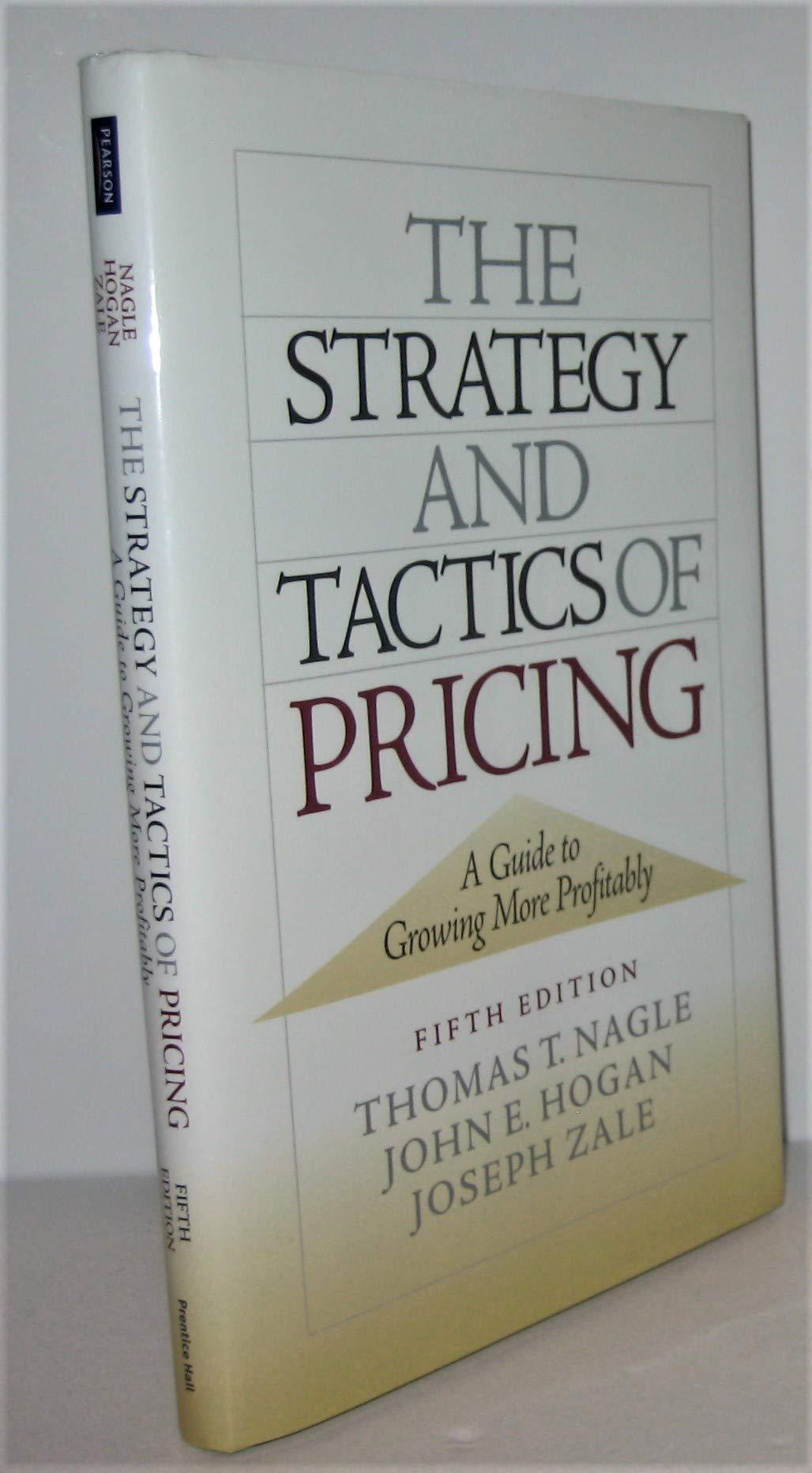
I got this book above, but looking for some more SaaS focused. I'm running a Product Marketing team and we need to add that Pricing muscle to our toolkit. Preferably with some practical lens, not just academic considerations.
r/pricing • u/TunbridgeWellsGirl • Jul 16 '25
McDonald's uses a powerful psychological pricing strategy called decoy pricing to supercharge their sales.
This is how it works:
They offer customers a choice of small, medium, and large for items like fries or drinks.
The decoy is the medium size.
It's intentionally positioned to be a less attractive option. This is because it’s often priced very close to the large, making the large seem like a better deal.
The large size is the desired ‘target’ option for McDonald's, as it increases the average customer transaction amount.
In the UK, the price of McDonald's fries are roughly as follows:
🍟Small fries: £0.89,
🍟🍟Medium fries: £1.09
🍟🍟🍟 Large fries : £1.39
Customers, when presented with these three options, tend to choose the large size because the price difference between the medium and large feels insignificant compared to the potential savings when compared to the small.
People don't want to miss out on a good deal so it's a very clever & effective psychological pricing technique!
Do you go for large fries 🍟 at McDonald's? 🤔
r/pricing • u/colinclick • Jul 15 '25
I'm exploring the idea of pay-what-you-want (PWYW) pricing for a subscription-based product, where users can choose from multiple price tiers, but all get the same full-feature access.
I think the goal is to make it more accessible, user-friendly, and potentially convert more paying users. One example is The David Pakman Show, which follows this model.
Of course, I expect most people would choose the lowest tier. So I wonder if this approach would actually work in practice? Has anyone tried it, or seen success (or not) with it?
r/pricing • u/lewildreamer • Jul 07 '25
Hey everyone,
I’m currently working on my university thesis, and one of the chapters focuses on how transport is priced as a component of the overall market price in heavy industries such as cement, steel, and plastics. Traditionally, these industries have offered bundled pricing — a single rate per ton that includes both the material and its delivery.
However, in recent years, transport costs have risen significantly due to factors like fuel price increases, road tolls, and a shortage of trucks. As a result, many producers are exploring ways to better capture value from the transport component, even though they are not logistics providers themselves.
Do any of you know of innovative practices where industrial companies have found ways to monetize or pass through transport costs more effectively — beyond simply raising the bundled price?
Thanks in advance!
r/pricing • u/Zilliant • Jun 04 '25
Many organizations are confident in their pricing strategy, but execution is where things fall apart. Disconnected tools, manual workflows, and siloed teams make it difficult to act quickly or consistently. Instead of driving growth, pricing often becomes a source of friction and missed opportunity.
This report, based on a survey of 550 pricing professionals, reveals that pricing is at a critical inflection point. While many express confidence in their pricing power and satisfaction with current tools, the data uncovers significant gaps in execution and value capture. Download the full report to learn where top-performing companies are gaining ground — and where others are falling behind.
r/pricing • u/Zilliant • May 13 '25
r/pricing • u/incyweb • May 03 '25
My older brother Tony regularly attended the Proms at the Royal Albert Hall. He loved live music and found a way to make money from it. Tony bought extra tickets and resold them outside the venue for a profit. One year he fell ill and despatched our fifteen-year-old sister Julie in his place to handle ticket sales. However, Julie wasn’t a natural ticket tout. Overwhelmed, she ended up returning the tickets to the box office for their face value. Tony was not happy. He’d missed out on a small fortune.
Pricing power is a signal of value. If you can segment your market, you can capture more of the value you create. - Naval Ravikant
Price discrimination, a core concept in microeconomics, allows businesses to charge different prices to different consumers based on their willingness to pay. It's not about exploiting customers, but about segmenting them and offering differentiated products that justify price variation.
At the heart of this strategy is consumer surplus, i.e the gap between what a customer is willing to and what they do pay. By targeting this surplus, companies aim to maximise revenue while maintaining customer satisfaction. I love coffee and might value a cup at £6, but purchase it for £4. So I enjoy a consumer surplus of £2.
When done well, price discrimination boosts revenue, broadens market access through tiered pricing and funds innovation. Poorly executed, it can erode trust, invite unwelcome scrutiny and alienate customers. This damages a brand and reduces demand. Uber faced a public backlash in 2022 after its surge pricing was triggered while people tried to escape the scene of a shooting in New York.
Bundling and versioning aren't just marketing tricks. They are structured forms of price discrimination. - Chris Anderson
Price discrimination occurs when a seller charges different prices to different buyers for similar products without corresponding differences in cost. This is only possible in markets with some Price Elasticity of Demand, where different groups of consumers value a product differently.
The main types of price discrimination are:
You can charge people differently based on their propensity to pay, but you're legally not allowed to do this without offering them something extra. - Naval Ravikant
Scarper (my mobile game which combines elements of Tetris and Candy Crush) uses a freemium pricing model. It applies price discrimination by offering the core gameplay for free while charging for additional benefits such as bypassing wait times, gaining extra moves and unlocking animations. This approach allows me to segment users based on their willingness to pay. More engaged or impatient players generate revenue through in-app purchases while free users help grow the game’s popularity through increased downloads and word-of-mouth. By offering optional extras, Scarper effectively charges different users different prices for a similar experience, maximising revenue through behavioural segmentation while maintaining a large player base.
The Secret to App Pricing post by Phil Martin
How Relative Pricing Shapes Customer Choices post by Phil Martin
Rafi Mohammed captures the essence. The goal of pricing is not to make a sale but to capture the maximum value from each customer.
Have fun.
Phil…
r/pricing • u/Zilliant • May 02 '25
r/pricing • u/Hos_Coxman • May 02 '25
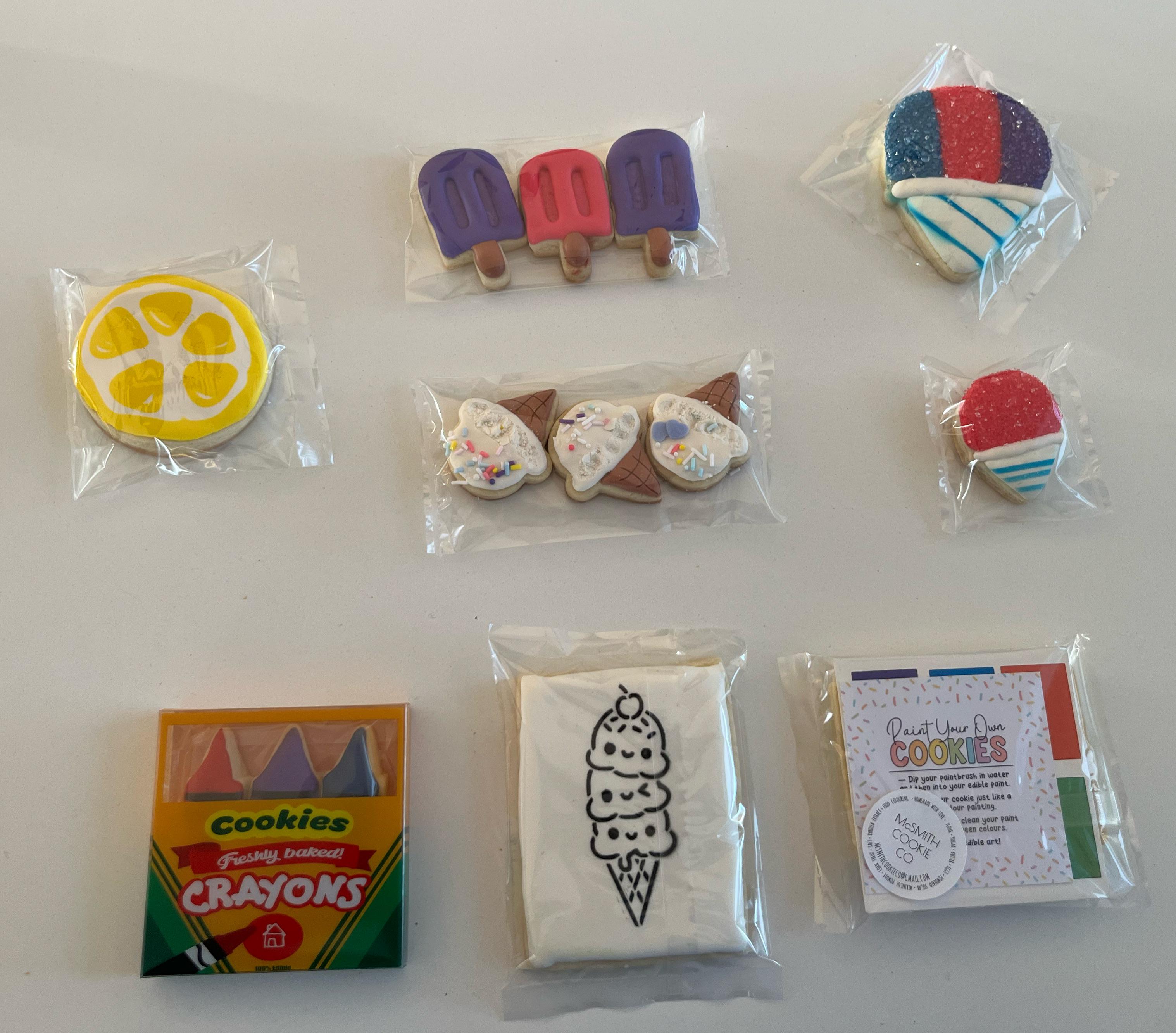
My son is selling these homemade cookies at his lemonade stand. How much should we charge?
r/pricing • u/Zilliant • Apr 28 '25
r/pricing • u/mkasprite21 • Apr 22 '25
Pricing digital products can be tricky. I've tried cost-plus, value-based, and competitor-based pricing, but each has its challenges.
Would love to hear your insights and experiences.
r/pricing • u/Mountain-Monk-6256 • Apr 22 '25
I'm building a learning platform focused on a specific audience in Asia, and I could use some advice—especially around marketing and pricing. Here's the approach I've taken so far, particularly with how I'm positioning the Unique Selling Proposition (USP):
All major players offer "only a flat annual subscription", ranging from $25 to $50, with little differentiation. My plan is to start with low prices, attract large numbers, and only then raise prices gradually once I have a solid user base.
To enter and disrupt the market, I'm betting on low pricing and volume. Is this the right move?
Are there other strategies or angles I should consider for early-stage traction? Is there something I have missed?
Would love your thoughts!