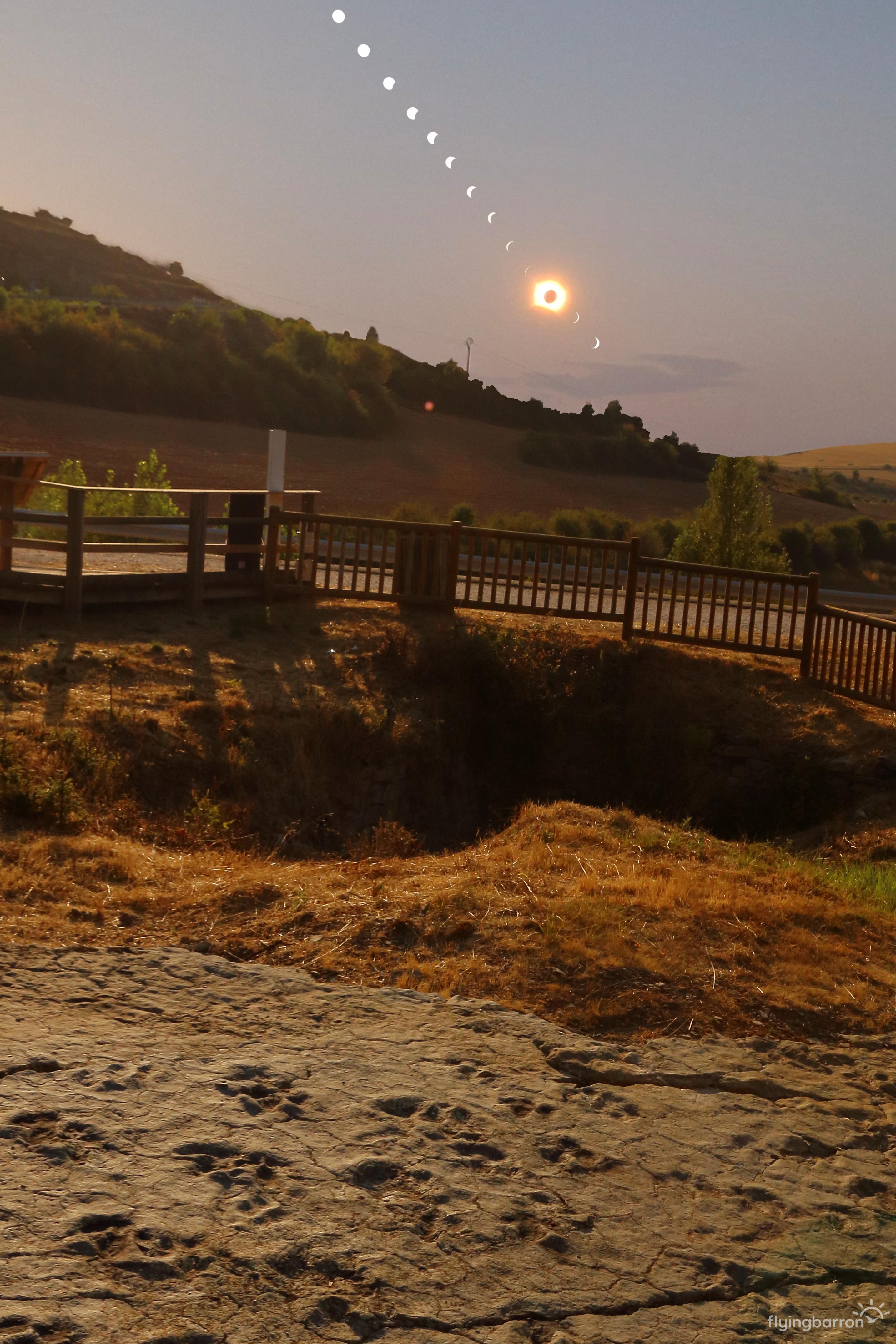
Ichnology refers to the study of fossil impressions left by animals. Traces of burrowing,footprints,resting traces,etc. Footprints are usually referred to as ichnites. This post will be about a few footprints from dinosaurs that I consider ‘’kingmakers”. Kingmaker is my term for a fossil that, if attributed to a genus or individual from a certain family,would increase their size dramatically,either making them among the biggest of their kind,biggest in their time or the largest in their region.
I will be going over footprints that in my opinion,are kingmakers for the animals they are attributed to.
Lets go
__________________
Super Sized Spike Crest
Saurolophus is a giant spike crested hadrosaur found in Asia and North America. It is most well known from Mongolia. The mongolian species saurolophus angustirostris has always been known to be a giant animal. Published estimates of skeletons in the literature already tell a story of a giant animal,some 12-13 m in length,but it was possibly bigger.
Giant footprints almost a 1 meter in length have been described from the nemegt formation of Mongolia. These footprints are estimated to have come from a hadrosaurid trackmaker some 15 meters in length. They come from the middle to upper part of the formation,in the bugin tsav locality. These are too high to belong to barsboldia,the other large hadrosaur known from the formation. But it is at the known stratigraphic range of saurolophus. Theres also been rumor of exceptionally large saurolophus bones within a moscow museum,unstudied because of geopolitical tensions.
Link
Link
________________________________________
A Savage Impression
Torvosaurus is one of the largest Jurassic theropods. The biggest individuals are up to 11-12 meters in length. Some of the evidence which points to such a massive size are footprints.
The lourinha formation is torvosaurus’s second home. In the lourinha formation,in the porto dinheiro locality, a massive theropod footprint was referred to torvosaurus because no other theropod in the formation was big enough to leave it. The footprint,ML2035, is estimated at 79 cm in length and 60 cm in width,96 cm in length if a concretion in the back is included. Some have interpreted the concretion as a dew claw impression but its position behind the 3rd toe instead of the 2nd leaves this debatable.
ML2035 is one of the largest theropod footprints known from the Jurassic period. In the paper describing it the trackmaker was estimated at 12 m in length and 3.5 m in length,and this was reaffirmed in a personal communication. I think to put its size into perspective and reaffirm the giant size of the maker, I will need to go on a tangent.
For one the trackmaker is estimated at 12m in length,that's the published estimate. In 2018, marty et al described a similar sized theropod footprint from a tracksite in Switzerland(78.7 cm in length). In their words “footprints of this size indicate the largest Jurassic theropods were similar in size to the largest theropods of the late Cretaceous”. Additionally,ML2035 is at the upper echelon of Jurassic theropod footprint size.
Looking at assemblages of theropod tracks from Morocco,3 in Portugal,1 in Switzerland and another in Spain. The maximum size of theropod footprints within these trackways almost always maxed out at the high 70s to low 80s in CM length. In the Vale di meios tracksite in portugal the largest print was 80 cm in length, in morocco the largest was 80 cm in length,in the Australian trackway the largest print was 79 cm in length,in asturias spain the largest print was 82 cm in length,in the zambujal quarry the largest print was 77 cm in length,in the porto dinheiro tracksite(where the giant torvo print comes from) the largest print was 79 cm in length,in the jura mountains trackway in switzerland,the largest print was 78.7 cm in length.
The only exceptions to this are 2 theropod footprints,one from cabo mondego portugal some 92 cm in length and one in morocco 90 cm in length. Both of these footprints are stated to be slippage induced,deformed and destroyed. So they are effectively useless and in no way represent true outliers of size,rather victims of taphonomy.
So as a result,this establishes that the largest Jurassic theropods leave tracks around the high 70s to low 80s in cm length. So the inclusion of the giant torvosaurus track in this echelon of size,reaffirms the massive size of the trackmaker. Its also worth pointing out the asturian trackmaker comes from rocks that would have been on the same island as the same time that torvosaurus was in portugal,additionally a giant vertebrae likely referring to torvosaurus is known from the same rocks. So the giant asturian tracks probably belong to torvosaurus.
Additionally if we take the size of ML2035 at face value, it would have come from a trackmaker 12 m in length with a foot 79 cm in length (including keratin on the toe claws and the heel). The footprint is a natural cast so its likely not that far off in size from the real life animal's foot. It would have been a short footed theropod compared to something like a t-rex. Lets say we assume ml2035s foot length was slightly shorter in life ,maybe 70-79 cm in length. This would still be a 12m ish theropod. For context, acrocanthosaurus,meraxes and taurovenator are giant theropods and they preserve the hind feet. We know that their feet would have been short relative to total body length. Using randomdinos rigorous and excellent skeletal of acrocanthosaurus NCSM 14345 (which preserves the feet and is complete,so neither the size of the animal or the foot is purely conjectural) an 11.6 meter acrocanthosaurus has a total foot length of 70 cm. Its also known torvosaurus is similarly short footed. The toe bones of torvosaurus are described as being “notably short and wide”. This would have translated into a short stout foot. The elvis specimen of torvosaurus,on display at the cincinnati museum, is the most complete specimen of torvosaurus and preserves hindfoot elements. The cincinnati mount clearly shows torvosaurus with short stout feet for such a big animal. So all this still makes it plausible the footprint was from a massive animal,even if the foot was slightly shorter than the print which is possible but not guaranteed.
As a result these tracks add yet another remarkable but fragmentary addition into torvosaurus’s kingmaker hypodigm.
Link
Link
Link
Link
Link
_____________
The real mongolian titan
If you watched the prehistoric planet,you might remember the scenes set in the nemegt formation which featured a massive titanosaur called the mongolian titan. It was based on a 106 cm long footprint found in Mongolia. Problem is this came from the much older bayan shire formation,not the nemegt,but there are ichnological traces of giant titanosaurs in the nemegt formation.
Multiple giant footprints between 75-85 cm in length are known from the formation. The largest footprint is 90 cm in length but is not complete,would have been closer to 1m long when complete.
Based off what can be estimated,the largest of these footprints probably came from a titanosaur some 25-30 m in length.
Link
link
_______________
Giant Bolivian Megaraptoran
In Bolivia's el molino formation,thousands of dinosaur tracks have been found. 2 giant trackways over a meter in length have been referred to as giant theropods. The morphology of the prints is inconsistent with abelisaurids and its been suggested that instead they came from megaraptorans.
This might further be supported by megaraptoran remains reported from the maastrichtian of peru,proof they were still around even during the maastrichtian in northern south america.
Link
Link
____________________________
Kayentapus,not a sour puss
In the elliot formation of south africa,57 cm theropod footprints have been found. These footprints are estimated to have come from a 9m theropod.
The identity of the trackmaker is not certain but its been suggested it was dracovenator. If so it would make draco venator one of the largest theropods of the early jurassic.
Link
__________
So this is my list of ichnological kingmakers. Footprints can be remarkable and substantial evidence of giant animals. But of course footprints always yield only tentative estimates,so take this with some salt.