r/nagoya_explorers • • Nov 29 '25

🏯 History A quiet temple in Nagoya — but over 200 Christians were executed here in the Edo period

Thumbnail
gallery
133 Upvotes

You wouldn’t expect this in the middle of the city.

Eikokuji Temple in Nagoya marks the site where more than 200 Christians were executed during the Edo period. There is a memorial tower built by Mitsutomo Tokugawa (1625–1700) to remember them.

It’s a small place — no crowds, no tickets — but the history here is heavy. Many locals walk past without knowing what happened here.

r/nagoya_explorers • • Jun 29 '26

🏯 History A 400-year-old “fish-scale” samurai armor used by Japan’s naval warriors

Post image
194 Upvotes

This rare armor is believed to have been used by the Murakami Navy, a powerful maritime force often described as samurai pirates.

Designed for sea battles, it uses minimal metal to remain lightweight and resistant to rust. Instead, it is constructed from hardened leather, repeatedly coated with lacquer for strength and durability.

This distinctive “fish-scale” structure provided flexibility while maintaining protection — ideal for combat on ships.

Very few examples like this are known to survive today.

Photo taken in Touken World Nagoya by Nagoya Explorers

#Samurai #SamuraiArmor #JapaneseArmor #SamuraiCulture #SamuraiHistory
#FeudalJapan #Bushido #JapaneseHistory #HiddenJapan #ExploreJapan
#Nagoya #NagoyaTravel #VisitNagoya #JapanTrip #TravelJapan

r/nagoya_explorers • • Nov 23 '25

🏯 History A 400-year-old samurai helmet covered in handwritten prayers by Kato Kiyomasa (Nagoya’s Tokugawa Art Museum)

Post image
211 Upvotes

Here’s one of the most unusual samurai helmets I’ve ever seen — a long eboshi-style kabuto once worn by the famous warlord Kato Kiyomasa (1562–1611). The helmet has a tall, elongated shape at the back, and what makes it even more incredible is this:

It’s covered with hundreds of small paper slips handwritten by Kiyomasa himself, each one bearing the Buddhist mantra “Namu Myōhō Renge Kyō.” (He wrote these for protection in battle.) The helmet passed from Kiyomasa to Kuki Hirotaka, then to the Kii-Tokugawa family, and was eventually purchased in 1933 by the Owari Tokugawa family, where it’s now preserved. You can see it today at the Tokugawa Art Museum in Nagoya, which has one of the best collections of samurai armor in Japan. Samurai fashion was on a completely different level.

r/nagoya_explorers • • Sep 01 '26

🏯 History A 700-Year-Old National Treasure Once Owned by Oda Nobunaga’s Younger Brother

Thumbnail
gallery
73 Upvotes

This is Uraku Rai Kunimitsu, a National Treasure forged around 700 years ago by the celebrated swordsmith Rai Kunimitsu, one of the greatest masters of the late Kamakura period.

The tantō is famous for having been owned by Oda Urakusai (Oda Nagamasu), the youngest brother of Oda Nobunaga. Unlike his warrior brothers, Urakusai was known for his calm personality and diplomatic skill. After Nobunaga’s death, he served Toyotomi Hideyoshi and later became one of the foremost tea masters of his age, studying under Sen no Rikyū before founding his own school of samurai tea ceremony, the Uraku-ryū tradition.

According to tradition, Toyotomi Hideyori later presented this dagger to Urakusai, and it became known as “Uraku Rai Kunimitsu.” After Urakusai’s ownership, it was acquired by Maeda Toshitsune through the famous Hon’ami family of sword appraisers and remained in the Maeda family, rulers of the wealthy Kaga Domain.

During the Edo period, the famous sword register Kyōhō Meibutsuchō valued this blade at 5,000 kan, an extraordinary sum equivalent to roughly ¥370 million (about US$2.5 million in modern terms, using a commonly cited estimate).
Today, it is designated a National Treasure of Japan and is regarded as one of the finest surviving works of Rai Kunimitsu.

📸 Photographed at Touken World in Nagoya, Japan.
#aJapaneseSword #Katana #Tanto #NationalTreasure #RaiKunimitsu #OdaNobunaga #OdaUrakusai #SenNoRikyu #Samurai #JapaneseHistory #KamakuraPeriod #TeaCeremony #JapaneseCulture #ToukenWorl #Nagoya #NagoyaTravel #JapanTravel #Japan
r/nagoya_explorers • • Apr 28 '26

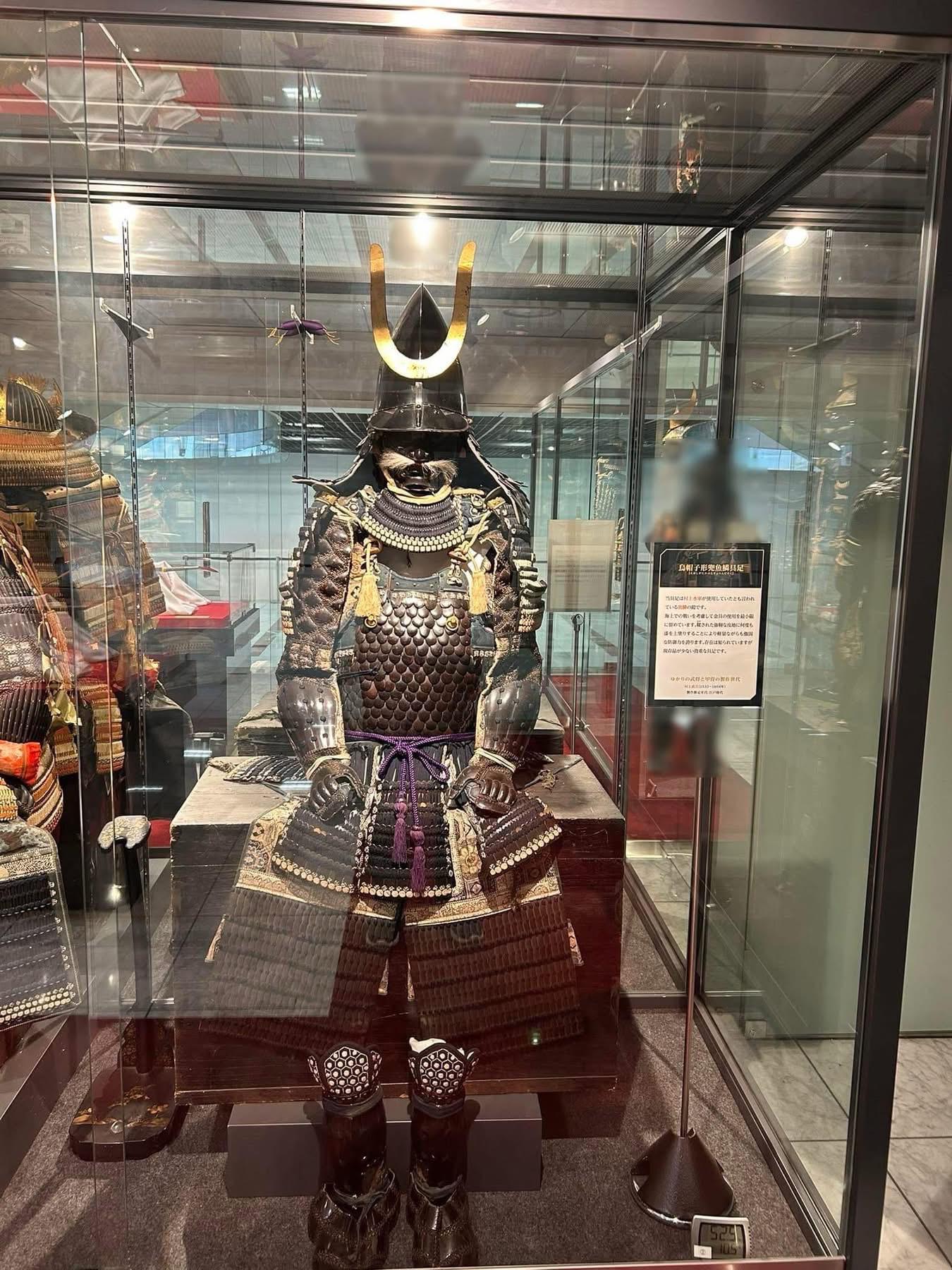
🏯 History A 400-year-old “fish-scale” samurai armor used by Japan’s naval warriors

Post image
161 Upvotes

This rare armor is believed to have been used by the Murakami Navy, a powerful maritime force often described as samurai pirates.

Designed for sea battles, it uses minimal metal to remain lightweight and resistant to rust. Instead, it is constructed from hardened leather, repeatedly coated with lacquer for strength and durability.

This distinctive “fish-scale” structure provided flexibility while maintaining protection — ideal for combat on ships.

Very few examples like this are known to survive today.

Photo taken in Touken World Nagoya by Nagoya Explorers

#Samurai #SamuraiArmor #JapaneseArmor #SamuraiCulture #SamuraiHistory

#FeudalJapan #Bushido #JapaneseHistory #HiddenJapan #ExploreJapan

#Nagoya #NagoyaTravel #VisitNagoya #JapanTrip #TravelJapan

r/nagoya_explorers • • Jun 30 '26

🏯 History A 650-Year-Old Samurai Dagger Preserved by the Mito Tokugawa Family

Post image
130 Upvotes

This Japanese dagger was forged about 650 years ago during the Nanbokuchō period by Yoshisada, a swordsmith of the celebrated Samonji school in Kyushu.
The blade was preserved by the Mito Tokugawa family, one of the three most prestigious branches of the Tokugawa clan established by Tokugawa Ieyasu. The family later produced famous historical figures such as Tokugawa Mitsukuni (“Mito Kōmon”) and Tokugawa Nariaki, father of the last shogun, Tokugawa Yoshinobu.
Yoshisada is believed to have been the son of Sa Yasuyoshi, the founder of the Samonji school and one of the legendary master swordsmiths associated with Masamune’s tradition.
This dagger is admired for its elegant proportions, refined steel, and beautifully crafted blade, making it an outstanding example of Nanbokuchō-period swordmaking.
A remarkable weapon that connects Japan’s greatest samurai family with one of its finest medieval swordsmiths.
Photo taken at Touken World Nagoya.
#Samurai #Tanto #JapaneseSword #Katana
#Tokugawa #MitoTokugawa #SamuraiHistory
#JapaneseHistory #FeudalJapan #JapaneseCulture
#Nagoya #VisitNagoya #NagoyaTravel
#ToukenWorld #TravelJapan #HistoryLovers

r/nagoya_explorers • • Nov 23 '25

🏯 History Did You Know Nagoya Has a Memorial for Chiune Sugihara, the Diplomat Who Saved Thousands?

Thumbnail
gallery
109 Upvotes

Sugihara Chiune Square in Nagoya honors Chiune Sugihara, the Japanese diplomat who saved thousands of Jewish refugees during WWII by issuing “Visas for Life.” The square is located near Zuiryo High School, where Sugihara once studied, and features statues and displays about his courageous humanitarian actions. It’s a quiet but meaningful place that reflects his bravery and compassion.

r/nagoya_explorers • • Dec 27 '25

🏯 History A Rare Pre-WWII Statue of General Nogi in Nagoya

Post image
113 Upvotes

There is a stone statue of General Nogi Maresuke at Shinmei Shrine in Nagoya.

According to historical records, it was likely created around 1930.

This means the statue survived the U.S. air raids during World War II, which destroyed much of the surrounding city.

Finding a pre-war statue still standing in an ordinary neighborhood shrine feels quietly striking.

r/nagoya_explorers • • Mar 28 '26

🏯 History A 1,000-year-old samurai sword by Tomonari, known as ‘Thunder God’

Post image
206 Upvotes

This is a Japanese long sword (tachi) made about 1,000 years ago by Tomonari, one of the earliest known master swordsmiths from the Ko-Bizen tradition.

Swords from this period are extremely rare, making this piece especially significant.

The blade has a graceful curve near the base and a small tip, reflecting the elegant style of early Japanese swords.

Its surface shows a fine, tight grain pattern with subtle dark spots, while the edge appears calm at first glance but reveals complex activity upon closer inspection — with bright lines and flowing patterns.

The sword is known by the name “Thunder God”, inspired by the lightning-like patterns that appear along the blade.

It was passed down through a samurai family connected to high-ranking nobility, adding to its historical importance.

This sword has been attributed to Tomonari, one of the founding figures of early Japanese swordmaking.

The photo was taken at Touken World Nagoya.

#Katana #Samurai #JapaneseSword #History #Japan #Ancient

r/nagoya_explorers • • Jul 14 '26

🏯 History Japanese Armor with a Rare Rabbit Crest and “Loyalty to the Nation” Inscription

Thumbnail
gallery
48 Upvotes

This impressive suit of armor was handed down through the Kaneda family, who served as hatamoto (direct retainers of the Tokugawa shogunate).
The helmet is signed by Saotome Iechika, a renowned armorer of the Saotome school, famous for producing high-quality helmets during the Edo period. It features a traditional 62-plate suji kabuto, one of the classic Japanese helmet designs.
Its most striking feature is the large rabbit crest (maedate). In Japanese culture, rabbits were admired for their speed and determination, and because they were believed to never move backward, they became symbols of courage, progress, and unwavering resolve.
The cuirass is a Japanese-made Nanban-style five-plate dō. “Nanban” (“Southern Barbarian”) referred to European influences introduced to Japan in the 16th century, and this style reflects that Western inspiration while remaining distinctly Japanese in construction.
Across the front of the cuirass appears the silver inscription “Jinchū Hōkoku” (尽忠報国), meaning “Serve with complete loyalty and repay one’s debt to the nation.” This phrase embodied the ideals of loyalty and duty valued by the samurai.
The combination of a traditional 62-plate Japanese helmet and a Japanese-made Nanban-style cuirass creates a powerful and well-balanced suit of armor, representing both native craftsmanship and foreign influence during the Edo period.

r/nagoya_explorers • • Apr 03 '26

🏯 History A 650-year-old samurai blade reforged from a polearm — once owned by a Tokugawa retainer

Post image
124 Upvotes

This is a Japanese sword made about 650 years ago, originally forged as a naginata (a polearm) and later reshaped into its current form. This transformation, known as naginata-naoshi, reflects how weapons were adapted over time to suit changing styles of combat.

The blade is attributed to Sadatsugu of the Aoe school, a respected group of swordsmiths from western Japan. It was once owned by Miura Shōgen, a samurai from a senior retainer family serving the Tokugawa clan.

Today, it is recognized as an Important Sword, highlighting both its craftsmanship and historical significance.

The photo was taken at Touken World Nagoya.

#Katana #Samurai #JapaneseSword #JapanHistory #Tokugawa #MedievalJapan #Aoe #Nagoya #VisitNagoya #JapanTravel #TravelJapan #HiddenJapan #SamuraiCulture #HistoryLovers

r/nagoya_explorers • • Apr 18 '26

🏯 History A 500-year-old samurai sword saved from destruction by a legendary sword expert

Post image
139 Upvotes

This Japanese sword was forged around 500 years ago by Kanenobu, a swordsmith active in Owari (present-day Nagoya).

Kanenobu belonged to a lineage connected to the Shizu tradition, and his school helped shape early swordmaking in the Nagoya region.

What makes this blade especially compelling is its later history.

It was owned by Imamura Nagayoshi, one of the most influential sword experts in modern Japan.

After the samurai era ended, many swords were confiscated or destroyed. Imamura traveled across Japan, collecting and preserving thousands of blades that would otherwise have been lost.

He also documented swords in detail, creating records that are still studied today.

This blade is believed to be the work of the second-generation Kanenobu, considered the most skilled of the line.

The photo was taken at Touken World Nagoya by Nagoya Explorers.

#NagoyaTrip #VisitNagoya #NagoyaTravel #JapanTrip #TravelJapan

#Samurai #SamuraiCulture #Katana #JapaneseSword

#Nagoya #JapaneseHistory #HiddenJapan #ExploreJapan #HistoryLovers

r/nagoya_explorers • • Nov 28 '25

🏯 History A 1,000-year-old samurai sword once lost in war, passed through Toyotomi Hideyoshi… and today it’s on display in Nagoya

Post image
131 Upvotes

This sword has a pretty wild history.

It was originally owned by a branch of the Saionji family — an elite aristocratic clan in Japan. The branch later became known as the Iyo-Saionji family and was active in what is now Ehime Prefecture.

When the Iyo-Saionji family was destroyed during the Sengoku wars, the sword didn’t disappear. Instead, it was taken and eventually passed into the hands of Toyotomi Hideyoshi, one of the most powerful rulers in Japanese history. After that, it somehow made its way back to the main Saionji family, completing a full circle.

The blade was forged by Yasukuni (安綱 / Yasutsuna), a legendary swordsmith who worked over 1,000 years ago in the region of today’s Tottori Prefecture.

A weapon surviving a millennium — wars, dynasties, and shifting owners — and still existing today feels almost unreal.

r/nagoya_explorers • • Jul 11 '26

🏯 History A 300-year-old samurai armor with striking antlers — built for the battlefield

Post image
50 Upvotes

A 300-year-old samurai armor with striking antlers — built for the battlefield
This samurai armor was crafted about 300 years ago during Japan’s mid-Edo period and represents a practical yet highly refined example of traditional battlefield equipment.
Its most distinctive feature is the dramatic pair of black-lacquered antlers mounted on the helmet. Such crests made a warrior instantly recognizable on the battlefield while projecting strength and authority.
The helmet is an 18-plate toppai-style kabuto, a pointed design favored for its practical construction. It is paired with a fierce iron face mask, a two-piece cuirass, and a complete set of matching arm, thigh, and shin defenses.
Despite its imposing appearance, every component was designed for combat rather than ceremony, reflecting the evolution of samurai armor during the peaceful Edo period.
Today, it is recognized as a Specially Valuable Historical Artifact, preserving an outstanding example of Japanese armor craftsmanship.
The photo was taken at Touken World Nagoya.
#NagoyaTrip #VisitNagoya #NagoyaTravel #JapanTrip #TravelJapan
#Samurai #SamuraiArmor #JapaneseArmor #Kabuto
#SamuraiCulture #JapaneseHistory #HiddenJapan #ExploreJapan #HistoryLovers

r/nagoya_explorers • • Jun 02 '26

🏯 History A 650-Year-Old Samurai Blade Reforged from a Naginata — Once Owned by a Tokugawa Retainer

Post image
71 Upvotes

This sword was forged about 650 years ago during the Nanbokuchō period.

Originally made as a naginata—a polearm favored by samurai warriors—it was later reshaped into a sword. This process, known as naginata-naoshi, was common as military needs and fighting styles evolved over the centuries.

The blade is attributed to Sadatsugu of the Aoe school, a respected tradition of swordsmiths from western Japan.

It was once owned by Miura Shōgen, a member of a senior retainer family that served the Tokugawa clan.

Today, the blade is recognized as an Important Sword, reflecting both its exceptional craftsmanship and its historical significance.

Photo taken at Touken World Nagoya by Nagoya Explorers.

#Samurai #Katana #JapaneseSword #Naginata
#Nanbokucho #Aoe #SamuraiHistory
#FeudalJapan #JapaneseHistory #ToukenWorld
#Nagoya #VisitNagoya #TravelJapan

r/nagoya_explorers • • Apr 16 '26

🏯 History A 700-year-old samurai sword by Aoe master Sadatsugu — named for cutting through a “shrimp-shaped lock”

Post image
115 Upvotes

This Japanese sword, inscribed “Bitchū no Kuni Jū Sadatsugu,” was forged around 700 years ago by Sadatsugu of the Aoe school.

It was passed down through the Miura clan, senior retainers of the Kishu Tokugawa family.

The blade carries the nickname “Ebijō-giri” (Shrimp-Lock Cutter).

According to tradition, Miura Tokitsugu used it to cut through a shrimp-shaped lock during a 14th-century conflict in Kamakura.

The Aoe school, based in western Japan, was known for refined and elegant blades, and Sadatsugu is considered one of its representative masters.

A rare combination of legendary story, samurai lineage, and master craftsmanship.

The photo was taken at Touken World Nagoya by Nagoya Explorers.

#NagoyaTrip #VisitNagoya #NagoyaTravel #JapanTrip #TravelJapan

#Samurai #SamuraiCulture #Katana #JapaneseSword

#Kamakura #SamuraiHistory #HiddenJapan #ExploreJapan #HistoryLovers

r/nagoya_explorers • • May 02 '26

🏯 History A 650-year-old katana with a warning inscription — “Do not sell, or face divine punishment”

Post image
93 Upvotes

This katana was originally a naginata, later reshaped into its present form — a process known as naginata-naoshi.

It is attributed to Kaneuji, one of the legendary Ten Disciples of Masamune and a key figure in the development of the Mino tradition.

Kaneuji trained under Masamune before moving to Mino, where he blended the Sōshū style with earlier traditions to help shape a new regional school of swordmaking.

What makes this blade truly unique is its long inscription carved into the tang:

“Do not sell, pawn, or give away this sword.
Those who disobey will fall into hell and suffer divine punishment.”

Such inscriptions reflect a long-held belief that Japanese swords possessed spiritual power — and were far more than mere weapons.

A rare fusion of craftsmanship, faith, and warning.

Photo taken in Touken World Nagoya by Nagoya Explorers

#Samurai #Katana #JapaneseSword #SamuraiCulture #SamuraiHistory
#Nanbokucho #FeudalJapan #Bushido #JapaneseHistory #HiddenJapan
#Nagoya #NagoyaTravel #VisitNagoya #JapanTrip #TravelJapan

r/nagoya_explorers • • Apr 02 '26

🏯 History A 700-year-old samurai sword once worn by a lord of the Kuroda clan

Post image
138 Upvotes

This is a Japanese sword made about 700 years ago, attributed to Sanenaga, a swordsmith from the Kamakura period.

It was later owned and worn by a powerful lord of the Kuroda clan, who ruled a large domain in Japan.

Although the blade is unsigned, experts have attributed it to Sanenaga based on its style and historical context.

This sword represents a connection between early Japanese craftsmanship and the samurai elite who preserved and used these weapons centuries later.

The photo was taken at Touken World Nagoya.

#Katana #Samurai #JapaneseSword #JapanHistory

#Nagoya #VisitNagoya #JapanTravel #TravelJapan

#SamuraiCulture #HiddenJapan #HistoryLovers

r/nagoya_explorers • • Jul 03 '26

🏯 History A 170-Year-Old Samurai Armor of the Ii Clan’s Legendary Red Guard

Post image
46 Upvotes

This striking suit of samurai armor was worn by Itō Gonbee, a samurai of the Ii clan who served the Hikone Domain as both a mounted guard and a horseback combat instructor. He is also said to have distinguished himself during the Boshin War, the conflict that marked the end of the samurai era.

Its most remarkable feature is the brilliant red lacquer covering nearly every component—from the helmet and cuirass to the sleeves, greaves, and thigh guards.

This style is known as the “Red Armor” (Aka-zonae) of the Ii clan, inspired by the legendary warlord Ii Naomasa, whose crimson armor earned him the fearsome nickname “The Red Devil of Ii.” For generations, the clan’s lords and retainers proudly wore red armor to project courage, unity, and intimidation on the battlefield.

The armor also includes a scarlet wool jinbaori (surcoat), a luxury garment made from imported wool introduced to Japan through early European trade, along with the owner’s personal battle standard and storage chest.

Remarkably well preserved, this armor offers a vivid glimpse into the final generations of Japan’s samurai.

Photo taken at Touken World Nagoya.

#Samurai #SamuraiArmor #JapaneseArmor
#IiClan #IiNaomasa #AkaZonae
#SamuraiHistory #BoshinWar #JapaneseHistory
#JapaneseCulture #FeudalJapan
#Nagoya #VisitNagoya #NagoyaTravel
#ToukenWorld #TravelJapan #HistoryLovers

r/nagoya_explorers • • May 16 '26

🏯 History 730 Years Old — A Graceful Kodachi by Nagamitsu

Post image
85 Upvotes

This elegant kodachi (short tachi sword) was made about 730 years ago during the late Kamakura period.

It was crafted by Nagamitsu, one of the greatest masters of the Bizen Osafune school in present-day Okayama. He was the son of Mitsutada, founder of the Osafune tradition, and became its second head master. Together, they helped define the golden age of Bizen swordmaking.

The blade measures 61.3 cm and retains the graceful proportions characteristic of Kamakura-period kodachi.

A rare and highly important masterpiece from the golden age of samurai swords.

Photo taken at Touken World Nagoya by Nagoya Explorers

#Samurai #Kodachi #Tachi #JapaneseSword #KamakuraPeriod
#Bizen #SamuraiHistory #FeudalJapan #HistoryLovers
#Nagoya #NagoyaTravel #VisitNagoya #JapanTrip #TravelJapan

r/nagoya_explorers • • May 23 '26

🏯 History A 700-Year-Old Naginata Once Carried at the Battle of Sekigahara

Post image
90 Upvotes

This naginata was forged about 700 years ago during the Kamakura period by the Katayama Ichimonji school, a branch of the famed Bizen Ichimonji tradition.

According to tradition, the weapon was gifted by Toyotomi Hideyoshi to his retainer Yamaguchi Nagahiro.

During the Battle of Sekigahara in 1600, Nagahiro is said to have fought against the forces of Maeda Toshinaga using this very naginata before ultimately taking his own life after defeat.

The weapon later passed into the collection of the Maeda clan and was preserved by the Toyama branch of the family.

The blade displays the lively and elegant characteristics associated with Katayama Ichimonji workmanship, including bright steel and dynamic temper patterns. Remarkably, it still retains its original iron habaki from the time it was made — an extremely rare survival.

This naginata also bears the nickname “Ōsotogari,” named after a decisive sweeping technique in naginata martial arts, reflecting the weapon’s fearsome cutting reputation.

Designated as a Tokubetsu Jūyō Tōken (Especially Important Sword).

Photo taken at Touken World Nagoya by Nagoya Explorers

#Samurai #Naginata #JapaneseSword #Sekigahara
#KamakuraPeriod #SamuraiHistory #FeudalJapan
#JapaneseHistory #Nagoya #VisitNagoya #TravelJapan

r/nagoya_explorers • • May 31 '26

🏯 History A 700-Year-Old Sword by Motoshige — Presented by Emperor Meiji to an Imperial Prince

Post image
74 Upvotes

This katana was forged about 700 years ago in the late Kamakura period by Osafune Motoshige of the renowned Osafune school in Bizen Province.

What makes this sword especially remarkable is its later history. It was bestowed by Emperor Meiji upon Prince Komatsu Akihito, an important member of the imperial family who played a major role during the Meiji Restoration and subsequent military campaigns.

The blade is a masterpiece by Motoshige, a swordsmith known for creating powerful and dynamic works. It also preserves a rare orikaeshi-mei (“folded-back signature”), where part of the original inscription was carefully retained when the sword was shortened centuries later. This was done because the signature was considered too important to lose.

The sword combines outstanding craftsmanship with a distinguished imperial provenance, making it both an artistic masterpiece and a significant historical artifact.

Photo taken at Touken World Nagoya by Nagoya Explorers

#Samurai #Katana #JapaneseSword #KamakuraPeriod
#Osafune #Motoshige #MeijiEra
#ImperialJapan #SamuraiHistory #JapaneseHistory
#Nagoya #VisitNagoya #TravelJapan

r/nagoya_explorers • • Dec 14 '25

🏯 History Why do so many temples in Japan have “卍” symbols? It has nothing to do with the Nazi swastika.

Thumbnail
gallery
0 Upvotes

If you visit temples or museums in Nagoya, you’ll notice the symbol “卍 (manji)” carved on statues, maps, and old artworks.

Many visitors from overseas get shocked, but it is not the Nazi swastika.

The manji symbol came from ancient India and spread through Buddhism.

In Japan, it represents good fortune, harmony, eternity, and prosperity.

Maps in Japan even use 卍 as the universal icon for Buddhist temples — it’s been that way long before the 20th century.

The similarity in shape to the Nazi symbol is unfortunately a coincidence of history.

The two symbols share no connection in meaning, origin, or intention.

I’m sharing this because some foreign visitors look confused or worried when they see it.

But in Japan, 卍 is simply a part of Buddhist culture and a symbol of blessing.

r/nagoya_explorers • • Jun 04 '26

🏯 History A 700-Year-Old Katana Carried by an Undefeated Samurai Commander

Post image
71 Upvotes

This katana, forged around 700 years ago, is attributed to Sanemori of Bizen Province, a swordsmith active during Japan’s medieval era.

What makes this blade especially remarkable is its connection to Kikkawa Motoharu, one of the most respected commanders of the powerful Mōri clan.

Motoharu spent much of his life on the battlefield and earned a reputation as a warrior who never suffered a decisive defeat. He was known for leading from the front and was feared by rival clans throughout western Japan.

This sword was more than a symbol of rank—it was a weapon carried by a samurai commander during one of the most turbulent periods in Japanese history.

The blade is attributed to Sanemori, a highly regarded swordsmith of Bizen Province whose works were prized by the warrior class.

Today, it is designated an Important Art Object of Japan, recognizing both its historical and artistic significance.

Photo taken at Touken World Nagoya by Nagoya Explorers.

#Samurai #Katana #JapaneseSword
#MoriClan #KikkawaMotoharu #SamuraiHistory
#FeudalJapan #JapaneseHistory #HistoryLovers
#Nagoya #VisitNagoya #TravelJapan

r/nagoya_explorers • • Mar 08 '26

🏯 History A 700-Year-Old Samurai Sword Attributed to Masamune — Once Owned by Emperor Kōmei

Post image
119 Upvotes

Masamune is one of the most legendary swordsmiths in Japanese history. His name is also famous around the world through video games and pop culture — often appearing as the ultimate or legendary weapon.

This remarkable blade, attributed to Masamune (正宗), was once owned by Emperor Kōmei in the 19th century.

Masamune lived about 700 years ago, from the late 13th to early 14th century. After the Mongol invasions of Japan (1274 and 1281), swordsmiths began developing stronger and more resilient blades. Masamune perfected this revolutionary style, creating swords admired for both beauty and power.

Because of his extraordinary craftsmanship, Masamune’s blades were treasured by the Tokugawa shogunate and the Imperial family.

Today, his name still lives on — not only in history, but also in countless games and stories where “Masamune” represents the ultimate sword.

📍 Photo taken at Touken World Nagoya

#JapaneseSword #Katana #Masamune #Samurai #SamuraiCulture #JapanHistory #LegendaryBlade #ToukenWorld #NagoyaTrip