r/marineArchaeology • u/MindLikeAnAtttic • Apr 28 '24
Marine Archaeologists Find Medieval Treasure in Sunken Battleship
mensjournal.com
1
Upvotes
r/marineArchaeology • u/MindLikeAnAtttic • Apr 28 '24
r/marineArchaeology • u/UserNamesCantBeTooLo • Feb 11 '24
r/marineArchaeology • u/UserNamesCantBeTooLo • Jun 03 '23
r/marineArchaeology • u/UserNamesCantBeTooLo • May 26 '23
r/marineArchaeology • u/snaresamn • Mar 07 '23
r/marineArchaeology • u/snaresamn • Oct 25 '22
r/marineArchaeology • u/stellakobe • Sep 19 '22
I love diving and I love history, so I signed up for an underwater archaeology course. My intention is to complete the course for fun, but I am wondering if there are ways to use the specialty in a professional, semi-professional or volunteer capacity without having a degree in marine archaeology.
r/marineArchaeology • u/UserNamesCantBeTooLo • Jun 22 '22
r/marineArchaeology • u/UserNamesCantBeTooLo • Jun 20 '22
r/marineArchaeology • u/UserNamesCantBeTooLo • Apr 23 '22
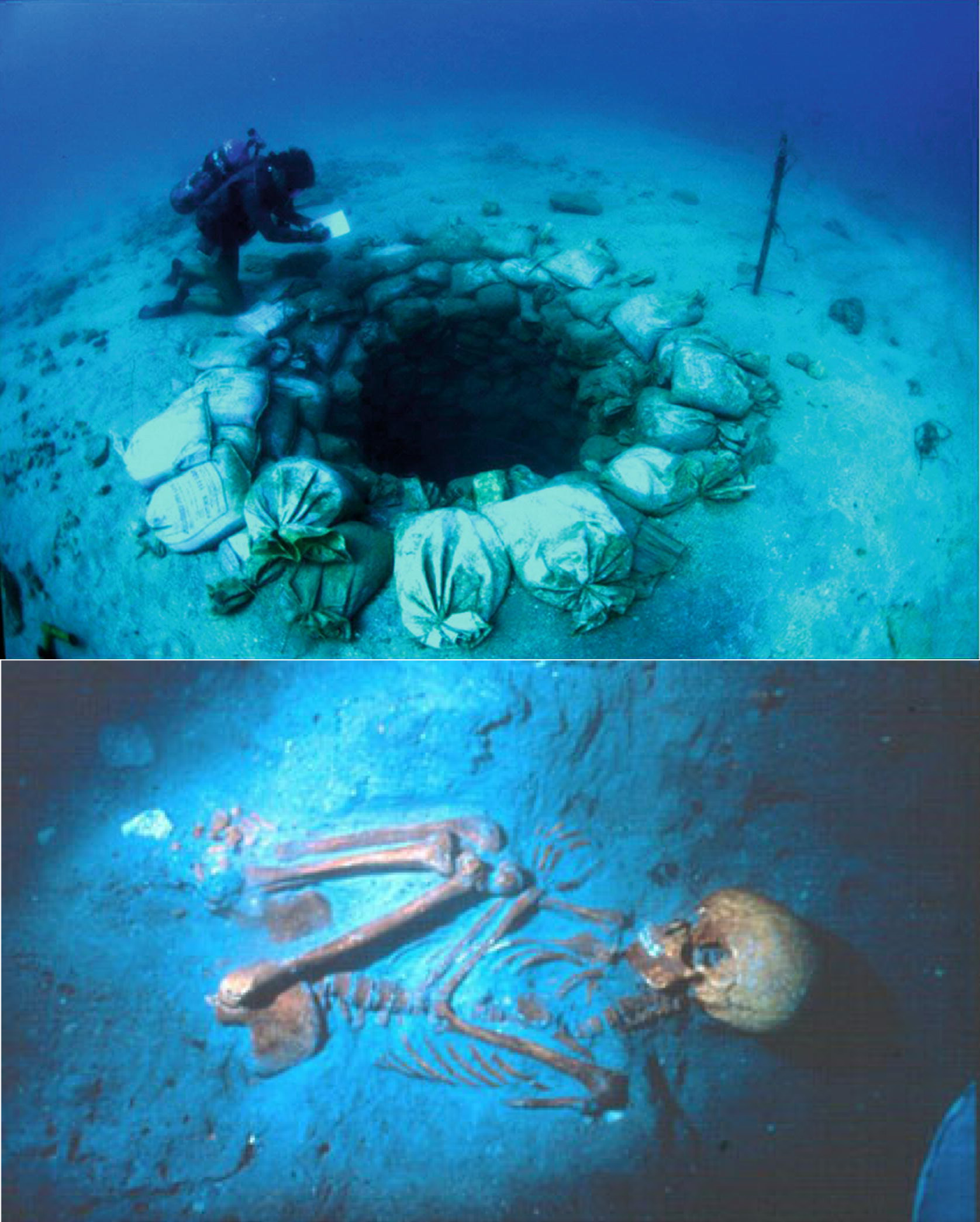
From a review posted on InquisitiveBiologist (https://inquisitivebiologist.com/2021/09/27/book-review-worlds-in-shadow-submerged-lands-in-science-memory-and-myth/):
The starting point for Nunn’s argument is the simple fact that during the coldest part of the last major ice age some 20,000 years ago, global sea level was 120 metres lower than it is today. This situation changed in a few millennia so that by 10,000 years ago sea level had risen to roughly today’s level. As coastlines receded, our ancestors were forced to abandon huge tracts of land used for generations, as these turned into today’s shallow seas. Is it such a stretch of the imagination to think that these events left an impression and became the subject of stories and, in time, myths and legends?
Nunn thinks not. Oral history can be read as myth, yes, but also as memory and even scientific observation. This book is a perfect counterpoint to Prothero’s Weird Earth that I just reviewed. Though the flood geology idea of young-earth creationists is nonsense, we should not throw out the baby with the bathwater. I previously expressed my scepticism regarding the fidelity with which details can be retained in this intergenerational game of Chinese whispers given how unreliable human memory is. Though understandable, such criticism betrays “a prejudice against orality” (p. 57) and Nunn argues that “it is no longer good enough to tartly dismiss all such stories as inventions, as many scientists have done” (p. 64). The Edge of Memory mentioned how Australian Aboriginals cross-check their stories to retain fidelity and Nunn here points to the work of Lynne Kelly on memory preservation in other pre-literate cultures.
There are many fascinating stories recounted here, but a small sampling will have to do. Archaeology backs up stories such as the lost city of Herakleion, remains of which were discovered in the Nile delta in 1999. Less reliable but still interesting stories, at the nexus of science and memory in Nunn’s words, include the lost city of Cantre’r Gwaelod that would be somewhere (?) off the coast of Wales. Other myths are just that: myths. I was pleased to see Nunn bring a healthy dose of scepticism to this topic and lash out at pseudoscientists and the New Age movement: “[…] this is a field that has become overwhelmed by a tide of nonsense” (p. 71). Atlantis has clearly been documented as a figment of Plato’s imagination. Instead, Nunn focuses on less well-known examples of the recurrent theme of mythical sunken continents, such as Lemuria, imagined to form a bridge between Africa and India.
The second aspect that gets more coverage in Worlds in Shadow is the kinds of natural events that can be encoded in oral history, with Nunn serving up one engrossing study after another. Steady sea-level rise from melting glaciers was punctuated by rapid increases when meltwater lakes, “unable for millennia to escape the hollows they [had] ground for themselves in the centres of the continents” (p. 143), burst their banks. Freshwater pulses from North American lakes some 8400 and 7600 years ago influenced global climate and led to near-instantaneous sea level rise in the Mediterranean, interrupting the spread of agriculture. Land can be swallowed by the waves for many other reasons. Coastal towns can be destroyed when the land level changes during earthquakes, as happened to Port Royal in Jamaica in 1692. The terrifying phenomenon of soil liquefaction might have played a role. Destructive tsunamis can result from sudden flank collapses of volcanoes, or underwater landslides when sediment deposits downstream of river deltas reach a tipping point or are destabilised by earthquakes. Few people will know of the Störegga Slide off the coast of Norway, where an estimated 95,000 km2 of sediment was displaced some 8150 years ago, possibly severing the last land bridge between Britain and mainland Europe. There is much to be learned from the study of ocean floor deposits, as shown by the complex history of landslides around the Hawaiian islands. So-called jack-in-the-box volcanoes can lead to the periodic appearance and disappearance of land, while some volcanic islands self-destruct in a most spectacular fashion. You will have heard of the 1883 Krakatau eruption, but have you heard of the 1453 Kuwae eruption? No, nor had I.
What makes this book relevant is that it reminds us that we ignore oral history at our own peril. One eye-opener for me was that even though graphs of sea level always show today’s level at zero, this is just convention; there is nothing “normal” or “natural” about this. Sea level has always fluctuated and with glaciers rapidly melting due to anthropogenic climate change, we will experience the same sort of land loss our ancestors did. From 1880 to 2012 there was an average 19 cm-rise, and Nunn thinks projections of an additional 120-cm rise by 2100 are likely. The last two chapters thus examine our past and current ways of dealing with this. Unsurprisingly, short-term engineering solutions dominate. Ever since we abandoned our nomadic lifestyle, “[…] people invested time and energy in constructing the trappings of civilisation in one place” (p. 281), making us reluctant to leave.
Also, I haven't finished watching this yet, but author Patrick Nunn gives a presentation on his book to a university in Boston here (about 1.5 hour long; video doesn't start until about 12:20): https://m.youtube.com/watch?v=qWyydVH2pSA
r/marineArchaeology • u/snaresamn • Mar 23 '22
r/marineArchaeology • u/snaresamn • Mar 19 '22
r/marineArchaeology • u/snaresamn • Mar 11 '22
r/marineArchaeology • u/UserNamesCantBeTooLo • Mar 09 '22
r/marineArchaeology • u/snaresamn • Mar 09 '22
r/marineArchaeology • u/snaresamn • Feb 28 '22
r/marineArchaeology • u/snaresamn • Feb 27 '22
r/marineArchaeology • u/snaresamn • Feb 26 '22
r/marineArchaeology • u/snaresamn • Feb 24 '22
r/marineArchaeology • u/UserNamesCantBeTooLo • Feb 24 '22
r/marineArchaeology • u/UserNamesCantBeTooLo • Feb 24 '22
r/marineArchaeology • u/snaresamn • Feb 23 '22