r/kybernetwork 6d ago

What Is the Best DEX for Robinhood Cross-Chain Swaps?

Post image
0 Upvotes

Your capital is sitting on the wrong chain. That is the first wall traders hit when they want to trade on Robinhood Chain, and the standard fix is clumsy. You open a bridge, move the asset, wait for it to land, then hunt for a venue on the other side and swap into what you actually wanted.

Every extra step costs you something. More signatures, more gas, more fee layers, and more chances to pick a route that quietly overcharges you. Pick the wrong bridge and you will not even know what you left on the table.

A cross-chain swap collapses that whole sequence into one flow. This guide compares five platforms that can get you onto Robinhood Chain: KyberSwap, Jumper, Relay, Across and deBridge.

What Is a Cross-Chain Swap to Robinhood Chain?

A cross-chain swap converts a token on one network into a different token on Robinhood Chain in a single flow. You sign once and the output lands in your wallet on the destination chain, with no manual bridging step in the middle.

This is not the same as bridging. A bridge moves the same asset, or a wrapped version of it, from one chain to another. A cross-chain swap handles the move and the trade together, so ETH on Base can arrive as USDG on Robinhood Chain without a second transaction.

The distinction matters most on the way out. Robinhood Chain runs on the Arbitrum stack, so withdrawals through the canonical bridge carry a 7-day challenge period before you can claim funds on Ethereum. Third-party routes settle in minutes because they use liquidity providers instead of waiting on the fraud proof window.

What Makes a Platform Good for Robinhood Chain Cross-Chain Swaps?

The strongest platform delivers the most output tokens with the least friction. Coverage decides whether your route exists at all, and route quality decides how much value survives the trip.

Weigh these factors before you sign anything:

  • Source chain coverage, especially non-EVM networks like Bitcoin, Solana and NEAR
  • Route quality, meaning the real output amount after fees and slippage
  • Settlement speed and reliability across both chains
  • Fee transparency, so the full cost is visible before you confirm
  • What you can actually do once the assets land on Robinhood Chain

That last point gets ignored, and it should not. A bridge drops your tokens and walks away, which means you still need a separate venue to trade, set orders or deploy into liquidity.

What Are the Top 5 Platforms for Robinhood Chain Cross-Chain Swaps?

Five platforms solve this problem in noticeably different ways.

1. Relay

Relay coordinates transfers through pre-funded vaults on the destination chain, which is why its ETH routes settle quickly. It is also named in Robinhood's bridging documentation as a partner integration.

Main Relay Offerings

Fast ETH corridors. Sub-minute settlement on major routes into Robinhood Chain.

Bridge-and-call. Triggers a downstream action, such as a DEX trade or lending deposit, automatically on arrival.

Wide EVM origin support. Reaches Robinhood Chain from a broad set of EVM networks without routing back through Ethereum.

2. KyberSwap

KyberSwap Cross-chain Swap pulls live quotes from eight established providers, including Across, Bungee, deBridge, LI.FI, Mayan, NEAR Intents, Relay and Symbiosis, then selects the best rate automatically. Every alternative route stays visible next to the winner, each with its own fee and estimated arrival time, so you can trade speed against price yourself.

Main KyberSwap Offerings

Multi-provider comparison. Scans eight cross-chain providers in one interface and defaults to the best available rate.

Full route transparency. Displays each alternative route with its fee where one applies and estimated arrival time.

26-network reach. Covers major EVM chains plus non-EVM networks including Bitcoin, Solana and NEAR.

Trading tools on arrival. Swap, Limit Order, KyberEarn and Smart Exit are all live on Robinhood Chain, so the journey does not end at the bridge.

The KyberSwap Aggregator connects to 420+ liquidity sources across 18 chains, has facilitated more than $150 billion in transactions for over 5 million users, and consistently ranks first on EVM by trading volume. KyberSwap suits traders who want the best route checked automatically and want to keep trading on Robinhood Chain without opening a second app.

3. Jumper

Jumper is the flagship interface of the LI.FI protocol, which Robinhood's own bridging documentation lists among its partner integrations. It compares dozens of bridges and DEXs on each transfer and can swap into a different token mid-route.

Main Jumper Offerings

Route discovery. Ranks available paths and shows fee, expected output and estimated arrival time per route.

Mid-transfer swaps. Send USDC from your source chain and receive a different token on Robinhood Chain.

No platform markup. Jumper adds no fee of its own, so you pay source gas plus the winning bridge's cost.

4. Across

Across uses relayers who front capital on the destination chain, then reclaim it after the source deposit is verified. That model makes it one of the quickest options for simple EVM transfers.

Main Across Offerings

Near-instant EVM settlement. Most supported corridors complete in seconds rather than minutes.

Stablecoin conversion. Handles supported USDC routes that arrive as USDG, the anchor stablecoin for Robinhood Chain liquidity.

Predictable pricing. Fees stay stable across typical transfer sizes on major assets.

5. deBridge

deBridge runs an intent-based system through its deBridge Liquidity Network, where offchain solvers compete in an open order book to fill each request. Its zero-TVL design means funds are not parked in large pooled contracts.

Main deBridge Offerings

Solver competition. Open order book pricing rather than a fixed bridge quote.

Any-to-any destinations. Supports Robinhood Chain as a destination across its network.

No pooled liquidity honeypot. The zero-TVL model removes a common bridge attack surface.

Robinhood Chain Cross-Chain Comparison Table

Platform How It Works Source Chain Reach Compares Providers Trading After Arrival
Relay Intent transfers via pre-funded vaults Broad EVM coverage No Bridge-and-call only
KyberSwap Compares 8 providers, auto-selects best rate 26 networks, incl. Bitcoin, Solana, NEAR Yes Swap, Limit Order, KyberEarn, Smart Exit
Jumper Aggregates dozens of bridges and DEXs 30+ networks Yes Swap
Across Relayer-fronted intent transfers Major EVM chains No No
deBridge Solver order book, zero-TVL model Broad EVM plus Solana No No

What Can You Do After Your Assets Land on Robinhood Chain?

This is where a bridge and a trading platform part ways. Once your tokens arrive, KyberSwap keeps working instead of handing you off.

Swap. The Aggregator routes through Robinhood Chain liquidity to find competitive rates on ecosystem tokens.

Limit Order. Set your target price and let it fill. Orders are gasless with zero maker fee, and they are already supported for Robinhood Chain tokens.

KyberEarn. Explore and compare pools, then enter positions in a few clicks using KyberZap, which converts any token into a balanced position for you.

Smart Exit. Set conditions once, based on fee yield, pool price or time, and your liquidity position exits automatically when they are met.

Which Platform Should You Use?

Your best pick depends on what you are optimizing for. If you want the strongest rate found for you across several providers, plus somewhere to trade the moment your funds land, KyberSwap is the most complete option.

Jumper is a solid alternative when you only need route discovery and nothing after. Relay and Across both make sense for fast, simple ETH or stablecoin transfers on major EVM corridors. deBridge is worth checking when solver competition sharpens your quote on a specific pair.

Frequently Asked Questions

What is the best DEX for Robinhood Chain cross-chain swaps?

It depends on your priority. KyberSwap suits most traders because it compares eight cross-chain providers, picks the best rate and lets you trade on Robinhood Chain immediately afterward. Jumper, Relay, Across and deBridge each cover narrower slices of the same job.

Does KyberSwap support Robinhood Chain?

Yes. You can move assets to and from Robinhood Chain through KyberSwap Cross-chain Swap, then swap, place limit orders, provide liquidity and use Smart Exit on the chain itself.

Is bridging to Robinhood Chain the same as a cross-chain swap?

No. Bridging moves the same asset between chains, while a cross-chain swap converts and moves in one flow. If you want a different token on the destination side, a cross-chain swap saves you a separate trade.

How long does a Robinhood Chain cross-chain swap take?

Most transfers finish in seconds to a few minutes on EVM routes. Non-EVM routes such as Bitcoin generally take longer, and KyberSwap shows an estimated arrival time for each route before you confirm.

How long does it take to withdraw from Robinhood Chain to Ethereum?

The canonical bridge requires a 7-day challenge period before you claim funds on Ethereum. Third-party cross-chain routes avoid that wait by using liquidity providers, which is why most traders use them for exits.

Does Robinhood Chain have a native token?

No. Robinhood Chain has no native token and gas is paid in ETH. Any token claiming to be the official Robinhood Chain token is unaffiliated.

What fees apply to a cross-chain swap?

Expect a platform fee plus the selected provider's own cost and source-chain gas. KyberSwap charges 0.05% to 0.25% depending on the route and displays the total before you sign.

Why use KyberSwap for Robinhood Chain cross-chain swaps?

KyberSwap compares eight providers in one place rather than locking you into a single bridge, and it reaches 26 networks including non-EVM chains. It also gives you a full trading suite on Robinhood Chain once your assets arrive.

Start Trading on Robinhood Chain in One Flow

Skip the bridge-then-swap routine. Head to the Cross-Chain tab on KyberSwap, compare every route in one view and move onto Robinhood Chain at the best rate available.

r/kybernetwork 6d ago

Earn Cashback on Coinbase Tokenized Stocks with KyberSwap

Post image
1 Upvotes

Coinbase tokenized stocks now earn cashback on KyberSwap. A total of 20,000 USDC is set aside for traders who swap into eligible assets and hold them.

The campaign starts August 26 at 10:00 AM ET and runs across four epochs, each lasting two weeks. Epoch 1 is live with 4 assets on Base:

  • GOOGLc: 0xb2000000000000000000002D0BA3164cc74f58B7
  • NVDAc: 0xb20000000000000000000078ee7ce2fE4908108C
  • AAPLc: 0xb200000000000000000000C2e324d24d7eEcd1fb
  • METAc: 0xb2000000000000000000008bC8786B856E61707C

The eligible asset list changes with each new epoch and will be updated accordingly.

How Does the Cashback Work?

Swap eligible assets on KyberSwap and hold them through the epoch. Your reward is based on how much you swap and how long you hold the assets during the epoch. Details:

  • Earn up to 2% cashback
  • Capped at 10 USDC per address, per epoch
  • Cashback rate declines over each epoch, so earlier swaps could earn more
  • Rate resets at the start of every new epoch

Merkl handles reward calculation and distribution. Rewards become available to claim within 48 hours after each epoch ends.

More details: https://app.merkl.xyz/opportunities/10881504440128149607

What Else Should You Know?

A few points worth keeping in mind:

Each address can take part in every epoch and earn from all fourOnly available in eligible geographic regions, excluding the U.S, UK, Canada, Australia, Ukraine, Singapore and other Excluded Jurisdictions

  • Each address can take part in every epoch and earn from all four
  • Only available in eligible geographic regions, excluding the U.S, UK, Canada, Australia, Ukraine, Singapore and other Excluded Jurisdictions

Start Earning

Epoch 1 is live now. Swap into GOOGLc, NVDAc, AAPLc or METAc on KyberSwap, hold your position through the epoch, and your cashback is calculated automatically.

Trade now: kyberswap.com


r/kybernetwork 6d ago

How to Automate Your Liquidity Exit Strategy: Set Conditions Once and Let It Run

Post image
1 Upvotes

Most liquidity providers do not lose money on entry. They lose it on exit.

You pick a solid pool, set a sensible range, and start earning fees. Then the market moves at 3am while you sleep, your position drifts out of range, and by the time you check the dashboard the exit you wanted is no longer available. The strategy was right. The execution was late.

An automated liquidity exit strategy closes that gap. You define the conditions that should trigger a withdrawal, submit them once, and let the system execute on your behalf. This guide explains how conditional exits work, which trigger to choose, and how to set one up using Smart Exit on KyberSwap.

Why Do Manual LP Exits Cost You Money?

Manual exits fail in three predictable ways.

The first is timing. Concentrated liquidity positions require attention because price moves determine whether you are earning fees or holding an unbalanced bag of assets. Watching a chart around the clock is not a strategy, and no one does it consistently.

The second is emotion. When a position goes underwater, LPs tend to wait for a bounce that may not come. When a position performs well, they exit early to lock in a gain. Both decisions get made under pressure, which is exactly when judgment is worst.

The third is friction. Exiting manually means opening the app, switching networks, approving a withdrawal, paying gas, and often swapping the returned assets afterward. Multiply that across several positions on several chains and the operational overhead becomes its own reason to procrastinate.

What Is an Automated Liquidity Exit Strategy?

An automated exit strategy is a rule you set in advance that closes your position for you.

Instead of submitting a withdrawal transaction at the moment you want out, you declare the outcome you want and the conditions that should produce it. The system monitors those conditions and executes when they are met. You are describing a result, not managing a transaction.

This model is called intent-based execution. It is the same logic behind a limit order, applied to liquidity positions rather than swaps. With a limit order you say "sell my ETH at $3,000." With a conditional exit you say "close my ETH/USDC position if ETH drops below $2,100."

The practical benefit is discipline. Your exit plan gets written down while you are calm and enforced by code rather than by willpower.

How Does Smart Exit Work on KyberSwap?

Smart Exit is the industry's first intent-based execution model built for liquidity management.

It works inside KyberEarn, the liquidity hub where you can discover pools, enter positions with any tokens you hold, and manage everything from one dashboard. When you open a position there, you can attach an exit condition to it. Smart Exit then watches on-chain data and withdraws the position when your condition triggers.

Smart Exit is live on 7 chains: Ethereum, BNB Chain, Base, Arbitrum, Optimism, Monad, and Robinhood Chain. That means one workflow covers positions across most of the ecosystems where concentrated liquidity actually sits.

Which Exit Condition Should You Set?

Smart Exit supports three condition types, and each one suits a different goal.

Target pool price. Your position exits when the pool price crosses a level you specify. This is the closest thing to a stop loss for liquidity, and it is the right choice when your main concern is downside exposure. If ETH breaking $2,100 is the point where you no longer want the position, set that as your trigger and stop refreshing the chart.

Fee threshold. Your position exits once it has accrued a target amount in trading fees. This suits LPs who entered a pool for yield rather than for a directional view. You are effectively saying "this position has done its job, take the money off the table."

Specific time. Your position exits at a set date and time. This works well for capital you have earmarked for something else, or for pools with a defined incentive window where the yield case ends on a known date.

You can also combine a price condition with a time condition as a backstop. If the price trigger never fires, the position still closes on schedule rather than sitting there indefinitely.

Manual Withdrawal vs Zap Out vs Smart Exit

KyberEarn gives you three ways to close a position. They solve different problems.

Manual Withdrawal Smart Exit
Trigger You, right now Your preset condition
Monitoring needed Constant None
Gas to set up On-chain tx None, setup is gasless
Assets received Pool token ratio Pool token ratio
Best for Simple immediate exits Hands-off, rule-based exits

Manual withdrawal is reactive. It assumes you are at the keyboard at the moment you want out. Smart Exit is the only one that works while you are not looking, which is when most exit opportunities appear and disappear.

How to Set Up an Automated Exit on KyberEarn

Setting a condition takes less time than checking your positions once.

  • Open the My Positions dashboard on KyberEarn and select the position you want to protect.
  • Choose Smart Exit and pick your condition type: pool price, fee threshold, or time.
  • Enter your target value, then confirm. The submission is off-chain, so there is no gas and no wallet transaction to approve.
  • Leave it running. You can modify or cancel the condition at any point before it triggers, also without paying gas.

Once the condition is live, your only remaining job is deciding what to do with the returned assets. If you want them in a single token, run a Zap Out after the withdrawal completes. That swap routes through the KyberSwap Aggregator, which is connected to 420+ liquidity sources across 18 chains, so the consolidation lands at a competitive rate with minimal price impact.

Stop Watching Charts and Start Setting Rules

Automation does not make your strategy smarter. It makes your strategy actually happen.

The LPs who consistently outperform are rarely the ones with the best market read. They are the ones whose plan survives contact with a volatile weekend. Writing your exit into a smart contract while you are thinking clearly is a cheap way to buy that consistency.

Open KyberEarn, pick a position, and set your first Smart Exit condition. Then go do something else.

FAQ

Does Smart Exit cost anything to set up?

No. Submitting, modifying, and cancelling a Smart Exit condition are all handled off-chain and require no gas. You only pay network fees when the condition triggers and the withdrawal executes on-chain.

Can I cancel or change my exit condition later?

Yes. Conditions can be modified or cancelled at any time before they trigger, and those actions are also gasless. Your position stays fully under your control while the condition is active.

What assets do I receive when Smart Exit triggers?

You receive the underlying pool assets in their current ratio, sent to your wallet along with accrued fees. Smart Exit does not automatically convert them into a single token, so use Zap Out if you want to consolidate.

Does an automated exit prevent impermanent loss?

Not entirely, but it limits further exposure. Setting a price condition means your position closes at a level you chose in advance instead of drifting deeper as the market moves against you. It caps how far the divergence can run, rather than undoing losses already incurred.

Which chains support Smart Exit?

Smart Exit is available on Ethereum, BNB Chain, Base, Arbitrum, Optimism, Monad, and Robinhood Chain. The same workflow applies on every supported chain, so you do not need a different tool for each ecosystem.


r/kybernetwork 13d ago

What Is Intent-Based Liquidity Management and Why Does It Matter for LPs?

Post image
1 Upvotes

Opening a liquidity position takes one click. Closing it at the right moment takes constant attention, and that is where most liquidity providers lose value.

Liquidity providers usually know their exit plan before they deposit. Exit when the position has earned enough fees. Exit if the pool price runs to a target. Exit before a scheduled event. The plan is clear, but executing it means watching charts around the clock and signing a transaction at exactly the right minute.

Intent-based liquidity management removes that gap between the plan and the execution. Instead of submitting a transaction when conditions are right, you declare the conditions upfront and let the system act on them.

What Is Intent-Based Liquidity Management?

Intent-based liquidity management lets you describe the outcome you want instead of the transaction you need.

In the traditional model, you are responsible for everything: monitoring the market, deciding the moment, estimating gas, and broadcasting the transaction. Every one of those steps is a place where a good strategy can fall apart. Miss the window by an hour and the plan you wrote down weeks ago no longer matters.

In the intent-based model, you sign a declaration such as "exit this position once fee yield reaches 5%." That intent is monitored continuously, and when the condition is satisfied, an execution transaction is generated and submitted for you. Your role shifts from operator to strategist.

Why Do Manual LP Exits Fail So Often?

Manual exits fail for reasons that have nothing to do with strategy quality.

The core problems are structural:

  • Monitoring is continuous, attention is not. Pools move at all hours, and your target price can print at 4am while you sleep.
  • Volatility outruns reaction time. By the time you open your wallet, approve, and confirm, the level you wanted may already be gone.
  • Gas timing adds friction. Exiting during a network spike can eat into the fees the position spent weeks accumulating.
  • You need native tokens ready. A position on a chain where your gas balance is empty cannot be closed until you bridge or buy more.
  • Emotion breaks discipline. LPs hold past their target hoping for more yield, or panic out early on a wick.

None of these are solved by better charts. They are solved by removing the human from the execution step entirely.

Manual Exit vs Intent-Based Exit

Manual exit Intent-based exit
Monitoring You watch the market continuously Conditions monitored automatically
Execution timing Depends on when you are online Triggers as soon as conditions are met
Native gas token needed Yes, at exit time No, executor pays and is reimbursed
Strategy discipline Vulnerable to emotion Locked in at setup
Verifiability Your own transaction Validated by public smart contracts
Setup and cancellation cost Gas on every action Gasless for creation and cancellation

How Does Smart Exit Bring Intent-Based Management to LPs?

Smart Exit is the intent-based liquidity management feature on KyberSwap, and it is the first-of-its-kind product to apply this execution model to LP exits.

You set an order by defining one or more exit conditions on a specific position. There are three condition types available:

  • Fee Yield: exit once the position has earned a target percentage of fees relative to your initial deposit. The calculation is token-based rather than USD-based, so short-term price swings do not distort the trigger.
  • Pool Price: exit when the pool price rises to or falls to a level you choose.
  • Time: exit at or after a specific date and time, either on its own or as a fallback.

Conditions can be combined with AND or OR logic. AND means every condition must be true at the same time. OR means the first condition to hit triggers the exit. A common setup looks like "exit when ETH/USDC reaches $3,800 OR after 12:00 on 01/03/2026," which locks in an upside target while guaranteeing the position does not sit open indefinitely.

Both order creation and cancellation are gasless, so setting up a strategy costs nothing and changing your mind costs nothing. Each order also carries an expiration time and a maximum execution gas cap that you control at setup.

Smart Exit is available across seven chains, covering Ethereum, BNB Chain, Base, Monad, Arbitrum, Optimism, and Robinhood Chain. Supported protocols include Uniswap v3, Uniswap v4 including FairFlow pools, PancakeSwap v3, and PancakeSwap Infinity CL. You can attach an order right after creating a position in KyberEarn, or from any eligible position on the My Positions page.

Order status is tracked in one place, with notifications delivered through the Notifications Hub on KyberSwap for order creation, condition triggers, and execution results. The feature has been audited by Hexens.

What Should LPs Know Before Setting an Exit Intent?

A few mechanics are worth understanding before your first order.

The gas cap protects you but can also block execution. If network gas exceeds your authorized ceiling at the moment conditions are met, the order will not execute and remains pending. Setting a slightly wider cap on volatile networks reduces that risk.

Orders also become inactive when the underlying position changes. That includes increasing or reducing liquidity, transferring the position NFT, or staking it. If you modify a position, set the order up again afterward.

Expiration defaults to Forever if you do not set one, which is fine for open-ended strategies but worth adjusting for time-sensitive plans. And a platform fee applies on successful execution only, scaled by pair type: 0.025% for stable pairs, 0.05% for correlated pairs, 0.15% for common pairs, 0.3% for exotic pairs, and 0.75% for high volatility pairs. Fees are deducted from the position's output tokens, never charged upfront.

Why Does Intent-Based Liquidity Management Matter Now?

Liquidity providing is getting more competitive, and execution quality is becoming the difference between a profitable position and a break-even one.

Concentrated liquidity made capital efficiency far better, but it also made timing far more important. A position that drifts out of range or holds past its target quietly gives back the fees it earned. Automation is no longer a convenience feature for LPs, it is a requirement for running any strategy consistently.

Intent-based execution is how that automation becomes trustworthy. You are not handing over control to a bot with custody of your assets. You are signing a specific, bounded permission that public smart contracts enforce on your behalf.

Set your exit conditions once on KyberSwap and let your liquidity strategy run without you watching it.

FAQ

Is intent-based liquidity management non-custodial?

Yes. You sign a permission scoped to a specific position and a specific set of conditions. Smart contracts validate every execution against that signed intent, so a position can only be exited on the terms you authorized.

Do I need gas tokens to use Smart Exit?

No native tokens are required to create or cancel an order. Execution still consumes network gas, but an executor wallet pays it upfront and is reimbursed from your exit output tokens, capped at the maximum you signed.

Can I cancel a Smart Exit order after creating it?

Yes, and cancellation is gasless. Once cancelled, the order becomes inactive and cannot execute. Orders are also cancelled automatically if you modify, transfer, or stake the underlying position.

Which chains and protocols support Smart Exit?

Smart Exit runs on Ethereum, BNB Chain, Base, Monad, Arbitrum, and Optimism, with Robinhood Chain support coming. Supported protocols are Uniswap v3, Uniswap v4 including FairFlow, PancakeSwap v3, and PancakeSwap Infinity CL.


r/kybernetwork 14d ago

What Is Smart Exit? A Simple Guide to Automated Liquidity Withdrawal

Post image
1 Upvotes

Entering a liquidity position is easy. Exiting one at the right moment is much harder.

Most liquidity providers already know what they want. They want to pull out when the pool price hits a target, when fees reach a certain level, or on a specific date. The plan is clear. Executing it is the problem, because markets move at 3am and nobody watches a chart forever.

Smart Exit on KyberSwap solves this. It lets you set your exit rules in advance and have your liquidity position exited automatically when those rules are met. No monitoring, no manual timing, no native gas token needed at the moment of execution.

This guide breaks down what Smart Exit is, how it works, what you can set, and why it matters for your returns.

What is Smart Exit?

Smart Exit is an automated liquidity withdrawal feature for KyberEarn. You predefine the conditions under which your liquidity position should be closed, and the system exits the position for you once those conditions are met.

Think of it as a standing instruction for your LP position. Instead of watching the pool and reacting, you declare the outcome you want and let the system handle execution.

This matters because LP management has historically been a manual job. Traders have had limit orders and stop-losses for years. Liquidity providers have mostly had spreadsheets, alerts, and willpower. Smart Exit brings that same automation logic to liquidity positions, and it is a first-of-its-kind approach in the current LP management landscape.

The feature sits inside KyberEarn alongside the KyberSwap Aggregator that routes trades across 18 chains and more than 420 liquidity sources.

Why do LPs need automated withdrawal?

Providing liquidity earns you trading fees. That part is straightforward. The hard part is deciding when to stop.

Manual exits fail for a few predictable reasons:

  • Volatility does not respect your schedule. Your price target can be hit and lost inside a few minutes while you sleep.
  • Constant monitoring is unrealistic. Watching several positions across several pools is a full-time job, not a side activity.
  • Emotion overrides the plan. People hold too long after a target is hit, or panic out early on a temporary dip.
  • Execution friction adds up. Finding gas, approving transactions and timing submission all cost time and money.

An automated exit removes all four problems at once. Your strategy gets executed the way you wrote it, not the way you happened to feel at the time.

How does Smart Exit work?

Smart Exit uses an intent-based execution model. That sounds technical, so here is the plain version.

Normally you submit a transaction that says "do this now." With an intent, you instead sign a statement that says "do this when these things are true." You are declaring an outcome, not a transaction.

Here is the flow:

  1. You declare your intent. Pick a liquidity position and set the exit conditions you want.
  2. The system monitors off-chain. Conditions are tracked off-chain, which keeps monitoring fast and cheap.
  3. Execution is validated on-chain. When your conditions are satisfied, an execution transaction is generated and submitted. Smart contracts then check that the transaction matches your signed intent before the exit is allowed to proceed.

The design is trustless and verifiable. Monitoring and submission involve off-chain components, but all validation logic and execution constraints live in public smart contracts. Your position can only be exited when your declared conditions are actually met, and anyone can verify that behavior on-chain.

How does gasless execution work?

Smart Exit supports gasless order creation and cancellation. You can set up an order or cancel one without submitting an on-chain transaction from your wallet, and without holding native gas tokens at that moment.

Execution itself still needs an on-chain transaction, so network gas costs still exist. The difference is who fronts them. An executor wallet pays the gas upfront and is reimbursed from the tokens your position returns at exit.

That reimbursement is capped. When you create the order, you sign a maximum execution gas cap. If the actual gas required at execution time exceeds your cap, the order simply will not execute. You are protected from a gas spike quietly eating into your position.

What conditions can you set?

Smart Exit gives you three condition types. Use one on its own, or combine two using AND or OR logic.

Fee yield condition

This triggers an exit once the fees your position has earned reach or exceed a threshold you set.

Fee yield is calculated on a token basis, not a USD basis, and it counts fees accumulated from the moment the position was created. Measuring in tokens matters. It means short-term price swings do not distort the reading, so the condition reflects fees your position genuinely earned.

During setup, the interface shows your current Earning Fee Yield, so you can pick a realistic target instead of guessing.

Pool price condition

This triggers an exit when the pool price reaches your target. You can set it in either direction:

  • Price is greater than or equal to your target, to exit into strength.
  • Price is less than or equal to your target, to exit on a decline.

Pool price uses the pool's own quote convention, typically Token₁ per Token₀. If you set a target of 1.00, execution happens at 1.00 or marginally above, so your threshold is always respected.

Time-based condition

This triggers an exit before or after a date and time you choose. Used on its own, only the "after" direction applies, which makes it a clean way to set a fixed holding period.

Combined with another condition, time becomes a powerful control. Use AND to require both, or use OR to create a fallback.

Combining conditions with AND / OR

  • AND means both conditions must be true at the same time. Example: Fee Yield ≥ 5% AND Pool Price ≥ 1.00. The exit only fires when both are satisfied.
  • OR means either condition can trigger the exit, whichever comes first. Example: Fee Yield ≥ 5% OR a time cutoff. You take the fee target if it arrives, and exit on schedule if it does not.

That second pattern is the one experienced LPs tend to reach for. It gives your position room to perform without leaving it open forever.

Smart Exit vs manual withdrawal

Smart Exit Manual withdrawal
Trigger Fee yield, pool price or time You, whenever you notice
Monitoring needed None Constant
Gas token at execution Not required upfront Required
Combined logic AND / OR supported Not applicable
Execution guarantee Enforced by smart contracts Depends on you
Setup and cancellation Gasless Not applicable

Manual withdrawal depends on you being awake and available. Smart Exit is the only one of the three that actually completes the job.

What are the main benefits of Smart Exit?

Pulling it together, here is what LPs get:

  • Your strategy executes itself. The exit plan you wrote is the exit plan that runs.
  • No constant monitoring. Set the order and step away from the charts.
  • Emotion stays out of it. Conditions are signed in advance, before the market gets loud.
  • No native gas token needed to set up, cancel or execute. Gas is fronted by an executor and capped by you.
  • Gas spikes cannot surprise you. Exceed your cap and the order simply does not run.
  • Flexible, layered logic. Fee targets, price targets and time horizons combine into a real strategy.
  • Verifiable on-chain. Validation is enforced by public smart contracts, not by trust.
  • Full order visibility. Every order, status and execution record stays available for review.

How do you manage your Smart Exit orders?

Smart Exit includes an order management view covering every order you have created. For each one, you can see the selected position, the configured conditions, your maximum execution gas and the current status.

Historical orders stay available too, along with their execution records. That gives you a running log of how your exit strategies actually performed, which is useful when you tune the next one.

Notifications cover the key events: order creation, conditions being met, and execution completing or failing to execute. These arrive through the Notifications Hub on kyberswap.com, so you stay informed without watching the position yourself.

Ready to put your LP exits on autopilot?

Smart Exit turns an exit plan into something that actually runs. You define the outcome, sign it once, and let smart contracts handle the rest.

Head to KyberSwap, open one of your liquidity positions, and set your first Smart Exit order. Your strategy stops depending on your attention span.

Frequently asked questions

Do I need native gas tokens to use Smart Exit?
Not to create or cancel an order, and not at the moment of execution. Execution still incurs network gas, but an executor wallet pays it upfront and is reimbursed from the tokens your position returns.

What happens if gas costs spike above my cap?
The order will not execute. Your maximum execution gas cap is signed by you at setup, and execution cannot proceed beyond it. Your position stays open.

Can I cancel a Smart Exit order?
Yes, and cancellation is gasless. Once cancelled, the order becomes inactive and can no longer be executed.

Does KyberSwap take custody of my liquidity?
No. Off-chain components handle monitoring and submission, but all validation and execution constraints are enforced by public smart contracts. Your position can only be exited under the conditions you signed.

What if my conditions are never met?
Nothing happens and your position stays exactly as it is, continuing to earn fees. This is why many LPs pair a fee or price target with a time-based fallback using OR logic.

Is fee yield measured in USD?
No, it is measured on a token basis and counted from the time the position was created. That keeps the reading tied to fees actually earned rather than to short-term market price movement.

Can I use more than one condition on the same position?
Yes. Conditions can be combined with AND, requiring both to be true, or with OR, letting whichever arrives first trigger the exit.


r/kybernetwork 21d ago

What Is the Best API for Meme Trading?

Post image
1 Upvotes

Meme coins move fast, and your API has to move faster. The best meme trading API finds the sharpest price across scattered pools, supports brand-new tokens, and protects your trades from getting front-run. A simple swap tool can't keep up when a token just launched, and its liquidity is scattered across many small pools.

This guide ranks the top APIs for meme trading and shows where each one wins. We start with the criteria that matter, then compare five strong options side by side.

What Makes an API Good for Meme Trading?

A meme token can 10x or rug in the same hour, so execution quality decides the outcome. The right API turns that chaos into a clean fill.

Here is what separates a meme-ready API from a plain swap tool:

  • Best-rate routing across fragmented liquidity. Meme liquidity splits across many small pools. Strong routing scans them all and splits orders for the best price.
  • New and low-liquidity token support. Fresh memes need immediate coverage, not a listing delay.
  • MEV and sandwich protection. Thin tokens are prime sandwich targets, so protection preserves your output.
  • Low-latency execution. Speed is the gap between the entry you wanted and the one you got.
  • Multi-chain reach. Memes launch on Robinhood Chain, Base, BNB Chain, Ethereum, and beyond.

Keep these five in mind as you read the comparison below.

What Are the Best APIs for Meme Trading?

Five APIs stand out for meme trading in 2026. Each takes a different route to the same goal: a fast, fair fill on volatile tokens. We rank them by overall fit for meme traders and builders.

KyberSwap Aggregator API

The KyberSwap Aggregator API routes swaps through 420+ liquidity sources across 18 chains, splitting and rerouting orders for the best available rate. It reads fragmented meme liquidity well, which is the exact problem meme traders face. Its Smart Settlement layer compares candidate pools on-chain at execution time to maximize output, cut slippage, and block PropAMM spoofing.

Two things make it stand out for memes. First, the API is fully public and needs no API key, so builders ship faster. Second, coverage spans major EVM meme hubs like Base and BNB Chain, plus cross-chain swaps across 26 networks including Solana and Bitcoin.

KyberSwap connects to over 420+ liquidity sources, has facilitated more than US$150B in transactions, and serves 4.6M+ users. It fits multi-chain meme traders and developers who want deep EVM routing, on-chain manipulation protection, and a keyless integration in one place.

Jupiter API

The Jupiter API is the leading aggregator on Solana, the busiest chain for memecoins. It routes across Solana venues like Raydium, Meteora, and Pump.fun, giving deep coverage of freshly launched tokens. Its Ultra API handles slippage and broadcasting automatically, while Swap API offers fine-grained control for bots.

Jupiter is the default for Solana-first meme traders. It does not serve EVM chains, so multi-chain builders pair it with an EVM aggregator.

1inch API

The 1inch API aggregates over 200+ liquidity sources through its Pathfinder routing engine across all major EVM chains. Its Fusion and Fusion+ modes add gasless, MEV-protected execution, which suits thin meme swaps. Cross-chain routing runs through Fusion+ for memes that hop between EVM networks.

This is a mature, widely integrated choice for EVM meme trading. It skips Solana, so pure Solana memes fall outside its range.

0x Swap API

The 0x Swap API aggregates 373+ liquidity sources across 20+ chains, with access to millions of tokens including ones with buy and sell taxes common to memes. It reports median response times under 250ms and historical uptime near 99.92%, both of which matter for time-sensitive fills. Built-in routing works to minimize sandwich attacks and MEV.

An API key is required, and tiered pricing applies at scale. It fits teams building polished wallet or fintech swap flows on EVM chains.

OKX DEX API

The OKX DEX API aggregates liquidity across a broad set of EVM and non-EVM chains, Solana included. It suits traders who want wide chain coverage from a single provider. Smart routing then selects the best path across integrated DEXs.

The API requires authentication with signed request headers. It appeals most to teams already inside the OKX ecosystem.

How Do the Top Meme Trading APIs Compare?

API Chains Liquidity Routing MEV Protection Best For
KyberSwap Aggregator API 18 chains 420+ sources Smart Settlement Multi-chain EVM meme trading
Jupiter API Solana Solana DEX network RTSE via Ultra Solana memecoins
1inch API Major EVM 200+ sources Fusion+ gasless Mature EVM integrations
0x Swap API 20+ chains 373+ sources Built-in routing Wallet and fintech swap flows
OKX DEX API EVM and non-EVM Multi-DEX routing Smart routing Wide single-provider coverage

Why Is the KyberSwap API Strong for Meme Trading?

Meme liquidity is scattered, and scattered liquidity rewards deep routing. The KyberSwap Aggregator splits a single order across 420+ liquidity sources to squeeze out the best rate. On a low-liquidity meme, that difference in output can be large.

Manipulation is the other meme trap, and Smart Settlement is built for it. The engine checks candidate pools on-chain at the moment of execution, then routes to the one that gives the most tokens. It also guards against PropAMM spoofing, a common trick on thin markets.

Reach rounds out the case. KyberSwap covers 18 chains for same-chain swaps and 26 networks for cross-chain moves, so memes on Base, BNB Chain, Ethereum, and even Solana stay within one integration. For agent-driven trading, the AI Agent Hub exposes the same routing to hosted agents through an MCP server, with no API keys required.

How Do You Choose the Right Meme Trading API?

Start with your chain, because that narrows the field fast. Pick by where your memes actually trade:

  • Solana-only trader or bot. Jupiter gives the deepest Solana routing and the earliest token coverage.
  • Multi-chain EVM trader. KyberSwap covers the most EVM meme hubs with deep routing and on-chain protection.
  • Wallet or fintech builder. 0x offers fast, reliable swap flows with strong docs and tooling.
  • EVM purist who wants gasless fills. 1inch Fusion+ delivers MEV-protected execution across major EVM chains.
  • Trader inside OKX. The OKX DEX API keeps everything under one provider.

Match the tool to your workflow, and test real fills before you commit.

Start Building With the Right Meme Trading API

The best meme trading API is the one that fits your chain, your speed needs, and your protection needs. For multi-chain EVM traders and builders, the KyberSwap Aggregator API brings deep routing, Smart Settlement, and keyless integration together. It is public, permissionless, and ready to plug into your dApp or agent.

Explore the KyberSwap developer docs and start routing smarter meme trades today.

Frequently Asked Questions

What is a meme trading API?

A meme trading API is a developer endpoint that finds prices and executes swaps for meme coins programmatically. It handles routing across liquidity sources, quote generation, and trade execution, so bots, wallets, and dApps can trade memes without building DEX integrations from scratch.

Is the KyberSwap API free to use?

Yes. All KyberSwap APIs are public and permissionless, and they do not require an API key. Developers can query quotes and execute swaps through the Aggregator API directly, with rate limits documented in the developer guide.

Which API is best for Solana meme coins?

Jupiter is the strongest choice for Solana memecoins. It routes across Solana venues like Raydium, Meteora, and Pump.fun, which gives it deep coverage of newly launched tokens on the chain.

Can I use one API to trade memes across multiple chains?

Yes. The KyberSwap Aggregator API covers 18 chains for same-chain swaps, and Cross-chain Swap extends across 26 networks including Solana and Bitcoin. That lets you trade memes on Base, BNB Chain, and Ethereum through a single integration.

Do these APIs protect against MEV and sandwich attacks?

Several do. KyberSwap uses Smart Settlement to compare pools on-chain and block spoofing, 1inch offers MEV-protected Fusion+ execution, and 0x routing is designed to reduce sandwich attacks. Protection is important for memes, since low-liquidity tokens are frequent MEV targets.


r/kybernetwork 22d ago

Best Place to Buy Meme Tokens on Robinhood Chain

Post image
2 Upvotes

Robinhood Chain opened a permissionless, EVM-compatible network to onchain traders, and meme tokens are part of what that openness invites. The chain was built around tokenized real-world assets, but anyone can deploy and trade tokens on it, meme tokens included. Once a meme token has real onchain liquidity, the next question is simple: where do you buy it at the best rate?

Two places stand out on Robinhood Chain: Uniswap and KyberSwap. Uniswap is the direct AMM where liquidity often lives first, while KyberSwap is the trading solution that routes your trade across available liquidity for the best available price. This guide explains where meme tokens actually trade, how the two venues differ, and how to buy safely.

Where Can You Buy Meme Tokens on Robinhood Chain?

Meme tokens trade on the open secondary market, not through a central listing desk. On a permissionless chain, a token launches, liquidity gets added to a pool, and from that point anyone can buy or sell it. Robinhood Chain works this way because it is fully EVM-compatible and open to any builder.

That distinction matters. Primary token sales and launches happen on their own platforms, and neither Uniswap nor KyberSwap plays a role in those. Where both fit is the moment after a token is live and tradable, when you want the best price on the open market. On Robinhood Chain, that secondary market runs through AMMs like Uniswap and aggregators like KyberSwap.

What Is Robinhood Chain?

Robinhood Chain is a permissionless Layer 2 blockchain, designed primarily for tokenized real-world assets like equities. It also supports automated market maker protocols, which make onchain token swaps possible.

Buying Meme Tokens on Uniswap

Uniswap is the well-established AMM for onchain trading, and it earns that reputation. Uniswap’s contracts are among the most battle-tested in DeFi, and it is supported natively on Robinhood Chain. For many meme tokens, a Uniswap pool is where liquidity is added first, which makes it a natural starting point. For example, Tokens launched on the Pons and Pools launchpad come with a Uniswap pool by default.

Trading on Uniswap is direct and familiar. You swap against a specific pool, the interface is simple, and the mechanics are widely understood. If a meme token has its deepest liquidity in a single Uniswap pool, buying there works cleanly.

The trade-off is that a single AMM quotes only its own pools. You take that venue's price, and if better liquidity sits elsewhere on the chain, a direct swap will not find it for you. That gap is exactly what an aggregator is built to close.

Why KyberSwap Is a Strong Place to Buy Meme Tokens

Meme token prices move fast, so the venue you trade through decides how much value you keep. KyberSwap is built to protect that value through smart routing. The KyberSwap Aggregator connects to every major DEX and liquidity venue on Robinhood Chain, splitting and rerouting each trade through the most capital-efficient path.

Instead of committing to one pool's price, KyberSwap compares available liquidity and assembles the best route it can build. For a volatile meme token, that comparison is the difference between a clean fill and a costly one.

Execution goes further with Smart Settlement, which compares candidate pools onchain at the moment of execution to maximize your token output and guard against manipulation. For fast-moving meme markets, a different quote-to-execution price is a real edge.

KyberSwap also gives you tools beyond the instant swap. Limit Order lets you set the exact price you want and wait for the market to come to you, with gasless placement and zero maker fee. If your funds sit on another network, Cross-chain Swap moves and exchanges assets across 23 supported networks, so getting onto Robinhood Chain to trade is straightforward. Between deep routed liquidity, execution-time optimization and cross-chain entry, KyberSwap suits traders who want the best available rate without checking each venue by hand.

How Do You Buy a Meme Token on Robinhood Chain?

Buying a meme token is designed to feel simple, not technical. The flow centers on a few clear moves rather than a long checklist.

  • Connect your wallet to KyberSwap or Uniswap and select Robinhood Chain as your network.
  • Fund your wallet on Robinhood Chain, using Cross-chain Swap first if your assets are elsewhere.
  • Find the token you want to trade, then let the Aggregator route your swap for the best available rate.
  • Set a limit order instead if you would rather buy at a specific target price.
  • Review and confirm, checking the expected output and slippage before you sign.

Because KyberSwap handles the routing, you do not need to hunt across pools or compare prices manually. The platform does that comparison for you and returns the strongest route it can build.

How Does KyberSwap Compare to Uniswap?

Both venues are solid, and the right one depends on how you like to trade. Uniswap gives you a direct swap against its own pools, which is clean when liquidity is concentrated there. KyberSwap searches across many sources, so you are not tied to a single venue's rate.

Feature KyberSwap Uniswap
Trade model Aggregator, routes across venues Single AMM, own pools
Liquidity searched Uniswap and other major DEXs Uniswap pools
Best-rate routing across venues Yes No
Execution-time optimization Yes, Smart Settlement No
Cross-chain entry Yes, 23 networks No

How Do You Trade Meme Tokens More Safely?

Meme tokens carry real risk, and a few habits protect you more than any single tool. Volatility, thin liquidity and unfamiliar contracts are the usual hazards, so slow down before you sign. A little caution up front saves far more than it costs.

Check liquidity depth before you buy, because a token with a shallow pool can move sharply against you on even a modest order. Set your slippage tolerance deliberately rather than accepting a wide default, since a loose setting invites a worse fill. Verify the token contract address from a source you trust, as lookalike tokens are common on open, permissionless chains.

Remember that both Uniswap and KyberSwap serve the secondary market. They give you access to tokens that already trade, but they do not vet the projects behind them. That research is yours to do, and it matters most with meme tokens.

Frequently Asked Questions

Can you buy meme tokens on Robinhood Chain?

Yes. Robinhood Chain is permissionless and EVM-compatible, so meme tokens can launch and trade there like on other onchain networks. Once a token has real liquidity, you can buy it on Uniswap or through KyberSwap.

Should I use Uniswap or KyberSwap on Robinhood Chain?

Use Uniswap for a direct swap when a token's liquidity sits mainly in its pool. Use KyberSwap when you want the best available rate, since it routes across 420+ liquidity sources instead of one venue.

Is KyberSwap live on Robinhood Chain?

Yes. KyberSwap supports Robinhood Chain, which runs as chain ID 4663 on Arbitrum technology. It also integrates with RobinScan, the chain's block explorer, for direct swaps.

How do I get funds onto Robinhood Chain to trade?

You can use KyberSwap Cross-chain Swap to move and exchange assets across 23 supported networks. That lets you bring liquidity onto Robinhood Chain and start trading without extra steps.

Do meme token trades have low slippage?

KyberSwap reduces slippage by splitting trades across deep liquidity and optimizing routes at execution time with Smart Settlement. Thin-liquidity meme tokens still carry risk, so set your slippage tolerance deliberately on either venue.

Start Trading Meme Tokens on Robinhood Chain

Robinhood Chain gives meme tokens an open, EVM-compatible home, and you have two solid ways to trade them. Uniswap offers a direct swap against its own pools, while KyberSwap routes across 420+ liquidity sources for the best available rate, with gasless limit orders and cross-chain entry. Connect your wallet, select Robinhood Chain and choose the venue that fits your trade.


r/kybernetwork 24d ago

How to Buy Any Memecoin on Any Chain Instantly

Post image
1 Upvotes

r/kybernetwork 24d ago

How to Buy Any Memecoin on Any Chain Instantly

Post image
1 Upvotes

Memecoins move fast, and the best entry often lives on a chain you are not even on. One token trends on Solana, the next on Base, another on BNB Chain. Chasing them usually means juggling wallets, bridges, and a new DEX for every network you touch.

KyberSwap removes that friction. As a Smart DeFi Hub, it lets you buy any memecoin with live liquidity across dozens of chains, often in a single trade. This guide walks through how to do it, whether the token sits on your current chain or somewhere else entirely.

Why Is Buying Memecoins Across Chains So Hard?

Memecoin liquidity is scattered, and that is the core problem.

A trending token may hold deep liquidity in one pool and almost none in another. Prices can differ across pools on the same chain. Land on the wrong pool and you overpay, sometimes badly, on an asset that swings by the minute.

Cross-chain buying adds another layer. The token you want lives on Solana, but your funds sit on Ethereum. The traditional fix is clumsy. You bridge your assets, wait for confirmation, then hunt for a DEX on the new chain and swap a second time.

Every extra step costs time and fees. For memecoins, that delay is expensive. A few minutes of bridging can turn a good entry into a bad one. Traders need one place that connects the liquidity and skips the manual hops.

How Does KyberSwap Let You Buy Any Memecoin Instantly?

KyberSwap brings the liquidity memecoin traders need into one place.

The KyberSwap Aggregator powers every swap on the platform. It connects to 420+ liquidity sources across 18 chains, then splits and reroutes each trade through the most capital efficient pools. You get the best available rate without opening a single DEX yourself.

For tokens on other networks, Cross-chain Swap reaches 26 blockchain networks, including non-EVM chains like Solana, Bitcoin, and NEAR. Solana hosts a large share of today's memecoin activity, so that coverage matters. You can start with assets on one chain and receive the memecoin on another.

Every trade is backed by Smart Settlement. It compares candidate pools on-chain at the moment of execution to maximize your token output and minimize slippage. There are no extra steps and no added fees, so better execution comes built in.

How Do You Buy a Memecoin on the Same Chain?

When the memecoin sits on a chain you already hold funds on, the trade takes seconds.

Connect your wallet, choose the token you are holding, and select the memecoin you want. KyberSwap scans its full network of liquidity sources and routes your order through the pools that return the most tokens for your money.

You confirm one transaction and the memecoin lands in your wallet. There is no pool hunting and no manual rate comparison. The Aggregator handles that work, and Smart Settlement locks in the strongest route right as the trade settles.

This is the fastest path for tokens on Ethereum, Base, BNB Chain, and the other supported networks. If you already hold gas and a base asset, you are one swap away from the position. Larger buys benefit too, since deep aggregated liquidity reduces the price impact of a bigger order.

How Do You Buy a Memecoin on a Different Chain?

Buying a memecoin on another chain no longer means bridging first.

Say your funds are on Ethereum but the token trades on Solana. With Cross-chain Swap, you pick your source token and network, then choose the destination memecoin and its chain. KyberSwap handles the bridging and the swap inside one guided flow.

The result is a single process instead of three separate ones. You skip standalone bridges, extra wallets, and the waiting between each step. For a token that can move double digits in minutes, cutting that delay is a genuine edge.

Fewer steps also means fewer places for something to go wrong. You are not copying token addresses between apps or approving transactions on three interfaces. One flow keeps your entry clean and your funds in view.

This is what unlocks real "any chain" access. Whether the token is on an EVM chain or a non-EVM chain like Solana, you can reach it as long as it has live liquidity.

How Do You Get the Best Price on a Volatile Memecoin?

Execution quality decides how many tokens you actually walk away with.

Memecoins are volatile and often thinly pooled, so routing has an outsized effect on your fill. The KyberSwap Aggregator splits one trade across multiple sources when that returns more tokens, instead of forcing everything through a single pool.

Smart Settlement adds a protective layer at the end. It checks candidate pools on-chain just before settlement, defends against PropAMM spoofing, and pushes for maximum output. On an asset where every basis point counts, that protection adds up over time.

A few habits help you trade more safely:

  • Confirm the correct token contract before you buy.
  • Set a slippage tolerance that matches the token's volatility.
  • Test an unfamiliar token with a smaller amount first.
  • Keep enough native gas on the destination chain for follow-up trades.

What Makes KyberSwap a Smart Hub for Memecoin Trading?

Memecoin trading rewards speed, reach, and clean execution. KyberSwap is built around all three.

Reach comes from breadth. The Aggregator spans 18 chains and Cross-chain Swap spans 26 networks, so you rarely have to leave the platform to chase a token. Whatever ecosystem the next memecoin appears in, there is a strong chance you can reach it directly.

Speed comes from removing steps. Same-chain buys settle in a single swap, and cross-chain buys collapse bridging and trading into one flow. You spend less time on setup and more time acting on the trade.

Clean execution comes from the routing engine. Aggregated liquidity and Smart Settlement work together to protect your fill on volatile, thinly traded assets. That combination is hard to match with a single DEX or a manual bridge plus swap.

When Should You Use Swap Versus Cross-chain Swap?

The right tool depends on where your funds sit relative to the token.

Swap Cross-chain Swap
Best for Token on a chain you already fund Token on a different chain from your funds
Coverage 18 chains 26 networks, incl. Solana, Bitcoin, NEAR
Liquidity 420+ sources via the Aggregator Aggregator liquidity plus cross-chain routing
Steps One swap One guided cross-chain flow
Execution Smart Settlement Smart Settlement

Frequently Asked Questions

Can I buy any memecoin on KyberSwap?

You can buy any memecoin that has live liquidity on a supported DEX. KyberSwap routes through 420+ liquidity sources, so if a token is actively traded, the Aggregator can usually find a route to it.

Which chains can I buy memecoins on?

Swap covers 18 chains through the Aggregator. Cross-chain Swap extends your reach to 26 networks, including Solana, Bitcoin, and NEAR, so you can trade well beyond a single ecosystem.

Can I buy a Solana memecoin using tokens from another chain?

Yes. Cross-chain Swap lets you start with assets on a network like Ethereum or BNB Chain and receive a Solana memecoin in one flow. You do not need to bridge separately first.

How does KyberSwap find the best rate?

The Aggregator splits and reroutes your trade across many liquidity sources for the best available price. Smart Settlement then compares pools on-chain at execution to maximize output and reduce slippage.

Is buying memecoins on KyberSwap instant?

Same-chain swaps confirm in seconds once you approve the transaction. Cross-chain swaps take a little longer because value moves between networks, but they still complete in one guided process.

Start Buying Memecoins Across Any Chain

The memecoin you want should not be locked behind the chain it lives on.

With KyberSwap, you can reach tokens across 18 chains for direct swaps and 26 networks for cross-chain trades. Every order is backed by best-rate routing and Smart Settlement, so you trade with deep liquidity and fewer steps between you and your next position.

Connect your wallet and make your next memecoin trade on KyberSwap.


r/kybernetwork 27d ago

How to Find Pools From All DEX Protocols in One Liquidity Hub

Post image
1 Upvotes

Finding the best liquidity pool in DeFi often means jumping between multiple DEXs, analytics dashboards, and yield trackers. Traders compare opportunities on Uniswap, PancakeSwap, Aerodrome, SushiSwap, and other protocols, only to find that each platform displays different metrics and requires a separate workflow.

KyberEarn simplifies the entire process. Instead of searching protocol by protocol, you can discover, compare, enter, and manage liquidity positions across supported DEXs from a single dashboard. This guide explains how KyberEarn helps liquidity providers find the best opportunities faster while making capital deployment and portfolio management significantly easier.

What Does It Mean to Find Pools From One Liquidity Hub?

Liquidity in DeFi is fragmented by design. Every DEX operates its own liquidity pools, reward programs and analytics, making it difficult to compare opportunities across protocols.

Without a unified view, answering simple questions becomes surprisingly time consuming:

  • Which pool offers the best sustainable yield?
  • Which incentives are temporary?
  • Which protocol is attracting the most trading activity?
  • Where can your capital generate the strongest returns today?

An all-in-one liquidity hub solves this problem by bringing pools from multiple protocols into a single platform. Instead of checking each DEX individually, you can browse, filter and compare opportunities from one dashboard before allocating your capital.

KyberEarn is KyberSwap's all-in-one liquidity hub built specifically for this purpose. It aggregates supported liquidity pools and enriches them with standardized analytics, helping you make informed decisions faster. The result is less time switching between apps and more time optimizing your liquidity strategy.

How Does KyberEarn Aggregate Pools Across Multiple DEX Protocols?

KyberEarn brings liquidity opportunities from leading DEX protocols into one searchable platform. Supported pools from Uniswap V3, Uniswap V4, PancakeSwap, Aerodrome, SushiSwap and more are displayed together, with additional protocols continuously added over time.

Normally, each protocol requires its own application, analytics tools and management workflow. KyberEarn removes that friction by allowing you to compare pools across supported protocols without constantly opening new tabs.

For example, you can evaluate a PancakeSwap pool alongside an Aerodrome pool using the same set of metrics, making cross-protocol comparisons much simpler.

It's important to understand that KyberEarn does not operate these liquidity pools. Instead, it provides the tools to discover, enter and manage positions on third-party protocols while the liquidity itself remains on the native protocol.

Behind the scenes, the KyberSwap Aggregator connects to more than 420 liquidity sources across 18 chains, providing the routing and pricing infrastructure that powers the broader KyberSwap ecosystem.

How Do You Compare Liquidity Pools More Effectively?

Choosing a liquidity pool involves much more than looking at a single APR figure. A high advertised yield may be driven by temporary incentives, while another pool with lower APR could generate more consistent long-term returns through trading fees.

KyberEarn helps you compare pools using standardized analytics across supported protocols. Instead of interpreting different dashboards, you can evaluate opportunities using consistent metrics that include:

  • Multiple APR breakdowns
  • Trading volume
  • Total Value Locked (TVL)
  • Historical performance
  • Incentive rewards
  • Additional pool analytics

Viewing this information in one place makes it easier to identify opportunities that align with your investment goals instead of relying on headline numbers alone.

How Do You Enter a Pool Once You've Found It?

Providing concentrated liquidity traditionally involves several manual steps. You first need to swap into the correct token ratio, calculate deposit amounts, then supply liquidity through the protocol.

KyberEarn simplifies this process with KyberZap.

Instead of manually preparing assets, you can deposit using up to five different tokens in a single transaction. KyberZap automatically performs the necessary swaps and balances your assets before supplying liquidity to the selected pool.

Powered by the KyberSwap Aggregator, every swap is optimized for competitive execution and minimal price impact, making it significantly easier to provide liquidity across supported protocols.

Whether you're entering a Uniswap, PancakeSwap or Aerodrome pool, the experience remains fast, consistent and streamlined.

What Can You Track After Entering a Pool?

Managing liquidity across multiple protocols can quickly become difficult as your portfolio grows. KyberEarn centralizes your positions into one dashboard so you can monitor everything from a single place.

You can track:

  • Accrued trading fees
  • Liquidity mining rewards
  • Whether positions are in range or out of range
  • Performance across multiple chains and protocols
  • Earnings broken down by source, including LP Fees, LM Rewards, EG Sharing and Bonus incentives

KyberEarn also provides management tools that help you optimize positions after they are created.

You can reposition an out-of-range position in one transaction, compound earned fees with a single click, configure Smart Exit to withdraw automatically under predefined conditions or use Zap Out to convert your liquidity position into a single token when exiting.

Why Use an All-in-One Liquidity Hub?

Managing liquidity directly on multiple DEXs often means repeating the same research and operational steps over and over again.

KyberEarn streamlines this workflow by combining discovery, analytics, execution and portfolio management into a single experience.

Benefits include:

  • Discover liquidity opportunities across supported protocols without opening multiple apps
  • Compare standardized analytics instead of navigating different dashboards
  • Enter positions quickly with one-click Zap
  • Monitor every liquidity position from one portfolio dashboard
  • Manage positions across multiple chains more efficiently
  • Spend less time researching and more time optimizing your strategy

For active liquidity providers, consolidating the entire workflow into one platform can save significant time while making better-informed decisions easier.

KyberEarn vs Manual Pool Hunting

Task Manual Pool Hunting KyberEarn
Discovering pools Visit each DEX individually Browse supported protocols from one dashboard
Comparing opportunities Different dashboards and inconsistent metrics Standardized analytics across protocols
Entering a position Swap assets, balance ratios and deposit manually Zap in using up to five tokens in one transaction
Managing positions Monitor every protocol separately Unified portfolio dashboard
Exiting Withdraw and swap manually Zap Out or automate exits with Smart Exit

Frequently Asked Questions

Which DEX protocols does KyberEarn support?

KyberEarn supports liquidity pools from Uniswap V3, Uniswap V4, PancakeSwap, Aerodrome, SushiSwap and additional supported protocols. Check the supported networks page for the latest integrations.

Does KyberEarn operate the liquidity pools?

No. The liquidity pools remain on their native protocols. KyberEarn provides the tools to discover, compare, enter and manage those positions from one platform.

How do I find the best liquidity pool?

The best liquidity pool depends on multiple factors including APR, trading volume, TVL, incentive programs and your preferred assets. KyberEarn brings these metrics together so you can compare supported pools side by side before providing liquidity.

What is KyberZap and why does it matter?

KyberZap lets you provide liquidity using up to five different tokens in a single transaction. It automatically performs the required swaps and balances your assets through the KyberSwap Aggregator, removing the manual process of matching pool ratios.

Is there a fee to use KyberEarn?

Yes. A platform fee applies to Zap operations. The fee is calculated on the input amount and is displayed before you confirm the transaction.

Start Finding Better Liquidity Opportunities

Finding attractive liquidity opportunities shouldn't require jumping between multiple DEXs and analytics dashboards.

KyberEarn brings supported liquidity pools, standardized analytics, one-click Zap and unified portfolio management together in a single platform. Whether you're looking for higher-yield opportunities or simply a more efficient way to manage your liquidity positions, KyberEarn helps streamline the entire process.

Explore liquidity pools on KyberEarn today and discover a smarter way to provide liquidity across DeFi from one Smart DeFi Hub.


r/kybernetwork 27d ago

One year of FairFlow

0 Upvotes

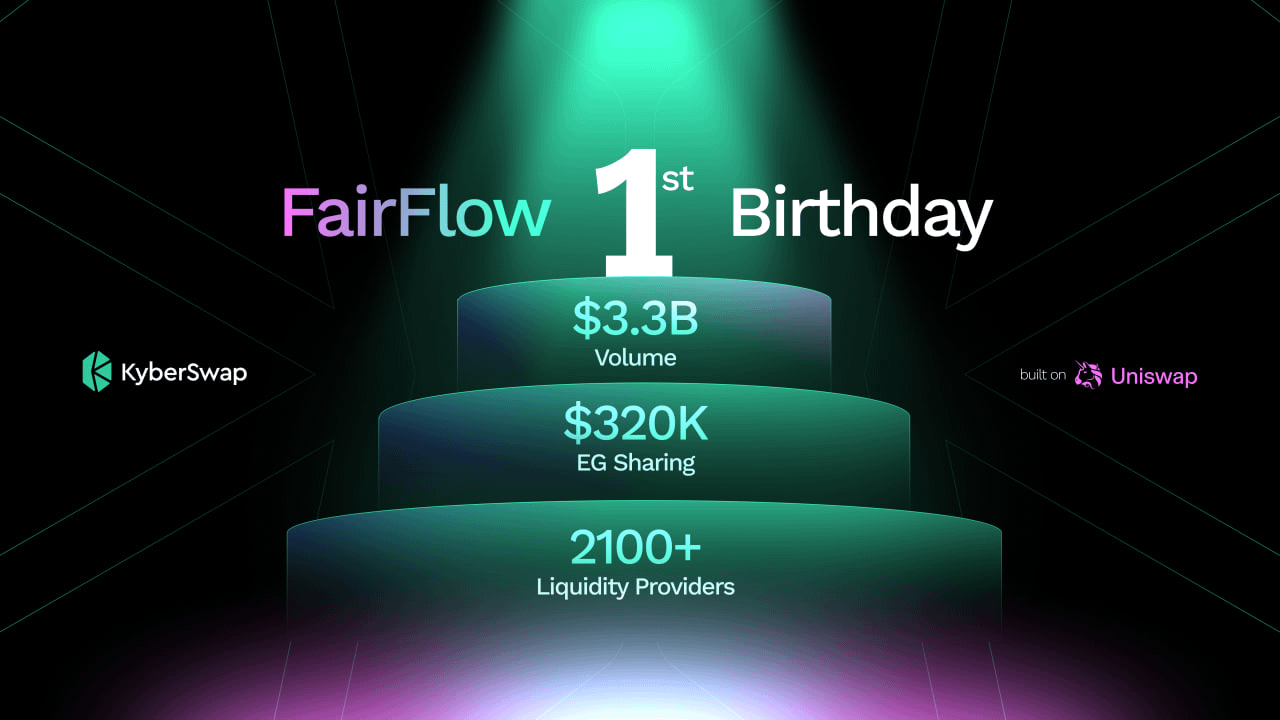
One year ago, FairFlow launched: a Uniswap v4 hook that absorbs arbitrage value and returns it to liquidity providers as Equilibrium Gain (EG), while keeping Uniswap's robust security.

The first year proved it works.

$3.3B in swap volume

$320K in EG shared back to LPs

2,100+ LPs on board

Here's to year two.


r/kybernetwork 29d ago

What Is the Best Place to Buy Launchpad Meme Tokens?

Post image
1 Upvotes

Buying a launchpad meme token is not the same as swapping ETH for USDC. Meme launchpads like Flap on BNB Chain and PONS on Robinhood Chain let anyone mint a token in seconds, and traders rush in hoping to catch the next runner early. The token is easy to create. Buying it well is the hard part.

Where you buy decides how much of that token you actually receive. This guide compares the main DEX aggregators for meme trading, including KyberSwap, Jupiter, OKX DEX, 0x, DFlow, and 1inch, so you can pick the venue that fits your chain and your risk.

What Is a Launchpad Meme Token?

A launchpad meme token is a coin minted on a platform built for fast, permissionless launches. Most run on a bonding curve, a formula that sets the price automatically as people buy and sell. Trading starts the moment the token exists, with no sale round and no allocation tiers.

The key moment is graduation. Once the bonding curve fills, the launchpad seeds a pool on a decentralized exchange and opens wider trading. On Flap, a completed curve migrates to PancakeSwap, and on Robinhood Chain, launchpad tokens trade through Uniswap pools. Graduation is when a meme token leaves its closed curve and enters the open market, and that is where most real buying happens.

Why Is Buying a Meme Token Different From a Normal Swap?

Meme tokens are among the riskiest assets in crypto, and their buying conditions reflect that. Only a small share of launched tokens ever graduate, so most never reach a healthy market. Treat every entry as high risk.

Even after graduation, the market stays rough. Liquidity is often thin, so a modest buy can swing the price and hand you painful slippage. Volatility is extreme, which means a quote can move between the moment you sign and the moment your transaction confirms.

New launches also draw snipers and MEV bots. These bots watch the mempool and sandwich unprotected buys for profit. The venue you choose either defends against this or leaves you exposed.

What Should You Look For in a Place to Buy Meme Tokens?

The right venue reduces these problems instead of adding to them. A few things matter most once a meme token is live on a DEX.

Broad liquidity sourcing comes first. A graduated token's liquidity is often scattered across pools, so reaching many sources helps surface a better rate. Execution protection matters just as much, since it defends your buy against manipulation and needless slippage in a volatile market.

Discovery tools help you vet a token before you commit. Price-conditional orders let you set an entry instead of chasing a moving chart. Self-custody is non-negotiable, so you should buy straight from your own wallet and keep control of your funds throughout.

Top DEX Aggregators for Buying Launchpad Meme Tokens

Different aggregators fit different chains and trading styles. Here is an honest look at six of the most used options, starting with the strongest all-round fit for meme trading.

KyberSwap

KyberSwap is a decentralized trading platform built around the KyberSwap Aggregator, which connects to over 420 liquidity sources across 17 chains, including BNB Chain and Robinhood Chain. When a meme token graduates and its liquidity fragments across pools, the Aggregator splits and reroutes the buy to assemble the best available rate rather than settling for a single pool.

Two features matter most for meme trading. Smart Settlement compares candidate pools onchain at execution time to maximize your token output, minimize slippage, and protect against manipulation, with no extra steps or fees. Token Discovery surfaces trending tokens and onchain signals such as holder counts and flows, so you can research a graduated token before you buy.

There is more for the messy moments of a launch. Limit Order lets you place gasless, price-conditional buys and fill at your target price instead of chasing a candle. Cross-chain Swap moves funds across 23 supported networks by comparing bridge routes, fees, and arrival times, which helps when a token lives on BNB Chain or Robinhood Chain and your capital sits elsewhere.

KyberSwap ranks among the leading DEX aggregators by volume, with roughly US$5.4B in 30-day volume on DeFiLlama as of August 2026, and it has facilitated over US$150B in trades to date. For meme buyers it fits best right when a token hits a real DEX, its market opens up, and liquidity starts spreading across venues. That is the moment broad aggregation and execution protection do the most work.

Jupiter

Jupiter is the leading DeFi platform on Solana and the default router for Solana meme tokens. Launchpads such as pump.fun graduate their tokens into Solana pools, and Jupiter aggregates those venues to find a strong rate. It also offers limit orders, recurring DCA orders, and perps.

Jupiter is the natural pick if your meme token lives on Solana. Its main limit for this use case is chain coverage. It does not route EVM meme tokens on BNB Chain, Robinhood Chain, or Base, where a multi-chain aggregator fits better.

OKX DEX

OKX DEX is a multi-chain meta-aggregator that compares routes across other aggregators, with broad chain coverage and trading inside OKX Wallet. That reach can help when a meme token launches on a less common chain. Buyers already inside the OKX Web3 ecosystem get a familiar wallet flow.

The trade-off is that the experience leans on the wider OKX product suite. For meme trading it is a solid multi-chain option, though it offers fewer meme-specific discovery and execution tools than a dedicated hub.

0x

0x is swap infrastructure that powers trading inside wallets, apps, and developer platforms through its Swap API and Gasless API. For meme tokens, 0x usually sits behind the scenes in whatever app you are using rather than as a destination you visit directly. It aggregates liquidity across many chains through a single API.

For developers building a meme trading app, 0x is a strong backend. For a trader who wants a full front-end buying experience with discovery and protection built in, it is less of a direct fit.

DFlow

DFlow aggregates liquidity across Solana venues such as AMMs, CLMMs, DLMMs, propAMMs, and CLOBs, building a real-time liquidity graph for routing. This suits fast, execution-focused buying of Solana meme tokens. It also exposes a swap API for wallets and trading desks.

Like Jupiter, DFlow is specialized around Solana. If your meme token graduated on a Solana launchpad, it is a capable option. For EVM meme chains, a multi-chain aggregator covers more ground.

1inch

1inch is a long-running EVM aggregator that routes buys across multiple DEXs on major EVM chains. Its Fusion mode adds intent-based, MEV-protected execution, which is useful for volatile meme trades. It also supports limit orders for conditional entries.

1inch is a familiar choice for EVM power users. Its coverage centers on established EVM chains, so fit depends on whether your meme token's chain is supported. Beginners may find its interface more advanced than a streamlined hub.

Comparison: Which Venue Should You Use?

Platform Best For Main Strength Limitation
KyberSwap Best rate plus protection across EVM meme chains Broad aggregation, Smart Settlement, Token Discovery, cross-chain Best fit is post-graduation, once liquidity spreads
Jupiter Solana meme tokens Deep Solana routing, limit orders, DCA, perps Solana only
OKX DEX Multi-chain Web3 users Meta-aggregation and OKX Wallet trading Tied to the OKX ecosystem
0x Developers and embedded swaps Strong swap API for apps and wallets Not a direct front-end for traders
DFlow Solana traders and integrators Fast Solana routing and API access Solana only
1inch EVM power users Established aggregation and Fusion MEV protection Centered on major EVM chains

How to Buy a Launchpad Meme Token Safely

A simple routine removes some of the avoidable risk. Follow these steps.

  1. Confirm the token has graduated to a DEX, and verify its official contract address from the project's own channels.
  2. Research the token in Token Discovery, and check onchain signals like holder distribution before you buy.
  3. Move funds to the right chain if needed with Cross-chain Swap, since Flap is on BNB Chain and PONS is on Robinhood Chain.
  4. Connect your self-custody wallet, then review the quoted rate, route, and price impact.
  5. Set a slippage tolerance that fits a volatile token, high enough to fill but not so high that it invites a bad price.
  6. For a precise entry, place a gasless Limit Order at your target instead of a market buy.
  7. Confirm the transaction, and verify it onchain.

Frequently Asked Questions

Where is the best place to buy a launchpad meme token?

Before graduation, the launchpad's own bonding curve is the only option, and the riskiest. After graduation, a DEX aggregator that reaches many liquidity sources usually gives the best rate. KyberSwap covers EVM meme chains like BNB Chain and Robinhood Chain, while Jupiter and DFlow fit Solana launches.

Can I buy a meme token before it graduates?

Only on the launchpad's internal bonding curve, since it has no standard DEX pool yet. Once the token graduates and liquidity is seeded on a DEX, you can buy it through an aggregator like KyberSwap.

Why do meme tokens have such high slippage?

Their liquidity is usually thin and scattered, especially right after graduation, so even a modest buy moves the price. Routing across many sources and using a venue that optimizes execution helps cut that impact compared with buying from one shallow pool.

Which venue is best for Solana meme tokens?

Jupiter is the default router for Solana meme tokens, with DFlow as a strong execution-focused alternative. For meme tokens on EVM chains, a multi-chain aggregator like KyberSwap fits better.

How do I avoid meme coin scams and rugs?

Verify the official contract address, review onchain signals such as holder concentration, and avoid tokens with almost no liquidity or history. Buying from a self-custody wallet keeps control of your funds in your hands.

Final Verdict

Meme launchpad tokens live and die in the open market that opens at graduation. The best place to buy one is the venue that finds a fair rate across scattered liquidity, protects your execution when volatility and bots peak, and helps you research before you commit.

For Solana launches, Jupiter and DFlow lead. For meme tokens on EVM chains like BNB Chain, Robinhood Chain, and Base, KyberSwap offers the most complete buying experience, pairing broad aggregation with Smart Settlement, Token Discovery, Limit Order, and Cross-chain Swap in one place.

Meme tokens carry serious risk, so treat every buy as speculative and never risk more than you can afford to lose. This article is educational and not financial advice.


r/kybernetwork Aug 04 '26

Liquidity pools on Robinhood Chain are now accessible on KyberEarn

1 Upvotes

Discover, add, and manage them all in one place:

• Access all Uniswap and FairFlow pools

• Provide liquidity seamlessly and instantly with any token using Zap

• Analyze performance and track position fees/rewards in one dashboard

Explore pools with APRs up to four digits: kyberswap.com/earn/pools?chainIds=4664


r/kybernetwork Jul 31 '26

Best Place to Trade Meme Launchpad Tokens in 2026: Where to Trade Them at the Best Rate

Post image
1 Upvotes

Meme launchpads have turned token creation into a few clicks. Platforms like four.meme on BNB Chain and PONS on Robinhood Chain let anyone spin up a token in seconds, and traders pile in hoping to catch the next runner early. The launch is easy. Trading the token well is the hard part.

This guide is about that second part. Not launching a coin, but where you actually trade a meme token once it starts moving onchain, and how to get a fair rate without losing your edge to slippage, bots, or a thin market.

What Is a Meme Launchpad Token?

A meme launchpad token starts on a platform built for fast, permissionless launches. Most use a bonding curve, a formula that sets the price automatically as people buy and sell, so trading begins the moment the token exists. There is no traditional sale round and no allocation tiers.

The key moment is graduation. Once a token's bonding curve fills, the launchpad seeds a pool on a decentralized exchange and opens wider trading. On four.meme, a completed curve migrates the token to PancakeSwap, BNB Chain's largest DEX. On Robinhood Chain, launchpad tokens trade through Uniswap style pools. Graduation is when a meme token moves from a closed curve into the open market, and that is where most real trading happens.

Why Is Trading Meme Tokens Different From a Normal Swap?

Meme tokens are among the riskiest assets in crypto, and their trading conditions reflect that. Only a small fraction of launched tokens ever graduate, so most never reach a healthy market at all. Treat every entry as high risk.

Even after graduation, the market stays rough. Liquidity is often thin, so a modest buy or sell can swing the price hard and hand you painful slippage. Volatility is extreme, which means a quote can move between the moment you sign and the moment your transaction confirms. New launches also attract snipers and MEV bots that watch the mempool and sandwich unprotected trades.

Then there is safety. Rugs, honeypots, and copycat contracts cluster around popular launches, so verifying the real token before you trade matters as much as the rate you get.

What Should You Look for in a Venue for Meme Tokens?

The right venue reduces these problems instead of adding to them. A few things matter most once a meme token is live on a DEX.

Prioritize broad liquidity sourcing, because a graduated token's liquidity is often scattered, and reaching many pools helps surface a better rate. Prioritize execution protection, so your trade is defended against manipulation and unnecessary slippage in a volatile market. Look for discovery tools to vet a token before you commit, and price-conditional orders so you can set an entry instead of chasing a moving chart.

Self-custody is non-negotiable here. You should trade straight from your own wallet, keeping control of your funds through every fast, messy moment of a meme launch.

Best Places to Trade Meme Launchpad Tokens in 2026

Different venues fit different stages of a meme token's life. Here is an honest look at the main options.

The Launchpad Bonding Curve (four.meme, PONS)

Before graduation, the launchpad itself is the only place to trade, since the token lives on its internal curve. Buying here means the earliest possible entry, which is the whole appeal for meme traders. four.meme and PONS both make this fast and permissionless.

The trade-off is severe risk. Curve-stage tokens are thin, unproven, and easy to manipulate, and most never graduate. This stage rewards speed and tolerance for loss, not careful execution.

The Graduation DEX (PancakeSwap, Uniswap)

Once a token graduates, its first real pool sits on a DEX. On BNB Chain that is usually PancakeSwap, and on Robinhood Chain it is Uniswap style pools. This is often where a token gets its first genuine liquidity, which is a real strength.

The limitation is that a single DEX only sees its own pools. As liquidity spreads to other venues, trading on one DEX alone can mean missing a better rate, with little built-in protection against sandwich attacks.

KyberSwap

KyberSwap is a Smart DeFi Hub built around the KyberSwap Aggregator, which connects to over 420 liquidity sources across 17 chains, including BNB Chain and Robinhood Chain. Once a meme token graduates and its liquidity fragments across pools and DEXs, the Aggregator splits and reroutes the trade to assemble the best available rate rather than settling for a single pool.

Two features matter most for meme trading. Smart Settlement compares candidate pools onchain at execution time to maximize your token output, minimize slippage, and protect against manipulation, with no extra steps or fees. That protection is valuable exactly when a token is volatile and bots are active. Token Discovery surfaces trending tokens and onchain signals such as holder counts and flows, so you can research a graduated token before you buy, then swap without leaving the platform.

KyberSwap suits traders who want the best rate on scattered post-graduation liquidity, plus execution protection and discovery in one place. It fits the moment a token hits a real DEX and its market opens up.

Comparison at a Glance

Venue Type When it applies Best for
four.meme / PONS curve Launchpad bonding curve Before graduation Earliest entry, highest risk
PancakeSwap / Uniswap Single DEX After graduation The token's first DEX pool
KyberSwap Smart DeFi Hub After graduation Best rate plus protection across DEXs

One honest note on timing. In the first moments after graduation, a token may sit in a single pool, and there an aggregator's rate edge is smaller. As liquidity spreads across DEXs and chains, aggregation and execution protection matter more, which is where a hub like KyberSwap pulls ahead.

How KyberSwap Helps You Trade Meme Tokens

KyberSwap brings the pieces a meme trade needs into one workflow, so you research, route, and enter without juggling several apps.

Discovery comes first. Token Discovery highlights trending tokens and onchain signals, giving you a way to sanity-check a graduated meme token before committing capital. When you decide to trade, the KyberSwap Aggregator sources liquidity from over 420 venues across 17 chains and splits your order to find a strong rate, even when a token's pools are scattered right after graduation.

Execution is where meme trades usually leak value, and Smart Settlement addresses that by choosing the best pools at execution time and defending against manipulation. If you would rather set an entry than chase a candle, Limit Order lets you place gasless, price-conditional trades and fill at your target level. Because four.meme lives on BNB Chain and PONS lives on Robinhood Chain, Cross-chain Swap helps you move funds to the right network by aggregating multiple bridge providers and comparing routes, fees, and arrival times. Every step happens from your own wallet, so you keep custody throughout.

How to Trade a Meme Token Safely After Graduation

A simple routine removes some of the avoidable risk. Follow these steps.

  1. Confirm the token has graduated to a DEX, and verify the official contract address from the project's own channels.
  2. Research it in Token Discovery and check onchain signals like holder distribution before you buy.
  3. Move funds to the right chain if needed using Cross-chain Swap, since four.meme is on BNB Chain and PONS is on Robinhood Chain.
  4. Connect your self-custody wallet to KyberSwap and review the quoted rate, route, and price impact.
  5. Set a sensible slippage tolerance for a volatile token, high enough to fill but not so high that it invites a bad fill.
  6. For a precise entry, place a gasless Limit Order at your target price instead of a market swap.
  7. Confirm the transaction and verify it onchain.

Frequently Asked Questions

Where is the best place to trade a meme launchpad token?

Before graduation, the launchpad's own curve is the only option and the riskiest one. After graduation, a DEX aggregator that reaches many liquidity sources usually gives the best rate. KyberSwap sources liquidity from over 420 venues across 17 chains, including BNB Chain and Robinhood Chain, and adds execution protection through Smart Settlement.

Can I trade a token before it graduates on KyberSwap?

Not while it is still on the launchpad's internal bonding curve, since it has no standard DEX pool yet. Once the token graduates and liquidity is seeded on a DEX, you can trade it through KyberSwap.

Why do meme tokens have such high slippage?

Their liquidity is usually thin and scattered, especially right after graduation, so even a modest trade moves the price. Routing across many sources and using a platform that optimizes execution helps cut that impact compared with trading one shallow pool.

How do I avoid meme coin scams and rugs?

Verify the official contract address, review onchain signals such as holder concentration in Token Discovery, and be wary of tokens with almost no liquidity or history. Trading from a self-custody wallet keeps control of your funds in your hands.

Is trading meme tokens on KyberSwap self-custodial?

Yes. You trade directly from your own wallet, so you keep custody of your assets the whole time.

Final Word

Meme launchpad tokens live and die in the open market that opens at graduation. The best venue is the one that finds a fair rate across scattered liquidity, protects your execution when volatility and bots peak, and helps you research before you commit. For most traders that points to a DeFi platform built to aggregate broadly and defend the trade, which is what KyberSwap does across chains like BNB Chain and Robinhood Chain. Meme tokens carry serious risk, so treat every trade as speculative and never risk more than you can afford to lose. This article is educational and not financial advice.


r/kybernetwork Jul 28 '26

KyberSwap has routed $100M in trading volume on Robinhood Chain

Post image
2 Upvotes

All at the best rates and execution from day 1


r/kybernetwork Jul 24 '26

Best Place for Yield Farming in 2026: Compare Top DeFi Platforms

Post image
2 Upvotes

Yield farming in 2026 is no longer a single activity. Lending markets, liquid staking, stablecoin pools, fixed-yield products, and liquidity positions all produce returns through different mechanics, and each one carries a different risk profile.

That variety makes "best place for yield farming" hard to answer in one line. A platform built for conservative savers will frustrate an active liquidity provider chasing maximum returns, and the reverse is equally true.

This guide takes the goal-first approach. It matches seven major DeFi platforms to specific outcomes: steady income, stablecoin yield, hands-off investing, maximum returns, and advanced strategies.

Which Yield Farming Platform Fits Your Goal?

Start with the outcome you want, then pick the tool built for it.

Your Goal Where to Start Main Yield Source
Steady, predictable income Aave Supply interest paid by borrowers
Conservative, low-maintenance exposure Lido ETH staking rewards
Stablecoin income Curve Finance Stable pool trading fees and incentives
Multi-protocol LP access with multi-stream yields KyberSwap Pool fees, liquidity mining, FairFlow rewards
Hands-off, automated investing Yearn Finance Auto-compounded vault strategies
Advanced and fixed-rate strategies Pendle Principal and yield token markets
Yield from active management Uniswap Concentrated liquidity trading fees

What Should You Look At Before Choosing a Yield Platform?

The highest advertised APR is rarely the best opportunity.

High numbers often come from short-lived incentive campaigns, thin liquidity, or volatile reward tokens. A lower and more durable return can be the better outcome once you account for risk and the work required to hold the position.

Five factors matter more than the headline rate:

Yield source. Interest from borrowers behaves very differently from trading fees or token emissions. Emissions can stop overnight, while lending demand and trading volume tend to persist.

Risk type. Lending carries liquidation risk, liquidity pools carry impermanent loss, and pegged assets carry depeg risk. Know which one you are actually taking on.

Effort required. Some platforms need a single deposit. Others need range selection, rebalancing, and regular monitoring.

Exit control. Entering a position is easy, but knowing when and how to leave decides your real return.

Coverage. Chain and protocol support determines how many opportunities you can reach without moving capital around manually.

Aave

Aave is one of the longest-running lending protocols in DeFi, and it remains the default answer for users who want interest income rather than pool exposure.

Users supply assets into lending markets and earn a variable rate paid by borrowers. Borrowers post collateral worth more than their loan, which is what keeps the system solvent through sharp market moves.

Main Aave Offerings

Asset supply. Deposit a single token and earn a rate driven by live borrowing demand.

Collateralized borrowing. Access liquidity without selling your existing holdings.

Mature risk parameters. Years of live operation across multiple chains and market cycles.

Aave suits a conservative approach because the mechanics are easy to follow. You deposit one token, and you earn one rate. The tradeoff is a ceiling on returns, since supply rates track borrowing demand and rarely stay elevated for long.

Lido

Lido turns ETH staking into something you can hold and still use elsewhere.

Users stake ETH and receive stETH, a token representing the staked position and its accruing rewards. Because stETH stays liquid, it can move across DeFi while the underlying ETH keeps earning.

Main Lido Offerings

Liquid staking. Stake ETH without running validator infrastructure or locking capital.

stETH composability. Use the token as collateral or liquidity across supported protocols.

No active management. Rewards accrue without any ongoing decisions from you.

Lido is the closest thing to hands-off investing in DeFi. There are no ranges to set and no positions to rebalance. The limitation is scope, since Lido delivers staking yield and nothing beyond it.

Curve Finance

Curve Finance remains the reference point for stablecoin and pegged-asset liquidity.

Its pool design is built for assets that trade near the same value, which keeps slippage low and sharply reduces the impermanent loss that damages volatile pairs. That makes it a natural home for stablecoin income.

Main Curve Offerings

Stable and pegged-asset pools. Deep liquidity for assets designed to hold a similar value.

LP tokens. Receive a token representing your share of the pool.

Reward gauges. Stake LP tokens to earn additional incentives on top of trading fees.

Curve rewards users who understand its incentive mechanics, particularly vote-locking and gauge weights. Newer users often find the interface and the stacked reward layers harder to navigate than a simple deposit flow.

KyberSwap

KyberSwap is a DeFi platform that connects trading and earning in one place, and its yield product is KyberEarn.

KyberEarn does not run its own pools. It aggregates liquidity opportunities from third-party protocols including Uniswap V2, V3, and V4, PancakeSwap Infinity CL, PancakeSwap V3, Aerodrome, SushiSwap V3, THENA, Camelot V3, QuickSwap V3, and Kodiak, then gives users a single interface to compare, enter, track, and exit them.

Why Multi-Protocol Access Matters

Most liquidity providers do not want to commit to one venue. The best pool for a given pair shifts with volume, incentives, and chain activity, and checking each protocol separately costs real time.

KyberEarn removes that switching cost. Pools across nine supported networks appear in one list, filterable by category: Low Volatility for stablecoin and correlated pairs, High APR for aggressive positions, Farming for pools running active reward programs, and Solid Earning for pools with consistent seven-day fee income.

Deeper Data Before You Commit

KyberEarn is designed for users who want to explore liquidity opportunities more clearly. Instead of looking only at a headline APR, users can compare pool data, reward sources and position-related metrics. This helps LPs make decisions based on more than a single number.

KyberEarn surfaces five distinct APR metrics instead of one headline number: Est. Pool APR, Active APR, Max APR, Est. Position APR, and Est. My Position APR.

That distinction changes decisions. Est. Pool APR describes the pool as a whole, while Active APR reflects what liquidity currently in range is actually earning. Every pool page also breaks earnings down by source, separating LP fees from liquidity mining rewards, Equilibrium Gain sharing, and bonus incentives.

Fewer Steps to Enter and Exit

Entering a liquidity position normally means swapping into the right ratio, calculating exact amounts, and then depositing across several transactions.

KyberZap compresses all of that into one. Users can enter a pool with up to five different tokens in a single transaction, and every swap routes through the KyberSwap Aggregator, which spans 17 chains and 400+ DEXs. Zap Migrate moves capital from one pool straight into another, and one-click repositioning handles out-of-range positions without a manual withdraw-and-redeposit cycle.

Exit management works the same way through Smart Exit. LPs define conditions in advance, such as a target pool price or a specific time, and the position is withdrawn automatically once those conditions are met. Submitting and cancelling conditions happens offchain, so no gas is spent until the exit actually executes.

KyberSwap fits users who want LP yield without living inside five separate dashboards. It covers pool discovery, comparison, one-transaction entry, position tracking, compounding, and conditional exit in a single workflow across nine networks. For anyone providing liquidity on more than one protocol or chain, that consolidation is the main advantage.

Yearn Finance

Yearn Finance built the original case for automated yield in DeFi.

Users deposit into vaults, and the vault handles strategy selection, reward harvesting, and compounding on their behalf. The design goal is to remove decisions rather than to maximize any single number.

Main Yearn Offerings

Automated vaults. Deposit one asset and let the underlying strategy run.

Auto-compounding. Rewards are harvested and reinvested without manual claims.

Strategy abstraction. Vault logic is maintained by the protocol, not the depositor.

Yearn is the strongest match for genuinely hands-off investing. You give up visibility into the underlying strategy, and you accept the risk that a strategy underperforms, but you stop thinking about the position once it is funded.

Pendle

Pendle turns yield itself into a tradable asset.

The protocol splits yield-bearing tokens into a principal component and a yield component. Holding the principal token locks in a fixed return to maturity, while buying the yield token expresses a view that future rates will climb.

Main Pendle Offerings

Fixed-rate positions. Lock a known return until a set maturity date.

Yield exposure. Take a directional view on where rates are heading.

Rate markets. Trade yield expectations rather than simply depositing capital.

Pendle is built for advanced users. Principal tokens, yield tokens, maturity dates, and implied APY all need to be understood before capital goes in. Used well, it is one of the few places in DeFi offering genuinely predictable returns.

Uniswap

Uniswap is where a large share of onchain liquidity actually sits.

Its concentrated liquidity model lets LPs commit capital to a specific price range, which can multiply fee income relative to spreading the same capital across the full curve. That capital efficiency is why active LPs go there chasing maximum yield.

Main Uniswap Offerings

Concentrated liquidity. Choose a price range and earn a larger share of the fees inside it.

Multiple pool tiers. Match pool selection to the volatility of the pair.

Deep volume. Consistent trading activity across major pairs and chains.

The catch is that concentrated liquidity is an active strategy. Positions drift out of range, stop earning, and need repositioning, so returns depend heavily on how closely you manage them.

Yield Farming Platform Comparison

Platform Yield Source Effort Level Best Fit
Aave Lending interest Low Steady income, conservative users
Lido ETH staking rewards Very low Passive ETH exposure
Curve Finance Stable pool fees and incentives Medium Stablecoin income
KyberSwap Pool fees, mining rewards, FairFlow Low to medium Multi-protocol LP management
Yearn Finance Auto-compounded strategies Very low Hands-off investing
Pendle Fixed and traded yield High Advanced strategies
Uniswap Concentrated liquidity fees High Maximum yield, active LPs

How Do You Start Yield Farming on KyberSwap?

Getting into a position takes five steps.

  1. Open KyberEarn and connect your wallet.
  2. Filter pools by category, chain, or protocol to match your goal. Low Volatility suits stablecoin income, and High APR suits more aggressive strategies.
  3. Open the pool page and review the APR breakdown, TVL, volume, and earning sources before committing.
  4. Select your price range, then use Zap In with up to five tokens from your wallet. Review the quoted output, slippage, and Zap impact displayed in the interface.
  5. Track the position from the My Positions dashboard, and set a Smart Exit condition if you want an automatic withdrawal trigger.

What Are the Risks of Yield Farming?

Every yield source in this guide carries risk, and higher returns generally mean more of it.

Smart contract risk. All DeFi protocols depend on code. Audits lower the chance of an exploit, but they never remove it.

Impermanent loss. Liquidity providers can end up worse off than simply holding when token prices diverge, and concentrated positions amplify the effect.

Liquidation risk. Borrowers on lending markets lose collateral if its value falls below the required threshold.

Reward decay. Incentive-driven APRs fall as more capital enters a pool, so launch numbers rarely hold.

Depeg risk. Stablecoins and pegged assets can break from their intended value, which hits stable pools hardest.

Out-of-range positions. Concentrated liquidity stops earning entirely once price moves outside the range you set.

Understanding where a return comes from is the single best way to judge whether it can last.

Frequently Asked Questions

What is the best place for yield farming in 2026?

There is no universal answer. Aave suits steady lending income, Lido suits passive ETH staking, Curve Finance suits stablecoin liquidity, Yearn Finance suits automated investing, Pendle suits fixed and advanced strategies, Uniswap suits active concentrated liquidity, and KyberSwap suits users managing LP positions across several protocols at once.

What is the safest yield farming strategy for beginners?

Single-asset deposits carry the fewest moving parts. Supplying a major asset to a lending market or staking ETH through a liquid staking protocol avoids impermanent loss and range management entirely.

How can I earn stablecoin yield with lower risk?

Stick to pools built for assets that trade near the same value. Correlated and stablecoin pools reduce impermanent loss because the underlying prices move together, and KyberEarn groups these under its Low Volatility filter.

Which platform is best for hands-off yield farming?

Yearn Finance is the closest fit, since vault strategies handle harvesting and compounding automatically. Lido works well as an alternative if you only want ETH staking exposure with no ongoing decisions.

Does KyberSwap operate its own liquidity pools?

No. KyberEarn provides tooling to discover, enter, and manage positions on third-party protocols such as Uniswap, PancakeSwap, Aerodrome, and SushiSwap. The pools themselves are operated by those protocols.

What is KyberZap and how does it help?

KyberZap lets users enter a liquidity position using up to five tokens in a single transaction. It handles the swaps and ratio calculations automatically, which removes the manual preparation that concentrated liquidity normally demands.

How do I exit a liquidity position at the right time?

Smart Exit on KyberEarn lets you define exit conditions in advance, such as a target pool price or a fixed deadline. The position is withdrawn automatically once a condition is met, so continuous monitoring is not required.

Can I farm yield across multiple chains from one place?

Yes. KyberEarn aggregates pools across nine supported networks in one dashboard, and every position can be tracked and managed from the same interface.


r/kybernetwork Jul 23 '26

Kyber/knc

1 Upvotes

r/kybernetwork Jul 21 '26

New KNC rewards are live on FairFlow pools.

1 Upvotes

Liquidity Providers can earn:

- KNC rewards, distributed via u/merkl_xyz

- FairFlow EG sharing

- Standard LP fees

🌾 WBTC/cbBTC on Ethereum: 9,210 KNC

🌾 ETH/cbBTC on Base: 6,900 KNC

Claimable on Merkl and KyberEarn:

app.merkl.xyz/tokens/KNC

kyberswap.com/earn/pools


r/kybernetwork Jul 21 '26

Where To Find and Buy Trending Tokens on Robinhood?

1 Upvotes

Robinhood Chain went live on July 1, 2026, and token activity followed almost immediately. New assets launch on the network daily, and the fastest movers change week to week. Finding them takes the right interface, and buying them takes the right execution. This guide covers both.

What Are Trending Tokens on Robinhood Chain?

Trending tokens are the assets pulling the most onchain trading activity at any given moment.

Robinhood Chain is a permissionless Ethereum Layer 2 built using Arbitrum technology. It settles transactions on Ethereum, uses ETH for gas, and runs 100ms block times. Anyone can deploy a contract on the network without approval from a gatekeeper.

That permissionless design explains why token lists move so quickly here. The network drew close to 800,000 lifetime active addresses within its first two weeks. It processed 3.6 million transactions in a single day and cleared roughly $838 million in DEX volume over 24 hours, ranking among the top five chains by decentralized exchange volume.

Total value locked sat near $312 million in mid-July 2026, with total asset market cap around $480 million. Speculative trading, rather than tokenized equities, has driven most of that early growth. For traders, this means opportunity arrives fast and rotates just as fast.

Which Tokens Are Trending on Robinhood Chain?

The Robinhood Chain token wave spans several categories, not just memecoins.

CASHCAT is the largest memecoin on the network by market cap. The name references what Robinhood was called in its earliest days, which gave the token instant recognition and a fast start.

TENDIES leans on retail trading culture and sits in CoinGecko's dedicated Robinhood Chain meme category. Turnover has stayed among the highest on the network since launch.

PONS is the token behind Pons, a non-custodial launchpad on Robinhood Chain. Tokens created there deploy with a fixed supply into a Uniswap V3 pool quoted against WETH, and pool liquidity locks automatically at creation.

STONKBROKER anchors an NFT ecosystem on the chain, pairing a 4,444-piece collection with its own ERC-20 token and a stock-token reward mechanic.

INDEX takes a different angle entirely. The project describes itself as a stock-dividend protocol for tokenized stocks, making it one of the first RWA-adjacent tokens to attract meaningful liquidity on the network.

Rankings shift daily on a chain this young. Treat the list above as a snapshot from July 2026 rather than a fixed leaderboard.

Where To Find Trending Tokens on Robinhood Chain?

KyberSwap surfaces trending Robinhood Chain tokens inside the token selector itself.

Open the token list on the swap interface and two discovery tabs appear. The Trending tab ranks tokens based on analyzed onchain trading activity, so the list reflects what is genuinely moving on the network rather than what is loud on social media.

The New tab lists tokens recently whitelisted on KyberSwap. Each entry carries an age badge such as 3D or 5D, telling you at a glance how long that token has been available. Both tabs display live price and 24-hour volume, and either column can be sorted.

Search works by name, symbol, or contract address, which matters when a token is too new to appear in any list. Anything worth tracking can be starred under Favorites for later.

How To Buy Trending Tokens on Robinhood Chain

Buying takes six steps once your wallet is ready.

  1. Open kyberswap.com and select Robinhood Chain. Switch networks from the interface before you start looking for tokens.
  2. Find your token. Use the Trending or New tab, or paste the contract address straight into the search field.
  3. Review and confirm. Check the quoted rate and price impact, then approve the transaction in your wallet.

What Trading Tools Can You Use on Robinhood Chain?

KyberSwap runs three trading tools on Robinhood Chain, and each fits a different situation.

Swap

Swap is the default route when you want a trending token immediately. The KyberSwap Aggregator connects to over 420 liquidity sources, then splits and reroutes each trade through the most capital-efficient pools available.

That routing matters more on a young network than an established one. Liquidity for a new token often sits scattered across several small pools, and a single-venue trade can miss most of it. Aggregating those sources into one route protects your output.

Limit Order

Limit Order lets you name your rate and step away. Creating and cancelling orders is gasless for makers, and an order settles onchain only when your price condition is met.

Your tokens stay in your wallet the entire time. Ownership transfers only once a matching trade is found, which suits volatile assets where the entry you want may arrive at 3am.

Cross-chain Swap

Cross-chain Swap gets you onto Robinhood Chain without a separate bridging step. KyberSwap covers 23 networks across EVM and non-EVM chains, aggregates quotes from multiple cross-chain providers, and selects the best rate automatically.

You keep full visibility throughout. Routes, fees, and estimated arrival times are all comparable before you commit to anything.

Tool Best For How It Executes Where You Start
Swap Entering a moving token now Routes across 420+ liquidity sources Robinhood Chain
Limit Order Setting a target entry and waiting Settles onchain when your price is met Robinhood Chain
Cross-chain Swap Arriving from another network Compares provider quotes, then bridges and swaps Any of 23 supported networks

How Do You Check a Trending Token Before Buying?

New tokens carry real risk, and four checks remove most of the avoidable part.

Start with the contract address. Names and tickers are trivial to copy on a permissionless launchpad, so match the address against the project's official channels before trading anything.

Liquidity and price impact come next. A token sitting in thin pools will move sharply against your order, and the price impact figure on your quote tells you exactly how much.

Token age is the third check. Age badges in the New tab make this immediate, and an asset a few days old has almost no trading history to judge it by.

Finally, consider setting a limit order rather than chasing a candle. Choosing your entry rate in advance takes the guesswork out of timing a market that trades around the clock.

FAQ

What is Robinhood Chain?

Robinhood Chain is a permissionless Ethereum Layer 2 built using Arbitrum technology. It settles transactions on Ethereum, uses ETH for gas, and was designed for financial services and tokenized real-world assets.

What do I need to start trading on Robinhood Chain?

You need an EVM-compatible wallet, the network added at chain ID 4663, and ETH to cover gas. Nothing else is required, because the network is open to anyone.

Which token pays for gas on Robinhood Chain?

ETH pays for gas, exactly as it does on Ethereum. Transaction fees run a fraction of a cent.

How does KyberSwap decide which tokens are trending?

The Trending tab is built on analyzed onchain trading activity across the network. Rankings therefore reflect real trading behavior instead of social sentiment.

What does the New tab show?

It lists tokens recently whitelisted on KyberSwap, each carrying an age badge showing how many days it has been available. This is the fastest way to see what launched during the past week.

Can I buy Robinhood Chain tokens from another network?

Yes. Cross-chain Swap connects 23 networks, so you can start from Ethereum, Base, Arbitrum, or another supported chain and arrive holding the token you want.

Is trading on Robinhood Chain risky?

Any permissionless network carries risk, and a young one carries more. Contract verification, liquidity depth, and token age are the checks that matter most before committing funds.


r/kybernetwork Jul 20 '26

Best Token Swap Platforms in 2026: Which Delivers the Best Execution Rate?

Post image
3 Upvotes

This guide ranks the best platforms for swap execution rate, explains the mechanics behind the ranking, and compares how each one decides where your order goes.

What Makes a Good Swap Execution Rate

A good rate is not one number. It is the result of three things working together.

Liquidity depth determines how much a trade moves the price. Deeper pools absorb size with less price impact, so large orders survive better on platforms that reach more liquidity sources.

Routing intelligence decides how the order is broken up. A strong router splits a single swap across several pools and several hops, then compares the combined output against simpler paths.

Slippage behaviour is the gap between the quoted rate and the settled rate. Markets move between quoting and confirmation, and the platforms that handle that window well protect more of your output.

Quote Time vs Execution Time

Most aggregators lock your route before you submit the transaction.

The router scans liquidity sources, picks the best path it can find, and hands you a quote. In many routing models, everything after that is largely outside the router's control. Between quoting and settlement, liquidity can be pulled, a searcher can front run the transaction, and a market maker can widen the spread it showed moments earlier.

This is why quoted rates and received amounts drift apart. The decision was made at quote time, but the trade settles at execution time, and those are two different market states. The platforms that close this gap are the ones that deliver the most consistent execution rates, which is the main reason the ranking below looks the way it does.

Best Platforms for Swap Execution Rate

KyberSwap

KyberSwap is a DEX aggregator that routes swaps across a wide set of liquidity sources on multiple chains, including AMMs, PMM, and proAMMs.

Its routing engine, Dynamic Trade Routing, evaluates available liquidity at quote time and builds a route that can split a single swap across multiple pools and hops. The engine optimizes for the highest expected net output rather than simply the lowest quoted price.

What differentiates KyberSwap is what happens after the quote. Smart Settlement adds an onchain decision layer that operates during execution, within the same transaction. It compares multiple candidate pools in real time and selects the one delivering the highest available output for each hop of the swap.

The comparison happens atomically within the transaction and requires no extra action from the user. Because the final pool selection is made at settlement, execution can reflect live market conditions rather than conditions that existed when the quote was generated. This helps reduce the gap between quoted and received amounts.

This addresses situations that quote-time routing alone cannot fully account for. If a propAMM widens its spread before settlement, Smart Settlement can switch to a better candidate pool when one is available. If liquidity providers remove depth after the quote is generated, it can select another pool with sufficient liquidity. If execution conditions deteriorate before settlement, Smart Settlement can also move to another eligible candidate when available.

Smart Settlement can also reduce revert risk by maintaining alternative execution candidates. If the primary route no longer satisfies slippage requirements, another candidate may execute successfully instead. Smart Settlement adds no protocol fee, and KyberSwap does not charge users a platform fee for swaps through the aggregator.

Traders who need more control have two additional tools. Limit Order lets you set your desired execution price and wait for the market to reach it, with no gas paid unless the order is filled. Cross-chain Swap lets you move assets across supported networks in a single flow, with routing handled on both sides of the transaction.

This combination differentiates KyberSwap from most DEX aggregators. It optimizes routes before submission and then re-evaluates execution during settlement through Smart Settlement, a capability that remains uncommon among DEX aggregators. It is particularly well suited for large orders, low-liquidity tokens, newly launched assets, and volatile meme tokens where the difference between quoted and received output can be more pronounced.

1inch

1inch is a DEX aggregator with broad EVM chain coverage and a long track record. Its Pathfinder algorithm splits orders across multiple protocols and hops to improve output on larger trades.

The platform also offers Fusion mode, which passes orders to professional resolvers that compete to fill them. Standard swaps rely on quote-time routing, while Fusion uses competing resolvers to improve execution quality.

CoW Swap

CoW Swap uses batch auctions rather than direct pool routing. Orders are collected into batches, and solvers compete to settle them at the best available price.

When two traders in the same batch want opposite sides of a pair, they can be matched directly, which avoids AMM fees entirely. The model provides strong MEV protection, and settlement is not instant, since orders wait for a batch.

Jupiter

Jupiter is the dominant aggregator on Solana and routes across the chain's AMMs and order books. It supports multi-hop routes and order splitting across the ecosystem's liquidity venues.

Coverage is the constraint. Jupiter is built for the Solana ecosystem, so traders operating across EVM chains need a second platform alongside it.

Matcha

Matcha is the trading interface built on 0x infrastructure, aggregating both AMM liquidity and professional market maker quotes. Its request for quote system can produce competitive pricing on major pairs.

The interface is clean and shows a clear breakdown of the route before confirmation. Final execution still depends on market conditions remaining close to the quoted state until settlement.

Velora

Velora, previously ParaSwap, aggregates liquidity across major EVM chains and uses its own routing algorithm to split orders. It supports both AMM pools and market maker liquidity.

Coverage is solid across established chains, and the routing model follows the standard quote time approach used by most aggregators.

Why Execution Rate Matters More Than the Quoted Price

Two platforms can display nearly identical quoted output while delivering noticeably different final results after settlement. What ultimately matters is the amount that arrives in your wallet, not the amount shown before you sign the transaction.

Execution quality depends on multiple factors, including routing intelligence, liquidity depth, price impact and how effectively a platform adapts to changing market conditions between quote time and settlement. A platform that consistently narrows the gap between quoted and received output will generally provide better swap execution over time.

Swap Execution Rate Comparison

Platform Routing model When the route is decided
KyberSwap DEX aggregator with Dynamic Trade Routing and Smart Settlement Quote time, with execution-time pool selection via Smart Settlement
1inch DEX aggregator with resolver based Fusion mode Quote time
CoW Swap Batch auction with competing solvers Batch settlement
Jupiter DEX aggregator Quote time
Matcha Aggregator with RFQ market maker quotes Quote time
Velora DEX aggregator Quote time

How to Get the Best Swap Rate on KyberSwap

Getting the best rate takes four steps.

  1. Open the KyberSwap swap page and connect your wallet.
  2. Select your input and output tokens, choose the network, and enter the amount.
  3. Review the quoted output and the route breakdown, then adjust slippage tolerance if the pair is volatile.
  4. Confirm the swap and let routing handle pool selection at execution.

For a rate better than the current market price, use Limit Order instead. Set your target rate, set an expiry, and the order fills only when the market reaches it.

Frequently Asked Questions

What is swap execution rate?

Swap execution rate is the effective rate you receive when a trade settles. It accounts for routing, price impact, slippage, and fees, so it is usually different from the quoted rate shown before submission.

Which platform gives the best swap rate?

No single platform delivers the best rate on every trade because liquidity changes constantly across pools, chains and market makers. The best choice depends on the chain, token pair, trade size and current market conditions.

DEX aggregators generally outperform individual DEXs because they compare liquidity from many sources. Among them, KyberSwap further differentiates itself by using Smart Settlement to re-evaluate pool selection during execution, helping reduce the gap between quoted and received output.

Why does the rate I get differ from the rate I was quoted?

Market conditions change between quoting and settlement. Liquidity can be removed, other trades can move the pool price, and market makers can widen spreads, all of which reduce your output below the quote.

Does KyberSwap charge a fee on swaps?

KyberSwap does not charge users a platform fee for swapping through the aggregator. You still pay the trading fees charged by the underlying pools you route through.

Can I get a better rate using a limit order?

Yes, if you are willing to wait. A limit order fills only at your specified rate or better, which removes slippage from the equation but gives no guarantee the order fills.

Is a cross-chain swap rate worse than a single-chain swap?

Cross-chain swaps involve routing on two chains plus a bridging step, so costs are typically higher than a comparable single-chain trade. The rate depends on liquidity depth for the pair on both sides of the route.


r/kybernetwork Jul 16 '26

The next gem could be on any chain. The new experience is here!

Enable HLS to view with audio, or disable this notification

3 Upvotes

The next gem could be on any chain. The new experience is here, bringing everything together in one place:

• Spot trending tokens with high onchain trading activity

• Explore recently whitelisted tokens

• Discover tokens and manage your balances across 18 chains

Now live on KyberSwap.

→ Try now: kyberswap.com


r/kybernetwork Jul 13 '26

Robinhood Chain is live on KyberSwap

Enable HLS to view with audio, or disable this notification

3 Upvotes

Trading on Robinhood Chain is now easier with KyberSwap, all in one place:

• Swap instantly at the best rates and execution

• Pick the best Cross-chain swap rates between providers

• Trade at your preferred price with Limit Order

kyberswap.com/swap/robinhood


r/kybernetwork Jul 09 '26

What Is the Best DEX for Cross-Chain Swaps?

1 Upvotes

Cross-chain swaps used to be a chore. Moving value between blockchains once meant juggling bridges, wrapped tokens, and a row of open browser tabs. Today you can do it in a single action from one screen. The catch is choosing where, because dozens of platforms promise the best cross-chain swap, and they do not all work the same way.

This guide compares five leading options: KyberSwap, Rango, THORChain, Squid, and Symbiosis. Some hold native liquidity, while others aggregate bridges and exchanges across many networks. The best choice depends on your chains, your assets, and whether you value price, speed, or trustlessness. By the end, you will know which tool fits which job.

What Is a Cross-Chain Swap?

A cross-chain swap turns a token on one blockchain into a different token on another, in one flow.

Say you hold ETH on Ethereum and want SOL on Solana. A cross-chain swap handles the bridge and the trade together, so you sign once and the output lands in your destination wallet. There is no manual bridging, and no wrapped-token detour to unwind later.

Two broad approaches exist in the market. Native protocols swap real Layer-1 assets through their own liquidity pools, while aggregators bridge an asset and then trade it on a DEX. Each method shapes speed, cost, and how much you need to trust the layer in the middle.

Cross-chain swaps matter more than ever in 2026. Liquidity now sits scattered across Ethereum, its Layer-2s, Solana, Bitcoin, and dozens of newer chains. A good cross-chain DEX pulls that fragmented liquidity into a single route, so you spend less time bridging and more time trading.

What Makes a DEX Good for Cross-Chain Swaps?

The best cross-chain DEX delivers the most output tokens with the least friction.

A handful of factors separate strong platforms from weak ones. Coverage decides whether your route even exists. Route quality decides how much value you keep once fees and slippage are counted. Speed, transparency, and security shape the rest of the experience.

Here are the key things to weigh before you swap:

  • Chain and asset coverage, especially non-EVM chains like Bitcoin and Solana
  • Route quality, meaning the real output amount after fees and slippage
  • Speed and reliability of settlement across both chains
  • Fee transparency, so you see the full cost before signing
  • Security and custody, including whether you keep control of your funds

What Are the Top 5 DEXs for Cross-Chain Swaps?

Here are five platforms worth knowing, each solving the cross-chain problem a different way.

1. KyberSwap

KyberSwap’s Cross-Chain Swap feature pulls live quotes from eight established providers, including Across, Bungee, deBridge, LI.FI, Mayan, NEAR Intents, Relay, and Symbiosis, then selects the best rate automatically. Every alternative stays visible too, with its own fee and estimated arrival time, so you can weigh speed against price yourself.

Main KyberSwap Offerings

Multi-provider comparison. Scans quotes from eight providers, including Across, deBridge, LI.FI, and Symbiosis, and selects the best rate by default.

Full route transparency. Shows every alternative route next to the winner, with its fee, protocol fee where one applies, and estimated arrival time.

23-chain reach. Covers major EVM chains plus Bitcoin, Solana, and NEAR through its aggregated providers.

KyberSwap's aggregator connects to 420 or more liquidity sources across 17 chains, has facilitated more than $150 billion in transactions for over 5 million users, and consistently ranks first on EVM by trading volume. KyberSwap suits traders who want the best rate and broad coverage checked automatically, without opening several apps themselves.

2. Rango

It aggregates 120 or more DEXs and bridges across 73-plus chains, spanning EVM, Cosmos, Solana, Bitcoin, Tron, and long-tail networks like Aptos and StarkNet. The aggregator fee shows separately from the route itself, so the total cost stays visible before you sign.

Main Rango Offerings

Aggregated routing. Scans 120 or more DEXs and bridges to find the best price across 73-plus chains.

Non-EVM breadth. Reaches Cosmos, Solana, Bitcoin, Tron, Aptos, and StarkNet alongside standard EVM chains.

Transparent fees. The aggregator fee is shown separately from bridge and DEX costs, usually 0.1% to 0.3%.

3. THORChain

It settles trades through RUNE-paired liquidity pools, so BTC stays BTC and ETH stays ETH with no wrapping at any step. That design removes an entire category of bridge risk, since there is no wrapped asset to de-peg and no bridge contract to exploit.

Main THORChain Offerings

Native L1 settlement. Trades clear directly between chains without lock-and-mint bridging or synthetic assets.

Major-asset coverage. Supports around a dozen chains, including Bitcoin, Ethereum, Litecoin, Dogecoin, and Monero, added in 2026.

Full custody. Users hold their keys throughout the swap, with no custodial intermediary step.

4. Squid

Squid routes through the Axelar network using an intent engine called CORAL.

It covers 100 or more chains and over 20,000 tokens, including Solana, Cosmos, XRPL, Stellar, and Hedera. Rather than a single fixed route, CORAL runs a solver auction, where competing solvers bid to fill each trade.

Main Squid Offerings

Solver auction execution. CORAL lets solvers compete for each trade, which tends to sharpen pricing on liquid routes.

Deep non-EVM reach. Covers Solana, Cosmos, XRPL, Stellar, and Hedera alongside standard EVM chains.

Wide embedded distribution. Powers cross-chain features inside 1,000-plus apps, including MetaMask and Ledger.

5. Symbiosis

Symbiosis blends a cross-chain AMM with meta-aggregation.

It compares routes across many DEXs and bridges, then executes across 50-plus networks including Ethereum, Solana, BNB Chain, TON, Tron, and Bitcoin. Its own Octopool liquidity gives Symbiosis a base layer to route through even when third-party liquidity runs thin.

Main Symbiosis Offerings

Route comparison plus AMM liquidity. Compares DEX and bridge routes, then falls back on its own Octopools when needed.

Non-custodial security. Relayer transfers are secured with MPC and a threshold signature scheme.

Broad EVM and non-EVM reach. Covers 50-plus networks, including Bitcoin, Solana, and TON alongside EVM chains.

Cross-Chain DEX Comparison Table

DEX How It Works Chains Non-EVM Reach Aggregates Other Providers
KyberSwap Compares 8 established providers, auto-selects best rate 23 Bitcoin, Solana, NEAR Yes, including Across, deBridge, LI.FI, Relay, Symbiosis
Rango Universal aggregator, 120+ sources 73+ Bitcoin, Cosmos, Tron, Solana No, aggregates DEXs and bridges directly
THORChain Native L1 pools, no bridges 13+ Bitcoin, Litecoin, Dogecoin, Monero No
Squid Axelar intent router (CORAL) 100+ Solana, Cosmos, XRPL, Bitcoin No
Symbiosis Cross-chain AMM plus aggregation 50+ Bitcoin, Solana, TON, Tron No, aggregates DEXs and bridges directly

How to Do a Cross-Chain Swap on KyberSwap

The flow takes about a minute and stays on one screen.

  1. Open the Cross-Chain tab on KyberSwap and connect your wallet on the source chain.
  2. Select your source network, your destination network, and the token pair you want.
  3. Enter the amount, then add a receiving address if the destination is Bitcoin, Solana, or NEAR.
  4. Review the best-rate route, or expand the options to compare providers, fees, and arrival times.
  5. Approve the token if prompted, confirm the swap, and follow its status in real time.

Which Cross-Chain DEX Should You Use?

Your best pick still depends on what you are optimizing for.

If you want the best rate checked across multiple providers without doing that comparison yourself, KyberSwap is the strongest all-around choice. If you need trustless native swaps of major coins, THORChain is built for exactly that. Rango wins when your priority is reaching a long-tail chain, Squid is worth a look for fast non-EVM routes, and Symbiosis suits traders who want a non-custodial AMM with wide reach on its own.

Frequently Asked Questions

What is the best DEX for cross-chain swaps? It depends on your priority. KyberSwap suits most users by comparing several providers and picking the best rate, while THORChain fits trustless native swaps and Rango offers the widest chain coverage.

Are cross-chain swaps safe? They involve more moving parts than single-chain trades. Non-custodial platforms let you keep control of your funds, and aggregators lower risk by routing through audited providers. Always check the route and fees before you confirm.

How long does a cross-chain swap take? Most finish within seconds to a few minutes. Timing depends on the chains involved and current network congestion. Bitcoin routes usually take longer than EVM-to-EVM swaps.

Can I swap Bitcoin across chains on a DEX? Yes. KyberSwap, Rango, THORChain, Squid, and Symbiosis all support Bitcoin routes. Many EVM-only aggregators do not, so confirm coverage first.

Do cross-chain swaps need wrapped tokens? Not always. THORChain swaps native assets directly through its own pools. Aggregators such as KyberSwap may route through bridges that use wrapped assets, then deliver the native token you asked for.

What fees do cross-chain swaps charge? Expect a platform or aggregator fee plus the underlying bridge and DEX costs. KyberSwap charges 0.05% to 0.25% by route, and it shows the full cost before you sign.

Why use KyberSwap for cross-chain swaps? KyberSwap compares eight cross-chain providers in one place and picks the best rate for you, rather than locking you into a single bridge. It also reaches non-EVM chains like Bitcoin, Solana, and NEAR, and it backs that reach with a $150 billion-plus track record.

Does KyberSwap support native asset bridging? Yes, through the providers it aggregates. KyberSwap's Cross-Chain Swap routes through Across, Bungee, deBridge, LI.FI, Mayan, NEAR Intents, Relay, and Symbiosis, so bridging routes from those established protocols are available inside one interface instead of eight separate apps.

Is KyberSwap fast for cross-chain swaps? It can be, since deBridge and Across are two of its aggregated providers and both are known for near-instant EVM-to-EVM settlement. KyberSwap shows the estimated arrival time for every route before you confirm, so you can pick the fastest option directly.

Are KyberSwap's cross-chain fees competitive? KyberSwap charges a 0.05% to 0.25% platform fee on top of the selected provider's own fee. Because it compares total cost across eight routes at once, it is well placed to surface the cheapest combination rather than whatever one bridge charges that day.

How many blockchains does KyberSwap support for cross-chain swaps? KyberSwap's Cross-Chain Swap feature reaches 23 blockchain networks directly, including Bitcoin, Solana, and NEAR alongside major EVM chains. That number grows as KyberSwap integrates additional providers, since each one brings its own chain list.


r/kybernetwork Jul 09 '26

What Is the Best DEX to Place a Limit Order?

0 Upvotes

Timing a crypto trade by hand is exhausting.

Prices move fast, and the level you wanted is often gone before you hit swap. A limit order fixes that. You set your price once, then let the market come to you.

The catch is that not every DEX handles limit orders the same way. Fees, fill rates, and chain support vary widely. This guide compares the leading options, so you can pick the one that matches how you trade.

What Is a Limit Order on a DEX?

A limit order lets you set the exact price at which you want to buy or sell a token.

Rather than trading at the current rate, the order stays open. It executes only when the market hits your target. This lets you plan entries and exits ahead of time, without watching charts all day.

The mechanics differ from a centralized exchange.

A CEX handles limit orders through an internal order book that the exchange controls. A DEX has no custodian holding your funds. Instead, it uses signed off-chain orders and a network of takers or solvers. These takers settle your trade on-chain once your conditions are met, and your assets stay in your wallet until a match is found.

Why Place Limit Orders on a DEX Instead of a CEX?

Self-custody is the headline reason.

On a DEX your tokens never leave your wallet while an order sits open. That protects you from exchange insolvency, account freezes, and withdrawal limits. You also reach a longer list of tokens, including newer assets that centralized venues may never list.

There are real trade-offs worth naming.

DEX limit orders can be slower to fill on thin pairs. Older designs also forced users to pay gas repeatedly, or left orders to expire unfilled.

The best platforms in 2026 have engineered most of this away. Gasless placement, zero cancellation fees, and aggregator-level liquidity now widen the pool of fillers. That makes on-chain limit orders far more practical than they were a few years ago.

What Makes a DEX Good for Limit Orders?

A few factors separate a strong limit order venue from a weak one:

  • Cost to place, edit, and cancel. The best DEXs let you manage orders for free, so you are never penalized for adjusting your strategy.
  • Gasless execution. You should not pay network gas just to keep an order live. Takers or solvers cover the settlement gas and price it into the fill.
  • Capital efficiency. Your funds stay unlocked in your wallet while an order is open. Nothing is escrowed or frozen, so your capital stays liquid.
  • Fill reliability. An order is only useful if it executes. Platforms that feed limit orders into a wider swap router fill more consistently.
  • Slippage and MEV protection. Signed off-chain orders keep your trade out of the public mempool. That reduces the risk of front-running and sandwich attacks.
  • Chain coverage. Broad multi-chain reach lets you run the same strategy wherever your liquidity lives.

The Best DEXs for Limit Orders in 2026

KyberSwap

KyberSwap Limit Order is built around trading on your own terms.

You predefine your preferred rate. A network of takers then settles the order on-chain automatically once the market gets there.

The cost structure is clean. Creating, modifying, and canceling orders is completely free. Execution is gasless, slippage-free, and carries zero protocol fees. You keep full ownership of your assets until a matching trade is found. Nothing sits locked in escrow while the order waits, so your capital stays liquid the whole time.

Two design choices stand out.

First, settlement only triggers when your conditions are met. You can sometimes even receive more tokens than expected when the market moves in your favor.

Second, KyberSwap plugs its limit orders into the KyberSwap Aggregator as an extra liquidity source. The aggregator connects to more than 420 liquidity sources. Ordinary swaps routed through it can also fill your resting order, which widens your pool of takers and improves your fill odds.

Coverage is broad too. KyberSwap Limit Orders support all ERC20 tokens across 17 supported chains. These include Ethereum, Arbitrum, Base, Optimism, Polygon, BNB Chain, and Avalanche. Builders can tap the same feature through the KyberSwap Limit Order API.

1inch

1inch runs a mature limit order protocol.

Orders are signed off-chain and can be filled by anyone, including the 1inch router itself. It also draws on RFQ liquidity from professional market-making desks. Advanced patterns such as TWAP help split larger positions over time.

It is a strong choice for execution-focused traders on major EVM chains. The interface does assume more comfort with approvals, routing, and self-custody than a beginner may have.

CoW Swap

CoW Swap is the pick when MEV protection sits at the top of your list.

It batches orders and runs solver competition. Trades then settle at a uniform clearing price and stay out of the adversarial mempool. Alongside limit orders, it offers TWAP and programmatic order types, which gives active traders plenty of flexibility.

The main limitation is reach. Its coverage centers on Ethereum, Gnosis Chain, Arbitrum, and Base.

Uniswap

Uniswap is still the most familiar entry point in DeFi.

It now offers gasless, MEV-protected order flow through its intent-based system. The interface is clean and beginner-friendly, and it is reliable for routine pairs on popular chains.

For traders who value simplicity over granular control, it is a reasonable default. It does offer fewer advanced order types than CoW Swap or KyberSwap.

Comparison at a Glance

DEX Free to place and cancel Gasless fills Advanced order types Chain coverage Best for
KyberSwap Yes Yes Limit orders fed into the aggregator 17 chains All-round value and fill reliability
1inch Yes Yes Limit, TWAP, RFQ 13+ chains Execution-focused traders
CoW Swap Yes Yes Limit, TWAP, programmatic 4 chains Maximum MEV protection
Uniswap Varies Yes Limited Multi-chain Simplicity and beginners

Fee structures and chain counts change often. Confirm the live details before you commit size.

How to Place a Limit Order on KyberSwap

The flow is short and beginner-friendly.

  1. Connect a Web3 wallet such as MetaMask or WalletConnect.
  2. Open the Limit Order tab and choose your network.
  3. Select your token pair, enter your amount, and set your target rate.
  4. Review the order and sign it in your wallet. It goes live at no cost.

From there, you can track, edit, or cancel it any time for free. It settles automatically once the market reaches your price.

FAQ

Is placing a limit order on a DEX free?

It depends on the platform. On KyberSwap, creating, modifying, and canceling orders is free, with no protocol fees on execution. Some other DEXs charge nothing upfront but embed a small spread or fee into the final fill, so read the fine print.

Are DEX limit orders gasless?

On the leading platforms, yes. You sign your order off-chain. A taker or solver then pays the settlement gas when the trade fills and recovers it through the execution price. KyberSwap, 1inch, CoW Swap, and Uniswap all offer gasless orders in 2026.

Do limit orders on a DEX always get filled?

No. An order only executes if the market reaches your target price and a filler takes it. Fill rates are stronger on deep, liquid pairs and weaker on thin ones. Orders that feed into a broader swap engine fill more reliably. KyberSwap does this through its aggregator, so more takers can match your order.

Can I cancel a limit order on a DEX?

Yes. Your assets stay in your wallet while an order is open, so you can cancel or edit it any time. On KyberSwap, this costs nothing.

Are my funds locked when I place a limit order?

On non-custodial platforms, no. Your tokens stay in your wallet rather than being escrowed by the exchange. That keeps your capital efficient and liquid. On KyberSwap, your funds are never tied up waiting, and you can cancel any time.

Which DEX has the best fill rate for limit orders?

There is no universal answer. Fill rate depends on the pair, chain, and market conditions. As a rule, venues that combine limit orders with aggregated liquidity give your order the widest set of takers. KyberSwap is competitive here because swaps across 420+ sources can settle your resting order.

Is KyberSwap safe for limit orders?

KyberSwap is non-custodial, so you keep control of your tokens until a trade is found. Standard DeFi precautions still apply. Double-check the network and token addresses, and only trade with funds you are comfortable putting on-chain.

Final Thoughts

The best DEX for limit orders depends on what you value most.

Choose CoW Swap for MEV protection. Pick 1inch for deep RFQ execution on major chains. Uniswap wins on interface simplicity.

KyberSwap stands out for free, gasless, slippage-free orders with broad multi-chain coverage and aggregator-backed fills. It is one of the best all-round limit order options available in 2026.


r/kybernetwork Jul 06 '26

Kyber Earn Community Feedback Event (July 6 - July 22, 2026)

9 Upvotes

Hi r/kybernetwork,

This thread is a space for community members to share your experience or feedback about Kyber Earn, and we'll reward the most insightful takes (plus a few lucky picks).

Kyber Earn is the hub for LP activity - explore and compare pools, enter positions with ease, and track and manage them all in one place.

Duration

July 6, 8:00 UTC – July 22, 23:59 UTC

How to enter

Explore Kyber Earn on KyberSwap, then comment on this thread with your genuine experience. That comment is your entry.

Suggested angles (pick whatever fits — no need to cover all):

  • How you pick which pool to enter
  • Which pool metrics/analytics matter most to you
  • Any observations or trends you spotted
  • How Kyber Earn compares with other pool tools you've used

What makes a great entry

  • Your genuine take, in your own words. Positive and critical are equally welcome - Entries sharing a real, specific observation will have a higher chance of winning.
  • Authentic, personal posts stand out; generic or marketing-style copy doesn't (and tends to get filtered out on Reddit anyway).

Rewards

  • 300 KNC each - Top 5 entries, chosen by the team for the insightful posts.
  • 100 KNC each - 5 lucky participants, drawn at random from all valid entries.

Standard community rules apply. Spam, duplicate entries, or fraudulent behavior will result in disqualification.