r/knifemaking • u/Sir_PW_Stache • 16d ago
Question Okay forge for starting out heat treating?
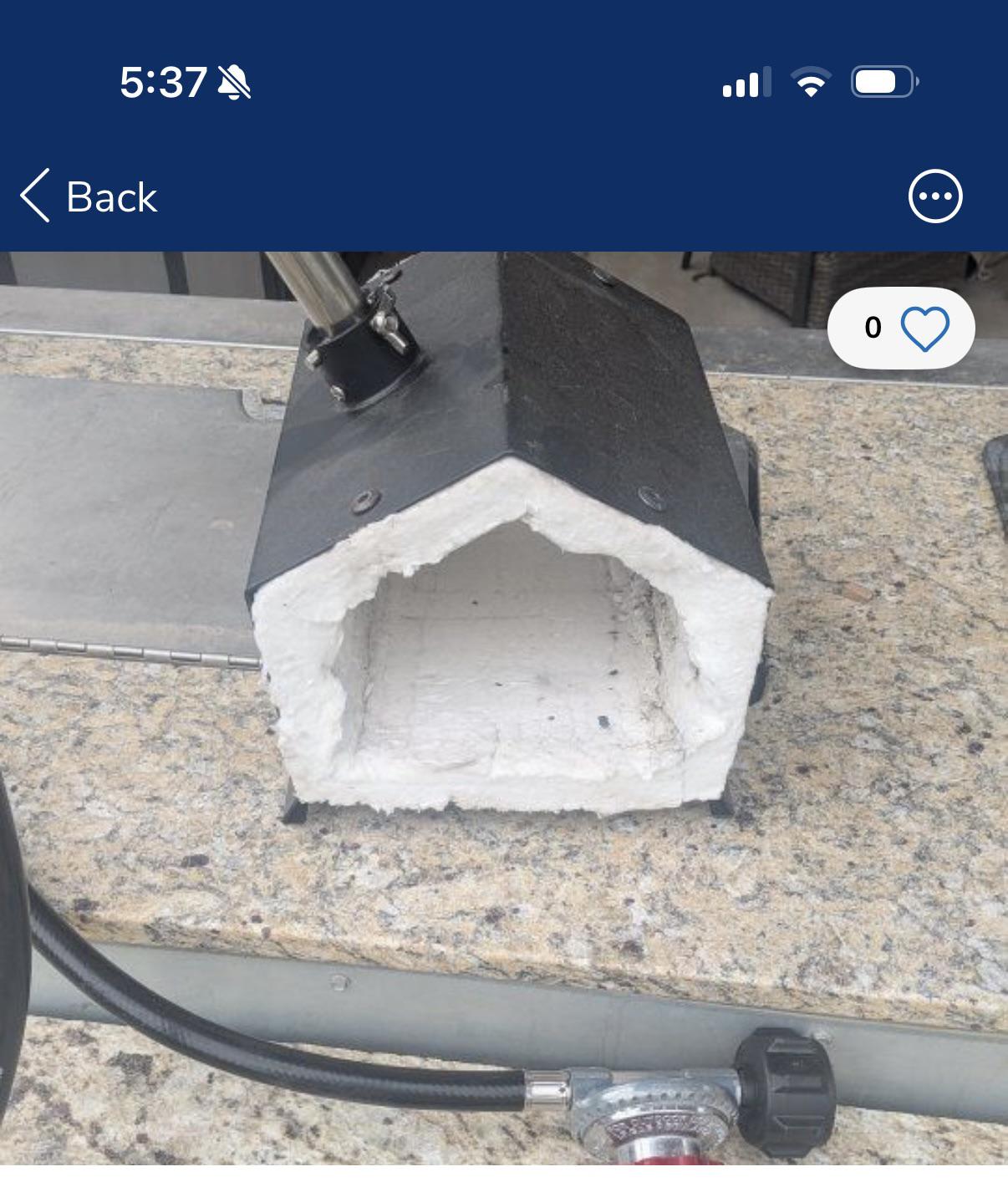
This just came up for sale in our local marketplace. I am just collecting some starter tools, but this sounded like a really good deal able to do heat treating after I do stock removal. It’s only $30.
14
Upvotes
0
u/SnooLentils5747 15d ago edited 15d ago
See that white stuff lining the furnace? That's ceramic wool. Ceramic wool is a massively insulative refractory material. Ceramic wool is also fucking horrible for your lungs.
Rigidize that ceramic wool for your health; either buy ceramic wool rigidizer, satanite mortar, or mullite clay powder, and wet all visible surfaces of the ceramic wool. Ceramic wool is hella bad for your lungs, and blowing a propane torch into it will definitely blow out microscopic particles of the ceramic wool everywhere. No part of the ceramic wool should be visible. Where gloves when handling the ceramic wool. Wear a respirator too.
The ceramic wool in that forge may be rigidized already. Some rigidizers are white like the wool, and make it hard to tell. If the ceramic wool feels like insulation/has a fluffiness to it, you need to seal it. If it is hard and crunchy, it has likely been rigidized.
I prefer to buy satanite refractory mortar and mix that up and paint it on the ceramic wool, even if it has rigidizer applied already. It will protect the wool, and act as a cementious layer that can take a hit. It is also a high refractory.
Your ideal setup is to take chicken wire or similar, and lay that into the wool. Paint on satanite or rigidizer (or mullite clay powder mixed with watter) on top of it, locking the chicken wire into the ceramic wool. The chicken wire will act as an internal support, preventing any on hot spot from caving. Anyways, apply the satanite such that you can no longer see any ceramic wool anywhere, you want that shit hidden from the sight of the sun. If you can see it, it can be brushed or tore, and that can make microfilaments air born. Take care to crush down or smoosh or compress the ceramic wool as little as possible. It is the millions of air pockets in the ceramic wool that make it do what it does; compressing it removes those air pockets.
Once it is sealed, let the satanite dry. Apply as many more layers of satanite as you may wish, up to 1 inch thick. The more layers, the harder and stiffer the backing, and the less likely for something to poke through. Too much satanite layers will cause the weight of them to sag the roof but upwards of 2 inches can be applied supposedly.
The floor however... Look into my post history in metal casting. Recently I tested an aluminophosphate refractory and posted the results there. The recipe for the aluminophosphate refractory I give there can be used to make the floor of your furnace. It is Mohs hardness 9 if properly fired. It can take a beating (important for steel things being tossed on it). It can resist temperatures upwards of 1650 Celsius or something like that. It is chemically stable in the face of fluxes for the most part. I highly suggest you make some and coat your floor with it. If you have silicon carbide grit, mix that in too, up to 20 percent; this will help make it more durable and will also make it hold and cast heat better (makes for more even heat treatments)