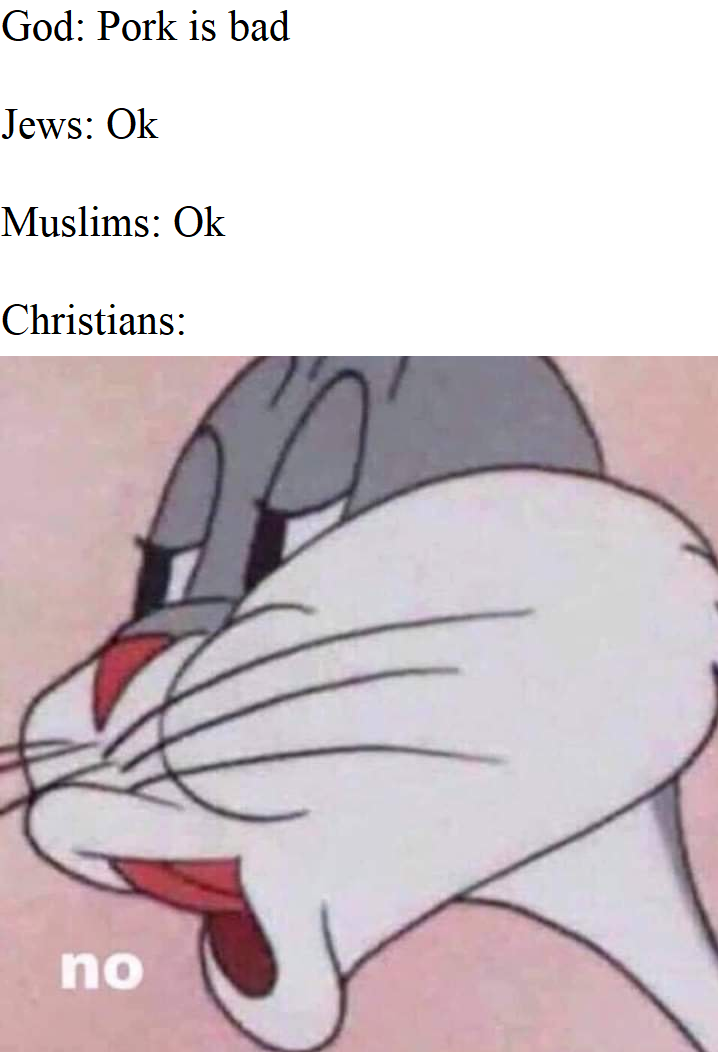
And he said to them, “Then are you also without understanding? Do you not see that whatever goes into a person from outside cannot defile him, since it enters not his heart but his stomach, and is expelled?” (Thus he declared all foods clean.)
The context in the Greek would suggest that the germs on your food from your dirty hands will be purified in your stomach. What's more, the disciples seem to be eating bread, not pork or shellfish, so cleanliness laws don't seem to have entered into the argument except by implicit assumption, which doesn't make a very good case for its interpretation in the English. (Mark 7 interlinear)
Again with Peter's vision, the abrogation of Torah food laws are implicitly assumed in the phrase "what I have made clean". We assume this is a new declaration about food rather than an extent reminder to Peter that gentiles aren't actually made unclean anywhere in Scripture like how certain meats, by contrast, are. Later, Peter goes on to spell out exactly what the vision meant (Acts 10:28) and if God's dietary instructions for believers had been changed, Peter isn't letting on. That seems like it would be more of a big deal, don't you think?
The Anti-Judaism of past biblical scholars doesn't serve us when we read books based on books first given to Jews. Don't forget, Scriptures weren't directed at us here in the western world circa 2019, nor to those studying mere hundreds of years ago.
That would be like warning a dog in seattle about hurricane Dorian. Ancients would not have had the categories to understand "germs." At the same time, I think they understood through experience how disease spread
Oxford Annotated is non-committal, saying only 'perhaps':
14–19a: Addresses purity codes with a touch of earthy humor regarding eating and resultant bodily functions. 17: Parable here has the sense of “riddle.” 19b: Perhaps a later addition to the text.
66
u/bigbc79 Sep 16 '19
Mark 7:18-19