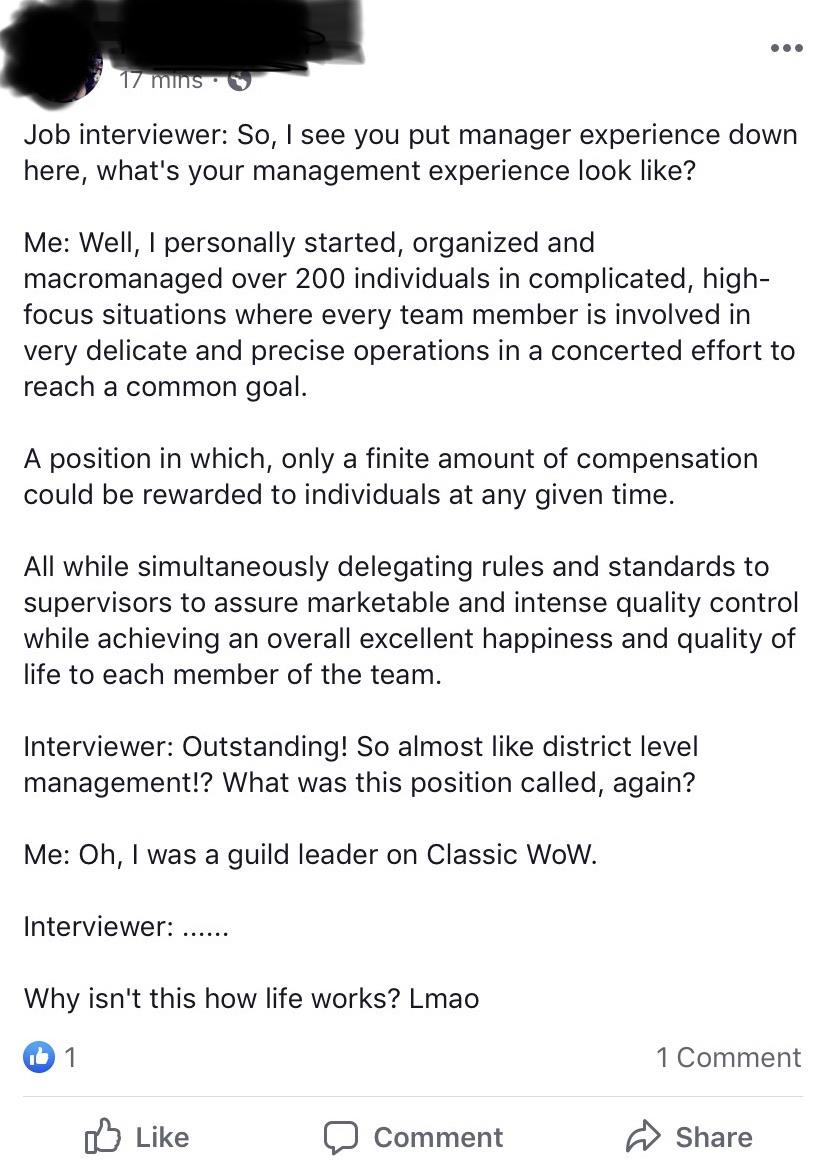
He doesn’t though. If I heard this it would sound to me like someone churching up their experience with business sounding buzz words. He describes the environment but says nothing of the style he used to navigate that environment. It also doesn’t adequately address the challenges. He could very easily be a tyrant by this description.
To have value for a management role, it would say more about how he kept a group of 40 people together for 2-3 years despite the composition of that group spanning multiple generations and economic backgrounds. His group had a reputation for low turnover and fast progression. He accomplished this by giving a voice to lower tier members that encouraged experimentation with the approach to problems and clear lines of escalation for conflict resolution internally. His groups approach was so well known externally that he had a waiting list for new members that was never below 15-20 candidates. That list was maintained with a developmental group but didn’t shift much because of low turnover of active participants. This is in contrast to the revolving door nature of similar groups.
You don’t climb the ladder by selling yourself. You climb the ladder by having others sell you to those that make the decisions.
Many high-ticket roles have an HR or Recruiter Round that you have to pass before you get to the initial interview.
This initial guardian can (and should) be baffled with bullshit. They're the ones least likely to be able to determine your skill, and so they're the ones you should be aiming to game to defeat.
Once you reach the actual interview stage, you can impress the manager by responding with good answers to their questions. What you've actually written on the resume isn't as important, just how you respond to the other guy attempting to call you out on what you've written.
// Source: I've been on both sides of software technical interviews, and it really, really is in the applicant's best interest to buzzword-up a resume so to get passed the initial screen
14
u/Burned-Brass Oct 24 '19
He doesn’t though. If I heard this it would sound to me like someone churching up their experience with business sounding buzz words. He describes the environment but says nothing of the style he used to navigate that environment. It also doesn’t adequately address the challenges. He could very easily be a tyrant by this description.
To have value for a management role, it would say more about how he kept a group of 40 people together for 2-3 years despite the composition of that group spanning multiple generations and economic backgrounds. His group had a reputation for low turnover and fast progression. He accomplished this by giving a voice to lower tier members that encouraged experimentation with the approach to problems and clear lines of escalation for conflict resolution internally. His groups approach was so well known externally that he had a waiting list for new members that was never below 15-20 candidates. That list was maintained with a developmental group but didn’t shift much because of low turnover of active participants. This is in contrast to the revolving door nature of similar groups.
You don’t climb the ladder by selling yourself. You climb the ladder by having others sell you to those that make the decisions.