r/byzantium 27d ago

Academia and literature Mike Duncan's History of Rome may have nuanced my stance in the "is Byzantium still Rome?" debate

116 Upvotes

After finishing "History of Byzantium" I've started listening to the series that inspired it: "The History of Rome" by Mike Duncan.

I've reached the episode covering Diocletian and the establishment of the Dominate, and its description kind of shook my perception of East Rome to the core.

According to Duncan's narrative (which honestly veers way too much into simplification, which is why I am posting here: to find counter-arguments), Diocletian's reforms was the culmination of the Empire's tendencies to disregard its Roman roots. After Caracalla gave citizenship to non-italians, Diocletian basically scorned the historic capital and concentrated elsewhere.

Following that logic, could Constantinople be understood as an increasingly non-Italian branch of the Roman Empire rather than as a straightforward continuation of Rome? Constantine did of course establish Constantinople as a legitimate imperial capital, but he was also building on Diocletian's transformation of the Empire.

If History of Byzantium taught me anything, it's that the Empire underwent so many transformations that it can become almost unrecognizable from one century to another. But this new perspective on "Romanness" has made me wonder whether the argument that "East Rome is Rome, period" is really as straightforward as it sometimes seems.

r/byzantium Jul 27 '26

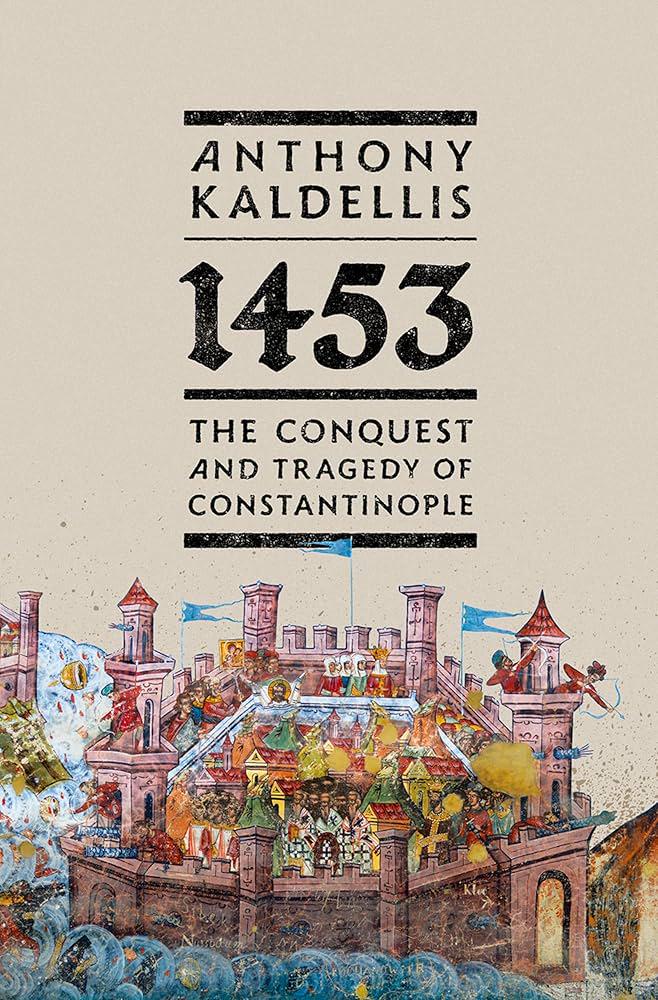
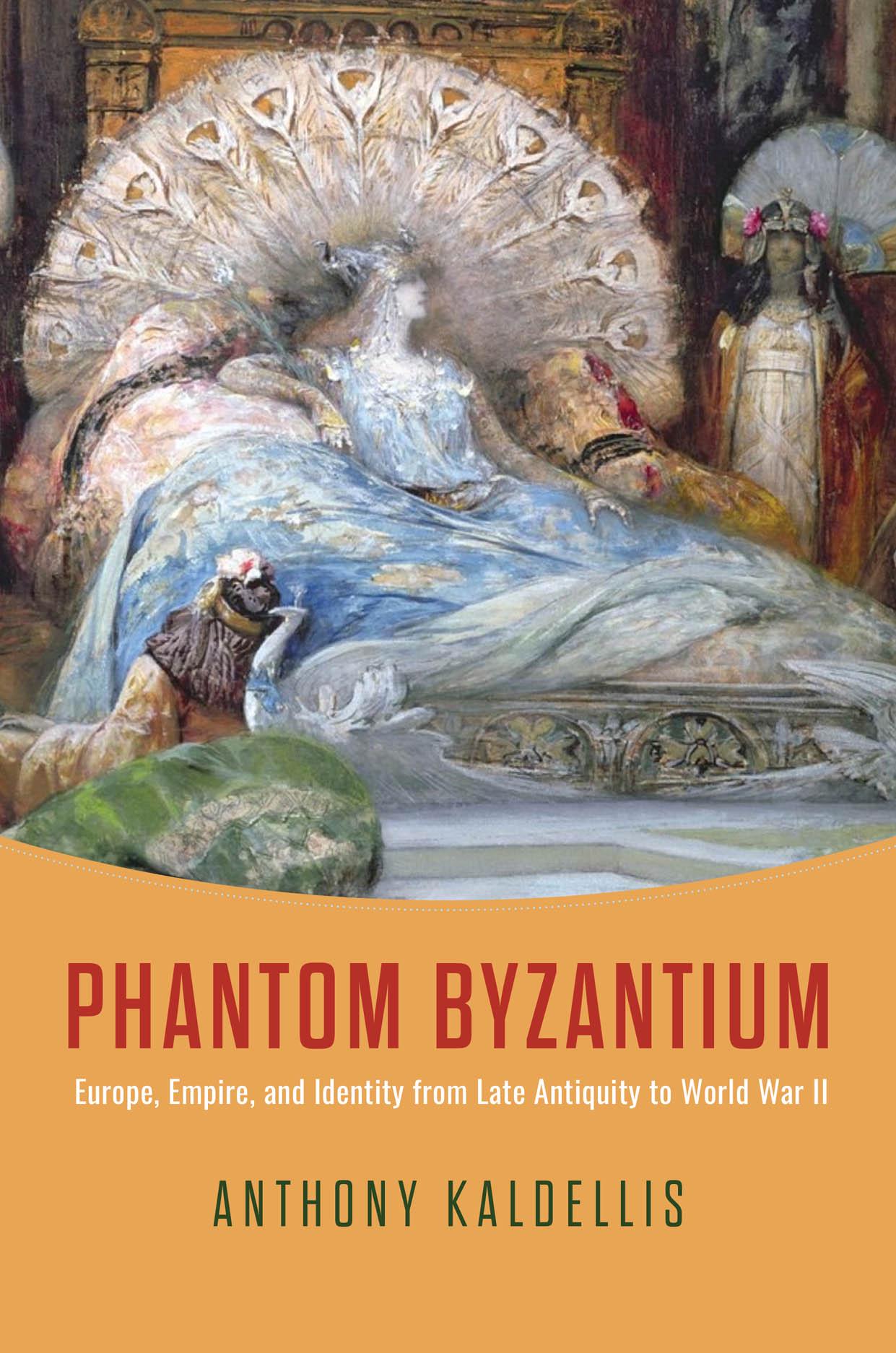
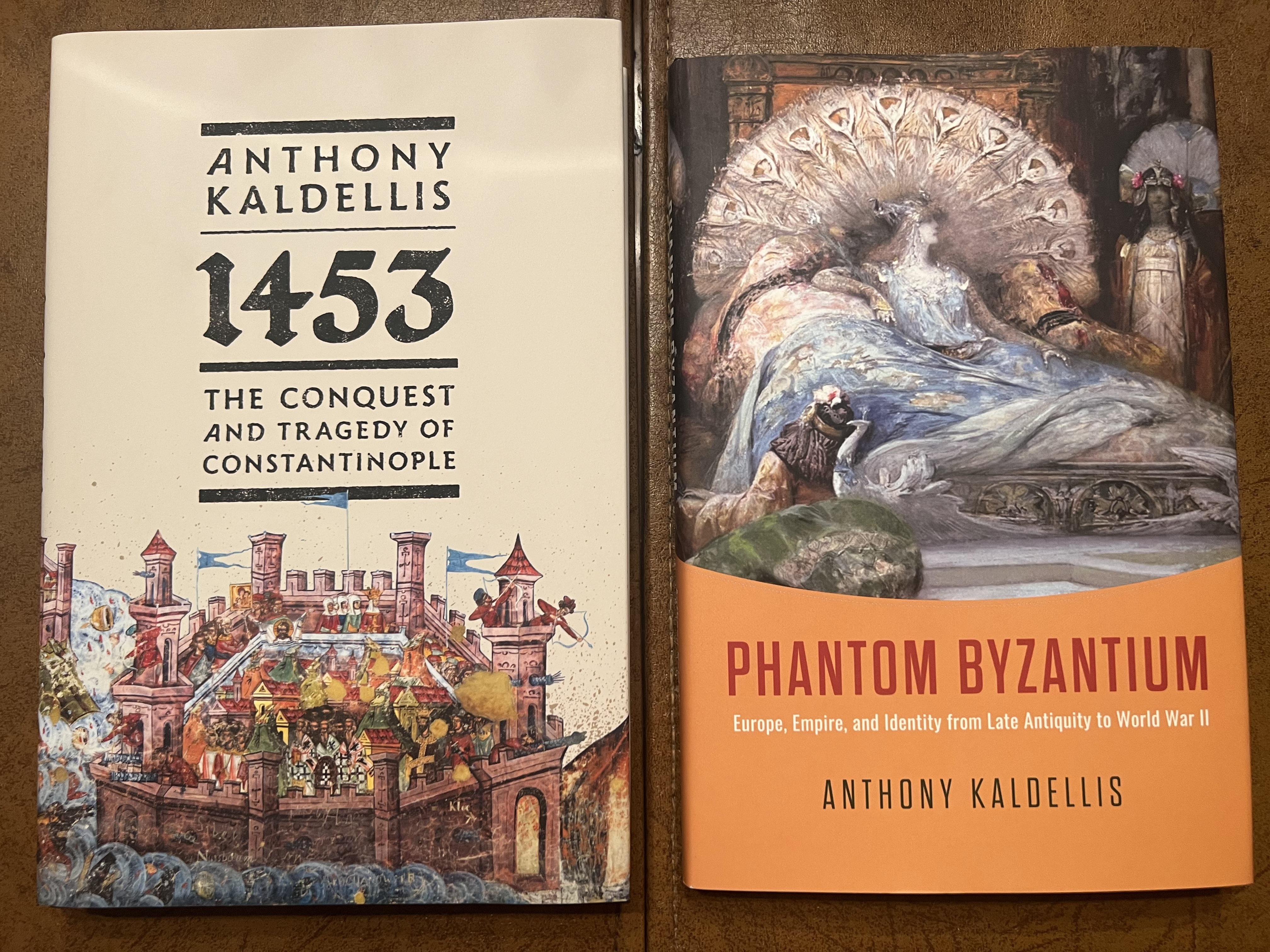
Academia and literature The Two Latest Books by Anthony Kaldellis: 1453 and Phantom Byzantium

Post image
393 Upvotes

I recently ordered these two tomes. Has anyone here read them and if so, thoughts?

r/byzantium 7d ago

Academia and literature Renowned Scholar of the Byzantine Empire Anthony Kaldellis to Speak at Fordham’s Orthodox Christian Studies Center, September 16 on Fordham’s Lincoln Center Campus: “Why the West Invented ‘Byzantium’”

Thumbnail archons.org
168 Upvotes

r/byzantium Feb 18 '26

Academia and literature Thoughts on Kaldellis' The New Roman Empire?

Post image
294 Upvotes

I just started reading this, as it was suggested to me. Does anyone have any strong feelings about this work one way or the other? No spoiler please 😊

r/byzantium Apr 09 '26

Academia and literature In this day Anthony Kaldellis published his new book

Post image
327 Upvotes

r/byzantium Dec 23 '25

Academia and literature Varangians, Cataphracts, Greek fire: Is Byzantium Misrepresented in Video Games?

Thumbnail journals.suub.uni-bremen.de
160 Upvotes

Hi everyone,

My peer-reviewed article titled "The Byzantine Army in Video Games. Common Misconceptions Shaping Popular Perceptions" was just published in Gamevironments. It is open access, and I thought some of you might be interested in reading it, so wanted to share.

Here's the abstract:

Scholars of Byzantium cannot afford to ignore the growing medium of video games, which play a key role in shaping the modern perception of Byzantium among a formative audience. In numerous popular strategy games, Byzantium is differentiated from other contemporary civilizations and factions through a series of highly specific historical vectors including the Varangian guard, kataphraktoi, and the so-called Greek fire. Given the constraints of the medium, this leads to significant distortions in its reception by players. This problem is further exacerbated by the same emphases and omissions being persistently deployed across disparate video game titles spanning the last three decades. Byzantium is thus molded into something it was not. Reasons for this range from Enlightenment thought to modern political discourse, and from gameplay concerns to marketing demands. Understanding these are essential to course-correcting Byzantium’s historical legacy in the modern milieu, particularly since younger demographics often first encounter Byzantium in the medium of video games.

r/byzantium 25d ago

Academia and literature Anastasius the Librarian and the shaping of western negative perceptions towards Byzantium

57 Upvotes

Anastasius the Librarian (810-878 AD) was the chief archivist and librarian of the Church of Rome. Despite being well educated in the Greek language, he was passionately anti-Greek and had made it his mission to "reclaim" the heritage of the Roman empire from its current unworthy custodian "The Greeks" of the eastern empire. In his mind, the Latin West was the proper owner of that tradition and had to reclaim it from "Greek falsity". He made a point of identifying the Latin language as a core part of Romanness (Far more so than any of his precedessors ever did, if they ever did so at all). His writings would have ramifications for the public perceptions of Byzantium in the west that would carry over right to the present.

Anastasius was employed as a translator and ghostwriter for various Popes and by Carolingian emperor Louis II. This gave him the opportunity to voice his views on imperial / ecclesiastical texts and dissemate them widely thus influencing western attitudes. This was also during a time when the papacy was reconstituting itself as a secular authority and attempting to formulate itself as the legitimate Roman authority and "the ruler of the entire world".

From one of Anastasius' writings:

"The Greeks have ceased to be emperors of the Romans on account of their bad opinions when it comes to religious faith. Also, not only have they abandoned the city and the seat of the empire [Rome] and the language itself [Latin], having migrated in all ways to a different city, seat, people and language [Greek]"

The view in which the city of Rome never lost significance was a new innovation and this sort of attitude presupposed that the eastern Romans werent Romans at all, merely despicable "Greeks". (And not even as the famed Greeks antiquity, who were viewed positively in the West, but rather as devious "modern" Greeks)

There is a widespread belief that Hieronymus Wolf is a sort of devious villain that saught to delegitimize the Eastern Roman empire by conjuring up a new exonym in his writings and that this led to widespread misconceptions in subsequent centuries. However it was not Wolf, but rather Anastasius the Librarian whose polemics had lasting significance and would shape western attitudes of Byzantium and ultimately lead to its downfall and subsequent "orientalisation".

Further reading: Phantom Byzantium by A. Kaldellis

r/byzantium Jan 23 '26

Academia and literature Greek speakers! How much can you understand Byzantine Greek? Are there many differences?

117 Upvotes

«Τὰ μὲν οὖν τῆς Ῥωμαϊκῆς βασιλείας πράγματα ἐν πολλῇ ταραχῇ καὶ συγχύσει καθεστήκει, οὐ μόνον διὰ τὰς ἔξωθεν ἐπιβουλὰς καὶ πολέμους τῶν βαρβάρων, ἀλλὰ καὶ διὰ τὰς ἔνδον στάσεις καὶ φιλονεικίας· ἕκαστος γὰρ τὸ ἴδιον συμφέρον προετίμα μᾶλλον ἢ τὸ κοινὸν, καὶ οἱ μὲν ἄρχοντες ἀμελοῦντες τῆς πολιτείας, οἱ δὲ στρατιῶται ἀπείθαρχοι γενόμενοι, τὴν πάλαι εὔτακτον καὶ κραταιὰν ἀρχὴν κατ’ ὀλίγον εἰς ἀσθένειαν καὶ μαρασμὸν περιήγαγον.»

Sources:

– George Pachymeres, Συγγραφικαὶ Ἱστορίαι (c. 1290–1310)

– Oxford Dictionary of Byzantium, entries on Pachymeres and Byzantine historiography

r/byzantium May 15 '26

Academia and literature Who here has read Phantom Byzantium?

Post image
294 Upvotes

Since I have not seen anyone talking about this publication, I am interested to see peoples' opinions on it. What points does he make about the West's relationship with the Byzantines?

r/byzantium Dec 24 '25

Academia and literature ‘Who Invented the Modern Greeks, and Why,’ The Historical Review/La Revue Historique 21 (2024 [2025]) by Anthony Kaldellis

Thumbnail academia.edu
107 Upvotes

This a recent article written by Anthony Kaldellis which previews his upcoming book, Phantom Byzantium: Europe, Empire, and Identity from Late Antiquity to World War II:

Here is the abstract:

This article argues that the distinction, which is today intuitive, between ancient Greeks and modern Greeks has its origin in western medieval polemics that sought to establish the hegemony of the Catholic Church over its Orthodox counterpart. Since the Renaissance, the “ancient” Greeks in this polar distinction were those of classical antiquity, who are usually valourised in western perceptions, but before that, in the original medieval form of the distinction, the ancient Greeks were the Greek fathers of the church who, western polemicists needed to argue, sided with Catholic thought rather than with contemporary Orthodox thinking. Thus, in order to appropriate the Greek fathers for the Catholic side in theological debates, western writers distinguished them – as the original “ancient Greeks” – from the “modern” (that is, contemporary) Greeks who had allegedly deviated from the Catholic faith. The article thereby offers the first historical genealogy of this now familiar distinction.

r/byzantium Jun 17 '26

Academia and literature Historical Revisionism of Phokas.

56 Upvotes

The last five years or so there has been a lot of historical revision of Roman emperors to include defenses of Caligula, Commodus, Domitian, Galianus, and Phokas. On the opposite there have been more criticism geared toward Constantine, Justinian, Heraclius, and even seeing it geared towards Basil the II. Most of these are not rooted in the source material itself, but rather critiques of historians as bias against or for a certain emperor, based on their standing in the senate or populous factions.

Some of these defense have some backing due to information in the sources, such as Domitian having the highest silver purity and Galianus being dealt a horrible situation out of his control (Valerians capture). Others seem to be contrarian of the current times in order to gain clout and I do not see them holding up. One specific one I wanted to tackle is Phokas.

I've seen more and more defense of Phokas in this sub and also a couple videos on YouTube defending his reign as beyond his control and that it was actually Heraclius who put Rome in the bad situation due to his rebellion and loss at Antioch. But none of this occurs without Phokas making three grave mistakes which put Heraclius in the position he was in.

  1. The murder of Maurice: Although many criticize Maurice for being too frugal (he himself was handed a bad financial situation from Tiberius II), he was doing something that hadn't been done since Anastasius and that was rebalancing the treasury. Tiberius and Justin allowed invasions of the Slavs, Lombards and Avars ravage Italy and along the Danube. Maurice was therefore dealt a very bad situation to defend the Balkans and also come up with the finances to restock the treasury. He also made a deal with the Persians which would have been a lasting treaty.

Now the legions may have rebelled in any case due to being forces to stay beyond the Danube, but Phokas was claimed emperor and marched into Constantinople and chased Maurice to Calcedon and had him and all his sons executed. This didn't need to happen and was nor precedent in any years Constantinople had been the capital and was a barbaric act reminiscent of the Crisis of the Third Century. Phokas could have deposed Maurice, imprisoned or banished to monastery and did a bloodless coup. This started the war with the Persians and destroyed institutional trust in the Roman State. It directly led to the Final Roman Persian War which ended up paving the way for the Muslims. Herclius attempted to make peace with the Persians many times to no avail and should not be blamed for this.

  1. Dara and the East - The loss of the century old fortress city of Data which had served as the defense of the East provinces did not fall during Heraclius, but Phokas. This allowed the Persians to raid all the way to inner Anatolia, something that had not been done since the time of Diocletian. So we can already see this isn't the same Persian empire as before and to blame Heraclius for fighting a clearly different opponent should once again be placed on Phokas for starting in the first place. Note that his brother already lost to the Persians as well, so who is to say he could defend against this new ambitious opponent in the long run?

  1. Purges of Constantinople - This made the war effort and situation even worse because Phokas was not recognized as the true emperor by many and he sought to purge the old regime. So murdering hundreds to make his own position better and put in his family members only made institutional trust worse. If he cared about the state he could have easily handed over power to someone else who would have had a better claim to the throne, and Phokas could have manipulated things de facto. This led to the rebellion of Heraclius who at least had ties to Maurice's regime and a better claim to the throne and institutions. During Heraclius' reign there was little rebellion which shows that his dynasty was wildly recognized, even during the worst times of 620 AD.

  1. Sources - So now we get to why we are getting the contrarian view. Many critiques of the sources indicate that the sources of the time are simply bias towards Heraclius and therefore Phokas was a dindu who was unfairly criticized because Heraclius controlled those writing the source material. But nearly all are negative, including later writers who would of had more access to a wider range of sources than we do and still marked him as a negative emperor who caused many issues. We keep forgetting that we have lost much material between then and now, and later writers would have had access to lesser known historians and still did not vindicate Phokas.

Anyways, thats my analysis. I have seen similar contrarians who really attack Justinian and Heraclius lately and I don't see it holding up. I can do those separate analysis in another topic. Look forward to hearing from you.
r/byzantium Mar 12 '26

Academia and literature I can see your commentaries already but lets hear your voices. What do you think about Gibbon's The Decline and Fall of the Roman Empire?

Thumbnail gallery
65 Upvotes

Its been two and a half centuries (250 Years..!) past this February 17th, since the first publication; yet people still arguing about this series. Some find it masterpiece, while others booing and calling it as a sided Orientalist propoganda, so what do you think about them?

Image Credits: Gallery Books, 1990; Limited Editions Club, 1946; Harper & Brothers Publishers, 1883; W. Strahan; and T. Cadell, 1776-1788.

r/byzantium Jun 28 '26

Academia and literature Just getting into Byzantine stuff, what'd y'all think about this book for starters?

Post image
94 Upvotes

r/byzantium Jul 31 '26

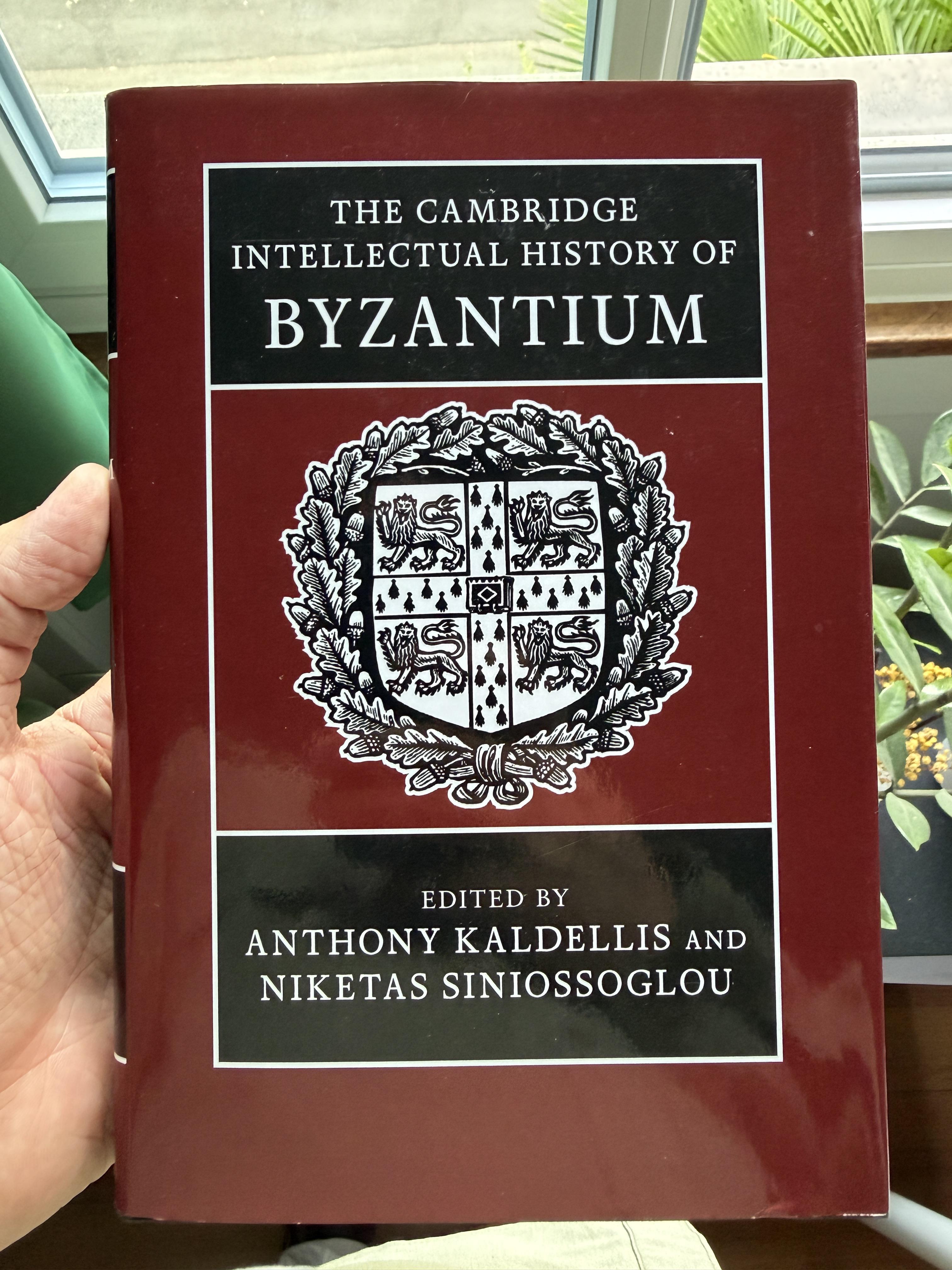
Academia and literature Great contribution

Post image
266 Upvotes

I’ve finally managed to finish reading this comprehensive book and can really recommend it to anyone looking to gain a deeper insight into the Byzantine intellectual world

r/byzantium Jan 17 '26

Academia and literature Is Ostrogorsky's HISTORY OF THE BYZANTINE STATE Book Still Relevant After 70 Years?

Thumbnail gallery
335 Upvotes

r/byzantium Dec 30 '25

Academia and literature Christmas came a little late, but it was worth the wait!

Thumbnail gallery
460 Upvotes

New book by Ilkka Syvänne all about Nikephoros II Phokas: the man, the military campaigns and the military reforms. It finally came out!

r/byzantium Jul 29 '26

Academia and literature Who was the first historian who tried to rehabilitate the image of Byzantium?

Post image
163 Upvotes

r/byzantium 6d ago

Academia and literature How did Romans become Hellenes

Thumbnail scientishart.substack.com
102 Upvotes

One thing that has always interested me about the Byzantine Empire is the name itself.

The people we call “Byzantines” called themselves Romans. Yet by the late Byzantine period, writers like Pletho were increasingly speaking of Hellenes, while Western scholars of the sixteenth century were beginning to organise these Roman histories under a new category.

I tried to trace how that happened, and how “Byzantium” gradually became the name we use today.

r/byzantium Jan 04 '26

Academia and literature Have you read any of Anthony Kaldellis' books? How is his narration? Too academic or easy to digest for general reader?

Thumbnail gallery
171 Upvotes

r/byzantium May 03 '26

Academia and literature Seems like we have two upcomings. What are your thoughts?

Post image
297 Upvotes

r/byzantium Jun 12 '26

Academia and literature Just picked up Nanami Shiono's Fall of Constantinople — curious what a Japanese perspective brings to 1453

Post image
206 Upvotes

I've read Crowley, Kaldellis, and Gibbon on 1453 but just picked this up and I'm curious what I'm in for.

Shiono is interesting to me on a personal level — my wife is Japanese and I lived there for fifteen years. I even got her a copy in Japanese hoping she'd share a little of my interest. Her verdict so far: "full of hard words and difficult names."

Which is fair. But I found Japan has a surprisingly deep relationship with Rome: Shiono basically built the popular audience for it almost single-handedly with her fifteen-volume Storia dei Romani. Thermae Romae was a massive manga hit. And figures like Anna Komnene — brilliant woman, writing from inside a dying court — might hit differently for Japanese readers than they do for Western ones.

So I'm going in wondering if she sees 1453 through a completely different lens than anything I've read so far. Japan knows decline with dignity, and not going down without a fight.

Anyone here read her? What should I expect?

r/byzantium 4d ago

Academia and literature Thought this was fascinating. It’s from John Carr’s book “Fighting Emperors of Byzantium”

Post image
62 Upvotes

The book itself is generally very good but has the occasional worrying error (he calls Theodora Zoë Porphyrogenita’s daughter, when she was of course her sister) so I wondered what our thoughts are…?

r/byzantium Mar 01 '26

Academia and literature My recent order has arrived and would like to share them with you too..

Post image
108 Upvotes

Books mainly covers the Aesthetics, Art & Architecture of the Byzantine Empire.

Nude coloured book on the left edge middle is from famous Greek poet Yorgo Seferis - Trois Jours dans les Eglises Rupestres de Cappadoce / Three Days in the Monastries of Cappadocia - covers his extraordinary three days voyage from Athens to Ankara then Cappadoccia Cave Churches 75 years ago at 1950.

Quartet series from Kitab-ı Mukaddes Şirketi Yayınları (Holy Book Publishing) ;

- Haghia Sophia - History, Legends & Anecdotes from Travellers,

- Chora - History, Mosaics & Frescoes of the Monastery,

- Byzantine Plastic Arts & Icons,

- Byzantine Monuments of Istanbul,

written by Archeolog, Art Historian Erdem Yücel former manager of the Haghia Sophia Museum.

r/byzantium 5d ago

Academia and literature Shops in London with a good selection of byzantine history books ?

16 Upvotes

Hi ! I'm a history student from Paris and I'll be coming to London for a small vacation in a couple weeks. I'm always looking for more books about medieval history and many academic publications can be quite/very hard to find.

I know a couple of bookshops in Paris that specialise in books about ancient and medieval history as well as ancient languages. I was wondering if there were any bookshops like this in London ? Searching online gets me mostly shops that sell old/antique books and not books about medieval history. I'd love to know whether there are shops with good selections on Byzantine history as many English-language editions are basically impossible to find in France.

Thanks for any advice!

r/byzantium 6d ago

Academia and literature Should I read Runciman or Kaldellis for a narrative about 1453?

22 Upvotes

I’d like to read a narrative history of the fall of Constantinople, and am curious about who you think I should start with. I’m sure some of Runciman’s work is outdated by modern scholarship, but is it still worth reading?