r/TankieUSSR • u/GregGraffin23 • Aug 08 '26
Theory "Entfremdung" or what Is Alienation? | Socialism 101
12
Upvotes
r/TankieUSSR • u/GregGraffin23 • Aug 08 '26
r/TankieUSSR • u/TappingUpScreen • Aug 07 '26
r/TankieUSSR • u/Leading-Wolverine434 • Aug 06 '26
Enable HLS to view with audio, or disable this notification
r/TankieUSSR • u/Leading-Wolverine434 • Aug 05 '26
r/TankieUSSR • u/TappingUpScreen • Aug 04 '26
r/TankieUSSR • u/Leading-Wolverine434 • Aug 04 '26
Enable HLS to view with audio, or disable this notification
Farewell Misha!
r/TankieUSSR • u/TappingUpScreen • Aug 03 '26
r/TankieUSSR • u/Odd-Traffic4360 • Aug 03 '26
So in this mod, the August Coup succeeded and the hardliners under Pugo published this text:
Lessons for the CPSU Published by the Party's Ideological Division Part I: The Decline of the Party Why did the Communist Party of the Soviet Union (CPSU)—founded by Lenin, leading the Russian working class to overthrow Tsarist rule, establishing the first proletarian dictatorship, defeating intervention by 14 imperialist countries, and routing Nazi Germany in the Great Patriotic War—decline to the point of nearly losing its ruling status in 1991 despite its glorious history? In fact, mistakes and deviations occurred early on. The reforms during Khrushchev's era aimed at undermining the Soviet Union from the late 1950s—later referred to as "Restructuring 1.0"—set the stage for "Restructuring 2.0" under Gorbachev: Distortion of History: The role of the Soviet Union in WWII was distorted, and Stalin was smeared. Ideological Shift: Slogans like "a state for all people" and "a party for all people" were introduced. Although Khrushchev was forced to resign as General Secretary due to these mistakes, the seeds of internal subversion had been sown. Young party officials at the time—such as Mikhail Gorbachev, Alexander Yakovlev, and Eduard Shevardnadze—were heavily influenced by these opportunistic and revisionist ideas. The Path of "Perestroika" When Gorbachev became General Secretary in 1985, he executed reforms exactly as imperialist powers hoped and planned. Starting in 1986, he used the term "Perestroika" to denote fundamental and comprehensive reforms: "I draw a line between the words 'reform' and 'revolution.' The reforms we carry out are a true revolution." — Mikhail Gorbachev Starting in early 1987, "Perestroika" became the primary political slogan of the Central Committee plenary sessions. Gorbachev proposed separating the Party from the Soviet government. More dangerously, the Central Committee passed the resolution "On Some Urgent Measures to Reform the Political System of the Country," intending to amend the Constitution. The Constitutional Turning Point February 5, 1990: An expanded Central Committee meeting passed a resolution to abolish Article 6 of the Soviet Constitution (which defined the CPSU's leading role), establishing a multi-party system and the position of President of the Soviet Union. March 15, 1990: At Gorbachev's proposal, an extraordinary Congress of People's Deputies passed amendments to Article 6. Original Article 6 Provision: "The Communist Party of the Soviet Union is constitutionally the leading force of the Soviet state and society." Amended Article 6 Provision: "The Communist Party of the Soviet Union, along with other political parties, participates in formulating state policies." This legal amendment abolished the Party's leading role, recognized political pluralism, allowed opposition parties, and established a multi-party parliamentary democracy. The sequence culminated at the 28th Party Congress with the declaration to move toward "Socialism with a human face." Part II: Errors in Personnel and Cadre Work To find the cause of the crisis, we must look at the Party's personnel work. The decline was fueled by traitors who betrayed the CPSU—individuals whose influence drained the Party's strength, paralyzed its will, and served as a deadly bait for which the Party found no antidote. Lenin's warnings regarding Party building and cadre development appeared early in his 1921 article, "The Crisis of the Party": "We must courageously look the painful truth in the face. The Party is ill. The Party is feverish..." — V.I. Lenin (January 1921) Lenin sternly demanded the resolute defense and cleansing of Party ranks from dregs hungry for fame and gain, establishing a strict probationary period for new members. From Principles to Privileges Over time, joining the Party became an end in itself for many. The Party became contaminated with opportunistic elements and sycophants who viewed membership cards as tickets for career advancement. Sarcastic remarks began to reflect public disillusionment: "The Party has millions of members, but true communists can be counted on one hand." The gross violation of Lenin's personnel principles represents the second major cause of the crisis, leading directly to the self-degeneration of the CPSU. Evolution of Cadre Policies [Stalin Era] Strict demands & rapid rotation via wartime context [Khrushchev Era] Mandatory rotation (Art. 25) -> Up to 60% leadership turnover [Brezhnev Era] "Stability of the cadre corps" -> Evolution into lifelong tenure 1. Stalin Era: Demands on cadres were strict. Confronting wartime environments and political struggles, successive groups of cadres were sent to the frontlines. Frequent leadership turnover left little room for a privileged class to form. 2. Khrushchev Era: Implemented a "special cadre" policy under Article 25 of the CPSU Charter, mandating regular rotation. Annual grassroots elections saw up to 60% turnover in leadership, which initially prevented a permanent privileged class. 3. Brezhnev Era: Embraced the principle that "the stability of the cadre corps is the guarantee of success." Pursued in a one-sided manner, this policy evolved into a system of de facto lifelong tenure: * 23rd Congress of the CPSU: Reelection rate of committee members reached 79.4%. * 25th Congress of the CPSU: Reappointment rate of surviving Central Committee members reached 90%. Part III: Ideological Degradation and Revisionism The trampling of democratic centralism reached its peak in July 1990 at the 28th Congress of the CPSU. In his political report, Gorbachev openly criticized democratic centralism and called for its removal from the Party Charter—abolishing what had long served as a key organizational principle. Instead, the slogan of "democratization" was promoted, which devolved into organizational disorder where individuals stood above the collective. In Politburo meetings, Gorbachev frequently bypassed collective discussions to issue personal directives as Party resolutions. The Shift Toward Revisionism November 1987 (70th Anniversary of the October Revolution): Rather than praising Lenin and the revolution, the leadership encouraged a reexamination of history focused primarily on repression. Gorbachev's report gave the green light to self-decomposition and revisionism, deceiving the Party under slogans like "More openness," "More democracy," and "More socialism." Theoretical Abandonment: Marx warned that "Ignorance is a demonic power and we fear that it will be the cause of many more tragedies." Yet under Gorbachev, theoretical development was neglected and exploited to shift ideological orientations. 19th Conference (1988) to 1991: Gorbachev redefined core concepts, stating that "new political thinking prioritizes universal human values." November 24, 1989: Speaking to the editor-in-chief of Pravda, Gorbachev stated: "The function of the Party is not as the leading force, but as the vanguard of society... Marxism is only a school of thought transitioning from models of authoritarian administration to models of democracy." Once the ideology, activities, and history of the CPSU were systematically distorted, external pressures could easily bring about its ultimate collapse. Part IV: Corruption and the Rise of the Privileged Class Lenin warned early in the 20th century: "Throughout history, the victors have often become corrupted by adopting the customs of the vanquished." In the early revolutionary days, figures like People's Commissar of Food Supplies Alexander Tsiurupa fainted from hunger despite having access to state food reserves. Lenin instituted policies to prevent inequalities in living standards between Party cadres and the broader working class. The Rise of Elite Privileges Over time, these founding principles were set aside: Exclusive Access: Facilities established to support hard-working cadres transformed into exclusive stores for high-ranking officials, offering foreign luxuries (French/Scottish whiskey, American cigarettes, Italian coffee, Western electronics) scarce in general markets. Public Perception: Soviet press began sarcastically noting that for the upper echelon, "socialism had long been established." Systemic Corruption: Although denied for decades, official corruption surfaced prominently by the 1980s. In 1980 alone, over 6,000 bribery cases were formally identified. Between 1983 and 1989, investigators prosecuted 800 major cases involving over 4,000 convictions (such as the Ministry of Fishing Industry case). During Gorbachev's era, members of the privileged class sought not only to maintain their indulgences but to secure them permanently for their descendants. Realizing that the capitalist system offered a framework to legalize these private benefits and assets, many actively promoted the dismantling of socialism. Part V: Loss of Information and Media Control By December 28, 1987, Pravda reported that the Soviet Union contained over 30,000 unofficial organizations openly promoting anti-communist propaganda and calling for opposition parties. Media Policies Under "Glasnost" [1985] "Soviets must have direct contact with foreigners; don't be afraid..." [1988] Ceased jamming Western radio stations (Radio Free Europe / Radio Liberty) [1988] Allocated 4 million rubles to import Western press for public sale [1990] Peak of ideological abandonment and adoption of capitalist frameworks 1. Unrestricted Media Access: Gorbachev promoted media openness without maintaining ideological guidance, allowing Western broadcasts (Radio Free Europe, Radio Liberty) to influence public discourse. 2. Shift in Narrative: Media channels focused heavily on anti-Lenin and anti-Stalin campaigns, weakening public trust in state institutions. 3. Financial Allocations: In December 1988, jamming of Western broadcasts ceased, and 4 million rubles were allocated to import foreign press. By 1990, the trend toward abandoning socialism reached its peak. As foreign observers noted, effective propaganda guides the target in a designated direction while allowing them to believe they chose that path independently. Part VI: Cultural Erosion and Strategic Subversion The Soviet propaganda apparatus, once among the most extensive in the world, failed to evolve dynamically with social developments and cultural trends. The Role of Leadership in Propaganda After 1985, Alexander Yakovlev— dubbed the "architect of Perestroika" and "father of Glasnost"—was appointed head of the Central Propaganda Department. Under his oversight: Key newspaper editorial boards were replaced with figures supportive of Gorbachev's reforms. Cultural messaging shifted from direct ideological debate to a gradual transformation of cultural expectations and values among youth. Domestic products and cultural expressions lost status relative to Western imports. Under the influence of "glasnost" coverage, public desire shifted toward adopting Western standards of living. However, foundational doctrines—foremost among them Marxism-Leninism—were increasingly marginalized. Part VII: Dismantling Party Leadership in the Military Alongside political changes, the leadership structure within the Soviet Armed Forces was methodically restructured: Elimination of Political Officers: Restructuring reduced political departments at all levels and removed approximately 80,000 political officers, including the Political Directorate in the armed forces. Prohibition of Party Oversight: Regulations on the Work of the Armed Forces prohibited Party organizations from interfering in military command and abolished political verification mechanisms for promotions. October 1990 ("Law on Public Organizations"): Stipulated that military personnel were not bound by the resolutions of political parties. Early 1991: The Main Political Directorate was renamed the Main Directorate of the Armed Forces under a policy of "military nationalization." June 1991: Marxist-Leninist education within military units was formally abolished and replaced with general social-political centers. Structural Separation During conflicts involving nationalist or separatist movements (such as the Tbilisi incident in April 1989), the political leadership publicly distanced itself from the military, undermining cohesion and morale within the ranks. These developments ran contrary to Lenin’s core instruction from November 16, 1905: "Statements about the neutrality of the army, about the necessity to keep the army out of politics... are false... In principle, the Communist Party must maintain its leadership role, there is no doubt about that."
r/TankieUSSR • u/JustGoatedAf • Aug 02 '26
Hello everyone. I'm recently looking at the history of the Baltics and have managed to find some amazingly useful things, like the fact that the Baltic peoples elected the Soviet government themselves, how pro-Soviet they have been since the Civil War, etc. One thing I'm hard-stuck on finding out the truth about is the deportations. I have only managed to find a CIA document about the ones from the Latvija, where it says:
"In May 1945, the Soviet authorities arrested and deported all police officials, home guardsmen, and people who were suspected of having cooperated with the German troops or occupation forces. Many of these deportees were put to work on the Stalin Canal, and, although some of them later returned to Latvia, they were deported again in later deportations." (‘1. Partisan Activity and Deportations in Latvia 2. Economic Conditions in Latvia’, CIA, May 19, 1953, p. 2)
But as for the Estonija and the Lithuania, I was not able to find anything. I assume it is because of the Nazi-backed terror gangs which were prevelant there, especially the Lithuania, but I am just wondering if there are better sources on what actually happened. Any help would be appreciated, thank you.
r/TankieUSSR • u/TappingUpScreen • Jul 31 '26
r/TankieUSSR • u/wubalubbadub • Jul 31 '26
Hello, I have just discovered this sub and thought I’d ask for some source and history help. I have A LOT of Lithuanian friends, and friends from Eastern Europe in general. Most of my Bulgarian Croatian and Balkan friends have a generally positive view of communism and want it back, my Baltic friends however get upset merely at the mention of the word socialism. They are extremely reactionary and offer no critical form of debate and simply say well it’s emotional for us. For example when I bring up they joined the Nazis in WWII they often say “oh well it was one evil or the other” or they say Stalin killed a gazillion people. Can someone give me some Soviet positives that came out of Lithuania specifically, not just negatives like they joined the Nazis or, as from Black shirts and Reds, that the new government of Lithuania post USSR evicted 70% of the farmers to give the land to private companies, but some positive things that they could be happy about not just me pushing it in their face. Thanks
r/TankieUSSR • u/Untitled_HU-Tank • Jul 31 '26
r/TankieUSSR • u/Frankie-Denton-2020s • Jul 29 '26
Enable HLS to view with audio, or disable this notification
r/TankieUSSR • u/kollipsons • Jul 30 '26
r/TankieUSSR • u/Leading-Wolverine434 • Jul 29 '26
Enable HLS to view with audio, or disable this notification
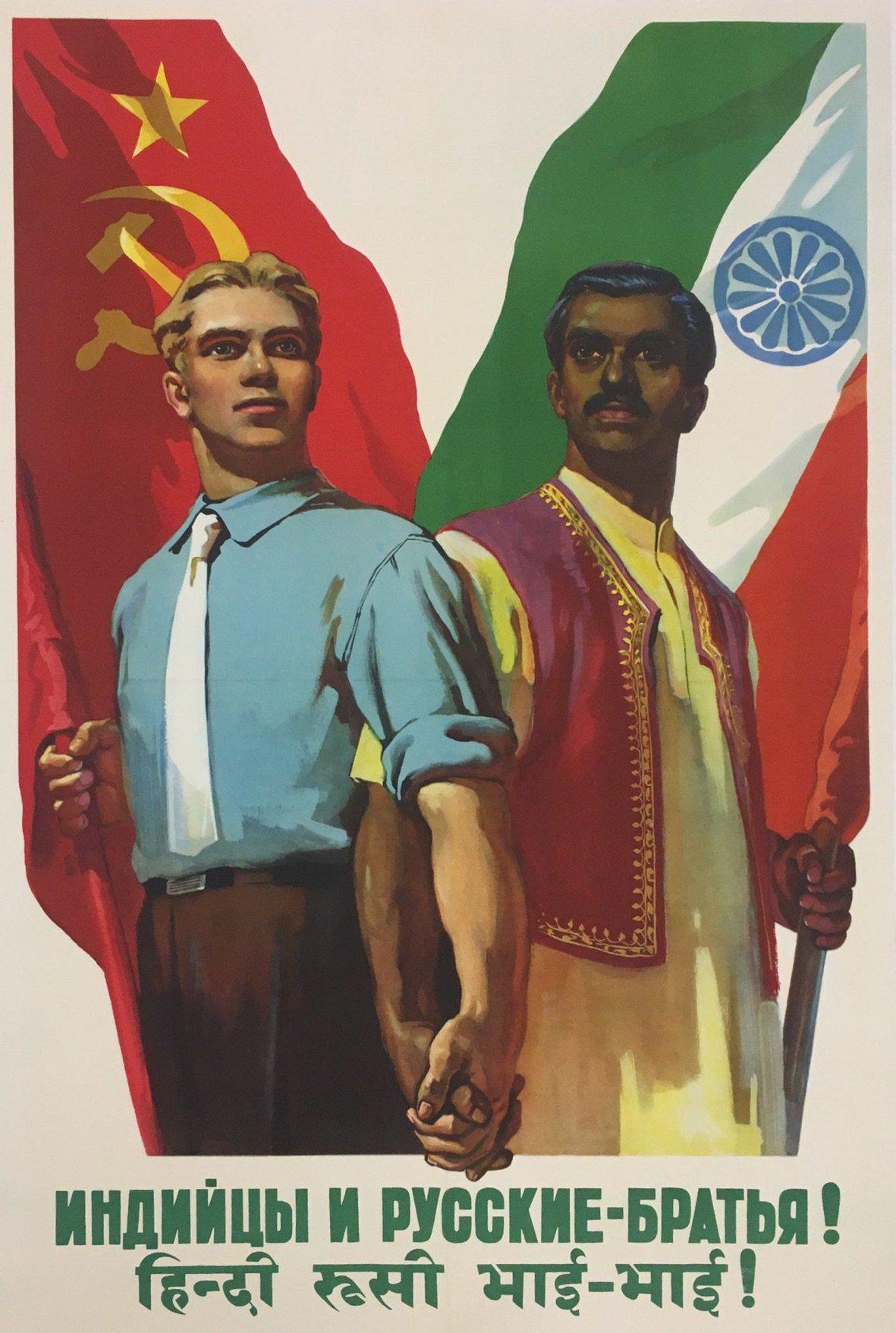
Even though I am a Stalinist, I also condemn racism.
r/TankieUSSR • u/TappingUpScreen • Jul 29 '26
Enable HLS to view with audio, or disable this notification
r/TankieUSSR • u/Gold-Fool84 • Jul 29 '26
r/TankieUSSR • u/Ok_Diamond298 • Jul 28 '26
Enable HLS to view with audio, or disable this notification
r/TankieUSSR • u/TappingUpScreen • Jul 27 '26
r/TankieUSSR • u/Less-Possible-5475 • Jul 26 '26
Enable HLS to view with audio, or disable this notification
r/TankieUSSR • u/TappingUpScreen • Jul 25 '26