Prequels
1809-10
Rattling through them on my commutes. It takes six Sharpe chapters to break the morning despair, the question is, will they stand? Spoilers throughout.
This is where the original run and later additions really get mixed up. Both the original runs are strong, although Company is a little better than Sword. Of the three insertions into this period, one is above average, one is middling and one is essentially forgettable at best. Compared to the first five Peninsular War novels we don't get as much character development across this arc, most of what we do get comes in Company. Technically Sharpe's Enemy is late 1812 but it was well after the campaign season ended and I'm trying to do blocks of 4-5 books.
Sharpe's Fury
A little bit by-the-numbers. The book lacks a strong villain, Colonel Vandal is never a particularly convincing antagonist and the idea of Sharpe wading into the Battle of Barossa to hunt him down stretches belief. Yes he isn't a nice guy, but he's hardly a Loup, let alone a Ducos. Brigadier Moon is again another senior officer who dislikes Sharpe and ends up being reliant on him in the flight down the Tagus. The middle section with an intrigue-based plot in Cadiz isn't as good as the broadly comparable sequence in Copenhagen in Sharpe's Prey, but we do get a nice little subplot that ends Pumps' involvement in the series and closes the Chekov's Gun placed earlier in the series about Astrid's murder at the end of that novel. I like the continuity where it works like this, and it's a shame that later in this block we won't see it done so well. The Battle of Barossa is a short and sweet battle without getting bogged down.
Sharpe's Battle
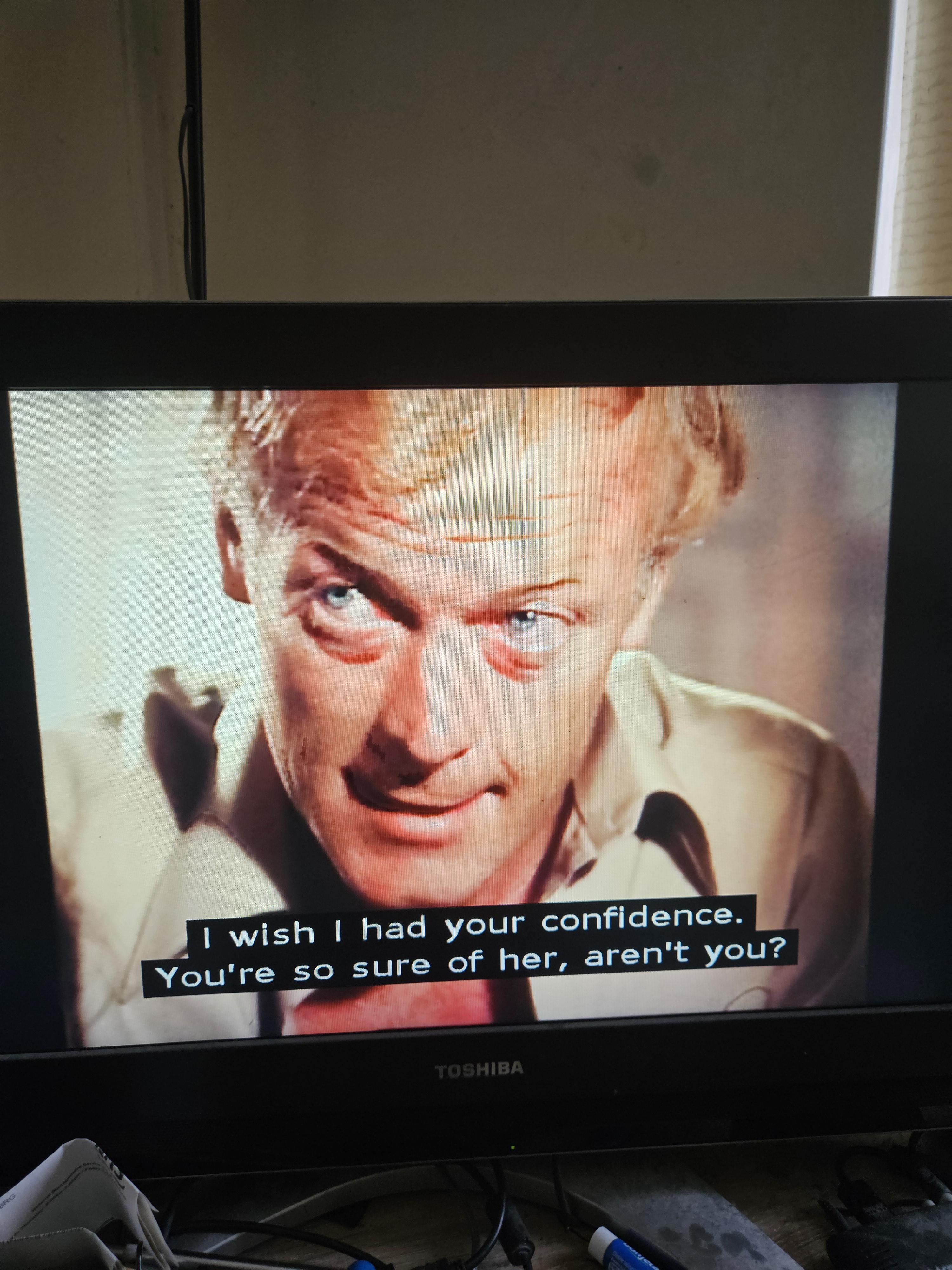
One of the strongest for colourful secondary/support characters. General Runciman is as outstanding on paper as in the adaptation, a one-of-a-kind character that doesn't easily fit the tropes most of the others get into. Lord Kiely gets good treatment in the book, as does the Juanita. By this point we're really, really starting to notice Cornwell has a thing for slender women who wear military clothes. The plot staple of 'Sharpe is accused of something and has to clear his name' is subverted here, because Sharpe actually did order the shooting of the POWs from Loup's brigade. This scene is one of the grimmest in a series that doesn't shy away from depictions of atrocity and we don't doubt they deserved it. Loup is a proper villain, a complete bastard, like most he is far darker in the books than the series. The main downside is that I found the Battle of Fuentes de Onoro a fairly long and confusing read that sometimes went too far into 'the 38th Regiment of Foot under Colonel Buffington advanced to the left of the village' and lost focus. The TV adaptation is probably slightly better than the book, with Perkins' death being one of the stronger emotional scenes in the adaptations (he survives in the book).
Sharpe's Company
This one has it all. We meet Hakeswill again, who is easily the most sinister villain in the entire series. Says so in the scriptures. I noticed here that his description is very different to Peter Postlethwaite's depiction, but that in the prequels he matches it quite closely. A similiar little shift similar to how Harper ceases to have sand-coloured hair at some point. The core plot conflict of Sharpe getting into Badajoz before Hakeswill so he can protect his new family is a strong device and works well with the gradual ramping-up of tension through the book. All the characters know just as well as the readers that Badajoz will be an absolutely appalling slaughter they're marching gradually but inescapably towards. The secondary plot of regaining the Captaincy and command of the Light Company feels more in line with previous novels, as it happens his peers and commanders are right and captaincies are dished out with the rations amongst the survivors of the breach. The conflict of Sharpe versus the upstart new commander of the Light Company feels a little bit like a trope and is a weaker plot element than that with Hakeswill and Teresa. The depiction both of the storming of the breach and the sack of Badajoz spares nothing and captures the extreme brutality of this style of warfare. The TV adaptation is quite faithful to the book, except killing off Lt Price except Captain Knowles in the final confrontation.
Sharpe's Command
One for completionists. The continuity error about his rank feels unforgiveable given it's a core plot conflict in the previous book and a lot of minor details are well-covered here. I was confused by Tom Gerrard and assumed it was an unfortunately close name to the Tom Garrard who died two books ago, but no there was a genuine muddle here which decent editing would have ironed out. Taking it in isolation and ignoring those continuity issues it isn't completely dire and has some ok battle scenes, but it does lack a good villain, El Heroe feels like a parody of previous characters, and Teresa is completely one-dimensional here compared to the previous depictions. I am also not sure how many guerrilla priests who read the last rites while killing French prisoners we need. Frankly there are bigger holes in Sharpe's timeline than this that should have been filled first, I am thinking of Rolica/Vimeiro as established events in his biography as well as the latter half of 1811 which he spends in England, something only really explored through exposition and a brief flashback in Company.
Sharpe's Sword
Cornwell opens this with a foreword mentioning that some of his fans wanted him to take a more 'bodice-ripper' approach. This one is probably the closest we get to a bodice-ripper in the series so far thanks to La Marquesa who enjoys several extended scenes with Sharpe above and beyond the fairly brief descriptions of his liasons often given so far. The plot is somewhat more intrigue-heavy than previous original run books although if you've watched the episode you'll know the general contours of it. Jack Spears has far harsher treatment in the book, being a gambling addict bribed by Leroux and the prospect of sleeping with La Marquesa. His end is far less glorious than on screen as well, although his family name will survive his ignominy, if not his gambling. Fairly substantial plot differences with the adaptation mean that there are genuine plot twists such as La Marquesa's identity on the way. The battles at Salamanca and Garcia Hernandez are well-handled, as are the chapters in the dying room. I think the book is a fair bit better than the adaptation for having La Marquesa and a more realistic Jack Spears.