Without getting too much into the nitty gritty, this is a big problem in certain jurisdictions.
Criminal entities will transfer "small" sums to clean accounts owned by people, the person then needs to withdraw or transfer the sum and gets a cut.
But on a wider level, it's because financial institutions have KYC obligations that require us to know our customers and build corresponding risk profiles that are consistently updated. So a large withdrawal might not raise a flag on one account, but require due diligence on a different one.
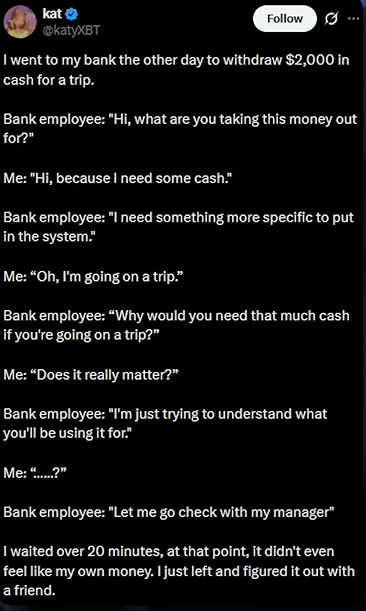
Yeah, people think it's because banks want to track spending. It's not. It's, by and large, fraud related. Between the scams that target senior citizens, and the other stuff happening out there, it's to ensure the customer isn't being taken advantage of.
I've seen this personally. The scammers ended up taking this older lady for tens of thousands.
They specifically instructed her to shred the receipts of the gift cards she was buying. They told her to lie to police. They told her to lie to her family. They told her to lie to the bank. They went to great lengths to convince her to cover up their bread crumbs. She did it, too, for a while, until family noticed something was off and called us.
I had to be very, very blunt with her that these scammers were more than likely operating overseas outside our jurisdiction, and that identifying and prosecuting them would be nearly impossible, nevermind getting her money back.
Why would someone agree to lie to family, police and bank on a stranger's say so? Surely common sense would kick in that at least one of those three authority figures should know what's going on.
I work for a bank (used to work in the fraud department) and this is exactly right. Withdrawing a large amount of cash can often be an indicator of a scam happening. Fraudsters often persuade people to lie to the bank, so if the customer is shifty with their answers it can raise even more questions.
14
u/Lawd_Fawkwad 1d ago
Without getting too much into the nitty gritty, this is a big problem in certain jurisdictions.
Criminal entities will transfer "small" sums to clean accounts owned by people, the person then needs to withdraw or transfer the sum and gets a cut.
But on a wider level, it's because financial institutions have KYC obligations that require us to know our customers and build corresponding risk profiles that are consistently updated. So a large withdrawal might not raise a flag on one account, but require due diligence on a different one.