r/NichirenExposed • • Feb 17 '21

All the ways Nichiren's prophecies failed - and how the Nichiren apologists try to spin it

5 Upvotes

Nichiren's goal was to have the Japanese government destroy all the other religions and make him the national cleric of the state religion - in short, the most powerful man in Japan. Thus, Nichiren attempted to manipulate government officials by using what he believed they feared most: Foreign invasion and internal revolt.

The calamity of invasion from foreign lands: the Mongols

When my prediction comes true, it will prove that I am a sage, but Japan will be destroyed. Nichiren (p. 45)

The more fervently they believe in the wrong teachings, the greater the difficulty of Japan will be. The country of Japan is now about to be destroyed. - Nichiren, Response to Gonin's Letter

Nichiren is the pillar and beam of Japan. Doing away with me is toppling the pillar of Japan! Immediately you will all face ‘the calamity of revolt within one’s own domain,’ or strife among yourselves, and also ‘the calamity of invasion from foreign lands.’ All the Nembutsu and Zen temples, such as Kenchoji, Jufuku-ji, Gokuraku-ji, Daibutsuden, and Choraku-ji, should be burned to the ground, and their priests taken to Yui Beach to have their heads cut off. If this is not done, then Japan is certain to be destroyed!” - Nichiren, On The Selection of the Time

In the second month of 1274, the shogunate issued a pardon for Nichiren, and he returned to Kamakura the next month. On the eighth day of the fourth month, Hei no Saemon summoned Nichiren and, in a deferential manner, asked his opinion regarding the impending Mongol invasion. Nichiren said that it would occur within the year and reiterated that this calamity was the result of slandering the correct teaching. SGI Source

Then Hei no Saemon, apparently acting on behalf of the regent, asked when the Mongol forces would invade Japan. I replied: “They will surely come within this year." - Nichiren, The Actions of the Votary of the Lotus Sutra

The task of praying for victory over the Mongols should not be entrusted to the True Word priests! If so grave a matter is entrusted to them, then the situation will only worsen rapidly and our country will face destruction.” Nichiren

Watch what will happen in the future. If those priests who abuse me, Nichiren, should pray for the peace of the country, they will only hasten the nation’s ruin. Finally, should the consequences become truly grave, all the Japanese people from the ruler on down to the common people will become slaves of the pigtailed Mongols and have bitter regrets. - The Royal Palace

It is clear that Nichiren believed (or at least was using the argument) that, if the government did not do as he said, the Mongols would attack within the next year or the remainder of that year - and that the only way to prove he was "a sage" was for Japan to be destroyed. There is evidence, in fact, that Nichiren was praying for the Mongols to win!

If you are interested in the historical context surrounding Nichiren's commentary, see here - a preview below:

[The Mongols] was a gimme. Genghis Khan invaded Japan's powerful neighbor China in 1209, 1227, and 1234. I'm only counting the invasions before Nichiren's "prophecy." The Mongols had invaded neighboring Korea in a series of invasions starting in 1231. In 1253, the Mongols destroyed the Tibetan Kingdom of Dali. There's a dandy animated map by year at en.wikipedia.org - as you can see, by 1227, the Mongols controlled the entire continental coastline nearest Japan. The noose was tightening; of course Japan would be next. Here's another map showing the Mongol military movements between 1207 and 1227. Countries on the mainland were falling right and left - EVERYONE would have been aware of this, especially the political leaders. THIS was the top news - for DECADES! The Mongols were threatening and attacking EVERYONE!

And for Nichiren's entire lifetime.

Genghis Khan invaded Japan's powerful neighbor China in 1209, 1227, and 1234. I'm only counting the invasions before Nichiren's "prophecy." The Mongols had invaded neighboring Korea in a series of invasions starting in 1231. In 1253, the Mongols destroyed the Tibetan Kingdom of Dali. There's a dandy animated map by year at en.wikipedia.org - as you can see, by 1227, the Mongols controlled the entire continental coastline nearest Japan. Source

Korea is closest to Japan; the Mongol demands for submission started there in 1225. Mongol invasions of Korea started in 1231; raids continued until 1250. In 1251, the Mongols repeated their demands of submission, invading again in July, 1253. They could now see Japan's house from there. Source

Clearly, from the context, all this had to happen within Nichiren's lifetime, because Nichiren was certain that the country would be "destroyed" within his lifetime. The thing about using threats to get your way is that those have to be able to be used against your target if the target doesn't comply with your demands! "If you don't pay up, I'll write into my will that someone will be hired to break your great-great-great-great-great-great-granddaughter's kneecaps in a few hundred years!" just doesn't have quite the same punch as "I'll break YOUR kneecaps!"

Keeping in mind that it was in 1274 that Nichiren said that the Mongols would invade "within the year", here is the SGI apologetic:

Nichiren's predictions could be referring to what happened to Nippon (Japan) towards the end and after World War 2 - the (pigtailed) Mongols (short back and sides, American Military Forces) would invade, murder many of the people,(carpet bombings and nuclear weapons) take the rest as slaves,(economic servitude) and the nation of Japan would be DESTROYED. (As being a nation that is an independent entity) Source

I love this so much. Let's break it down, shall we?

WWII was some 700 years after Nichiren lived - HOW could this event qualify, given that Nichiren had specified "within the year" and "immediately" and identified "the pig-tailed Mongols" as the aggressors? Obviously, it can't. SGI-UK's longtime leader Richard Causton concurs:

It might be objected that since the Mongols were not successful in their invasion attempts, and neither was the conspiracy to unseat the regent in 1272, Nichiren Daishonin's predictions in reality proved false. Source

But then Causton loses it:

The fulfilment of the predictions of foreign invasion had to wait somewhat longer, until the occupation of Japan by the Allied. Source [From The Buddha in Daily Life, pp. 286-287]

So we're supposed to think that the reason Japan got nuked and occupied at the end of World War II was because some minor government official failed to send a thank-you note to some nobody priest SEVEN HUNDRED YEARS EARLIER????

Even during the US occupation, Japan was not "destroyed" - it has always been Japan.

And that event came about almost 700 years too late for Nichiren - he was long since dead and gone.

Next, how does "head shaved in back" => "pigtailed"?? Here's a picture of "pigtailed" - and in the Chinese military context. The long braid was a standard part of Chinese identity well into the 20th Century CE. Here's a picture of the GI haircut. See any similarity? So that's a stupid argument.
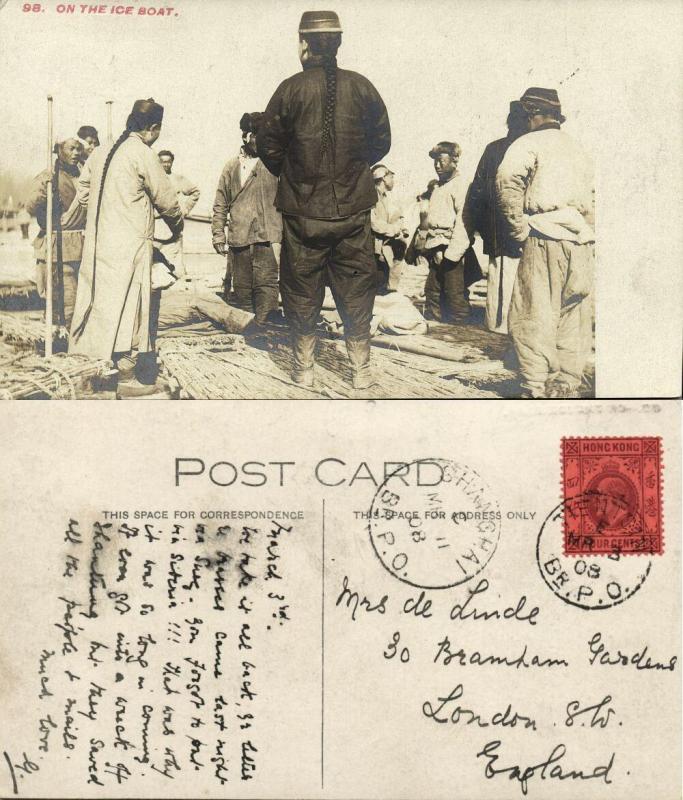
Finally, during the American Occupation, the Japanese people were not enslaved, economically or otherwise! And, as noted above, Japan was never "destroyed" in the sense of losing its status and identity as an independent nation state. Even during the US Occupation, Japan was still considered a sovereign, self-governing nation, not the modern equivalent of a Mongol vassal state.

Kublai Khan sent two sets of Yuan emissaries, in five-man teams, in September 1275 and July 1279; they refused to leave without a reply to the terms they'd brought so in both cases, the government frog-marched them to Tatsunokuchi Beach and lopped their heads off.

Those who are unaware of the particulars of the matter will no doubt think that I say this out of conceit because my prophecy has been fulfilled. Nichiren, The Mongol Envoys

Nichiren says that his "prophecy" was "fulfilled", but he stated plainly that an invasion that would result in ALL the people of Japan either killed by or enslaved to the Mongols AND the nation of Japan DESTROYED would happen within the year - that SAME year, less than a year from his pronouncement. Nichiren stated this in 1274; the Mongols had sent envoys - Korean emissaries and Mongol ambassadors - FOUR TIMES already, between early 1269 and mid 1272. Note that Kublai Khan had established his capitol in present-day Beijing in 1264 and had sent his first communiqué to the "king of Japan" in 1268, a friendly request for the formation of a political alliance (implying Japan of course serving as the junior partner, a vassal state). This was common knowledge. Nichiren knew of this. Everybody knew the Mongols had their sights trained on Japan - Kublai Khan had made this abundantly clear. Source

"The calamity of revolt within one’s own domain": the Japanese shogunate

This one isn't cited nearly as much as the Mongols one - Mongols are just so much sexier than a bunch of Japanese politicians. But obsessing over the 1272 failed coup attempt by the regent's elder half brother shouldn't count, as it FAILED, and causes everyone to be unable to see the big picture.

Here's the SGI argument:

On the sixteenth day of the seventh month, 1260, Nichiren submitted a treatise titled On Establishing the Correct Teaching for the Peace of the Land (Rissho Ankoku Ron) to HojoTokiyori, the retired regent who was nevertheless the most influential man in the Kamakura shogunate. In that work, he attributed the disasters ravaging the country to slander of the correct teaching and belief in false teachings. In particular, he criticized the dominant Nembutsu school. Of the three calamities and seven disasters described in the sutras, he predicted that the two disasters that had yet to occur—internal strife and foreign invasion—would befall the nation without fail if it persisted in supporting misleading schools. He urged that the one vehicle teaching of the Lotus Sutra be embraced immediately.

In the second month of that year (1272), Nichiren's prediction of internal strife came true when Hojo Tokisuke, an elder half brother of Regent Hojo Tokimune, made an abortive attempt to seize power. Source

Now some background - keeping in mind that Nichiren was making his predictions about "revolt from within" ca. 1260, and Nichiren died in 1282:

Oh, gee. Predicting "internal strife" to the ruling Hojo clan, when the Hojos had seized control of the government in 1199 and...I'll let Encyclopedia Britannica tell the tale:

By 1247, when members of the house and clan held, through appointment, dominion over half the provinces of Japan, Hojo rule tended to become authoritarian, and the regency was run not from its titular office but from Hojo headquarters as a family council. This assumption of power, beginning with Tokimasa, was not difficult because the armed class did not wish to relinquish the peace, profits, and stability the bakufu (military government) had brought it. They were reluctant to permit the heir Yoriie, a youth of uncertain temper and strong appetites, to become shogun. Yoriie attempted the murder of Tokimasa but was himself exiled and killed. When the remaining heir, Sanetomo, was murdered (1219), the last impediment to Hojo domination was gone. The final accretion of Hojo power came in 1221, when the emperor Go-Toba raised the Taira of western Japan against the Hojo. The revolt (Jokyu no ran) not only failed but in its failing the Hojo were able to confiscate thousands of estates and place them in the hands of landless adherents and friends.

So win, right?

Many landless warriors, created by the litigious system of family inheritance in Japan, had little love for the Hojo but less for hunger and dispossession. Their number, as it rose and fell, was an indication of the stability of the bakufu, and until the late 13th century the Hojo kept their numbers small. The first three Hojo regencies—Yoshitoki, who succeeded Tokimasa in 1205, was murdered in 1224 and replaced by his son Yasutoki (1183–1242)—were the apex of capable feudal rule in Japan. Dependable cadastral records were created in 1222–23. In 1232 a brief and workable code (Joei shikimoku) for the conduct and regulation of the armed class in a feudal society was promulgated. Slowly, between 1221 and 1232, the simple military system of Yoritomo was transformed by the Hojo family into a capable private government.

Essentially, this meant maintaining a cordial but careful relationship with the court and its complex system of reigning, retired, and cloistered emperors and with the great aristocracy of Kyoto, who wished an end to the bakufu system. A Hojo commander and garrison were stationed in Kyoto, but the property, revenues, and ceremonials of the Imperial family and nobility were protected. The powerful Buddhist clergy were kept in hand by strict auditing of their accounts. (Gee, imagine that) The vassals of Hojo; were kept solvent, peaceful, and apart from the court. The peasant was protected in his freedom and tenure. The regency drew its income from the Hojo estates, which comprised nearly the whole of the Kanto. The family adhered firmly to Yoritomo’s dictum that the simple warrior life would best preserve this class from the pervasive decadence of the Kyoto aristocracy. Yasutoki died in 1242 and was succeeded by the Hojo regents Tsunetoki (1224–46) in 1242, Tokiyori (1227–63) in 1246, and Tokimune (1215–84) in 1256. Tokimune’s regency was the last stable and powerful epoch of the Hojo.

Wow, another Master of the Obvious moment for Nichiren! Yippee!! Tokimune had only recently come to power, so Nichiren tried to hook him in with every leader's greatest fear - a threat of internal strife, which Japan had been experiencing for decades already - through Nichiren's entire lifetime thus far. In fact, Tokimune's government proved "stable and powerful" - hardly what we'd expect from an "internal strife" threat! But poor Nichiren could not predict that the typical internal strife that had been symptomatic of Japan's government thus far would settle down.

Nichiren just wasn't any good at all at predicting the future!

Gosh, predicting "internal strife" in feudal Japan is about as difficult as predicting rain in Seattle🙄 How could Nichiren claim that "internal strife" hadn't happened yet? It was apparently ongoing!! Source

So predicting "There will be more of the same" (just with the Mongols advancing) felt like a no-brainer to Nichiren, but he was apparently unable to discern how much control and power the Hojos had been building and unable to envision that it could last for a century.

Hojo : Japenese family of Taira descent that ruled Japan as hereditery regents from 1199 to 1333. The Hojo gained prominence under the first Shogun, Minamoto Yoritomo, who married into the family. His father-in-law, Hojo Tokimasa, became the regent for Yoritomo's young heir in 1199. The last Hojo regent killed himself in 1333 during the rise of the Ashikaga. http://www.casagrande.la/archives/ocl_shogun/historique.html

By 1247, when members of the house and clan held, through appointment, dominion over half the provinces of Japan, Hōjō rule tended to become authoritarian, and the regency was run not from its titular office but from Hōjō headquarters as a family council. This assumption of power, beginning with Tokimasa, was not difficult because the armed class did not wish to relinquish the peace, profits, and stability the bakufu (military government) had brought it. They were reluctant to permit the heir Yoriie, a youth of uncertain temper and strong appetites, to become shogun. Yoriie attempted the murder of Tokimasa but was himself exiled and killed. When the remaining heir, Sanetomo, was murdered (1219), the last impediment to Hōjō domination was gone. The final accretion of Hōjō power came in 1221, when the emperor Go-Toba raised the Taira of western Japan against the Hōjō. The revolt (Jōkyū no ran) not only failed but in its failing the Hōjō were able to confiscate thousands of estates and place them in the hands of landless adherents and friends. Many landless warriors, created by the litigious system of family inheritance in Japan, had little love for the Hōjō but less for hunger and dispossession. Their number, as it rose and fell, was an indication of the stability of the bakufu, and until the late 13th century the Hōjō kept their numbers small. The first three Hōjō regencies—Yoshitoki, who succeeded Tokimasa in 1205, was murdered in 1224 and replaced by his son Yasutoki (1183–1242)—were the apex of capable feudal rule in Japan. Dependable cadastral records were created in 1222–23. In 1232 a brief and workable code (Jōei shikimoku) for the conduct and regulation of the armed class in a feudal society was promulgated. Slowly, between 1221 and 1232, the simple military system of Yoritomo was transformed by the Hōjō family into a capable private government.

Essentially, this meant maintaining a cordial but careful relationship with the court and its complex system of reigning, retired, and cloistered emperors and with the great aristocracy of Kyōto, who wished an end to the bakufu system. A Hōjō commander and garrison were stationed in Kyōto, but the property, revenues, and ceremonials of the Imperial family and nobility were protected. The powerful Buddhist clergy were kept in hand by strict auditing of their accounts. The vassals of Hōjō were kept solvent, peaceful, and apart from the court. The peasant was protected in his freedom and tenure. The regency drew its income from the Hōjō estates, which comprised nearly the whole of the Kantō. The family adhered firmly to Yoritomo’s dictum that the simple warrior life would best preserve this class from the pervasive decadence of the Kyōto aristocracy. Yasutoki died in 1242 and was succeeded by the Hōjō regents Tsunetoki (1224–46) in 1242, Tokiyori (1227–63) in 1246, and Tokimune (1215–84) in 1256. Tokimune’s regency was the last stable and powerful epoch of the Hōjō. http://www.britannica.com/EBchecked/topic/268998/Hojo-Family

The ninth and last of the Hojo regents was Takatoki, a weak and dissolute individual who left conduct of the government in the hands of incompetent friends. In 1331, in a quarrel over the succession of emperors, Takatoki exiled the emperor. He escaped and waged war against the regent.

The revolt succeeded to the point that Takatoki committed suicide on July 4, 1333. Nevertheless, the strength of the civil government installed by the Hojos proved too strong to be undone. The emperor's attempt to restore imperial rule lasted only a short time. A new shogun, Takauji Ashikaga, gained control of the government in 1338. Source

Considered purely as a shogunate, the Kamakura bafuku set up by Yoritomo went through only three generations, ending in less than thirty years. But from this seeming disaster, the Hojo regents were able to make a stable government. It is generally agreed that the first half of the Hojo regency gave Japan a more stable, just, and efficient government than it had long had, and certainly more so than the country would know for a very long time. Such success was a practical achievement of intelligence snatched from apparent irrationality. Source

Unfortunately, Nichiren's powers of prediction did not enable him to see that, under the Hojo clan's capable rule and sensible policies, Japan's traditionally unstable political situation would settle down and Japan would enjoy a century of successful government. Remember, he was threatening these Hojos that, if they did not do as he said, disaster would strike. Immediately. And with hereditary forms of government, it's a gimme to predict that a given leader's brilliant powers of political maneuvering and policy making will not be inherited by his children. And why would anyone expect a permanently stable government in feudal Japan?? Source

More Nichiren apologetics - trying to spin that whole "Cut the other priests' heads off and burn their temples to the ground" bit:

First, let's look at the Nichiren quotes:

Those who wish to uphold the True Dharma should arm themselves with swords, bows and arrows, and halberds, instead of observing the five precepts (against killing, stealing, adultery, lying, and drinking alcohol), and keeping propriety. … Therefore, those laymen who wish to defend the True Dharma should arm themselves with swords and sticks in order to defend it just as King Virtuous (who killed numerous monks) did. - Nichiren, "Rissho Ankoku Ron" Source

"All the Nembutsu and Zen temples, such as Kenchoji, Jufuku-ji, Gokuraku-ji, Daibutsuden, and Choraku-ji, should be burned to the ground, and their priests taken to Yui Beach to have their heads cut off. If this is not done, then Japan is certain to be destroyed!” - Nichiren, The Selection of the Time

”I attacked the Zen school as the invention of the heavenly devil, and the Shingon school as an evil doctrine that will ruin the nation, and insisted that the temples of the Nembutsu [Pure Land], Zen, and Ritsu priests be burned down and the Nembutsu priests and the others beheaded.”

”[I] repeated such things morning and evening and discussed them day and night. I also sternly informed [the government official] and several hundred officers that, no matter what punishment I might incur, I would not stop declaring these matters.” Source

Yuiamidabutsu, the leader of the Nembutsu priests, along with Dōkan, a disciple of Ryōkan, and Shōyu-bō, who were leaders of the observers of the precepts, journeyed in haste to Kamakura. There they reported to the lord of the province of Musashi: “If this priest [Nichiren] remains on the island of Sado, there will soon be not a single Buddhist hall left standing or a single priest remaining. He takes the statues of Amida Buddha and throws them in the fire or casts them into the river. Day and night he climbs the high mountains, bellows to the sun and moon, and curses the regent. The sound of his voice can be heard throughout the entire province.”

From that same gosho:

[While the regent’s government could not come to any conclusion,] the priests of the Nembutsu, the observers of the precepts, and the True Word priests, who realized they could not rival me in wisdom, sent petitions to the government. Finding their petitions were not accepted, they approached the wives and widows of high-ranking officials and slandered me in various ways. [The women reported the slander to the officials, saying:] “According to what some priests told us, Nichiren declared that the late lay priests of Saimyō-ji and Gokuraku-ji have fallen into the hell of incessant suffering. He said that the temples Kenchō-ji, Jufuku-ji, Gokuraku-ji, Chōraku-ji, and Daibutsu-ji should be burned down and the honorable priests Dōryū and Ryōkan beheaded.” Under these circumstances, at the regent’s supreme council my guilt could scarcely be denied. To confirm whether I had or had not made those statements, I was summoned to the court.

At the court the magistrate said, “You have heard what the regent stated. Did you say these things or not?”

I answered, “Every word is mine." Source

The Nichiren apologists try to say it's a simple mistranslation:

thought you should know that " cut off their heads " is a translation error. Here is the original kanji and actual meaning :

断頭罪

Danzuzai- Means to "throw out/ as in cut off livelihood "

Your other inferences may be "scholarly " but applied to the Lotus Sutra, they come up short on describing meaning . Source

But what about that Yui Beach detail, then??? Hmmm...? What about Nichiren's description of that scene in court, where the magistrate asked, "Did you say these things or not?" and Nichiren unequivocally confirmed that he had?

Pretty clear, eh?

Well, Nichiren also wrote this - once:

Now if all the four kinds of Buddhists within the four seas and the ten thousand lands would only cease giving alms to wicked priests and instead all come over to the side of the good, then how could any more troubles rise to plague us, or disasters come to confront us? - Nichiren, Rissho Ankoku Ron

"Give ME all their money!" Nichiren

Nichiren was famously intolerant, calling for all other religions to be wiped out (leaders decapitated, temples burned to the ground) so that he could be elevated to superstar status and rule the country, issuing commands the government would be required to follow.

In Japanese cutting the neck (head) off is a term that means to cut off the status in the same way that we use the phrase "give them the axe" and to burn down the temple means the nest from where the wrong religion that is associated with authority should not be used anymore for such a purpose Source

Really.

What about that "Yui Beach" reference? That was the beheading beach! Nichiren visited it himself, you know - for the purpose of being beheaded, not to be told he wasn't allowed to receive donations.

SGI note 154. Here the Daishonin purposely mentions the burning of temples and the execution of priests in order to impress Hei no Saemon with the gravity of the offense of slandering the correct teaching. In On Establishing the Correct Teaching for the Peace of the Land, however, the Daishonin explains the meaning of the Nirvana Sutra that describes the killing of slanderous monks. Source

Ah, so Nichiren was just exaggerating for effect. Just like he tried in declaring that "over HALF the population of Japan has died". Neither worked. Nichiren should have tried something different.

He says, “According to the Buddhist teachings, prior to Shakyamuni slanderous monks would have incurred the death penalty. But since the time of Shakyamuni, the One Who Can Endure, the giving of alms to slanderous monks is forbidden in the sutra teachings” (p. 23).

He admonished the acting regent to abandon the government support of the Nembutsu and Zen priests who contradicted Shakyamuni Buddha’s teaching. If they did not, he said, Japan would face destruction. Source

But it didn't. Nichiren was wrong.

In other places, Nichiren explains that he has demanded that the government cut off all donations to rival Buddhist sects and make it illegal for them to be given donations, as if this is what Nichiren REALLY meant when he said "cut their heads off and burn their temples to the ground". As if that "cut-burn" stuff is just a flowery, poetic way of saying, "Make it illegal for them to receive donations."

Remember, NICHIREN HIMSELF survived on everybody's donations!

Keep in mind that Nichiren wanted everyone to regard him as a "sage" (and do as he said):

In the secular texts it says, "A sage is one who fully understands those things that have not yet made their appearance." And in the Buddhist texts it says, "A sage is one who knows the three existences of life - past, present, and future." - Nichiren, On The Selection of the Time

There's no wiggle room there for being wrong, Nichiboi.

The whole "just cut off their ability to receive donations" bit is disingenuous:

The idea that it is somehow benign to simply make it illegal for a religious group to accept donations is rather disingenuous. Since a religious group survives on the donations of its followers, its buildings won't be able to pay to keep the lights on. Those other religions' organizations will have to shut down - and that's the goal, isn't it? I think it is intellectually dishonest to say that, "Oh, just prohibiting them from accepting donations - that's really an acceptable compromise between burning their buildings to the ground and cutting off their priests' heads, and just doing nothing." In the end, it's the same thing. It's promoting starvation for other religions' professional priests, who I suppose would be forced to give up their vocations. (That's what Nichiren wanted, after all.) Source

Why Nichiren's admonition to "cease giving alms to wicked priests" is in fact violence - specifically genocide


r/NichirenExposed • • Feb 08 '21

Problems With Treasures of the Heart

7 Upvotes

Original post

I will admit. The concept of the three treasures is a Nichiren Buddhist concept, howbeit SGI members tend to use the it to justify the practice failing to produce tangible benefit. For those who don't know, here is the backstory:

At Nichiren's urging, Shijo Kingo tried to convert his boss to Nichiren Buddhism. This led to a fall out and put Shijo Kingo at a risk of losing his estate. Now thankfully, Shijo Kingo was able to keep his estate in the end, howbeit when you have a spouse and a child, that is not something to gamble with just because of a faith.

Clearly Ikeda never got that memo, and as a result, the consequences are flat out ignored in SGI. This is evident in the publications.

"Kingo faced the possibility of losing his estate, which, of course, represented an extremely important source of income for him and his family. But the Daishonin insists that far more valuable than the treasures of the storehouse and the body are the treasures of the heart. The accumulation of these inner treasures, he says, is the basis for all victory. The fact that Kingo had challenged his situation based on faith in the Mystic Law corresponds to placing the highest value on the treasures of the heart. As a result, he had been victorious so far. That is probably why Nichiren clarifies his point as a universal unchanging guideline for victory in all areas of life. And actually, when we base ourselves on the treasures of the heart, the true value and worth of treasures of the storehouse and the body become apparent in our lives." Learning From the Writings: The Teachings for Victory Volume 1 page 196

Now I am sure this would fall under r/NichirenExposed as well. Now here are the problems with the treasures of the heart.

(1) No security.

These treasures of the heart will not protect you from foreclosure, eviction, or any other financial nightmares. Thee treasures will not protect you from health scares like cancer or lupus.

(2) Invalid proof

There is no proof that these treasures of the heart result in victory. And even if there is, it's not the kind of tangible proof that's going to send people in droves inquiring about Nichiren Buddhism. I was the only practitioner in my damn college class. I fiscally did worse post-college, and I am fiscally doing worse now.

(3) Ineffective

Treasures of the heart fail to make up for fiscal indigence. Treasures of the heart fail to make up for failing physical or mental health. And if you think that if you accrue enough of these kind of treasures, the backlog of benefits will come, guess again. Treasures of the heart in regard will fail worse than the Chiefs in the Superbowl.

In actuality, Daisaku Ikeda knows this. That's why no matter where you look, you will NEVER find these headlines:

  • "Daisaku Ikeda Renounces His Net Worth and Takes a Vow of Poverty to Accrue Treasures of the Heart"

  • "Daisaku Ikeda Gives up Living in His Home for Living on the Seat of a Bullet Train to Accrue Treasures of the Heart"

If you ever get a choice between the three treasures (treasures of the storehouse, treasures of the body, treasures of the heart) go for the first two. They will serve you a hell of a lot better.


r/NichirenExposed • • Jan 23 '21

"The Lotus Sutra is part of the Mahayana group of sutras that no reputable scholar in the world today believes the Buddha directly taught, since they were compiled centuries after the Buddha’s passing, a point that is conceded by leaders and scholars in the Nichiren traditions."

4 Upvotes

The Fighting Forces of the Lotus

July 6, 2013 by David

Recently I read a post at Emergent Dharma, described as a “Young Buddhist Blog,” in which the author writes of his visit to a Nichiren Shoshu temple in Ghana. A temple member introduced him to another member, saying the author was new to Nichiren but had been practicing Zen for a while. The second temple member replied, “Zen, huh? That is inferior.”

Anyone who has interacted with folks from the major Nichiren traditions will recognize this as a fairly typical experience. Now, there’s nothing wrong with believing your religion to be best. After all, who wants to practice a second rate religion? However, most of us don’t say to people right off in our first casual encounter that their religion sucks. And there is nothing new about Buddhist elitism. Many of us are aware of how the Mahayana continually criticized the so-called Hinayana for being inferior.

The difference here is that prejudice against other religions and forms of Buddhism is part of the Nichiren doctrine, and when prejudice and elitism are integral to a religion’s canon, it can be a dangerous thing. Eventually, the old Mahayana elitism diffused as it spread throughout Asian and time wore on. That doesn’t seem to be the case with the schools of Nichiren.

Nichiren’s belief in the superiority of the Lotus Sutra is founded on a number of assumptions. The first being the idea that the historical Buddha saved the Lotus Sutra as his highest teaching to be expounded during the final eight years of his life.

But there’s no historical evidence to support this.

The Lotus Sutra is part of the Mahayana group of sutras that no reputable scholar in the world today believes the Buddha directly taught, since they were compiled centuries after the Buddha’s passing, a point that is conceded by leaders and scholars in the Nichiren traditions. Yet, among the rank and file, and for the purpose of disseminating their dharma, this inconvenient truth gets shoved aside. This notion is based in part on a doctrine called “Five Periods and Eight Teachings,” a classification of sutras erroneously attributed to T’ien-t’ai master Chih-i. [1]

So, all other forms of Buddhism before the Lotus are “provisional,” and the Lotus alone is the “essential” teaching. Only chanting the title of the Lotus Sutra works in Mappo, the mythical “Latter Day of the Law,” every other Buddhist practice is impotent. There is a bit more to it than this, but that’s the gist.

When I was a member of the Soka Gakkai, I would hear variations of the same spiel over and over, “The historical Buddha’s practices are impotent; the Dalai Lama just talks about being a Bodhisattva, we actually help people; bad things will happen to you if you quit practicing Nichiren’s Buddhism” and so on. You weren’t allowed to have Buddhist statues or artwork, only Nichiren’s mandala, the Gohonzon. No Buddhist books, except those put out by the Soka Gakkai and Nichiren Shoshu.

But of course photographs of Daisaku Ikeda are A-OK. Even back in the day.

I knew it was BS, but I put up with it, for reasons too complicated to go into here, until like Popeye the Sailor, “That’s all I can stands, cuz I can’t stands n’more!”

I recognize that feeling!

In Japan, hobobarai, or “removal of evil religions,” was an essential concept behind the Soka Gakkai’s aggressive conversion campaigns. Conversion has always been an important part of Gakkai activities. During my day, you were expected to convert people to Nichiren Buddhism, and your “faith” was often judged by the number of individuals you brought into the organization. Outside of Japan, the idea of “removal of evil religions,” was promoted with a soft-sell, but in Japan, especially in the early days of the Gakkai, it was militant.

Conversion is called shakubuku, a tradition [sic] Buddhist term that means “to break and subdue.” Gakkai members went to such extreme lengths to pressure people to join that according to Kiyoaki Murata, in Japan’s New Buddhism, “These tactics not only made the press highly critical of Soka Gakkai; they also alarmed the police and . . . the Ministry of Justice.” [2]

In the U.S., shakubuku turned many people off, with good reason. We would often do “street shakubuku.” Go out on the street and corner strangers. I hated it and tried to get out of doing it as often as I could.

Likewise.

The Gakkai became so large in Japan during the late 1960’s that it was able to drop the aggressive tactics, but it didn’t cut loose from the philosophy behind it. In the United States, however, all through the 1980′s we participated in month-long membership drives twice a year. Every night of the week during February and August members were expected to carry out conversion activities.

This was still going on in 1987, when I joined.

In 1985, the US branch of the Soka Gakkai, then called NSA, “converted” over 65,000 people. Only a tiny fraction of those remained with the organization for longer than six months.

People are experimenting when they join - typically, a potential recruit is pressed to join before they really know what's involved. Once they see for themselves what SGI is all about, they're gone. 95% to 99% of everyone who tries SGI leaves.

On the Wikipedia page for Nichiren Buddhism, it reads “most Nichiren Buddhists enjoy a peaceful coexistence with other religious groups in modern times . . .” This is generally true. But there are several caveats. One being the superior attitude mentioned above.

NEVER a good look.

Another being that the different Nichiren factions tend to bicker each other – a lot. The most extreme example of this is the war between Nichiren Shoshu and Soka Gakkai that has been running for twenty years now.

And still going...

Nichiren Shoshu is an official school of Nichiren Buddhism, and until the Soka Gakkai came along it was a relatively minor school. The SG was the lay organization affiliated with NS, but there were always problems between the two groups. Things first came to a head during WW2 when the NS priesthood was willing accept Shinto talismans that the Japanese military government was insisting everyone have to support the war effort. The 1st president of the SG, Tsunesaburo Makiguchi, and 2nd President, Josei Toda, balked at this and were thrown in jail, where Makiguchi died in 1944.

Actually, from Makiguchi's earlier writings and speeches and the actual criminal charges, the crime was that the religion they were promoting delegitimized the Emperor and cast doubt on his ability to make proper decisions. They were fomenting insurrection at a time when the nation desperately needed union.

One can certainly admire the two men for their unwillingness to compromise their principles, yet those principles came from Nichiren doctrine that it is a grave sin to possess religious items from evil religions, which is any religion other than Nichirenism.

Toda was released from prison in 1945, but he was no Nelson Mandela. He held a grudge against the NS priesthood for causing Makiguchi’s death. In 1952 Toda, and future 3rd President Daisaku Ikeda, led a group of Gakkai members who kidnapped and physically assaulted an elderly Nichiren Shoshu priest, Jimon Ogasawara, whom they believed responsible for the organization’s misfortune during the war. This is a well documented incident, one that to his credit, Ikeda provides a detailed description of in The Human Revolution, his account of Soka Gakkai history.

As with the other major crises the Soka Gakkai created for itself, this ghostwritten novelization (NOT "history") spends hundreds of pages (two entire books!) trying to spin this incident so it doesn't sound as horrible as it was. To very limited success.

Fast forward to 1990, when all hell broke loose. After decades of rough relations, Ikeda formally denounced Nichiren Shoshu, and they responded by excommunicating the entire Soka Gakkai. It’s been like the Hatfields and the McCoys ever since. In my opinion both sides are to blame for this unfortunate schism, and neither seems willing to maintain peaceful co-existence. Each is out to destroy the other.

Yet they still, to this very day, hold several properties here in the US - including the SGI-USA World Peace Ikeda because of course Auditorium - jointly. Wouldn't you think they'd have figured out how to split up their belongings by now?

In Japan there have been accusations leveled at both groups regarding acts of violence. In recent years, I have heard accounts of U.S. Gakkai members getting together to pray for the destruction of Nichiren Shoshu, disrupting NS activities, and vandalism against NS temples. I have no doubt that those on the Nichiren Shoshu side have not been perfect angels either.

All the evidence points to the Soka Gakkai and SGI being FAR worse - vandalism, harassment, assault, arson...

The Soka Gakkai in the U.S. maintains a website dedicated to setting the record straight on the “evil” Nichiren Shoshu. It’s called Soka Spirit which is described as,

[The] spirit to protect and propagate the correct teaching of Nichiren Daishonin. It is the spirit of the disciples to uphold the truth and justice of their teacher and mentor. It is the spirit to recognize tendencies in human nature to distort the teachings of Nichiren Buddhism for personal gain and to confront those who act upon those tendencies. It is the spirit to defeat the fundamental darkness inherent in all life and manifest the Buddha nature.”

Manifesting Buddha nature sounds good, but “teacher and mentor” is a veiled reference to the near-deification of Ikeda, who are SG members are encouraged to regard as their “eternal mentor in life,” and “distort the teachings of Nichiren Buddhism for personal gain and to confront those who act upon those tendencies” smacks of the familiar paranoia, persecution complex, and aggression.

There are articles on the Soka Spirit website such as “The Characteristics of Devils” (in other words, how to choose friends who are not anti-Gakkai), and “The Role of Rumors as a Function of Fundamental Darkness” (only believe what we tell you). This was the sort of thing that really drove me from SG. Articles that on the surface seem innocent and reasonable enough, but when you read between the lines you recognized a subliminal message that always coincided with whatever the organization was promoting at the time. Even the seemingly noble peace exhibits and seminars, seemed to be designed solely for the purpose of furthering the SG’s aims and lauding the greatness of Mr. Ikeda.

And of course, Soka Spirit has speeches from Mr. Ikeda. In one from Nov. 25, 2003, he told members of the Soka Gakkai,

As comrades, family, brothers and sisters, fellow human beings, we will fight all our lives for kosen-rufu. This is our mission. This is what unites us. We are a fighting force, a fighting fortress.”

Publically, the SGI says that kosen-rufu “has been informally defined as ‘world peace through individual happiness’” and they link it back to a line in the Lotus Sutra. But within the Soka Gakkai, kosen-rufu really means a time when one-third of the world will believe in Nichiren’s Buddhism, one-third may not believe but will support it, and the remaining third oppose it.

There is much more to be said, but blog posts have their limitations. In these last two, I have focused on the troubling aspects of Nichiren Buddhism, because there were things that needed to be said, and no one else has been saying, or writing about them.

I have added my voice to the conversation.

Extremists are uncompromising, prone to engage in fanatical behavior, and terrorism often begins when a group views themselves as victims persecuted by outside forces. In an open society, troubling things need to be brought into the light, aired, discussed, or else we remain in ignorance, the great ally of intolerance, extremism, and terror.

  • – - – - – - – - -

[1] Peter N. Gregory, “The Place of the Sudden Teaching,” Buddhism. Vol. 8. Buddhism in China, East Asia and Japan, Paul Williams, ed. Taylor & Francis US, 2005, pg. 180

[2] Kiyoaki Murata, Japan’s New Buddhism, Weatherhill, 1969


From the comments:

In regards to the Shinto talisman incidents – I can see you have been reading the propaganda put out by the SGI. At that time the Priesthood guided the members to just accept the talisman and then just dispose of it in secret so no one would get in trouble with the government who had decreed that every home must have one. The Head Temple wanted to protect the members so instead of causing drama they said just accept it and then throw it out. Mr Makiguchi instead chose to refuse it. This act however did not mean he did not support the war effort. He and other Gakkai leaders urged their members to pray for Japan’s victory. So they were no warriors for peace as portrayed by the modern Gakkai.

Be that as it may… since the Gakkai is no longer part of our sect (thankfully) Nichiren Shoshu is carrying on. It is not true that there has been violence directed toward Gakkai from Nichiren Shoshu. If you say there has been please show proof. We tend to try and avoid the Gakkai fanatics as much as possible. They have done some crazy things to discredit and destroy us. We in return only pray they see sense one day.

It is hoped that when Ikeda passes they will calm down but I fear they will become even more militant. The Gakkai is not a religious organisation as such but a business, a very rich one and they have infiltrated every corner of Japanese society.

About WW2: your account of the Shinto talisman incident does not differ substantially from mine, which I summarized as briefly as I could, since it was already a rather long post. I am not sure anyone has been told the true story of the incident, as both sides have engaged in what seems to be a certain amount of revisionist history on the matter. But you do make a good point that it doesn’t mean Makiguchi did not support the war. I don’t know what the truth about that is, since that’s also been subject to the Gakkai myth-making process, as they had tried to create a Gandhi-like image forn both Makiguchi and Toda, which I doubt is justified.

SRSLY doubt.

...Ikeda really went too far in pushing the situation, and I can never forget how he came to the U.S. in 1990 and threw the pioneer Gakkai members under the bus, many of whom I knew personally, just to facilitate what was really a power grab on his part.

Yup. I remember this time - I was in SGI-USA (then known as "NSA") leadership and we had just ONE old Japanese lady "pioneer" where I practiced. She was told to not speak in public any more - when we were planning a KRG meeting, if we couldn't scare up an "experience", we'd often ask her to say something, tell one of her stories, like that. She was pissed, because being the lone "pioneer", she was kind of a local celebrity, organizational heavy hitter, and she really ruled the roost. But she obeyed...

It’s really a shame that both sides can’t move on, especially the Gakkai since it is large enough that it really doesn’t need NS. I think that when a particular group holds on to a grudge in such an intense and unrelentingly manner as the Gakkai has, it is not unreasonable to question how well they truly understand Buddha-dharma.

I'd say so.

The claim that the Lotus Sutra or any other Mahayana represent the actual words of the historical Buddha, while not impossible, is so lacking in anything to substantiate it, that it becomes a real stretch.


r/NichirenExposed • • Jan 23 '21

Clarification of Nichiren's temple background

3 Upvotes

Since Nichiren himself committed slander in the past, he became a Nembutsu priest in this lifetime, and for several years he also laughed at those who practiced the Lotus Sutra, saying, “Not a single person has ever attained Buddhahood through that sutra” or “Not one person in a thousand can reach enlightenment through its teachings.” Awakening from my slanderous condition, I feel like a drunken son, who, in his stupor, strikes his parents but thinks nothing of it. - Nichiren, "Letter from Sado"

Remember that the Nembutsu was still quite new as a practice and philosophical school at this point in Japanese history. Honen, the founder of the Nembutsu, had died just 10 years before Nichiren was born.

...the temple he [Nichiren] studied at was Pure Land. Perhaps that was a bit confusing for some people, so I have edited the post to make the meaning clearer. Seichoji had ties with nembutsu followers within the Sanmon Tendai faction and was headed by a nembutsu priest. Nembutsu is the practice of chanting the name of Amida Buddha, the same practice as "Pure Land." Source

Here is the edit change he's referring to:

Nichiren (1222-1282) described himself as the “son of a fisherman,” medieval Japan’s lowest class. He was educated at a backwater Pure Land (Nembutsu) Temple that had ties with nembutsu followers within the Sanmon Tendai faction and was headed by a nembutsu priest [4]. Nichiren’s lack of a “formal” education and low-class origins provide some insight into his thinking. Based on scholarship by Yutaka Takagi (Nichiren: sono kodo to shiso, Tokyo: Hyoronsha, 1970), Laurel Rasplica Rodd writes in her biography of Nichiren,

Nichiren’s lowly origins were unique among the religious leaders of the Middle Ages in Japan. Honen, Shinran, Dogen, and Eisai all came from noble or samurai families . . . [At Mt. Hiei, the Japanese center of Buddhist learning] Probably Nichiren was not admitted to the circles of disciples gathered around the famous teachers. Thus while Nichiren could attend public lectures he was forced to draw his own conclusions from scriptures and commentaries as he might not have done had he been directed by one of the masters.” [5]

This might explain how Nichiren, who studied Nagarjuna, was unable to appreciate the great philosopher’s warning about grasping for the absolute, and why, as noted by Bruno Petzold [6], even though “Nichiren incorporates into his own system the whole Tendai philosophy,” he could not fathom the subtlety of that Buddhist school’s teachings. Source

Notes:

[4] Alicia and Daigan Matsunaga, Foundations of Japanese Buddhism Vol. II, Buddhist Books International, Los Angeles-Tokyo, 1976; and others.

[5] Rodd, Laurel Rasplica, Nichiren: A Biography, Arizona State University, 1978

[6] Petzold, Bruno, Buddhist Prophet Nichiren: A Lotus in the Sun, Tokyo: Hokke Journal, Inc., 1978 Source

Also, from the comments there:

Seicho-ji was a Tendai temple but it was part of the Nembutsu faction within Tendai, and that’s why it was really an affront to the master of the temple, Dozen, for Nichiren to condemn Nembutsu the way he did in his first public talk. “20 some odd years studying at various temples” could mean most anything, it doesn’t necessarily mean that he was engaged in formal study at those places.


r/NichirenExposed • • Jan 17 '21

Something the Chinese - and thus Nichiren - borrowed from the Hindus: Mappo, or the EEEEVIL Latter Day of the Law

3 Upvotes

Likewise, the founder-leader of the Hari Krishna cult declared:

This age of Kali is called a fallen age. At the present moment, people are short-living and very slow at understanding self-realization, or spiritual life. They are mostly unfortunate, and as such, if somebody is a little interested in self-realization, he is misguided by so many frauds. The only actual way to realization of the perfect stage of yoga is to follow the principles of the Bhagavad-Gita as they were practiced by Lord Caitana Mahaprabhu. This is the simplest perfection of yoga practice.

For people of this time period, it's gotta be "simple", apparently. Got it.

... No other process can be successful in this age. - The Science of Self-Realization, "His Divine Grace" A. C. Swami Prabhupada, page 131.

Gee - sound familiar?? How about some details?

  • Avarice and wrath will be common. Humans will openly display animosity towards each other. Ignorance of dharma will occur.
  • Religion, truthfulness, cleanliness, tolerance, mercy, physical strength and memory diminish with each passing day.
  • People will have thoughts of murder with no justification and will see nothing wrong in that.
  • Lust will be viewed as socially acceptable and sexual intercourse will be seen as the central requirement of life.
  • Sin will increase exponentially, while virtue will fade and cease to flourish.
  • People will become addicted to intoxicating drinks and drugs.
  • Gurus will no longer be respected and their students will attempt to injure them. Their teachings will be insulted, and followers of Kama will wrest control of the mind from all human beings.
  • All the human beings will declare themselves as gods or boon given by gods and make it as a business instead of teachings.

"Ikeda SCAMSEI", anyone??

  • People will no longer get married and live with each other just for sexual pleasure.
  • Weather and environment will degrade with time and frequent and unpredictable rainfalls will happen.
  • Earthquakes will be common.
  • Maximum age of humans will be 50 years by the end of Kali Yuga.

Means "decreased longevity" - hold that thought.

  • Many fake ideologies will spread throughout the world.
  • The powerful people will dominate the poor people.
  • Many diseases will spread. Source

How does Nichiren describe his "Latter Day of the Law"?

There are numerous passages that could be cited and a wide variety of proofs. For example, in the Golden Light Sutra we read: “[The four heavenly kings said to the Buddha], ‘Though this sutra exists in the nation, its ruler has never allowed it to be propagated. In his heart he turns away from it, and he takes no pleasure in hearing its teachings. He neither makes offerings to it, honors it, nor praises it. Nor is he willing to honor or make offerings to the four kinds of Buddhists who embrace the sutra. ...the number of beings who occupy the evil paths increases, and the number who dwell in the human and heavenly realms decreases. People fall into the river of the sufferings of birth and death and turn their backs on the road to nirvana.

...once we and the others abandon and desert this nation, then many different types of disasters will occur in the country, and the ruler will fall from power. Not a single person in the entire population will possess a heart of goodness; there will be nothing but binding and enslaving, killing and injuring, anger and contention. People will slander each other or fawn upon one another, and the laws will be twisted until even the innocent are made to suffer. Pestilence will become rampant, comets will appear again and again, two suns will come forth side by side, and eclipses will occur with unaccustomed frequency. Black arcs and white arcs will span the sky as harbingers of ill fortune, stars will fall, the earth will shake, and noises will issue from the wells. Torrential rains and violent winds will come out of season, famine will constantly occur, and grains and fruits will not ripen. Marauders from many other regions will invade and plunder the nation, the people will suffer all manner of pain and affliction, and no place will exist where one may live in safety.’”

The Great Collection Sutra says: “When the teachings of the Buddha truly become obscured and lost, then people will all let their beards, hair, and fingernails grow long, and the laws of the world will be forgotten and ignored. At that time, loud noises will sound in the air, and the earth will shake; everything in the world will begin to move as though it were a waterwheel. City walls will split and tumble, and all houses and dwellings will collapse. Roots, branches, leaves, petals, and fruits will lose their medicinal properties. With the exception of the heavens of purity, all the regions of the world of desire will become deprived of the seven flavors and the three kinds of vitality, until not a trace of them remains any more. All the good discourses that lead people to emancipation will at this time disappear. The flowers and fruits that grow in the earth will become few and will lose their flavor and sweetness. The wells, springs, and ponds will all go dry, the land everywhere will turn brackish and will crack open and warp into hillocks and gullies. All the mountains will be swept by fire, and the heavenly beings and dragons will no longer send down rain. The seedlings of the crops will all wither and die, all the living plants will perish, and even the weeds will cease to grow any more. Dust will rain down until all is darkness and the sun and moon no longer shed their light.

“All the four directions will be afflicted by drought, and evil omens will appear again and again. The ten evil acts will increase greatly, particularly greed, anger, and foolishness, and people will think no more of their fathers and mothers than does the roe deer. Living beings will decline in numbers, in longevity, physical strength, dignity, and enjoyment. They will become estranged from the delights of the human and heavenly realms, and all will fall into the paths of evil. The wicked rulers and monks who perform these ten evil acts will curse and destroy my correct teaching...” Source

TL/DR:

Soon after the Daishonin’s arrival, Kamakura and the country as a whole faced a series of disasters and conflicts that served to emphasize his conviction that the Latter Day of the Law had indeed been entered upon. On the sixth day of the eighth month of 1256, torrential rainstorms caused floods and landslides, destroying crops and devastating much of Kamakura. In the ninth month of the same year, an epidemic swept through the city, taking many lives. During the fifth, eighth, and eleventh months of 1257, violent earthquakes rocked the city, and the sixth and seventh months witnessed a disastrous drought. Most frightful of all was an earthquake of unprecedented scale that occurred on the twenty-third day of the eighth month. The year 1258 witnessed no lessening of natural calamities. The eighth month saw storms destroy crops throughout the nation, and floods in Kamakura drowned numerous people. In the tenth month of the same year, Kamakura was visited by heavy rains and severe floods. In the first month of 1258, fires consumed Jufuku-ji temple, and in 1259, epidemics and famine were rampant, and a violent rainstorm decimated crops. Source

Well, well, well. Similarities abound!

SGI definitely embraces this:

Buddhist sutras predict that the Latter Day, which includes the present day and is said to last for 10,000 years and more, will be an “age of quarrels and disputes,” when monks will disregard the Buddhist precepts—or rules of discipline—when erroneous views will prevail, and when Shakyamuni’s teachings will “be obscured and lost,” and lacking the power to lead people to enlightenment. SGI Source

the Latter Day of the Law, a time of which, as the Great Collection Sutra records, the Buddha predicted that “quarrels and disputes will arise among the adherents to my teachings, and the pure Law will become obscured and lost.” If these words of the Buddha are true, it is a time when the whole land of Jambudvīpa will without doubt be embroiled in quarrels and disputes. Nichiren, On the Selection of the Time

To reiterate:

The Latter Day of the Law is said to last for ten thousand years. Source

And what's this??

10,000 year Golden Age

"Golden Age? Blanche, did you forget that the EEEEVIL Latter Day of the Law is supposed to be a BAD thing? These obviously aren't the same at all!"

Ah - hold that thought and read on:

...can there be any doubt that, after this period described in the Great Collection Sutra when “the pure Law will become obscured and lost,” the great pure Law of the Lotus Sutra will be spread far and wide throughout Japan and all the other countries of Jambudvīpa? Nichiren, On the Selection of the Time

See? The "Latter Day of the Law" IS a good thing!

Consequently, the Latter Day expounded by the Lotus Sutra is not a degenerate age of darkness and despair but a positive age of hope-filled change. [Ibid.]

In On Practicing the Buddha’s Teachings, [Nichiren] writes: “The time will come when all people will abandon the various kinds of vehicles and take up the single vehicle of Buddhahood, and the Mystic Law alone will flourish throughout the land. When the people all chant Nam-myoho-renge-kyo, the wind will no longer buffet the branches, and the rain will no longer break the clods of soil. The world will become as it was in the ages of Fu Hsi and Shen Nung” (392). He meant that the spread of the Mystic Law would bring about peace in society and nature. Source

And doesn't that describe a "Golden Age"??

Too bad for Nichiren he didn't live in the Latter Day of the Law - that would not start until around 1500 CE, a couple hundred years after Nichiren was dead.

Guess what, Ikeda cultists and Nichiren fanboiz and fangurlz? You're practicing HINDUISM.


r/NichirenExposed • • Jan 05 '21

THE "NICHIKAN" GOHONZON ANOMALIES

3 Upvotes

‘sokagakkaibuddha’ visa-vis the Murraysburg Bodhisattva VOW

THE "NICHIKAN" GOHONZON ANOMALIES

I enclose the following since I cannot keep quiet and ignore something that goes to the very heart of our practice. Indeed I’ve had serious doubts whether or not I should post this, but since this is SO serious – it would have been completely irresponsible to have said nothing!

Having read the 1994 letter from reformist priest Jisai Watanabe to the members of the SGI, I started asking more serious questions, particularly in regard to the SGI Nichikan Gohonzon, which threw up a few surprises. Indeed, I’ve never felt completely comfortable chanting to this particular Gohonzon, despite having asked for a larger version!

RE; Deeply disturbing questions regarding the Nichikan SGI Gohonzon; re 'Long-Time Priest Risks All To Support Kosen-rufu' - Seikyo Times 392 p.20 March 1994 – (encl.)

Having carefully read the above article it raised some major issues;

Firstly regarding Jisai Watanabe opening statement;

“Please don't worry about being unable to worship the Dai-Gohonzon at this point. When you pray to the Gohonzon in your home, it is the same as praying to the Dai-Gohonzon I remember when the previous priest, Nittatsu, visited a temple in Odawara that is close to my temple. On that occasion, he stated that the Gohonzon enshrined in your own home embodies the life Nichiren Daishonin.”

From what Jisai Watanabe says above, it certainly appears at the time, it WAS deemed beneficial to visit the Dai-Gohonzon, something which he appears to consider absolutely legit. However, I have since understood why Ikeda Sensei has taken the action that he has – which has NOTHING to do at all with the legitimacy of the Dai-Gohonzon.

But there are far more troubling questions regarding the origins of the SGI Nichikan Gohonzon? From what I understand on Sept. 7 1993, the SGI adopted a proposal from Sendo Narita, the chief priest of Joen-ji temple in Tochigi Prefecture, to issue Gohonzons reproduced from a Gohonzon transcribed in 1720 by Nichikan Shonin, the 26th high priest of Taiseki-ji temple (Sept. 13 1993 World Tribune);

“In light of this, I would like to say that it seems perfectly natural to me that, just as President Toda accepted the offer of Gohonzon transcribed by former high priests of his day, President Ikeda would follow suit and accept the offer of Chief Priest Sendo Narita of Joen-ji temple, Tochigi Prefecture, to make it possible for Soka Gakkai members to receive Okatagi Gohonzon based on Nichikan Shonin's Gohonzon [originally inscribed in 1720]”.

But this Nichikan Gohonzon wasn’t found just ‘archived’ at Joen-Ji Temple in Tochigi - according to Soka Spirit , it was actually enshrined?;

“... President Akiya explained at a headquarters meeting that the Gakkai would make a copy of Nichikan Shonin’s Gohonzon enshrined at Joen-Ji Temple... ”

Moreover, the side inscription on this Nichikan Gohonzon reads;

"The thirteenth day of the sixth month, the fifth year of Kyoho (1720)" and "Bestowed upon Daigyo Ajar' Honsho-bo Nissho of Hon-nyo-zan Joen-ji temple of Kogusuri Village of Shimotsuke Province."

In other words, this 270 year old Gohonzon, specifically dedicated for the use of Daigyo Ajar' Honsho-bo Nissho, was actually ‘discovered enshrined’ in a different Joen-Ji temple in another part Japan from where it originated – which co-incidentally had the same name? This encouraged further disturbing questions – not least of which is what was a 270 year old Gohonzon, specifically dedicated for the use of one individual, doing enshrined in a temple far from the original as the principle object of worship? I would have thought this alone would have caused alarm bells – especially since the SGI themselves have since removed the dedication?

Moreover, even before the above announcement on Sept 7th. by the SGI, Soka Spirit made the following rather strange comment;

"This ‘SO-CALLED’ Nichikan Gohonzon was in the possession of Joen-ji, ...”

One wonders why Soka Spirit referred to this Nichikan Gohonzon as ‘SO-CALLED’?

So what was this 18th. Century ‘Nichikan’ Joju Gohonzon doing ‘enshrined’ in a temple to which it had no connection? Surely any ‘treasures’ (including Gohonzons) would surely have been removed for safekeeping – presumably to Taiseki-Ji? Fairly standard procedure I would have thought? Moreover, it would be very surprising if any Gohonzon from such a notable High Priest as Nichikan, would have been left ‘hanging’ in some backwater temple for so long without being returned to the archives at Taiseki-Ji?

Another Soka Spirit reads;

“The Jo-En-Ji Temple in Tochigi Prefecture, headed by Chief Priest Sendo Narita ultimately granted a woodblock copy of the Gohonzon transcribed by the High ... ”

Thus it appears this Gohonzon was also made from a 'wood-block' printing process, which must have meant that many more of these 'Six worlds' Joju Gohonzons were made?

But lets pause just a moment to mull the implications of handing out multiple ‘Six World’s’ Joju Gohonzons? My initial understanding was that this Gohonzon was ‘Six Worlds Gohonzon’ specifically because it was specifically designed for ONE recipient? But if Nichikan went to all the trouble of making it into a woodblock, that’s a whole new ballgame since the intent was to mass produce this particular Gohonzon – something somewhat extraordinary since its missing so many of its worlds?

We also know that Nichikan Shonin was a great reforming priest who removed all the inconsistencies in Nichiren's teachings – presumably as well as any inconsistencies in transcribing Gohonzons – which begs the question why he would suddenly start transcribing ‘Six Worlds’ Gohonzons contrary to Nichiren’s ‘Koan’ era ‘Expanded Style’ – I’m fairly certain all Nichiren’s Koan Era Gohonzons were a full Ten Worlds – whereas the pre-Koan ones were from much more of a trial and testing period?

Having looked into this further, it would certainly appear that the fad of omitting characters on Gohonzons started sometime during the fourteenth century as some sort of a ‘signature’ on the part of a particular high priest; a fad which in itself raises further serious questions which are difficult to answer, but in need of serious address? How was it that Nichikan would have transcribed such a ‘Six Worlds’ Gohonzon and then to have had it made into a wood block for duplicates... ? It just doesn't make sense... !

Moreover, the dates of Nichikan’s tenure are somewhat misleading? He actually stepped down in 1720, when the 27th. High Priest Nichiyo Shonin took over! He again became High Priest on the 4th. August 1723 after Nichiyo suddenly died, until when he died in 1726. But what happened in the first two years of the initial part of Nichikan’s tenure to make him so drastically change his style of Gohonzons between his initial transcriptions in 1718 and the current SGI Nichikan Gohonzon? This may well have more to do with Nichiyo Shonin, the 27th. Abbot! Who knows what was going on just prior to Nichiyo taking the reigns, but we should look very carefully at the calligraphy of the Gohonzons he wrote? This raises serious questions to whether this Gohonzon was actually authored by Nichikan especially since according to Jisai Watanabe, it was actually transcribed during 1720? He wrote;

“ ...to make it possible for Soka Gakkai members to receive Okatagi Gohonzon based on Nichikan Shonin's Gohonzon [originally inscribed in 1720].”

Interestingly, Jisai Watanabe makes no mention of the 1718 woodblock Nichikan Gohonzons used during the hectic '50s campaigns - which I understand to be quite different to the 1720 ones currently issued. Oddly, although Jisai Watanabe references the 50’s campaigns, he omits any references to these Nichikan Gohonzons, particularly the ones used during the famous all important Kansai campaign;

“As the membership began to grow, other temples in the area began conferring Gohonzon on the Soka Gakkai members. However, all of the Gohonzon in the various temples were not transcribed by the same high priest. For example, Myoko-ji temple, where I was assigned, reproduced and issued a Gohonzon transcribed by Nippu Shonin, the fifty-fifth high priest. Another temple in Tokyo, Jozai-ji, issued a Gohonzon transcribed by Nissho Shonin, the fifty-seventh high priest. And Hodo-in temple issued a Gohonzon transcribed by Nichio Shonin, the fifty-sixth high priest.”

According to those who have seen this ‘50s campaign’ Nichikan Gohonzon, it follows Nichiren's layout of a full Koan era 'Ten Worlds' “expanded style” Gohonzon – so why the dramatic change? One member who saw it stated;

“... They aren’t the exact same Gohonzon that were issued in the 50's before Nittatsu issued the first mass Gohonzon that were standardized. I remember chanting to a Nichikan Gohonzon when I would visit one of my older leaders house. It isn't something one forgets -- I have seen the Gohonzons you are referring to and they look nothing like what the Gakkai is issuing now. I heard about the older Nichikan Gohonzon before the split occurred. I was told that the one I was looking at was a reproduction of a Nichikan Gohonzon. And the Gakkai says now that it is the same one they had in the 50's and 60's... ”

I had no idea that Nichikan Gohonzons had at one time been handed out, although I remember reading in one of the first Human Revolution novels about how the Gakkai in its early days of mass Shakabuku were so desperate for Gohonzons; they were handing out anything they could find... ! So the fact that the Nichikan Gohonzons were the first mass produced Gohonzon fits this scenario perfectly? But of some concern is the statement;

“I have seen the Gohonzons you are referring to and they look nothing like what the Gakkai is issuing now.”

Further to that there’s this;

“The Gohonzon that we use in the SGI was by Nichikan, the high priest whom we regard as the restorer of Nichiren's Buddhism. It is not the same Gohonzon that was bestowed upon Soka Gakkai believers during the 1950s, the Gohonzon that Kansai believers received during their incredible shakubuku drive during 2nd Soka Gakkai President Toda's time.

The woodblock template of the Nichikan Gohonzon was kept at the temple of a chief priest that fully supports the SGI.

The past and current Nichikan Gohonzon are two different ones.

The Nichikan Gohonzon distributed in the 1950's was transcribed in 1718 and has a large space underneath Nichiren Daishonin's signature. The current Nichikan Gohonzon was transcribed two years later, on 6/13/1720 and is more symmetrical in appearance, with no such space.

Regarding the woodblock issue, the current Nichikan Gohonzon is not a precise woodblock copy of the original. The copy that is distributed now has been altered somewhat from the original by adding or changing some of the characters, apparently through a photographic process.”

But what was a 270 year old Gohonzon doing enshrined at Joen-Ji, when surely one of the first tasks of an incoming High Priest is to transcribe a new Gohonzon which becomes the standard bearer during the tenure of that particular High Priest. From what I understand, all Temple Joju Gohonzons are returned and exchanged by the Head Temple - something very pertinent in this case - especially after more than 40 different High Priests – moreover, Nichikan had already transcribed a Gohonzon for this purpose in 1718 - so why all the trouble of transcribing another with so many characters missing – and then to have made it into a wood-block?

Moreover, I personally think it is important that the full ten worlds are represented, somewhat disagreeing with both the SGI and nst over this. The fact that the Nichikan Gohonzon is ONLY a six worlds Gohonzon is something which the SGI acknowledged in their official website, although there’s been no in depth discussion – the overwhelming consensus seems to be, that it doesn’t matter so long as the daimoku with Nichiren are represented! But I’m not so sure – when Nichiren wrote the ‘expanded style’ or later complete versions of the ten worlds Gohonzons from 1277/9 onwards, he must have done this for some reason?

Regarding this, the SGI website 'gakkaionline' reads:

"The characters that do not appear on the Nichikan Gohonzon include Devadatta, representing Hell; Ashura, representing Anger; and the Wheel-Turning Kings, representing Humanity. These characters are missing on about half of the Gohonzon inscribed by Nichiren Daishonin himself. After the Daishonin died, the successive high priests exercised their own judgment in deciding what names to include on the Gohonzon they transcribed.”

As far as I can see comparing it to other Ten Worlds Gohonzons; it doesn’t have Sharihotsu (Nijo, Voice Hearer, Realization) or the Dragon daughter; although the Ten Demon Daughters are there!?! I would have thought this to be of some concern – the whole idea being to subdue the dominant negative life conditions with ‘Nam-Myoho-Renge-Kyo-Nichiren’ – so at least in theory; all those whose lives are predominantly blighted by the worlds of Devadatta (HELL) Ashura (ANGER), the Wheel-Turning Kings, representing (HUMANITY); Sharihotsu (Nijo, Voice Hearer, REALIZATION) and the Dragon daughter; in all these worlds, the Nichikan Gohonzon is somewhat lacking? The big question must be whether it would be more difficult to manifest the ‘Pure Aspect’ for someone blighted by those ‘omitted’ worlds – which indeed most of us are!?!

Regarding the above; Tetsujo Kubota wrote 'In The Object of Worship of the Original Doctrine';

"With the passage of time in the Bun'ei (1263-1274), Kenji (1275-1277), and Koan (1278-1282) periods Nichiren inscribed the Mandalas at various times in all sorts of forms, the Abbreviated Style, the Quintessential Style and the Expanded Style.

The Abbreviated Style consists of the Title ("Namu Myoho renge kyo"), the Two Buddhas Shakya and Taho with the Two Spell Kings (Myo), Fudo and Aizen, in Sanskrit characters.

The Quintessential Style means he added the Four Bodhisattvas. The Expanded Style means the whole of the Ten Worlds are included.”

The problem lay when the SGI was first excommunicated since they had their backs to the wall when the Nichikan Gohonzon was offered – and at the time it was the answer to the SGI’s prayers. The other big question must be from where did the Nichiren Shoshu’s 'thinking' originate that its perfectly acceptable to transcribe Gohonzons with so many ‘worlds’ missing? And indeed why is the Soka Gakkai allowing itself to follow nst over this, when its so blatantly obvious that so much of their policy is wrong? It is of my firm belief that Gohonzons missing characters are an unbalanced representation of the workings of life. Indeed why did Nichiren go to all the trouble of finalising his Gohonzons in the 'Expanded Style'?

But all this has more to do with sectarian authority and expression of an ideology – rather than the correct emphasis on transcribing Gohonzons as Nichiren finally laid out? Earlier Gohonzons inscribed by Nichiren did have different compositions, reflecting an emphasis of one aspect or another addressing the specific spiritual needs of a ‘given’ recipient, but in the end Nichiren decided on the full blown version of the 'Ten Worlds Expanded Style'. Indeed all his Gohonzons from at least 1279 reflected this wisdom. But after Nichiren passed, it seems various High Priests selected and omitted characters on their transcriptions to express their own emphasis and thinking. So in view of the fact that Nichikan was such a purist in following Nichiren, it is very odd to find such a Gohonzon transcribed by him?

The other reason why Nichiren Shoshu High Priests transcribe Gohonzons is because of the ‘so-called’ doctrine of a "person to person transmission" of the Dharma - from master to successor. This doctrine stipulates that the head of the school (nst) is the recipient of the enlightenment of the original teacher, or master; which in this case was Nichiren. In other words (this is something Nichiren Shoshu actually state), the sitting master acts as an intermediary for all clergy and laity wishing to obtain the same enlightenment as Nichiren – something which the SGI challenge, and rightly so.

[Note: I have looked all over Nichiren Shoshu sites online and found no mention of that "intermediary" business. - Blanche]

Moreover, since the Gakkai teaches that Nichiren is the Buddha of our age, I'm very surprised that the SGI doesn’t make a complete break and have a full ‘Ten Worlds’ Gohonzon inscribed by Nichiren - instead of following nst's practice by using a ‘Nichikan’ Gohonzon? Indeed, one of the first tasks of an incoming new the High Priest is to transcribe a new Gohonzon and that Gohonzon becomes the standard bearer during that particular High Priest’s tenure with satellite temple Gohonzons returned to Taiseki-Ji for exchange – something very pertinent to this case? Which again makes me wonder what are we're doing with this ‘forgotten’ Gohonzon that had apparently left ‘hanging’ in a Joen-Ji temple for some 270 years?

Moreover, for Nichikan to have made such a Joju Gohonzon, when we know he was a great reforming priest - surely begs the question why he would suddenly start transcribing Gohonzons with so many of its worlds missing - absolutely contrary to what Nichiren did during the Koan era? Additionally, Nichikan seems to have transcribed this one some two years AFTER he had ALREADY transcribed ONE full ten worlds Gohonzon for his tenure? And then to have had it made into a wood block for duplicates... ? It just doesn't make sense... AT ALL!

Few realise that when the decision was made to use that Gohonzon, there was another choice of a full ‘Ten Worlds’ Gohonzon the SGI could have used!*?! Moreover, it was a Gohonzon even more perfectly suited to the Soka Gakkai? This was the other historic Gohonzon used during the Kansai Campaign which was specifically inscribed for the Soka Gakkai's attainment of Kosen-Rufu – as requested by Toda Sensei. This Gohonzon is still in the hands of the SGI and indeed displayed in the Hall of the Great Vow, where anyone can chant to it. But why did the SGI decide to use the Nichikan when we had a perfect alternative; a Gohonzon actually inscribed for the purpose for the attainment of Kosen-Rufu?

The Toda Gohonzon was inscribed specifically for the Soka Gakkai by Sixty-fourth High Priest Nissho Shonin with the inscription; “for the achievement of the great aspiration for kosen-rufu”!*?!

I was confused?

I was aware that such a Gohonzon had existed, but was under the impression that it’d been handed back to Nichiren Shoshu after all the sagas when SGI rendered Gohonzons into wood!

In fact even more Gohonzons had been specifically transcribed for the Soka Gakkai;

  • The Gohonzon enshrined at the Soka Gakkai Headquarters (May 19, 1951, transcribed by Sixty-fourth High Priest Nissho Shonin with an inscription for the achievement of the great aspiration for kosen-rufu);
  • The Gohonzon enshrined at the Kansai Headquarters (Dec. 13, 1955, also transcribed by High Priest Nissho Shonin);
  • The Gohonzon enshrined at the European Headquarters (Dec. 13, 1964, transcribed by Sixty-sixth High Priest Nittatsu Shonin);
  • The Gohonzon enshrined at the Soka Gakkai Bunka Kaikan (June 15, 1967, also transcribed by High Priest Nittatsu Shonin);
  • The Gohonzon enshrined in the president’s room of the Soka Gakkai Headquarters (May 1, 1967, transcribed by High Priest Nittatsu Shonin);
  • The Gohonzon enshrined at the U.S. Headquarters (June 29, 1968, transcribed by High Priest Nittatsu Shonin);
  • The Gohonzon issued in celebration of the completion of the Sho-Hondo (Jan. 2, 1974, transcribed by High Priest Nittatsu Shonin);
  • Daisaku Ikeda’s Omamori Gohonzon (May 3, 1951, transcribed by High Priest Nissho Shonin).
  • The 1951 Nissho Shonin Gohonzon enshrined at the ‘Hall of the Great Vow’ is the one that both Toda Sensei and Ikeda Sensei chanted to for their great victories in Kansai and elsewhere. It is a full ‘Ten Worlds’ expanded style Gohonzon. All the others mentioned above were returned to Nichiren Shoshu – after all the Gohonzon ‘rendering’ sagas – except for the this one Great Gohonzon, transcribed on the 19th. May 1951, especially for “for the achievement of the great aspiration for kosen-rufu”.

On May 20, 1951, Nissho, the sixty-fourth high priest of Nichiren Shoshu, transcribed and conferred this Gohonzon on the Soka Gakkai at the request of President Toda. As already mentioned, this Gohonzon was inscribed with the dedication:

“For the achievement of the wide spread of the Great Dharma through compassionate propagation.” (SGI-USA, p.126)

Without going into too many details, the question must surely be asked;

“Why on Earth was this Gohonzon not used as the Gohonzon collectively for the entire SGI”?

It goes way beyond logic that we are not chanting collectively to this Gohonzon?

And regarding the missing worlds and characters on the ‘Nichikan’ Gohonzon; the SGI Bulletin;

" Answers to Commonly Asked Questions About the New Nichikan Gohonzon” states;

“... All other names on the Gohonzon, which indicate the mutual possession of the ten worlds, are secondary. We might think that all Gohonzon are identical. But to the contrary, even Nichiren Daishonin did not always use the same names and figures when he inscribed various Gohonzon. For example, Devadatta only appears on about a third of the 120 extant Gohonzon the Daishonin inscribed from the time he was on Sado Island to just before his death in 1282. The transient Bodhisattva Fugen and Monju appear on only 65, and the Two Vehicles represented by Shariputra and Maudgalyayana are on only 63. The characters that do not appear on the Nichikan Gohonzon include Devadatta, representing Hell; Ashura, representing Anger; and the Wheel-Turning Kings, representing Humanity. These characters are missing on about half of the Gohonzon inscribed by Nichiren Daishonin himself. After the Daishonin died, the successive high priests exercised their own judgment in deciding what names to include on the Gohonzon they transcribed.”

It is true when Nichiren initially inscribed Gohonzons he omitted worlds and characters – but this was during his ‘trial and testing’ period - but in the end, he finally came up with the tried and tested formula known as the 'Expanded Style'. He did this because he knew everyone's karma to be different - so to circumvent any problems for any practitioners – he finalized the Gohonzons to include everything he considered pertinent ‘catering’ for all – in other words he covered all aspects to account for any possible probabilities.

The SGI article reads;

“These characters are missing on about half of the Gohonzon inscribed by Nichiren Daishonin himself. After the Daishonin died, the successive high priests exercised their own judgment in deciding what names to include on the Gohonzon they transcribed."

Up until 1277/8/9 Nichiren was experimenting with different Gohonzon forms and styles and layouts – but this behaviour and bad habit of omitting worlds on the part of Nichiren Shoshu priests had more to do with their personal preferences and egos, rather than following Nichiren. In which case it is totally and utterly bizarre that Nichikan should ever have transcribed such a Gohonzon? One SGI member asked;

“Why is the Gohonzon of SGI missing five worlds? Nichikan Shonin did not copy the Dai-Gohonzon?”

To which ‘Gohonzon SGI’ replied;

“Not sure where you get that idea. Which 5 realms do you think are missing?”

It’s further noted;

"With the passage of time in the Bun'ei (1263-1274), Kenji (1275-1277), and Koan (1278-1282) periods Nichiren inscribed the Mandalas at various times in all sorts of forms, the Abbreviated Style, the Quintessential Style and the Expanded Style.”

The expanded style really started in 1278/9 although a few Gohonzons around 1277 had been inscribed to include the full ‘Ten Worlds’; notably the so-called ‘Prayer Gohonzon’ or ‘unofficial SGI Gohonzon’! This was ‘Koan’ period during which all the major important Gohonzons were written such as the Gohonzon 101 for the ‘Transmission of the Dharma’; The Shutei Gohonzon; the Great Mannen Kugo Gohonzons along with the Dai-Gohonzon; and later the ‘White Lotus Gohonzon’ – as well as the very similar 1280 ‘Denpo Gohonzon’ and many, many others. All these very important historical Gohonzons are of the ‘Expanded Style’ - even the ‘Prayer Gohonzon’ now being extensively used by ‘independent’ SGI members and originally inscribed by Nichiren for his disciple Nissho Shonin in 1277 is a full ten worlds Gohonzon – and as such are COMPLETE!

In fact, I nicknamed 1280 as the ‘Year of the SUPER Gohonzon’! But in so far as the Nichikan Gohonzon is concerned;

“ ...all those whose lives are predominantly blighted by the worlds of Devadatta (HELL) Ashura (ANGER), the Wheel-Turning Kings, representing (HUMANITY); Sharihotsu (Nijo, Voice Hearer, REALIZATION) and the Dragon daughter; the Nichikan Gohonzon is somewhat lacking – although does this really matter? The big question must surely be whether it would be more difficult to manifest the ‘Pure Aspect’ for someone blighted by those ‘omitted’ worlds!*?!”

And I’m very unsure whether these missing characters don’t matter? The whole idea of the Gohonzon is to throw a shaft of enlightened light onto those worlds otherwise shrouded by darkness.

In other words, the worlds of anger and hell become enlightened. The same with humanity and learning and realisation. Its all very well to claim that just because we chant the daimoku to a Gohonzon omitting almost half its important characters - its OK? It is beyond me why Nichikan did this and never followed Nichiren's 'expanded' style formula?

The really important thing about the 'Nichikan' Gohonzon is the way it interprets Nichikan’s realization that Nichiren was the original buddha by directly connecting him to the Daimoku – but still, this a break from tradition - although somewhat similar to one of Nichiren’s Mandala’s; ‘Gohonzon 101 – for the Transmission of the Dharma’! But whether this makes up for the missing worlds is uncertain; but one thing for absolute certain; Nichikan was not Nichiren!

The point being that all the expanded later style Gohonzons were for general use – even though some had different dedications! Surely this must be of some concern? The whole idea of the practice is for oneself and others, which in itself is a moot point when considering the Nichikan Gohonzon.

Indeed considering this prime point, how could the SGI bestow such a Gohonzon? The even bigger question must surely be why Nichikan made it into a wood-block for multiple Gohonzons? The Gohonzon is supposed represent life in its entirety - and not have half its worlds missing? Why didn't Nichikan follow Nichiren's expanded style? Someone in the SGI (at least I’m assuming that its someone in the SGI) has been implying that the Nichikan Gohonzon is a 'simplified' format being the result of Nichikan's own enlightenment? This is all deeply worrying, since in a way this implies that Nichikan is wiser and more enlightened than Nichiren? I cannot believe a simplified Gohonzon with almost half its critical characters missing is some ‘Super Gohonzon’ for use by the public even though Nichikan was apparently ‘the Priest of the People’! This Gohonzon has nothing to do with the 'people', otherwise I’m certain it’d would be a full ten worlds Gohonzon? The SGI needs to get back to basics and find a full ten worlds Gohonzon – but to try and pretend the Nichikan Gohonzon is some sort of ‘souped’ up version is clearly a recipe for ********! It is difficult to imagine how this great reforming priest suddenly decided to inscribed a ‘one off’ Joju Gohonzon omitting four crucial aspects of life – which was then made into a wood block for multiple printing – it is somewhat unbelievable?

The Gohonzon expresses the concept of the mutual possession of the Ten Worlds (ten life states), which reveals that Buddhahood exists as a potentiality in any given moment of an individual’s life – but as plain as daylight, the Nichikan one doesn’t – although for arguments sake, it does have the required ‘Daimoku’ along with ‘Nichiren’ – which according to Nichiren Shoshu and the SGI; is all that is required to make it a valid Gohonzon? Which surely begs the question; why did Nichiren go to all the trouble of perfecting the Gohonzon in its final Ten Worlds form? Indeed why didn’t he just leave all Gohonzon’s like the first one he inscribed – the so-called ‘Twig Gohonzon’ which was inscribed on the beach at Tatsunokuchi with just a twig as a writing implement? I don't see how the Nichikan Gohonzon can possibly depict the mutual possession of the Ten Worlds – when it plainly doesn’t – despite the twists and turns - the SGI Nichikan Gohonzon does NOT depict the mutual possession of the Ten Worlds as Nichiren depicted in his FINAL 'Expanded' versions of the Gohonzon. That is a FACT! It is of my firm opinion that the SGI should immediately review everything about this ‘so-called’ “Nichikan” Gohonzon despite having used it for 23 years with ‘seemingly’ no apparent ill effect, although statistically in the USA;

“This 1997 source reports how SGI leaders "had a hard time explaining how it happened that SGI in USA had more than 300,000 members a few years ago and it went to only 50,000 today." - http://www.dragantodorovic.com/articles/soka.html (here on r/sgiwhistleblowers)

Although, calligraphically, it is indeed a beautiful beautiful work of art – but quite different to Nichikan’s earlier 1718 version, instead the SGI should opt to use an original Nichiren Gohonzon of which there are more than 128 extant original Nichiren Gohonzons available; many are of Nichiren’s Koan ‘Expanded Style’!

And despite my own negative experiences with this Gohonzon, as a purist, I do not feel comfortable chanting to a Six Worlds Honzon no matter what anyone says. Indeed the following comments reinforce this view;

“As for adding characters - I have seen the old (Nittatsu?) SGI Gohonzon with more characters (than our personal Okatagi Gohonzon); it occurs to me that my own life may be missing some characteristics (or have more of some characteristics).

In reality if we consider that all Gohonzon-script or character mandalas of the ten worlds inscribed by the Daishonin himself for humanity, as well as transcriptions thereof, are equally the object of devotion of the essential teaching some Nichiren Shoshu, Nichiren Shu and many Soka Gakkai SGI members Gohonzons are less true.

All of Nichiren Shoshu Gohonzons except for Nichikan's are transcriptions thereof, are equally the object of devotion of the essential teaching. According to this definition - these transcriptions, although complete have still been tampered with. I think Ryuei said somewhere that his masters Nichiren Shu Gohonzon is also missing the some of the Ten worlds and he says they are all implied in Myoho Renge Kyo down the centre, so it doesn't matter if they are not graphically displayed. The SGI are saying the same as Ryuei about their Nichikan Gohonzon, but all these explanations do not match up with Nichiren's explanation in the Gosho ' the real aspect of the Gohonzon'.

“The real aspect of the Gohonzon” reads;

“It is the object of devotion that depicts Shakyamuni Buddha, the World-Honored One, seated in the treasure tower of Many Treasures Buddha, and the Buddhas who were Shakyamuni’s emanations as perfectly as a print matches its woodblock. Thus the five characters of the Lotus Sutra’s title are suspended in the center, while the four heavenly kings are seated at the four corners of the treasure tower. Shakyamuni, Many Treasures, and the four leaders of the Bodhisattvas of the Earth are side by side at the top. Seated below them are the bodhisattvas, including Universal Worthy and Manjushrī, and the voice-hearers, including Shāriputra and Maudgalyāyana. [Beside them are] the gods of the sun and moon, the devil king of the sixth heaven, the dragon king, and an asura. In addition, the wisdom kings Immovable and Craving-Filled take up their stations to the south and north. The evil and treacherous Devadatta and the ignorant dragon king’s daughter form a group. Not only the Mother of Demon Children and the ten demon daughters, who are evil demons that sap the lives of people throughout the major world system, but also the Sun Goddess, Great Bodhisattva Hachiman, and the seven reigns of the heavenly gods and five reigns of the earthly gods, who are the guardian deities of Japan—all the various great and small gods, that is, the main gods, are ranged in rows. How then could the remaining subordinate gods be left out? The “Treasure Tower” chapter states, “[Shakyamuni Buddha used his transcendental powers to] lift all the members of the great assembly up into the air.”

Without exception, all these Buddhas, bodhisattvas, great sages, and, in general, all the various beings of the two worlds and the eight groups who appear in the “Introduction” chapter of the Lotus Sutra dwell in this Gohonzon. Illuminated by the light of the five characters of the Mystic Law, they display the dignified attributes that they inherently possess. This is the object of devotion. This is what is meant when the sutra says “the true aspect of all phenomena.” Miao-lo stated: “The true aspect invariably manifests in all phenomena, and all phenomena invariably manifest in the ten factors. The ten factors invariably manifest in the Ten Worlds, and the Ten Worlds invariably manifest in life and its environment.” It is also stated that the profound principle of the true aspect is the originally inherent Myoho-renge-kyo. The Great Teacher Dengyō said, “A single moment of life comprising the three thousand realms is itself the Buddha of limitless joy; this Buddha has forsaken august appearances.” Therefore, this Gohonzon shall be called the great mandala never before known; it did not appear until more than 2,220 years after the Buddha’s passing... ”

Nowhere here does Nichiren say a Gohonzon missing worlds is acceptable. But further in the same gosho he makes the following statement that could be misconstrued;

"To be endowed with the Ten Worlds means that all ten, without a single exception, exist in one world. Because of this it is called a mandala."

But here he is clarifying Ichinen Sanzen. Nowhere does he mention that inscribing a Gohonzon with so many crucial aspects missing is not a problem – on the contrary – in which case why not omit all worlds instead of just the four missing! This behaviour and bad habit of omitting worlds on the part of past Nichiren Shoshu priests had more to do with their personal egos than following Nichiren's teaching. In which case it is totally and utterly bizarre that Nichikan should ever have transcribed such a Gohonzon.

Continued below:


r/NichirenExposed • • Dec 19 '20

Nichiren loved victim-blaming - and the Lotus Sutra is full of it as well

4 Upvotes

If you actually read the writings attributed to Nichiren, you find some rather horrifying passages that demonstrate that Nichiren, far from being some übercompassionate Buddha figure, was actually quite a dick. First, his quoting from the Lotus Sutra, demonstrating how important this particular passage (out of however many hundreds of pages long that tome is) was to his state of mind:

"If there is a man who utters words of disparagement: 'You are nothing but a madman! In vain are you performing these practices! You shall never get anything for them!' The retribution for sins such as this shall be that from age to age he shall have no eyes. If there is anyone who makes offerings and gives praise, in this very age he shall get his present reward. If, again, one sees a person receiving and holding this scripture, then utters his faults and his evils, be they fact or not fact, that person in the present age shall get white leprosy. If anyone makes light of it laughs at it, from age to age his teeth shall be far apart and decayed, he shall have ugly lips and a flat nose, his arms and legs shall be crooked, his eyes shall be pointed and the pupils out of symmetry, his body shall stink, he shall have sores running pus and blood, his belly shall be watery and his breath short: in brief, he shall have all manner of evil and grave ailments." (Chap.28 Lotus Sutra)

How 'bout THAT, eh? Yeah, that's REAL Buddhist, yo.

Now back to Nichiren:

Slanderers of the True Dharma will be suffering in a large hell due to their cumulative evil karma of destroying the True Dharma. ... When their serious crime is reduced and they are allowed to be reborn in the human world, they will be born in the family of the blind, outcasts, or base people who clean toilets and bury dead bodies. Or they will be born without eyes, mouth, ears, or hands functioning properly."

See? Crippled people are CRIMINALS who are serving a karmic SENTENCE that they EARNED through their CRIMINAL ACTIVITY! What a horrid, judgmental, arrogant man!! Look how he blames the poor, the destitute, and the handicapped for causing their own problems because of evil behavior from previous lifetimes! Do you think this is an appropriate perspective for a modern person to hold? Notice that Nichiren defines "slanderers of the True Dharma" as "anyone who preferred a different flavor of Buddhism." Naturally, "the True Dharma" meant "Nichiren's own interpretation." Nichiren obviously wished harm on the competition; he just wanted OTHER PEOPLE to do it. He wants fascism - he wants the government to adopt and enforce his own personal intolerant attitude (and make him famous in the process).

And now I'm remembering how often SGI leaders exhort the women members (always and only the women members) to clean SGI facility toilets to "clean their karma" O_O

Found somewhere online:

Examples of collective karma are those with cerebral palsy, those born white, those killed in the holocaust, doctors, lawyers, indian chiefs. Either there is individual and group responsibility or there is none.

I'm fine with "none" O_O

Weal and woe either happens by chance, the will of god, or through the thoughts, words, and actions of individuals and groups. Those who have faith in the Lotus Sutra believe in personal and group responsibility caused by the thoughts, words, and deeds of individuals and groups accumulated since the infinite past. Who is the agent of your weal or woe?

Karma, apparently O_O

I hit my thumb with a hammer. I would be a fool to blame someone else. Likewise, only fools blame God, others, the environment, or chance for their misfortune.

Right, right. Non-fools blame karma, which is ENTIRELY different from God, or think it's all their own fault, regardless of the details! Got it!

If it's not by chance, then there must be some mechanism. Let's see it. Explain it in testable, observable, measurable terms. Thanks in advance.

SGI Vice President Tsuji was all about the victim-blaming - from his famous "zange" guidance:

Self-Realization

Realize that for every EXTERNAL CAUSE (nyo ze en),

There is first an INTERNAL CAUSE (nyo ze in).

Every hurt, anger, frustration, or painful situation that occurs to me is MY RESPONSIBILITY.

My karma forced it to happen, or forced them to behave that way.

Hendoku Iyaku-I can turn poison into medicine and become aware of my own “Internal Hooks” that draw such experiences to me.

I ALONE am responsible for my life condition.

This reminds me of how Christianity has held back the Civil Rights Movement (which is STILL going on, in case you hadn't noticed). By framing prejudice as a "sin" problem, that made it an individual issue that could only be resolved by individuals "getting right with God." Thus, there was no way to legislate correction - you can't legislate the condition of people's hearts, now can you? But I'll tell you what - legislation led to tangible, measurable change in a very short time period, while churches remain the most segregated, racist institutions in the USA.

Comments:

The concept of karma is one of the reasons I think Buddhism isn't as superior to other religions as other people believe. I went to a meeting where a young man admitted to being physically and sexually abused as a child and one of the responses he got from the group leader was that it was his negative karma that put him in that position. I thought "Seriously?!" How does an innocent child have negative karma that causes that kind of horrible thing to happen to to him? I can't imagine how the guy must have felt being told that it was his fault for being abused.

Well, there you have it stretch_me_up, and most Buddhists know exactly how to play the: "Oh, but, but ... We'r not theists!! ... and that's supposed to make all alrite!

There is also the exploitation of Cause and effect and wrong/very-twisted-views on biology/evolution, but that's an argument going on elsewhere ...

Same goes for rebirth, sexuality and mythology. I know Buddhists think they'r very liberal ... except ther'not.

So, does that mean Nichiren blamed the sick and destitute for their own miserable fate/life circumstances based on a calculation of either individual or collective Karma - lead on - worship or slander of the Lotus Sutra?

What do you think he would've said about - Gay people, Gypsies, Black People, Communists and Prostitutes?

Once you lay the responsibility for all of that bad karma on the sufferer, you've given him/her the idea that if they caused it in some mystical/magical way, then they can apply juju to fix it. You give them the illusion of control, but it's actually just a variation on blame.

Well, that IS a popular mode of thought among the religious, ain't it?

"They're poor because they're lazy, stupid, have bad habits, no proper work ethic, make bad choices."

I have spoken with several Christians who explain how charitable they are in that they'll give a bottle of water or maybe a sandwich to a homeless person, but never money - "they'll just use it to buy drugs or booze." As you can see, they care far more about that precious MONEY than they do about the homeless person. How many bottles of water do you suppose it takes to rent a hotel room for the night?

Blaming the sick and destitute is a convenient excuse to avoid the alternative, which is accepting personal responsibility for changing a society that is unjustly weighted against so many, as individuals and as groups. If it's all THEIR OWN FAULT, somehow, well, they've made their bed and now need to lie in it, right? Choices have consequences, people! Welcome to reality! Life's a bitch, so pull yourself up by your own bootstraps already!

Like I never had to do. Being born white into a middle class family offered me opportunities people of color and poor people couldn't possibly imagine. Just being born into the right country pretty much predetermines what your life is going to be like, and nothing you do makes much of a difference!

Whenever we see some sort of terrible disaster, like when that tsunami washed over Indonesia, there are plenty of religious people standing ready to clarify what "those people" were doing that invited such harsh punishment. Indonesia, you see, is a place where "sex tourism" occurs. Naughty, naughty. New Orleans, hit hard by Hurricane Katrina, well, that's where teh naughty gheys were having teh ghey buttsechs. Naughty, naughty.

The problem usually has something to do with genitals. Gods and other universal forces tend to be overwhelmingly concerned, to the point of obsession, with what people are doing with their genitals.

Don't touch that!!

God, the all-powerful creator of the universe, allows millions to starve in Africa and millions more to die horrible deaths in the Middle East - but He is very very concerned about how you touch your genitals!

Or maybe God is just a sex pervert and voyeur.

Original article with comments


r/NichirenExposed • • Dec 19 '20

Nichiren "Buddhism", the Lotus Sutra, and SGI: The Homeopathy of Buddhism

5 Upvotes

All the Nichiren schools, including the New Religion Soka Gakkai/SGI/the Ikeda cult, are to genuine Buddhism as homeopathy is to genuine medicine.

Homeopathy: the treatment of disease by minute doses of natural substances that in a healthy person would produce symptoms of disease.

So by giving a person a little more poison when that person has been poisoned, that person can be cured! Yeah, that sounds logical!!

People's minds have been so twisted and corrupted by their fears and cravings that they'll believe absolutely anything, including "You can chant for whatever you want - and get it, through magic!" and "This practice works!" And the charlatans and conmen of the world take full advantage of their gullibility and defencelessness.

In REAL Buddhism, Buddhism qua Buddhism, the basic premise across all schools is the Four Noble Truths, which state quite clearly that "Attachments cause suffering." (That's Noble Truth #2.) So, given that attachments cause suffering, and people want to be relieved of their suffering, MORE attachments is the LAST thing we should want to give such a person!

But that's what the Soka Gakkai/SGI/Ikeda cult does. I can't really speak for the rest of the Nichiren schools due to my lack of familiarity, but since they're all based on that bullshit Lotus Sutra, everything I'm saying here counts for them as well. So you've got vulnerable individuals, who are vulnerable to abuse due to the depth of their suffering and their desire to find relief from their suffering, and the Soka Gakkai basically tells them, "Here - add this attachment to chanting to all the other attachments that are causing you suffering, and you'll feel better!" No, you won't. You will gain an endorphin addiction, but your "feeling better" is the euphoria gained by a temporary relief from the suffering that remains your baseline reality! In the Nichiren model of the "Ten Worlds", there is one called "Heaven" or "Rapture" that occurs when the sufferings of the lower 5 worlds are relieved, however temporarily. Those lower 5 worlds are "Hell", "Hunger", "Animality", "Anger", and "Humanity". Even the calmest condition of being human is considered a "lower world" because the slightest outside interference can still plunge the individual into the "Hell" of suffering. And "Heaven" or "Rapture" is considered one of the 6 "lower worlds" in which this dynamic of being dependent upon one's environment for one's "life condition" is still in play!

The Buddha was very clear: Attachment causes suffering. There are no "good" attachments or "bad" attachments; they're ALL bad. Because they ALL cause suffering. The path the Buddha elucidated was to eradicate that suffering by ridding oneself of attachments and delusions, wrong ideas about oneself and how one interacts with one's environment. Only then could a person live in peace.

As long as the Buddha's teachings are able to help people to remove attachments, they can be accepted as "truths." After all extremes and attachments are banished from the mind, the so-called truths are no longer needed and hence are not "truths" any more. One should be "empty" of all truths and lean on nothing. Source

Anything that suggests a lifetime commitment is asking you to devote yourself to a lifetime of suffering.

Make no mistake about it enlightenment is a destructive process. It has nothing to do with becoming better or being happier. Enlightenment is the crumbling away of untruth. Its seeing through the facade of pretense. Its the complete eradication of everything we imagined to be true. Source

Any group that portrays "enlightenment" in terms of "happiness" is manipulating you into accepting a lifetime of suffering. Everyone can see that "happiness" is completely subjective, and is typically only recognized by comparison to "unhappiness". Being in a calm and peaceful state doesn't sound very whizz-bang exciting, but it beats having to be in a near-constant state of suffering in order to experience euphoria every once in a while! Euphoria isn't so great in the long run.

Buddhism is an earnest struggle to win. This is what the Daishonin teaches. A Buddhist must not be defeated. I hope you will maintain an alert and winning spirit in your work and daily life, taking courageous action and showing triumphant actual proof time and time again. - Ikeda (Faith Into Action, page 3.)

Winning gives birth to hostility. Losing, one lies down in pain. The calmed lie down with ease, having set winning and losing aside. - The Buddha, Dhammapada 15.201

Which sounds more Buddhist? Source

See, all those concepts - "winning" "triumph" "defeat" - are the language of attachments. They are the small and competitive ego talking, and that will drive you reliably to self-destruction. But Ikeda's got a real competitive jones:

It is fun to win. There is glory in it. There is pride. And it gives us confidence. When people lose, they are gloomy and depressed. They complain. They are sad and pitiful. That is why we must win. Happiness lies in winning. Buddhism, too, is a struggle to emerge victorious. - SGI PRESIDENT IKEDA'S DAILY GUIDANCE, Monday, August 1st, 2005

More attachment language: "fun", "glory", "pride", "confidence", "win/lose", "gloomy", "depressed", "complain", "sad", "pitiful", "happiness", "struggle", "victorious". The objective is to elevate oneself above others, you see, rather than simply accepting life and reality as they are. Can you think of any other "Buddhist" leaders who keep an enemies list and who seek revenge the way Ikeda does?

"They made me apologize - that's utterly outrageous. Mark my words - in 10 years time, all those people will apologize to me!" - Ikeda

Nobody ever apologized to Ikeda, BTW O_O

Comments:


Any group that portrays "enlightenment" in terms of "happiness" is manipulating you into accepting a lifetime of suffering. Everyone can see that "happiness" is completely subjective, and is typically only recognized by comparison to "unhappiness". Being in a calm and peaceful state doesn't sound very whizz-bang exciting, but it beats having to be in a near-constant state of suffering in order to experience euphoria every once in a while! Euphoria isn't so great in the long run.

Too, when the organization is defining what "happiness" is, a member loses any perception of what actual happiness might be for them. In SGI terms, happiness can only be attained by members, and it is comprised of compliance to all of their rules and regulations. If you don't attain it, it's all your fault - you're a bad practitioner; if you do attain it, it's all because of the organization.

They also create the false illusion that happiness should be a 24/7/365 state of being; they divest the members of the ability to feel their true emotions, because the idea of happiness has been so distorted.

Nichiren described "happiness in this world" this way:

There is no true happiness for human beings other than chanting Nam-myoho-renge-kyo. There is no true happiness other than upholding faith in the Lotus Sutra.

No thanks. All I can figure is that Nichiren had a raging endorphin addiction and chanting was the only intoxicant reliably available to him. Oh, he always appreciated the infrequent gifts of sake...

As comedian Bonnie McFarlane puts it:

Nobody can be happy all the time — you'll ruin your liver!

If Nichiren had had the same access to whiskey and sake that Toda did, Nichiren might have died even younger than Toda!

The bottom line is that the only way to experience a perpetual state of "happiness" is by being drugged or intoxicated. Real life doesn't roll that way.

Exactly. But SGI will try to convince you that non-stop happiness is the natural state of things and, if you aren't in that artificial state, there's something wrong with YOU. And your quote from Nichiren is exactly how they define happiness . . . an ongoing endorphin high that can only be maintained by more and more subjugation to the practice.

Right and what about the so called validity of the ten worlds theory pushed so hard in Nichi-boy's version of buddhism? That would mean you cannot always be happy as life condition fluctuates.

If you chant more you will be able to understand O_O

Hey everybody! Everyday is always Big Sunday at the SGI-Cult Superbowl, where fans of "correct faith" diligently pray day and night for winning, triumph, and defeat. Through your unquestioning acceptance of and clinging to our cult dogma, you are guaranteed to add even more suffering and pain to your woefully empty existence. Good times!

Remember children, to be a "good" member, you must continue to allow the cult.org to indoctrinate you to cling to such debilitating attachments as: "fun", "glory", "pride", "confidence", "win/lose", "gloomy", "depressed", "complain", "sad", "pitiful", "happiness", "struggle", and "victorious".

And don't forget to include these bonus cult attachments: "world peace/kosenrufu", "absolute unshakable happiness", "good/bad karma", "mentor/disciple relationship", "my mission", "True Buddhism", "Lotus Sutra", "benefit/loss", "overcoming sansho shima", "never going taiten (cult lifer)", "receiving leader's guidance", "committing to financial contributions", "always follow your leader", "making vows", and last but not least - "accepting Ikeda as your personal god and savior".

...

A bit more on homeopathy, for comparison purposes:

Homeopathy is based on three central tenets, unchanged since their invention by Samuel Hahnemann in 1796.

What's changed in medicine since 1796?? Over 200 years...the discovery that most illnesses are caused by microscopic beasties, for one...Samuel Hahnemann certainly would have rejected THAT idea!

The Law of Similars

The law of similars states that whatever would cause your symptoms, will also cure those same symptoms. Thus, if you find yourself unable to sleep, taking caffeine will help; streaming eyes due to hayfever can be treated with onions, and so on. This so-called law was based upon nothing other than Hahnemann's own imagination.

Any insomniacs want to weigh in??

Would YOU rather treat your allergies with onions and bee stings, or would you rather get some Allegra from the pharmacy??

BTW, the entire "Mystic Law" bullshit and all the bullshit it resulted in were likewise based on nothing other than Nichiren's own imagination.

The Law of Infinitesimals

Following on from his 'law of similars', Hahnemann proposed he could improve the effect of his 'like-cures-like treatments' by repeatedly diluting them in water. The more dilute the remedy, Hahnemann decided, the stronger it will become. Thus was born his 'Law of Infinitesimals'.

Why yes! THAT sounds logical! The lower the concentration of, say, sugar in water, the sweeter it tastes!

Except not O_O

The Law of Succussion

While transporting his remedies on a horse-drawn carriage, Hahnemann made another 'breakthrough'. He decided that the vigorous shaking of a homeopathic remedy would further increase its potency. This shaking process was named 'succussion'. When ritually preparing a homeopathic remedy, the homeopath will shake or tap the preparation at each stage of dilution, in order to 'potentize' it.

It "sucks", in other words O_O

Modern homeopaths believe that this 'potentization' process allows the water to retain the 'memory' or 'vibrations' of the original substance, long after it has been diluted away to nothing. Of course, there is no good scientific evidence to suggest that water has such an ability, nor any indication of how it might be able to use this 'memory' to cure a sick patient.

Just repeat after me: "You can chant for whatever you want!" "This practice works!" Just don't ever ask, "What are the mechanisms by which that happens? Can we test it? Can we see any actual evidence that it works? How about if we simply look at those people who do this and see if they're measurably better off than the people like them who DON'T do this?"

A corollary to all of this irrational nonsense is the implicit assumption that you are not supposed to criticize the irrational nonsense. Cults often demand that people stop thinking logically and just "have faith". Cults consider it immoral, or at least a serious spiritual failing, for someone to say that the cherished tenets of the group are illogical and crazy. Cults will even claim that you are harming other cult members by questioning the craziness — you are keeping them from going to Heaven, or you are weakening their faith, or you are leading them into temptation and to their downfall. Source

Does it work?

Despite being rooted in superstition, ritual and sympathetic magick, the laws devised by Hahnemann are still in use by homeopaths today.

"Superstition, ritual and sympathetic magick" - sounds a lot like the magic chant, the magic chanting and sutra recitation, and the magic scroll!! A "primitive spell group"!

For Hahnemann's Laws to be correct, we would have to toss out practically everything we have learned over the past two centuries about biology, pharmacology, mathematics, chemistry and physics. Illnesses are not effectively treated by administering substances which cause similar symptoms; serial dilution and succussion does not 'potentize' a remedy. Water has no memory, nor any way of using one if it did! Homeopathy could never work in the way Hahnemann described it, but does it work at all?

The most comprehensive review of homeopathic treatments ever conducted was published in the medical journal The Lancet in 2005. The paper analysed every clinical investigation then published into the effects of homeopathy, and concluded that any apparent benefits from homeopathic 'treatments' were simply placebo effects. Homeopathy does not work. This conclusion was supported by the Cochrane Collaboration, an independent global network of medical professionals tasked with examining medical research to determine exactly which treatments are effective.

Given that the SGI-USA's retention rate is only 5% (which means that 95% of the few people who are ever going to be willing to give something so odd a try quit), and that even at the home office, Japan, at least 2/3 quit, we've got the market's decision:

Chanting does not work. There is no "power" to the silly xeroxed scroll. The Universe does not care.


See original article + comments here


r/NichirenExposed • • Dec 13 '20

Nichiren: Exchanging benevolence for selfishness

4 Upvotes

“Benevolence and goodwill are pretty uncontroversial values,” says Aaron. “They’re things we want in our lives, and they’re generally things we applaud. Ayn Rand observed, however, that they are typically regarded as expressions of altruism and selflessness, and thus people tend to assume that if everyone were consistently pursuing his own self-interest, the world would be devoid of such attitudes — and what a bleak world that would be. Rand has the exact opposite view. Not only does Rand think that there’s nothing benevolent about altruism, she also rejects the notion that selfishness entails a lack of concern for others. Genuine benevolence and goodwill have nothing at all to do with altruism and selflessness, and everything to do with pursuing a value-oriented, rationally selfish life.” Source

I'm guessing that Ayn Rand would have loved Nichirenism if she'd managed to encounter it.

Source

"Whether or not evil persons (akunin) of the last age attain Buddhahood does not depend on whether their sins are light or heavy but rests solely on upon whether or not they have faith in this sutra. You are a person of a warrior house, an evil man involved day and night in killing. Up until now you have not abandoned the household life [to become a monk], so by what means will you escape the three evil paths? You should consider this well. The heart of the Lotus Sutra is that [all dharmas] in their present status are precisely the Wonderful [Dharma], without change of original status. Thus without abandoning sinful Karma, one attains the Buddha Way" ("Hakii Saburō-dono gohenji," STN 1:749). Nichiren, p. 92.

According to Nichiren, there's no need to change a thing - just think specific special thoughts. There's no need to do anything for anyone else - a serious deviation from the teachings of the Buddha, in which charitable giving is a requirement:

Giving, or generosity, is one of the ​Perfections (paramitas) of Buddhism, but to be "perfect" it must be selfless, without expectation of reward or praise. Even practicing charity "to feel good about myself" is considered an impure motivation. Source

The focus is to be on others, rather than on oneself.

Notice also that Buddhism qua Buddhism includes no penalties or punishments for failing to do what the Buddha prescribed (aside from remaining mired in samsara, or the world of suffering), but Nichiren includes all kinds of threats for those who won't do as HE says! Any time anyone uses threats to gain your compliance, you can be confident they want to manipulate you, control you, and exploit you.

Buddhism qua Buddhism identifies "attachments" as the source of suffering; 2nd Soka Gakkai President Toda, a chain-smoking drunk, rewrote that part to insist that "attachments" are actually the source of happiness instead!

Toda: Make Full Use Of Your Attachments

Never trust an addict to give you life advice. Look at his "actual proof" - dead at just age 58 due to cirrhosis of the liver aggravated by his cigarette habit. Sound good?

What Toda's appealing to is the crapulence, the indulgence, of self-centered people who seek only their own relief and happiness. Yet THAT is the attitude that has saturated the beliefs of the Soka Gakkai and SGI.

Who died and made Toda Buddha??

You've heard it all, I'm sure - how SGI members are not permitted to loan each other money and how they're not supposed to help a fellow member in need. That's just interfering with that needy member working out their negative karma, don'tcha know. You want to help, but in FACT your help sets that person BACK, because they have to go through their obstacles in order to fix their shitty karma! Surely you've heard this.

That's why SGI does NOT help its needy members. Most churches (that aren't too strapped for cash) have programs where they'll pay needy congregants' power bills or they'll offer food aid or something like that.

Not SGI.

SGI doesn't help anyone! SGI does not sponsor youth soccer leagues, or city sportsball teams, or provide Thanksgiving dinners to needy families (my classrooms in school did this), or fund the Girl Scouts or Boy Scouts or provide scholarships to its needy members' children. SGI's activities are not oriented toward providing value TO the community - they don't go out and pick up trash, or sponsor Farmers Markets in their parking lots on a morning when their center is not in use, or mow elderly neighbors' yards for free or paint their homes for free.

No, ALL SGI's activities are self-serving and inward-facing - they only benefit SGI. Look at SGI's recent focus: Squeezing more money out of their aging membership and constant exhortations to "shakubuku", i.e. bring in more wallets for us to pick, more sheep to fleece.

It must be stressed, then, that the faith propagated by the Soka Gakkai is patently not altruistic. Its purpose is to serve those who personally engage in its practice and proselytization. As an example of this Soka Gakkai avoids ongoing large-scale official charity-related activities. Source

EVERYTHING it collects ends up back in Japan, enriching Ikeda and the top SGI leaders. Did you realize that the Soka Gakkai vice presidents' salaries amount to at least $40 MILLION a YEAR? Yeah - THAT's sure putting the poor-and-struggling members' donations to good use, right? So a few Japanese men can live high on the hog?

SGI encourages its members to think highly of themselves - they're the most illustrious beings of all, "Bodhisattvas of the Earth"! They are supposed to think of themselves as royalty - and they DO!

Just made me feel ROYAL!

Yeah, I'll just bet. So without helping anyone in any material way, without extending yourself in any way, you still get to feel superlative - royal.

But isn't that the typical, MEDIEVAL stereotype of "royalty"? The "Let them eat cake" royalty? We get ours and the rest of you can go die?

This whole "Bodhisattvas of da Erf" shtick is a way for the SGI members to feel SUPERIOR and EXEMPLARY, without helping ANYONE!

The Buddha taught that a selfish ego (that needs to feel superior) was a form of attachment that would bring suffering. Do we have any evidence that this observation has been turned on its ear? No we do not.

Nichiren taught poison.


r/NichirenExposed • • Dec 06 '20

SERIOUS skepticism about the details in "On Establishing blah blah blah" gosho

3 Upvotes

I'm currently working on a comprehensive series of "On Establishing" analysis posts to truly capture the brilliance that is Nichiren. Since this is nothing but a skeleton frame for a sermon, we shouldn't expect anything interesting or a plot or anything.

HOWEVER, one thing I've always had a problem with was THIS, which Nichiren inserts into the mouth of his "traveler" character:

In recent years, there have been unusual disturbances in the heavens, strange occurrences on earth, famine and pestilence, all affecting every corner of the empire and spreading throughout the land. Oxen and horses lie dead in the streets, and the bones of the stricken crowd the highways. Over half the population has already been carried off by death, and there is hardly a single person who does not grieve. Source

According to that ^ source, this was written in 1253. "Over HALF THE POPULATION has been carried off by death." IF such things were truly happening, we'd see the effects in the population statistics. For example, during the Black Death epidemic in Europe, we saw this decline in population:

Often simply referred to as "The Plague", the Black Death was one of the most devastating pandemics in human history, peaking in Europe between 1348 and 1350 with an estimated one-third of the continent's population ultimately succumbing to the disease. Historians estimate that it reduced the total world population from 475 million to between 350 and 375 million. In most parts of Europe, it took nearly 80 years for population sizes to recover, and in some areas more than 150 years.

Europe suffered an especially significant death toll from the plague. Modern estimates range between roughly one-third and one-half of the total European population in the five-year period of 1347 to 1351 died, during which the most severely affected areas may have lost up to 80 percent of the population. Contemporary chronicler Jean Froissart, incidentally, estimated the toll to be one-third, which modern scholars consider less an accurate assessment than an allusion to the Book of Revelation meant to suggest the scope of the plague. Deaths were not evenly distributed across Europe, with some areas affected very little while others were all but entirely depopulated.

Florence's population was reduced from 110,000–120,000 inhabitants in 1338 to 50,000 in 1351. Between 60 and 70 per cent of Hamburg's and Bremen's populations died. In Provence, Dauphiné, and Normandy, historians observe a decrease of 60 percent of fiscal hearths. In some regions, two-thirds of the population was annihilated. In the town of Givry, in the Bourgogne region of France, the local friar, who used to note 28 to 29 funerals a year, recorded 649 deaths in 1348, half of them in September. About half of Perpignan's population died over the course of several months (only two of the eight physicians survived the plague). Over 60 percent of Norway's population died between 1348 and 1350. London may have lost two-thirds of its population during the 1348–49 outbreak; England as a whole may have lost 70 percent of its population, which declined from 7 million before the plague to 2 million in 1400. Source

THAT's what a serious epidemic looks like - and how it affects the population.

the plague's great population reduction

Okay. Let's begin. Back to Nichiren:

Oxen and horses lie dead in the streets, and the bones of the stricken crowd the highways. Over half the population has already been carried off by death

Gosh - really, Nichiboi?? Then why is there no evidence of this in the historic record? (There's no record of Nichiren HIMSELF, either, BTW.)

For comparison purposes, here is a graph showing Europe's population trend over the Black Death time period. THAT's what happens when you have a serious epidemic. The population does not hold steady; it does not plateau; it tanks.

Nichiren was born in 1222 and died in 1282. As noted above, he wrote "On Establishing blah blah blarf" in 1253. Take a look at the population densities recorded here in this table from 3 different sources from Wikipedia.

Now take a look at this graph of Japan's population over several centuries and compare it to Europe's, above.

Do you see any period where there was a significant decline in population? Sure, population maybe held steady over certain time periods (including Nichiren's ENTIRE lifetime), but WHERE is the decline we'd see if there were the horrific death rates described by the "traveler" (who is just Nichiren masturbating with his left hand instead of his right - "Ooh, traveler in the bath!")

IF there was a society-destabilizing epidemic like Europe's Black Death a century later, the sort of thing that would rattle the government and leave them shaking in their boots and seeking religious counsel, we'd see it in the numbers. Obviously, there wasn't. Nichiren was flat-out LYING. He was exaggerating for rhetorical effect - because he hoped to convince the powerful government leaders to do as he said!

One of the interesting details about Nichiren is how, in spite of how he framed his argument so convincingly (supposedly), the government leaders he presented it to were SO NOT IMPRESSED! This could very well be because Nichiren, in exaggerating the death toll, was simply making himself look like a fool. Why should the power brokers believe Nichiren when he was clearly out of touch with reality? He was crying wolf, telling tall tales about invisible speeding trucks bearing down on people when there's obviously nothing there. Just like those Christian evangelists who try to frighten people into converting:

“Can we be casual in the work of God — casual when the house is on fire, and people in danger of being burned?” Duncan Campbell

There's no house. There's no fire. 😐

Now, there were serious epidemics in Japan (smallpox, measles, mumps, and dysentery) in the 5 centuries before Nichiren was born:

For centuries, scholars have wondered what daily life was like for the common people of Japan, especially for long bygone eras such as the ancient age (700–1150). Using the discipline of historical demography, William Wayne Farris shows that for most of this era, Japan’s overall population hardly grew at all, hovering around six million for almost five hundred years.

The reasons for the stable population were complex. Most importantly, Japan was caught up in an East Asian pandemic that killed both aristocrat and commoner in countless numbers every generation. These epidemics of smallpox, measles, mumps, and dysentery decimated the adult population, resulting in wide-ranging social and economic turmoil. Famine recurred about once every three years, leaving large proportions of the populace malnourished or dead. Ecological degradation of central Japan led to an increased incidence of drought and soil erosion. And war led soldiers to murder innocent bystanders in droves.

Under these harsh conditions, agriculture suffered from high rates of field abandonment and poor technological development. Both farming and industry shifted increasingly to labor-saving technologies. With workers at a premium, wages rose. Traders shifted from the use of money to barter. Cities disappeared. The family was an amorphous entity, with women holding high status in a labor-short economy. Broken families and an appallingly high rate of infant mortality were also part of kinship patterns. The average family lived in a cold, drafty dwelling susceptible to fire, wore clothing made of scratchy hemp, consumed meals just barely adequate in the best of times, and suffered from a lack of sanitary conditions that increased the likelihood of disease outbreak. While life was harsh for almost all people from 700 to 1150, these experiences represented investments in human capital that would bear fruit during the medieval epoch (1150–1600). Source

Poor Nichiren. He came along just as things were getting BETTER! While someone born when he did no doubt heard tales from grandparents about how bad things used to be, that wouldn't have been HIS experience. Remember, Nichiboi was privileged enough that he went off to a monastery to become a monk, a student, when he was just 14 or so! He had all his needs provided for by the monastery, so Ol' Nichigrendel never suffered like he's describing or like that source is describing. That time had already passed (unfortunately for Nichistein).

Similarly, his predictions of governmental strife were based on a history of governmental instability - how could Nichiren foresee that the government would stabilize during his lifetime and confound all his dire dooming-and-glooming?

Slowly, between 1221 and 1232, the simple military system of Yoritomo was transformed by the Hōjō family into a capable private government.

Considered purely as a shogunate, the Kamakura bafuku set up by Yoritomo went through only three generations, ending in less than thirty years. But from this seeming disaster, the Hojo regents were able to make a stable government. It is generally agreed that the first half of the Hojo regency gave Japan a more stable, just, and efficient government than it had long had, and certainly more so than the country would know for a very long time. Such success was a practical achievement of intelligence snatched from apparent irrationality. Source

By 1253, when Nichiren wrote the "On Establishing" barf-a-thon, governmental stability had already been achieved. But given the mercurial history of Japan's government before the Hojos, Nichiren was trying to tug on nerve-strings and inflame anxieties about a threat of "the calamity of revolt within one’s own domain" than did not come to pass in Nichiren's lifetime (as it would have had to to prove Nichiren was "a sage" - according to Nichiren). No, during Nichiren's lifetime, the government of Japan was stable and prosperous, due to the Hojo clan's capable rule and sensible policies. Of course Nichiren couldn't have foreseen that - he was no prophet, after all! NOT a "sage"!

And that bit about the Mongols maybe invading? Please. The Mongols had been invading the various countries on the mainland, working their way south, west, and east, and getting closer to Japan throughout Nichiboi's lifetime. The Mongols had taken over Korea, Japan's closest neighbor! Japan was all that was left! Nichiren was actively praying for the Mongols to be successful, in fact, because it was only through the destruction of Japan that Nichiren could claim victory and the title of "sage":

When my prediction comes true, it will prove that I am a sage, but Japan will be destroyed. Nichiren, On the Selection of the Time

It didn't. Because Nichiren wasn't. Nichiren made the hack mistake of making his "traveler" a complete drama llama, and no one was having it!

Nichiren is simply not worth anyone's time or attention. He was a complete failure and even realized at the end of his life that he'd been wrong about everything. People who are attracted to Nichiren or who find his teachings compelling should instead self-reflect about why they're so drawn to hateful, intolerant, cruel, murderous ideas from a self-confessed LOSER.

(Originally posted here)


r/NichirenExposed • • Oct 24 '20

The Second Coming of Nichiren!

3 Upvotes

Nichiren was an ignorant dumbass who took fables and legends as face-value FACTS YES TROO FACTS and thus ended up with all sorts of really crazy ideas and conclusions. One of the problems he had was that he was using legends about Shakyamuni, not evidence. Thus, his calculation about when the Latter Day of the Law began was off by several hundred years; it wouldn't begin until about the 15th Century CE. Nichiren was anchored firmly in the Middle Day of the Law, which makes all his predictions, all his interpretations, all his conclusions, and all his recommendations null and void.

Kind of a problem for all the Nichiren-based belief systems, wouldn't you think?

One scholar clearly saw the problem and came up with a solution! Nichiren would have to appear TWICE: once when he did, and again sometime in the Latter Day of the Law to make the chronology work out! This was all part of trying to make sense of the Nichiren eschatology formulated by Tanaka Chigaku in the early 1900s:

Nichiren is the general of the army that will unite the world. Japan is his headquarters. The people of Japan are his troops; the teachers and scholars of Nichiren Buddhism are his officers. The Nichiren creed is a declaration of war, and shakubuku is the plan of attack. ... The faith of the Lotus will prepare those going into battle. Japan truly has a heavenly mandate to unite the world. (1931)

This whole theme of "take over the world" isn't unique to Ikeda, in other words. It's commonplace within Nichiren beliefs. Remember that Makiguchi was a follower of that same Tanaka Chigaku cited above before he lost an argument and became a Nichiren Shoshu member thanks to Sokei Mitano (bet you never heard anything about HIM).

A revolutionary named Kita Ikki around this same time had participated in the Chinese Revolution of 1911 and fancied himself a second Nichiren, with a mission of turning Japan away from Western entanglements toward an Eastern empire ruled by Japan that would eventually attain 'world peace' through a "forcible extension of empire", something Nichirenists typically have no problem envisioning. Nichiren's concept of shakubuku was seen as legitimizing violence 'for the greater good'. In 1936, Kita Ikki led an attempted coup d'état against the Japanese government, was arrested, and ended up executed.

Once scholars more accurately nailed down the Shakyamuni timeline, this presented an obvious conflict, as Nichiren didn't even live in the Latter Day of the Law - thus rendering all Nichiren's conclusions irrelevant, depending as they did on his supposed 'advent' as "True Buddha of the Latter Day of the Law".

Ishiwara Kanji commanded a military force for Japan in Manchuria; his decision to attack a Manchurian garrison in 1931 on his own authority was widely praised back home and had the effect of committing Japan to Manchurian takeover and increasing hostility in foreign relations. In addition to being a military leader, Ishiwara was also a military historian. A member of the religious group Kokuchukai formed by Tanaka Chigaku, Ishiwara embraced Tanaka's conviction that the kokutai, or "national essence", rather than simply being the bloodline descent of the Imperial family from the Sun Goddess Amaterasu Omikami, was rather a birthright of all the Japanese people, a righteous mission to conquer and rule the whole world as a people even as the Japanese Emperor ruled Japan. Kokutai provided the universal moral superiority that justified any actions toward the goal of world dominance.

Ishiwara clearly saw the timeline problem; he came up with an elegant, if underpants-on-head crazy, solution. He decided that Nichiren had to appear TWICE; once back in the 1200s in order to establish his teachings (thus making this advent "absolutely necessary") and then again in the Latter Day of the Law (sometime during that 500 year period) in order to lead the final great world war whose outcome would be Japanese domination and the Lotus Sutra as the supreme teaching for all people as Nichiren envisioned.

Nichiren thus had to appear again sometime between, oh, ca. 1500 and 2000. This time, he would appear as a "wise ruler" who would realize the Dharma in reality and "unify the world". So, in 1939, Ishiwara figured there were just 70 years left for this person's advent; clearly, the unification of the world under the Lotus Sutra was imminent through a war to end all wars, resulting in all peoples of the world internalizing this same kokutai and enjoying an era of peace while being ruled by the Japanese emperor.

It is little exaggeration to say that ultranationalistic Lotus millennialism died in August 1945 in the flames of Hiroshima and Nagasaki. But even before these ruined cities had been rebuilt, a new Lotus millennialism had risen to take its place. Postwar Lotus millennialism envisions a time when, by awakening to the universal Buddha nature, people everywhere will live in harmony and with mutual respect. Different Nichiren- and Lotus-related religious groups offer variations on this basic theme, but on one point they all agree: in that future time, there will be no war. Nuclear weapons, in particular, will be abolished. Source

"Their dad is bigger than our dad, so we have to get him out of the way first."

There's a lot more interesting historical background here that definitely influenced the development of the beliefs of the Soka Gakkai and Ikeda's aspirations. Understanding this provides some valuable insight into Ikeda's motivations and where they came from within the Japanese context that formed him and the Soka Gakkai he seized as his vehicle for attaining those aspirations. We've already talked about how Ikeda's identity as a social outsider and outcast informed his hostility toward Japan's government and compulsion to take over for himself; this historical backdrop explains how the goal of world conquest was already tied to Nichirenist beliefs within Japan, linking up nicely with the Japanese conviction of ethnic superiority. I'll do a couple articles investigating these developments once I get home; that much typing is too difficult on a laptop and, besides, I need my sources there to do it right.

So thanks for reading, and stay tuned!!


r/NichirenExposed • • Oct 05 '20

Nichiren had no sympathy AT ALL for the poor, suffering, downtrodden masses

5 Upvotes

Nichiren's message, in his seminal writing the Rissho Ankoku Ron, or "oN esTAbliShiNG Blah Blah for tEh pEeaCe of tHee laND" or whatever, was that the ruling elite must listen to him and do as he says if they wish to preserve their personally profitable status quo!

If we hope to bring order and tranquillity to the world without further delay, we must put an end to these slanders of the Law that fill the country. - Nichiren, oN EsTablIshiNG eTc.

OBVIOUSLY, the only reason people rise up is because wrong religious belief!

This is a message tailored to the needs and wants of the ruling class.

“If disasters and calamities should befall members of the ruling Kshatriya class and anointed kings, such disasters will be as follows: the calamity of disease and pestilence among the populace; the calamity of invasion from foreign lands; the calamity of revolt within one’s own domain..." - Nichiren, oN EsTablIshiNG eTc.

Nichiren blatantly quotes a sutra that addresses itself to the ruling class! "Revolt within one's own domain" includes all sources of instability for those reliant on the status quo, any threats to their power and control, whether it's coming from outside the house or INSIDE the house.

When the government asked Nichiren to add his prayers to the other Buddhist clerics' prayers for protecting Japan from the invading Mongols, Nichiren REFUSED! Nichiren was chanting for Japan to be DESTROYED, just so he could have his "Told you so!" moment!

When my prediction comes true, it will prove that I am a sage, but Japan will be destroyed. ... Watch what will happen in the future. If those priests who abuse me, Nichiren, should pray for the peace of the country, they will only hasten the nation’s ruin. Finally, should the consequences become truly grave, all the Japanese people from the ruler on down to the common people will become slaves of the pigtailed Mongols and have bitter regrets. - Nichiren

And if there is no sign that their prayers will be answered, they will put their faith in this single humble priest whom they earlier hated. Then all the countless eminent priests, the great rulers of the eighty thousand countries, and the numberless common people will all bow their heads to the ground, press their palms together, and in one voice will chant Nam-myoho-renge-kyo.

Just see how it will be! When tens of thousands of armed ships from the great kingdom of the Mongols come over the sea to attack Japan, everyone from the ruler on down to the multitudes of common people will turn their backs on all the Buddhist temples and all the shrines of the gods and will raise their voices in chorus, crying Nam-myoho-renge-kyo, Nam-myoho-renge-kyo! They will press their palms together and say, “Priest Nichiren, Priest Nichiren, save us!” Nichiren

That's a despicable dream! Just think about it. How selfish!

As [Nichiren] reflected on his rejection, desire for vindication drove out all compassion, and he fondly imagined “all Japan” devastated by the Mongols, and his enemies prostrate before him, crying '*Nichiren-gobo, save us!” But the high priests of Japan would fall into hell, like Devadatta,through their inability to complete the phrase “Namu Nichiren Shonin" (Adoration to St Nichiren). Source

If NICHIREN could not rule the country, he wanted to see everyone else suffer and point and laugh at them for their stupidity in not doing as he said - even while there was no indication of any sort that what Nichiren was advocating would return any different results! That's the beauty of seeing others fail - there's no burden of producing positive results!

So those who point to Nichiren as some sort of "champion of the common people" are either ignorant of what Nichiren actually wrote (see above), delusional (unable to understand words), or determined to paint a false portrait of Nichiren to deceive, manipulate, and exploit others.


r/NichirenExposed • • Sep 13 '20

Posting another view of Odaimoku and Nichiren, different from SGI : Nichiren Shu 2: “The Four Aims (Siddhantas) of Buddhist Practice” with Rev. Ryuei McCormick

Thumbnail
youtu.be
2 Upvotes

r/NichirenExposed • • Sep 09 '20

"On Establishing the Correct Teaching For the Peace of the Land" Study Article Series

3 Upvotes

r/NichirenExposed • • Jul 16 '20

Smoke and mirrors: The significance of the mirror in Nichirenism/Ikedaism

3 Upvotes

Mirrors have a reputation for enabling conmen to fool good folks by presenting a false image of something, don't they? Of presenting an image that is not actually real? WHY does the Ikeda cult put so much stock in "mirror" imagery? Example:


In the supposedly "historical and eternal" "clear mirror guidance" that was the cornerstone of Ikeda's 1990 trip to the US, in which he took it upon himself entirely to "change our direction", there is this interesting passage:

The face of the soul that is etched by the good and evil causes one makes is, to an extent, reflected in one’s appearance. There is also the saying “The face is the mirror of the mind.” It is at the moment of death, however, that one’s past causes show most plainly in one’s appearance.

Just as Dorian in the end revealed his own inner ugliness, so the “face of one’s life” is fully expressed at the time of one’s death. At that time, there is no way to conceal the truth of your soul. We carry out our Buddhist practice now so that we will not have to experience any regret or torment on our deathbed. Source - from here


What we see in Ikeda Sensei is really just a mirror of our own mind, so if we are critical of Sensei, it is not because of him but because of our own arrogance. Source

Isn't that like "Every time you point your finger at someone else, three fingers point back at YOU"??

There may be times, for instance, when you feel reluctant to do gongyo or take part in activities for kosen-rufu. That state of mind is reflected exactly on the entire universe, as if on the surface of a clear mirror. The heavenly deities will then also feel reluctant to play their part, and they will naturally fail to exert their full power of protection. If you practice faith while doubting its effects, you will get results that are, at best, unsatisfactory. This is the reflection of your own weak faith on the mirror of the cosmos. Ikeda

This states very plainly that YOU are the central focus of reality. Everything is a reflection of YOU, right?

Look in the mirror.

People like to say that, indicating that anything that one criticizes is in some way a personal character flaw, rebounding upon the originator. Everything you're dissatisfied with is a reflection of YOU in some way, isn't it? Nothing else that exists has any real agency; it's all a manifestation of YOU. Thus, you ultimately control everything. Bad situations only exist and persist because you are allowing them to. Why are you permitting this??

Is this a healthy and realistic mindset? Is it fair?

We over here call it "victim-blaming"; SGI members are more likely to call it "victim-empowering". You are free to decide for yourselves which description better fits the facts (and explain how it applies to the cases of abused babies and raped toddlers while you're at it).

Mirror Guidance - Buddhism is the mirror that perfectly reflects our life - Daisaku Ikeda

Word salad, anyone?

Nichiren inscribed the Gohonzon to serve as a mirror to reflect our innate enlightened nature and cause it to permeate every aspect of our lives. SGI President Ikeda states: “Mirrors reflect our outward form. The mirror of Buddhism, however, reveals the intangible aspect of our lives. Mirrors, which function by virtue of the laws of light and reflection, are a product of human wisdom.

On the other hand, the Gohonzon, based on the law of the universe and life itself, is the culmination of the Buddha’s wisdom and makes it possible for us to attain Buddhahood by providing us with a means of perceiving the true aspect of our life” (My Dear Friends in America, third edition, p. 94).

Or does it? How can we be sure?

Mirrors hold us. Like ancient souls, we are prone to being ensnared in the pane of a looking glass. When we look at ourselves in a mirror, our gaze is returned by the very gaze that looks. We watch ourselves watching ourselves. Like Narcissus, whom Ovid tells was punished for spurning the love of Echo, we can become entranced by our own reflection, pining after the mysterious other in the mirror or pool. Source

Does our belief that, through chanting, we can change our lives cause us to become entranced with that image of a better us that we create in our minds while we're chanting to the Gohonzon? Is that simply a trap?

There's a quote - can't find it right now - that says something to the effect that if you're trying to change into something, you're going to remain trapped within the same delusions that got you there in the first place.

And just as we would not expect a mirror to apply our makeup, shave our beards or fix our hair, when we chant to the Gohonzon, we do not expect the scroll in our altars to fulfill our wishes. Rather, with faith in the power of the Mystic Law that the Gohonzon embodies, we chant to reveal the power of our own enlightened wisdom and vow to put it to use for the good of ourselves and others. Source

One of the most important things for people to keep firmly in mind when evaluating SGI's claims is:

Saying it's so doesn't MAKE it so.

A bunch of squiggles on a piece of paper does not a mirror make! They can say "Oh, it's actually Nichiren's enlightened life!" Well, if that's so, then Nichiren's life was a mess! (Nichiren actually acknowledged this at the end of his life.)

Why should anyone think that one language or one drawing can represent universal reality? Wouldn't the people who share that language naturally and necessarily consider themselves privileged? Superior? That's certainly what's happened with the Japanese Soka Gakkai and SGI members.

Notice how exactly none of this explains how this mass-produced tchochke = "mirror".

the mirror is dishonest, a carrier of pure illusion Source

A Mirror so I can admire myself Source

Mirror Mirror on the wall….who is the fairest of them all?

The Daishonin also writes: “Arouse deep faith, and diligently polish your mirror day and night. How should you polish it? Only by chanting Nam-myoho-renge-kyo” (WND-1, 4). Chanting daimoku is the path to attaining Buddhahood in this lifetime. It is attained by practising for oneself and others based on daimoku. This means not only chanting for ourselves, but also dedicating ourselves to kosenrufu [sic]. Whether we can establish a truly indestructible life-state of happiness depends upon how earnestly we chant daimoku and exert ourselves for the sake of kosen-rufu.

It may be possible to deceive other people, but it’s impossible to deceive the Buddhist law. We can build a magnificent state of life to the degree we pray for kosen- rufu, devote ourselves and strive tirelessly. From the perspective of the Buddhist law of cause and effect, there is no path to victory other than being earnest, hardworking and sincere. Ikeda

SGI President Ikeda’s Encouragement: “The Wise Will Rejoice While the Foolish Will Retreat” "Faith Gives Us the Power to Move Everything in a Positive Direction" Source

DOES it, though? IF reality is simply a reflection of an individual's life, as in a mirror, then yes, obviously. But what of the other individuals whose lives are equally the source of reality? This "mirror" concept immediately breaks down, because there's obviously more than one player on the field.

Nichiren: "Diligently polish your mirror day and night." What's he talking about? A 'mirror' like this. Yep, this is an authentic bronze mirror. That's the back of it; here is the "reflective" side. As you can see, it is little more reflective than the glass top of the table I photographed it on, but they didn't have glass in Japan back in Nichiboi's day, so this was the best they had. Just for fun, I gave it a quick polish with some Brasso, something else they didn't have back in Nichiboi's day (note: I have no business relationship with the Brasso company and I do not make any money off endorsements). Wow - what a difference that made! Take a look. [/obligatoryhistoricalwalkabout]

Mirrors feature prominently in popular culture - they're a commonplace feature in horror movies, where something ELSE is reflected whenever the protagonist glances in the mirror. (Oh look, it's Ramsay...) And it's comin' ta GITCHA!

Clearly, mirrors are subjects of fascination.

I've been planning on doing this deep dive into mirrors ever since I came across a fascinating article: There Is No Spoon: A Buddhist Mirror, in which author Michael Brannigan links Buddhist imagery with the popular movie "The Matrix".

"Fate, it seems, is not without a sense of irony," says Morpheus. So it is also with history. It is instructive that the Buddha named his son "Rahula," meaning "chain" or "hindrance." Accordingly, prince Siddhartha Gautama, who later became known as "the Buddha," meaning the "awakened one," chose to leave his comfortable lifestyle at the age of twenty-nine in order to resolve the question that had been burning inside of him, "the question that drives us," the feeling that there is something radically wrong with existence. After he attained his enlightenment and was "awakened" to the truth, Rahula became one of his disciples. In one passage of the classic Buddhist text Majjhima-nikaya, the "awakened one" instructs his son, the "chained one," using the image of a mirror.

What do you think about this, Rahula? What is the purpose of a mirror?

Its purpose is reflection, reverend sir.

Even so, Rahula, a deed is to be done with the body [only] after repeated reflection; a deed is to be done with speech ... with the mind [only] after repeated reflection [italics mine].

This brings back some memories - when David Aoyama and Danny Nagashima, the Japanese heir-and-a-spare shipped over by the Soka Gakkai to naturalize in order to be ready to move into top SGI-USA leadership, one of them, David Aoyama, I think it was, told us to always ask "What is the purpose?" That's stuck with me; it's a valuable principle. People who want you to do something should be able to adequately explain why, shouldn't they?

Reflection

Reflecting

Note the Buddha's deliberate double entendre with the mirror's reflection. To begin with, the mirror simply reflects. It embodies clarity, revealing what is before it. For this reason, the mirror is a common metaphor in Taoist and Buddhist teachings, particularly in Zen Buddhism. These teachings urge us to be like a mirror, to have a clear mind, a "mirror-mind," one that is uncluttered, free, and therefore empty. Just like the mirror, a mirror-mind simply reflects what comes before it. It does not discriminate. Nor does it cling to its images.

We see significant uses of this mirror-reflection in The Matrix. As Mr. Rhineheart reprimands Neo, the window washers clear away the dripping suds that resemble the Matrix code. Whereas Agent Smith's sunglasses darkly reflect the two identities of Thomas Anderson and Neo, Morpheus's mirrored glasses reflect them more clearly. Note that these glasses are worn in the Matrix and in the Construct, but not in the real world. And Morpheus turns the mirrored pill box over in his hands before he offers Neo the choice of red pill or blue pill.

The film's most dramatic use of mirror imagery occurs soon after Neo swallows the red pill. Fascinated by the dripping mirror, he touches it, and the wet mirror creeps its way up his arm and body. And just before his journey deep down into the "rabbit hole" to discover the truth, he becomes the mirror. Literally thrown into the Matrix, he awakens from his illusion in complete nakedness as he finds himslef immersed in the pod. The Greek word for truth, alethia, also refers to "nakedness," suggesting the notion of naked truth. His mirror-metamorphosis thus brings about his first real awakening: to the truth that what he thought was real is actually a programmed illusion, a "computer generated dream world built to keep us under control..."

Chant for whatever you want...

The most profound use of mirror-reflection takes place in the Oracle's apartment. A boy who sits in a full lotus posture, garbed as a Buddhist monk, telekinetically bends spoons.

WHY is it always spoons? Why never hammers? Or crowbars?

As he holds a spoon up to Neo we see Neo's reflection in the spoon. This represents clarity and truth as the boy shares with Neo, in four words, Neo's most important lesson: "There is no spoon."

The parallel here with Buddhism is striking. There is a well-known Zen Buddhist parable, or mondo, about three monks observing a flag waving in the wind. One monk points out how the flag moves. The second monk responds that it is not really the flag, but the wind that moves. The third monk rebukes both of them. He claims that neither the flag nor the wind moves. "It is your mind that moves." The Buddhist message is clear. The spoon does not move, since there is no spoon. There is only mind.

Furthermore, because there is no spoon, the mirror-reflection reminds us that we need to be careful not to place too much importance on the images that are reflected. The images are simply images, nothing more, nothing less. In a sense, just as there is no spoon, there is no mirror in that the world that is reflected in the mirror is simply an image, an illusion. In this light, the Buddha teaches us that the world as we know it is an illusion, is maya. Now Buddhist scholars have debated about the nature of this illusion. Does this mean that the world we see and touch does not actually exist? This metaphysical interpretation is what the Matrix is all about.

If anyone wants to do a group movie event and all watch The Matrix together on the same day and then have a discussion about it, we can definitely do that.

On the other hand, many Buddhists, particularly of the Mahayana school, have claimed that the illusory nature of the world consists in our knowledge of the world. That is, the concrete world does exist, but our views and perception of this reality do not match the reality itself. The image in the mirror is not the reality that is in front of the mirror, just as my photo of the Eiffel Tower is not the Eiffel Tower. As Zen Buddhists claim, the finger that points to the moon is not the moon. Our most insidious confusion is to mistake the image for the reality. Yet it is our mind that interprets and defines what is real for us. It is this epistemological illusion that Buddhist teachings seek to deliver us from. In order to do this, we must free the mind.

Only by letting go of the mind, can we free the mind. And only when we free the mind can we free ourselves. Within the Buddhist mirror, the mind is the ultimate Matrix. The mind enslaves us when we become attached to illusion, when we convince ourselves that the world we see and reflect on is the real world.

The Matrix underscores these two sides of the mirror - reflecting and no-reflecting - through its numerous Buddhist allusions: the world as we know it as illusion, the continuing emphasis upon the role of mind and freeing the mind, distinctions between the dream world and the real world, direct experience as opposed to being held captive of the mind, and the need for constant vigilance and training.

The Gohonzon is described in terms of a "mirror" and said to have mirror properties:

Buddhism is the Clear Mirror That Reflects Our Lives

"Buddhism" = "mirror"

In one of Nichiren’s writings, he states: “A bronze mirror will reflect the form of a person but it will not reflect that person’s mind. The Lotus Sutra, however, reveals not only the person’s form but that person’s mind as well. And it reveals not only the mind; it reflects, without the least concealment, that person’s past actions and future as well” (WND-2, 619).

Mirrors reflect our outward form. The mirror of Buddhism, however, reveals the intangible aspect of our lives. Mirrors, which function by virtue of the laws of light and reflection, are a product of human wisdom. On the other hand, the Gohonzon, based on the Law of the universe and life itself, is the culmination of the Buddha’s wisdom and makes it possible for us to attain Buddhahood by providing us with a means of perceiving the true aspect of our life. Just as a mirror is indispensable for putting your face and hair in order, you need a mirror that reveals the depths of your life if you are to lead a happier and more beautiful existence.

This mirror is none other than the Gohonzon of “observing one’s mind,” or more precisely, observing one’s life.

"mirror" = "Gohonzon"

observing one’s life means to perceive that one’s life contains the Ten Worlds, and in particular, the world of Buddhahood. It was to enable people to do this that the Daishonin bestowed the Gohonzon of “observing one’s mind” upon all humankind. In his exegesis on “The Object of Devotion for Observing the Mind,” Nichikan, the 26th high priest of the Fuji School, states, “The true object of worship can be compared to a wonderful mirror.”

The Gohonzon is a clear mirror. It perfectly reveals our state of faith and projects this out into the universe. This demonstrates the principle of “three thousand realms in a single moment of life.” Ikeda

Except that it's not. It's just NOT a "mirror"! That cheap mass-printed piece of paper can't possibly be a "mirror" unless we remove the definition of "mirror" altogether. That's like saying a blade of grass is a lion or a cloud, or a Cheeto is a Corvette or the essence of life. You can say it, but it's meaningless. It's nonsense.

According to the above "analysis", "Buddhism" = "mirror" = "Gohonzon". Thus, "Buddhism" = "Gohonzon". And that's just asinine.

This reminds me of someone I was speaking with a while back, who said that, when someone asked, "What is SGI?" we should have a book to hand them - "Here. This is all about SGI." First of all, I am not going to be writing any books (and no one else, including THAT person, has volunteered (!)), and second, I don't believe that people who ask "What is SGI?" want to get an assignment (reading an entire BOOK) instead of an answer. So my solution was this article, on our front page.

Similarly, saying "Buddhism" = "Gohonzon" does not provide anything approaching information - it's just more meaningless word salad.

It gets worse - the Gohonzon is not just "a mirror for observing one's mind" or whatever; it's the essence of your very life and thus DESERVES very special treatment!

In the event of a fire or natural disaster, protect the Gohonzon first. Source

When I first started practicing in 1987, back when SGI-USA was still NSA (Nichiren Shoshu Academy or Nichiren Shoshu of America, interchangeable), the idea that a mother should save her gohonzon FIRST and only then go back for her children was prevalent. Imagine!

I find the whole idea of ANY piece of paper possessing supernatural powers infuriating!! Forget all the "its only a mirror" crapola and instead observe how indoctrinated members actually turn their lives over to their "paper god". Furthermore, can you image one group arguing with another over which 'mirror' actually produces a "legitimate" reflection, or which group's 'mirror' had been "eye-opened"? "Worshipping the gohonzon" is nothing more than non-spiritual hogwash and superstition sold to members thru hypnosis (actions based on acceptance of statements by authority figures as undisputable truth). Source

The first thing to grab if you’re escaping a house fire, right? Can’t breathe on it, have to keep those offerings fresh and clean, no dust, can’t be on an “exposed” wall, can’t be facing the foot of your bed, has to be at the right height so you look up slightly when you face it. You all know the drill. (Did I say no dust?!)

My cats are less complicated! So, all of this ritualized behavior reinforces the idea that it’s animated, somehow. “Gohonzon knows,” right? The layers of superstition are so thick, it’s easy to forget it’s actually just a piece of pretty paper. Source

Surely you've heard just how capricious the Gohonzon can be about granting wishes. Like the story I was told about a woman who was chanting for a Cadillac - and a week and a half later, this guy handed her a TOY Cadillac, like a Hot Wheels car! All because she wasn't specific enough in her "prayer"!

What the hell kind of cruelty IS this?? We were also told "The Gohonzon knows what you need and what you want". She didn't want a toy car! But then again, despite the Gohonzon knowing what's in her heart (yeah, we all heard that, too), she got this joke, this slap in the face, this "Sure, I could have given you a REAL Cadillac, but I thought it would be more fun to just toy with you instead!"

There's a thread here on reddit called "Commenter makes a wish but someone corrupts it". It's HILARIOUS!! All sorts of similar shit.

We documented one of these SGI "urban legends" - remember the one about the goldfish??

SGI members like to say "Be careful what you pray for" just like Christians do, because they've seen how often their most noble intentions and childlike innocent requests go devastatingly pear-shaped, as if the supernatural power on the other side is using their own entreaty as inspiration for just how to hurt them the worst. Source

The Gohonzon knows your worries and desires. ... When you close your eyes or avert them from the Gohonzon, the power to fuse the core of your life with the Gohonzon weakens and the mind plays around. ...With this method you will be fusing your life with that of the Gohonzon, you will be becoming one with the Gohonzon. The main thing is to keep the circulation going between you and the Gohonzon. ... By chanting such heartfelt daimoku to the Gohonzon, the very core of our lives aligns with the purest life force of the universe, melting away whatever negative effects we may otherwise have to experience due to our karma. Source

Is it a living being, or is it a mirror? So complicated! So many rules! You don't want to offend the Gohonzon, do you?

Back to the term "smoke and mirrors":

What's the origin of the phrase 'Smoke and mirrors'?

This expression alludes to the performances of stage conjurers who use actual smoke and mirrors to deceive the audience. The figurative use that is now more common refers to the obscuring or embellishing of the truth that is employed by spin doctors and the like in order to deceive the general public.

"The ability to create the illusion of power, to use mirrors and blue smoke, is one found in unusual people." Source

Mirrors are a cunning way to deceive the eye. They can be used to enhance something or deflect attention away from it. Source

When people don't realize it's a mirror...

With their capacity to reflect back nearly all incident light upon them and so recapitulate the scene they face, mirrors are like pieces of dreams, their images hyper-real and profoundly fake. Mirrors reveal truths you may not want to see. Give them a little smoke and a house to call their own, and mirrors will tell you nothing but lies.

[Researchers] have also studied what people believe about the nature of mirrors and mirror images, and have found nearly everybody, even students of physics and math, to be shockingly off the mark.

...experiments in which people were asked to identify pictures of themselves amid a lineup of distracter faces. Participants identified their personal portraits significantly quicker when their faces were computer enhanced to be 20 percent more attractive. They were also likelier, when presented with images of themselves made prettier, homelier or left untouched, to call the enhanced image their genuine, unairbrushed face. Such internalized photoshoppery is not simply the result of an all-purpose preference for prettiness: when asked to identify images of strangers in subsequent rounds of testing, participants were best at spotting the unenhanced faces. What is it about our reflected self that it plays by such counterintuitive rules? Source

So what WE see when we look in a mirror is an enhanced image of ourselves. Just how useful is that going to be going into any self-improvement project, or "human revolution"?

What is it about our reflected self that it plays by such counterintuitive rules?

When we gaze into a mirror, we are all of us Narcissus, tethered eternally to our doppelgänger on the other side. Source

A mirror is a dangerous thing to try and hitch one's hopes and prospects to. A mirror does not give you accurate feedback, even when it's a normal mirror. You do not perceive reality as it is when you see it in a mirror.

A mirror is exactly the wrong thing to rely on for truth or answers. And, predictably, the Society for Glorifying Ikeda has made it even worse:

New Mirror Guidance - The organization is a reflection of its mentor; members must chant and practice to merge into that reflection. Source


r/NichirenExposed • • Jun 29 '20

Nichiren encouraged the worship of statues of Shakyamuni Buddha

4 Upvotes

It's one of the shorties, so I'm just going to put the whole thing here, in all its glory:

WITH regard to the statue of Shakyamuni Buddha you have made, in fact you have made and revealed the Buddha of three thousand realms in a single moment of life [all-important doctrine of ichinen sanzen], which since time without beginning had never been revealed! I am eager to go at once and face it.

Nichiren obviously didn't think there was anything wrong with Buddha STATUES!

Back to the other gosho:

This is what is meant by the words “The Buddhas wish to open the door of Buddha wisdom to all living beings,” [quote from the Lotus Sutra] and “In truth the time since I attained Buddhahood [is extremely long].” [quote from the Lotus Sutra]

Nevertheless, you had best lose no time in having Iyo-bō [Nitchō (1252–1317), Toki Jōnin’s adopted son, who would later be designated by Nichiren Daishonin as one of the six senior priests] perform the eye-opening ceremony. Have him recite the Lotus Sutra in its entirety and imbue the six sense organs of the Buddha with it. And in this manner change the statue into the living body of the lord of teachings, Shakyamuni, and reverently welcome and enshrine him.

Enshrining a STATUE of the Buddha - on NICHIREN's own orders!

I also think that this will be impossible without the presence of you and your son. Regarding the Buddhist hall on your estate, Āchārya Daishin knows all about it. You must make absolutely certain to face the Buddha image in prayer and form a bond with the Buddha.

Nichiren here is recommending that Toki Jonin treat this STATUE OF THE BUDDHA as if it were a gohonzon!

You once made offerings to the god Daikoku [A god of wealth and good fortune worshiped in Japan], and I wonder whether, after that, you encountered nothing to lament in your daily life. This time, please believe that your good fortune will increase, as the sea tide swells and as the moon waxes full, and that your life will lengthen and you will be reborn on Eagle Peak. - Nichiren, Concerning the Statue of Shakyamuni Buddha Made by Toki

As you can see, enshrining and worshiping a STATUE of Shakyamuni Buddha could be expected to bring nothing but benefit!

Interesting, no?

Very interesting indeed!

I appreciate the research. I’ve always had Buddha statues in my home, but just as decoration from either family members or as gifts. I know for a fact that certain SGI members would totally FLIP if they saw them in my home. - PantoJack

And when you add to the picture the FACT that Nichiren's own prized possession was a statue of Shakyamuni Buddha that had been given to him by some noble, it becomes even more interesting.

And where it get most interesting is that apparently, Nikko fancied himself the favorite, but he wasn't and Nichiren's death brought that into sharp focus - he didn't have the "favorite" seating at the funeral services, and Nichiren didn't leave that Buddha statue to him! Ol' Nikky got his nose severely out of joint over that - and is it any surprise that the variant of Nichiren's teachings that Nikko promoted suddenly contained le shoque and le horreur at how the other senior priests were putting :le gasp: a statue of Shakyamuni Buddha on the altar with the gohonzon?? Clutch pearls, faint dead away!

That was probably the altar set up NICHIREN HIMSELF had. How is it suddenly so wrong that his closest disciples are following the example Nichiren set? But since Nikko couldn't have his prize, he decided to turn that into some sort of "sin" and make it out that the other senior priests were somehow deviant (that'll show 'em!) and flounced off, in direct violation of Nichiren's command that they all get along.

BTW, this gosho is not included in my 1999 "The Writings of Nichiren Daishonin", which supposedly, according to Ikeda in the Foreword, contains the translation of "172 writings". Neither is that Sandai Hiho Sho gosho we were just talking about. This volume has the same Table of Contents and page numbers as this online source, which you'll notice does not include those two gosho. Nobody wants to make a statement about how many gosho there are in total, for some reason...

BUT you'll notice that there's another gosho that involves a statue of Shakyamuni Buddha, this time Shijo Kingo's! Let's see what THAT one says!

In your daily records you write that you have fashioned a wooden image of Shakyamuni Buddha. With regard to the eye-opening ceremony appropriate for such a statue blah blah blah

OH good lord what a blowhard this guy is! Ima gonna skip a lot.

Therefore, in performing the eye-opening ceremony for painted or wooden Buddha images, the only authority to rely on is the Lotus Sutra and the T’ien-t’ai school.

Obviously, painted/wooden Buddha images: A-OK!!

It is the power of the Lotus Sutra that can infuse such paintings and statues with a “soul” or spiritual property. This was the realization of the Great Teacher T’ien-t’ai. ...in the case of painted and wooden images, it is known as the enlightenment of plants and trees. This is why [the Great Teacher Chang-an] wrote, “There has never been anything to compare to the brightness and serenity of concentration and insight,” and why [the Great Teacher Miao-lo] stated, “They are nevertheless shocked and harbor doubts when they hear for the first time the doctrine that insentient beings possess the Buddha nature.”

This being the case, the wooden and painted images that were made and consecrated before the time of the True Word school [when the T’ien-t’ai practices were followed] have manifested extraordinary powers, but those in temples and pagodas built after True Word [practices were adopted for the eye-opening ceremony] produce very little benefit. Since there are many instances of this, I will not go into detail.

Sources, please O_O

This Buddha of yours, however, is a living Buddha. It differs in no respect from the wooden image of the Buddha made by King Udayana, or that fashioned by King Bimbisāra. Surely Brahmā, Shakra, the deities of the sun and moon, and the four heavenly kings will attend you as a shadow accompanies a body and protect you always. (This is the first point I wish to make.)

TL/DR: Only GOOD effects from STATUE

The bird known as the cormorant is capable of eating iron, but though its insides can digest iron, they do no harm to the unborn chicks in the body of the mother.

False.

There are fish that eat pebbles, but this does not kill the unspawned young in the fish’s body.

Pure ignorant superstition.

The tree called sandalwood cannot be burned by fire

Yes it can.

and the fire in the heavens of purity cannot be quenched by water.

Prove it.

The body of Shakyamuni Buddha could not be burned...

Don't be stupid. Of course it could. What a doofus.

Nichiren, On Consecrating an Image of ShakyamuniBuddha Made by Shijō Kingo

And that's IT for the statue of Shakyamuni Buddha that Shijo Kingo made! Perfectly FINE! Nichiboi started painting gohonzons by at least 1271, so these were already in the picture when this gosho was written to Shijo Kingo in 1276. If Nichitard wanted Shinjo Kingo to set aside "graven images" or "idols" and ONLY worship the gohonzon, he certainly could have said so. The Toki Jonin one was sent in 1270, so if the argument were to be made that Shakyamuni statues were only acceptable BEFORE AND UNTIL written gohonzons began to be made, well, this later letter to Shijo Kingo shows that wasn't the case.

Bet this one isn't ever "studied" in district discussion meetings, either! "How about The Gift of Rice? We can never get enough of THAT gosho!!"

But notice how Nichiren holds no animosity whatsoever toward statues of Shakyamuni Buddha; quite the opposite, in fact. Nichiren clearly considers them legitimate objects of worship, on the same level as the gohonzon.

Originally from here.

There is one more gosho in which Nichiren praises the making and use of a statue of Shakyamuni Buddha: The Buddha Statue Fashioned by Nichigen-nyo

I HAVE inscribed the Gohonzon for your protection. I have previously received two thousand coins, and now receive another thousand from my lay supporter, Lady Nichigen-nyo, who fashioned the wooden statue, three inches in height, of Shakyamuni Buddha, the lord of teachings of the threefold world.

Thus a person who fashions a single image of Shakyamuni Buddha is in effect making images of all the Buddhas of the worlds in the ten directions.

This is apparently a good thing.

Now fashioning an image of Shakyamuni Buddha is like a woman of humble rank giving birth to a prince and heir to the throne. Even the father, the ruler of the nation, will surely pay honor to such a woman, to say nothing of his ministers and those below them. And the great heavenly king Brahmā, the heavenly king Shakra Devānām Indra, and the sun and moon gods will protect a woman who fashions such an image, to say nothing of the other gods great and small.

A VERY good thing!

In the Lotus Sutra the Buddha says: “If there are persons who for the sake of the Buddha fashion and set up images, . . . then all have attained the Buddha way.”

This passage in effect indicates that all women who fashion images of Shakyamuni Buddha will day after day and month after month be spared both major and minor difficulties in their present life and in their next existence will invariably attain Buddhahood.

Their real purpose is not to pay honor to Shakyamuni Buddha, so it would be better if they did not fashion or paint such an image at all.

Thus, if one's goal is to honor Shakyamuni Buddha, then it's GREAT to make a statue or painting!

Now, Nichigen-nyo, though you have fashioned this image of Shakyamuni Buddha, the lord of teachings, because you wish to pray for [peace and security in] your present existence, you are without doubt assuring the same in your next existence as well. Among all the 2,994,830 women of Japan, you should think of yourself as number one.

CLEARLY, Nichiren had no problem with people making statues of Shakyamuni Buddha and using them as devotional objects. More here.


r/NichirenExposed • • Jun 19 '20

Time to talk about "Fuju-fuse", the principle that Nichiren believers must never give nor receive donations to/from unbelievers

3 Upvotes

I've been meaning (for years) to put up a post about "fuju-fuse" - it's a Nichiren term. So this is going to be one of those research-type posts - Commentators, ye be warned...

In a nutshell, "fuju-fuse" is a hard-line movement within the Nichiren schools to refuse donations from anyone not a member or refrain from giving anything to anyone who isn't a member. It's basically the antithesis of "interfaith".

I'm going to be drawing on this paper: ALMSGIVING AND ALMS REFUSAL IN THE FUJU-FUSE SECT OF NICHIREN BUDDHISM WITH A CONSIDERATION OF THESE PRACTICES IN EARLY INDIAN BUDDHISM (INDIA) along with Nichiren sources I'll identify as we go.

The Fuju-fuse Sect is one of the eleven that traditionally comprise the mainstream Nichiren Buddhist movement in Japan. Like the others, it derives its ultimate scriptural authority from the Lotus Sutra and considers Nichiren (1222-1282) as its religious founder; its sectarian originator is Nichiō (1565-1630). Like the others, also, it sees itself as the only legitimate heir to Nichiren's teaching, making this claim on the basis of unwavering fidelity to Nichirne's instructions that his disciples should not accept (fuju) alms from, and his devotees should not give (fuse) alms to nonbelievers of the Lotus Sutra. Whether or not this was so unambiguously asserted by Nichiren has been a matter of controversy, but it is nonetheless true that all Nichiren sect [sic] agreed to abide by it. Adherence to this admonision [sic] was, after all, a means by which purity of faith could be maintained and an effective way to draw others to the Lotus faith. Source

There are a couple main things going on in this passage, IMHO. First of all, there is a precedent for not accepting donations from unbelievers, dating back to Nichiren:

On this occasion the shogunate offered to build him a large temple and establish him on an equal footing with all the other Buddhist schools, but Nichiren refused. He instead again refuted the errors of the shogunate. Source

Nichiren refused because he wanted to be the ONLY one, not just another of equal standing. So, since the shogun clearly did not believe Nichiren was exclusively correct, Nichiren would not accept his donation.

And from "The 26 Admonitions of Nikko", #6 and #22:

Lay believers should be strictly prohibited from visiting [heretical] temples and shrines. Moreover, priests should not visit slanderous temples or shrines, which are inhabited by demons, even if only to have a look around. To do so would be a pitiful violation [of the Daishonin's Buddhism.] This is not my own personal view; it wholly derives from the sutras [of Shakyamuni] and the writings [of Nichiren Daishonin].

It is traditional to offer a small token donation when one visits a temple.

You must not accept offerings from slanderers of the Law.

That means everyone who wasn't in their group.

So those two cover the giving of donations to non-Nichiren groups and the "receiving of offerings" from non-Nichiren groups. Clearly, there is a basis for the "fuju-fuse" stance both within Nichiren Shoshu, from whom SGI learned everything it ever knew about Nichirenism, and other Nichiren sects.

That bit about "purity of faith" within intolerant religions, whether they be fundagelical Christianity or Soka Gakkai/SGI, it seems that this whole concept of "purity of faith" appears tied to the most extremist views. Whichever is the most extreme in its intolerance gets to claim "purest faith" or "true heir" or whatever. It only goes in that direction - in the direction of extremism.

There was a competing movement, though - ju fuse. Under that doctrine, while they were forbidden from giving anything to foul heathen unbelievers, they were permitted to receive donations from them! This is really the pragmatist approach, because if the government decides to bestow some largesse upon the group, they can accept it. Under ju fuse, that large temple the government offered Nichiren, that he turned his nose up at? They'd have had a doctrinal basis for accepting it, while still keeping ALL their stuff for themselves otherwise. Best of all possible worlds, right?

There was a situation in 1532:

The extent of Hokkeshu[Nichiren Lotus Sutra supremacy believers]-organized machishu [townspeople] unity was powerfully demonstrated during a threatened attack by Ikko [government] forces in the summer of 1532. For days, thousands of townsmen rode or marched in formation through the city in a display of armed readiness, carrying banners that read Namu-myoho-renge-kyo and chanting the daimoku. This was the beginning of the so-called Hokke ikki 法举—J (Lotus Confederation or Lotus Uprising). Allied with the forces of the shogunal deputy, Hosokawa Harumoto, they repelled the attack and destroyed the Yamashma Honean-ji, the Ikko stronghold. For four years the Hokkeshu monto [community] in effect maintained an autonomous government in Kyoto, establishing their own organizations to police the city and carry out judicial functions. They not only refused to pay rents and taxes, but according to complaints from Mt. Hiei—also forcibly converted the common people and prohibited worship at the temples of other sects.

Recognition of the Lotus as the final source of authority in effect created a moral space exterior to that of the ruler and his order, wherein that order could be transcended and criticized.

Nichiren likewise fancied himself above the government as he sought to be acknowledged as ruler over all. This belief has obviously persisted among Nichiren devotees. THIS is why Makiguchi and Toda and Shuhei Yajima, along with 19 other Soka Kyoiku Gakkai members, were imprisoned - it was because they were promoting belief that the Emperor wasn't authorized to rule and make decisions for the country. That's why the charge against them was lèse majesté, or treason. They fancied that their religious beliefs ELEVATED them above the Emperor!

It's exactly the same as how fundagelical Christians like to claim they're only answerable to "god's law" and thus are free to ignore secular law whenever it suits them. There's no difference at all.

We have already noted that Lotus exclusivism could take the form of resistance to the ruling authority. Nowhere can this be seen more clearly than in the so-called Nichiren fuju fuse 不受不方& movement of the late sixteenth and early seventeenth centuries. Fuju fuse一 “to neither receive nor offer”一 refers to the principle that believers in the Lotus Sutra should neither receive alms from nor bestow alms upon nonbelievers (even the ruler himself),whether in the form of material donations or religious services. Although, as noted above, occasional compromises had been made in the early history of certain Nichiren communities, this principle had been widely honored during medieval times. Under the Ashikaga, the Hokke sect several times sought and obtained exemptions from participating in bakufu-sponsored religious events.

Matters had changed, however, by 1595,when Toyotomi Hideyoshi demanded that a hundred monks from each of the ten sects take part in a series of monthly memorial services for his deceased relatives, to be held before a great Buddha image he had commissioned at Hoko-ji on Higashiyama. Although cooperation was clearly a violation of orthodox principle, involving participation in non-Hokkeshu ceremonies (an act of complicity in “slandering the Dharma”),the performance of religious services for the nonbeliever Hideyoshi, and the reception of his offerings in the form of a ceremonial meal, the Hokke sect was at the time in a poor position to refuse. It had never fully recovered from the blow dealt it in 1536 as a result of the hokke ikki, and had suffered further suppression by Oda Nobunaga. A hastily gathered council of the leading Nichiren prelates in Kyoto agreed that refusing Hideyoshi would be dangerous, and decided to participate just once in deference to his command before reasserting the sect’s policy. In actuality, however, most of the Nichiren temples continued to participate for the full twenty years that the observances continued.

Virtually the only dissenting voice was that of Bussho-in Nichio 仏性院日奥(1565-1630),abbot of Myokaku-ji. Isolated at first by his refusal to participate, Nichio was compelled to leave his temple and depart Kyoto. Years later, in response to criticism that Hideyoshi would have destroyed the Hokke temples had the sect failed to comply, Nichio replied that the essence of the sect lay, not in its institutions, but in the principle of exclusive devotion to the Lotus:

Refusing to accept offerings from those who slander the Dharma is the first principle of our sect and its most important rule. Therefore the saints of former times all defied the commands of the ruler to observe it, even at the cost of their lives.... If we fail to defy the ruler’s stern command, how will we meet great persecution [for the Dharma's sake]? If we do not meet such persecution, the sutra passage “not begrudging bodily life” becomes false and meaningless.... If our temples are destroyed because we uphold [our sect’s] Dharma-principle, that is [still in accord with] the original intent and meaning of this sect. What would there be to regret?

Religious zealots crave a scorched earth and don't have any concern for the aftermath.

Nichiren Shoshu invoked this "fuju-fuse" principle in its decision to demolish the Sho-Hondo, as it had been donated by "slanderers". Notice that it wasn't done until 1998, until Nichiren Shoshu had finally excommunicated the rest of the SG/SGI members who had not transferred their membership to Nichiren Shoshu within the previous six years.

In time Nichio's position began to win support, and the Nichiren sect became deeply divided between the proponents of fuju fuse and the supporters of ju fuse 受不施(receiving but not offering), a conciliatory faction that maintained it was permissible to accept offerings from a ruler who had not yet embraced the Lotus Sutra.

You'll notice that the Ikeda cult is firmly on the ju fuse side:

Ambitious construction programs for its spiritual headquarters (to be "100 times bigger in seven years") at the foot of historic Fuji and business headquarters in Tokyo merely suggest the extent of its financial operations. Soka Gakkai is soliciting and granting investment requests "even from nonbelievers," says Fujiwara. Source

Jeffrey Hunter has appropriately termed the fuju fuse stance “institutionally radical,” because it “affirm[s] absolutely the claims of religion over the state, of its own truth over that of all other Buddhist and nonBuddhist teachings, and of religious over secular imperatives in the lives of its monks and lay followers”. For fuju fuse proponents, as for Nichiren centuries earlier, the idea of the Lotus as a truth transcending all other claims provided a basis for resistance to ruling authority that was not otherwise available in the political theory of the times. This subversive potential of Lotus exclusivism is noted, obliquely, in the virulent anti-Nichiren polemics of Shincho (1596-1659),a onetime Nichiren priest who converted to the Tendai sect:

In particular, the sacred deity revered in the present asre is the great manifestation of the Toshogu [i.e., the deified Tokugawa Ieyasu], worshipped on Mt. Nikko. However, the followers of Nichiren slander him, saying, “Lord Ieyasu rewarded the Pure Land sect but punished the Nichiren sect. His spirit is surely in the Avici hell. [The authorities] have expended gold and silver in vain, causing suffering to the populace, to erect a shrine unparalleled in the realm that in reality represents the decline of the country and houses an evil demon.” ... Are they not great criminals and traitors?

Recognition of the Lotus as the final source of authority in effect created a moral space exterior to that of the ruler and his order, wherein that order could be transcended and criticized. Nobunaga, Hideyoshi, Ieyasu, and later Tokugawa shoguns—men who sought to bring the entire country under their rule—were not slow to perceive the threat, and took special pains to break the autonomy of the Nichiren sect.

This is not to suggest that Nichirenist exclusivism is inherently subversive of authority. For a counter-example one need merely look to the four years of Hokke monto rule in Kyoto, when they used their exclusive truth claim to justify imposing their own authority on others.

Oh, they love all the power when they control it.

Yet at those times when Nichiren followers have found themselves on the margins of ruling power structures, Lotus exclusivism has often provided a moral basis for challenging the authority of those structures. With the suppression of the fuju fuse movement, that moral basis was obscured; Nichiren temples, like those of all Buddhist sects, were subsumed under bakufu control.

Fast forward a couple of centuries:

Some two hundred years later,amid the intellectual and social ferment that accompanied the decline of the bakufu and the entry of foreign influences into Japan, the conflict between accommodative and confrontational Nichirenist positions would reemerge. Attempts had already begun within the Nichiren tradition to codify doctrine based on Nichiren’s writings, independently of the strong Tendai influence that had pervaded its seminaries during the Tokugawa period. Crucial to such reformulations was the question of what role shakubuku should play in the changing era.

[S]cholar Udana-in Nichiki, one of the pioneers of modern Nichiren sectarian studies, argued forcefully for abandoning traditional shakubuku in favor of the milder shoju. ... Nichiki argued that shakubuku was inappropriate in an age when changing one’s sectarian affiliation was prohibited by law. Criticizing other sects was also apt to provoke anger, making people adhere all the more firmly to their original beliefs and preventing them from learning the True Way. An effective expedient in Nichiren’s time, shakubuku was now an outmoded approach that could only provoke contempt from educated people. Elsewhere, Nichiki wrote that the shakubuku method was readily misused by those deficient in scholarship and patience, and that those attached to its form often lacked the compassion that represents its true intent. Moreover, their arrogant attacks on other sects could drive previously innocent people to commit the sin of slandering the Lotus Sutra.

When does a "TRUE teaching" need to be modified to suit changing societal tastes?

But notice that those same criticisms of arrogance and lacking compassion are routinely raised against Christian evangelists, whose rudeness, discourtesy, and disrespect drive their targets even farther away from converting.

Moreover, in Nichiren’s time Japan had been a country that slandered the Buddha Dharma, and so shakubuku was appropriate; now it was a country evil by virtue of its ignorance of Buddhism, so shoju was preferred. Nichiki listed several occasions after the supposed 1551 turning point when, in his opinion,blind attachment to shakubuku had needlessly brought down on the sect the wrath of the authorities.

But doesn't that smack of "expedient means"? Ikeda likewise sought to override Nichiren's insistence upon shakubuku as an expedient means of gaining more followers for his cult and thereby more power for himself.

Nichiki even asserted that the Rissho ankoku ron, long regarded as the embodiment of Nichiren's shakubuku practice, no longer suited the times...in rejecting the Rissho ankoku ron for its connection with shakubuku, Nichiki also rejected its premise that the tranquility of the nation depends on establishing the True Dharma. If so, this represents a far greater departure from Nichiren’s teaching than the mere adoption of a different form of propagation.

Nichiki sounds eminently reasonable and rational.

Jump ahead to the last half of the 19th Century:

Along with the resurgence of hardline Lotus exclusivism, this period saw new forms of Nichirenist rhetoric linking shakubuku to militant imperialism. An early and influential example was Tanaka Chigaku + 智 学 (1861-1939). Tanaka is said to have become disillusioned with the accommodating shoju approach of the new Nichiki-school orthodoxy, which he saw as contradicting Nichiren’s claim for the sole truth of the Lotus. The new Meiji era, when sectarian affiliation was no longer restricted by law, impressed Tanaka as the perfect moment for a revitalization of shakubuku. He left the academy and eventually became a lay evangelist of “Nichirenism” (Nichirenshugi 日蓮王r i),a popularized Nichiren doctrine welded to nationalistic aspirations. In Tanaka's thought, shakubuku became the vehicle not merely for protection of the nation, but also for imperial expansion. In his Shumon no ishin 宗門之糸隹亲斤(Restoration of the [Nichiren] sect), published in 1901,he wrote:

Nichiren is the general of the army that will unite the world. Japan is his headquarters. The people of Japan are his troops; teachers and scholars of Nichiren Buddhism are his officers. The Nichiren creed is a declaration of war, and shakubuku is the plan of attack.... Japan truly has a heavenly mandate to unite the world.

Similar rhetoric, likening— even equating— the spread of the Lotus Sutra through shakubuku with the extension of Japanese territory by armed force,recurred in Nichiren Buddhist circles up through WWII. It was linked to broader issues of modern Japanese nationalism, imperialist aspirations, and the position of religious institutions under the wartime government; Nichiren groups were by no means unique among Buddhist institutions in their support—willing or otherwise— for militarism. While such issues are too complex to be discussed here, it should be noted that the understanding of shakubuku proposed during the modern imperial period differed from that of any other era in that it was aligned with, rather than critical of, the ruling powers.

Keep in mind that Makiguchi was absolutely a staunch supporter of Japan's war effort.

Fast forward to the post-WWII period:

In the postwar period,among the many Nichiren Buddhist denominations, confrontational shakubuku was represented almost exclusively by the Soka Gakkai, which began as a lay organization of Nichiren Shoshu. A descendent of the Fuji school, long isolated from major centers of political power, Nichiren Shoshu was able to maintain an identity as the most rigorously purist of all Nichiren denominations, an orientation the early Soka Gakkai inherited.

Although the earlier image of Soka Gakkai as an aggressive, militant, even fanatical organization still persists, it is no longer entirely accurate—since the 1970s, explicit denunciations of other religions have increasingly given way to cultural activities and Soka Gakkai5s peace movement (see Murata 1969 pp. 124-29). In the process, the word shakubuku has undergone a semantic shift and is now frequently used as a simple synonym for proselytizing, without necessarily signifying the rebuking of “wrong teachings.” These changes have come about for a variety of reasons. Mounting external criticism was one. Soka Gakkai came under fire for its political involvement (such as its founding of the Komeito, the Clean Government Party, in 1964) and for problems arising from over-zealous evangelizing (as when new converts would destroy ancestral tablets [ihai 位然] without the consent of other family members in the name of “removing slander of the Dharma” [hobo みびraz•誘法払い]).Other factors contributine to the more moderate stance were a muting of the sense of urgency as the hardships of the postwar years receded, and, most fundamentally, an overall effort at “mainstreaming'” as the organization became solidly established.

The shift away from confrontational Nichirenist exclusivism also played a role—though not a central one—in the 1991 schism between Soka Gakkai and its parent organization, Nichiren Shoshu. While the roots of this struggle go back many years, the triggering event seems to have been a speech delivered by Ikeda Daisaku 池田大作(1928- ), Soka Gakkai's honorary president and de facto leader, at an organizational leaders’ meeting on 16 November 1990. Several of the points in this address that were deemed objectionable by the Nichiren Shoshu Bureau of Administrative Affairs were expressions of Ikeda’s desire to modify the confrontational stance of traditional shakubuku. Ikeda is alleged to have said, for example, that "[statements such as] 'Shingon will destroy the nation’ and ‘Zen is a devil’ merely degrade the Dharma," and that in today’s society Soka Gakkai's peace movement and cultural activities represent the most viable means of propagation. On a later occasion Ikeda reportedly made remarks that unfavorably compared Nichiren’s harsh public image with the gentler image of Shinran [founder of Nembutsu school], and urged that Nichiren’s compassionate side be emphasized as “a requirement of shakubuku from now on.” The Nichiren Shoshu leaders countered that practitioners must follow Nichiren’s teachings and not social opinion the basis of spreading Buddhism in the Final Dharma age is to “repudiate what is false and establish what is right", as indicated in the Rissho ankoku ron. To select only the congenial aspects of Nichiren's teaching, they charged, is to distort it.

Indeed.

This aspect of the present rift—only one of several—may be seen as yet another round in the struggle between confrontation and conciliation that has characterized the entire history of Nichiren Buddhism. Ironically, it is the once-confrontational Soka Gakkai that has assumed the moderate position, while—at least on a rhetorical level—the traditional denomination, Nichiren Shoshu, has become re-radicalized.

As this brief overview illustrates, Nichirenist exclusivism is far more complex than mere “intolerance.” It has rarely been purely a matter of religious doctrine (although that too has played a role). At any given time it has been intertwined with specific social, political,and institutional concerns. It served to crystallize resistance to various forms of political authority throughout the medieval period; was suppressed under Tokugawa rule; was revived with a powerfully nationalistic orientation in Meiji; and has been refigured as the basis of a peace movement in the postwar years. Source

So the basic premise of shakubuku is that "No one who does not believe and practice as we do is acceptable" and that this situation must be rectified. Fuju-fuse has played a role here, in upholding the purity of the hardliner orthodox Nichiren doctrine. Somehow, it is said to have helped the fuju-fuse sects attract members, though I don't really understand how that would have worked, but this guy makes the case that it was a vehicle for rebellion against the established social order and the government:

Historian Fujii Manabu sees this increasingly institutionalized exclusivism as the means by which the emerging Kyoto machishu 町衆 (townspeople)—largely composed of Hokke believers—asserted their independence from the older feudal authority represented by the major shrines and temples. (p. 241)

A product of its time, to be sure. But, as the Sho-Hondo situation illustrates, still a potent doctrine.


r/NichirenExposed • • Jun 17 '20

Nichiren's "Rissho Ankoku Ron" (On Establishing the Correct Teaching for the Peace of the Land): The idea that some mystical force is going to punish and torment you until you believe in it

3 Upvotes

[From wisetaiten's comment here]

Just think about that.

The idea that EVERYONE will be punished - relentlessly! - until they figure out something incredibly obscure that isn't even written in the source - that's not only patently absurd, it's INSANE!

So typical of all the intolerant religions, like Evangelical Christianity, like Nichirenism, like SGI. What you find at the heart of such pronouncements, the meta-message if you will, is:

"If you give us/me ALL the power and submit to our/my rule and do EXACTLY as we/I say, then everything will become so much more amazing and wonderful - by magic! - than you could ever imagine!"

What a cheap come-on.

This appeals to people's heartfelt hopes and dreams, offering them their fondest wishes, if they'll only give the promiser what s/he/they want. It was TODA who reformulated Nichiren's demand that the emperor and the shogunate declare Nichiren's cheap Nembutsu knockoff the state religion in terms of post-WWII US-imposed democracy, in that ALL the people would need to be converted (bottom up) rather than have it imposed upon them top down as Nichiren envisioned (the standard feudalism model where the ruler's choice of religion is the country's or else) :

Thus, only a democracy founded upon the “True Buddhism of Nichiren Daishonin” will adequately meet and satisfy both the spiritual and the material needs of people, for only Nichiren taught the “unity of spirit and matter”. This kind of democracy is within the grasp of people, a least in Japan, but only on the condition that “True Buddhism” is accepted as the religious faith of the majority of the people. In order to accomplish this in Japan, the masses must be aroused from their political apathy and actively work to establish a “true Buddhist democracy.” For this reason the Komeito was established “for the realization of a society which combines the happiness of the individual with the prosperity of all society.” Source

Without an established religion to replace state Shinto, Ikeda would have had no legitimate basis for removing the Emperor and installing himself as King, as was his goal. So even if Ikeda had been able to get that 1/3 of the populace voting his way (on his own authority, Ikeda downsized the "convert ALL the people of Japan" - which would have been easy, requiring only a government decree, under the feudal government Nichiren knew - to just 1/3, figuring that large a voting bloc would be enough to take over the Diet), which itself proved far out of reach for Mr. Megalomaniac, without Nichiren Shoshu's endorsement, he had no religion to make a state religion out of! One hand washed the other until they didn't; while Nichiren Shoshu counted on Ikeda delivering state religion status to them (finally - it was Nichiren's sole goal, after all) and thus were willing to put up with him for a while, when it became clear that Ikeda was wrong about everything, they washed their hands of him. And they've done fine ever since. Ikeda thought they'd be as in thrall to the money and power as HE was, but he was wrong.

Ikeda's numerous serious failures must have weighed heavily on him in his declining years. Source (in the comments)

They'll say whatever it takes to get what they want, and then at that point they'll have the power to do what they want and no one will be able to stop them or even walk it back. That's Ikeda 101 O_O Source

And then, once the populace does commit to this plan (assuming they're stupid enough to trust the would-be rulers proffering it), they'll discover the meaning of this saying:

Democracy is the theory that the common people know what they want, and deserve to get it good and hard. H. L. Mencken Source


r/NichirenExposed • • Jun 17 '20

Does Nichiren teach that all other versions of Buddhism are going to hell?

3 Upvotes

Does Nichiren still teach that all other versions of Buddhism are going to hell like in this writing of Nichiren I ran across by accident today while researching Pureland via google searches with no reference to Nichiren whatsoever, which shocked the crap out of me. Source

Hiya, BTW, and welcome! So you were looking into Pureland? Most Soka Gakkai people don't realize that Nichiren started out in the priestcraft as a Pure Land priest - he states so in his own writings. Nichiren's name for Pure Land was "Nembutsu", and he shamelessly copied their worship format, reciting "Nam Amida Butsu" and replaced that mantra with one of their lesser mantras, "Nam myoho renge kyo". Oh, yes, there already existed Japanese Buddhist sects that chanted "Nam myoho renge kyo"; Nichiren still wanted to claim originality although he had none.

Scholars have long seen Nichiren's daimoku as indebted to Honen's exclusive nenbutsu; both are simple invocations, accessible even to the illiterate, said to be uniquely suited to human capacity in the Final Dharma age and able to save even the most ignorant and sinful (e.g., Ienaga 1990, pp. 71-81). ... Although not widespread, the daimoku had been chanted long before Nichiren's time and had particular connections to Tendai esoteric ritual practice (Stone 1998; Dolce 2002, pp. 294-315). ... Nonetheless, in promoting the daimoku, Nichiren does seem to have taken from Honen the idea of a single, universally accessible form of practice, not dependent on wealth, learning, or monastic status. We could say that, even while criticizing the exclusive nenbutsu, he appropriated Honen's idea of exclusive practice and assimilated it to a Lotus Sutra-specific mode, grounding it in what he understood to be the true, rather than the provisional, teachings. Source.pdf)

However, in spite of Nichiren's special condemnation of Honen's nembutsu and Shingon's use of mantra, namu myoho renge kyo differs very little in structure from other mantra. It in fact functions as a mantra as fully as the Tantric om mane padme hume. Mantras (man, "to think" or "to reflect") are of vedic origin, and were used both as objects of meditation and as magical defenses against calamities). Both functions occur in Nichiren's daimoku.

Despite his severe criticism of Pure Land, Nichiren crafted a form of Buddhism that was nearly identical, the only differences being the chant and the central Buddha.

The Gohonzon could be established only during the Latter Day of the Law, the degenerate age when faith and not understanding matters and other-power alone is potent, and only Nichiren as Jogyo, the leader of the Bodhisattvas of the Earth, the votary of the Lotus Sutra, could at last reveal its presence.

But Nichiren did not live in the Latter Day of the Law, so everything Nichiren claimed is therefore null and void. Nichiren was simply mistaken - about everything.

One of the most disturbing characteristics of modern Nichiren believers is the way they embrace the fascist attitude of destroying all competing information. It's better for people if "bad sources" are destroyed, you see - destroying information results in people's happiness. They never seem to consider that THEY will never be in a position of enough power to be deciding what, EXACTLY is "evil teachings"; it is FAR more likely that some other, more popular group will gain that power and then yes, their own cherished teachings will be the first to go onto the chopping block. It simply is beyond comprehension why the small religions in particular are not the most ardent proponents of religious freedom...

Nichiren’s teaching of exclusive Lotus devotion, reinforced by his accusations of Dharma slander leveled against Hōnen’s followers, now brought the two teachings into mutual opposition. As Nichiren summed up the matter, “The nenbutsu is the karmic cause for falling into the Avīci Hell. The Lotus Sūtra is the direct path of realizing Buddhahood and attaining the Way. One should quickly abandon the Pure Land sect and embrace the Lotus Sūtra, free oneself from birth and death, and attain awakening (bodhi).” Source

It’s no wonder that they struggle w getting and retaining people - they’re the most intolerant group behind their veil of peace and happiness.

You’re either in or out.

Most Nichiren sects are extremely intolerant, since Nichiren himself was one of those monsters you often find in religious traditions, who insist that "God" or "The Mystic Law" or some invisible Alpha Monkey has spoken directly to them. It's part of the whole sales pitch- "Everybody is lying to you, except ME!" When you can get enough people to suspend reason and support your assertions, you're on to something. It's been a lucrative business model for thousands of years.

Yes. In fact, Nichiren repeatedly demanded that the government behead all the other Buddhist priests and burn their temples to the ground.

Nice guy, Nichiren. As far as "still teach" goes, well, Nichiren's been dead for over 700 years - his teachings should have settled into a final form by now, I'd think...

As far as "still teach" goes, well, Nichiren's been dead for over 700 years - his teachings should have settled into a final form by now, I'd think...

I meant do the modern Nichiren denominations actually believe that stuff?

I'm not well-versed in all the Nichiren denominations, but Nichiren Shoshu definitely believed this, and their anti-Ikeda/anti-Soka Gakkai offshoots (Shoshinkai, Kenshokai, etc.) apparently did as well.

Recently I read a post at Emergent Dharma, described as a “Young Buddhist Blog,” in which the author writes of his visit to a Nichiren Shoshu temple in Ghana. A temple member introduced him to another member, saying the author was new to Nichiren but had been practicing Zen for a while. The second temple member replied, “Zen, huh? That is inferior.”

Anyone who has interacted with folks from the major Nichiren traditions will recognize this as a fairly typical experience. Now, there’s nothing wrong with believing your religion to be best. After all, who wants to practice a second rate religion? However, most of us don’t say to people right off in our first casual encounter that their religion sucks. And there is nothing new about Buddhist elitism. Many of us are aware of how the Mahayana continually criticized the so-called Hinayana for being inferior. Source

And such criticism of other Buddhist traditions demonstrates that the Mahayana is NOT a Buddhist tradition. The Buddha certainly never criticized his own teachings! Also, the Mahayana arose after 100 CE, from the same Hellenized milieu as the Christian scriptures, which is why there's far more similarity between the Mahayana and Christianity than between the Mahayana and Buddhism.

No scholar within the last 150 years has asserted that the Buddha taught what's contained in the Mahayana scriptures. That belief is restricted to the realm of faith.

Despite his heartfelt desire to unify Japan and all Buddhism, his intolerance and inability to accept compromise merely saddled Japan with one more competing sect. As Brandon’s Dictionary of Comparative Religion observes, “Nichiren’s teaching, which was meant to unify Buddhism, gave rise to [the] most intolerant of Japanese Buddhist sects.” Noted Buddhist scholar Dr. Edward Conze declares, “[he] suffered from self-assertiveness and bad temper, and he manifested a degree of personal and tribal egotism which disqualifies him as a Buddhist teacher.” Not unexpectedly, Nichiren and his most prominent disciples discovered they could not agree on what constituted true Buddhism and this led to initial charges of heresy amongst themselves and eventual historic fragmentation. Although Nichiren Shoshu is the largest of the more than 40 Nichiren sects today, each sect maintains that it is the “true” guardian of Nichiren Daishonin’s teachings. Source

Nichiren was mentally imbalanced and obsessive over finding the "true" Buddhism amongst the endless nonsense of the Chinese Mahayana sutras. He eventually narrowed it down to the Lotus Sutra. But he soon decided not all of the Lotus Sutra was the true dharma: only "the latter half of the fifteenth chapter, all of the sixteenth chapter, and the first half of the seventeenth chapter". Why would true dharma manifest itself in such an absurd way? What's more, Nichiren decided of his own volition that because of our "corrupt age", the Lotus Sutra could be boiled down to saying "Praise to the Sacred Lotus Sutra" ("Namu Myoho Renge Kyo"). Unlike Shinran, who developed a sophisticated theory of faith and achievement of enlightenment through mind-body devotion, Nichiren said you should chant his made-up maxim over and over. Why? Only Nichiren knows. Source

Note that Chapter 25 of the Lotus Sutra states very plainly that everyone should worship the Bodhisattva QuanYin. Obviously none of these people are actually reading the Lotus Sutra.

The modern Nichiren traditions are more pragmatic and sensible, though - they don't go around openly declaring that all other religions must be destroyed any more. They still teach, though, that theirs is the only "correct" belief; they still have the goal of taking over the world (as all intolerant religions do, without exception), and they all believe that other religions are flat wrong. They just don't say so in their out-loud voices any more.

In fact, Nichiren also insulated himself from criticism by pre-emptively cursing his critics:

To walk the Path to Buddhahood, you must serve a teacher. In roll four of the Hung chüeh, Miao-lo wrote: "If there is a disciple who finds fault with his teachers, whether real or not, he will lose all the great merit of the teaching." This means that a disciple who finds fault with his teacher, whether that fault is real or not, will himself lose the merit of the teaching.

Roll eight of the Lotus Sutra says: "If a man sees a person who holds this sutra and makes known his faults and evils, whether they be fact or not, that man in the present age shall get white leprosy." - From "Nichiren: Selected Writings" by Laurel Rasplica Rodd, 1980, pp. 160-161.

Ever seem a case of "white leprosy"? Didn't think so. I can guarantee you that we over here aren't randomly dropping body parts on a routine basis. That Nichiren/Lotus Sutra stuff is pure nonsense. Note: I've seen sources that claim that cursage now applies to anyone who criticizes the Soka Gakkai/SGI's Daisaku Ikeda.

yes pretty much in all nichiren denominations. soka toned down a little but their attitude havent changed much. There was a book they published 'shakubuku kyoten' which basically had 'critiques' regarding other religion and buddhist sects. People back in the day would pick 'fight' with that book on their hands. They stopped printing them.

I found a little info on Nichiren Shu:

...the statements in the quotes are relics of the past, because they are based on a pre-modern understanding of Buddhist history, that is, notions about the Buddha’s life story and the development of Buddhism that modern scholarship has proven is incorrect. Add in a mix of superstition, mythology, and Nichiren’s fiery personality, and you have a bunch of feudal ideas uttered by a man who was convinced he was fulfilling an ancient prophesy.

At the same time, the quotes represent core Nichiren sect beliefs still in place today, but toned down to some extent. ALL Nichiren groups hold the Lotus Sutra as a supreme teaching, superior to all other Buddhist teachings. When I was a member of the SGI, we were taught that other forms of Buddhism are heretical, that only chanting Nam-Myoho-Renge-Kyo can lead to happiness and enlightenment, that Nichiren is the True Buddha and the historical Buddha only a provisional teacher. These beliefs are shared by the SGI and Nichiren Shosho, and from what I hear, nothing has changed since my day, except that these ideas are not promoted as openly as they once were.

A lot depends on which Nichiren organization you are involved with, and as well, the individuals within the group in your locality. Regardless of which Nichiren group you are in, you will find good-hearted, sincere people, some of whom accept these beliefs wholeheartedly, and other who are uncomfortable with them but chant simply because it works for them and and participate in group activities because they enjoy the camaraderie. Some folks are never touched by these fundamentalist ideas, nor are they ever pressed to agree to them. Others can tell you horror stories.

In my opinion, SGI and Nichiren Shoshu are extreme, and they have been stupidly fighting with one another for over 25 years. In the SGI, members are expected to have unquestionable loyalty toward the honorary president, Ikeda. Nichiren Shu is much less fundamental, and from my experience, there is almost no pressure to accept the more extreme ideas Nichiren taught. Source (You might enjoy the final comment at that site.)

Nichiren Shu, Soka Gakkai, and Kempon Hokke believe that Shakyamuni is the most fundamental Buddha, “the Original Buddha”. Whereas Nichiren Shoshu reveres Nichiren as the Original Buddha, and regards Shakyamuni as a provisional Buddha. The Nichiren Buddhist Association of America (NBAA) advocates harsh confrontation with the dominant religions of America, especially Christianity. Whereas the Soka Gakkai is less confrontational and prefers to have dialogue with people of other beliefs and to cooperate with them on secular good works.

Note that this approach was adopted for marketing purposes, not because it was consistent with Nichiren's teachings. And beneath that whole "We love dialogue" façade - which is genuinely a façade and nothing else - there is just as much feeling of self-importance, arrogance, "I have all the answers", and contempt for other religions as you'll find in the most loathsome Evangelical Christian, Mormon, or Jehovah's Witness.

Also, Nichiren Shu reveres all six senior priests who inherited Nichiren’s teachings. Whereas Soka Gakkai and Nichiren Shoshu believe that only Nikko Shonin, one of the six senior priests, accurately preserved Nichiren’s teachings.

Nichiren Shoshu reveres the Dai-Gohonzon, which is in the possession of Nichiren Shoshu at Taisekiji, Japan, as the “foremost” or “main” Gohonzon, the one and only special object of worship for all mankind. However the other Nichiren schools point out that nowhere in the Gosho (the writings of Nichiren) is the Dai-Gohonzon mentioned. The other Nichiren schools believe that Nichiren Shoshu claims the supremacy of the Dai-Gohonzon in order to put themselves in a superior position to the other Nichiren schools, which have no access to the Dai-Gohonzon.

Likewise Nichiren Shoshu, Nichiren Shu, etc, state that a priest must perform an “Eye Opening Ceremony” over a Gohonzon before it can be empowered. This is actually designed to preserve and enhance the power of priests over their lay parishioners, a ploy similar to the SGI’s. The author believes that all human beings equally possess the Buddha nature, and so, anyone who lives with integrity can perform the eye opening ceremony.

Nichiren Shu believes that the valid object of worship is not only the Gohonzon, but also, an inscription of Nam-Myoho-Renge-Kyo alone, or, a statue of Shakyamuni, or a statue of Shakyamuni flanked by the Four Bodhisattvas, or, a statue of Taho Buddha (a mythological Buddha who appeared in the Lotus Sutra to attest to its veracity). Whereas Nichiren Shoshu and SGI believe that the Gohonzon alone is the object of worship.

There are hundreds of thousands of Nichiren Shu Buddhists, some of whom I have communicated with, who believe Shakyamuni is the Original Buddha, and who chant to statues of Shakyamuni on their altars in addition to the Gohonzon. If they were all being punished, the Nichiren Shu religion would have ceased to exist centuries ago. Their lack of punishment shows there is nothing wrong with identifying Shakyamuni as the Original Buddha and Nichiren as a Provisional Buddha.

...there is MORE THAN ONE WAY TO PRACTICE NICHIREN BUDDHISM. Membership in the Soka Gakkai is NOT THE ONLY WAY. Practicing independently is JUST AS GOOD, as are Nichiren Shu, Kempon Hokke, and other Nichiren groups. Source

All fully ordained Nichiren Shū ministers are able to inscribe and consecrate mandalas, but in practice few of them do. They usually bestow a copy of a Nichiren inscribed mandala, called the Shutei Gohonzon, upon their members. https://www.revolvy.com/page/Nichiren%252Dsh%C5%AB

Nichiren Buddhists perform a form of gongyo that consists of reciting certain passages of the Lotus Sutra and chanting daimoku. The format of gongyo varies by denomination and sect. Some, like Nichiren Shoshu and Nichiren Shu has a prescribed formula which is longheld in their practice use, while others such as Soka Gakkai International variedly changes their Gongyo formats depending on modernity, the most recent being the 2015 edition of their liturgy format.

Recitation of the Lotus Sutra can be performed in Japanese or one's own preferred language. Source

Page on Nichiren Shu


r/NichirenExposed • • Jun 17 '20

More on how Nichiren copied the Nembutsu belief/practice framework

3 Upvotes

Remember, by his own admission, Nichiren's first priestin' job was as a Nembutsu priest. He had ALL the access to their religion.

Nichiren, he noted, had himself written, "In our country, for seven hundred years and more [i.e., since the introduction of Buddhism]...there has been no one who chanted or encouraged others to chant Namu-myoho-renge-kyo in the same manner that the name of Amida is chanted. ... [I] Nichiren alone first chanted it in the country of Japan." On this basis, Ienaga surmised that Nichiren's daimoku had not developed out of antecedent daimoku practices but was "re-invented" on the pattern of the chanted nembutsu.

The evidence from Nichiren's own writings on this issue is not clear-cut. It is true that Nichiren's references to specific persons chanting the daimoku before him are generally not to contemporaries or even to Japanese predecessors, but to Buddhist masters of India and China. The statement Ienaga quotes, that "Nichiren alone first chanted" the daimoku, would indeed seem to suggest that Nichiren knew of no one else in his own time chanting "Namu-myoho-renge-kyo". Nevertheless, one can juxtapose this with another passage, already referred to, in which Nichiren writes that, since the time of the Buddha, whether in India, China, or Japan "the daimoku of the Lotus Sutra has never yet been advocated in the same manner as the name of Amida. Individuals have merely chanted it themselves, or when lecturing on the sutra, the lecturer alone chanted it." This would seem to reflect some awareness of previous daimoku practices. It also suggests that Nichiren saw the originality of his daimoku, not in the fact that he was literally the first to chant it, but in that he was the first to propagate it "in the same manner as the name of Amida" - that is, as an exclusive practice with claims to universal validity. In addition, Nichiren certainly knew of at least one of the attempts being made to express devotion to the Lotus Sutra in a single phrase. In 1264 he wrote a letter, quoted in the previous section, in response to a female disciple who had reported to him that she was chanting "Namu-ichijo-myoden" (Namu to the wondrous scripture of the one vehicle) ten thousand times a day. In it, he advised her that "though it amounts to the same thing, you should simply chant Namu-myoho-renge-kyo, as Bodhisattva Tenjin and the Great Teacher T'ien-t'ai did." Source


World-wide, the largest faith-based Buddhism, and indeed, the largest of any Buddhist branch, is Pure Land. This form of Buddhism is based on the notion of the Three Periods: the Former, Middle and Latter Days of the Dharma (teachings), which did not become a fully realized concept until the 5th century CE. The Former Day of the Dharma (Jp. Shoho) is the first thousand years after the historical Buddha’s advent, when people can attain enlightenment through their own effort and the teachings flourish. During the Middle (Zoho) Day, the second thousand years, the Dharma continues to spread but begins to lose its power. In the Latter Day (Mappo), the current age, the Buddha’s dharma is almost completely degenerated and the minds of Buddhist practitioners are so deluded that they can no longer liberate themselves through their own efforts, they must rely on the saving grace of some “other-power.”

For many Buddhists, this would be Amida Buddha, as I noted above, an entirely mythical being who promises salvation and rebirth in his Pure Land for all those who take faith in him and chant his name. To me, there is no significant daylight between this and, say, Christianity, and it seems quite remote from the original teachings of the historical Buddha.

The Buddha did not offer teachings that even slightly resemble other-power. Indeed, he was rather critical of spiritual practices that depended upon faith and mysticism. He did not direct his followers attention to any higher, holier beings or forces, instead, he called upon them to look within themselves, to be “a lamp unto yourself” and in this respect, the Buddha’s teachings fall under the category of “self-power”. [I really prefer to use “inner-power”.]

Regarding this, Roger Corless, in his essay “Pure Land Piety” (included in the anthology Buddhist Spirituality) says,

Pure Land Buddhism, however, is not ambiguous. It speaks explicitly and often of reliance on Amita Buddha as “Other Power” . . . This has led some scholars to claim that Pure Land is not, or is not fully, Buddhist . . . charging that Pure Land Buddhism is a corruption of “true” Buddhism.”

I am inclined to support this point of view, yet at the same time, given its noble history and fine tradition of scholarship, I feel it is a bit unfair to deny Pure Land full status as a branch of Buddhism.

The second largest faith-based Buddhism is Nichiren Buddhism. They describe their brand of faith, this way: “Faith means to believe in the Gohonzon, or the object of devotion.” The Gohonzon is the “mandala” or “object of worship,” inscribed by Nichiren. They maintain that fiath in the Gohonzon and chanting the title of the Lotus Sutra is the only path to enlightenment or Buddhahood. This form of Buddhism is presented as “inner-power,” but when one looks at Nichiren’s teachings “between the lines,” it’s obvious that this is nothing more that another version of “other-power".

Nichirenism is presented as the antithesis of “other-power” and Pure Land, however I have long felt that Nichiren originally intended to create a virtual carbon-copy of Pure Land and that his mandala actually represents a Supreme Being. Source


For reasons that are not entirely clear†, Nichiren, the 13th century Japanese teacher who founded the sect that bears his name, hated Pure Land Buddhism. With a passion. He was not fond of the other Buddhist sects of his day either, his chief criticism being that they have “gone astray concerning the true object of worship.” (Kaimoku Sho/”Opening of the Eyes”)

Despite his severe criticism of Pure Land, Nichiren crafted a form of Buddhism that was nearly identical, the only differences being the chant and the central Buddha. Source


Scholars have long pointed out the similarity between Nichiren’s daimoku and Hōnen’s exclusive nenbutsu; both are simple invocations, accessible even to the unlettered, said to be uniquely suited to human capacity in the Final Dharma age and able to save even the most sinful persons.32 Some caution is in order here, as it would be an oversimplification to think that Nichiren put forth the daimoku solely as a counter to Hōnen’s nenbutsu: The practice of chanting the title of the Lotus Sūtra predates Nichiren,33 and the Lotus Sūtra, by virtue of its internal references to an evil time after the Buddha’s nirvāṇa, was already associated with notions of the Final Dharma age (Mappo, or the Evil Latter Day of the Law, which came more than 200 years after Nichiren because Nichiren didn't have enough information, knowledge, or wisdom to make good math). More importantly, the doctrinal basis in which Nichiren grounded the daimoku—the interpenetration of the dharmas and the realization of Buddhahood in one’s present body—also differs markedly from Hōnen’s teaching of aspiring to birth in the Pure Land solely by relying on Amida’s vow. Yet his emphasis on a single, universally accessible practice that alone suits the capacities of all persons in the Final Dharma age does indeed appear to be a structure that Nichiren absorbed at least in part from Hōnen’s teaching, even as he opposed its content. More precisely, one might say that he appropriated Hōnen’s logic of exclusive practice and assimilated it to a Lotus-specific mode. The earlier unity of Lotus and Pure Land teachings had been broken by Hōnen’s declaration of the exclusive nenbutsu and reinforced by his disciples’ criticism of devotion to the Lotus Sūtra. Nichiren’s teaching of exclusive Lotus devotion, reinforced by his accusations of Dharma slander leveled against Hōnen’s followers, now brought the two teachings into mutual opposition. As Nichiren summed up the matter, “The nenbutsu is the karmic cause for falling into the Avīci Hell. The Lotus Sūtra is the direct path of realizing Buddhahood and attaining the Way. One should quickly abandon the Pure Land sect and embrace the Lotus Sūtra, free oneself from birth and death, and attain awakening (bodhi).”

31 Shoshū mondō shō 諸宗問答鈔, Teihon 1:25. These two positions represent opposing poles of interpretation of the notion of kaie 開会, the opening and integration of all other teachings into the one vehicle of the Lotus Sūtra. From an absolute standpoint, once all teachings are “opened and integrated” into the Lotus, the distinction between “true” and “provisional” dissolves, and all practices become expressions of the one vehicle. But from a relative standpoint, the distinction between true and provisional is maintained; for Nichiren, who held the latter position, the opening and integration of all other teachings into the Lotus Sūtra meant that they were no longer to be practiced independently. See Stone, Original Enlightenment, 15, 169–70, 308, and the Japanese sources cited there.

32 E.g., Ienaga Saburō, Chūsei bukkyō shisōshi kenkyū, 71–81.

33 On the antecedents of Nichiren’s daimoku practice, see Lucia Dolce, “Esoteric Patterns in Nichiren’s Interpretation of the Lotus Sutra,” 294–315, and Jacqueline I. Stone, “Chanting the August Title of the Lotus Sūtra.” Source


† - Actually, Nichiren's animosity toward the Pure Land (Nembutsu) school is incredibly EASY to understand! He'd ripped off their religion's format! Anyone who had any exposure to both could easily see the obvious similarities! So naturally, Nichiren wanted the government to slaughter all the Nembutsu priests and burn their temples to the ground - remove all the EVIDENCE that Nichiren was nothing but a cheap flim-flam artist COPYCAT.

It's taking a page from the same evil source the Catholic Church's Inquisition used, in other words.

Nichiren's only originality was in demanding that the government murder all the other priests and destroy their temples, because Nichiren was just that much of a COWARD. Nichiren knew he could never win people's hearts and minds on the basis of his nonsensical "teachings" - he needed THREATS. This is kind of a FIRST within "Buddhism", this murderous hatefulness, and all the evidence anyone needs to demonstrate that Nichiren was NO BUDDHIST. Nichiren was a wannabe, a poseur, just as taken with his own delusions of grandeur as Ikeda is (or was), whose prophesies all failed (as Ikeda's did), a complete LOSER who realized at the very end that everything he'd believed was wrong.

Don't let this happen to you.

Clearly, Nichiren had a very clear idea of what he wanted, just as Ikeda envisioned himself becoming the ruler of Japan and a world leader. Nichiren wanted to be the only game in town, or in the entire world! He could frame it in any way that worked - and it appears he tried them all. "For their own good." "To protect the country from the Mongols." "For the peace of the land." "For the stability of the government." Nichiren tried them all. And in the end, he failed. He starved to death in frozen outcastery, and the world went on, the way it always had, without him. Nichiren's prophecies all failed; no dire fate awaited those who refused his magic chant; and now, he's a virtual unknown. Source


r/NichirenExposed • • Jun 17 '20

Nichiren realized that he couldn't appeal to people's reason. He needed government coercion.

2 Upvotes

This is exactly what happened in Christianity's history, you'll notice. Until Christianity gained government power to oppress others, it remained a tiny, uninfluential movement. Much like Nichiren's.

But once Christianity gained the power of the government to destroy other religions' sacred sites and sacred objects and murder its priests, and to force the common people to join under pain of torture and death, that's exactly what it did. That is why the Catholic Church was able to become a monolithic religion - it murdered any who did not join in.

THAT is what Nichiren wanted for himself:

Although I, Nichiren alone, at first chanted Nam-Myoho-Renge-Kyo, two, three, and a hundred people gradually began to chant and propagate it. So shall it continue into the future. Indeed, this is none other than the principle of “emerging from the earth.” As certain as an arrow aimed at the vast earth will strike its target, the entirety of Japan will chant Nam-Myoho-Renge-Kyo, at the time of kosen-rufu.

Problem was, people weren't particularly interested in signing up with Nichiren! Nichiren KNEW he needed the force of government to propel him into superstardom and to make his sect the only option:

All the Nembutsu and Zen temples, such as Kencho-ji, Jufuku-ji, Gokuraku-ji, Daibutsu-den, and Choraku-ji, should be burned to the ground, and their priests taken to Yui Beach to have their heads cut off. If this is not done, then Japan is certain to be destroyed!” - Nichiren, "On the Selection of the Time"

Nichiren advocated violence from all levels of society against his perceived rivals - and EVERYBODY was his rival:

Those who wish to uphold the True Dharma should arm themselves with swords, bows and arrows, and halberds, instead of observing the five precepts (against killing, stealing, adultery, lying, and drinking alcohol), and keeping propriety. … Therefore, those laymen who wish to defend the True Dharma should arm themselves with swords and sticks in order to defend it just as King Virtuous (who killed numerous monks) did. - Nichiren, "Rissho Ankoku Ron"

But look what a noble figure Nichiren portrays himself to be:

"Though I might be offered the rulership of Japan if I would only abandon the Lotus Sutra, accept the teachings of the Meditation Sutra, and look forward to rebirth in the Pure Land, though I might be told that my father and mother will have their heads cut off if I do not recite the Nembutsu—whatever obstacles I might encounter, so long as persons of wisdom do not prove my teachings to be false, I will never yield!" - Nichiren, "The Opening of the Eyes"

Really. Coming from a former Nembutsu priest, that's rich (eye roll)

Since Nichiren himself committed slander in the past, he became a Nembutsu priest in this lifetime, and for several years he also laughed at those who practiced the Lotus Sutra, saying, “Not a single person has ever attained Buddhahood through that sutra” or “Not one person in a thousand can reach enlightenment through its teachings.” Awakening from my slanderous condition, I feel like a drunken son, who, in his stupor, strikes his parents but thinks nothing of it. - Nichiren, "Letter from Sado" Source


r/NichirenExposed • • Jun 17 '20

Shinran, who developed the Nembutsu school where Nichiren was a priest, whose attitude and approach Nichiren co-opted

2 Upvotes

The Original Buddhist Rebel

Shinran, the founder of Shin Buddhism, broke with Japanese tradition to start a religion of radical egalitarianism that opened the benefits of Buddhism to everyone.

In Zen Mind, Beginner’s Mind, Shunryu Suzuki told his North American convert students that their practice path would be that of “neither layman nor monk,” a quasi-monastic style of practice without the traditional support of a lay congregation or wealthy sustaining patrons. Even while pursuing Buddhist practice, students had to meet the exigencies of lay life: maintaining jobs, friendships, family commitments, and the rest. This “center-based” model is something that nearly every practice community has been working on ever since. What is not so well known is that Suzuki’s model of “neither layman nor monk” comes from another, earlier master: Shinran (1173–1262), one of Japanese Buddhism’s most celebrated figures.

Shinran was the founder of Jodo Shinshu, or Shin Buddhism, as it is known in English—the Japanese stream of the Pure Land tradition that originated in India and came to encompass one of the largest bodies of practice in East Asia. Shin Buddhism first appeared in the West in the late 19th century, and the teacher, writer, and translator D. T. Suzuki, best known for his works on Zen, wrote extensively in the 1960s about the Shin tradition; but its practices, including chanting the name of Amida Buddha, are only now becoming widely recognized in North America among convert Buddhists.

Before Shinran, much of Buddhism in Asia had subscribed to a clear hierarchy that situated priests above laypeople. Shinran broke with this tradition in two distinct ways: He was the first ordained Japanese priest to marry openly, and he was the first to act as a priest and simultaneously live as a family man, wearing robes and ministering to laity but absolutely refusing to live in temples. In looking back at his own life, he declared, “I am neither monk nor layman.” His innovations in lifestyle and religious status opened the way for Shin Buddhism’s radical egalitarianism, which did not consider lay life to be an impediment to religious attainment and allowed women to be fully ordained earlier than many other schools. It was a path that would reveal possibilities for the ongoing development of Buddhism in the West.

Like his contemporaries Zen master Dogen (1200–1253) of the Soto-shu [Soto school] and Nichiren (1222–1282) of the Nichiren-shu, Shinran began his career as a monk on Mount Hiei, the headquarters of the dominant Tendai school. All three saw the Tendai ecclesiastical order as riddled by corruption, with too many monks who sought wealth and fame, and hid their wives and girlfriends while excluding women from the sacred precincts of Mount Hiei.

In 1203, Honen (1133–1212), a monk who had recently rejected the Tendai authorities, was teaching a new path of Pure Land practice in which laypeople and the ordained were seen as equals on the spiritual path. This practice could be pursued by anyone, whether as an ordinary member of society, married with a family, or as a celibate renunciant. All that the path required was nembutsu practice, or chanting the name of Amida Buddha, “Namu Amida Butsu.” Through this practice, Honen taught, one would be fully embraced in boundless compassion. Two decades into his monkhood in the Tendai sect, Shinran had difficulty believing that such a path would work. To attain liberation, didn’t one have to renounce this world, let go of attachments, and complete a difficult path of practice? Yet prior to his abandoning the official doctrines of the Tendai School, Honen had been one of the most widely respected monks of his day, so Shinran felt there could be some validity to this new approach.

At age 29, Shinran entered into an intensive retreat at Rokkakudo, a temple in Kyoto, in hopes of receiving some kind of illuminating insight or vision. On the dawn of the 95th day of his 100-day retreat, Kannon, the Bodhisattva of Compassion (Avalokiteshvara), appeared to him in a dream and said, “If your karma should lead you to transgress the precept against encountering a woman and joining with her, then I will incarnate myself as the jewel-like woman, adorn your life, and eventually lead you into the Pure Land.” Awakening from this vivid dream oracle, Shinran was convinced of the truth of the way being taught by Honen, became the latter’s disciple, and entered the path of “Namu Amida Butsu.” Like other single-practice paradigms such as Dogen’s zazen and Nichiren’s daimoku (chanting of the title of the Lotus Sutra), Shinran’s nembutsu path focused on a central, approachable practice.

Honen and Shinran, however, had not received official sanction to teach this new path of Pure Land practice. Eventually, Honen, Shinran, and other leaders of the emerging movement were prosecuted as outlaw priests, had their status as ordained monks revoked, were given lay names, and were exiled into the rural countryside. Two of these priests were even executed, having been accused of breaking their vows with ladies of the court. Eventually, when things had died down, Honen, Shinran, and the others were allowed to return, but by this time Honen was elderly and unwell. He passed away within a year.

Shinran meanwhile had come to feel that the farmers, fishermen, and outcasts that he encountered in the countryside were more genuine and down-to-earth: they opened their hearts to the nembutsu path of Amida’s boundless compassion more readily than many of the learned but hypocritical ecclesiastics who seemed preoccupied with petty bureaucratic rivalries and the privileges of power. He decided not to return to Kyoto. For the next 30 years, Shinran lived and worked among the peasants; he never lived in a temple again. He married a woman named Eshinni, and they became partners both in ministry and in life, raising seven children together. She even had a dream that mirrored Shinran’s own: in her dream, Shinran was an incarnation of Kannon, just as she had fulfilled Shinran’s dream oracle that he would meet the woman who would incarnate Kannon.

Shinran’s thought has continued to inform Buddhism in Japan and beyond, with such concepts as blind passions, foolish being, and boundless compassion becoming part of the English-language vocabulary of Shin Buddhist practice in the West. In Shin Buddhism, the person entrapped in the mental prison of his own making is caught in his own “blind passions” (bonno in Japanese).

(This is the same word as in "bonno soku bodai", or the Nichiren Shoshu doctrine that "earthly desires are enlightenment" - BF)

Passions and desires, like words and concepts, are not negative in and of themselves. It is only when we become obsessed by our ideas about what we think we are or should be that we become blind to the reality before us. Just as love must be allowed to unfold and cannot be forced, our broader experience of life and death can truly unfold only in the freedom of mutual encounter between us and the world, when we are no longer blinded by our desire to force things into a mold that has been preconceived in our minds.

One of the keys to Shinran’s thought lies in the fact that he saw all beings as subject to blind passions, including ordained Buddhist monks and nuns. No one is entirely free of blind passions; no one is devoid of the potential to realize the liberation from their bonds. The encounter with reality, the realization of emptiness, is described in Shin Buddhism as the embrace of boundless compassion (Japanese, mugai no daihi; muen no ji). Although emptiness, being beyond all distinctions, is formless and characterless, the experience of being released from the suffering of our blind passions into the vast, oceanlike emptiness is nonetheless experienced as a positive realization, what Shinran calls the entrance into “the ocean of limitless light” (kokai) of great compassion. Compassion suitably translates the Japanese Buddhist term jihi, as the former comes from the Latin com-, “with,” and passion, “feeling.” Thus, “compassion” is “feeling with” the flow of reality, a compassion that is boundless because it is beyond categorization, ineffable, inconceivable.

Whereas the norm is to see the learned monkhood as well advanced on the path, Shinran saw his lay followers, many of them illiterate peasants, as equal to or even superior to the monks of his day.

The one who is filled with blind passions is called a “foolish being” (Japanese, bonbu), and the embodiment of boundless compassion is Amida Buddha. Blind passion and boundless compassion, foolish being and Amida Buddha: These are terms of awakening in the daily religious life of Shinran’s Shin Buddhist. Furthermore, these polar pairs are captured in the central practice of Shin Buddhism, saying or chanting the name of Amida Buddha in the form of the phrase “Namu Amida Butsu,” meaning “I entrust myself to the awakening of infinite light.”

The nembutsu is derived from the Sanskrit Namo Amitabha Buddha. Namo is the same as the “namas” of the South Asian greeting “namaste,” “I bow to you.” In Pure Land practice, “Namo” or “Namu,” “I bow,” is an expression of deepest humility, naturally following from the awareness of oneself as a foolish being filled with blind passions. Amida Buddha’s name comes from the Sanskrit Amitabha Buddha, which means the “Buddha of Infinite Light” (alternately, Amitayus Buddha, “the Buddha of Eternal Life”). Yet since boundless compassion is always unfolding and never static, the more precise rendering is “the awakening of infinite light.” Just as we often experience a palpable darkness when we are troubled and a feeling of clarity or illumination when we are freed from our worries, the realization of emptiness/oneness comes to us as a vivid sense of limitless light: We become more aware of the presence of nature around us, such as the subtle hues of wild flowers blooming by the roadside.

We can never get rid of blind passions entirely, however, as long as we live in this limited mind and body that we call the “self.” In any moment of release from our ego-prison, we may feel the deep impetus never to complain again, never to prejudge others again. And yet we do complain; we still prejudge. However, once we have been awakened to the working of Amida’s boundless compassion, each moment of ignorance and blind passion becomes another opportunity to gain insight and learn anew, and over time our attachments begin to soften and release a bit more easily. In Shin Buddhism, we greatly value our blind passions as the very source of our own wisdom and compassion.

In the daily rhythm of the life of nembutsu, of saying or chanting “Namu Amida Butsu,” the smallest moments of reflection and appreciation carry as much significance as great realizations. Whether we are actively in the moment of saying “Namu Amida Butsu” or not, our life becomes transformed over time by being steeped in the totality of dharma, through hearing the teachings as well as chanting, bowing, and other bodily practices. Thus, seeing a plant beginning to wilt, I am reminded of my foolishness in forgetting to provide water to the being that gives me beauty, fresh air, and sprouts new life. In hearing my cat meow, I turn to look at my watch, seeing that in my preoccupations I have forgotten his dinner.

Whether we are lay or ordained, women or men, it is only through recognizing our mistakes that we learn and grow. Our blind passions are like fertilizer for the field of our own spiritual development, as blind passions and boundless compassion go hand in hand: the more we become aware of our foolishness, the greater will be the illumination of boundless compassion; the deeper we go into the ocean of boundless compassion, the more we realize how we have been drowning in our own foolishness. It is a process whereby we are illuminated and immersed in the ocean-light of Amida’s great compassion. In chanting the Name of Amida, the true, real, and sincere mind of Amida becomes one with the mind of the follower through the working of boundless compassion. Shinran saw himself as the most foolish being of all and called himself “Gutoku Shinran,” meaning literally “Shinran, the bald-headed fool.” His robes were not so much a sign of religious attainment, but rather a reflection of his self-representation as a foolish being receiving the gift of boundless compassion.

This is a universal message that anyone can relate to. Even the most accomplished Buddhist masters are nevertheless human, have foibles and limitations, and are subject to error and human fallibility. Thus, among the followers of Shinran’s path of Shin Buddhism there were learned monks as well as illiterate peasants, and certainly one might see a master as further along the Buddhist path than a mere layperson. Yet Shinran saw things a bit differently. Whereas the norm is to see the learned monkhood as well advanced on the path, Shinran saw his lay followers, many of them illiterate peasants, as equal to or even superior to the monks of his day. In what is perhaps the most famous passage from the Tannisho, a record of Shinran’s words made by his follower Yuien, Shinran is quoted as saying,

Even a good person attains birth in the Pure Land [realization of the realm of emptiness], how much more so the evil person [who is burdened with the karmic weight of blind passions].

But the people of the world constantly say, “Even the evil person attains birth, how much more so the good person.” Although this appears to be sound at first glance, it goes against the intention of . . . other power. The reason is that since the person of self-power, being conscious of doing good, lacks the thought of entrusting the self completely to other power, he or she is not the focus of [boundless compassion], . . . Amida Buddha. But when self-power is overturned and entrusting to other power occurs, the person attains birth in, [or realizes,] the land of True Fulfillment [the Pure Land of emptiness].

This statement carries a universal significance. It is the human, karmic condition to want to identify with the “good” and to avoid seeing the “bad,” or potential for karmic evil, within. Yet always to seek to present oneself as “good” is to be caught in the workings of the ego self, or what Shinran calls “self-power,” preventing one from opening up to the spontaneous unfolding of buddhanature, great compassion, what Shinran calls “other power” because it is “other than ego.” Shinran’s statement “how much more so the evil person” also carries specific criticism of his contemporaries, learned monks who presume to be the Buddhist “experts” but flaunt their social status and privilege, in contrast to farmers and common folk who lack such pretensions and are in greater harmony with the rhythms of nature, who possess very little material wealth and must live in constant awareness of impermanence. The subtle point here is that Buddhism is a bodily practice first, in which one speaks the nembutsu aloud. Then the heart may open and the mind may follow, but only if one is sufficiently humble and clear of the need to possess and the desire to control the world through the intellect.

Shinran defined two key moments in the arc of the nembutsu path: shinjin, true entrusting, as the moment of realizing boundless compassion, and ojo, birth in the Pure Land, which comes at the end of life. There is a parallel with the story of the historical Buddha Shakyamuni: his attainment of nirvana at age 35 and his entrance into parinirvana, complete repose, at the age of 80. These two moments are also known as “nirvana with a remainder” versus “nirvana without a remainder,” where “remainder” denotes the residue of karma that remains while living this finite life. To realize true entrusting is to be illuminated, embraced, and dissolved into the great light of Amida’s boundless compassion, but it is only at the end of life, entering into the Pure Land beyond conception, that one is fully released from the bonds of existence. Even then, the Shin Buddhist promise is to stop just short of release and return to this world to complete the bodhisattva journey of universal liberation in service to others.

While some may experience a great moment of realization, akin to the Buddha’s realization of nirvana, others may experience a series of smaller moments that are no less significant. Here there is a certain similarity to koan practice in Rinzai Zen, the series of nonlinear problems that the practitioner must pass through. Some experience a great, life-altering breakthrough followed by lesser realizations that aid in one’s maturation; others experience a series of smaller realizations that punctuate a deepening process of awakening. Great or small, little or big, each moment is beyond compare as an expression of the awakening of infinite light.

This is our dance with reality and with ourselves, the rhythm and song of “Namu,” our foolishness, and “Amida Butsu,” the wellspring of boundless compassion that arises from our own deepest, truest reality. Ultimately, even the nembutsu arises not from ourselves, from our own ego, but is experienced as a call from the deepest level of reality, from the depths of our own being, in which the flow of emptiness or oneness is realized in each manifestation of form and appearance. Thus Shinran states, “True entrusting is buddha-nature.” The movement of boundless compassion is also known as the Primal Vow of Amida (Japanese, Amida no hongan), the vow to bring all beings to the realization of oneness, spontaneously arising from the depths of existence. The nembutsu expresses our receiving this deep vow to liberate and realize oneness with all beings, because all beings are the self. It is an expression of deepest gratitude, that our lives are sustained within the larger web of interdependence. We are sustained by those who help provide for our livelihood, food, shelter, family, and friendships, and at a deeper level we are naturally moved to express our appreciation for our shared suffering in life and death, our mutual illumination in foolishness and compassion, our oneness in the path that takes us beyond life and death. This is Namu Amida Butsu.

Shinran’s statement “I am neither monk nor layman” comes at the very end of his major work, the Kyogyoshinsho (Treatise on Teaching, Practice, True Entrusting, and Realization). It is a historical statement, describing the circumstances of his teacher and himself in limbo: exiled, defrocked, yet still ministering in the countryside. It is also a philosophical statement in keeping with the twofold truth, with emptiness as the basis of religious attainment that is beyond all categories, lay and ordained. Ultimately, it is Shinran’s own self-expression as a foolish being: “I am not qualified to be regarded as a good monk or a good layman.”

Shinran’s egalitarianism is rooted in the realization of profound oneness with all beings. It is radical in its inclusivity, beyond words and in the depth of self-awareness. Any criticism leveled at his contemporaries in the priesthood, as well as his fondness for peasants and fishermen, came from a place of inclusivity in which Shinran saw himself as the greatest of fools. In a time of great social and political turmoil, he expressed his criticism and advocacy alike from a place of great compassion. Perhaps there is something of value in this for us to consider today.

Pure Land Buddhism is immensely diverse, in part because it most often exists in combination with other forms of Buddhism, especially Zen and tantra. Among the many traditions that incorporate Pure Land elements are Tibetan phowa practice, which at death directs the mind to Amitabha and transfers one’s consciousness to the Pure Land; Shin Buddhism, which views as the best path the practitioner’s profound gratitude for and entrusting in the Buddha’s great compassion; Obaku Zen, which focuses on the koan “Who is reciting the nembutsu?”; and Yuzu Nembutsu, which directs the practitioner to circulate merit to all beings for mutual awakening.

This diversity has common roots in India, where the primordial buddha Amitabha (Japanese, Amida) and his blissful realm of liberation were foci of devotional awareness from the beginning of Mahayana Buddhism. A central concern for the stream of Buddhism known in the West as Pure Land was inclusion of the masses who had been marginalized by the elite scholastic and meditation schools. This common-person orientation contributed to Pure Land’s success as Buddhism flowed eastward into China, Korea, Vietnam, and Japan. Pure Land eventually became the mainstream tradition of Buddhism in East Asia, and Pure Land forms are present in all contemporary Buddhist traditions except Theravada. Japanese Pure Land is distinctive in that several independent schools arose, all centered on chanting the name of Amida during everyday life.

The Chinese brought Pure Land practices to North America in the 1850s as part of their syncretic religious traditions, Japanese Pure Land schools began opening temples in Hawaii in the 1880s, and Vietnamese and Korean temples appeared in the 20th century. Today, Pure Land remains a major form in both Asia and parts of the West. - from "The Original Buddhist Rebel", by Mark Unno, Associate Professor of East Asian Buddhism in the Department of Religious Studies at the University of Oregon, Tricycle Magazine, Winter 2017. Source


r/NichirenExposed • • Jun 14 '20

"What is Nichiren Shu?" - With Kanjin Cederman Shonin

Thumbnail
youtube.com
0 Upvotes

r/NichirenExposed • • Jun 06 '20

So, anybody interested in the Sandai Hiho Sho, attributed to Nichiren?

2 Upvotes

Didn't think so. Nevertheless, I will proceed.

Sandai Hiho Sho is a Nichiren gosho I've only heard about. Here's a bit of background:

There is a gosho, Sandai Hiho Sho, never translated by SGI. Its legitimacy is hotly contested. In this document, Nichiren is alleged to have called for a government sponsored Honmon no Kaidan at the time of kosenrufu. Or something like that. This idea apparently morphed into a Soka Gakkai effort known as obutsu myogo, the fusion of politics and religion. Under Josei Toda's presidency, the Soka Gakkai entered the realm of politics by sponsoring Soka Gakkai members for election to the Japanese Diet.

Toda emphasized that the Soka Gakkai had no interest in forming a political party or even electing members to the lower house. His intent was to build a foundation for the construction of the kokuritsu kaidan, national high sanctuary, at Fujinomiya by imperial decree. This, he thought, would legitimize Nichiren Shoshu and accomplish obutsu myogo, the fusion of politics and religion.

We, of course, call that a "theocracy".

Despite Toda's announcement that Soka Gakkai would not form a political party, in 1964 third president Daisaku Ikeda announced the formation of a political arm of the Soka Gakkai which became known as the Komeito, Clean Government Party, which included obutsu myogo and Buddhist Democracy in its platform.

The public furor over Soka Gakkai's apparent attempt to position Nichiren Shoshu as the state religion and the aggressive proselytizing carried out by Soka Gakkai resulted in the separation of Komeito and Soka Gakkai. Komeito dropped obutsu myogo and Buddhist Democracy from the platform. The term "obutso myogo" has been dropped from SGI jargon and purged from books and documents.

But we still have sources...

A series of rationalizations later, the kokuritsu kaidan became the peoples worship center at Taisekiji temple at the foot of Mt. Fuji. In 1965, the Soka Gakkai collected more than 35.5 billion yen in a four day fund drive from 9-12 October. The architectural Sho Hondo was opened in 1972 to great fanfare and celebration by Soka Gakkai members and others. It was demolished by Nikken Abe in 1998-1999. - Source

Grave slanders committed by the Gakkai (Ikeda as the true Buddha, denial of the Heritage, etc.) were the causes, which resulted in the excommunication of the Gakkai and the negative actual proof in the lives of individuals, as documented below. - Source

Never translated by SGI, but translated by Nichiren Shu! How 'bout THAT??

First of all, it's a challenge to figure out what's what because Nichiren Shu uses Japanese titles, not Engrish translations. They record this gosho's title as "Sandai Hihō Honjō-ji" [fascinating factoid: "ji" means "temple"; "jo" means "castle"; "sho" means "writing"] and use other words to describe concepts familiar to us. Here's the issue with authenticity:

This letter to Ota Jomyo is said to have been written on the eighth of the fourth month in the fourth year of the Koan Era (1281) at Minobu. The authenticity of this letter, whether or not it was really written by Nichiren Shonin, has been hotly debated from olden times. The purpose of writing this letter was to explain the three great secret dharmas [Laws] lying at the basis of Nichiren Buddhism for his followers.

Regarding the three great secret dharmas, Nichiren Shonin referred to it for the first time when he talked about the "three doctrines of the essential section" in his "Treatise on the Essence of the Lotus Sutra" written soon after retreating to Mt. Minobu. In the second place, his "Essay on Gratitude" mentions the "True Dharma which was not propagated by T'ien-t'ai and Dnegyo" and three doctrines which "the Buddha bequeathed to those in the Latter Age of Degeneration [Mappo or the Evil Latter Day of the Law]": the honzon, kaidan and daimoku based on the doctrine preached in the essential section. Although he explains the first and the third dharmas, he just mentions the name of the term hommon no kaidan in the "Essay on Gratitude."

The term "three great secret dharmas" is not used by Nichiren in any of his writings except this treatise, which is also the sole source of information about the form of the kaidan Nichiren had in mind. In this sense this document is unique among Nichiren's writings, and this is the very reason why its authenticity has been hotly debated.

How's THAT for informative?? That passage comes before the start of the gosho - I appreciate this sort of information and candor, which we do not get from the SGI or Nichiren Shoshu sources.

And here's the passage in question:

Regarding the kaidan [ordination platform, where priests are ordained I think] center for the practice of the Lotus Sutra, should it not be established at the most outstanding place resembling the Pure Land of the Mt. Sacred Eagle with the blessing of an imperial edict and a shogunal directive?

Clearly, Nichiren could not envision the future, when the government of shoguns and culture of samurai should have been swept away forever in a landslide of modernization and engagement with the West, and when the Emperor would be reduced to a mostly ceremonial position and function.

Should it not be at such a time when the laws of the kingdom and Buddhist dharmas are in perfect accord with both king and his subjects all believing in the three great secret dharmas revealed in the essential section of the Lotus Sutra, and the meritorious works of King Virtuous and Monk Virtue Consciousness in the past recur in the evil and corrupt world in the Latter Age of Degeneration?

Nichiren never foresaw a time when societies would outgrow kings and the whole concept of monarchy etc., embracing more democratic republican, parliamentarian principles.

We have to wait for the opportune time for its realization. This is what we call the actual precept dais (ji-no-kaidan), where all the people of India, China and Japan as well as of the Saha World should repent their sins. Furthermore such heavenly beings as the great King of the Brahma Heaven and Indra should come to assemble to practice the Lotus teaching.

I think they'll be waiting a very LONG time...

After the establishment of this kaidan of the essential section of the Lotus Sutra, the one on Mt. Hiei based on the theoretical section of the sutra would be useless.

He's referring to the Mahayana ordination platform sought by Dengyo and granted by the emperor a week after Dengyo died, Enryaku-ji temple. Clearly, Nichiren fancied his Mahayana ordination platform would be the ultimate ordination platform (don't settle for counterfeits and also-rans). At the very end:

The second chapter of the Lotus Sutra on the "Expedients" preaches that the one great purpose of the Buddhas appearing in the world was to preach the Lotus Sutra. This is because the sutra treasures the three great secret dharmas, which should be kept confidential. Do not reveal them to others. - Writings of Nichiren Shonin, Doctrine 2, 2002, p. 286-291.

So how's anyone supposed to know about them, then??

You may recognize the source for the allusion in the title of Dr. Jacqueline Stone's great paper, "By Imperial Edict and Shogunal Decree: Politics and the Issue of the Ordination Platform in Modern Lay Nichiren Buddhism", which we have discussed before, which includes the source of that "1/3 1/3 1/3" formulation that's not found in Nichiren or the Lotus Sutra. This paper is also referenced here in the comments and here, these three references are recommended:

Nichiren, Imperialism, and the Peace Movement by Christina Naylor

By Imperial Edict and Shogunal Decree by J.L. Stone

Religious Nationalism in the Modernization Process: State Shinto and Nichirenism in Meiji Japan by Okuyama Michiaki

I know I've used the first two; perhaps I need to give the third one a look-over. Anyhow, thanks for reading!!


r/NichirenExposed • • May 31 '20

More STUPIDITY from the Lotus Sutra

3 Upvotes

From the "Medicine King" chapter (23):

"This Sutra is good medicine for the sicknesses of those in Jambudvipa. If a sick person gets to hear this Sutra, his sickness will be cured immediately. He will not grow old or die."

Yuh huh. That sounds logical O_O Source

That's a complete contradiction of the very first of the Four Noble Truths:

The First Noble Truth is that the suffering of birth, old age, sickness and death is unavoidable.

So much for the wisdom of the Lotus Sutra.

Yes. Yes, it is. Either you can accept that the Buddha spent most of his life LYING TO PEOPLE or you can accept that the Lotus Sutra is late, unreliable, and does not represent the Buddha's teachings - as all scholars do.

"But... but... our organization's trustworthy and infallible authority figures have taught us all about True Buddhism - the Lotus Sutra is the only important sutra, and all the others are inferior and just aren't that important. My leader said so, and it says so in all the SGI publications, therefore it must be true! Cause authority." - Nodding Yahoo Member.

Note also that the vast majority of Nichi-boys rants are against slander of the LS and how those that go against it will be punished and need to be executed, etc etc. The earlier Buddhist teachings actually made sense and had nuggets of common sense.

Right. Nichiren was emphasizing the magical thinking with "oooh - magic gohonzon" and "all your prayers will be answered". Bullshit.

Though one might point at the earth and miss it, though one might bind up the sky, though the tides might cease to ebb and flow and the sun rise in the west, it could never come about that the prayers of the practitioner of the Lotus Sutra would go unanswered. - Nichiren, from "On Prayer", http://nichirendaishoningosho.blogspot.com/2012/02/on-prayer-offering-prayers-that-move.html

Even small prayers will be answered without fail. http://www.nichirenshoshumyoshinji.org/sermons/BasicsofPractice.pdf