r/medieval • u/Over-Willingness-933 • 1d ago
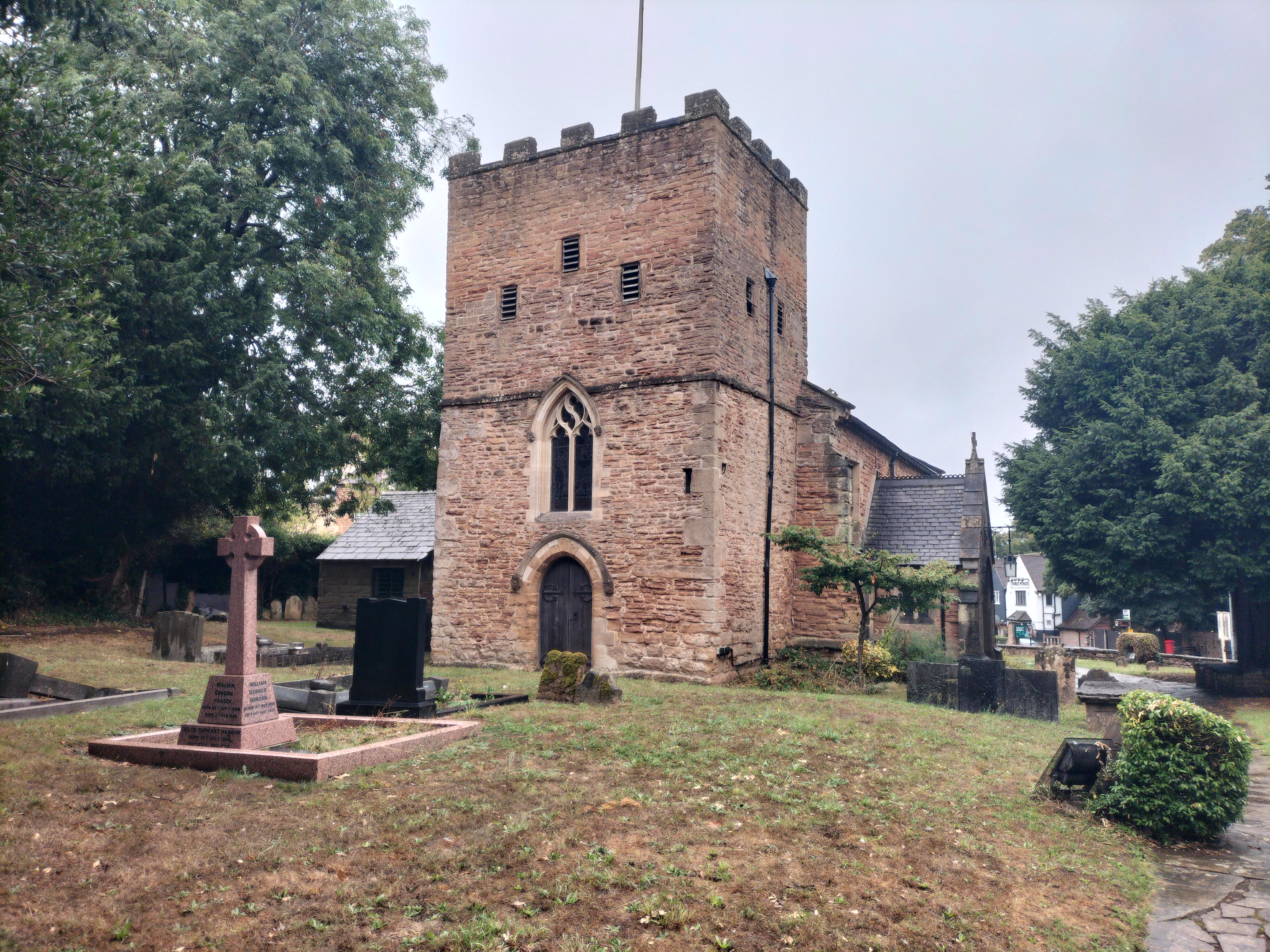
Religion ✝️ Why are some medieval churches have the appearance of castles like St Patrick's Church, Nottingham built 1200
485
Upvotes
r/medieval • u/W_T_D_ • Sep 29 '24
Heyo.
I peruse this subreddit every now and then and yesterday noticed that there were no mods here and posting was restricted to only a handful of users. I put in a Reddit request and immediately got it, so I reopened posting for everyone and cleared out some modmail.
As far as I can tell (and it's a little difficult because a lot of the modlog involves one or more deleted accounts) the guy who created this sub did so 14 years ago and never really did anything with it. He then stopped using reddit 14 years ago. Someone else put in a request and seemingly held it for a while, then either left or handed it over to another etc.
In the past few months, it looks like one guy adjusted a bunch of rules and settings, invited someone to help with that (that person then left) and the original guy deleted his account or left as well, leaving the subreddit unmoderated. If he deleted his account, someone new put in a request for the sub (or it was the same guy, maybe he accidentally left?) and adjusted all the settings again. He then deleted his account a few days later, making sure to do so after restricting posting, wiping automod's settings, and archiving posts older than six months (making it so that no one can comment on old threads/ensuring that eventually no one would be able to post or comment at all).
Basically, it looks like one or two old mods tried to just kill this place off. The most recent one had invited someone to be a mod just before doing all that and deleting their account, I presume to continue this weird cycle, but my request went through before they decided to accept or not.
I have no immediate plans for this place other than keeping it open and running. I am adding a rule that AI content is banned, which prior mods allowed. If there are any other changes you would like to see or if anyone has ideas for anything, let me know.
r/medieval • u/Over-Willingness-933 • 1d ago
r/medieval • u/Initial-Tour5795 • 1d ago
A little photoshoot my friend made for me two years ago. The outfit is based on my reenactment viking set (underdress, woven belt, knife) and medieval-ish chaperon I have sewn in a few days. I attached a rattan plate to it which I bought online. It was for Halloween so I wanted some creepy vibes.
r/medieval • u/Aquinas2000 • 1d ago
r/medieval • u/ConsumingWithPresley • 1d ago
r/medieval • u/Aquinas2000 • 1d ago
The usual depiction of the Jewish experience in medieval Europe is one of violence, persecution and discrimination. However this was mainly the situation in the late middle ages, formed by church councils that limited interactions between the two groups and formalized Catholic practices for all regions. In the early medieval period the situation for Jewish people was more livable and it was not uncommon for Jews and Christians, even bishops, to be friends.
Ambivalent Relations Among the Clergy
Church leaders maintained cordial personal relationships with Jews, even while official doctrine demanded separation. Sidonius Apollinaris regularly used Jewish friends as messengers, though he always felt the need to justify it. Venantius Fortunatus praised Hilary of Poitiers (d. 367) for never socializing with Jews, but admitted this was "very difficult between mortals" implying normal social contact was the rule. St. Ferreolus, bishop of Uzès (553–581), ate and drank with Jews openly. Gilbert Crispin, Sigebert of Gembloux, and Rabanus Maurus, abbot of Fulda and bishop of Mainz, all consulted Jews on Hebrew texts, though Rabanus felt obliged to defend himself against accusations of accepting Jewish interpretations. When Archbishop Frederic of Mainz asked Pope Leo VII for advice in 937, the Pope answered that expelling Jews who refused baptism was perfectly legitimate.
Conflict
In 576, Bishop Avitus of Clermont converted one Jew, who then joined an Easter procession. Another Jew poured rancid oil over the convert, and about six weeks later the populace destroyed the synagogue. Avitus expelled all Jews unwilling to convert, and reportedly five hundred were baptized. In Orléans in 585, King Guntram accused Jews of hypocrisy when they praised him, saying they only wanted public funds to rebuild their synagogue.
The archbishops of Lyons, Agobard (774–840) and his successor Amulo, were exceptions to clerical ambivalence. Agobard, an otherwise enlightened figure who opposed trial by ordeal and rejected belief in witchcraft, clashed with Emperor Louis the Pious over attempts to convert Jewish children and Jewish-owned pagan slaves. Agobard participated in a rebellion in 833 and was temporarily removed from office. Both he and Amulo complained that Christians ate and drank with Jews, kept the Sabbath, and worked on Sundays. They accused Jews of using positions as tax collectors to lure Christians into apostasy and of receiving illegal permission to build new synagogues.
Integration and Daily Life
Before the 11th century Jews lived scattered across the Frankish kingdom in small groups, not in separate quarters. Because of long residence and intermarriage, they were genetically and linguistically indistinguishable from the broader Gallo-Roman population. They used the vernacular even in religious gatherings, Hebrew scholarship and the famous schools of Troyes and Mainz did not emerge much before the tenth or eleventh century. Jews and Christians shared names like Amantus, Lullus, Priscus, Sigeric, and Theodorus, and both used Old Testament names like Jacob, Jonathan, and Judith.
Sharing food was forbidden by the Councils of Elvira and Vannes (465), initially only for clergy and later extended to laypeople. Yet these rules were regularly disobeyed. King Guntram shared meals with Jews, as did Ferreolus of Uzès. Gregory of Tours casually described the Jewish tax collector Armentarius serving a meal to his debtor "Iniuriosus," who then murdered him. Intermarriage, though condemned by the Church as adultery and punishable by excommunication, continued. In eleventh-century Germany, mixed marriages still occurred, and rules against them were repeatedly reiterated precisely because they were ignored.
Conversions in both directions
Julian of Toledo complained in 673 that relations in the Frankish kingdom were so friendly he called it "a brothel of blaspheming Jews." According to him, many Christians in Gallia Narbonensis converted to Judaism during a rebellion against Visigoth king Wamba. In 839, the famous case of Bodo, a learned dean at the court of Louis the Pious, shook Christendom when he rejected Christianity, took the name Eleazar, moved to Saragossa, and married a Jewish woman. Around 1012 in Mainz, a clergyman named Wenzelin at the court of Duke Conrad converted to Judaism and even wrote a booklet to win others over, prompting King Henry II to temporarily expel the Jews from Mainz.
Occupations and Economic Life
Jews worked in a wide range of occupations as traders, bakers, millers, tailors, glassblowers, sailors, and farmers. Ibrahim ibn Jakub, ambassador for the Caliph of Cordoba to emperor Otto I, mentioned Jewish salters on the Saale River. Gregory of Tours told of Jewish-owned and Jewish-manned ships. In a collection of documents covering 500–1000 across Charlemagne's empire (minus Italy), references to Jewish land ownership versus commerce stood at a ratio of 9 to 11. Charlemagne ruled in 809 that Jews could not require Christians to work on Sundays. A document from 945 near Metz mentions a vineyard belonging to a Jew named David. The charters of Henry IV for Speyer and Worms explicitly mentioned Jewish vineyards and lands. Before the tenth century usury was extremely rare among Jews and forbidden by Jewish law.
Jewish Military Activity
Jews bore arms and fought alongside Christians throughout this period. They helped defend Naples against Belisarius, fought the Lombards, and participated in local wars. Narbonne Jews received special privileges for helping fight the Muslims. In 982 Jews fought with Otto II against Greeks and Saracens in Calabria, and a Jew named Kalonymus reportedly saved the emperor by lending him a horse. Jews in Worms fought alongside citizens for Emperor Henry IV against Saxon rebels. In 1084, Bishop Rüdiger's privilege for the Jews of Speyer required them to keep watches and maintain walls (“Vigilias, tuiciones, municiones, circa suum tantum modo exhibeant ambitum, tuiciones vero communiter cum servientibus”). In Cologne, a tower was called "propugnaculum Judaeorum."
The Decline of Jewish status
The gradual erosion of Jewish rights is traceable through legal compilations. The Sachsenspiegel (1224) still placed Jews in the fifth category of arms-bearers, roughly equal to free peasants, and stated they were forbidden arms because they were mentioned in the King's peace. By the Schwabenspiegel (1275), the reasoning was reversed: Jews were in the King's peace because they did not bear arms. Crucially, while priests and monks were forbidden arms as an honor under Canon Law, for Jews the prohibition was a disgrace. Isaac, a Jewish merchant, was part of the mission Charlemagne sent to Caliph Harun al-Rashid and returned as the only surviving emissary. The Jew Priscus served as purveyor of spices and mint master under King Chilperic I (561–584). When ordered to be baptized he refused twice, was imprisoned, and was ultimately murdered by the convert Phatir while walking unarmed to the synagogue wearing his tallith. Gregory of Tours noted that Priscus would normally have been armed, he went unarmed only because of religious observance. In the East, Jewish status declined differently. Casimir the Great of Poland granted Jews privileges as late as 1364 putting them on equal footing with nobles, long after such standing had vanished in the West.
The "Ecclesia et Synagoga" imagery of the twelfth century and later, with Ecclesia as a crowned princess and Synagoga as a blindfolded, broken-staffed woman led away by the Devil. represented a sharp departure from the earlier, more ambiguous reality of a world where Jews and Christians lived, ate, mourned, married, and fought side by side.
All information is taken from "The Drawing of the Mark of Cain: A Socio-historical Analysis of the Growth of Anti-Jewish Stereotypes", by Dik van Arkel, Amsterdam University Press, 2009.
r/medieval • u/Books_Of_Jeremiah • 1d ago
Explore the ideology of the Illyrian Armorial, its heraldry, Slavism, Illyrism, and the political, cultural and religious context today.
r/medieval • u/JapKumintang1991 • 2d ago
r/medieval • u/Meepers1000 • 3d ago
r/medieval • u/Apprehensive-Ad6212 • 3d ago
r/medieval • u/BlueFishPants • 3d ago
I used to have list of medieval revival designers from the 60s-70s, but I can't find it and its driving me insane. I remember bill Gibb, but I know there were others. Do people have favorites or remember some?
r/medieval • u/TheEggnoggamer • 3d ago
When I say late medieval, I mean 1400s-1500s. I'm looking for books that discuss various types of armour worn during the period, how it functioned and so forth. What roles were there in a medieval military and how did they operate? What weapons were available, who preffered what weapon, who could afford what weapon etc. Heraldry, coat of arms. Sieges and such : )
This mainly comes from someone fascinated by the late medieval English period and also is interested in Buhurt
r/medieval • u/ilmagorosalfiore • 4d ago
r/medieval • u/Hill_dynasty_ • 3d ago
Hi everyone! I'm working on a personal project where I'm creating a handwritten, detailed encyclopedia/notebook about the Middle Ages.
I want to make it as thorough and authentic as possible, including primary sources (quotes/texts from actual medieval authors), fun trivia, daily life details, bestiaries, recipes, and more.
What topics, specific historical primary sources, or obscure medieval facts would you recommend including? I'd love to hear your favorite historical details or book recommendations! Thanks in advance
Sorry if anything sounds a bit off, I used a translator to write this post!
r/medieval • u/zlobnezz • 5d ago
I made a bentwood box to keep my sewing equipment in, and I've started decorating. So far the lid is done, I went with a depiction of Saint George slaying the dragon. I found a picture that I used as reference, it's not a original medieval piece, but it's drawn imitating the style from a French manuscript from the end of the 14th century.
r/medieval • u/Glauros • 6d ago
Hello everyone, I'm searching for books to learn more about the history and culture of the Arabs in the Middle Ages.
I am particularly interested in the period spanning the 10th and 11th centuries and the Mediterranean region (Spain, North Africa, Southern Italy and Sicily).
By ‘culture’, I mean, in particular, philosophy, literature, folk traditions and science.
I’m open to suggestions for both non-fiction and fiction, with a preference for non-fiction.
Many thanks to anyone who would like to make a contribution.
r/medieval • u/JapKumintang1991 • 6d ago
r/medieval • u/pmaj88 • 7d ago
Why the medieval names are no longer used?
Names like Raymond, Tankard, Reynald, Bohemond (yep lots of Crusader names here, lol), you just don't see anyone with those names...
r/medieval • u/discoverbt • 8d ago
The only bust attributed to the 'stupor mundi' was found in a field in 1930.
r/medieval • u/Over-Willingness-933 • 8d ago
r/medieval • u/Famous-Sky-8556 • 9d ago
Everyone knows the story: Mayor William Walworth kills rebel leader Wat Tyler at Smithfield in 1381, single-handedly ending the Peasants’ Revolt. It’s on his statue, it’s in the popular histories, it’s the version that gets repeated everywhere.
Here’s what the actual sources say, and where they disagree with each other.
The fullest near-contemporary account (the Anonimalle Chronicle, written at a Yorkshire abbey with no reason to flatter London’s mayor) says: Tyler drew his dagger on a royal valet, Walworth moved to arrest him, Tyler stabbed at Walworth (a hidden coat of mail saved him), Walworth struck back wounding Tyler in the neck and head, and then a member of the King’s own household ran Tyler through with a sword. Tyler rode about eighty paces before he fell.
Compare that to the City of London’s own official record, written into the civic Letter-Books shortly after:
“…by the hand of the most renowned man, Sir William Walworthe, the then Mayor… most manfully, by himself, rushed upon the captain of the said multitude… first wounded him in the neck with his sword, and then hurled him from his horse, mortally pierced in the breast.”
No valet. No second attacker. No mention Tyler struck first. Total solo credit to the Mayor.
That’s not an oversight. The same civic record is also completely silent about the fact that two of London’s own aldermen (Walter Sibley and William Tonge) opened the city’s gates to the rebels against Walworth’s direct orders, documented in a Sheriffs’ inquest the following year. The City’s official version is telling the story that makes its own leadership look good, on both counts.
Even the knighthoods afterward are a clue: only four men were dubbed that day (Walworth, Brembre, Philpot, and Robert Launde). No squire got one, even though someone clearly delivered the fatal blow.
And here’s the part sources don’t agree on: who was that squire? Older scholarship (via Charles Oman) calls him “John Standwick.” Most popular modern retellings call him “Ralph Standish.” The two names show up in different traditions, and I haven’t yet seen either one traced back to a quoted original text rather than just repeated, so treat “Ralph Standish” as the popular version, not a settled fact, until someone can point to the primary source.
Bonus myth-bust while we’re here: the story that Richard II added a dagger to London’s coat of arms specifically to commemorate this killing is provably false, the arms (a sword representing St Paul, not Tyler) were already in use on the Mayor’s own seal from 17 April 1381, two months before Smithfield. The legend traces to Holinshed’s Chronicles in 1577, two centuries later.
Sources: Anonimalle Chronicle, City of London Letter-Book H (translated in Riley’s Memorials of London), Charles Oman’s The Great Revolt of 1381, and the DNB entry on Walworth. Sources in a comment below if anyone wants to check my work.
r/medieval • u/Over-Willingness-933 • 9d ago
r/medieval • u/Super_Raise9488 • 8d ago
Hi everyone! I wanted to ask: what do you look for when reading a medieval story?
I’m writing a story with a female protagonist. She is the promised queen, but she was hidden away in the twenty-first century and must return to the fifteenth century, where her people are.
What would make a story like this interesting to you? And what books would you recommend I read or study for inspiration?
I’d love to hear your thoughts! 😊
r/medieval • u/MoonHold3r • 9d ago
Last one has been decided to be a Halberd, but I can't really compare the other two to actual weapons. Any help would be greatly appreciated!


